How we make this list: we compare pricing pages, product documentation and public user reviews. Rankite is independent; if a vendor ever pays for a featured spot, that listing is clearly labeled Partner.
Key takeaways
- Anaqua and Clarivate lead for large corporate IP departments that manage thousands of patents and trademarks across jurisdictions.
- AppColl is the standout for smaller firms and solo practitioners who need real docketing without enterprise pricing.
- Alt Legal owns the trademark-specific niche with automated USPTO docketing that trademark attorneys genuinely like.
- Almost everything here is quote-based, so budget for a sales process and ask about per-matter versus per-user pricing early.
Quick comparison
| Tool | Best for | Starting price | Free plan |
|---|
 Anaqua Anaqua | Large corporate IP departments | See website | No |
 Clarivate Clarivate | End-to-end IP lifecycle at enterprise scale | See website | No |
 AppColl AppColl | Small firms and solo practitioners | See website | Free trial |
 Alt Legal Alt Legal | Trademark docketing and prosecution | See website | Free trial |
 MaxVal MaxVal | Patent portfolio analytics and management | See website | No |
 Inteum Inteum | University technology transfer offices | See website | No |
 Dennemeyer Dennemeyer | Global IP management with services attached | See website | No |
 Questel Questel | IP intelligence and innovation management | See website | No |
 Wellspring Wellspring | Tech transfer and innovation management | See website | No |
Is your product missing or out of date?
We review this list regularly. Vendors can request a listing, send updated pricing or ask about featured placement.
The best intellectual property management software
Starting priceSee website
Free planNo
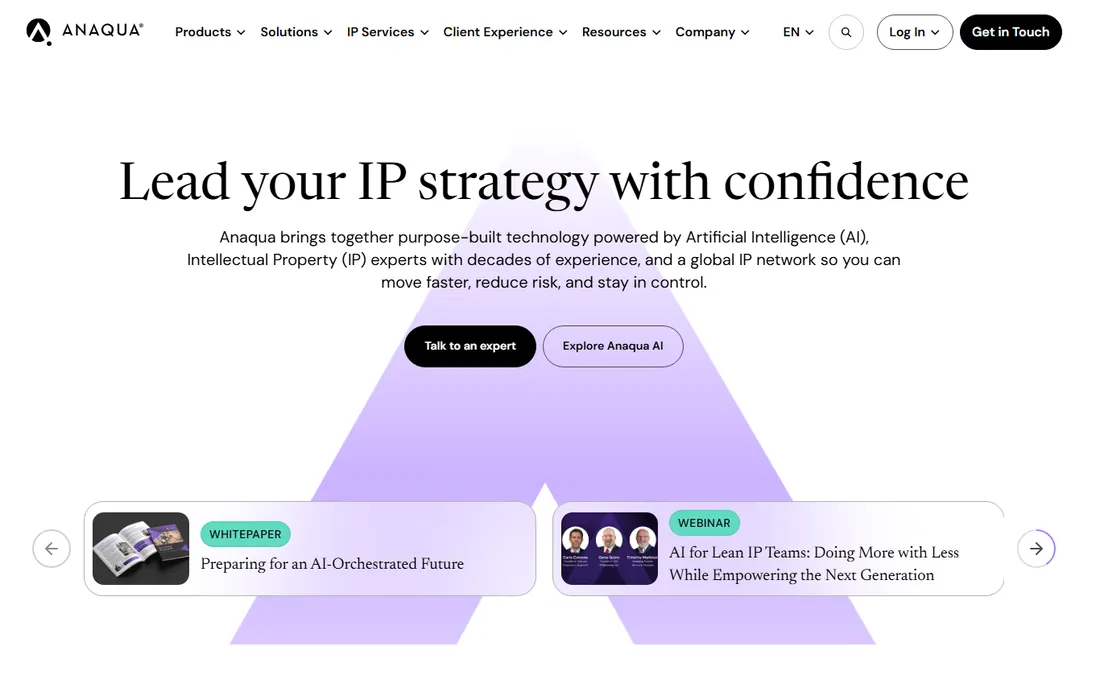
Anaqua is the platform large companies use to run their entire IP operation: invention disclosures, patent prosecution, trademark management, licensing and annuity payments. Its docketing engine handles the deadline complexity of multi-jurisdiction portfolios, which is where cheaper tools break down. Integration with IP service providers keeps renewals and filings moving without manual handoffs.
This is enterprise software with enterprise sales cycles and pricing. A company with fifty patents will find it oversized. But for IP departments managing thousands of assets across dozens of countries, Anaqua is the market reference.
What we like- Deep patent and trademark workflow coverage
- Strong annuity and deadline management
- Trusted by major corporate portfolios
Watch out for- Enterprise pricing and implementation
- Can be more than smaller teams need
Starting priceSee website
Free planNo

Clarivate combined its IP management products (including IPfolio) with acquired service businesses like CPA Global and patent data from Derwent. The result covers the full lifecycle: searching, filing, docketing, renewals and portfolio analytics. For enterprises that want software plus the services to execute globally, the combination is powerful.
The pieces came together through acquisitions, so ask which specific product you are buying and how it connects to the rest. Pricing is enterprise and quote-based. Still, few vendors match the breadth of IP data and services behind the software.
What we like- IPfolio, CPA Global services and Derwent data under one roof
- Strong analytics
- Global renewals infrastructure
Watch out for- Portfolio assembled by acquisition, so integration varies
- Quote-only enterprise pricing
Starting priceSee website
Free planFree trial
AppColl is the rare IP management tool built for the smaller end of the market. Solo practitioners and boutique firms get automated docketing, document management and USPTO integration without the five-figure contracts the enterprise tools demand. The interface is modern and the learning curve is short.
It will not replace Anaqua for a 10,000-patent corporate portfolio. The reporting and multi-jurisdiction depth are lighter. But for firms that found the big platforms unaffordable and spreadsheets terrifying, AppColl fills the gap well.
What we like- Real docketing at prices small firms can afford
- Clean modern interface
- Good USPTO integration
Watch out for- Less depth for huge multinational portfolios
- Fewer enterprise integrations
Starting priceSee website
Free planFree trial
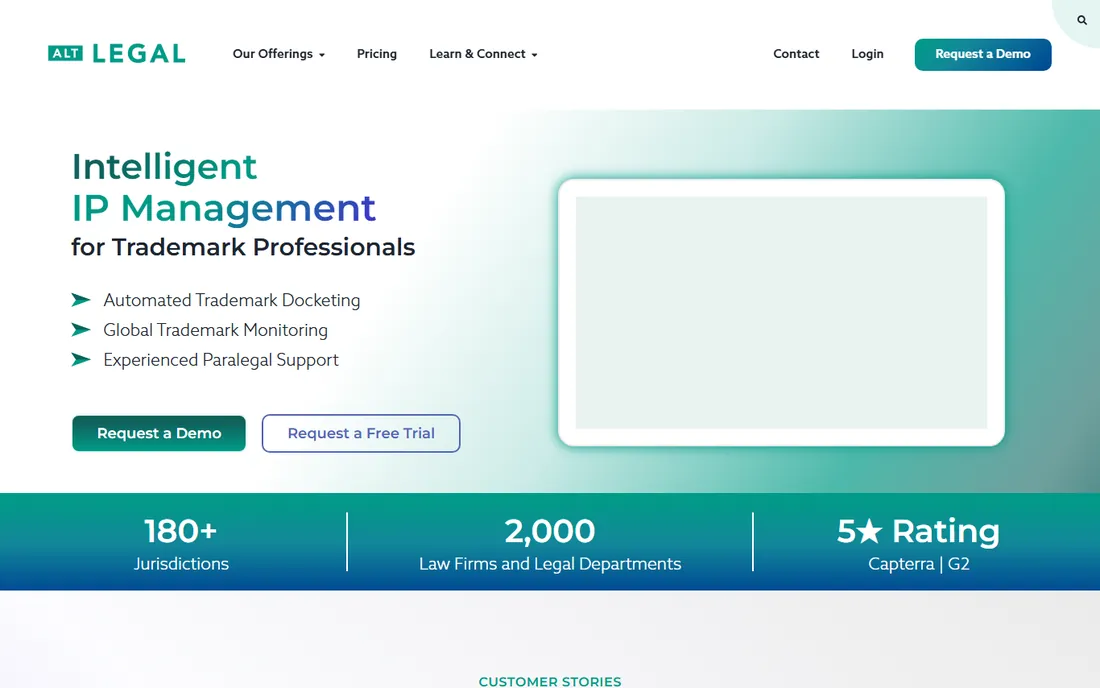
Alt Legal does one thing extremely well: trademark docketing. It pulls USPTO data automatically, calculates deadlines and keeps trademark attorneys out of spreadsheet hell. Firms that live in trademark prosecution consistently rate it among their favorite tools, which is rare praise in legal tech.
It is not a patent management system and does not pretend to be. Pricing scales with trademark volume. If trademarks are your practice, start here; if you need patents too, pair it with a patent tool or pick a broader platform.
What we like- Automated trademark docketing from USPTO data
- Purpose-built for trademark practices
- Well-liked by attorneys
Watch out for- Trademark-focused, not a patent tool
- Priced per trademark volume
Starting priceSee website
Free planNo
MaxVal blends IP management software with patent analytics and valuation. Beyond tracking deadlines, it helps companies decide which patents to keep, prune, license or abandon, which is where real portfolio money is saved or wasted. The services team behind the software has deep patent operations experience.
Companies that just need docketing will find the analytics layer unnecessary. But for in-house teams making renewal and filing decisions across large portfolios, the combination of management plus insight is valuable.
What we like- Combines docketing with valuation and analytics
- Strong for portfolio optimization decisions
- Experienced IP services team
Watch out for- Analytics depth can overwhelm basic docketing needs
- Enterprise-leaning pricing
Starting priceSee website
Free planNo
Inteum is the long-standing choice for university technology transfer offices. It tracks invention disclosures from faculty, manages the resulting patents, and handles licensing agreements and royalty distributions. The workflows reflect how universities actually operate, which generic IP tools do not.
Corporate IP departments should look elsewhere. But for a university TTO choosing between Inteum and a spreadsheet, the decision is easy, and the vendor understands academic compliance requirements like federal funding obligations.
What we like- Built for academic tech transfer workflows
- Manages disclosures, patents and licenses
- Long track record with universities
Watch out for- Niche focus means less corporate IP depth
- Interface is functional rather than modern
Starting priceSee website
Free planNo
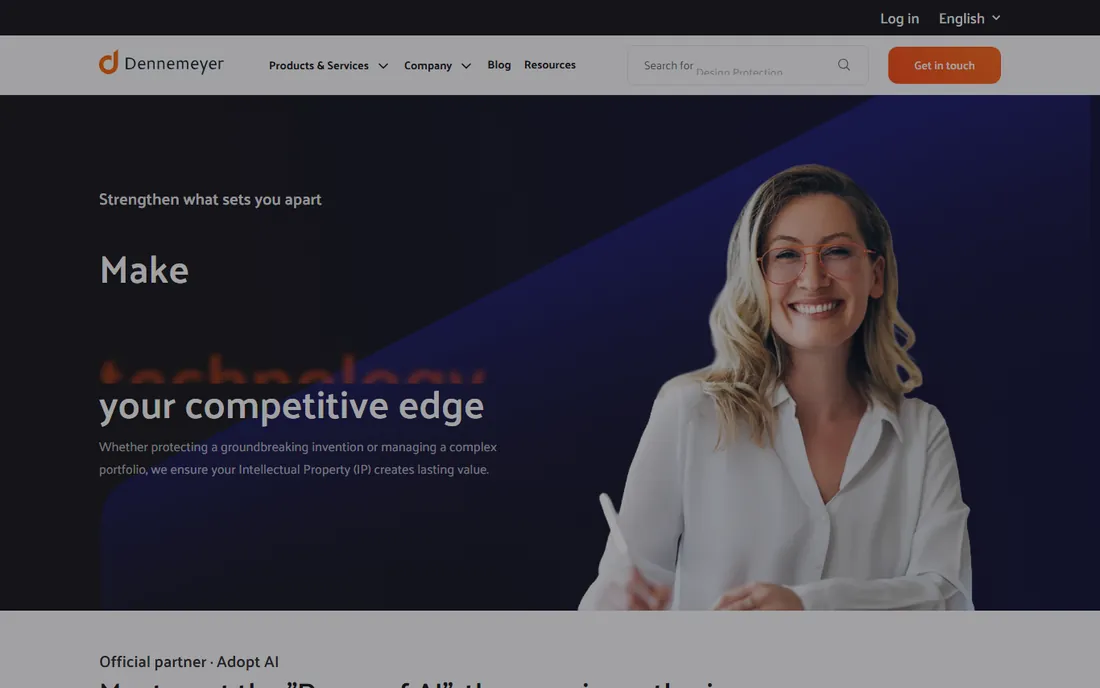
Dennemeyer pairs IP management software with its own global network of IP professionals. The model suits companies that want the software and the people who file, renew and prosecute, coordinated together. Annuity and renewal management across jurisdictions is a particular strength.
If you want pure software without services, the bundled model may feel heavy. But for companies expanding internationally that need both tooling and local expertise, Dennemeyer offers a coherent package.
What we like- Software plus a global IP service network
- Strong in renewals and annuity payments
- Long-established provider
Watch out for- Service-heavy model means software is part of a bigger engagement
- Pricing is custom
Starting priceSee website
Free planNo
Questel grew from patent intelligence and search into full IP management. That heritage shows: the platform is strong where IP meets R&D strategy, with analytics that inform filing and portfolio decisions. Innovation-driven companies that want search, management and intelligence together will find the combination natural.
The product range is wide, so be clear about which modules you are evaluating. Pricing is enterprise. For companies where IP strategy starts with understanding the patent field, Questel's intelligence-first approach stands out.
What we like- Strong patent search and analytics heritage
- Portfolio management with intelligence built in
- Good for R&D-driven companies
Watch out for- Breadth can complicate the buying decision
- Enterprise pricing
Starting priceSee website
Free planNo
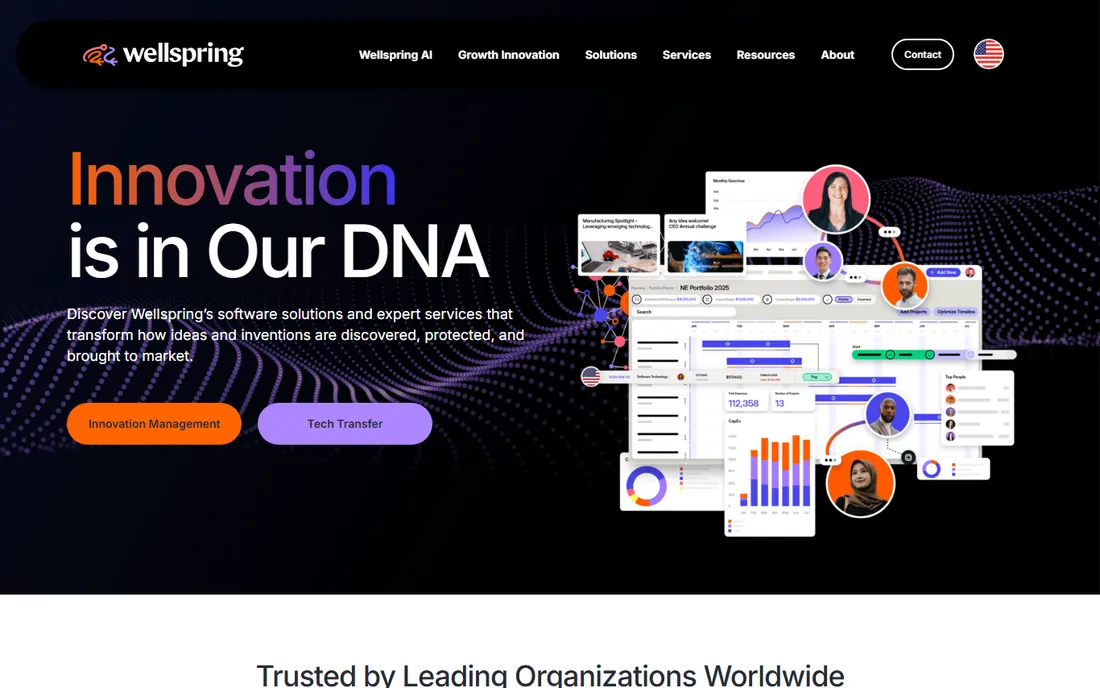
Wellspring serves the innovation management side of IP: invention disclosures, technology marketing, licensing deals and agreement tracking. Universities, research institutions and corporate innovation groups use it to move ideas from lab to license. The deal and agreement management is more developed than in pure docketing tools.
It is not the pick for high-volume patent prosecution docketing. But where the job is managing innovation as a pipeline rather than managing deadlines, Wellspring fits well.
What we like- Covers the full innovation pipeline from disclosure to deal
- Used by universities and corporate innovation teams
- Strong agreement management
Watch out for- Niche positioning
- Less known in corporate patent docketing
How we chose
We compared platforms on docketing accuracy and deadline coverage, patent versus trademark depth, portfolio analytics, integrations with IP offices and service providers, and fit for different organization types. We verified each vendor's homepage and current product positioning, checked practitioner reviews and legal tech coverage, and noted acquisitions that changed product lineups. We did not manage live IP portfolios in these systems.
Docketing is the feature that matters most
Every IP management purchase should start with docketing: the system that calculates deadlines, tracks them across jurisdictions, and makes sure nothing lapses. Missed deadlines kill patents and trademarks outright, so this is not a nice-to-have. Ask vendors how their docketing rules are maintained, how quickly they reflect rule changes at patent offices, and what happens when a deadline is disputed.
Beyond docketing, match the tool to your asset mix. Trademark-heavy practices need different software than patent-heavy ones. Universities need disclosure and royalty workflows that corporations do not. And be honest about portfolio size: a 200-asset portfolio does not need the platform built for 20,000.
Making the software work with outside counsel
Most companies do not prosecute patents or trademarks entirely in-house. Your IP management software has to share data cleanly with the law firms doing the work, or you end up with two versions of the truth. Before buying, ask how each firm you use will interact with the system: do they get logins, do they work through a portal, or do they email you documents that someone re-enters by hand?
The firms' cooperation matters as much as the software's features. Some large firms have preferred platforms and established data feeds; a system they already know will go live faster than one they have to learn for your account. Ask your primary outside counsel which tools they integrate with and how the docketing handoff works in practice, not just in the sales demo.
Set clear rules about who owns docketing. The most common failure pattern is shared responsibility: the firm assumes you are watching deadlines, you assume the firm is, and a deadline slips through the gap. Decide explicitly, document it, and make sure the software's reminders go to the party actually responsible. A quarterly audit of upcoming deadlines, comparing the system against the firm's docket report, catches the discrepancies before they become malpractice.
Finally, plan for firm changes. Companies switch counsel, and your portfolio data must move cleanly. Confirm export formats and historical data access before you sign, so a change of firm never means a loss of institutional memory.
Frequently asked questions
What does IP management software actually do?
It tracks intellectual property assets (patents, trademarks, designs, copyrights), calculates and monitors legal deadlines, manages documents and prosecution workflows, and often handles renewals, licensing and portfolio analytics.
Can small firms afford IP management software?
Yes. AppColl and Alt Legal are priced for small firms and solo practitioners, with trials available. The enterprise platforms assume corporate budgets, so match the tool to your size.
How is this different from a patent search tool?
Search tools find prior art and map who owns what. Management software tracks your own portfolio's deadlines, documents and workflows. Many vendors now bundle both, but they solve different problems.
Do we still need outside counsel if we buy this software?
Usually yes. The software manages deadlines and documents; attorneys provide legal judgment on prosecution strategy, office actions and disputes. The software makes your counsel more efficient, it does not replace them.
What happens to our data if we switch vendors?
Ask before you buy. Data export formats, migration assistance and contract terms around your portfolio data vary widely. A vendor that makes export difficult is a red flag.
Should trademarks and patents be in one system?
If you manage both at volume, a unified platform like Anaqua or Clarivate reduces duplicate work. Trademark-specialist firms often prefer Alt Legal for trademarks alongside a separate patent tool. There is no universal answer; it depends on your mix.
Sources we checked (9)
- https://www.anaqua.com/
- https://clarivate.com/
- https://www.appcoll.com/
- https://www.altlegal.com/
- https://www.maxval.com/
- https://www.inteum.com/
- https://www.dennemeyer.com/
- https://www.questel.com/
- https://www.wellspring.com/
Is your product missing or out of date?
We review this list regularly. Vendors can request a listing, send updated pricing or ask about featured placement.

Shihab Mia · Founder, Rankite
Shihab has spent more than a decade helping SaaS and e-commerce brands grow through search. He writes Rankite's software buying guides from pricing pages, documentation and public user reviews. More about Shihab.