How we make this list: we compare pricing pages, product documentation and public user reviews. Rankite is independent; if a vendor ever pays for a featured spot, that listing is clearly labeled Partner.
Key takeaways
- Most insider incidents are carelessness, not malice: misaddressed emails, overshared folders, departing employees copying files. Buy for that reality, not the spy-movie version.
- Detection and prevention are different jobs. Teramind and Cyberhaven can intervene before data leaves. Proofpoint, Varonis and Microsoft Purview mostly detect, investigate and record.
- Teramind is the only tool here with transparent per-user pricing (from $15/month). Everything else is quote-based enterprise software.
- If you already live in Microsoft 365, Purview Insider Risk Management is the cheapest credible starting point. If you live in logs, start with a UEBA platform like Exabeam or Securonix.
Quick comparison
| Tool | Best for | Starting price | Free plan |
|---|
 Teramind Teramind | Teams wanting monitoring plus DLP in one agent | From $15 per user/month (billed monthly, 5-seat minimum) | Free trial |
 Varonis Varonis | Data-centric teams that need file-level evidence | See website (quote-based) | No |
 Gurucul Gurucul | Insider investigations needing evidence trails | See website (quote-based) | No |
 Proofpoint Insider Threat Management Proofpoint Insider Threat Management | Enterprises already on Proofpoint | See website (quote-based) | No |
 Exabeam Exabeam | SOCs that want behavior analytics on humans and AI agents | See website (quote-based) | No |
 Securonix Securonix | Enterprises standardizing on a cloud SIEM with UEBA | See website (quote-based) | No |
 Microsoft Purview Insider Risk Management Microsoft Purview Insider Risk Management | Microsoft 365 shops that want insider risk built in | See website (licensed as M365 add-on or via E5) | No |
 Cyberhaven Cyberhaven | Teams that want data lineage to stop exfiltration | See website (quote-based, enterprise) | No |
 ManageEngine Log360 ManageEngine Log360 | Mid-market teams that want log-driven insider evidence | See website (quote-based) | No |
Is your product missing or out of date?
We review this list regularly. Vendors can request a listing, send updated pricing or ask about featured placement.
The best insider threat detection software
#1
Teramind
Best for: Teams wanting monitoring plus DLP in one agent
Visit teramind.co
Starting priceFrom $15 per user/month (billed monthly, 5-seat minimum)
Free planFree trial
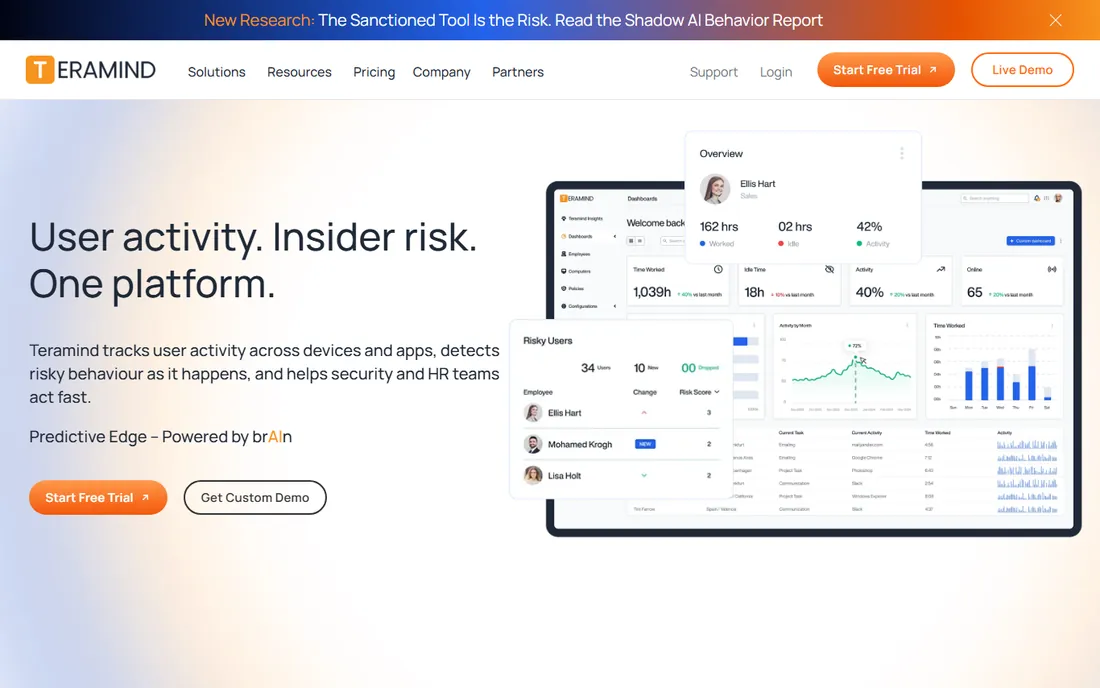
Teramind is the most hands-on tool on this list. An endpoint agent records sessions, tracks application and file activity, applies behavior rules, and enforces data loss prevention policies. When someone plugs in a USB drive at 11pm or uploads a customer list to a personal cloud account, Teramind can warn, block or record depending on how you configure it.
That configurability is the point. Rules range from gentle productivity nudges to hard blocks on sensitive data movement, and the audit trail is built for HR and legal review. Deployment comes in cloud or on-premise flavors, which matters for regulated industries that cannot send telemetry offsite.
The tradeoff is intensity: the closest thing here to full surveillance, so the employee policy and legal review matter most here. The 5-seat minimum also prices out very small teams. We cover Teramind's productivity side in our employee monitoring guide as well.
What we like- Session recording, behavior rules and DLP in a single agent
- Leader in 50+ G2 categories
- Cloud or on-premise deployment
Watch out for- 5-seat minimum excludes the smallest teams
- The monitoring depth demands a careful employee policy
- Can duplicate DLP you already own
#2
Varonis
Best for: Data-centric teams that need file-level evidence
Visit varonis.com
Starting priceSee website (quote-based)
Free planNo

Varonis starts from the data rather than the user. It continuously discovers where sensitive files live, classifies them, flags excessive permissions, and watches every access in real time. When behavior analytics flag a risky user, investigators get an evidence chain tying the alert to the exact files touched, which is what auditors and lawyers actually need.
This data-first design suits organizations drowning in unstructured data: file shares, SharePoint, NAS, cloud storage. It answers the question "who can see our sensitive data and what did they do with it" better than any endpoint-centric tool here.
The catch is scope and cost. Varonis is enterprise software with enterprise implementation timelines and quote-only pricing. If your risk lives on endpoints and in email rather than in file repositories, a UEBA or endpoint tool will cover more ground for less money.
What we like- Automatically discovers, classifies and right-sizes access to sensitive data
- Investigation workbench links detections to specific files
- Strong in file-heavy environments
Watch out for- Quote-only enterprise pricing
- Implementation is a real project
- Deepest value is in file shares, SharePoint and M365 rather than endpoints
Starting priceSee website (quote-based)
Free planNo
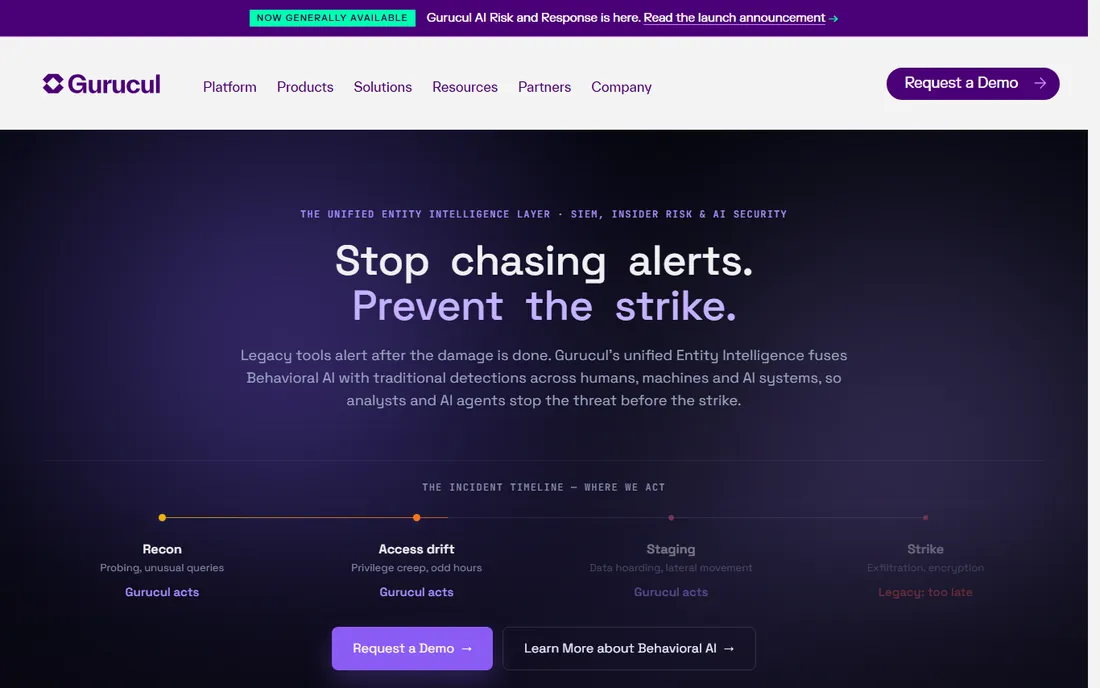
Gurucul pioneered the UEBA category and it shows. The platform builds behavioral baselines for every user and entity, then scores deviations with machine learning models that are explainable by design. When an analyst gets an alert, they get the proof chain behind it, not a black-box score. That evidence trail runs through the case management workflow, from detection to investigator notes to response.
The insider risk story got a concrete proof point on the vendor's own homepage: a departing employee attempting to steal confidential IP was flagged with a high-risk score before acting. Whether or not you credit the marketing, the capability pattern is right. Identity, endpoint and cloud activity scored together beats three disconnected alert queues.
Deployments run 4 to 6 weeks per the vendor, fast for this category. The tradeoff: you are buying a security analytics platform, not a point tool. Teams without SIEM experience should budget for the learning curve or look at Teramind and ManageEngine instead.
What we like- 5,000+ machine learning models with explainable risk scores
- Case management preserves evidence from signal to investigator notes
- 4 to 6 week deployments
- 4.9/5 on Gartner Peer Insights for SIEM
Watch out for- Quote-only pricing
- SIEM-adjacent complexity for smaller teams
- Less brand recognition than the biggest SIEM vendors
#4
Proofpoint Insider Threat Management
Best for: Enterprises already on Proofpoint
Visit proofpoint.com
Starting priceSee website (quote-based)
Free planNo
Proofpoint's insider threat product grew out of its ObserveIT acquisition, and the heritage is visible: detailed session recording tied to user activity, with the timeline an investigator needs to reconstruct what happened. The differentiator is the people-centric layer. Because Proofpoint sees email, cloud apps and data movement for its customers, insider risk signals arrive with context about what the person was doing across channels.
For companies already running Proofpoint for email security, adding ITM is the path of least resistance: the data already flows, the console is familiar, and the combined view of external and insider risk suits lean security teams.
The honest limitation is response. Proofpoint ITM detects and alerts; it does not block data movement the way Teramind or Cyberhaven can. If your requirement is stopping exfiltration in progress rather than investigating it afterward, pair it with DLP or pick a prevention-capable tool.
What we like- Built on ObserveIT session recording with deep user activity context
- People-centric view connects email, data and behavior
- Used by most of the Fortune 100 through the broader Proofpoint platform
Watch out for- Primarily detect-and-alert with limited blocking
- Enterprise sales motion
- The full value needs other Proofpoint products alongside it
#5
Exabeam
Best for: SOCs that want behavior analytics on humans and AI agents
Visit exabeam.com
Starting priceSee website (quote-based)
Free planNo
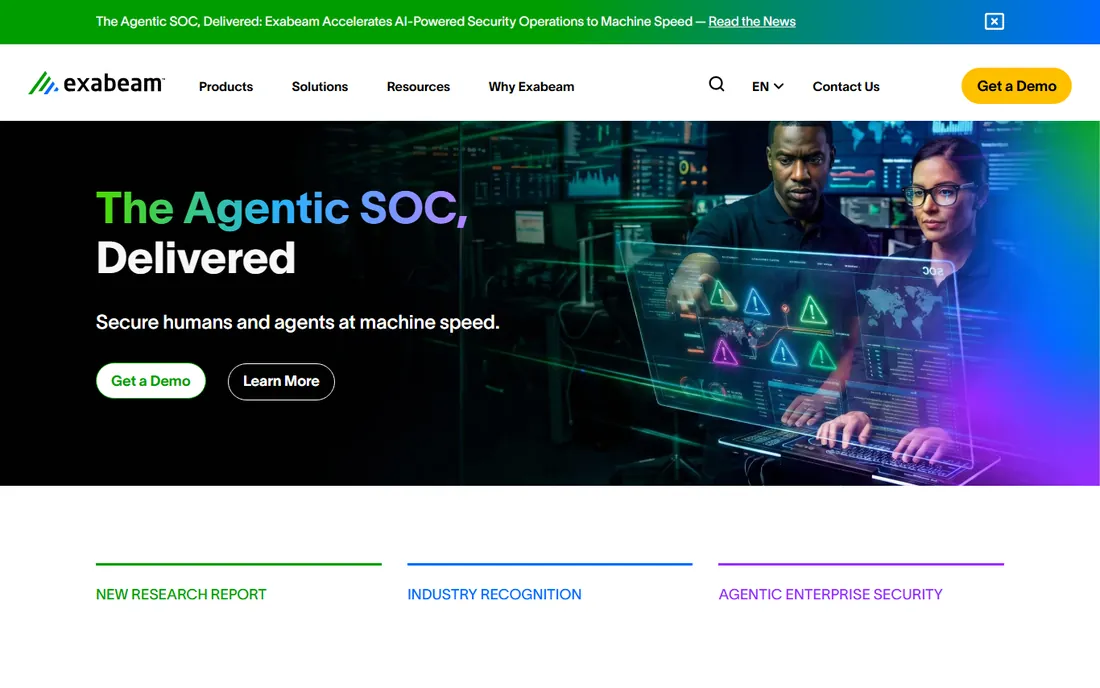
Exabeam's 2026 message is that the insider is no longer only human. AI agents acting at machine speed create a new class of insider risk, and the platform now baselines agent behavior alongside user behavior. For security teams watching autonomous systems touch production data, that is a forward-looking capability few competitors match.
Underneath, it is a mature SIEM with strong UEBA: behavioral baselines, anomaly detection, risk scoring and machine-built investigation timelines. Six consecutive years as a Gartner Magic Quadrant Leader is a track record the younger vendors here cannot claim. Data pipeline controls and low-cost storage options address the SIEM cost complaint directly.
The tradeoff is platform gravity. You are buying a SIEM that does insider threat well, not an insider threat point tool. Teams without a SOC or log pipeline will find simpler tools faster to value. Teams with a SOC should evaluate Exabeam's insider module against their current SIEM's UEBA before adding another console.
What we like- UEBA plus agent behavior analytics for AI-driven threats
- Six-time Gartner Magic Quadrant Leader for SIEM
- Open platform avoids vendor lock-in
Watch out for- Quote-only enterprise pricing
- SIEM-scale deployment effort
- Insider threat is one module of a larger platform
Starting priceSee website (quote-based)
Free planNo
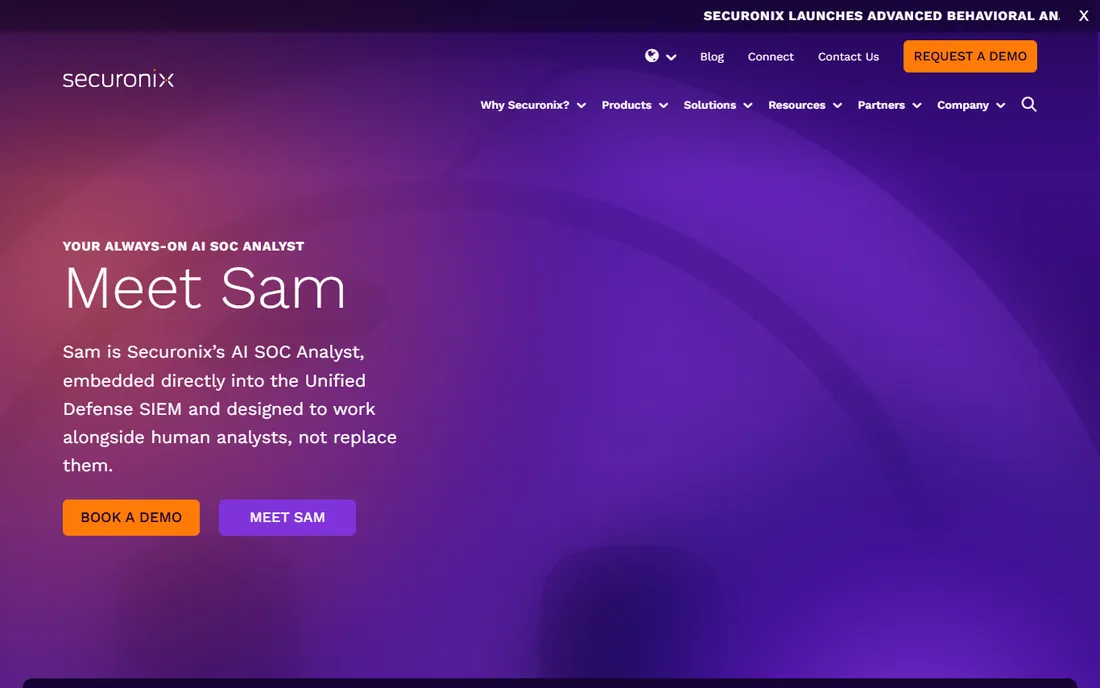
Securonix won the 2026 SC Award for Best Insider Threat Solution, which is the closest thing this category has to an industry prize. The platform is a cloud-native SIEM with UEBA at its core: behavioral baselines, dynamic risk scoring and correlated event views that cut alert fatigue. The newer AI layer adds an agentic SOC analyst that triages alerts and drafts investigation summaries.
For insider threat specifically, the strength is correlation across hybrid and cloud environments: compromised credentials, lateral movement and data exfiltration surface as connected stories, with MITRE ATT&CK mapping for a common language. Heavy MSSP use speaks to multi-tenant maturity.
Like Exabeam, this is a SIEM decision more than a point-tool decision. If you are already standardizing on a cloud SIEM, Securonix's insider capabilities deserve evaluation inside that RFP. As a standalone insider threat purchase for a team without SIEM infrastructure, it is more platform than most buyers need.
What we like- Won the 2026 SC Award for Best Insider Threat Solution
- Six-time Gartner Magic Quadrant Leader for SIEM
- Cloud-native with an AI SOC analyst built in
Watch out for- Quote-only enterprise pricing
- SIEM-first product where insider threat rides on UEBA
- Needs mature log sources to shine
#7
Microsoft Purview Insider Risk Management
Best for: Microsoft 365 shops that want insider risk built in
Visit microsoft.com
Starting priceSee website (licensed as M365 add-on or via E5)
Free planNo
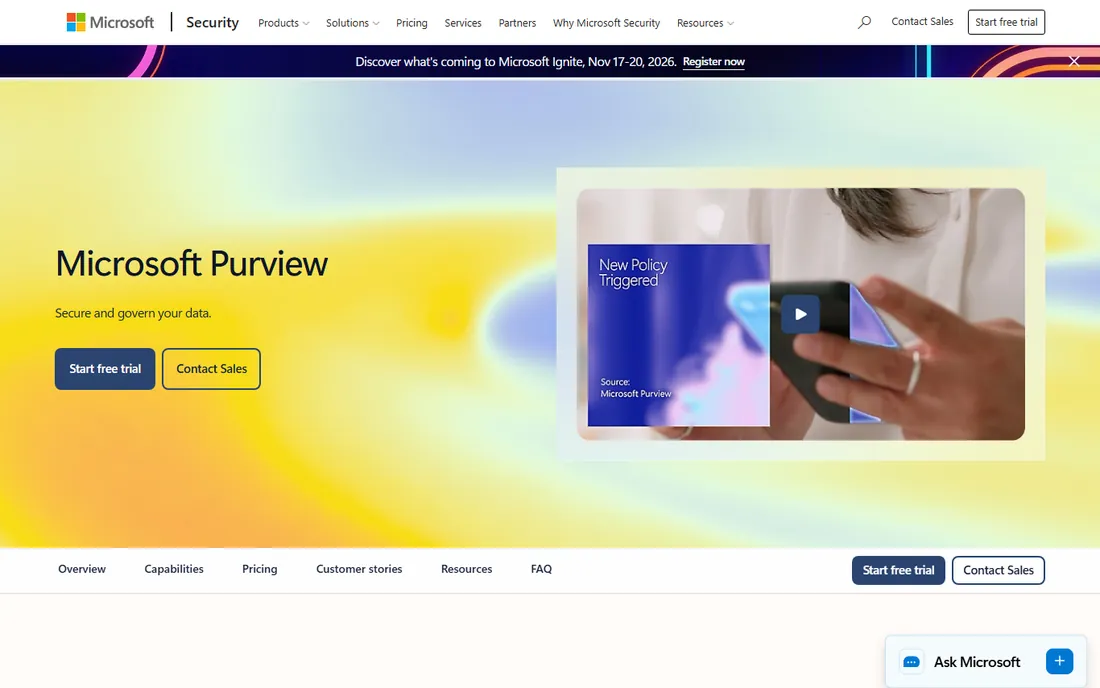
If your company lives in Microsoft 365, Purview Insider Risk Management is the obvious first look. It correlates signals across Exchange, SharePoint, OneDrive, Teams and endpoints via Defender, then applies risk scoring to trigger adaptive protection: a high-risk user automatically gets stricter DLP policies. No new agent to deploy for the Microsoft data plane, and the licensing often rides on existing E5 or compliance add-ons.
The integration depth is the selling point: HR connector data, like upcoming terminations, feeds risk models so departing-employee scenarios get extra scrutiny automatically. For the most common insider patterns, data theft by departing staff and accidental oversharing, native M365 coverage handles the bulk of the risk.
The gaps are real: outside Microsoft 365, visibility thins out, there is no session recording, and the analytics run less deep than Gurucul or Exabeam. Treat Purview as the foundation for M365-centric organizations, adding a specialist tool only if your risk extends beyond Microsoft's walls.
What we like- Native to Microsoft 365 with no new agent for cloud data
- Adaptive protection adjusts DLP strictness by risk level
- The cheapest credible option for M365-heavy organizations
Watch out for- Microsoft-centric, with thinner coverage outside M365
- No session recording
- Licensing across Purview, E5 and add-ons confuses buyers
Starting priceSee website (quote-based, enterprise)
Free planNo
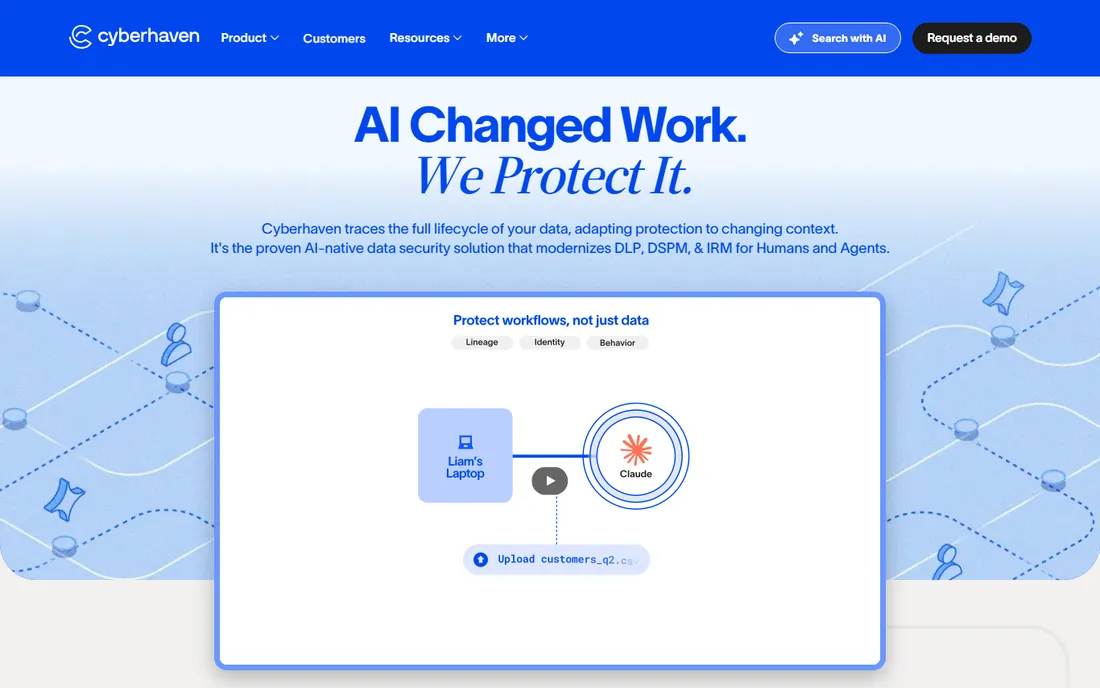
Cyberhaven takes a different technical path from the behavior-scoring crowd. It traces data lineage: following sensitive data as it moves across endpoints, apps and cloud services, then intervening when that data heads somewhere it should not. The pitch is precision. Instead of guessing from behavior anomalies, it watches the data itself.
That lineage model enables active blocking across email, web uploads, USB and cloud sync, putting Cyberhaven in the small prevention-capable group with Teramind. For IP-heavy companies where a single exfiltration event is catastrophic, blocking beats investigating.
The tradeoffs are price and youth. Third-party estimates put entry pricing in the tens of thousands annually, and the vendor is younger than the SIEM incumbents here. Cloud-only deployment simplifies operations but rules out organizations that need on-premise. Evaluate it when prevention matters more than forensic depth.
What we like- Data lineage tracing shows exactly where sensitive data flows
- Can block exfiltration across multiple channels
- Cloud-only deployment keeps operations simple
Watch out for- Enterprise pricing with third parties citing $30,000+ annually
- Cloud-only with no on-premise option
- Younger vendor with a shorter track record
Starting priceSee website (quote-based)
Free planNo
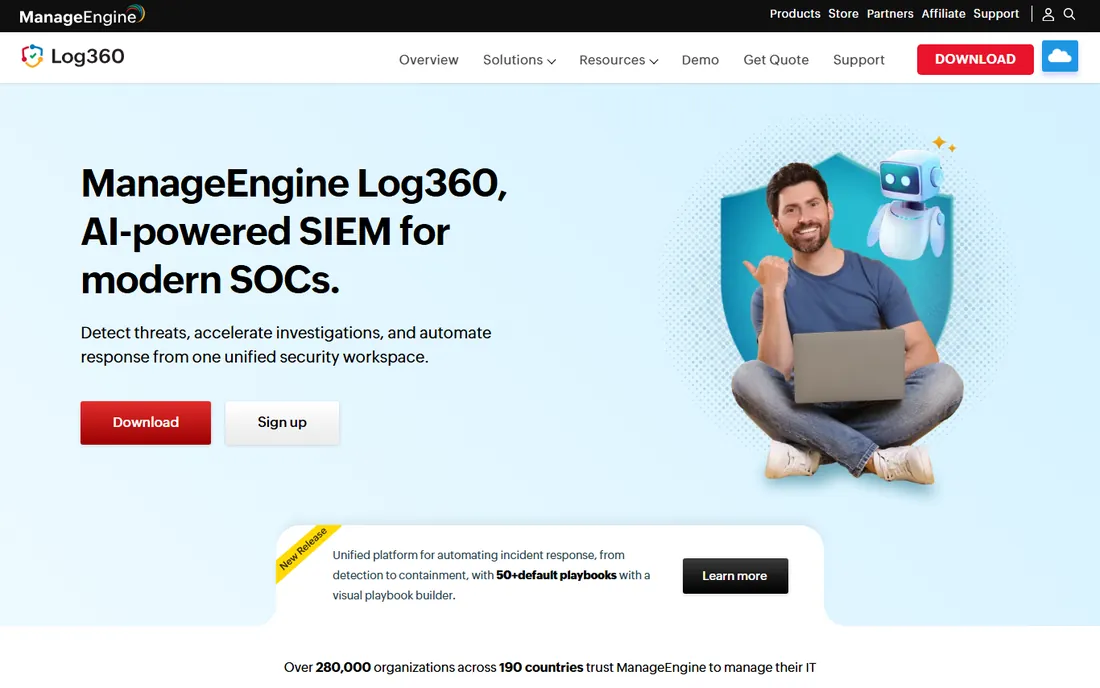
Log360 is the pragmatic pick for mid-market teams that already think in logs. It collects and correlates log data across Active Directory, endpoints, firewalls and applications, then flags deviations from baseline behavior with timelines an investigator can follow. For the classic insider patterns, unusual logon times, mass file access, privilege changes, log evidence is often sufficient.
The price is the attraction. Third parties cite entry pricing under $1,000 a year, which is an order of magnitude below the SIEM vendors on this list. If you already run ManageEngine's AD or endpoint tools, the integration story is straightforward and the learning curve is gentle.
The ceiling is analytics depth. Log360 does not match Gurucul, Exabeam or Securonix on behavioral modeling, and the primarily on-premise architecture needs infrastructure you maintain. Buy it when you need credible insider evidence on a mid-market budget, not when you need the most advanced UEBA on the market.
What we like- Affordable entry point for log-based insider detection
- Builds evidence timelines from log data with baseline deviation alerts
- Fits shops already running ManageEngine tools
Watch out for- Primarily on-premise deployment
- Less machine learning depth than the UEBA leaders
- The interface shows its age
How we chose
We built this list from practitioner comparisons (the anysecura September 2026 breakdown, worldmetrics.org 2026 rankings) plus G2, Gartner Peer Insights and SC Awards recognition from the last year. Every vendor above is an operating company with live customers. Pricing is quote-based across nearly the whole category, so we marked that plainly; Teramind is the exception. We weighted detection methodology, prevention capability, evidence quality and deployment fit. No vendor paid for placement, and we ran no software trials.
Detection is not prevention: buy for your actual risk
The most important distinction in this category is also the least advertised. Most insider threat tools detect: they record activity, score behavior and alert analysts after something looks wrong. Only a few prevent: they warn, block or encrypt before data leaves. Teramind and Cyberhaven can intervene on the endpoint. Proofpoint, Varonis and Microsoft Purview mostly detect and investigate.
Neither is universally better. Prevention suits high-stakes, well-defined risks: source code, customer databases, financial data leaving through known channels, with precise policies to avoid false blocks interrupting real work. Detection suits the larger set of ambiguous risks: the salesperson downloading slightly too much before quitting, the admin with gradually expanding access. Most insider programs need both.
When vendors demo, ask for the intervention story explicitly. What happens at the moment of exfiltration, not ten minutes later in an alert queue? If the answer is a dashboard, you are buying detection. Price and staff it accordingly.
Where to start: the 30-day insider risk pilot
Do not buy a platform before you know your top three insider scenarios. For most companies they are: departing employees taking data, privileged users abusing access, and accidental exposure through oversharing or misaddressed email. Write those down with the data types involved and the systems where they live.
Then pilot against real data for 30 days in your actual environment, not a demo tenant, and measure three things: alerts per week, the fraction that are actionable, and investigation time per alert. A tool generating 500 alerts at 2% actionability trains analysts to ignore everything.
Start monitoring with your highest-risk groups, typically IT admins and departing employees, and expand only when the alert quality holds. Keep HR and legal in the pilot from day one. Insider threat tools touch employment law, and a finding without a lawful process behind it is a liability, not an asset.
Frequently asked questions
How is insider threat detection different from DLP?
DLP enforces rules about where data can go. Insider threat detection looks for risky behavior by trusted users, including behavior that breaks no DLP rule. The two overlap and several tools here do both, but DLP alone will not catch the authorized user doing something unusual.
Do these tools require endpoint agents?
Some do, some do not. Teramind and Cyberhaven need endpoint agents for full capability. Varonis, Exabeam and Securonix work primarily from logs and API data. Microsoft Purview uses the agents and telemetry you already have in M365 and Defender. Agentless is easier to deploy but sees less.
What about employee privacy?
Insider threat tools are among the most sensitive software a company can deploy. Check employment law in every jurisdiction where you operate, involve HR and legal before rollout, and document what is monitored and why. Works councils in the EU can block deployments that lack proper consultation.
How long does deployment take?
Teramind can show value in days. Log-based tools like Log360 take weeks to collect baselines. SIEM-based UEBA platforms typically take one to three months including log onboarding. Behavioral scoring needs 2 to 4 weeks of data to stabilize anywhere.
Can these tools stop an insider attack in progress?
A few can. Teramind and Cyberhaven can block USB transfers, web uploads and other exfiltration channels in real time. Most others detect, alert and record for investigation. If real-time prevention is the requirement, shortlist only the tools that explicitly offer blocking and test it before buying.
Which tool fits a company under 100 people?
Teramind is the most accessible, with per-user pricing from $15 a month and a 5-seat minimum. Microsoft Purview works if you are on M365. ManageEngine Log360 fits log-centric small IT teams. The SIEM-based platforms are generally too heavy below a few hundred employees.
Sources we checked (12)
- https://teramind.co/
- https://www.varonis.com
- https://gurucul.com/
- https://proofpoint.com/
- https://exabeam.com/
- https://securonix.com/
- https://www.microsoft.com/en-us/security/business/microsoft-purview
- https://www.cyberhaven.com
- https://www.manageengine.com/log-management/
- https://www.anysecura.com/blogs/insider-threat-detection-software.html
- https://worldmetrics.org/best/insider-threat-detection-software/
- https://www.scworld.com/news/sc-award-winner-2026-securonix-ueba-best-insider-threat-solution
Is your product missing or out of date?
We review this list regularly. Vendors can request a listing, send updated pricing or ask about featured placement.

Shihab Mia · Founder, Rankite
Shihab has spent more than a decade helping SaaS and e-commerce brands grow through search. He writes Rankite's software buying guides from pricing pages, documentation and public user reviews. More about Shihab.