How we make this list: we compare pricing pages, product documentation and public user reviews. Rankite is independent; if a vendor ever pays for a featured spot, that listing is clearly labeled Partner.
Key takeaways
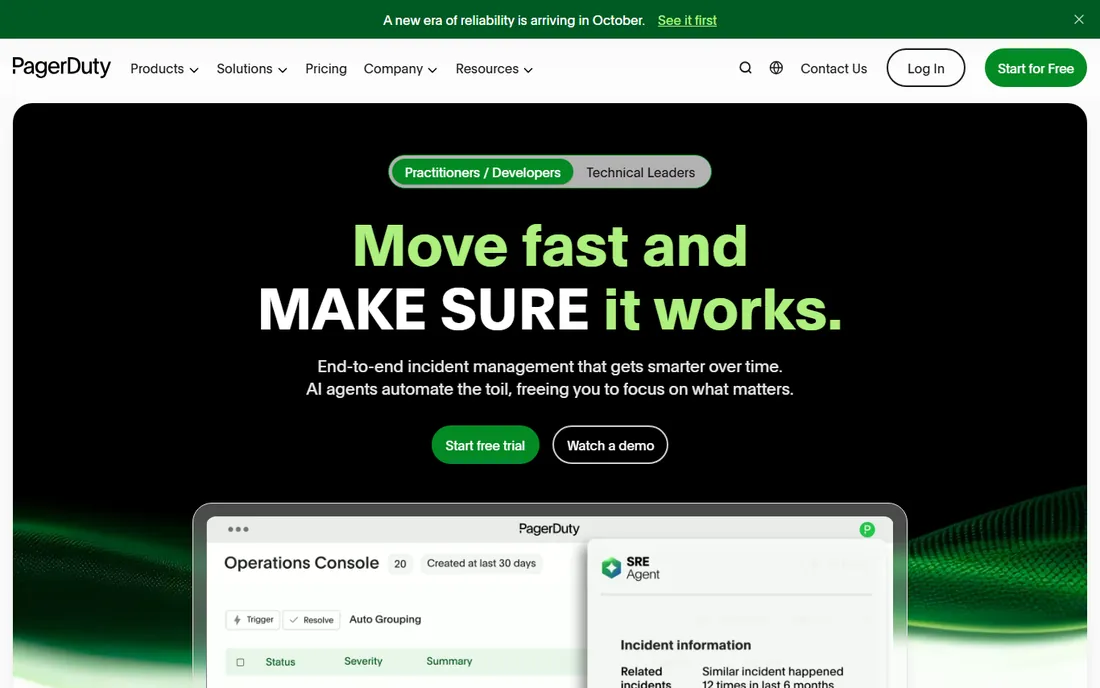
- PagerDuty remains the default for complex on-call rotations, but the Professional plan at $21 per user per month is only the starting point once add-ons enter the picture.
- incident.io and Rootly are the strongest modern picks for Slack-native teams, with incident.io's free Basic tier covering up to 5 users.
- Better Stack and Grafana Cloud IRM are the value plays: Better Stack bundles monitoring with on-call at $29 per responder, and Grafana includes 3 active IRM users free.
- Opsgenie buyers should stop evaluating it: Atlassian ended new sales in June 2025, and Jira Service Management is the official migration path.
Quick comparison
| Tool | Best for | Starting price | Free plan |
|---|
 PagerDuty PagerDuty | Complex on-call at scale | $21 per user per month (billed annually) | Yes (up to 5 users) |
 Jira Service Management Jira Service Management | Atlassian shops and ITSM depth | $20 per agent per month | Yes (up to 3 agents) |
 xMatters xMatters | Regulated enterprises | See website | No (free trial available) |
 incident.io incident.io | Slack-native incident response | $15 per user per month (billed annually) | Yes (Basic, up to 5 users) |
 Rootly Rootly | AI-assisted response in Slack | $20 per user per month | No (free trial available) |
 FireHydrant FireHydrant | Runbooks and retrospectives | $25 per responder per month (billed annually) | Yes (up to 10 responders) |
 Better Stack Better Stack | Monitoring plus on-call in one bill | $29 per responder per month (billed annually) | Yes (free tier with monitors and status pages) |
 BigPanda BigPanda | AIOps for large estates | See website | No |
 Grafana Cloud IRM Grafana Cloud IRM | Grafana-native on-call | $20 per active IRM user per month (above the free tier) | Yes (3 active IRM users per month) |
Is your product missing or out of date?
We review this list regularly. Vendors can request a listing, send updated pricing or ask about featured placement.
The best incident response software for cloud
Starting price$20 per agent per month
Free planYes (up to 3 agents)
If your company already lives in Jira, Jira Service Management is the path of least resistance, and Atlassian has made that explicit by folding it into the Service Collection bundle. On-call scheduling, alert grouping, and post-incident reviews connect directly to the tickets and knowledge base your team already uses. Only agents are billed, so the hundreds of employees filing requests cost nothing.
The Standard plan at $20 per agent per month covers the ITSM basics, but the incident, problem, and change management features that matter for serious response work sit on Premium at about $51.42 per agent per month. The free tier allows 3 agents, fine for a tiny IT team. With Opsgenie end-of-sale in June 2025 and shutdown set for April 2027, JSM is also the official answer for Atlassian loyalists who need a supported on-call future.
What we like- Natural fit with Jira and Confluence
- Per-agent pricing keeps requesters free
- Strong change and asset management on higher tiers
Watch out for- Real incident management depth needs the $51.42 Premium tier
- Per-agent costs scale fast
Starting priceSee website
Free planNo (free trial available)
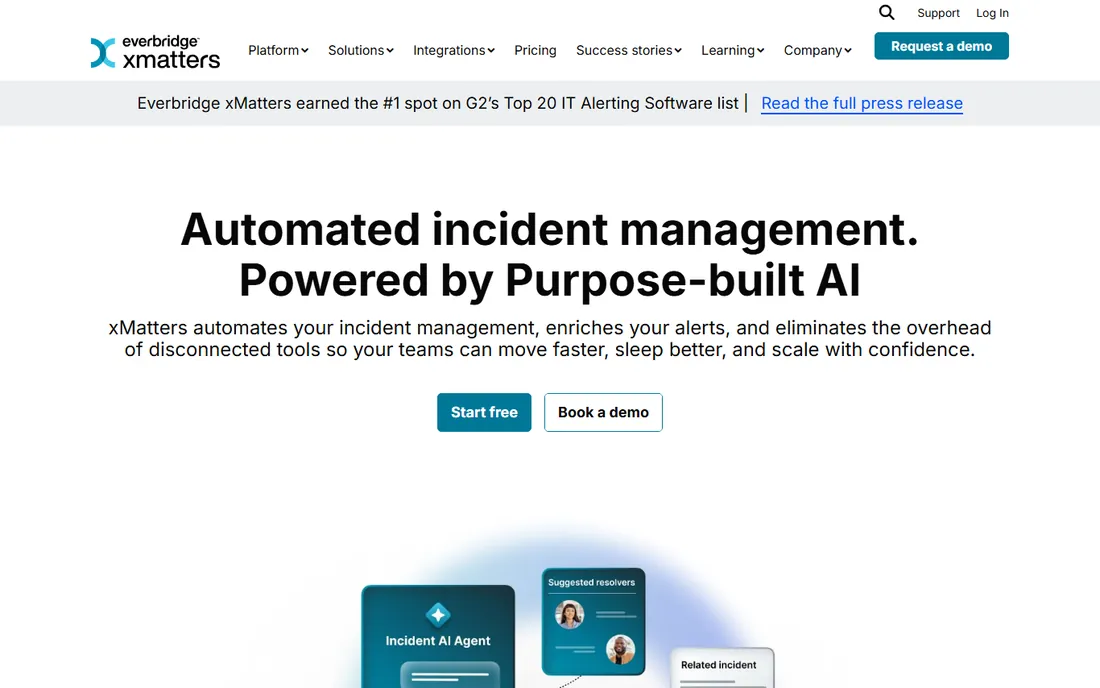
xMatters, now part of Everbridge, targets the buyers PagerDuty's self-serve motion misses: large organizations in regulated industries where every incident action must be logged, audited, and defensible. The Flow Designer builds notification and remediation workflows without code, and the platform's audit readiness is a genuine differentiator in healthcare, financial services, and government.
There is no public pricing and no free plan, which tells you who the buyer is. Expect a sales cycle, a quote based on your scale, and an implementation project rather than a signup form. For a 50-person SaaS startup, that is overkill. For a hospital system or a bank running critical digital services, the compliance posture and enterprise workflow depth justify the process.
What we like- Powerful workflow automation
- Strong compliance and audit trails
- Proven in healthcare and finance
Watch out for- No public pricing
- Implementation is heavier than modern rivals
Starting price$15 per user per month (billed annually)
Free planYes (Basic, up to 5 users)
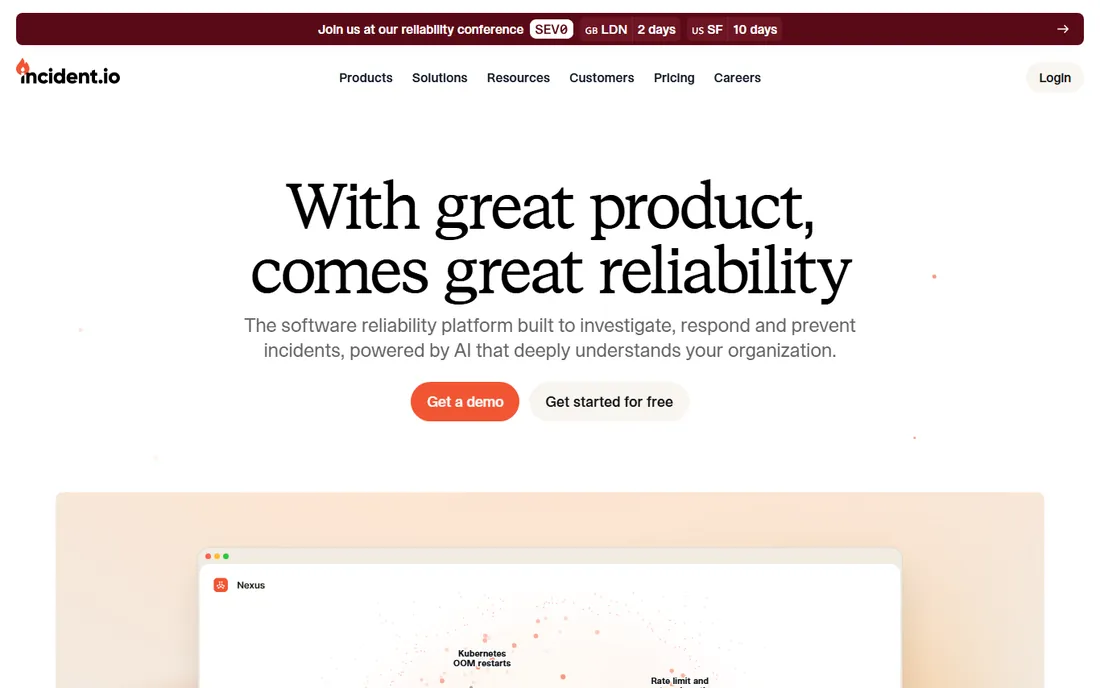
incident.io is the tool engineers actually enjoy using, which sounds soft until you have watched an incident channel descend into chaos. Declaring an incident spawns a structured Slack channel, roles get assigned by slash command, and the AI scribe transcribes the response call into a timeline for the postmortem. Status pages come included on Team and above, which PagerDuty charges extra for.
Read the pricing carefully. Team is $15 per user per month on annual billing ($19 month-to-month) for incident response, but on-call scheduling is a separate add-on at $10 to $20 per user per month, so the real all-in cost is $25 on Team and $45 on Pro. The free Basic tier covers up to 5 users with single-team on-call, enough to run real incidents before paying. For teams of 10 to 100 engineers who live in Slack, it is the most coherent alternative to PagerDuty.
What we like- Incidents run entirely inside Slack
- AI-generated postmortems
- Status pages included on paid tiers
Watch out for- On-call is a paid add-on, not included
- Microsoft Teams support lags the Slack experience
Starting price$20 per user per month
Free planNo (free trial available)
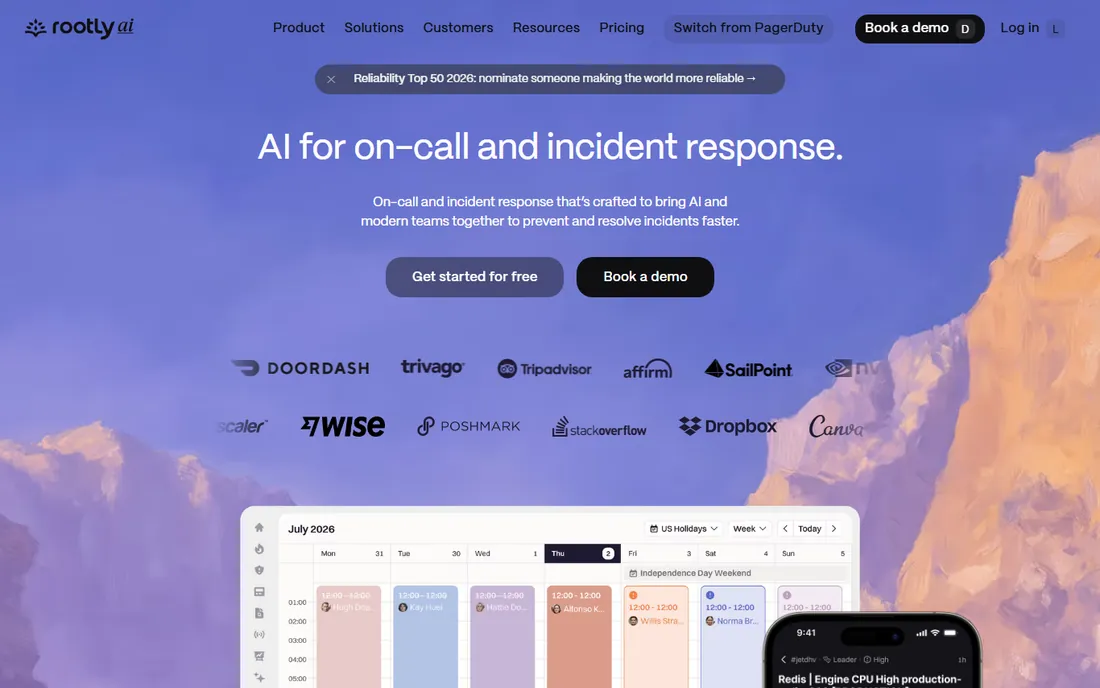
Rootly pitches itself as the AI-native incident platform, and the product backs up the claim better than most. During an incident it surfaces probable root causes with confidence scores, drafts the retrospective from the Slack timeline, and plugs into your IDE through an MCP server so responders can act without context-switching. The workflow automation covers the full lifecycle from detection to the post-incident review.
Pricing is published per product: Incident Response and On-Call Essentials each run $20 per user per month, while the AI SRE product is quote-only. There is no free plan, though a trial is available. Rootly suits teams that want the AI assistance to be proactive, suggesting fixes and next steps, rather than limited to post-incident summaries. The tradeoff versus incident.io is price transparency on AI features against a higher entry cost.
What we like- AI root-cause suggestions with confidence scores
- Excellent runbook automation
- Status pages and retrospectives included
Watch out for- No free plan
- AI SRE tier is quote-only
Starting price$25 per responder per month (billed annually)
Free planYes (up to 10 responders)
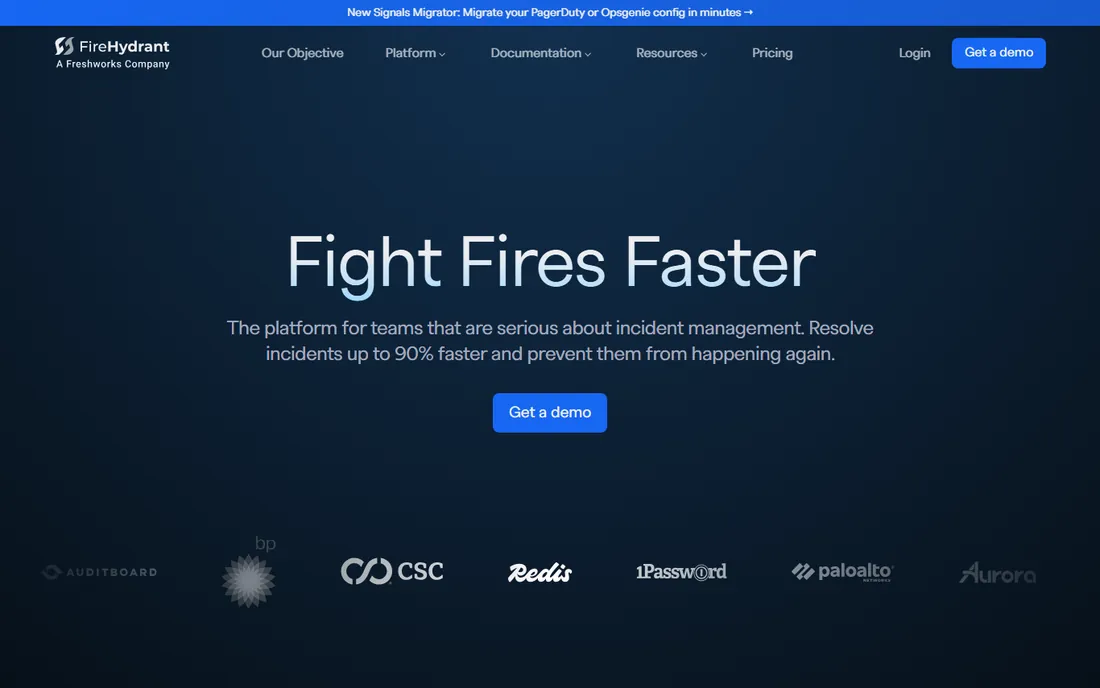
FireHydrant covers the whole incident lifecycle in one platform: on-call alerting, Slack-based response, automated runbooks, status pages, and retrospectives with AI-drafted summaries and action items. The free tier supports up to 10 responders, which is the most generous free on-call allowance on this list, plus a 14-day Pro trial that needs no credit card.
The Pro plan is $25 per responder per month on annual billing, and the AI features require the custom-priced Enterprise tier. One thing to know: Freshworks acquired FireHydrant with the deal closing in January 2026, and the company says accounts, pricing, and access stay the same during the transition. The product is live and buyable today, but buyers signing multi-year deals should ask about the roadmap inside Freshservice.
What we like- Strong automated runbooks
- AI-enhanced retrospectives
- Generous free tier for small teams
Watch out for- AI features sit on the custom-priced Enterprise tier
- Acquired by Freshworks in early 2026
Starting price$29 per responder per month (billed annually)
Free planYes (free tier with monitors and status pages)
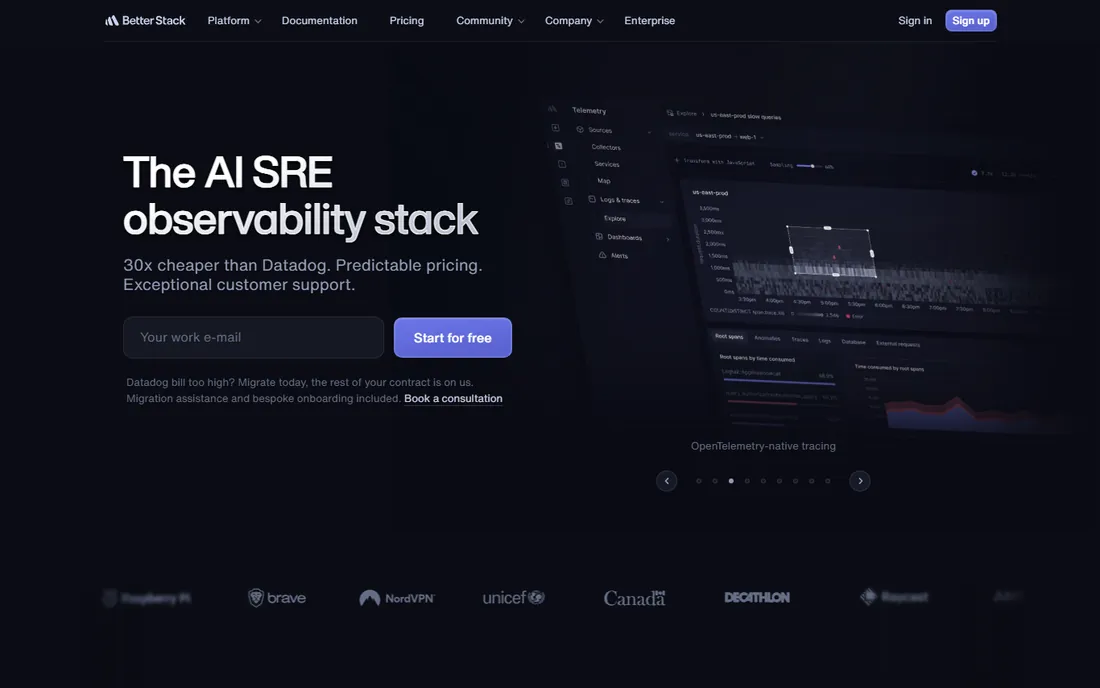
Better Stack takes a different approach from everyone else here: instead of only receiving alerts, it also generates them. Uptime monitors, logs, traces, and status pages live on the same platform as on-call scheduling and Slack-native incident management, so a small team can replace three vendors with one bill. Every responder license includes unlimited phone and SMS alerts, which removes the per-message anxiety that plagues usage-capped plans.
The responder license is $29 per month on annual billing ($34 month-to-month), with telemetry priced separately by data volume. The free tier covers 10 uptime monitors, heartbeats, and a status page with Slack and email alerts, which is enough to monitor a side project properly. Better Stack fits teams that want observability and incident response from one vendor and are tired of per-feature module fees.
What we like- Uptime monitoring, logs, and on-call on one platform
- Unlimited phone and SMS included
- Transparent flat pricing
Watch out for- $34 per responder on monthly billing
- Telemetry costs scale with data volume
Starting priceSee website
Free planNo
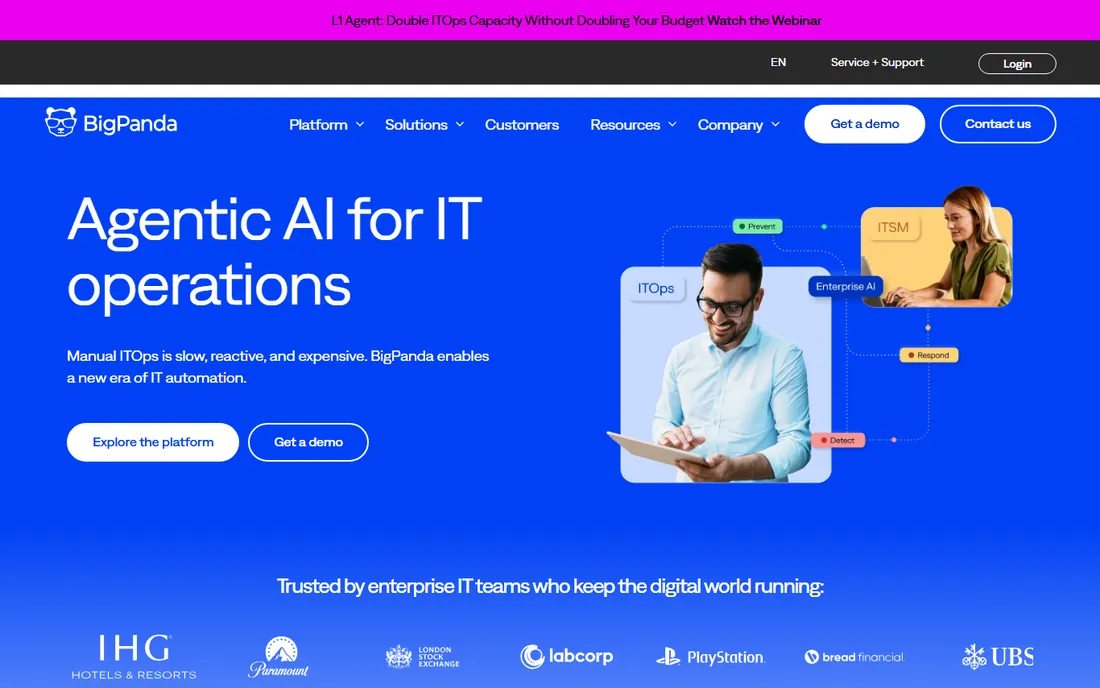
BigPanda is not an on-call tool with AI added; it is an AIOps platform that sits above your monitoring stack and turns alert floods into a handful of actionable incidents. For enterprises running thousands of services across hybrid cloud, its correlation engine and newer agentic AI workflows cut through noise that would drown a human on-call rotation. The ServiceNow integration is deep enough that many buyers use BigPanda as the intelligence layer on top of their ITSM.
Pricing is custom and enterprise-grade, with no public numbers and no free tier. This is a tool for organizations with large NOC or SRE teams and a real alert-volume problem. Smaller teams should look at Better Stack or Grafana instead; BigPanda's value only appears at a scale where alert correlation is itself a full-time problem.
What we like- Best-in-class alert correlation at enterprise scale
- Agentic AI for ITOps workflows
- Strong ServiceNow integration
Watch out for- Custom pricing only
- Overkill below a few hundred engineers
Starting price$20 per active IRM user per month (above the free tier)
Free planYes (3 active IRM users per month)
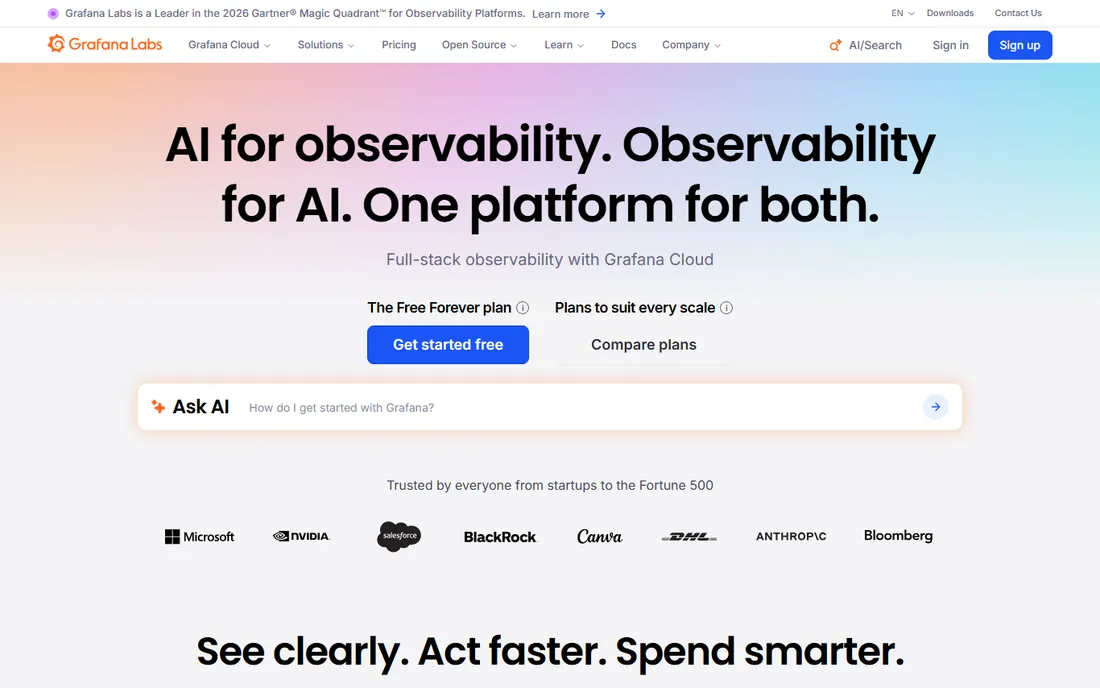
If your team already runs on Grafana Cloud, Grafana's incident response and on-call management removes a vendor from your stack. Alerts flow from your existing dashboards and alert rules straight into on-call schedules, escalation policies, and a mobile app, with no integration project. The pricing model is refreshingly simple: 3 active IRM users free every month, then $20 per active user, and you only pay for users who actually take part in incidents.
The catch is depth. Grafana IRM covers the core on-call and response workflow well but lacks the advanced status pages, stakeholder management, and workflow automation of PagerDuty or incident.io. Note that the old open-source Grafana OnCall project was archived in March 2026; the supported path is Grafana Cloud IRM. For Grafana-centric teams that want one bill and one login, it is the pragmatic choice.
What we like- On-call and incident response inside the observability platform
- Generous free tier
- Open-source roots
Watch out for- Narrower incident feature set than PagerDuty
- Status pages and phone alerting need workarounds
How we chose
We started from the tools that appear most often in 2026 comparisons of incident management and on-call software, then verified each against its own homepage and pricing page in October 2026. Products that were shut down or absorbed were removed: Opsgenie is excluded because Atlassian ended new sales in June 2025 ahead of its April 2027 shutdown, and the standalone Squadcast was excluded because its site now sells SolarWinds Incident Response instead. FireHydrant stays because it continues to operate as its own product after the Freshworks acquisition. Prices below come from vendor pricing pages or from pricing trackers that cite them; where no public price exists, we say so instead of guessing. We claim no hands-on testing. The ranking weighs cloud fit, pricing transparency, free-tier usefulness, and how complete the incident lifecycle is.
What to check before you buy
Start by mapping who actually needs a paid seat. Most tools charge per user, per responder, or per agent, and those are different populations. Your on-call engineers are responders; your whole engineering org might be users; your IT staff are agents. A 200-person company might need 15 responder seats, so a $29-per-responder tool costs far less than a $21-per-user tool at that headcount. Get this count right before comparing sticker prices.
Second, price the add-ons, not the headline plan. PagerDuty's Professional tier looks reasonable until AIOps, status pages, and stakeholder licenses enter the quote. incident.io's Team tier looks cheap until the on-call add-on doubles it. Ask each vendor for the all-in number for your seat count, including the features you identified as requirements: status pages, SSO, audit logs, and phone/SMS volumes.
Third, check the notification economics. Some plans meter SMS and voice minutes, which creates a nasty surprise during a major incident when alert volume spikes. Better Stack includes unlimited phone and SMS per responder; PagerDuty's free tier caps international notifications at 100 a month. If you page across regions, confirm what a busy month costs. Finally, test the mobile app and the Slack or Teams integration during the trial with a simulated incident, because the 3 a.m. experience is the product.
Per-user, per-responder, and per-agent pricing explained
Incident tools use three billing units and they are not interchangeable. Per-user pricing, used by PagerDuty, incident.io, and Rootly, charges for everyone with access, which is simple but punishes broad visibility. Per-responder pricing, used by FireHydrant and Better Stack, charges only for people who take part in on-call rotations and incidents, which is usually the smaller and fairer number. Per-agent pricing, used by Jira Service Management, charges for the staff who work tickets while requesters stay free, which suits IT service desks.
Grafana adds a fourth variant worth understanding: per active user, where you pay only for users who participate in incidents that month. For teams with seasonal incident loads or large groups who rarely get paged, that model can cut the bill substantially. When vendors quote you, convert every proposal to the same denominator: annual cost for your actual responder count, including the add-ons. That single number is the only honest comparison.
Frequently asked questions
What is the best incident response software for a small cloud team?
incident.io on its free Basic tier or Better Stack's free tier both cover small teams without spending anything. Grafana Cloud IRM is free for up to 3 active users and fits teams already on Grafana. When you outgrow free, incident.io Team and Better Stack responder pricing stay reasonable well into the dozens of engineers.
Is Opsgenie still available?
No, not for new customers. Atlassian ended Opsgenie sales on June 4, 2025, and the service shuts down on April 5, 2027. Existing customers should plan migration now; Atlassian points them to Jira Service Management, and incident.io and PagerDuty both publish migration guides.
How much does PagerDuty actually cost?
The Professional plan lists at $21 per user per month on annual billing, with a free tier for up to 5 users. The real cost depends on add-ons: AIOps, status pages, stakeholder licenses, and analytics are priced separately, and most production deployments we see discussed publicly land well above the base rate. Get an all-in quote before budgeting.
Do I need a separate status page tool?
Not necessarily. incident.io includes status pages on paid tiers, Better Stack bundles them with responder licenses, and Rootly and FireHydrant include them too. PagerDuty and Jira Service Management charge extra or reserve them for higher tiers. If public status communication matters to you, treat it as a line item in the comparison.
What is the difference between on-call software and incident response software?
On-call software handles alerting, schedules, and escalations: getting the right human paged. Incident response software manages what happens after: coordination, communication, runbooks, and postmortems. Most tools on this list do both, but incident.io famously splits them, with on-call as a paid add-on to its response platform.
Can I manage incidents from Slack or Teams?
Yes with most of these tools. incident.io and Rootly are built around Slack, with Teams support that varies in maturity. PagerDuty, FireHydrant, and Better Stack all offer Slack-native incident channels. xMatters and BigPanda integrate with chat tools but are less chat-centric by design.
Sources we checked (9)
- https://www.pagerduty.com/pricing/
- https://www.atlassian.com/software/jira/service-management/pricing
- https://xmatters.com/
- https://incident.io/pricing
- https://rootly.com/pricing
- https://firehydrant.com/pricing
- https://betterstack.com/pricing/
- https://www.bigpanda.io/
- https://grafana.com/products/cloud/irm/
Is your product missing or out of date?
We review this list regularly. Vendors can request a listing, send updated pricing or ask about featured placement.

Shihab Mia · Founder, Rankite
Shihab has spent more than a decade helping SaaS and e-commerce brands grow through search. He writes Rankite's software buying guides from pricing pages, documentation and public user reviews. More about Shihab.