How we make this list: we compare pricing pages, product documentation and public user reviews. Rankite is independent; if a vendor ever pays for a featured spot, that listing is clearly labeled Partner.
Key takeaways
- The default shortlist: PagerDuty (from $21/user/month annual, free for 5 users) for the proven standard, Squadcast ($9/user/month) for the same job at half the price, xMatters (free for 10 users) for communication-driven response.
- Slack-native teams should compare Rootly ($20/user/month) and FireHydrant ($25/responder/month, free for 10 responders): both run incidents where your engineers already are.
- Opsgenie is end-of-life and shuts down April 5, 2027: do not buy it, and plan migration now if you are on it.
- Per-user pricing punishes large responder bases; xMatters and FireHydrant have the most generous free tiers for small teams.
The best incident management software
An hour of downtime costs the average mid-size SaaS company more than a year of any tool on this list. That is the entire business case for incident management software: the right alert reaching the right engineer in two minutes instead of twenty. The eight platforms below cover on-call scheduling, alert routing and incident response, from free tiers for tiny teams to enterprise suites. One of them is dying, one was just acquired, and the price gaps are enormous, so the details matter.

#2
Opsgenie
Best for: Existing customers planning migration (not for new buyers)
Visit atlassian.com
Starting priceSee website (product is end-of-life; no new sales)
Free planNo (product is end-of-life)
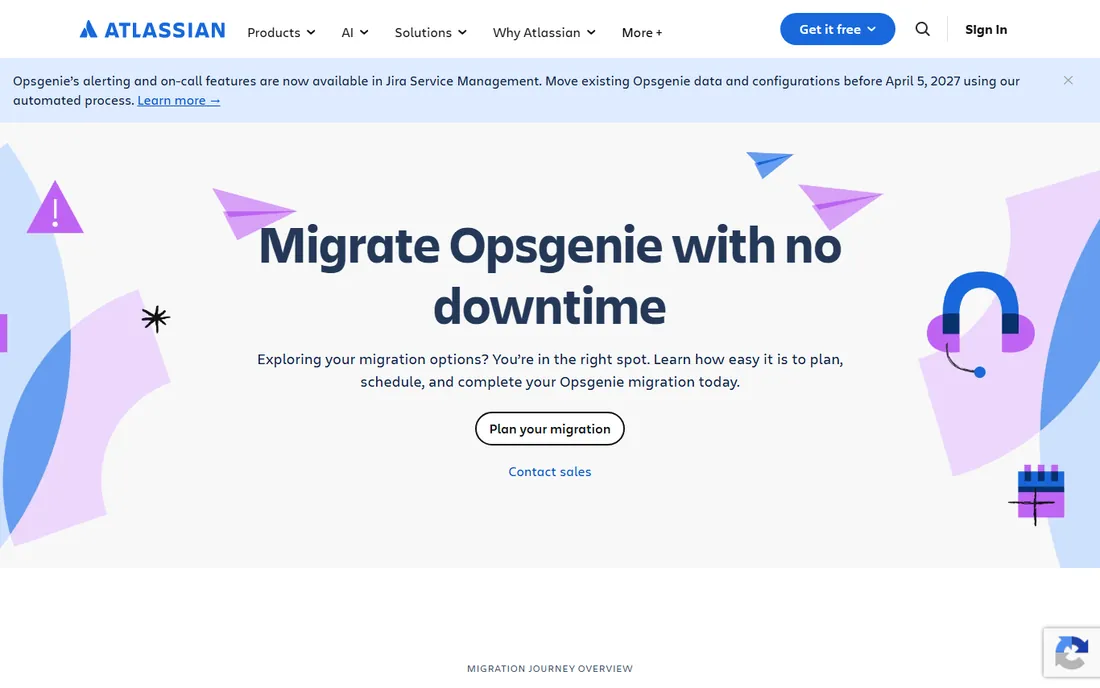
Opsgenie is on this list as a warning, not a recommendation. Atlassian ended sales in June 2025 and the product shuts down permanently on April 5, 2027. No new customers are accepted, and no new deployments should start. If you are evaluating incident tools today, skip this entry entirely and pick from the other seven.
If you are an existing customer, the situation is manageable but urgent. Atlassian provides a guided migration path to alerting in Jira Service Management, and the Jira integration that made Opsgenie attractive carries over. Plan the migration as a project now, not in March 2027: alert routing, schedules and integrations all need rebuilding and testing. The shutdown date is hard, and last-minute migrations during an incident are how outages get worse.
What we like- Deep Jira and Atlassian ecosystem integration
- Flexible alert routing and on-call schedules
- Atlassian provides a guided migration path
Watch out for- Shuts down permanently April 5, 2027
- Migration to Jira Service Management alerting requires project effort
#3
Splunk On-Call
Best for: Teams already invested in Splunk monitoring
Visit splunk.com
Starting priceSee website (custom quote)
Free planFree trial (yes)
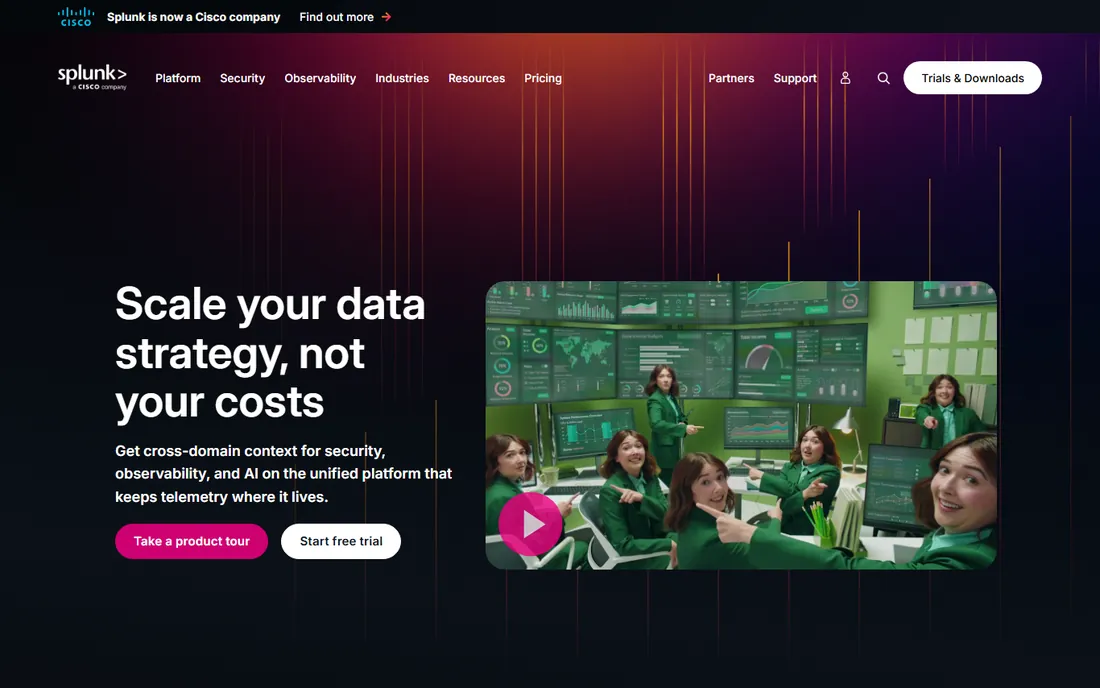
Splunk On-Call (formerly VictorOps) makes sense in exactly one situation: your monitoring already lives in Splunk. The incident timeline is genuinely good for post-incident review, and the native coupling with Splunk data means alerts carry context that generic paging tools cannot. Routing and escalation rules are flexible enough for complex on-call rotations.
For everyone else, the quote-only pricing and Splunk-shaped product are friction without payoff. Standalone buyers face an enterprise sales process for a tool designed around an ecosystem they do not have. If Splunk is your observability platform, evaluate it alongside PagerDuty. If it is not, the other tools on this list get you running faster and cheaper.
What we like- Strong incident timeline view for post-incident review
- Native integration with the Splunk observability ecosystem
- Flexible routing and escalation rules
Watch out for- Pricing is not published
- Sales-led process
- Best value only if you already use Splunk

#4
xMatters
Best for: IT and DevOps teams wanting communication-driven incident management
Visit xmatters.com
Starting priceFree (up to 10 users); Starter $16/user/month
Free planYes (Free, up to 10 users)
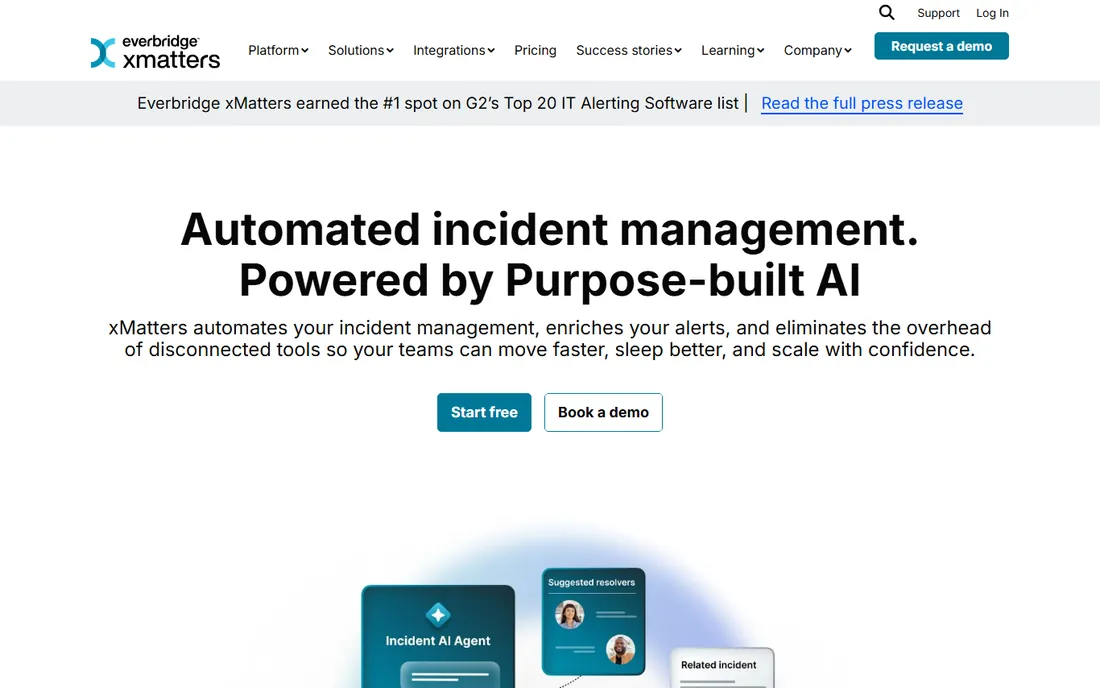
xMatters approaches incidents as a communication problem first. Alerts reach responders across push, voice, SMS and email with flexible targeting, and workflow automation can drive the response process rather than just paging someone. The free tier for up to 10 users is the most generous in the category, and Starter at $16 a user is priced below PagerDuty.
The trade is complexity. Building workflows takes more effort than simpler paging tools, and the interface has a learning curve that shows in user reviews. Advanced integrations and analytics sit on higher tiers. Setup ranges from days for basic alerting to weeks for automated workflows. If your incidents need coordinated communication across teams and channels, xMatters fits. If you just need reliable paging, simpler tools get you there faster.
What we like- Free tier covers small teams with up to 10 users
- Flexible multi-channel notifications across push, voice, SMS and email
- Workflow automation for incident response processes
Watch out for- Interface and configuration have a learning curve
- Pricing tiers gate advanced integrations and analytics

#5
Squadcast
Best for: Startups and mid-size engineering teams wanting PagerDuty-style alerting at lower cost
Visit squadcast.com
Starting priceFree (5 users); Pro $9/user/month billed annually ($12 monthly)
Free planYes (Free, 5 users); free trial (14 days)
Squadcast is the value play against PagerDuty: the same core alerting and on-call workflows at $9 a user instead of $21, with status pages and runbooks included on paid tiers rather than sold as add-ons. The interface is modern, the SRE-focused workflows are thoughtful, and the free tier for 5 users lets a small team run production on-call for nothing.
The gaps are ecosystem and proof. The integration catalog is smaller, so verify that your monitoring stack connects before committing, and the vendor is newer with less enterprise track record. For a startup or mid-size team that finds PagerDuty's pricing hard to justify, Squadcast is the rational alternative. For a large enterprise with exotic integrations, PagerDuty's catalog still wins.
What we like- Affordable per-user pricing that undercuts PagerDuty significantly
- Built-in status pages and runbooks on paid tiers
- Modern UI with SRE-focused workflows
Watch out for- Smaller integration catalog than PagerDuty
- Newer vendor with less enterprise proof
Starting price$20/user/month (Incident Response Essentials); 14-day trial
Free planFree trial (14 days); no free plan
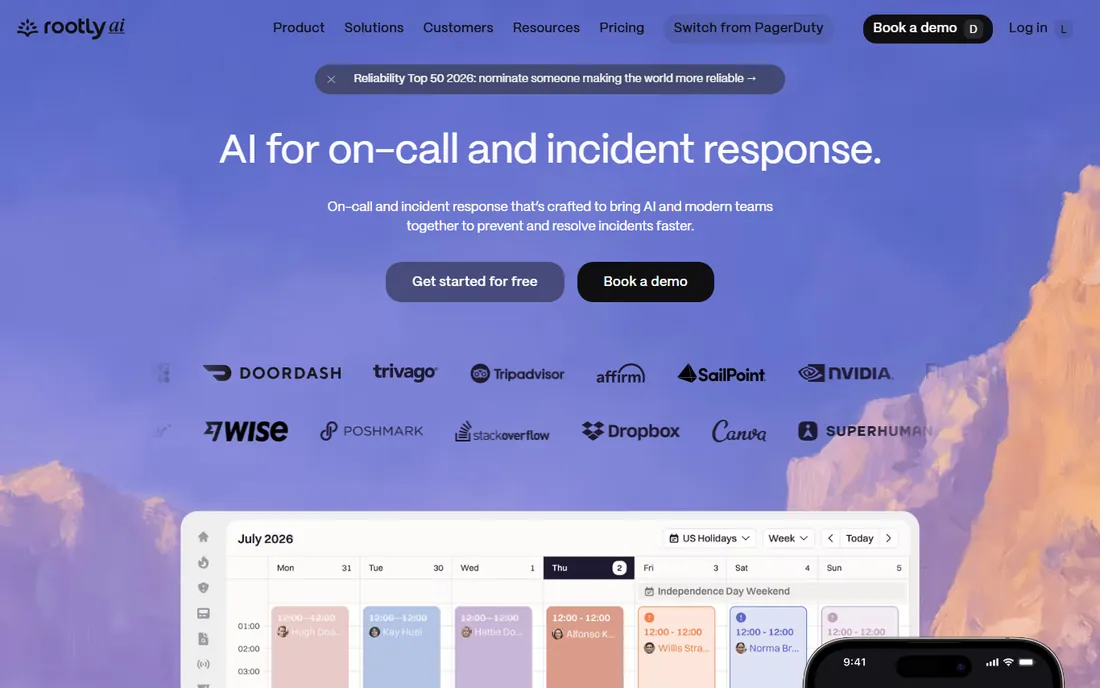
Rootly runs incidents where your engineers already work. Declaring an incident spins up a Slack channel with roles, timelines and retrospective docs automated, which removes the context-switching that slows response. The automation depth is the selling point: the busywork of incident command happens without anyone remembering to do it. Startups get up to 50% off, which softens the $20 per user price.
The Slack dependency is absolute. Teams on Microsoft Teams or Discord get a fraction of the value, so this is a Slack-shops-only recommendation. Per-user pricing also adds up with large responder bases. Setup is genuinely quick: install the Slack app and you are running incidents in minutes. If your team lives in Slack, Rootly is the most natural fit on this list.
What we like- Slack-native incident management keeps responders in chat
- Strong automation for incident roles, timelines and retrospectives
- Startup program discounts up to 50%
Watch out for- Slack-centric design is a drawback for non-Slack teams
- Per-user pricing adds up for large responder bases

#7
Blameless
Best for: SRE-minded organizations focused on learning from incidents
Visit blameless.com
Starting price$20/user/month (Startup); Pro $40/user/month
Free planNo (no free plan; trial terms unverified)
Blameless is built around the idea that incidents are for learning. The retrospective workflow is the deepest on this list, and SLO tracking tied to incident data connects reliability work to business priorities in a way paging tools do not. For organizations adopting SRE practices, the methodology baked into the product is genuinely valuable.
The commercial side is the weakest here: no free plan, unclear trial terms and quote-adjacent pricing that requires talking to sales for straight answers. At $20 to $40 per user, large teams pay significantly. If your goal is reducing alert noise and paging faster, buy a paging tool. If your goal is building a learning culture around reliability, Blameless is purpose-built for it.
What we like- Strong incident retrospectives and reliability insights
- SLO tracking tied to incident data
- Good fit for SRE culture adoption
Watch out for- No free plan and trial terms are unclear
- Per-user pricing can be steep for large teams

#8
FireHydrant
Best for: SaaS engineering teams wanting automated incident response in Slack
Visit firehydrant.com
Starting priceFree tier (up to 10 responders); Pro $25/responder/month billed annually
Free planYes (Free, up to 10 responders); free trial (14 days, no card)
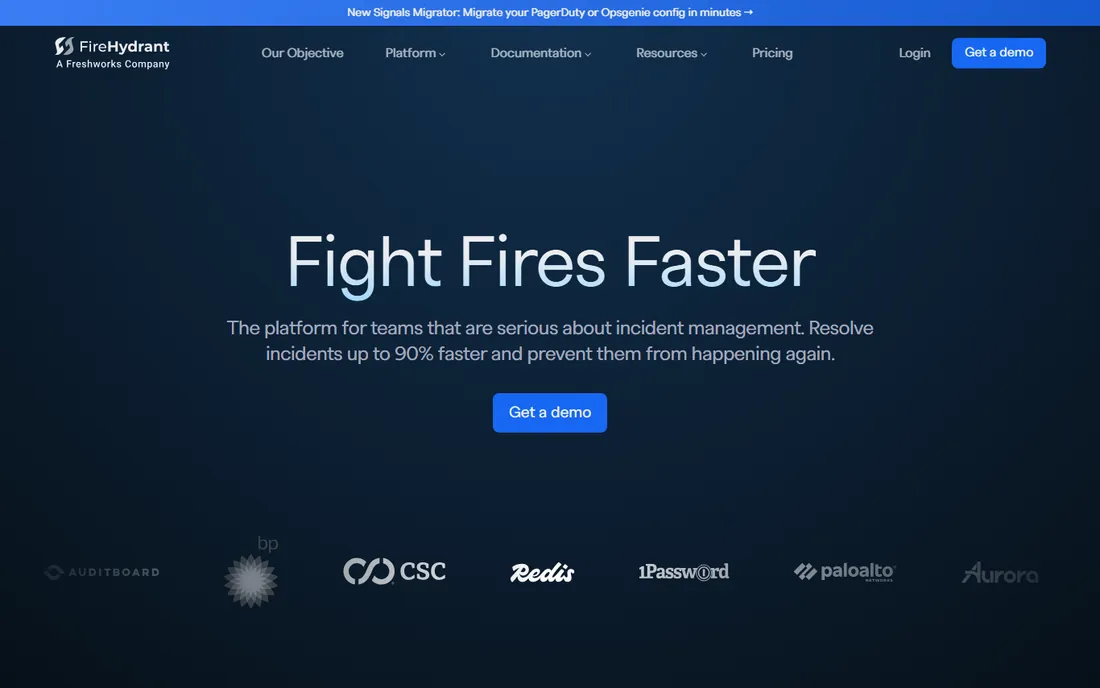
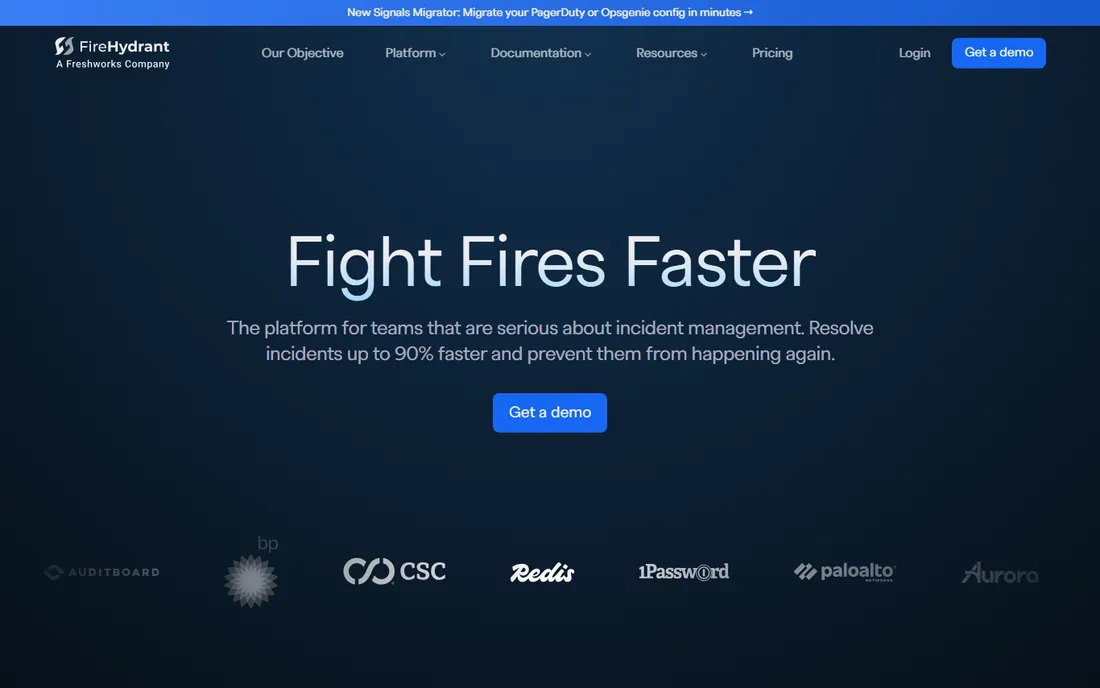
FireHydrant automates the incident lifecycle in Slack: declare, coordinate, resolve, retrospect, with timelines built automatically along the way. The free tier for up to 10 responders is generous enough to run a small team's entire incident process at $0, and Pro at $25 per responder adds the deeper automation. The 14-day trial needs no card.
The caveat is the Freshworks acquisition, which closed in January 2026. Acquisitions create roadmap uncertainty, so confirm pricing stability and product direction with the vendor before committing long-term. AI-assisted retrospectives are Enterprise-only. For a SaaS team that wants Slack-native incident automation and likes the free tier as a starting point, FireHydrant is worth the evaluation, with eyes open on the acquisition.
What we like- Free tier covers small responder teams
- Strong incident lifecycle automation in Slack
- AI-assisted retrospectives and insights on higher tiers
Watch out for- AI features gated to Enterprise
- Acquisition by Freshworks creates roadmap uncertainty
Quick comparison
| Tool | Best for | Starting price | Free plan |
|---|
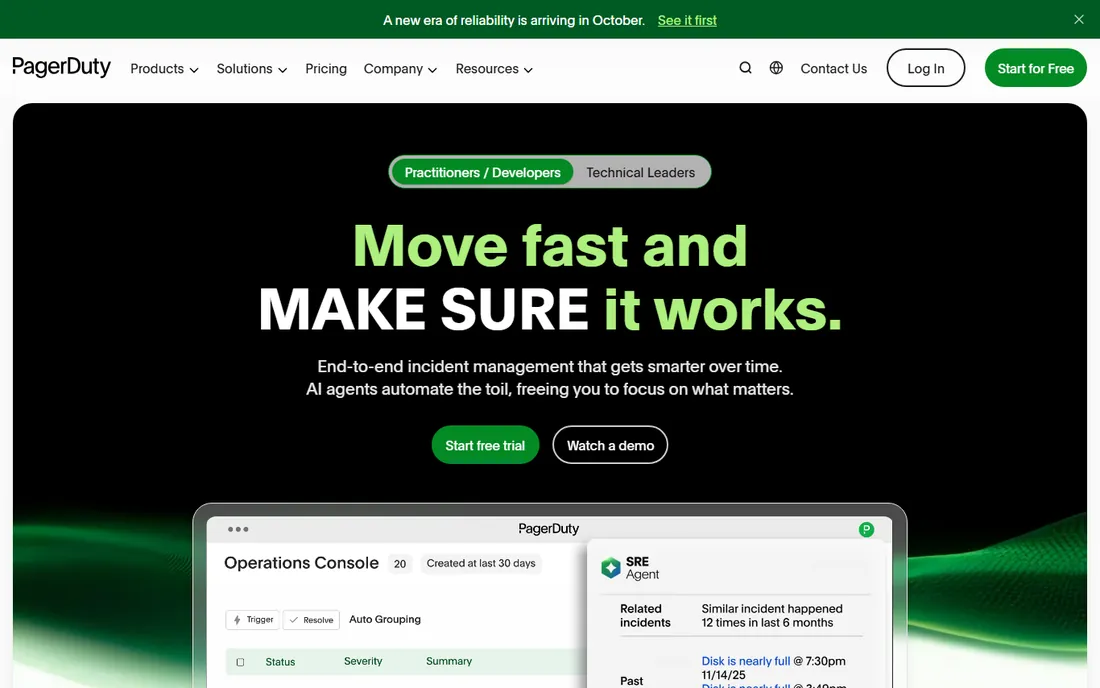
 PagerDuty PagerDuty | Engineering organizations that need dependable alerting and on-call management | Free (5 users); Professional $25/user/month monthly ($21 annual) | Yes (Free, 5 users) |
| Opsgenie | Existing customers planning migration (not for new buyers) | See website (product is end-of-life; no new sales) | No (product is end-of-life) |
| Splunk On-Call | Teams already invested in Splunk monitoring | See website (custom quote) | Free trial (yes) |
| xMatters | IT and DevOps teams wanting communication-driven incident management | Free (up to 10 users); Starter $16/user/month | Yes (Free, up to 10 users) |
| Squadcast | Startups and mid-size engineering teams wanting PagerDuty-style alerting at lower cost | Free (5 users); Pro $9/user/month billed annually ($12 monthly) | Yes (Free, 5 users); free trial (14 days) |
 Rootly Rootly | Engineering teams that live in Slack | $20/user/month (Incident Response Essentials); 14-day trial | Free trial (14 days); no free plan |
| Blameless | SRE-minded organizations focused on learning from incidents | $20/user/month (Startup); Pro $40/user/month | No (no free plan; trial terms unverified) |
| FireHydrant | SaaS engineering teams wanting automated incident response in Slack | Free tier (up to 10 responders); Pro $25/responder/month billed annually | Yes (Free, up to 10 responders); free trial (14 days, no card) |
Is your product missing or out of date?
We review this list regularly. Vendors can request a listing, send updated pricing or ask about featured placement.
Frequently asked questions
How much does incident management software cost?
For a 20-person engineering team, expect $0 to $500 a month: PagerDuty free tier, xMatters free tier and FireHydrant free tier all cover small teams at $0. Squadcast Pro runs $180, PagerDuty Professional $420, Rootly $400. Blameless and FireHydrant Pro sit in the $400 to $500 band. Status pages, AIOps and AI features are the usual paid add-ons.
What is the difference between on-call alerting and incident management?
On-call alerting (PagerDuty, Squadcast, xMatters) routes the right alert to the right person fast. Incident management (Rootly, FireHydrant, Blameless) coordinates the response once the incident is declared: roles, timelines, communication and retrospectives. Most teams need both, which is why the categories blur. Buy alerting first; add response coordination when incidents regularly involve more than two people.
We are on Opsgenie. What should we do?
Plan migration now. The product shuts down April 5, 2027, and rebuilding alert routing, schedules and integrations takes longer than teams expect. Atlassian's guided path leads to Jira Service Management alerting, which suits Atlassian-heavy shops. Everyone else should evaluate PagerDuty, Squadcast or xMatters as replacements. Do not wait until Q1 2027.
Do we need a paid plan or is a free tier enough?
Free tiers from PagerDuty (5 users), xMatters (10 users), Squadcast (5 users) and FireHydrant (10 responders) cover genuine production on-call for small teams. You outgrow them when you need advanced integrations, status pages, AI features or more responders. Start free, and upgrade when a specific missing feature blocks you, not before.
Slack-native vs. standalone: which is better?
It depends where your engineers are during incidents. If everyone is already in Slack, Rootly and FireHydrant remove context-switching and automate the response workflow. If your team spans Slack, Teams, email and phones, a standalone tool like PagerDuty or xMatters with multi-channel notifications reaches everyone. Match the tool to your actual communication habits.
Per-user vs. per-responder pricing
Read the pricing unit carefully, because it changes the bill. PagerDuty, Squadcast, xMatters and Rootly charge per user: everyone with a login counts, including managers who only view dashboards. FireHydrant charges per responder: only the people who actually respond to incidents. For a 50-person engineering org where 15 people are on rotation, per-responder pricing can cut the bill by two-thirds.
Then add the free tier math. Four vendors on this list cover small teams free, which means a startup can run production incident management at $0 for a long time. The paid tiers kick in for integrations, automation depth and AI features. When you compare, price your actual responder count, not your engineering headcount, and check whether the free tier already covers you.
The Opsgenie migration: what to do now
Atlassian's shutdown of Opsgenie on April 5, 2027 is the biggest forced migration in this category's history, and it deserves its own plan. Start with an inventory: every integration, escalation policy, schedule and automation currently in Opsgenie. Most teams discover orphaned integrations and schedules nobody owns, which is useful cleanup regardless.
Next, choose the target. Atlassian shops should take the guided path to Jira Service Management alerting. Everyone else should run a bake-off between PagerDuty (safest), Squadcast (cheapest) and xMatters (best for complex communication). Run the new tool in parallel for at least one full on-call rotation before cutting over, and migrate during a quiet period, never during a launch. The teams that suffer are the ones that start in February 2027.
How we chose
We started with the categories buyers actually search: incident management software, on-call alerting, and incident response tools. For each candidate we opened the vendor's own pricing page, checked plan names and prices against public reviews on G2 and Capterra and practitioner discussion on Reddit, and compared feature lists, alerting depth and team-size fit. Where a price could not be verified on the vendor's page we wrote "See website" rather than guessing. The shortlist mixes paging standards with Slack-native response tools, because a five-person startup and a 500-person platform team are not buying the same thing.
Sources we checked (10)
- https://www.pagerduty.com/pricing/
- https://www.atlassian.com/software/opsgenie/pricing
- https://www.splunk.com/en_us/products/on-call.html
- https://www.xmatters.com/pricing/
- https://www.squadcast.com/pricing/
- https://www.rootly.com/pricing/
- https://www.blameless.com/pricing/
- https://www.firehydrant.com/pricing/
- https://www.g2.com/categories/incident-management
- https://www.capterra.com/incident-management-software/
Is your product missing or out of date?
We review this list regularly. Vendors can request a listing, send updated pricing or ask about featured placement.

Shihab Mia · Founder, Rankite
Shihab has spent more than a decade helping SaaS and e-commerce brands grow through search. He writes Rankite's software buying guides from pricing pages, documentation and public user reviews. More about Shihab.