How we make this list: we compare pricing pages, product documentation and public user reviews. Ratings come from G2, Capterra or Trustpilot, with the date we checked them.
Key takeaways
- Cloudinary is the best all-around pick for image and video management with automatic optimization and transformation.
- imgix suits developers who want real-time image processing through URL parameters.
- ImageKit fits teams that want optimization, CDN delivery, and digital asset management in one platform.
- TinyPNG is the simplest choice for quick compression of PNG, JPEG, WebP, and AVIF files.
- ShortPixel is the best value for WordPress sites that need bulk compression with flexible pricing.
Quick comparison
| Tool | Best for | Starting price | Free plan |
|---|
 Cloudinary Cloudinary | all-around media management and optimization | See website | See website |
 ImageKit ImageKit | optimization plus CDN and asset management | See website | See website |
 TinyPNG TinyPNG | simple fast compression | See website | See website |
 Kraken.io Kraken.io | API-driven bulk optimization | See website | See website |
 ShortPixel ShortPixel | WordPress bulk compression value | See website | See website |
 Imagify Imagify | WordPress image optimization simplicity | See website | See website |
 Sirv Sirv | image CDN with zoom and 360 features | See website | See website |
 imgix imgix | developer-friendly real-time processing | See website | See website |
Is your product missing or out of date?
We review this list regularly. Vendors can request a listing, send updated pricing or ask about featured placement.
The best image optimization software
Starting priceSee website
Free planSee website

Cloudinary is the most complete media platform on this list. Upload images and videos once, then deliver automatically optimized versions: the right format (WebP, AVIF), the right size for each device, with smart cropping and compression applied on the fly. The DAM features organize large media libraries, and AI tools handle tagging and background removal.
The pricing reflects the platform scope, scaling with transformations and bandwidth. Teams that just need compression will find it more than necessary. But for media-heavy sites and apps that need optimization, transformation, and management together, Cloudinary is the standard.
What we like- Automatic format selection and responsive delivery
- Full digital asset management
- AI features like smart cropping and tagging
Watch out for- Pricing scales with transformations and bandwidth
- Platform breadth can overwhelm simple needs
Starting priceSee website
Free planSee website
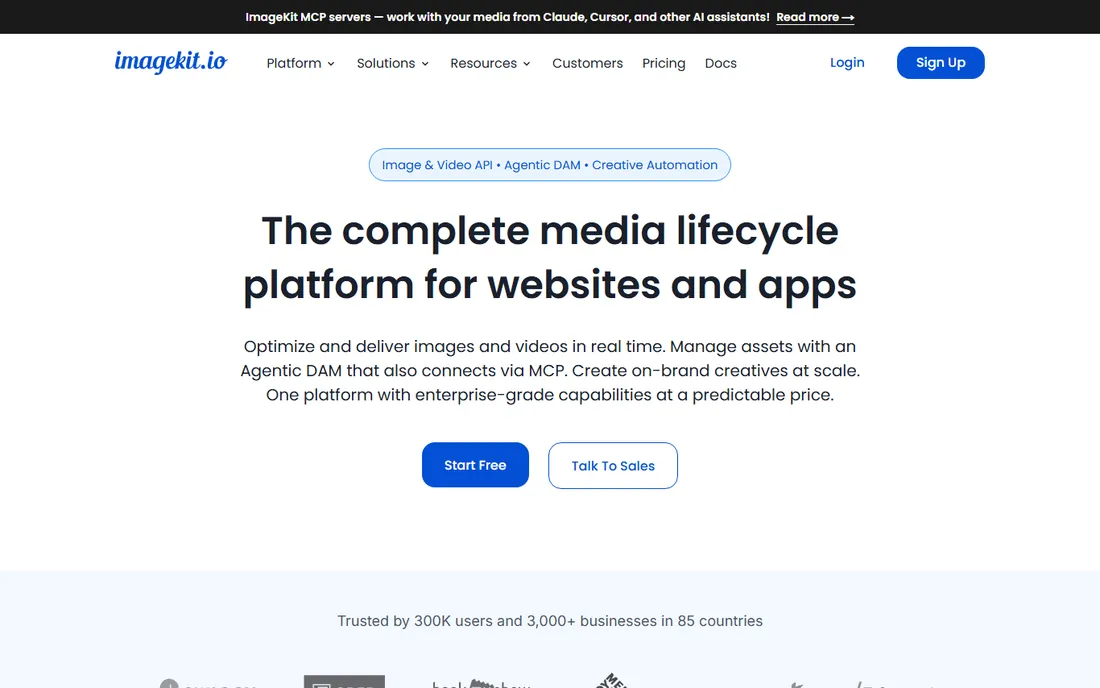
ImageKit combines real-time image optimization with a global CDN and asset management. Images are optimized and transformed on the fly through URL parameters, cached at edge locations worldwide, and managed in a central library. The free tier is generous enough for small sites to run production workloads.
Cloudinary leads on advanced DAM and AI features. But ImageKit's combination of optimization, delivery, and management at competitive pricing makes it the value alternative. Teams that want one vendor for the image pipeline without enterprise budgets should compare it directly against Cloudinary.
What we like- Real-time optimization with global CDN
- URL-based transformations
- Generous free tier
Watch out for- Advanced DAM features trail Cloudinary
- Smaller ecosystem
Starting priceSee website
Free planSee website
TinyPNG (by Tinify) made smart lossy compression famous: drag images onto the site and get files 50-80% smaller with no visible quality loss. Developers get an API with SDKs for major languages, WordPress users get a plugin, and the Tinify CDN handles delivery. The free tier covers casual use generously.
It is a compression tool, not a media platform. There is no URL-based transformation engine or advanced DAM. But for the core job of making image files smaller with minimum fuss, TinyPNG's quality-to-simplicity ratio remains unmatched.
What we like- Dead-simple compression with excellent quality
- Supports WebP, PNG, JPEG, and AVIF
- API and WordPress plugin available
Watch out for- Primarily a compressor, not a full optimization platform
- No built-in CDN transformation
Starting priceSee website
Free planSee website
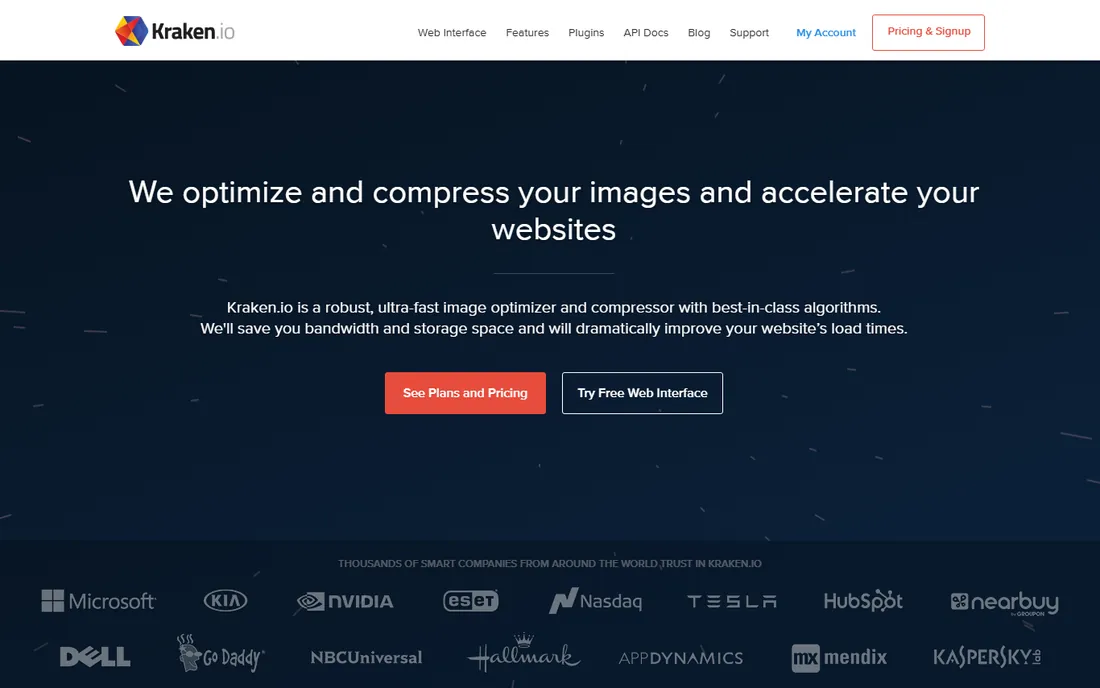
Kraken.io offers API-driven image optimization with a web interface for manual jobs and plugins for WordPress and Magento. Developers integrate compression into their workflows, choosing lossy or lossless modes, and the service handles bulk processing quickly. A free account with testing quota makes evaluation easy.
The product feels less modern than newer competitors, and side-by-side quality comparisons slightly favor TinyPNG. But Kraken's API reliability and straightforward pricing keep it in production use across many sites. A solid workhorse for bulk compression pipelines.
What we like- Fast API for bulk compression
- WordPress and Magento plugins
- Lossy and lossless modes
Watch out for- Interface and brand feel dated
- Optimization quality trails TinyPNG slightly
Starting priceSee website
Free planSee website
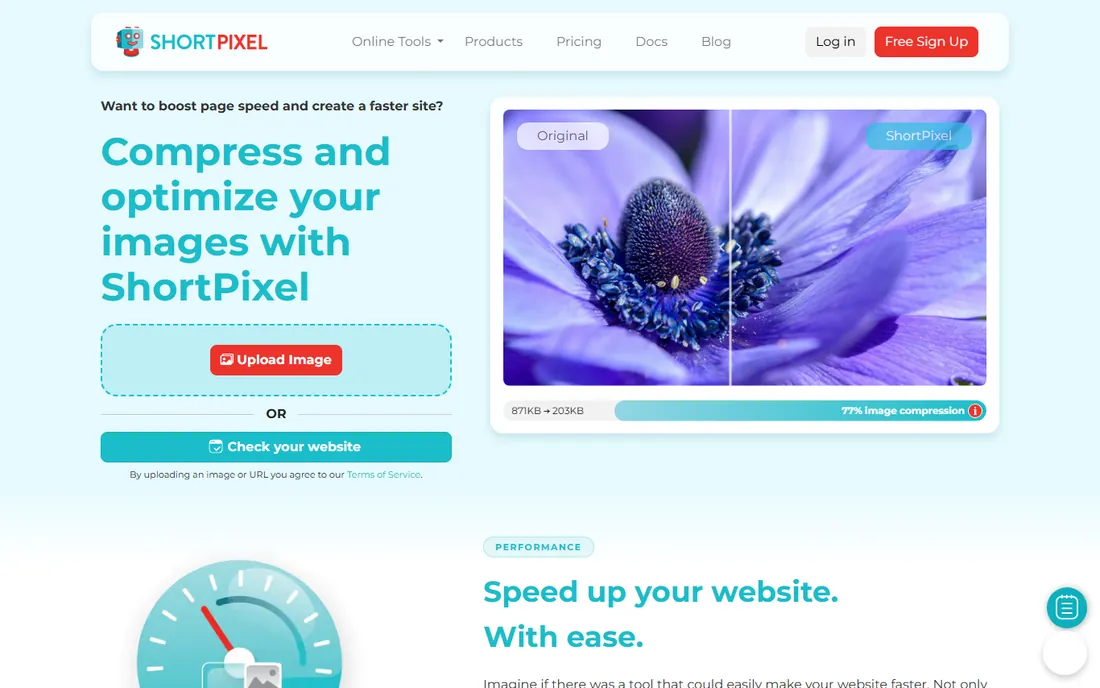
ShortPixel's WordPress plugin is one of the most popular image optimizers in the ecosystem, compressing existing media libraries in bulk and new uploads automatically. Three compression modes balance quality and size, WebP and AVIF conversion is built in, and the credit pricing includes one-time purchases, not just subscriptions.
The credit model takes a moment to understand, and advanced CDN delivery costs extra. But for WordPress site owners, the combination of plugin quality, compression results, and pricing flexibility makes ShortPixel the default recommendation.
What we like- Excellent WordPress plugin with bulk optimization
- Lossy, glossy, and lossless modes
- Flexible credit pricing including one-time plans
Watch out for- Credit system can confuse
- CDN features are add-ons
Starting priceSee website
Free planSee website
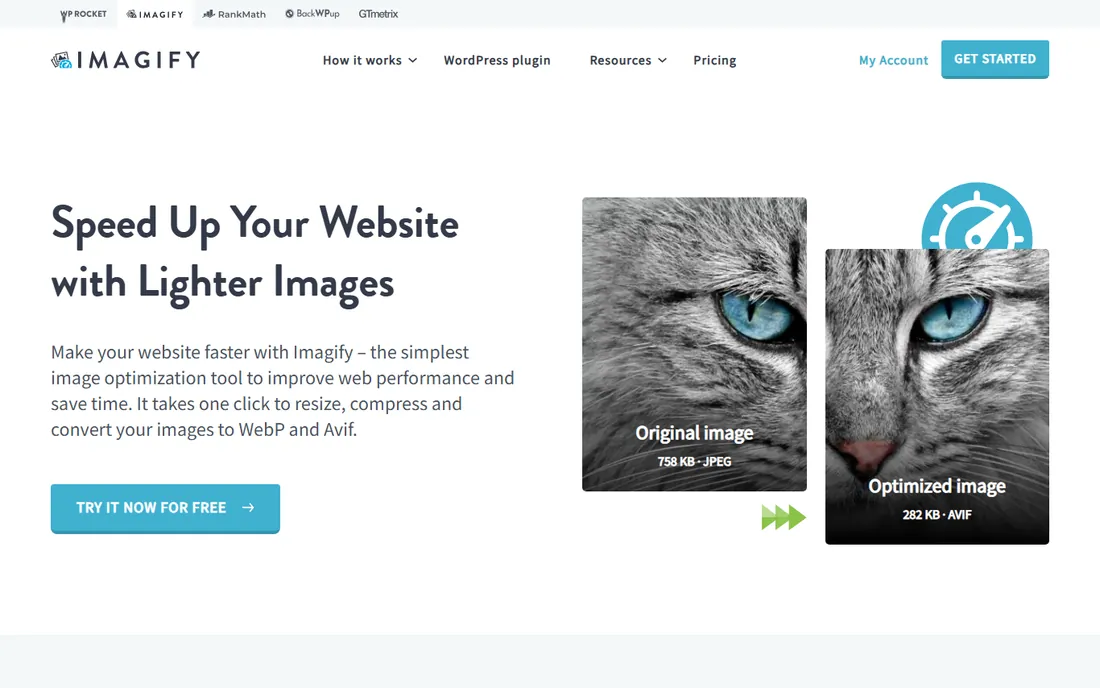
Imagify comes from the team behind WP Rocket, and it shows in the polish. Install the plugin, choose a compression level, and images optimize automatically on upload with bulk optimization for existing libraries. The interface is clean, the results are good, and it pairs naturally with WP Rocket's caching.
Non-WordPress users get less value; this is a WordPress-first product. And power users may want ShortPixel's finer controls. But for WordPress site owners who want optimization to just happen in the background, Imagify's simplicity is the selling point.
What we like- Simple WordPress integration with automatic optimization
- Three compression levels
- Made by the WP Rocket team
Watch out for- WordPress-centric
- Less flexible for non-WordPress stacks
Starting priceSee website
Free planSee website
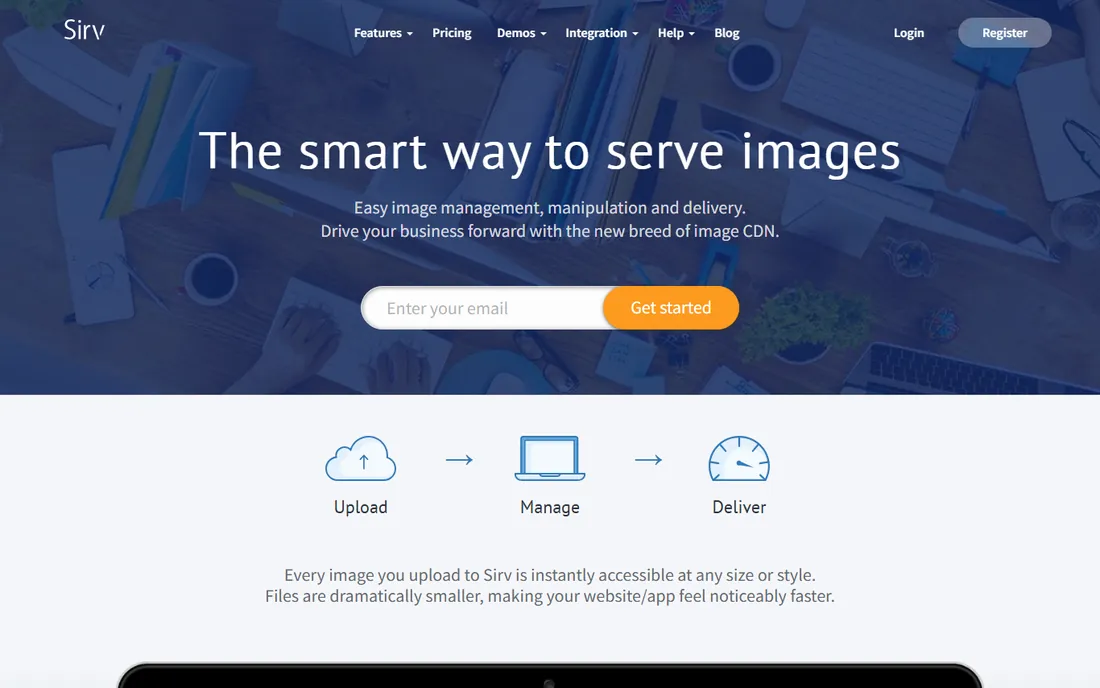
Sirv is an image CDN that optimizes on the fly and adds interactive features e-commerce sites need: deep zoom, 360-degree spins, and image galleries served from the same platform. Product images get compression, responsive sizing, and rich viewing experiences without separate tools.
Brand recognition trails the leaders, and the DAM side is lighter than Cloudinary's. But e-commerce teams that need both optimization and interactive product imagery from one service will find Sirv's focused feature set compelling.
What we like- Fast image CDN with on-the-fly optimization
- Image zoom, 360 spin, and video features
- Good e-commerce fit
Watch out for- Less known than Cloudinary or imgix
- DAM features are lighter
Starting priceSee website
Free planSee website
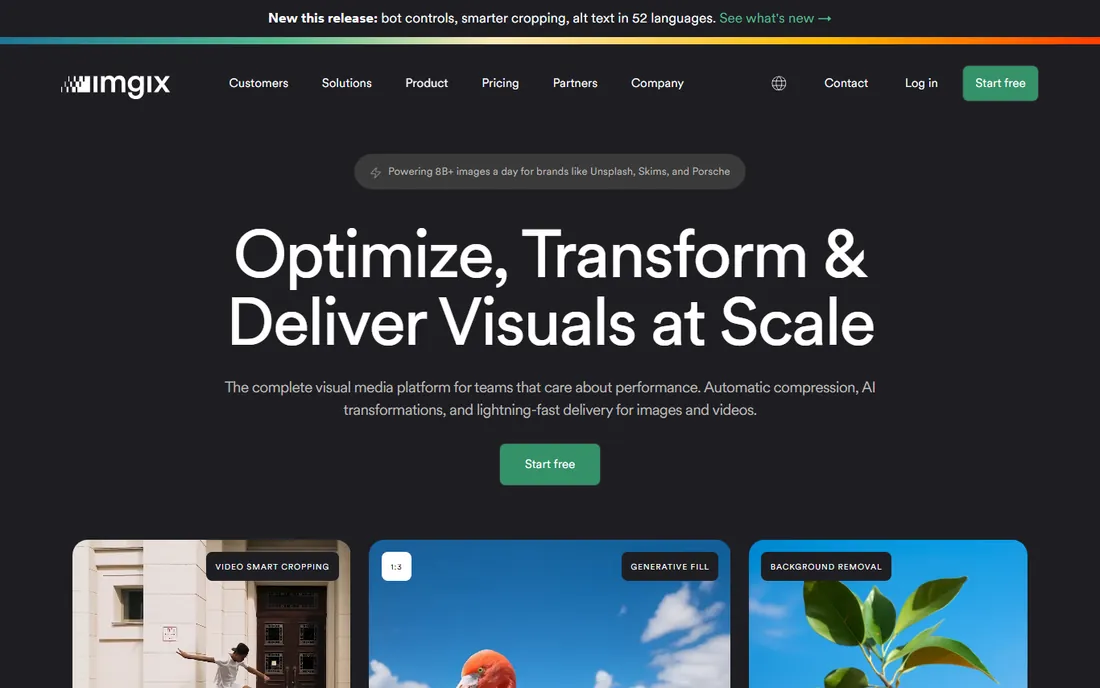
imgix gives developers real-time image processing through URL parameters: resize, crop, compress, and apply effects by changing the URL, with results cached on a global CDN. The API design is clean, the documentation is excellent, and performance is consistently strong. Teams that think in URLs and APIs love it.
Non-developers will find it less approachable than plugin-based tools. Usage-based pricing needs monitoring at scale. But for engineering teams building image-heavy products who want programmatic control over every pixel delivered, imgix is the developer's choice.
What we like- Powerful URL-based real-time transformations
- Excellent developer experience
- Strong performance
Watch out for- Developer-centric, less friendly for non-technical users
- Pricing scales with usage
What to check before you buy
Start by deciding where optimization happens. Plugin-based tools like ShortPixel and Imagify optimize files on your server, which suits WordPress sites. CDN-based platforms like Cloudinary, ImageKit, and imgix transform images at the edge on request, which suits dynamic sites and apps. API compressors like TinyPNG and Kraken.io fit into build pipelines. The architecture should match how your site serves images.
Then measure, don't assume. Run your actual images through each candidate and compare file sizes at equivalent visual quality. Check format support: AVIF and WebP deliver the biggest savings, but your audience's browsers must support them. And test the performance impact on Core Web Vitals, since image optimization's business case is faster pages.
Finally, model the total cost. Plugin tools charge per image or per site; CDN platforms charge for transformations and bandwidth; APIs charge per optimization. Project your image volume and traffic, then compare. The cheapest per-image price is not always the cheapest at your scale.
Compression vs delivery: you may need both
Compression shrinks files; delivery gets the right file to each user fast. Some tools do both, some do one. A WordPress blog might only need ShortPixel's compression. A global e-commerce site needs compression plus a CDN with device-aware delivery, which points to Cloudinary, ImageKit, or imgix.
The common mistake is optimizing files but serving them slowly, or delivering fast but serving bloated originals. Audit both halves: check your image file sizes and check your delivery setup. The best results come from pairing good compression with smart delivery, whether from one platform or two complementary tools.
Frequently asked questions
What is image optimization software?
It is software that reduces image file sizes, converts formats, resizes for different devices, and delivers images efficiently. It includes compressors, WordPress plugins, API services, and CDN platforms with real-time transformation.
What is the difference between lossy and lossless compression?
Lossless compression reduces file size without changing image quality. Lossy compression achieves much smaller files by discarding some image data, ideally imperceptibly. Most web optimization uses lossy or near-lossy settings; use lossless for images where perfect fidelity matters.
Should I use WebP or AVIF?
Both beat JPEG and PNG significantly. WebP has broader browser support; AVIF compresses better but supports fewer older browsers. Good platforms serve AVIF to supporting browsers and fall back automatically. If your tool does not handle format negotiation, WebP is the safer default.
Will image optimization improve my SEO?
Faster pages improve user experience and Core Web Vitals, which are ranking factors. Properly sized images with descriptive file names and alt text also help image search. Optimization is one piece of page speed work, alongside caching, code efficiency, and hosting.
How much can image optimization reduce file sizes?
Smart compression typically cuts 50-80% from PNG and JPEG files without visible quality loss. Format conversion to WebP or AVIF can save another 20-30% beyond that. Results vary by image content: photographs compress differently than graphics with flat colors.
Do I need a CDN for images?
If your audience is geographically distributed, a CDN meaningfully improves image load times. For small local sites, good compression plus decent hosting may suffice. E-commerce and media sites with global traffic should treat an image CDN as standard infrastructure.
How we chose
We selected image optimization tools that appear consistently in web performance shortlists on G2, Capterra, and developer community discussions, covering compressors, WordPress plugins, and CDN platforms. Each vendor's site was checked to confirm the product is current in 2026. Pricing details come from vendor pages where published; usage-based pricing is noted as such. No hands-on compression testing was conducted for this guide.
Sources we checked (14)
- https://www.cloudinary.com
- https://www.imagekit.io
- https://www.tinypng.com
- https://www.kraken.io
- https://www.shortpixel.com
- https://www.imagify.io
- https://www.sirv.com
- https://www.imgix.com
- https://slashdot.org/software/comparison/Cloudinary-vs-Imagify/
- https://Slashdot.org/software/comparison/Cloudinary-vs-Sirv/
- https://sourceforge.net/software/compare/Cloudinary-vs-Sirv-vs-TwicPics/
- https://slashdot.org/software/comparison/ShortPixel-vs-WP-Compress-vs-WP-Smush/
- https://Slashdot.org/software/comparison/Kraken.io-vs-TinyPNG/
- https://ranking-articles.com/image-optimization/
Is your product missing or out of date?
We review this list regularly. Vendors can request a listing, send updated pricing or ask about featured placement.

Shihab Mia · Founder, Rankite
Shihab has 5+ years in B2B and SaaS SEO. He writes Rankite's software buying guides from pricing pages, documentation and public user reviews. More about Shihab.