How we make this list: we compare pricing pages, product documentation and public user reviews. Rankite is independent; if a vendor ever pays for a featured spot, that listing is clearly labeled Partner.
Key takeaways
- Upwork and Fiverr remain the two largest general marketplaces, with the most clients and the most competition.
- Toptal and Arc are the picks for experienced specialists who want vetted clients and higher rates without bidding wars.
- Contra and Dribbble serve visual creatives best, with portfolio-first profiles that replace the traditional proposal grind.
- 99designs is the only real contest-based option, which suits designers who prefer competing on work over pitching on calls.
- Guru and PeoplePerHour are solid alternatives with loyal client bases, and Freelancer.com covers the widest range of oddball skills.
Quick comparison
| Tool | Best for | Starting price | Free plan |
|---|
 Upwork Upwork | general freelancers who want the biggest client pool | Free to join | Yes |
 Fiverr Fiverr | selling packaged services instead of bidding | Free to join | Yes |
 Toptal Toptal | elite developers, designers, and consultants | Free to join | Yes |
 Freelancer Freelancer | bidding on a huge variety of project types | Free to join | Yes |
 Guru Guru | long-term client relationships with flexible terms | Free to join | Yes |
 PeoplePerHour PeoplePerHour | UK and European clients especially | Free to join | Yes |
 Contra Contra | creatives who want a portfolio-first presence | Free to join | Yes |
 99designs 99designs | designers who thrive in contests | Free to join | Yes |
 Dribbble Dribbble | designers hired on the strength of their shots | Free to join | Yes |
 Arc Arc | developers and marketers wanting vetted remote roles | Free to join | Yes |
Is your product missing or out of date?
We review this list regularly. Vendors can request a listing, send updated pricing or ask about featured placement.
#1
Upwork
Best for: general freelancers who want the biggest client pool
Visit upwork.com
Starting priceFree to join
Free planYes
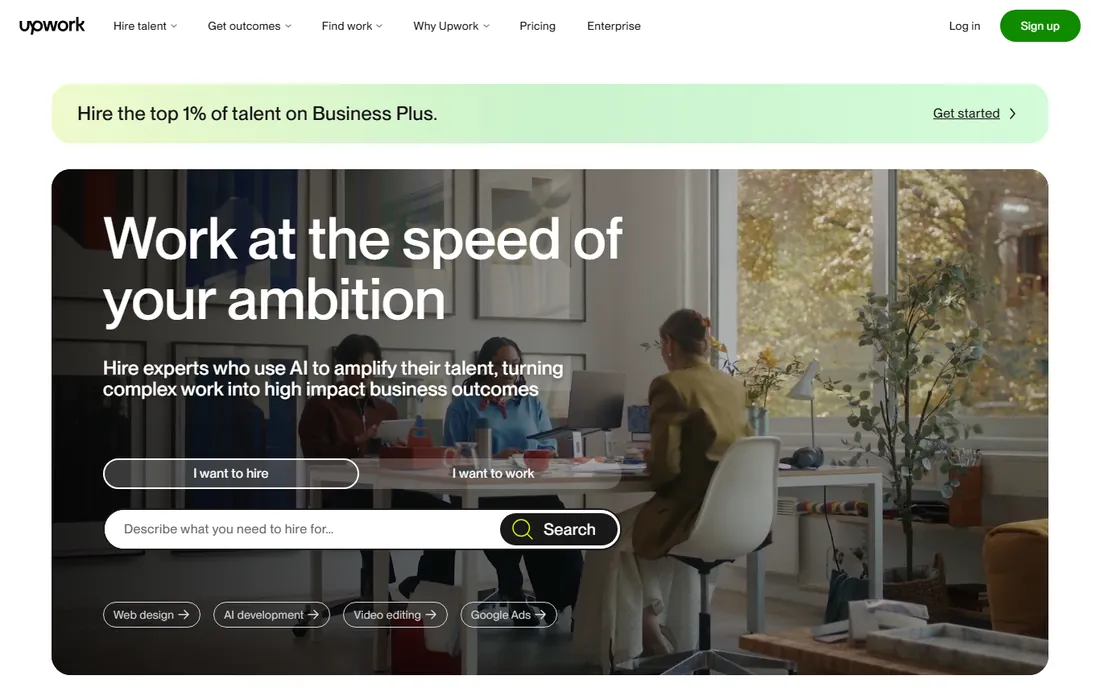
Upwork is the default answer to which freelancing platform has the most work, and the numbers explain why: 800,000 clients post everything from logo tweaks to year-long development contracts. The platform supports hourly contracts with time tracking and fixed-price milestones with escrow, so payment protection is stronger than on most rivals.
The catch is competition. Popular categories attract dozens of proposals within the hour, and Upwork’s Connects system means bidding itself costs money. New freelancers should niche down hard, complete a few small jobs for reviews, and treat the first month as an investment. For sheer volume of opportunity, nothing else comes close.
What we like- Largest client base with 800,000 clients
- Work across every skill category
- Escrow and hourly protection built in
Watch out for- Intense competition on popular jobs
- Connects system charges freelancers to bid
#2
Fiverr
Best for: selling packaged services instead of bidding
Visit fiverr.com
Starting priceFree to join
Free planYes
Fiverr flips the usual model: instead of bidding on client postings, you package your service as a gig with a fixed price and buyers come to you. That structure rewards freelancers who can productize their work, like a $150 logo package or a $500 SEO audit, and the 700-category catalog now stretches into AI automation and business services.
The downside is the race to the bottom in crowded categories, where $5 gigs still set buyer expectations. Fiverr’s commission on each order is also among the steepest in the industry. Succeed here by selling outcomes in tight niches, stacking gig extras, and climbing to higher seller levels where better clients shop.
What we like- No bidding
- You define fixed-price gigs
- 700 categories from design to AI services
Watch out for- Price pressure pushes many gigs toward the bottom
- The platform takes a significant cut of each order
#3
Toptal
Best for: elite developers, designers, and consultants
Visit toptal.com
Starting priceFree to join
Free planYes
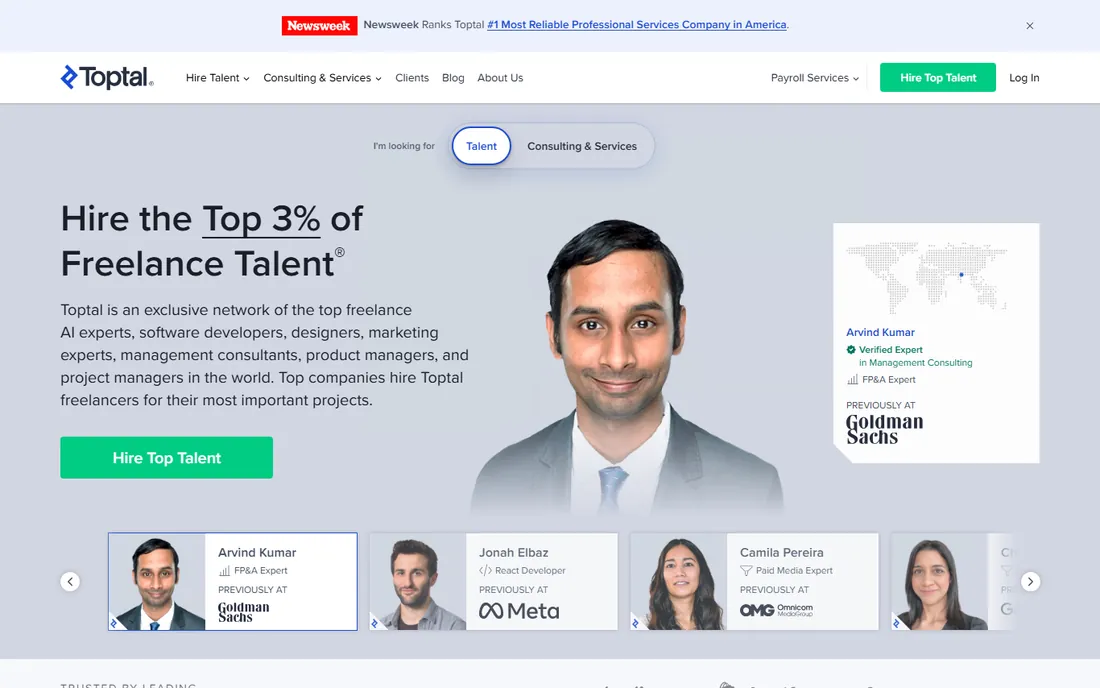
Toptal is the velvet-rope option among freelancing platforms. Its screening process, spanning language, personality, and multi-week technical trials, admits only the top 3% of applicants, and that exclusivity attracts clients like Bridgestone and the Cleveland Cavaliers who pay accordingly. Freelancers skip bidding entirely; Toptal matches them with projects and guarantees a trial period where the client pays only if satisfied.
Getting in is the hard part, and the process can take weeks. Once inside, though, the combination of high rates, serious projects, and zero proposal writing makes Toptal the best platform for proven specialists who are tired of marketplaces. Designers, developers, finance experts, and project managers all have dedicated tracks.
What we like- Top 3% vetting means premium clients and rates
- No bidding wars
- 35,000+ clients served across 140+ countries
Watch out for- Brutal multi-stage screening rejects most applicants
- Less control over which projects you get
Starting priceFree to join
Free planYes
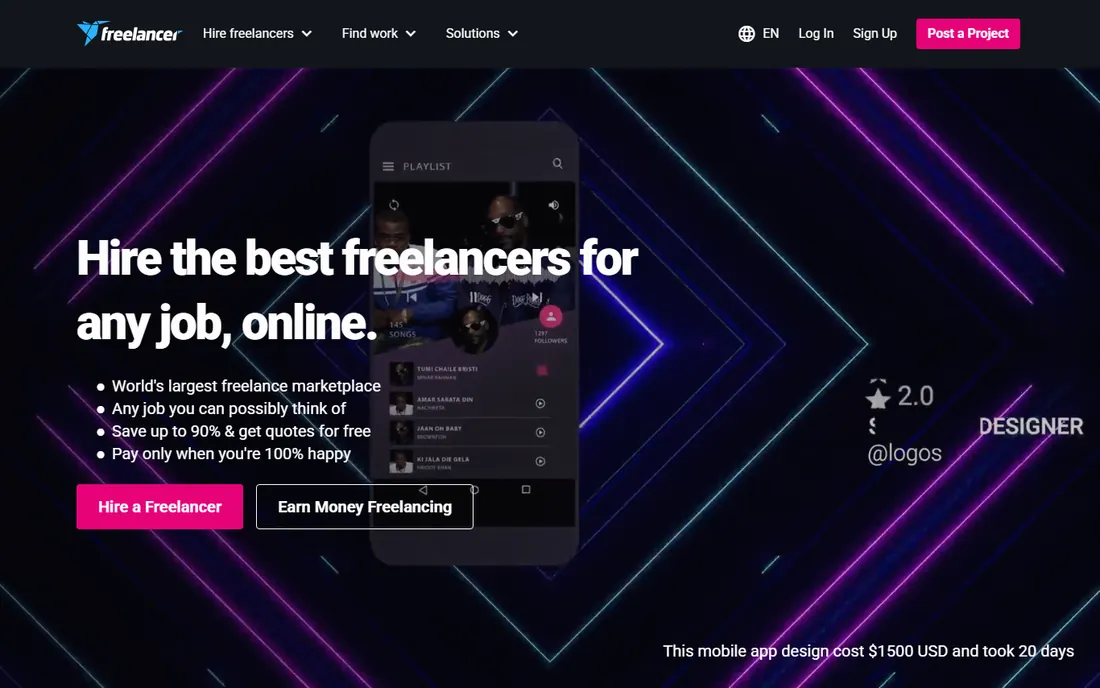
Freelancer.com is the broadest of the big marketplaces, with 2,700+ skills spanning software, design, writing, engineering, and genuinely unusual categories like robotics and manufacturing. Clients post projects, freelancers bid, and milestone payments release funds only when both sides are satisfied. Enterprise clients including Adobe, IBM, and NASA have run work through the platform.
Breadth brings noise: the bidding pools are global and price competition is fierce, so differentiation matters more here than on curated platforms. The contest feature, where clients pick a winner from submitted entries, gives designers and writers a way to win work on merit rather than on the cheapest bid. For freelancers with uncommon skills, the long tail of categories is the draw.
What we like- 2,700+ skills covered, including unusual ones
- Contest format for design work
- Milestone payment protection
Watch out for- Heavy competition from low-cost regions
- Interface feels cluttered next to newer rivals
#5
Guru
Best for: long-term client relationships with flexible terms
Visit guru.com
Starting priceFree to join
Free planYes
Guru has been matching freelancers and clients since the early days of online work, and its culture reflects that: the platform is built around WorkRooms where ongoing collaborations live, with agreements supporting fixed-price milestones, hourly tracking, task-based billing, and recurring payments. SafePay holds client funds in escrow before work begins, which removes the classic freelancer anxiety about getting paid.
The client pool is smaller than Upwork’s, but many freelancers report that Guru clients convert into long-term relationships more often. Fees are competitive and the platform actively courts agencies as well as solo freelancers. If your goal is a handful of steady retainer clients rather than a constant churn of gigs, Guru’s structure fits.
What we like- SafePay escrow protects both sides
- Flexible agreement types including recurring payments
- Loyal repeat-client culture
Watch out for- Smaller client pool than Upwork
- Interface shows its age
Starting priceFree to join
Free planYes
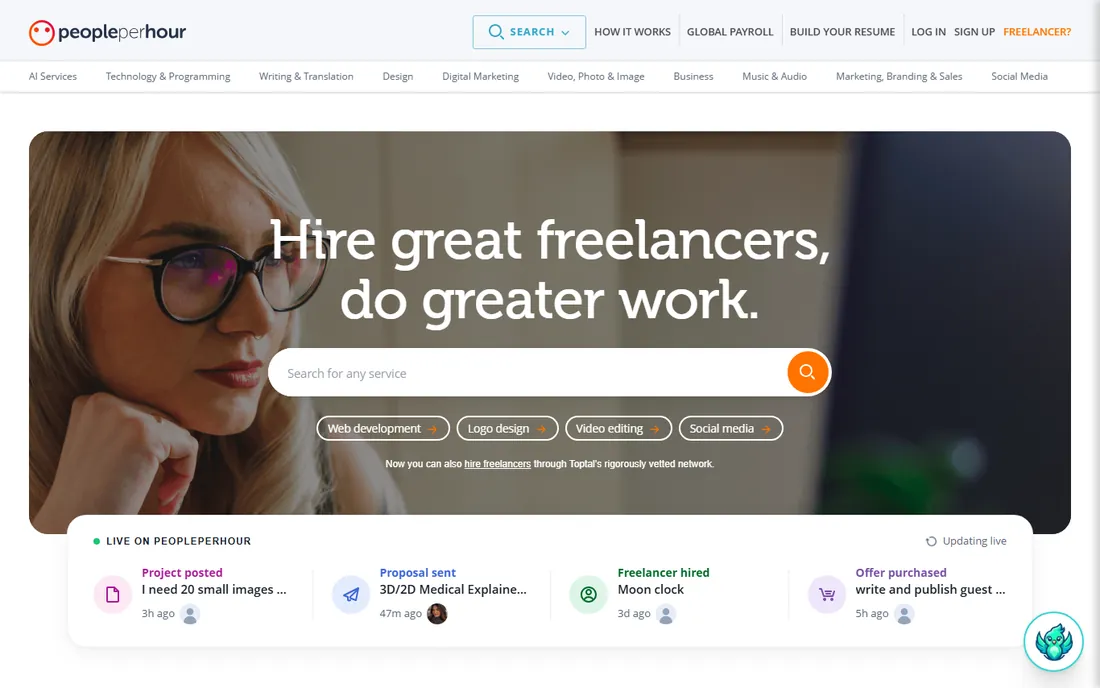
PeoplePerHour takes a curated approach: every freelancer is hand-reviewed and approved, which keeps quality higher and spam lower than open marketplaces. The platform is UK-first, with 60% of freelancers and clients UK-based and users in over 100 countries, and it reports 3 million rated freelancers with $150 million earned through the platform.
Freelancers can sell fixed-price offers, browseable like a menu, or bid on posted projects hourly. AI matching pairs jobs with suitable freelancers quickly. The trade-off is geography: if your target clients are in the US or Asia, the UK tilt means fewer relevant postings. For Europeans and UK-based freelancers, the fit is natural.
What we like- Every freelancer is hand-reviewed before approval
- Strong UK and European client base
- Fixed-price offers alongside hourly work
Watch out for- Smaller than the global giants
- 60% of users are UK-based, which limits other regions
#7
Contra
Best for: creatives who want a portfolio-first presence
Visit contra.com
Starting priceFree to join
Free planYes
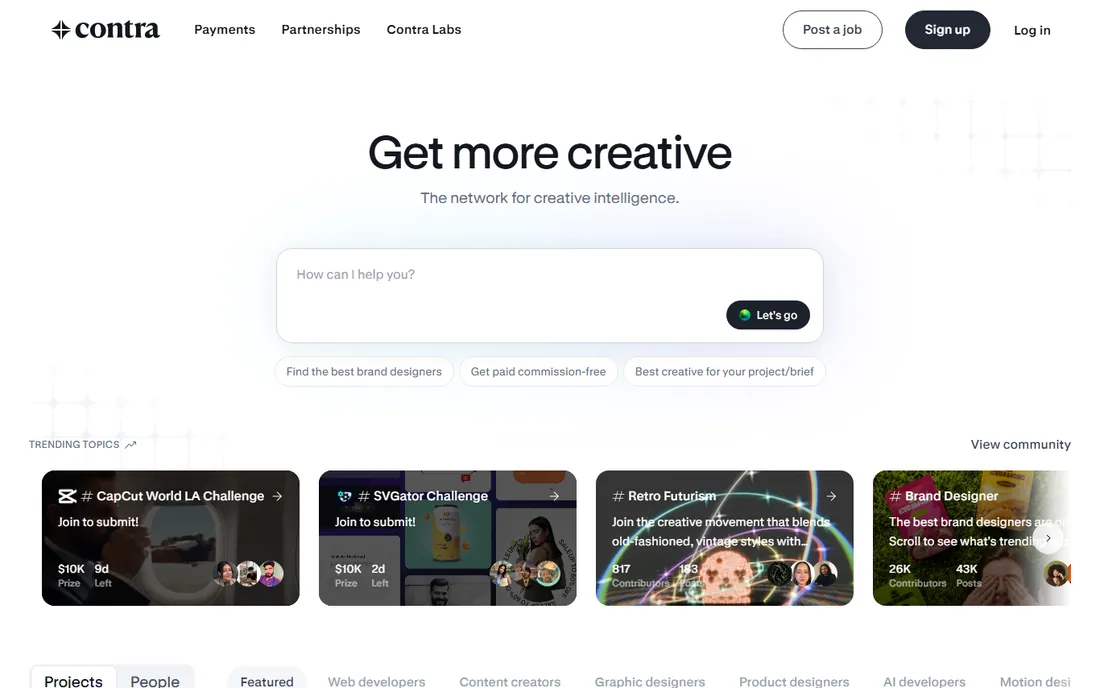
Contra rebuilt the freelancer profile around the portfolio instead of the proposal. Designers, developers, and video professionals showcase standout projects, and clients browse the work before reaching out. Posting a job is free for clients, which keeps the barrier low, and the platform’s commission-free model for independents means freelancers keep more of what they earn than on Fiverr or Upwork.
The audience skews creative: brand designers, Webflow developers, motion designers, and illustrators dominate. Writers, marketers, and generalist VAs will find thinner pickings. For visual creatives who hate writing cover letters, Contra’s show-don’t-tell approach is the most refreshing model among current freelancing platforms.
What we like- Portfolio-led profiles that sell the work itself
- Commission-free structure for independents
- Clients post jobs free
Watch out for- Creative-industry focus limits other professions
- Smaller client base than general marketplaces
Starting priceFree to join
Free planYes
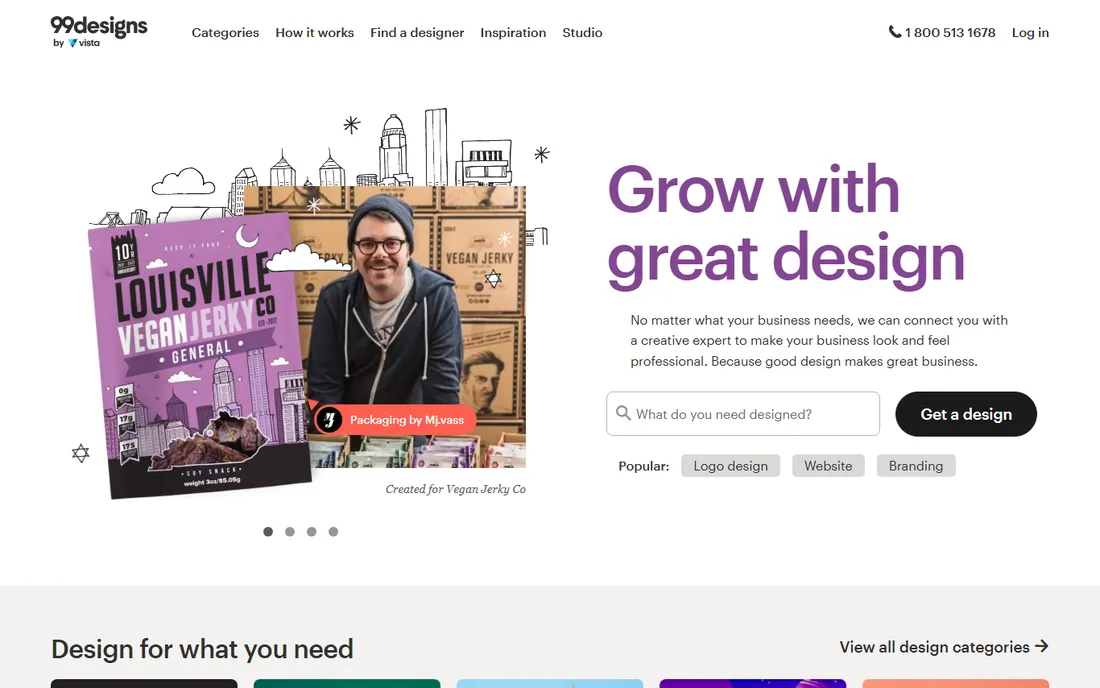
99designs runs on design contests: a client posts a brief, designers submit concepts, and the winner gets paid. A new design is created on the platform every two seconds, and logo contests start around the mid-hundreds, so the budgets beat typical gig-site pricing. All designers are vetted, and direct one-to-one projects are available alongside contests for established relationships.
The honest math is that most contest entries go unpaid, so designers must treat entries as marketing spend and win often enough to justify it. That model frustrates many, but for fast, versatile designers it converts portfolio pieces into income without sales calls. If you are a designer who would rather compete on craft than on price, this is your arena.
What we like- Contest model lets work win instead of pitches
- Vetted designer community across 192 countries
- Clients arrive with real budgets
Watch out for- Unpaid contest entries cost time
- Limited to design disciplines
Starting priceFree to join
Free planYes

Dribbble is where the design world shows its work, and that visibility doubles as a hiring channel. Designers post shots of interfaces, brand identities, and illustrations; clients browse and reach out directly. The built-in Services section formalizes freelance engagements, and Pro accounts add portfolio features and job-seeking tools.
There is no bidding and no contest grind; your public portfolio is the pitch. The flip side is that Dribbble rewards designers who already produce shareable, polished work, which makes it a weak starting point for true beginners. For mid-career and senior designers, it remains one of the highest-signal places to get found by clients with real budgets.
What we like- The design industry’s portfolio standard
- Clients discover you through your work
- Freelance Services marketplace built in
Watch out for- Design-only audience
- Standing out requires consistently excellent public work
#10
Arc
Best for: developers and marketers wanting vetted remote roles
Visit arc.dev
Starting priceFree to join
Free planYes
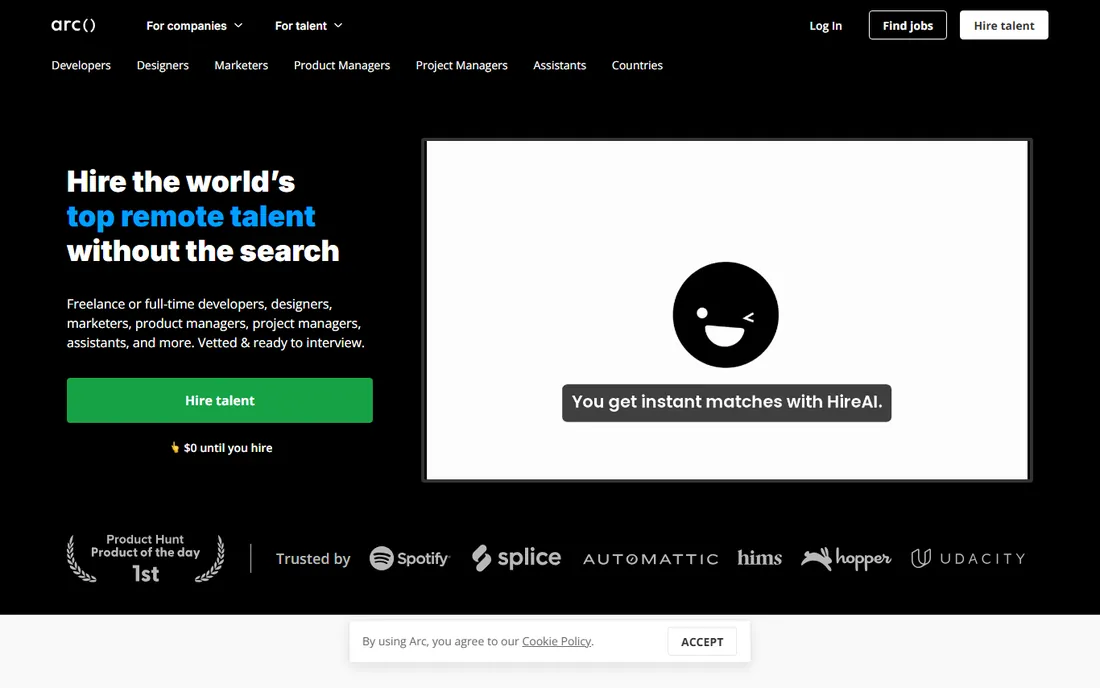
Arc positions itself as the faster, more modern alternative to Toptal for remote tech hiring. Freelancers pass vetting for domain expertise and English fluency, then get matched to freelance contracts, with hiring possible in 72 hours, or full-time remote roles at startups and tech companies. The network spans 450,000 professionals across 190 countries, and secure freelancer payments plus compliant hiring run through the platform.
For freelancers, the appeal is curated opportunity without the proposal treadmill: developers, designers, marketers, product managers, and project managers get matched rather than bidding. The niche is narrower than general marketplaces, but within tech and marketing the signal-to-noise ratio is far better than Upwork’s open bidding.
What we like- Top 2% vetting with HireAI matching
- Freelance contracts and full-time roles
- 450,000 talent across 190 countries
Watch out for- Tech and marketing focus excludes other professions
- Newer network with less brand recognition than Toptal
Match the platform’s shape to how you sell. If you win work by writing persuasive proposals, Upwork, Freelancer, and Guru reward that skill. If you would rather package a fixed offer and let buyers come to you, Fiverr, PeoplePerHour’s offers, and Contra fit better. Designers choosing between contests, portfolios, and bidding should compare 99designs, Dribbble, and Contra side by side before committing time.
Consider geography too. PeoplePerHour leans UK and European, Arc and Toptal serve US startups and global tech companies, and Upwork and Fiverr are genuinely worldwide. Your timezone and rate expectations should line up with where the clients cluster.
Finally, be honest about your experience level. Toptal and Arc reject most applicants, which wastes weeks if you are just starting. New freelancers build faster on Upwork, Fiverr, or Contra, where the barrier is effort rather than credentials, then graduate to vetted networks once they have a track record and testimonials.
Joining is free everywhere on this list, but every platform takes its cut somewhere. The standard model is a percentage of each project, and that percentage is the single most important number to compare, because a five-point difference compounds across a year of earnings. Always check the current fee schedule on the vendor’s own site before you commit, since platforms change these numbers.
Beyond commissions, watch for the smaller tolls: paid bids or connects on Upwork and Freelancer, withdrawal and currency conversion fees when you move money home, and membership tiers that gate visibility or bid volume. Contra’s commission-free positioning and Toptal’s client-paid model are the notable exceptions to the freelancer-pays structure.
Run the math on a typical month. A freelancer billing $5,000 monthly keeps meaningfully more on a low-fee platform than on a high-commission one, and that gap often exceeds any difference in job availability. The cheapest platform is not always the one with the most jobs; it is the one where your take-home pay per hour of effort, including unpaid bidding time, is highest.
How we chose
We opened each platform’s homepage and recorded its positioning, freelancer counts, client counts, vetting claims, and fee structure as published by the vendor. We cross-checked reputation against public reviews on G2, Trustpilot, and freelancer communities. Platforms that had shut down or pivoted away from freelance work were excluded, including one well-known creative network whose domain now hosts unrelated content. We did not create freelancer accounts or bid on test projects.
Frequently asked questions
What is the best freelancing platform for beginners?
Upwork and Fiverr are the best starting points because they have the most clients and the lowest barriers to entry. Contra is a strong alternative for creatives who prefer showing work over writing proposals. Build reviews on one platform before spreading across several.
Which freelancing platform pays the most?
Vetted networks like Toptal and Arc typically deliver the highest rates because clients arrive expecting premium talent and pay accordingly. Among open marketplaces, rates depend more on your niche and positioning than on the platform itself.
Do freelancers have to pay to join these platforms?
No, joining is free on all ten platforms here. Platforms earn through commissions on completed work, paid bid credits, or client-side fees. Never pay an upfront fee to access jobs; legitimate platforms do not work that way.
What is the best freelancing platform for designers?
Dribbble and Contra are the strongest portfolio-led options, 99designs suits contest-style work, and Toptal’s design track serves senior designers wanting premium clients. Many designers maintain Dribbble for discovery and take projects through Contra or direct contracts.
How do I avoid scams on freelancing platforms?
Keep all communication and payments inside the platform until trust is established, never pay to apply for a job, and be wary of clients who move conversations off-platform immediately or offer unusually high pay for simple work. Use escrow and milestone features wherever they exist.
Should I be on multiple freelancing platforms?
Start with one and learn its dynamics before adding a second. Managing profiles, proposals, and client messages across many platforms dilutes the effort that wins work. Most successful freelancers concentrate on one or two platforms that match their niche.
Sources we checked (10)
- https://www.upwork.com
- https://www.fiverr.com
- https://www.toptal.com
- https://www.freelancer.com
- https://guru.com/
- https://peopleperhour.com/
- https://contra.com
- https://99designs.com/
- https://dribbble.com
- https://arc.dev
Is your product missing or out of date?
We review this list regularly. Vendors can request a listing, send updated pricing or ask about featured placement.

Shihab Mia · Founder, Rankite
Shihab has spent more than a decade helping SaaS and e-commerce brands grow through search. He writes Rankite's software buying guides from pricing pages, documentation and public user reviews. More about Shihab.