How we make this list: we compare pricing pages, product documentation and public user reviews. Ratings come from G2, Capterra or Trustpilot, with the date we checked them.
Key takeaways
- Duolingo is the most complete free starting point, with full course content behind ads and a hearts limit.
- Memrise and HelloTalk cover the two gaps Duolingo leaves: real native-speaker video and real conversation.
- Anki is free on desktop and Android and remains the strongest tool for long-term vocabulary memory.
- Free tiers teach real beginner material, but fluency still needs live speaking practice beyond any app.
- Babbel and Pimsleur are left out here because their free offers are only a first lesson or a short trial.
Quick comparison
| Tool | Best for | Starting price | Free plan |
|---|
 Duolingo | Daily habit for beginners | Free | Yes |
 Memrise | Real native-speaker phrases | Free | Yes |
 Busuu | Short structured lessons | Free | Yes |
 HelloTalk | Talking with native speakers | Free | Yes |
 Anki | Long-term vocabulary memory | Free | Yes |
 Mondly | Casual daily lessons | Free | Yes |
 LingQ | Learning from real content | Free | Yes |
 Language Transfer | Free audio lessons | Free | Yes |
Is your product missing or out of date?
We review this list regularly. Vendors can request a listing, send updated pricing or ask about featured placement.
The best free language apps
#1Duolingo
Best for: Daily habit for beginners4.5/5 on
G2 (145 reviews, checked Oct 2026)
Visit duolingo.com
Starting priceFree
Free planYes
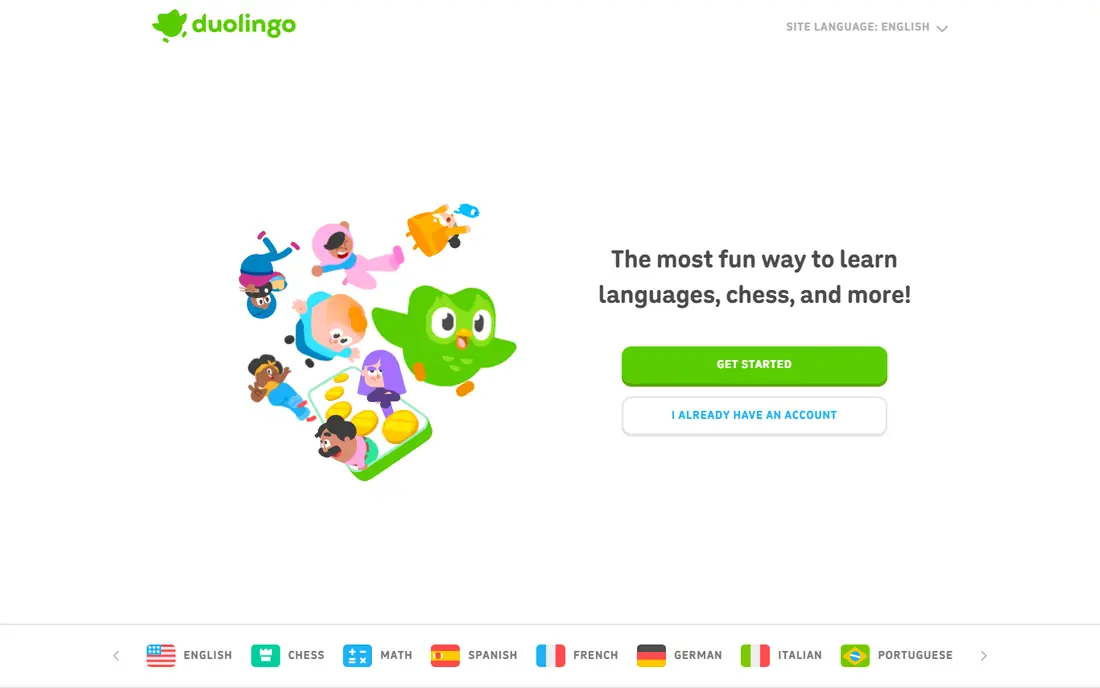
Duolingo is the easiest free app to stick with, and that is why it leads this list. Lessons are short, the streak system rewards showing up daily, and the free tier includes the same course content as the paid tier. You get speaking and listening practice at no cost, across more than 40 languages, which no other free app here matches.
The free tier has friction by design. Ads appear between lessons, and the hearts system limits how many mistakes you can make before practice pauses until hearts refill or you watch an ad. Grammar explanations are thinner than a structured course. If ads do not bother you, the free version covers serious beginner study, and paid Super mainly removes those limits rather than adding new lessons.
What we like- 40 plus languages
- Full course content on the free tier
- Speaking and listening included
Watch out for- Ads and a hearts limit interrupt lessons
- Grammar notes are thin
- Super costs about $6.99 to $12.99 per month
Starting priceFree
Free planYes
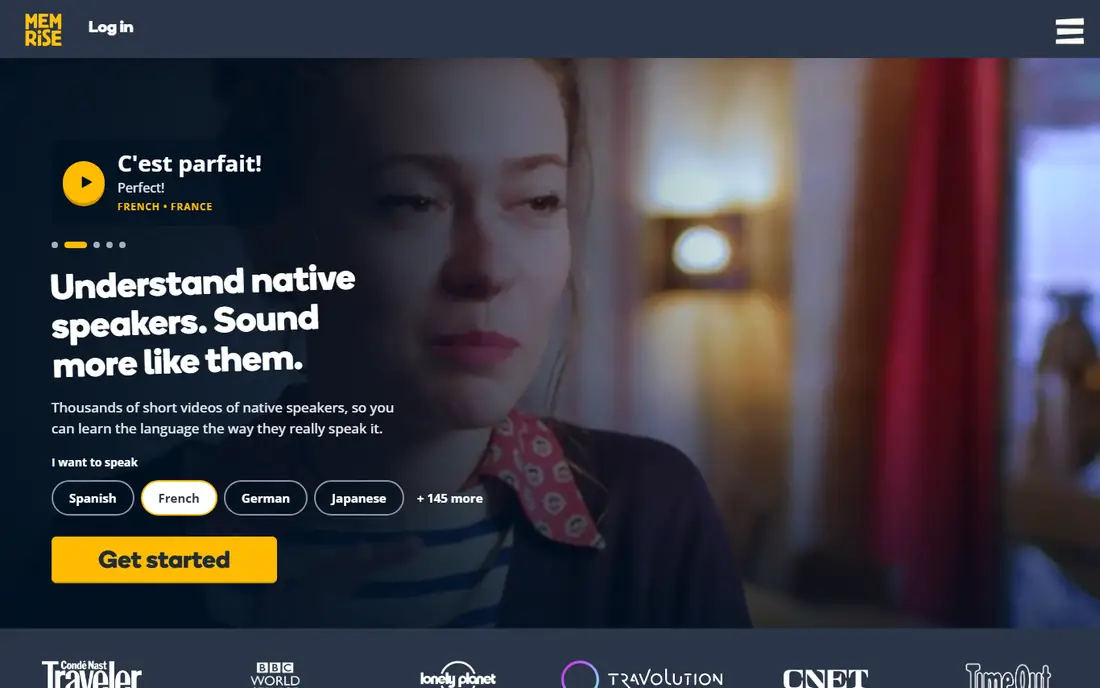
Memrise teaches how people actually talk, using short video clips of native speakers instead of flat synthetic audio. That difference matters when you arrive in a country and realize textbook phrases sound nothing like street speech. Core vocabulary courses are free with no time limit, and spaced review schedules words before you forget them.
The trade is depth. Some advanced grammar content is locked behind Pro, and the language list is smaller than Duolingo. Use Memrise for phrases and listening, and pair it with another app for grammar. Together they cover more than either does alone.
What we like- Video clips of real native speakers
- Core courses free with no time limit
- Spaced review built in
Watch out for- Some advanced content sits behind Pro at about $8.49 per month
- Fewer languages than Duolingo
#3Busuu
Best for: Short structured lessons4.4/5 on
G2 (71 reviews, checked Oct 2026)
Visit busuu.com
Starting priceFree
Free planYes
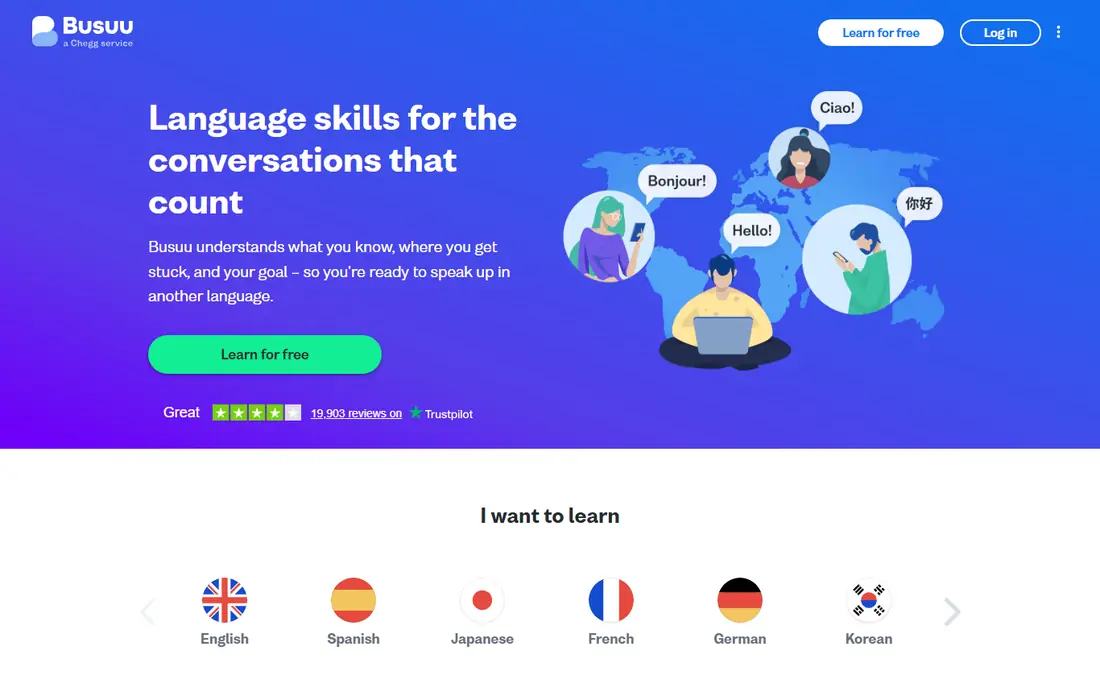
Busuu is the most classroom-like free app here. Lessons follow CEFR levels from A1 upward, grammar is explained rather than guessed, and the community feature lets native speakers correct your writing and speaking. That feedback loop is something solo drill apps cannot offer.
The free tier is limited, with only part of each unit open, so progress is slower than on Duolingo. Premium opens the full course at about $9.99 to $12.49 per month depending on source and billing. For learners who want structure and correction without paying, the free tier still teaches real material, just at a slower pace.
What we like- CEFR-leveled lessons
- Native-speaker corrections from the community
- Grammar notes included
Watch out for- Free tier limits you to one lesson per unit
- Premium costs about $9.99 to $12.49 per month
Starting priceFree
Free planYes
HelloTalk works differently from every other app here: instead of lessons, it connects you with native speakers who want to learn your language in exchange. Core chat, voice messages, and correction tools cost nothing, and the language list covers more than 150 languages, far beyond course-based apps.
There is no curriculum, so progress depends on your own discipline and on finding good partners. Some matches fade fast, and conversation quality varies. For learners past the basics who need real speaking practice, HelloTalk is the cheapest path to it. For total beginners, start with Duolingo first, then bring HelloTalk in once you can hold a simple exchange.
What we like- Free text, voice, and correction features
- 150 plus languages
- Built-in translation in chats
Watch out for- No structured curriculum
- Practice quality depends on your matches
- Needs self-discipline
Starting priceFree
Free planYes
Anki is not a course, it is a memory machine. It uses spaced repetition to show you each flashcard just before you are likely to forget it, which moves vocabulary into long-term memory with less total study time. It is free on desktop and Android, and user-built decks cover nearly any language, including rare ones no course app touches.
The cost is effort and looks. The interface is plain, you must find or build decks yourself, and the iOS app costs $24.99 as a one-time purchase that supports development. Advanced learners swear by it. Beginners should pair it with a course app so new words come from lessons, then use Anki to keep them.
What we like- Free on desktop and Android
- Spaced repetition tuned by you
- Any language with user decks
Watch out for- IOS app costs $24.99
- Bare interface
- You must find or build your own decks
Starting priceFree
Free planYes
Mondly suits casual learners who want a quick daily lesson without a heavy course. It covers more than 41 languages, lessons run a few minutes, and speech recognition checks your pronunciation as you speak. The daily lesson format builds a habit with little friction.
The free version is limited, and full access costs about $9.99 per month or $47.99 per year by current guides. Treat Mondly as a free sampler first: if the lesson style clicks for you, the paid year is modest, but the free tier alone will not carry you far.
What we like- 41 plus languages
- Short daily lessons
- Speech recognition for pronunciation
Watch out for- Free app version is limited
- Full access costs about $9.99 per month or $47.99 per year
Starting priceFree
Free planYes
LingQ flips the usual method: instead of drills, you read and listen to real content at your level, clicking unknown words to save and review them. That approach suits intermediate learners who are bored of beginner dialogues and want news, stories, and podcasts in the target language. The free plan includes the core method with limits on saved words.
The interface takes a session or two to learn, and beginners get less guidance than on Duolingo. Use LingQ once you know basic grammar, when real content starts to feel reachable. It is the best free bridge from classroom lessons to real reading.
What we like- Learn from real texts and audio
- Word tracking across content
- Free plan with limits
Watch out for- Free plan caps saved words
- Interface takes learning
- Less hand-holding than Duolingo
Starting priceFree
Free planYes
Language Transfer is the only tool here that is fully free with no paywall at all. Its audio courses teach you to think in the language, building sentences from patterns rather than memorizing phrases. Learners often describe a lightbulb moment when grammar starts to make sense instead of feeling like rules to recite.
The limits are clear: audio only, no drills or games, fewer languages than the big apps, and no feedback on your speaking. Use it on walks or drives as a companion to a drill app. For the price of nothing, it adds understanding that gamified lessons often skip.
What we like- Completely free
- Teaches how the language thinks
- No ads or paywall
Watch out for- Audio only, no app drills
- Fewer languages
- No speaking feedback
How we chose
We set a strict rule for this list: a genuine free tier must teach real material, not just a first lesson or a short trial. That is why Babbel and Pimsleur are absent, since their free offers are only a sample or a trial. We compared vendor pages and 2026 guides for free-tier limits, language counts, and current status, and we favored apps that stay free without a time limit. Paid prices are noted where they matter, but the ranking rests on what you get for nothing.
How to pick a free language app
Start with your goal, not the download chart. If you need a daily habit, Duolingo is the obvious start. If you need to speak with real people, add HelloTalk once you know basics. If you keep forgetting words, add Anki. One app rarely covers everything, and combining two free apps usually beats paying for one.
Build a free stack
A strong free stack is Duolingo for daily lessons, Memrise for real phrases, and Anki for keeping vocabulary. That trio costs nothing on desktop and Android, and it covers lessons, listening, and memory. Add HelloTalk when you can hold a simple conversation, and LingQ when graded content feels too easy. Check the free tier before you commit time, since limits change.
Know when to pay
Pay when a limit blocks your actual progress, not before. A good test is to ask what the payment removes: if it only removes ads while the lessons stay the same, wait until ads truly slow you down. If it opens full lessons, corrections, or live classes that you will use every week, the cost earns its keep. Track one month of real use before renewing, since many learners pay for a year and then stop opening the app after week three. Duolingo Super makes sense if hearts keep stopping your study, and Busuu Premium makes sense if you want full structured lessons with corrections. A tutor on italki, from a few dollars an hour by some guides, is the cheapest paid step toward fluency, since no free app gives you live conversation with a teacher.
Frequently asked questions
Can I learn a language for free with apps?
Yes, up to a solid beginner or intermediate level. Duolingo, Busuu, Memrise, and Mondly all teach real beginner material for free, and HelloTalk adds free conversation practice. Fluency needs live speaking, which free apps only partly provide.
Which free app is best for beginners?
Duolingo, because the free tier includes full course content, the lessons are short, and the streak system keeps you returning. Add Busuu free lessons if you want more grammar explanation.
Is Anki really free?
On desktop and Android, yes. The iOS app is a one-time $24.99 purchase that funds development. Decks made by users are free, and you can build your own at no cost.
Why is Babbel not on this list?
Babbel offers only the first lesson of each course for free, which is a sample, not a free tier. This list requires a free tier that teaches real material without a time limit, so Babbel did not qualify.
How long until I can hold a conversation?
With 15 to 30 minutes of daily practice, expect basic conversation in two to six months depending on the language and your starting point. Adding HelloTalk or a tutor speeds this up, since speaking practice is what turns study into conversation.
Sources we checked (8)
- https://www.duolingo.com
- https://www.memrise.com
- https://www.busuu.com
- https://www.hellotalk.com
- https://apps.ankiweb.net
- https://www.mondly.com
- https://www.lingq.com
- https://www.languagetransfer.org
Is your product missing or out of date?
We review this list regularly. Vendors can request a listing, send updated pricing or ask about featured placement.

Shihab Mia · Founder, Rankite
Shihab has 5+ years in B2B and SaaS SEO. He writes Rankite's software buying guides from pricing pages, documentation and public user reviews. More about Shihab.