How we make this list: we compare pricing pages, product documentation and public user reviews. Ratings come from G2, Capterra or Trustpilot, with the date we checked them.
Key takeaways
- Duolingo suits daily habit building with short, gamified lessons and a free tier.
- Babbel suits learners who want structured grammar and practical conversation lessons.
- Pimsleur suits audio-first learners who study while commuting, walking, or doing chores.
- Rosetta Stone suits immersive learners who prefer pictures and context over translation.
- Busuu, Memrise, italki, and Lingoda add community feedback, vocabulary video, live tutoring, and live classes respectively.
Quick comparison
| Tool | Best for | Starting price | Free plan |
|---|
 Duolingo | Daily habit building | See website | Yes |
 Babbel | Structured grammar lessons | See website | No |
 Rosetta Stone | Immersive learning | See website | No |
 Pimsleur | Audio-first learning | See website | No |
 Busuu | Community feedback | See website | Yes |
 Memrise | Vocabulary and video phrases | See website | Yes |
 italki | Live one-to-one tutoring | See website | Yes |
 Lingoda | Live small-group classes | See website | No |
Is your product missing or out of date?
We review this list regularly. Vendors can request a listing, send updated pricing or ask about featured placement.
The best foreign language apps
#1Duolingo
Best for: Daily habit building4.5/5 on
G2 (145 reviews, checked Oct 2026)
Visit duolingo.com
Starting priceSee website
Free planYes
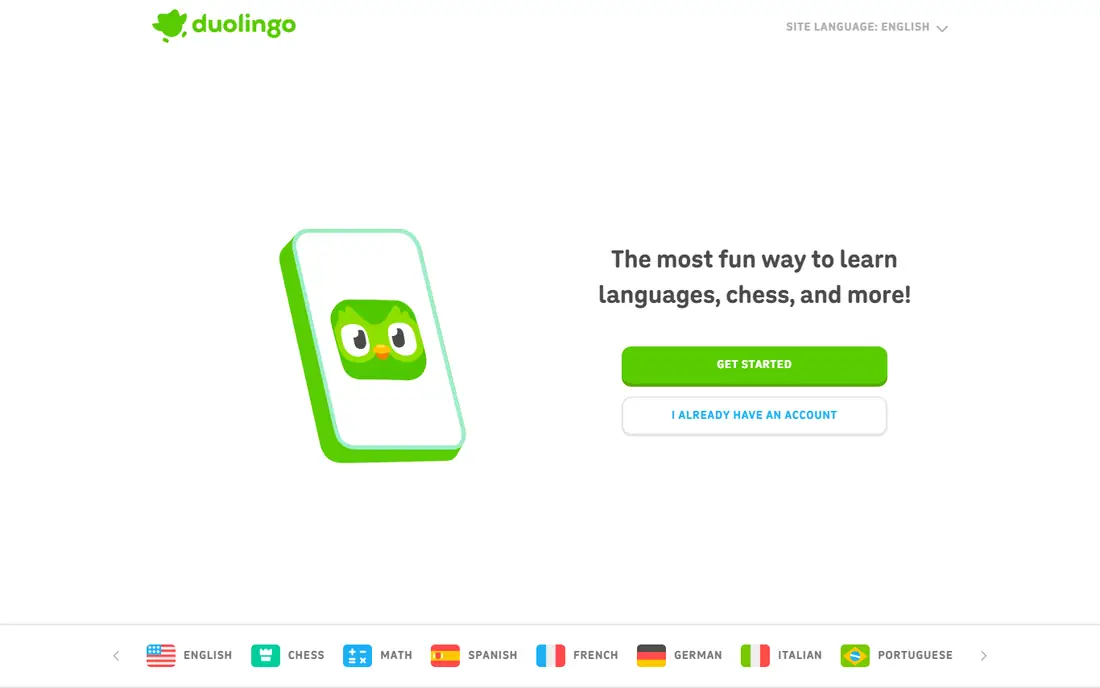
Duolingo is the easiest app to start with, and that is its main strength. Lessons are short, gamified, and free at the core, with streaks, levels, and reminders that help a learner practise every day. That daily habit matters more than any single feature, since language progress depends on regular exposure over months. The app covers many languages, from Spanish and French to less commonly taught options, and it works on phone and web.
The limit is depth. Duolingo builds vocabulary and basic grammar patterns well, but speaking practice and natural conversation remain thinner than in a tutoring or audio course. Advanced learners often need a second tool for reading, listening, and conversation. As a starting app, or as a daily supplement to classes, Duolingo is hard to beat for consistency and cost.
What we like- Free core courses
- Short lessons and streaks keep practice daily
- Many languages available
Watch out for- Speaking practice is limited
- Advanced learners may outgrow the course depth
Starting priceSee website
Free planNo
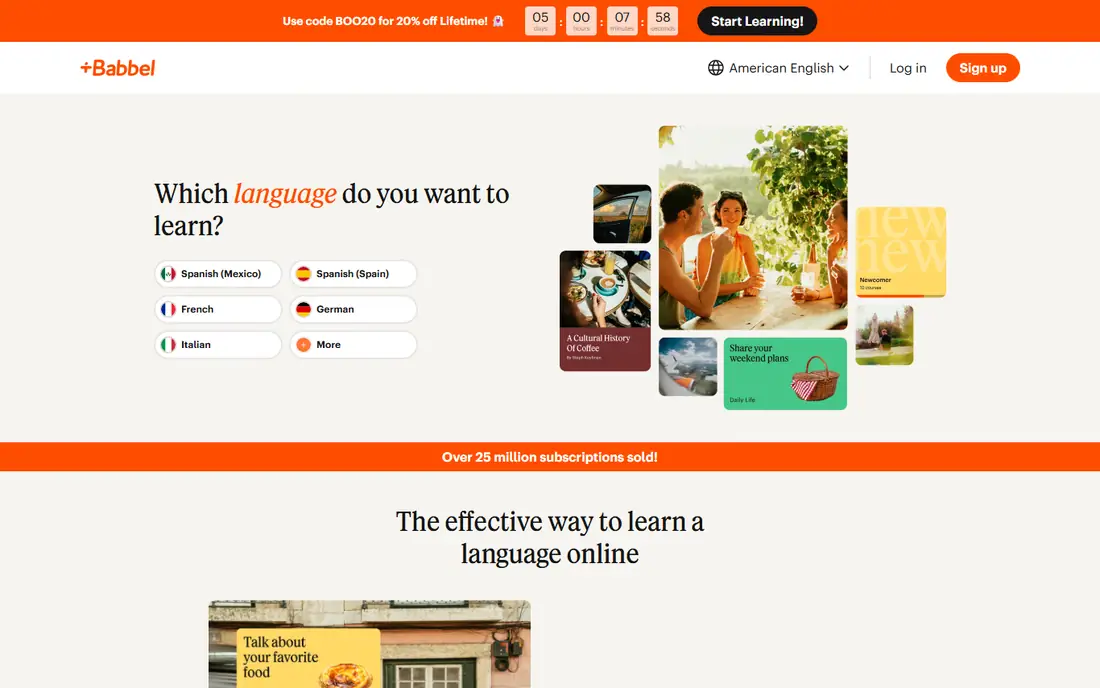
Babbel takes a classroom-like approach, with structured lessons that explain grammar through practical dialogues. A lesson might cover ordering food, asking directions, or handling a work call, with vocabulary and grammar introduced in context. Speech recognition gives pronunciation feedback, and spaced repetition reviews words at intervals. That structure suits learners who want to understand why a sentence works, not only memorise it.
The language range is smaller than Duolingo, focusing on major European and world languages, and the free offering is a limited trial rather than a full free course. Learners of less common languages may need another app. For Spanish, French, German, Italian, and similar languages, Babbel gives a clear, practical path from beginner to intermediate.
What we like- Clear grammar explanations
- Practical dialogues
- Lessons built for real situations
Watch out for- Language range is smaller than Duolingo
- Free trial is limited rather than a full free tier
Starting priceSee website
Free planNo
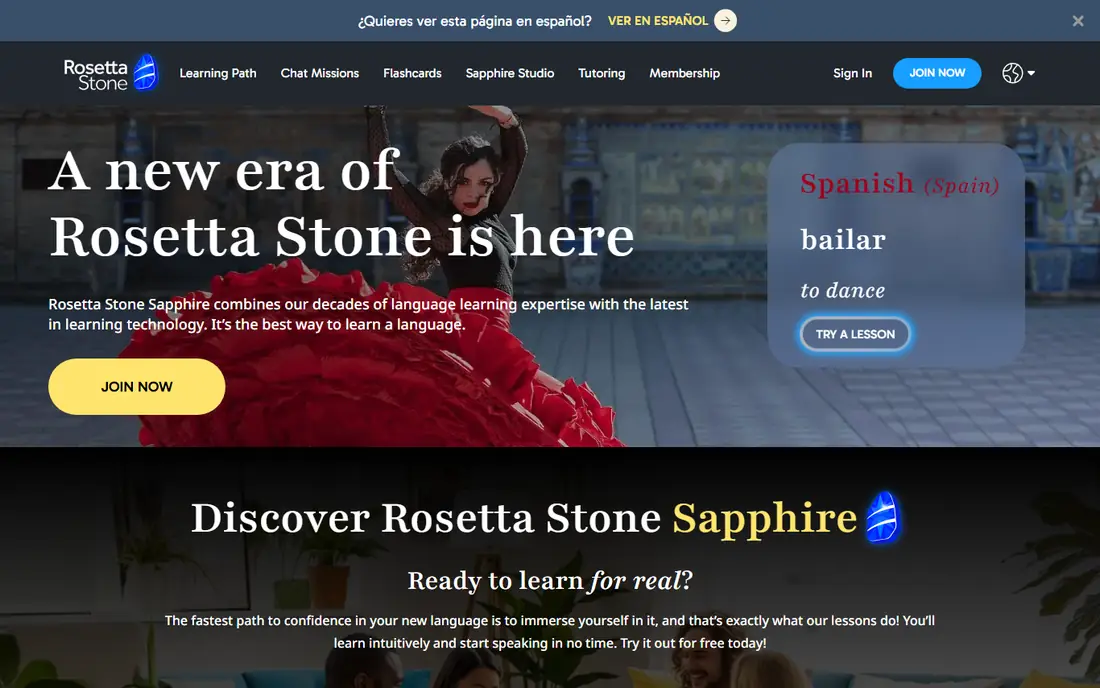
Rosetta Stone teaches through pictures, audio, and context, without translating into the learner first language. That immersion suits learners who want to think in the new language from the start, and it builds listening and reading intuition over time. TruAccent speech recognition gives feedback on pronunciation, and downloadable lessons support offline study on flights or commutes. The method is consistent across languages, which helps learners who switch languages later.
Grammar explanations are minimal, so learners who want explicit rules may need a supplement such as Babbel or a grammar book. Pricing is also higher than many rivals, especially for lifetime access, though subscription options exist. For learners who enjoy immersion and want a long-term, structured course, Rosetta Stone remains a respected choice.
What we like- Immersive method without translation
- Speech recognition
- Downloadable lessons for offline use
Watch out for- Higher cost, especially for lifetime access
- Grammar explanations are minimal
#4Pimsleur
Best for: Audio-first learning4.3/5 on
G2 (2 reviews, checked Oct 2026)
Visit pimsleur.com
Starting priceSee website
Free planNo
Pimsleur is built around thirty-minute audio lessons that ask the learner to listen and answer aloud. That format suits commuting, walking, cooking, and other hands-free time, and it builds speaking confidence faster than text-heavy apps for many learners. The method uses spaced repetition and graduated recall, prompting the learner to produce words and phrases at increasing intervals. That speaking focus is the reason many travellers and business learners choose Pimsleur before a trip.
Reading and writing receive less attention, so learners who need those skills should pair Pimsleur with Duolingo, Babbel, or reading material. Subscription cost also adds up over a long course, though a single-language plan is cheaper than an all-languages plan. For audio-first learners and for pre-trip speaking preparation, Pimsleur is the strongest option on this list.
What we like- Thirty-minute audio lessons
- Strong speaking and listening focus
- Works hands-free
Watch out for- Reading and writing practice is limited
- Subscription cost adds up over time
#5Busuu
Best for: Community feedback4.4/5 on
G2 (71 reviews, checked Oct 2026)
Visit busuu.com
Starting priceSee website
Free planYes
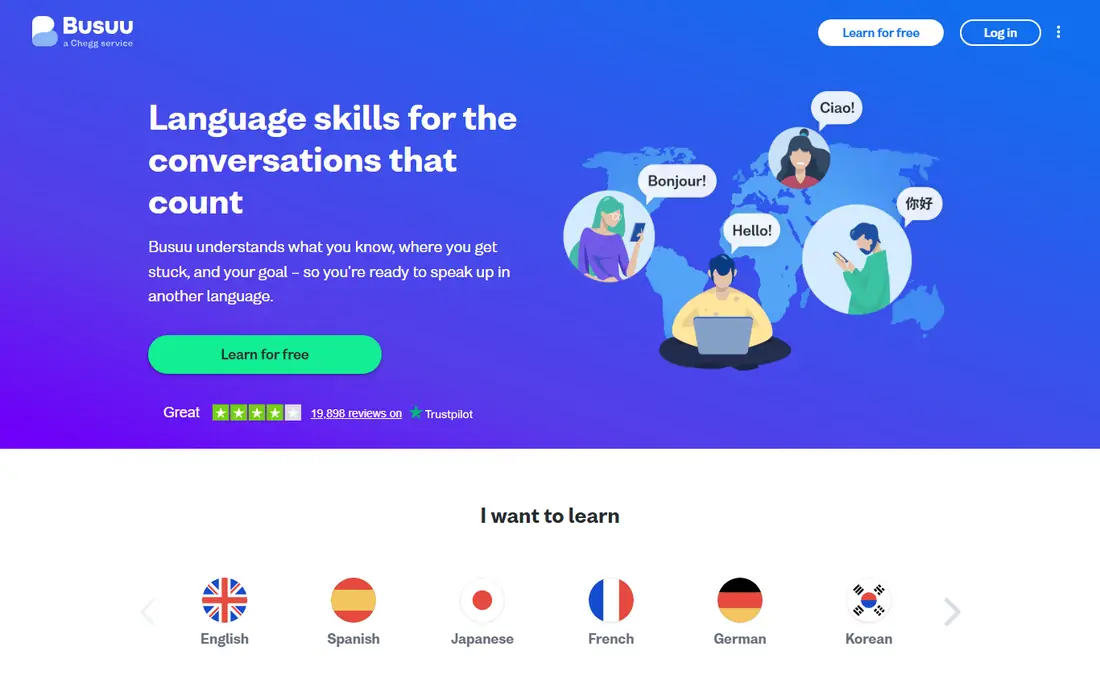
Busuu combines structured courses with feedback from native speakers in its community. Learners submit written and spoken exercises, and native speakers correct them, which gives real-world feedback that automated scoring cannot match. The free tier includes complete courses, which is more generous than many rivals, and a personalised study plan helps learners set a pace and track progress. Grammar lessons and vocabulary reviews support the community work.
The language range is narrower than Duolingo, and some advanced features, such as offline mode and grammar review tools, need a paid plan. Feedback speed also depends on community activity for a given language. For learners who want human correction without paying for a tutor, Busuu offers a practical middle ground between a self-study app and live lessons.
What we like- Free tier includes complete courses
- Native speaker feedback
- Personalised study plans
Watch out for- Language range is narrower than Duolingo
- Some features need a paid plan
Starting priceSee website
Free planYes
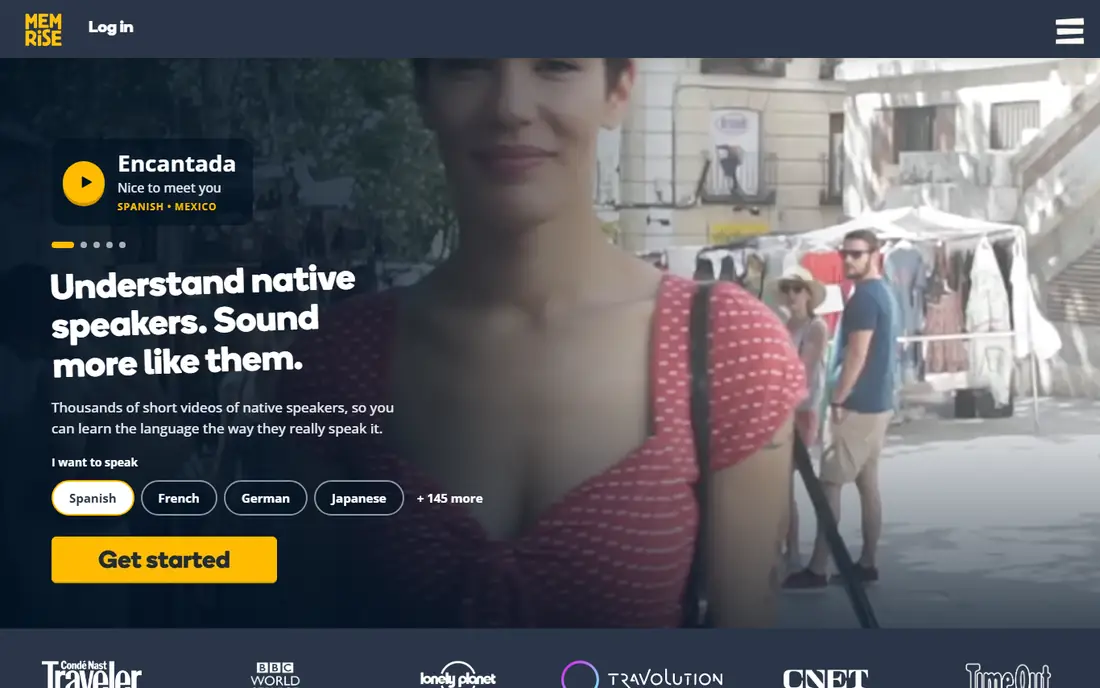
Memrise focuses on vocabulary and phrases, using video clips of native speakers so learners hear real pronunciation, rhythm, and facial expression. That video element helps learners recognise words in natural speech, not only in a clean studio recording. Spaced repetition schedules reviews to strengthen memory, and short sessions fit easily into a day. The app covers many languages, with community-created courses adding breadth beyond the official set.
Grammar teaching is less structured than Babbel, and course depth varies by language, with major languages receiving more content than smaller ones. Memrise works best as a vocabulary companion to a structured course or tutoring, rather than as the only learning tool. For learners who struggle to remember words, or who want to hear how phrases sound in real use, Memrise is a strong supplement.
What we like- Video clips of native speakers
- Spaced repetition for vocabulary
- Engaging short sessions
Watch out for- Less structured grammar teaching
- Course depth varies by language
#7italki
Best for: Live one-to-one tutoring3.8/5 on
G2 (19 reviews, checked Oct 2026)
Visit italki.com
Starting priceSee website
Free planYes
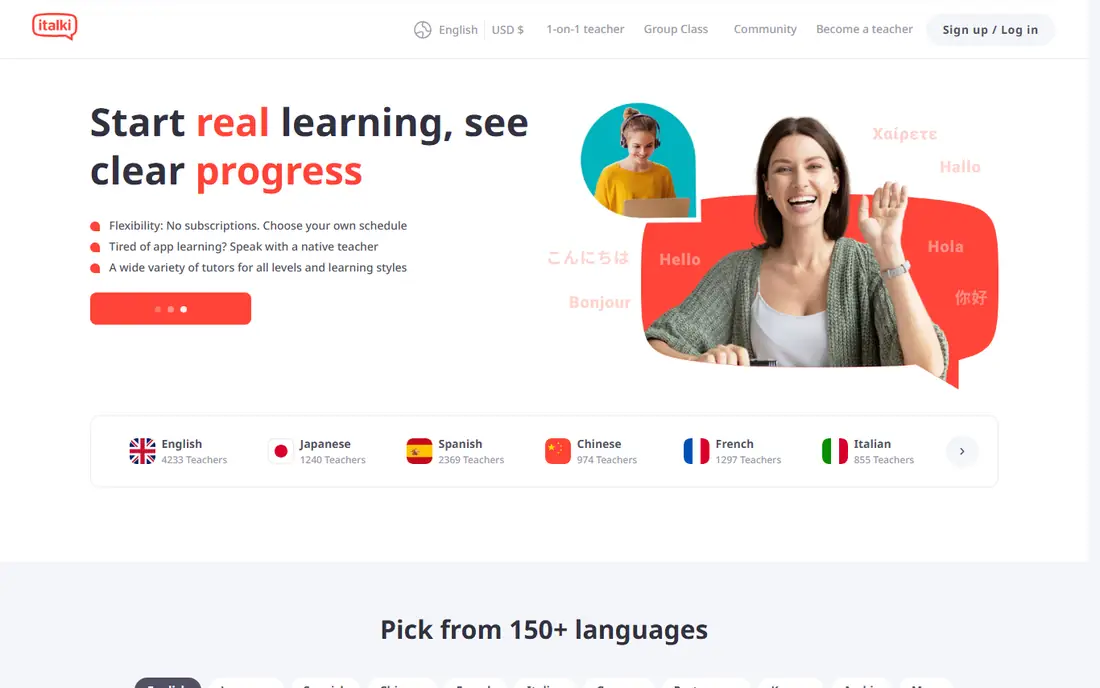
italki connects learners with tutors and professional teachers for live one-to-one lessons by video. That live conversation is the fastest way to improve speaking and listening, since a tutor can correct pronunciation, explain a phrase in context, and adapt to the learner level in real time. Learners choose a tutor by language, rate, availability, and focus, such as conversation, exam preparation, or business language, and book lessons flexibly without a fixed subscription.
Quality varies by tutor, so learners should try trial lessons with two or three tutors before committing. Cost also depends on tutor rates and how often lessons are booked, which can exceed a subscription app for frequent lessons. For learners who want real conversation and personal feedback, italki is the most direct route, and it pairs well with a self-study app for vocabulary and grammar between lessons.
What we like- Choose a tutor by language, price, and availability
- Live conversation practice
- Flexible booking
Watch out for- Quality varies by tutor
- Cost depends on tutor rates and lesson frequency
Starting priceSee website
Free planNo
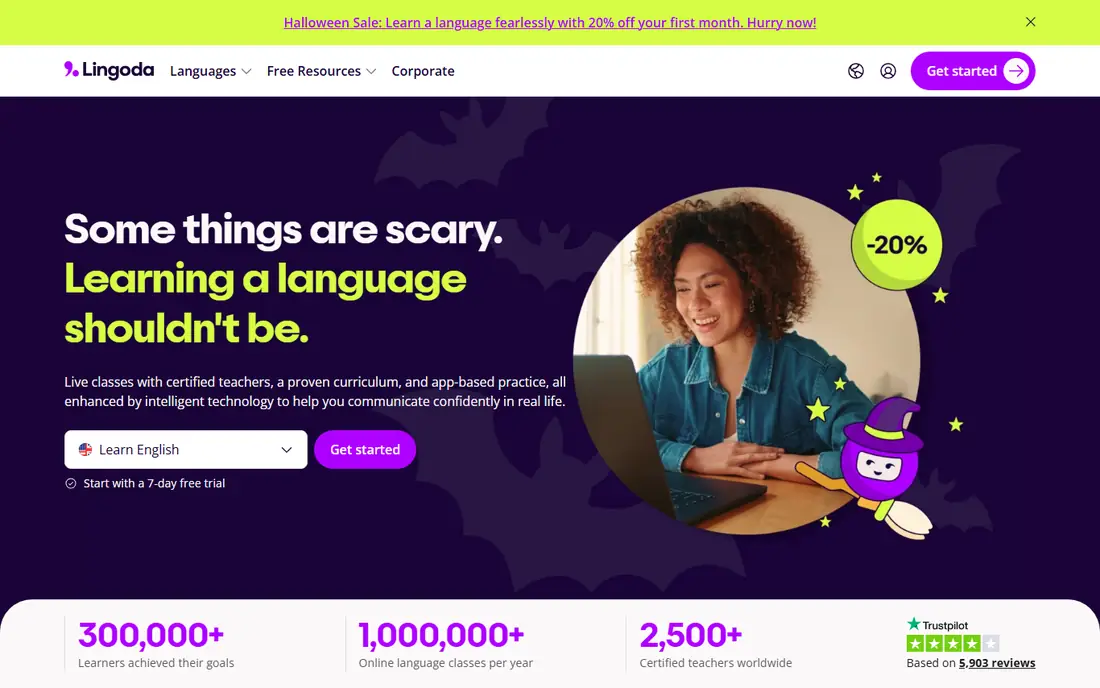
Lingoda offers live online classes in small groups, with a structured curriculum for English, German, French, Spanish, and business English. Classes run around the clock, so learners can book at a time that fits work and family life, and the small-group format gives speaking practice with a teacher and peers. That structure suits learners who want classroom accountability without travelling to a language school, and who benefit from a set curriculum rather than self-directed study.
Monthly cost is higher than a self-study app, and class availability varies by language and level. Learners in some timezones may find fewer convenient slots for advanced levels. For learners who want live teaching, peer practice, and a clear curriculum, Lingoda is a strong alternative to one-to-one tutoring, especially for those who enjoy group learning.
What we like- Live small-group classes with qualified teachers
- Structured curriculum
- Class scheduling around the clock
Watch out for- Higher monthly cost
- Class times may not suit every timezone or schedule
How we chose
We compared apps on teaching method, language range, speaking practice, feedback quality, and price structure. We checked each vendor homepage and pricing information, noted where a free tier is full versus trial-only, and weighed self-study against live teaching. We also considered offline use, since many learners study while travelling or commuting. No hands-on testing is claimed here, and prices are listed as See website where plans vary by language, billing period, and region.
Building a routine that actually lasts
Pick one core app and one practice partner, rather than five apps at once. A core app such as Babbel or Duolingo gives structure and daily lessons, while a practice partner such as Pimsleur, Memrise, italki, or Lingoda adds speaking, vocabulary, or live conversation. That pairing covers the main skills without splitting attention across too many systems. Set a small daily target, such as fifteen minutes, and keep it realistic for busy weeks, since consistency beats occasional long sessions.
Match the app to the skill you need most
If speaking is the goal, prioritise Pimsleur, italki, or Lingoda, and use a self-study app only for vocabulary between lessons. If reading is the goal, add graded readers and news in the target language alongside Babbel or Rosetta Stone. If travel is the goal, focus on practical phrases, listening, and pronunciation in the weeks before departure, rather than trying to complete a full course.
Use the free tier before paying
Try the free tier or trial of two or three apps for a week each, and judge them on whether you return daily, not only on feature lists. Check language availability for your exact target, since a language may be listed but have thin content. Confirm pricing for your billing period and region before subscribing, and check cancellation terms, since language subscriptions renew automatically on most platforms.
Add real language outside the app
Apps build a foundation, but real progress comes from hearing and using the language in context. Watch shows with subtitles, listen to podcasts, read short articles, and practise with a tutor or language partner when possible. That outside exposure turns app vocabulary into usable language, and it reveals gaps that an app alone may hide.
Frequently asked questions
What is the best foreign language app for beginners?
Duolingo is the best starting app for most beginners, thanks to its free tier, short lessons, and habit features. Babbel suits beginners who want more grammar structure, while Pimsleur suits beginners who prefer audio learning.
Can an app make me fluent?
An app alone rarely leads to fluency, but it can build a strong foundation. Fluency also needs live conversation, extensive listening and reading, and regular practice over months or years. Pair an app with tutoring, classes, or immersion for the best results.
Which app is best for speaking practice?
Pimsleur, italki, and Lingoda give the most speaking practice. Pimsleur builds speaking through audio lessons, while italki and Lingoda give live conversation with a tutor or teacher. Duolingo and Memrise support speaking less directly.
Are free language apps good enough?
Free tiers from Duolingo, Busuu, and Memrise cover a useful amount of beginner and intermediate material. Paid plans add offline access, extra features, and full courses, but a motivated learner can make real progress on a free tier, especially when paired with free reading and listening material.
How much time should I study each day?
Fifteen to thirty minutes a day, kept consistent, is a realistic target for most learners. Short daily practice beats occasional long sessions, since spaced repetition works best with regular review. Increase the time gradually as the habit becomes stable.
Which app should I choose for a less common language?
Check language availability and course depth before subscribing, since coverage varies widely. Duolingo and Memrise cover many languages, while italki can help for almost any language through live tutors, even when a structured course is thin.
Sources we checked (8)
- https://www.duolingo.com
- https://www.babbel.com
- https://www.rosettastone.com
- https://www.pimsleur.com
- https://www.busuu.com
- https://www.memrise.com
- https://www.italki.com
- https://www.lingoda.com
Is your product missing or out of date?
We review this list regularly. Vendors can request a listing, send updated pricing or ask about featured placement.

Shihab Mia · Founder, Rankite
Shihab has 5+ years in B2B and SaaS SEO. He writes Rankite's software buying guides from pricing pages, documentation and public user reviews. More about Shihab.