How we make this list: we compare pricing pages, product documentation and public user reviews. Ratings come from G2, Capterra or Trustpilot, with the date we checked them.
Key takeaways
- Babbel is the best structured alternative, with grammar-led lessons built by language experts.
- Rosetta Stone suits learners who want immersion without translation.
- Busuu combines lessons with feedback from native speakers.
- Pimsleur is the best audio-first option for learning while driving or walking.
- Memrise and Drops suit vocabulary building, while LingQ suits learners who learn from real content.
Duolingo made language learning a daily habit for millions, with short lessons, streaks and a friendly owl. Its alternatives take different paths. Some teach grammar properly. Others focus on speaking, listening or reading real material. The eight below cover those paths, and the right one depends on why Duolingo stopped working for you.
Most language apps charge monthly or annually, with free tiers that limit lessons or features. Prices below are marked "See website" where plans and discounts change often. A free trial or a week on the free tier tells you more than any review about whether a method fits you.
Quick comparison
| Tool | Best for | Starting price | Free plan |
|---|
 Babbel | Structured grammar-led lessons | See website | Free trial |
 Rosetta Stone | Immersion without translation | See website | Free trial |
 Busuu | Native speaker feedback | See website | Yes |
 Pimsleur | Audio-first learning | See website | Free trial |
 Memrise | Vocabulary and video clips | See website | Yes |
 LingQ | Learning from real content | See website | Yes |
 Drops | Visual vocabulary drills | See website | Yes |
 Mango Languages | Library-based learning | See website | Yes |
Is your product missing or out of date?
We review this list regularly. Vendors can request a listing, send updated pricing or ask about featured placement.
The best Duolingo alternatives
Starting priceSee website
Free planFree trial
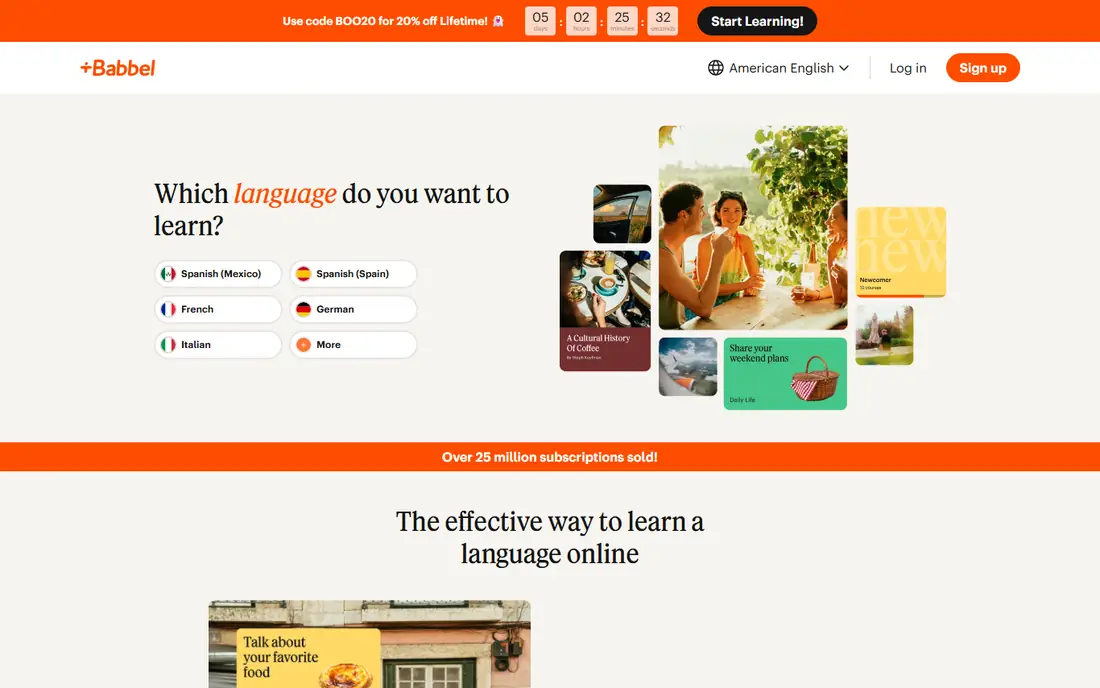
Babbel takes a classroom approach in app form. Lessons follow a curriculum built by linguists, with grammar explained plainly and vocabulary tied to real situations like travel, work and daily life. Speech recognition checks pronunciation, and a review system brings back words at intervals for retention. The method suits learners who felt Duolingo was fun but shallow.
The game layer is thinner, so learners who need streaks and leagues for motivation may miss them. Language choice is also narrower. For a learner who wants to understand how a language works, not just memorise phrases, Babbel is the strongest structured alternative.
What we like- Lessons built by language experts with clear grammar
- Speech recognition for pronunciation
- Review system for retention
Watch out for- Language range is smaller than Duolingo
- Less game-like, which some learners miss
#2Rosetta Stone
Best for: Immersion without translation4.2/5 on
G2 (113 reviews, checked Oct 2026)
Visit rosettastone.com
Starting priceSee website
Free planFree trial
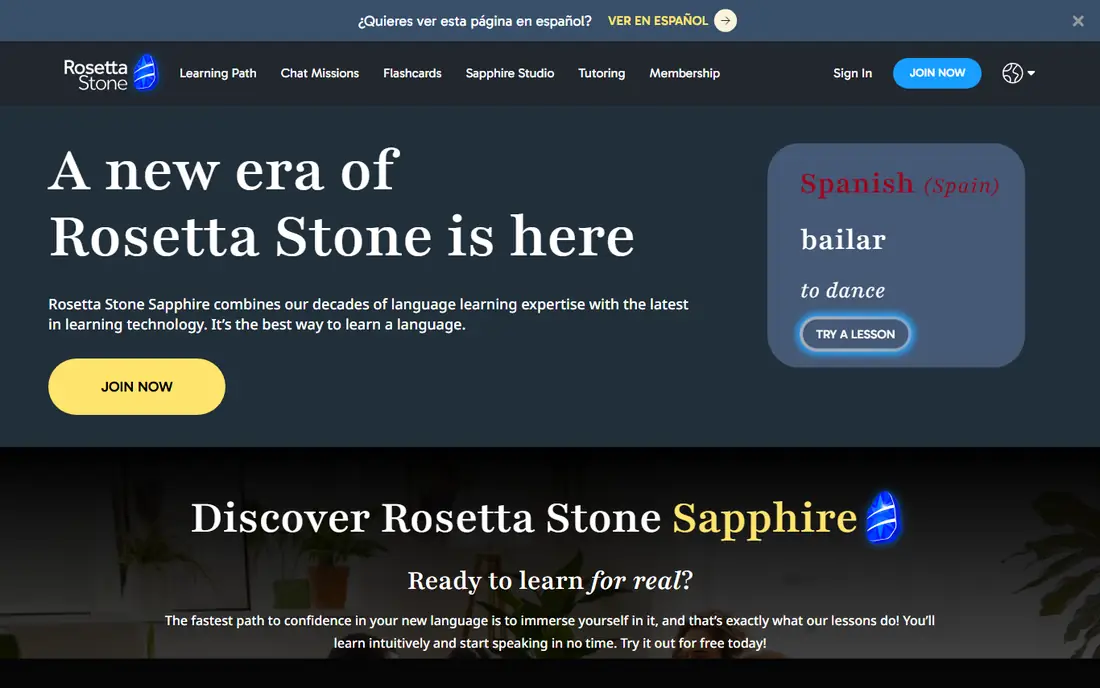
Rosetta Stone teaches without translation. Pictures, audio and text combine so learners connect words directly to meanings, much like a child learning a first language. Pronunciation scoring gives feedback on speaking, and the programme has decades of use in schools, companies and the military.
Grammar rules are rarely explained outright, which frustrates learners who want to know why a form changes. Pricing also sits above most app rivals. For a learner who prefers immersion and is happy to absorb patterns through repetition, Rosetta Stone remains a proven method.
What we like- Immersion method links images and speech directly
- Pronunciation scoring
- Long track record
Watch out for- Grammar explanations are minimal
- Price is higher than most rivals
#3Busuu
Best for: Native speaker feedback4.4/5 on
G2 (71 reviews, checked Oct 2026)
Visit busuu.com
Starting priceSee website
Free planYes
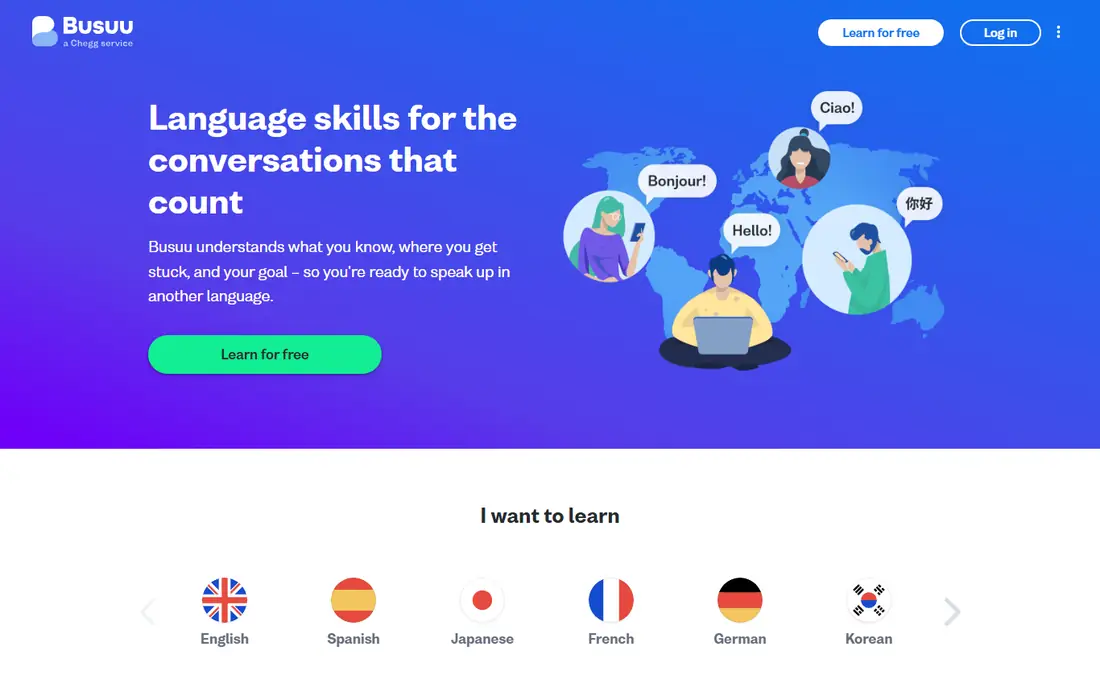
Busuu pairs structured courses with a community of native speakers who correct written and spoken exercises. Courses map to CEFR levels from beginner to upper intermediate, so progress is measurable against a real standard. Offline mode covers lessons for travel, and the app includes grammar tips and vocabulary review.
The free tier limits lessons, and correction speed depends on community activity for your language. For a learner who wants human feedback without paying for a tutor, Busuu's community is its best feature.
What we like- Lessons plus corrections from native speakers
- Structured courses to CEFR levels
- Offline mode
Watch out for- Free tier is limited
- Community feedback speed varies
#4Pimsleur
Best for: Audio-first learning4.3/5 on
G2 (2 reviews, checked Oct 2026)
Visit pimsleur.com
Starting priceSee website
Free planFree trial
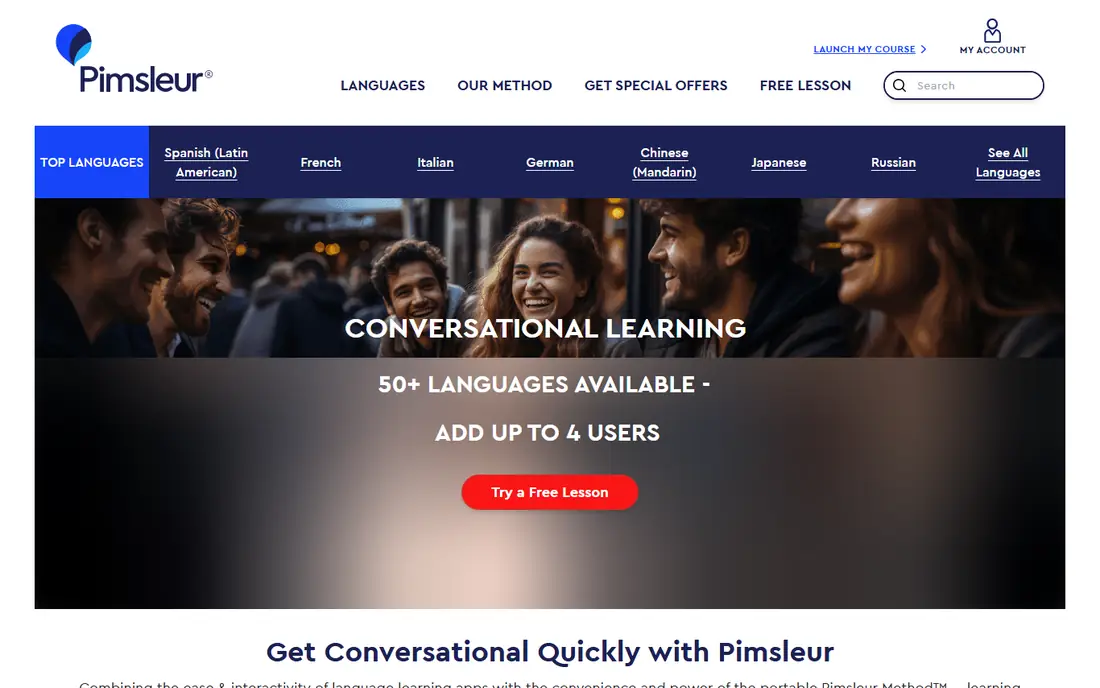
Pimsleur is the audio method. Thirty-minute lessons use spaced repetition and call-and-response to build speaking and listening skills, and the method works while driving, walking or doing chores. The approach suits learners whose goal is conversation rather than reading, and it has a long record with travellers, military learners and business users.
Reading and writing receive less focus, so learners who need literacy should pair Pimsleur with another app. Pricing is higher than most app subscriptions. For a learner who wants to speak confidently on a trip, Pimsleur is the best audio-first choice.
What we like- Audio lessons built for speaking and listening
- Spaced repetition is core to the method
- Hands-free learning
Watch out for- Reading and writing get less attention
- Subscription cost is higher than app rivals
Starting priceSee website
Free planYes
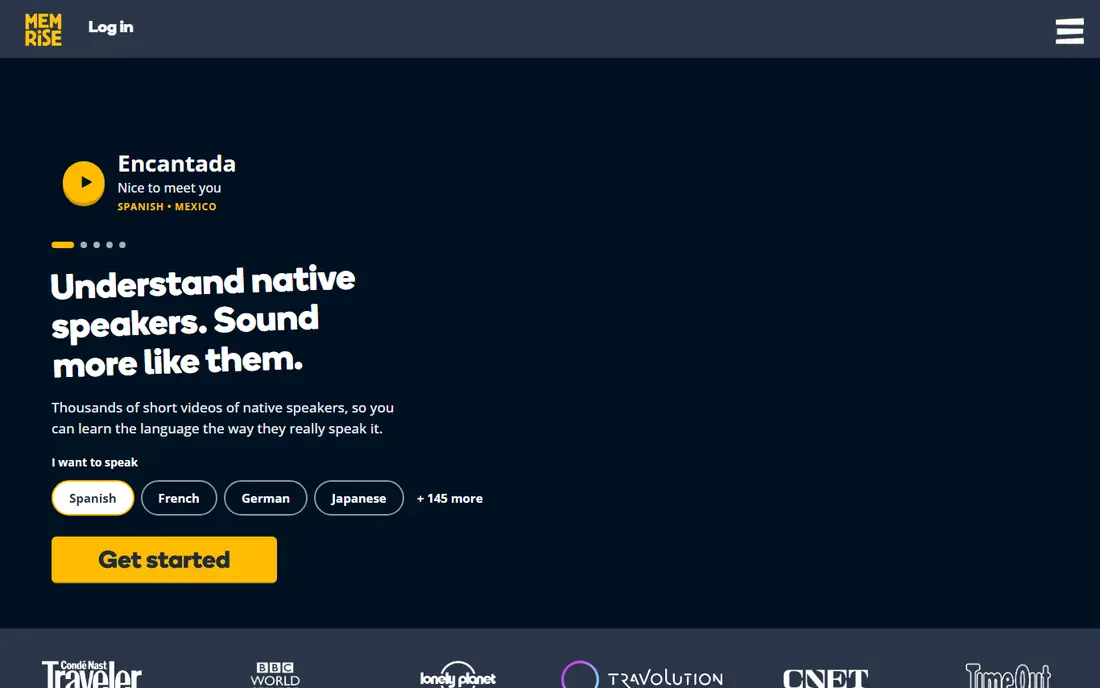
Memrise builds vocabulary fast, using video clips of native speakers so learners hear real pronunciation and see real usage. Spaced repetition schedules reviews, and short lessons fit into spare minutes. The app's tone is playful, which keeps daily practice easy.
Grammar instruction is light, and course depth varies by language, with popular languages far richer than rare ones. For a Duolingo user who wants better vocabulary retention and real-speaker video, Memrise is a natural next step.
What we like- Video clips of native speakers
- Spaced repetition for vocabulary
- Engaging, fast lessons
Watch out for- Grammar teaching is light
- Course depth varies by language
Starting priceSee website
Free planYes
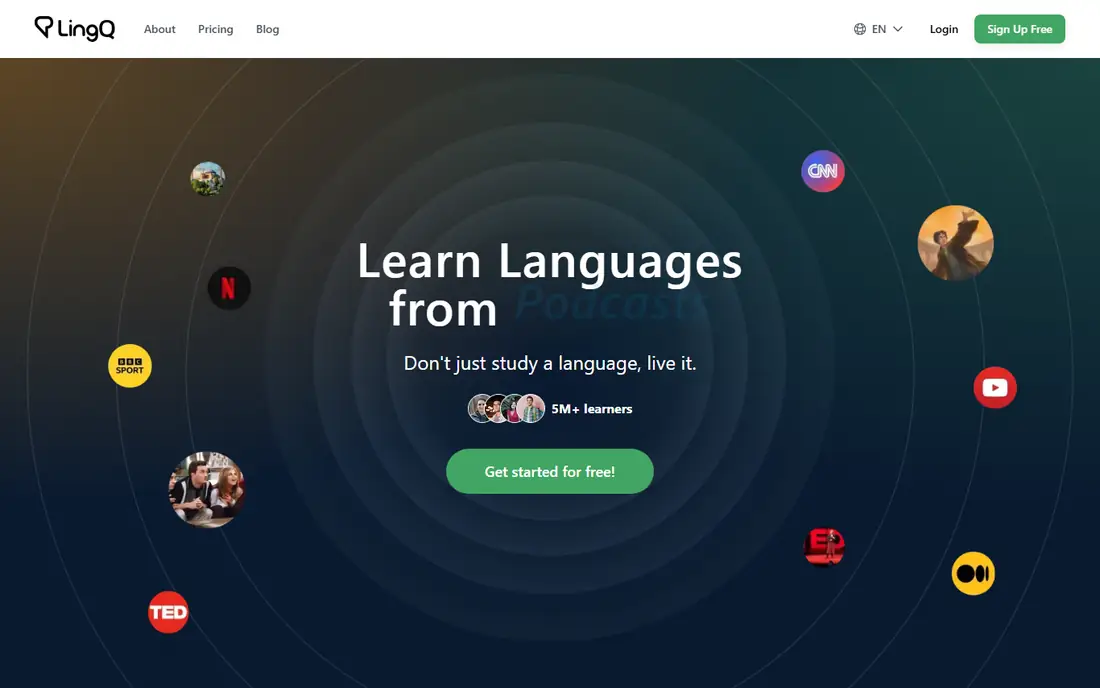
LingQ flips the usual method. Instead of a fixed course, you import or choose real content, such as articles, books and podcasts, and the app tracks every word you know, are learning or have ignored. Clicking an unknown word shows its meaning and adds it to review. The library holds thousands of lessons across languages.
Beginners can feel lost without a set path, since content choice is theirs. For an intermediate learner who wants to move from exercises to real reading and listening, LingQ is the most effective bridge.
What we like- Learn from articles, books, podcasts and videos you choose
- Vocabulary tracking across content
- Large content library
Watch out for- Interface takes learning
- Beginners need guidance on what to read
Starting priceSee website
Free planYes
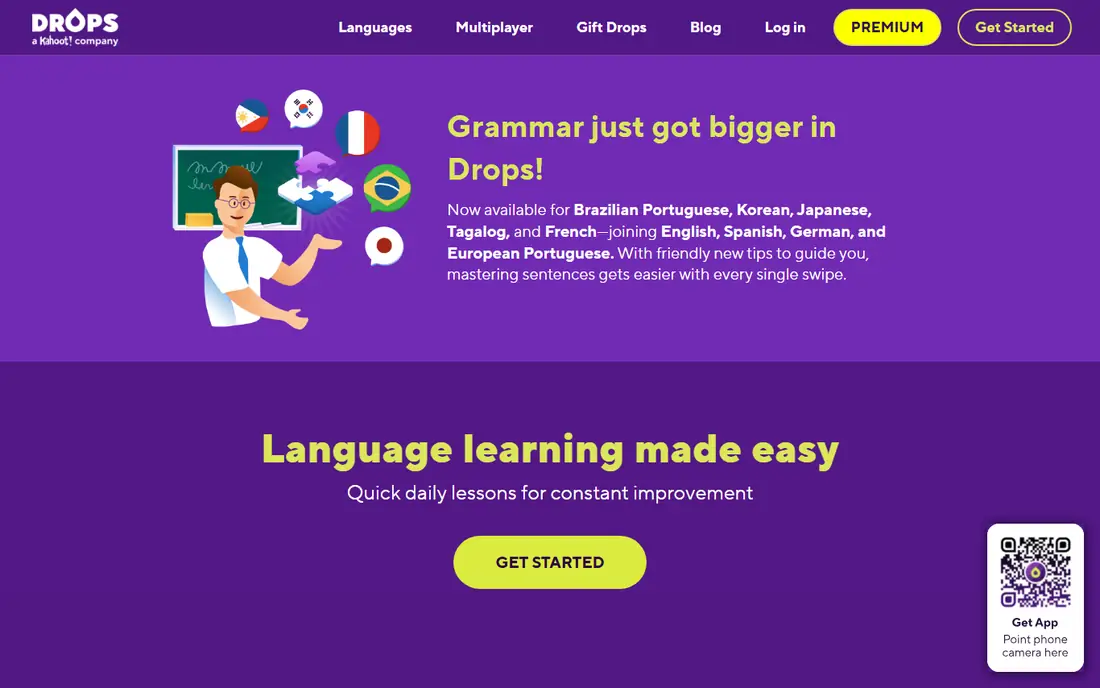
Drops teaches vocabulary through fast, visual five-minute drills. Words pair with illustrations and audio, and the short sessions fit into any gap in the day. The method suits building a base of everyday words before a trip or alongside a grammar app.
There is no grammar teaching and no conversation practice, and free sessions are capped at five minutes unless you pay. For a learner who wants a daily vocabulary habit that feels like a game, Drops is the most attractive option here.
What we like- Beautiful visual vocabulary drills
- Five-minute sessions
- Good for building a word base fast
Watch out for- No grammar or conversation practice
- Free sessions are time-limited
Starting priceSee website
Free planYes
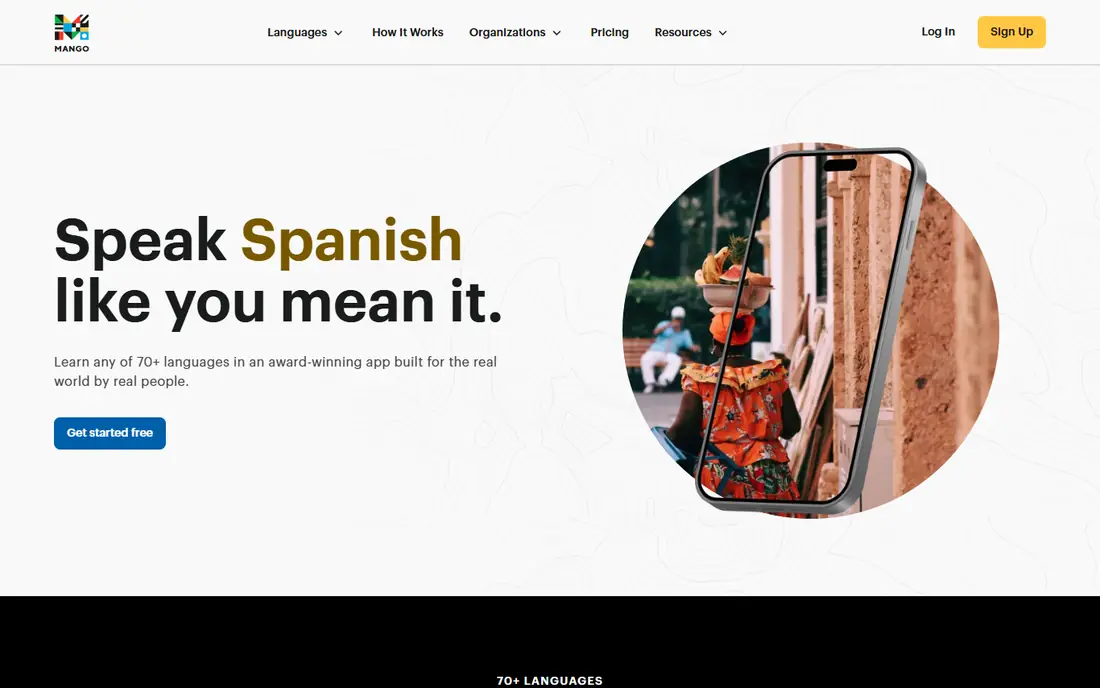
Mango Languages teaches through conversation, with courses built around real dialogues and cultural notes that explain why phrases work as they do. Many public libraries offer it free to cardholders, which makes it the cheapest full course for many learners. The language range is broad, including less common languages that app rivals skip.
The interface looks dated, and speaking practice is thinner than Pimsleur's audio method. For a learner with library access who wants a proper course at no cost, Mango Languages is the best-kept secret in this guide.
What we like- Conversation-based courses with cultural notes
- Free through many public libraries
- Broad language range
Watch out for- Interface feels dated
- Speaking practice is thinner than Pimsleur
How we chose
We compared apps on their published methods, pricing pages, language ranges and public reviews from learners. We favoured apps with a clear teaching method, not just gamification, and a free tier or trial for testing. Prices were marked "See website" because subscription pricing and discounts change often. We did not claim hands-on testing.
Matching the app to your goal
Start with why you learn. For travel conversation, Pimsleur or Busuu fits best. For understanding grammar, Babbel fits best. For reading real material, LingQ fits best. For vocabulary, Memrise or Drops fits best. For a free full course, Mango through a library fits best. Most successful learners pair two apps: one for structure and one for vocabulary or listening.
Also consider time. Five minutes a day suits Drops or Memrise, while thirty minutes suits Pimsleur or Babbel lessons. A method you actually use beats a better method you abandon, so pick the one whose daily habit you can keep for three months and reassess then.
Language apps work best paired with real conversation. Use the app daily for vocabulary and grammar, then add one weekly conversation session with a tutor or language partner, even a short thirty-minute exchange, since speaking practice exposes gaps that exercises hide. Focus app time on your weakest skill: if you read well but freeze when speaking, spend app time on speaking and listening exercises rather than more reading drills. Track progress by what you can do, such as ordering food, explaining a problem or telling a story about your weekend, rather than by streak days or points, because a long streak with no real ability is a common trap. Review old lessons regularly, since spaced repetition only works when the app actually resurfaces material you are about to forget.
Pronunciation improves fastest with shadowing. Listen to a short native sentence, then repeat it immediately while the sound is fresh, matching rhythm and intonation rather than just individual words. Do this for five minutes daily with app audio or podcast clips, recording yourself occasionally to hear progress. Shadowing feels awkward at first, but it trains mouth muscles and listening together, which silent study never does. Pair it with reading the same sentence aloud from text, so sound and spelling connect. After a month of daily shadowing, most learners notice strangers understanding them more easily, which is the real test of pronunciation.
Frequently asked questions
What is the best alternative to Duolingo?
Babbel is the best structured alternative, with grammar-led lessons and clear progression. Busuu adds native speaker feedback, while Pimsleur suits audio learners. The best pick depends on whether you want grammar, speaking or reading practice.
Is Babbel better than Duolingo?
Babbel teaches grammar more explicitly and follows a structured curriculum, which suits learners who want to understand a language deeply. Duolingo is more game-like and better for daily habit building. Many learners use Babbel for study and Duolingo for habit, or switch to Babbel when Duolingo feels too shallow.
Can I learn a language free with these apps?
Yes, several offer free tiers. Busuu, Memrise, LingQ and Drops have free plans, and Mango Languages is free through many public libraries. Free tiers limit lessons or features, but they are enough to test a method before paying.
How long does it take to learn a language with an app?
Reaching conversational level usually takes several months of daily practice, depending on the language and your starting point. Apps build a foundation, but speaking with real people accelerates progress far more than app lessons alone. Pair app study with conversation practice for the fastest results.
Does Pimsleur work without reading?
Yes, Pimsleur is designed for audio-first learning, with lessons you can complete while driving or walking. Reading and writing receive less attention, so pair it with a reading app like LingQ or a course like Babbel if literacy matters to you.
Which app is best for Spanish specifically?
Babbel, Pimsleur and Busuu all have strong Spanish courses, and Spanish is well covered on every app here. Babbel suits grammar-focused learners, Pimsleur suits speakers, and Busuu suits learners who want native feedback. Try the free tiers of two and pick the method you enjoy most.
Sources we checked (8)
- https://www.babbel.com
- https://www.rosettastone.com
- https://www.busuu.com
- https://www.pimsleur.com
- https://www.memrise.com
- https://www.lingq.com
- https://www.languagedrops.com
- https://mangolanguages.com
Is your product missing or out of date?
We review this list regularly. Vendors can request a listing, send updated pricing or ask about featured placement.

Shihab Mia · Founder, Rankite
Shihab has 5+ years in B2B and SaaS SEO. He writes Rankite's software buying guides from pricing pages, documentation and public user reviews. More about Shihab.