How we make this list: we compare pricing pages, product documentation and public user reviews. Ratings come from G2, Capterra or Trustpilot, with the date we checked them.
Key takeaways
- Chinese can be learned for free to a solid intermediate level if you combine a course app, a dictionary, and a flashcard system instead of relying on one app.
- Tones and characters are the two skills that need dedicated tools: a dictionary with audio and a flashcard app will do more for you than another general course.
- Most "free" apps in this list offer a genuinely usable free tier, with paid upgrades that mainly remove limits or add advanced content.
- Live tutoring is the only item here that is not free, but italki lessons start low enough to fit a small budget once a week.
Quick comparison
| Tool | Best for | Starting price | Free plan |
|---|
 Duolingo | Building a free daily Chinese habit | $12.99 per month | Yes |
 Pleco | Looking up any word or character instantly | Free | Yes |
 Anki | Memorizing characters and vocabulary long term | Free | Yes |
 SuperChinese | A structured path from beginner to intermediate | See website | Free trial |
 Du Chinese | Reading real Chinese at exactly your level | See website | Yes |
 italki | Live lessons with tutors at low prices | $5 per hour | No |
 LingoDeer | Learners who want grammar explained clearly | See website | Free trial |
 ChineseSkill | Free structured lessons with teacher-designed content | Free | Yes |
Is your product missing or out of date?
We review this list regularly. Vendors can request a listing, send updated pricing or ask about featured placement.
The best apps to learn Chinese for free
#1Duolingo
Best for: Building a free daily Chinese habit4.5/5 on
G2 (145 reviews, checked Oct 2026)
Visit duolingo.com
Starting price$12.99 per month
Free planYes
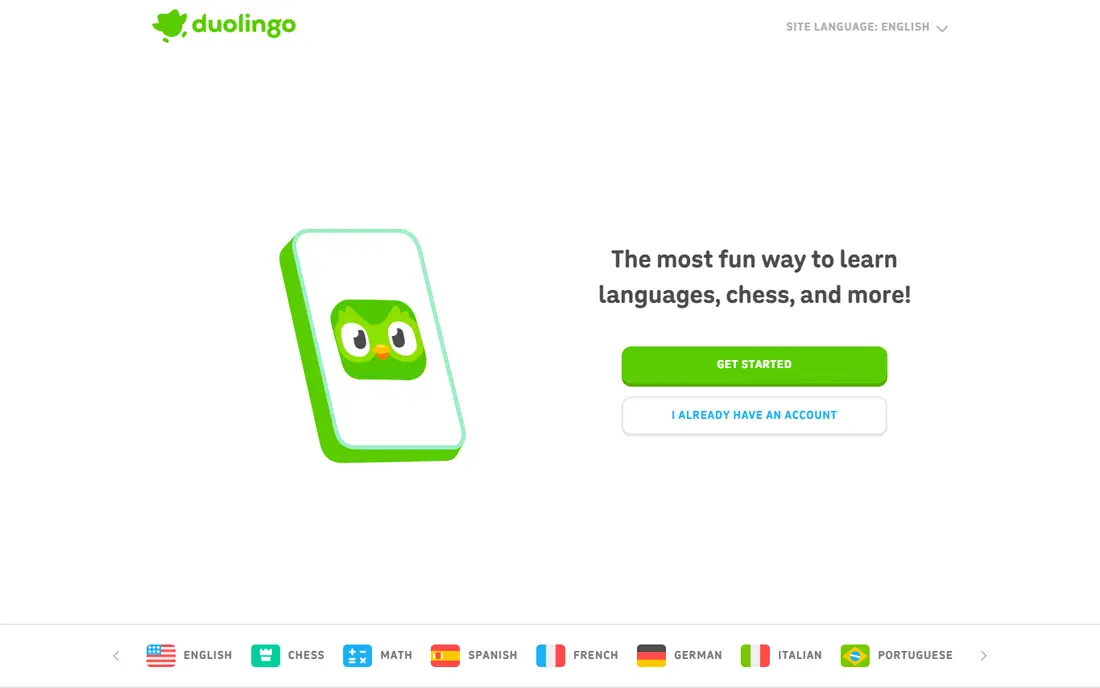
Duolingo remains the simplest free entry point for Mandarin. The Chinese course introduces pinyin alongside characters from the start, and tone practice is built into listening exercises. Lessons are short, the app is free with ads, and the streak system gives most learners a reason to open it every day.
The limits show up at the intermediate stage. Duolingo explains little grammar, and its sentences stay simple for a long time. It also caps free practice with an energy system, so heavy study days get cut short unless you pay for Super. Treat Duolingo as your daily foundation, not your whole curriculum, and pair it with reading and a dictionary.
What we like- Full course available free
- Teaches pinyin, characters, and tones together
- Streaks keep practice consistent
Watch out for- Grammar explanations are thin
- Speaking practice is limited
- The energy system caps free daily practice
#2
Pleco
Best for: Looking up any word or character instantly
Visit pleco.com
Starting priceFree
Free planYes
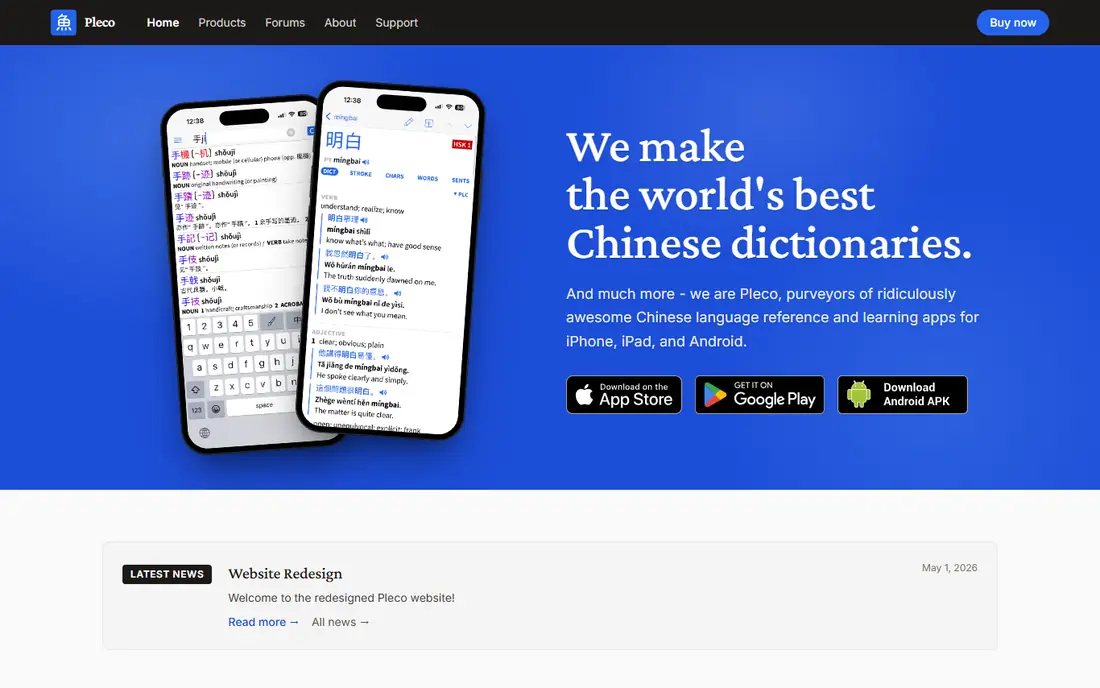
Pleco is the dictionary almost every serious Chinese learner ends up installing. Point your camera at a menu or a page and it translates the words live. Draw a character you do not recognize and it finds it even if your stroke order is shaky. Audio from native speakers covers tens of thousands of words, and the flashcard system turns any dictionary entry into a review card.
The base app and several dictionaries are free, which is enough for most learners. Paid add-ons, such as extra dictionaries and the document reader, are optional. Pleco will not teach you Chinese on its own, but no other tool on this list makes the language around you readable as fast.
What we like- Huge dictionary collection including Oxford titles
- Camera and handwriting lookup
- Flashcards built in
Watch out for- Paid add-ons add up if you want every dictionary
- The interface looks dated
- No structured course
#3Anki
Best for: Memorizing characters and vocabulary long term4.6/5 on
G2 (34 reviews, checked Oct 2026)
Visit apps.ankiweb.net
Starting priceFree
Free planYes
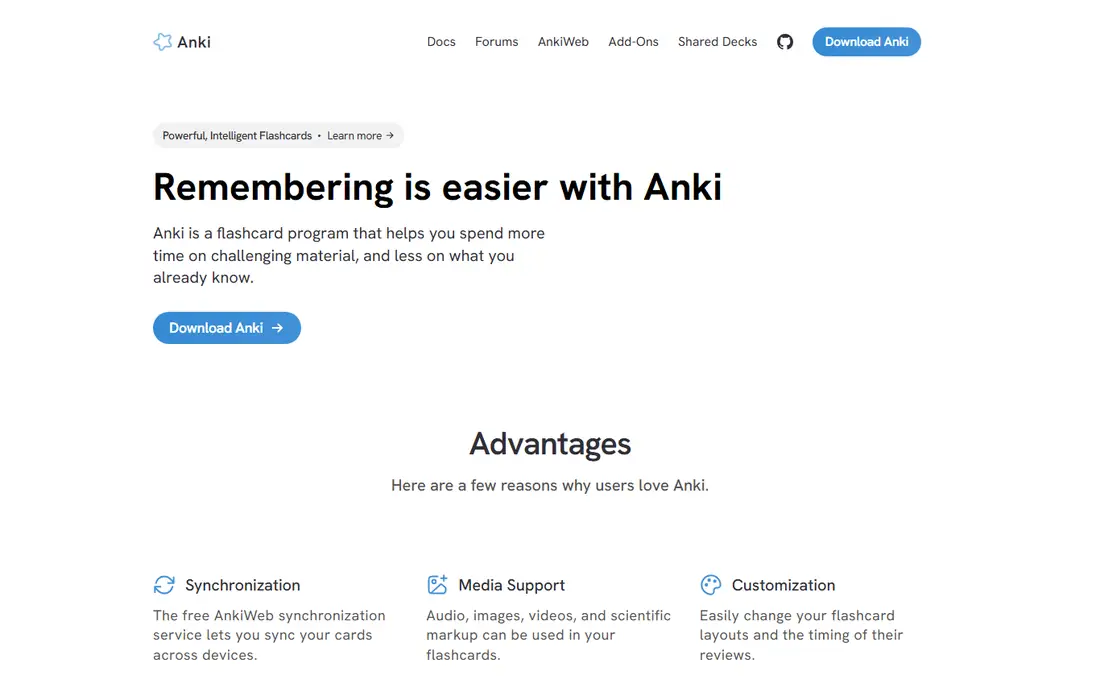
Anki is a flashcard program built on spaced repetition: cards you struggle with return soon, cards you know return later. That schedule is exactly what Chinese characters need, since a character you read today fades fast without review. Shared decks cover HSK vocabulary, common characters, and sentence patterns, so you can start reviewing in minutes.
The trade-off is setup. Anki looks plain, and building your own decks takes thought, though shared decks remove most of that work. The desktop and Android apps are free, while the official iOS app costs a one-time fee. For learners who stick with it, Anki is the highest-return free tool for characters.
What we like- Spaced repetition is proven and adjustable
- Thousands of free shared Chinese decks
- Syncs across devices
Watch out for- The interface is plain and takes setup
- Making good cards takes effort
- The iOS app is a paid one-time purchase
Starting priceSee website
Free planFree trial
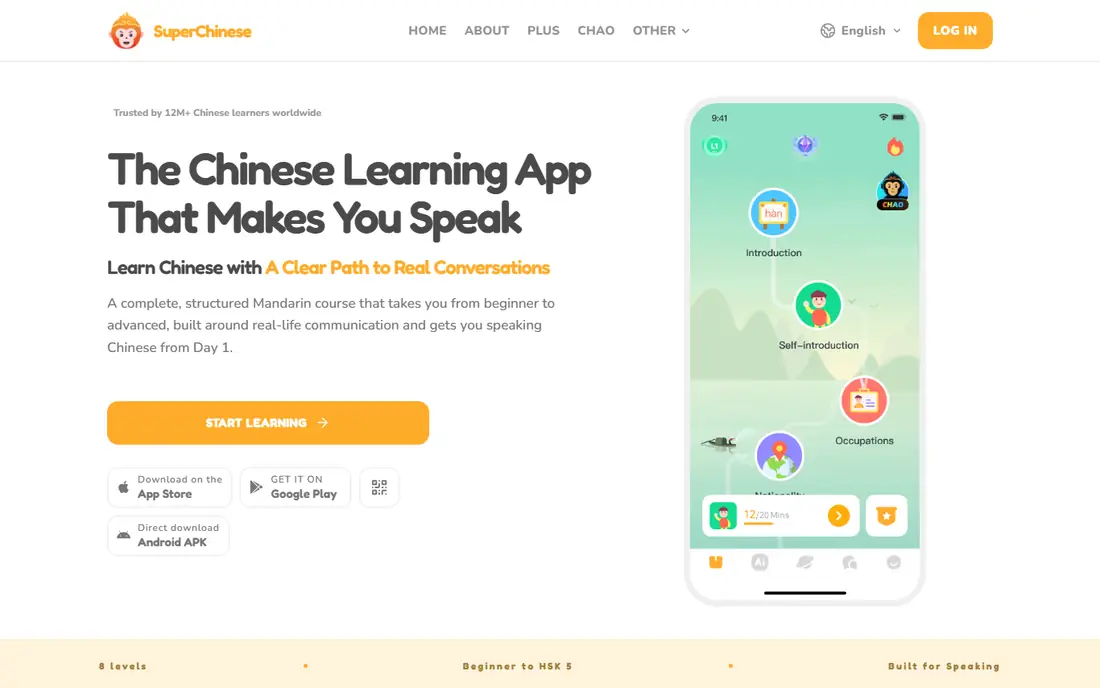
SuperChinese offers a guided Mandarin course that takes you from your first sentence toward HSK 5 material, in ten-minute lessons built around real situations. An AI teacher gives speaking feedback, and the path removes the daily question of what to study next. Learners who restarted Chinese several times often credit the structure with keeping them going.
The catch is that the free portion is a trial, not a full free course, and prices are shown at checkout rather than on a public pricing page. Use the trial to judge whether the lesson style suits you before paying. For self-study learners who want a path rather than a pile of resources, it is a strong option.
What we like- Clear eight-level path aligned to HSK levels
- Ten-minute lessons fit busy days
- AI speaking practice gives feedback
Watch out for- Full access requires a subscription
- Advanced content is thinner than beginner content
- Some features need the app
Starting priceSee website
Free planYes
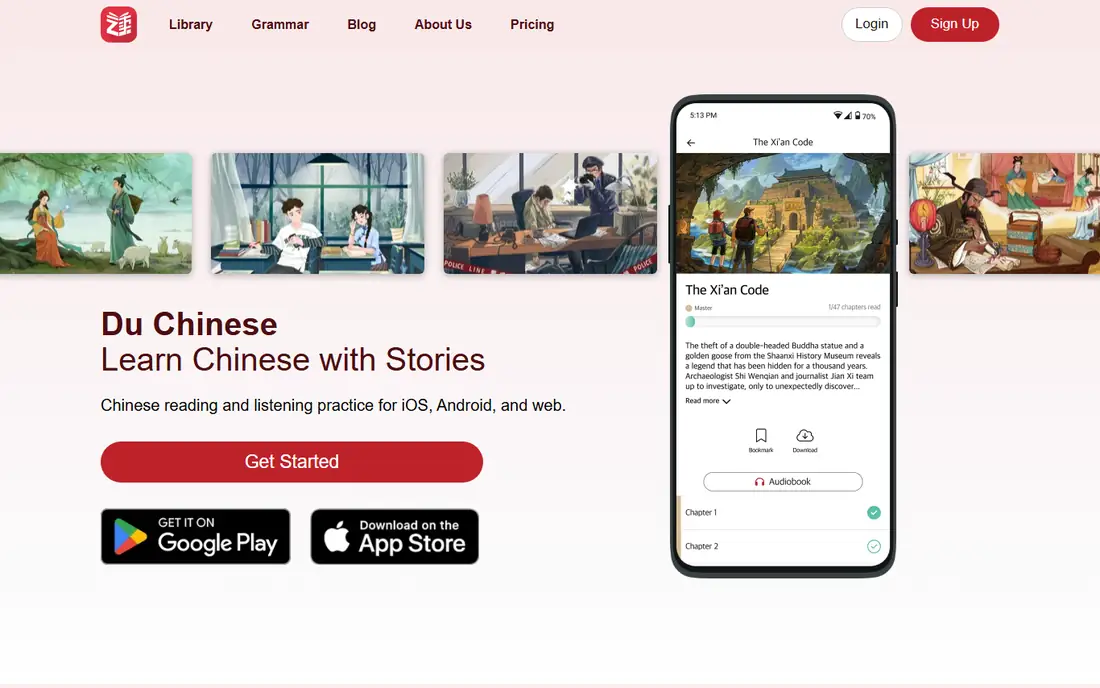
Du Chinese solves the hardest problem for intermediate learners: finding something you can actually read. Its library holds thousands of graded stories and articles, from 150-character beginner tales to master-level novels, each with tap-to-translate words, grammar notes, and native audio. Reading at your level builds vocabulary faster than drills, because words appear in context.
It is a reading tool, not a course. You will not learn tones or speaking here, and the free tier covers only part of the library. But learners who read daily in Du Chinese commonly report the fastest jump in character recognition, and the app exports flashcards to Pleco and Anki, which ties your whole study system together.
What we like- Thousands of graded readings from newbie to master
- Tap any word for meaning and grammar notes
- Native-speaker audio
Watch out for- Reading only, no speaking course
- The free tier limits full access
- No tutor or conversation feature
#6italki
Best for: Live lessons with tutors at low prices3.8/5 on
G2 (19 reviews, checked Oct 2026)
Visit italki.com
Starting price$5 per hour
Free planNo
italki is a marketplace of professional teachers and community tutors, and it is the cheapest way to get live Chinese conversation. Prices start around $5 per hour according to the site, and you book only the lessons you want, with no subscription. Trial lessons let you test a teacher before committing, and many tutors build lessons around HSK exams, business Chinese, or daily conversation.
The weakness is consistency. Teachers differ in quality, and without a curriculum you must drive your own goals. That is manageable if you arrive with a plan, such as reviewing your Du Chinese reading or practicing tones. One weekly lesson is enough to keep speaking real, and it costs less than most app subscriptions.
What we like- Pay per lesson with no subscription
- Teachers set their own prices from a few dollars
- Trial lessons let you test a tutor
Watch out for- Quality varies between teachers
- Scheduling takes effort
- No structured curriculum unless your teacher provides one
Starting priceSee website
Free planFree trial

LingoDeer stands out for grammar. Where many apps drill phrases, LingoDeer explains how sentences are built, which matters in Chinese, where word order and particles carry meaning that English speakers miss. Lessons include native audio, built-in flashcards, and stories that recycle new words in context.
The free portion covers only the start of the course, and prices are shown in the app rather than on a public pricing page. LingoDeer suits learners who like to understand rules before practicing them, and it pairs well with Du Chinese reading once you reach the intermediate stage.
What we like- Grammar-based curriculum built by teachers
- Detailed explanations for tones and sentence structure
- Native-speaker audio
Watch out for- Full access needs a subscription
- Chinese content is smaller than its Japanese and Korean courses
- No live tutoring
Starting priceFree
Free planYes
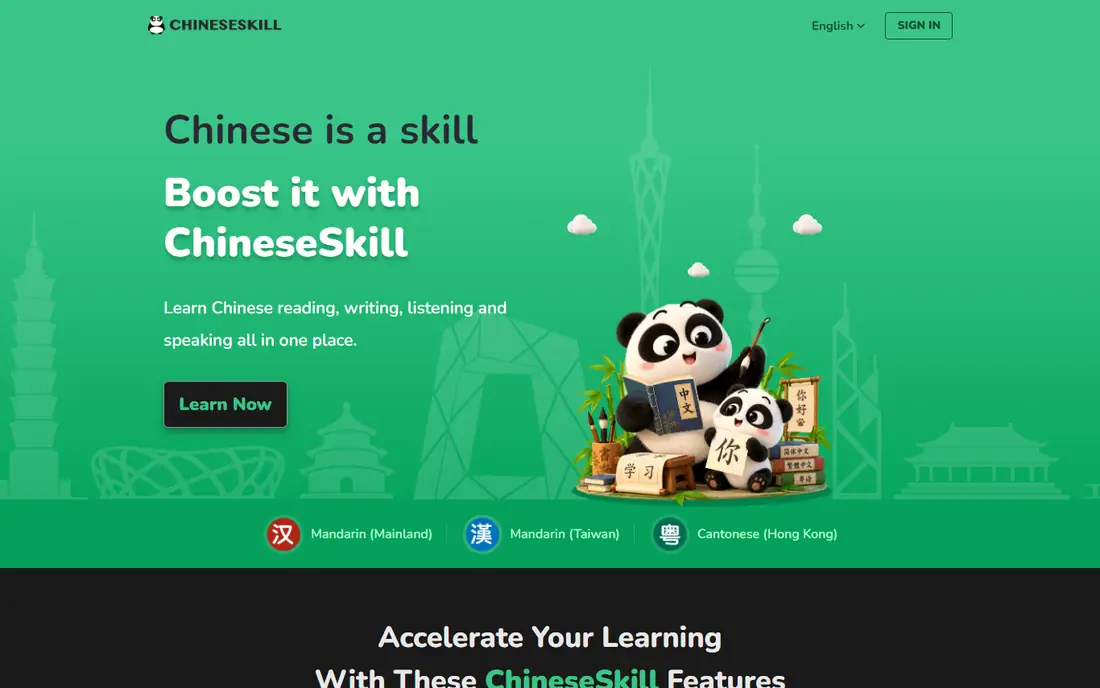
ChineseSkill offers a full beginner-to-intermediate Mandarin curriculum designed by Chinese teachers, with short lessons that mix vocabulary, grammar, and all four skills. The free tier covers a large part of the course, which makes it one of the genuinely free options on this list rather than a short trial.
The limit is the ceiling: the curriculum tops out around HSK 4, so advanced learners will outgrow it. Some features also require a paid plan. For a learner starting from zero on a zero budget, ChineseSkill plus Pleco and Anki form a complete free system.
What we like- Curriculum guides you from zero to HSK 4
- 15-minute lessons cover reading, writing, listening, and speaking
- Native audio throughout
Watch out for- Advanced content is limited
- Some features are locked behind a subscription
- Fewer user reviews than bigger apps
How we chose
We checked each vendor homepage to confirm it loads and belongs to the product listed, and we dropped one planned tool when its domain turned out to be for sale. Prices were checked against recent vendor and comparison sources, and where prices were not published or sources disagreed we used "See website" rather than publish a figure we could not stand behind. We favored tools with genuinely usable free tiers, and we covered the four skills a Chinese learner needs: course structure, dictionary lookup, character memory, and reading.
How to study Chinese for free without stalling
Start with one course app and one dictionary, not five apps at once. Duolingo or ChineseSkill can carry your daily lessons, while Pleco handles every word you meet outside the app. Add Anki once you have 100 words you want to keep, and review daily, since characters fade faster than vocabulary in languages with an alphabet.
Reading is the step most free learners skip, and it is the step that moves you from beginner to intermediate. Once you know a few hundred characters, open Du Chinese daily and read one story at your level. Finally, add a weekly italki lesson when you can afford it, even a short one, because tones and listening only improve when a real person responds to you.
Frequently asked questions
Can I really learn Chinese for free?
Yes, to an intermediate level. A free course app, Pleco, Anki, and Du Chinese reading cover the core skills at no cost. Live tutoring and advanced courses cost money, but they are optional until the intermediate stage.
Should I learn simplified or traditional characters?
Learn simplified characters first unless you plan to live in Taiwan or Hong Kong. Simplified characters are used in mainland China and Singapore, and most learning apps default to them.
How important are tones?
Very important. Mandarin has four main tones, and the same syllable with a different tone can mean a different word. Use apps with native audio and record yourself to compare.
How long does it take to read basic Chinese?
Most daily learners read simple graded stories after three to six months, once they know 300 to 500 characters. Anki review and daily reading speed this up considerably.
Is Duolingo enough on its own?
No. Duolingo builds a habit and basic vocabulary, but it explains little grammar and offers limited speaking practice. Pair it with Pleco, Anki, and reading for real progress.
Sources we checked (8)
- https://www.duolingo.com
- https://www.pleco.com
- https://apps.ankiweb.net
- https://www.superchinese.com
- https://www.duchinese.net
- https://www.italki.com
- https://www.lingodeer.com
- https://www.chineseskill.com
Is your product missing or out of date?
We review this list regularly. Vendors can request a listing, send updated pricing or ask about featured placement.

Shihab Mia · Founder, Rankite
Shihab has 5+ years in B2B and SaaS SEO. He writes Rankite's software buying guides from pricing pages, documentation and public user reviews. More about Shihab.