How we make this list: we compare pricing pages, product documentation and public user reviews. Ratings come from G2, Capterra or Trustpilot, with the date we checked them.
Key takeaways
- Talk To Me In Korean is the best Korean-specific app, with 1,700 plus structured lessons built over 16 years.
- Duolingo is the best free starting point, with gamified lessons that build a daily habit.
- LingoDeer is the best app for Korean grammar, with expert curricula and detailed explanations.
- Drops is the best app for vocabulary, with fast visual games and 5-minute daily lessons.
- Pimsleur is the best audio-first option, ideal for learning Korean while driving or walking.
Quick comparison
| Tool | Best for | Starting price | Free plan |
|---|
 Talk To Me In Korean | Learners who want a dedicated Korean curriculum from beginner to advanced | See website | Free lesson and 7-day trial |
 Duolingo | Beginners who want a free, fun, habit-forming app | Free | Yes |
 LingoDeer | Learners who want deep Korean grammar explanations | See website | See website |
 Drops | Vocabulary building through fast visual games | Free | Yes |
 Memrise | Learners who want to understand and sound like native Korean speakers | Free | Yes |
 Busuu | Learners who want feedback from native speakers | Free | Yes |
 Mondly | Learners who want quick daily lessons across many topics | Free | Yes |
 Pimsleur | Audio-first learners who want to speak Korean hands-free | See website | See website |
Is your product missing or out of date?
We review this list regularly. Vendors can request a listing, send updated pricing or ask about featured placement.
The best apps to learn korean
#1
Talk To Me In Korean
Best for: Learners who want a dedicated Korean curriculum from beginner to advanced
Visit talktomeinkorean.com
Starting priceSee website
Free planFree lesson and 7-day trial
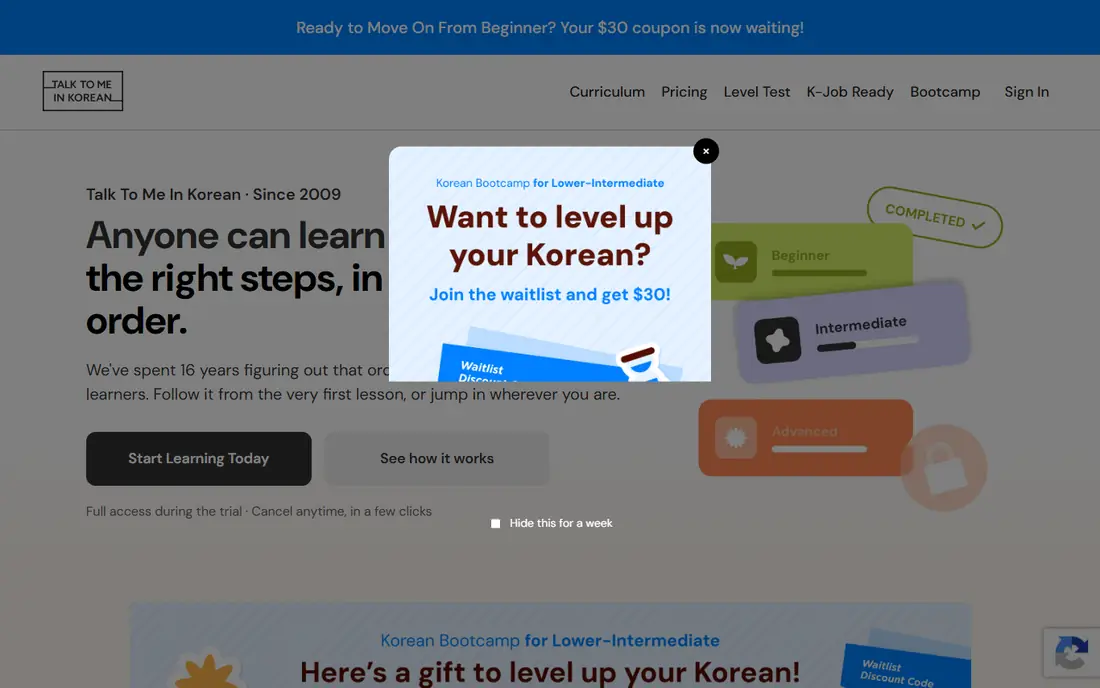
Talk To Me In Korean, known as TTMIK, has been teaching Korean since 2009, longer than most language apps have existed, and it has spent 16 years figuring out the right order to learn Korean in. Its course subscription offers all 1,700 plus lessons on web and mobile, in the order that makes sense, with a clear path from beginner to advanced, structured courses with guided lessons, and quizzes and reviews that make learning stick.
Every TTMIK lesson walks you through four steps: warming up, learning, speaking, and reviewing, because understanding something and being able to use it are two different things. Learners can start with the subscription at their own pace, add bootcamp programs for a structured schedule with assignments and deadlines, or join the community to ask questions and stay motivated with people on the same path.
TTMIK also offers a 3-minute level test to find your starting point, a full lesson free, and a 7-day trial with full access during the trial and cancellation in a few clicks. With 2.1 million plus YouTube subscribers and 48 books published with over 1 million copies sold, TTMIK's track record is unmatched for Korean. If you are serious about Korean, this is the first app to try.
What we like- Since 2009 with over 2 million learners, 1,700 plus structured lessons, clear path from beginner to advanced, quizzes and reviews, community and bootcamps
Watch out for- Subscription pricing not shown plainly on the homepage, Korean-only focus, less gamification than Duolingo
#2Duolingo
Best for: Beginners who want a free, fun, habit-forming app4.5/5 on
G2 (145 reviews, checked Oct 2026)
Visit duolingo.com
Starting priceFree
Free planYes
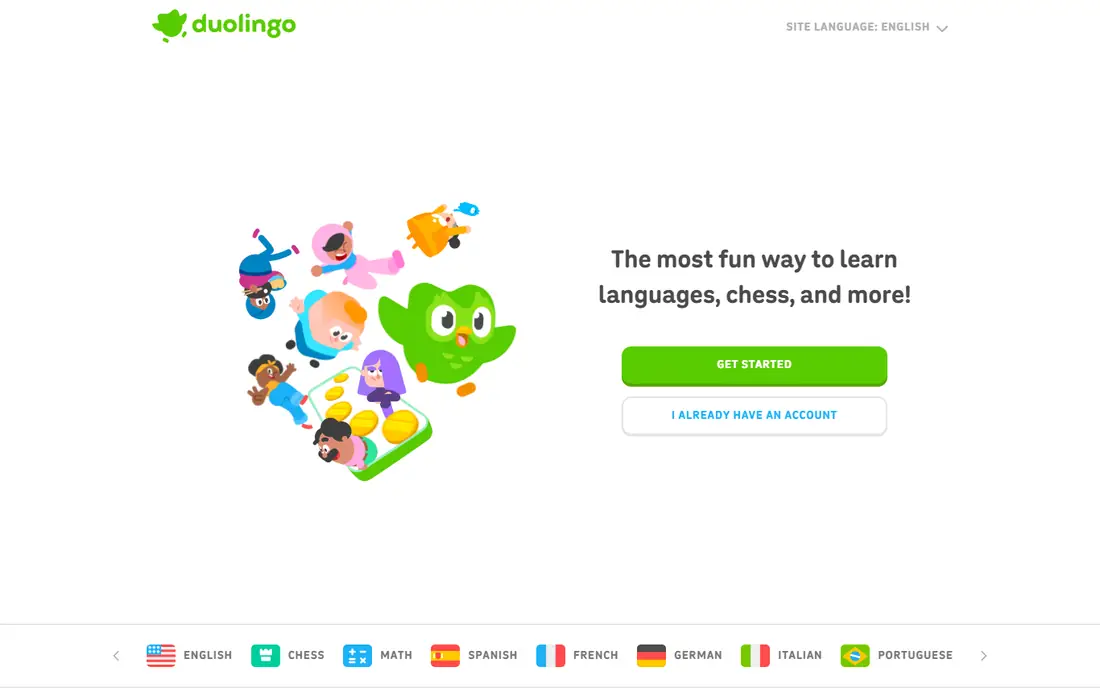
Duolingo is the world's most popular way to learn a language, and its Korean course is the easiest free place to start. Lessons are quick and bite-sized, with points, levels, and streaks that make daily practice feel like a game rather than homework. Research-backed teaching methods cover reading, writing, listening, and speaking, and AI personalization adjusts lessons to your level and pace.
For Korean specifically, Duolingo helps you learn Hangul, the Korean alphabet, and build basic vocabulary and sentence patterns fast. Its strength is habit formation: reminders, challenges, and leagues keep you coming back, and that consistency matters more than any single feature when learning a language.
The trade-offs are depth and speaking. The free version includes ads and a hearts system that limits mistakes, and grammar explanations are thinner than LingoDeer or TTMIK. Korean honorifics and particles need more explanation than Duolingo gives. As a free starting point and daily habit builder, though, Duolingo is unmatched.
What we like- Free core lessons, game-like streaks and points, bite-sized lessons, personalized AI-adjusted difficulty
Watch out for- Free version has ads and limited hearts, Korean grammar explanations are thin, speaking practice is limited
Starting priceSee website
Free planSee website
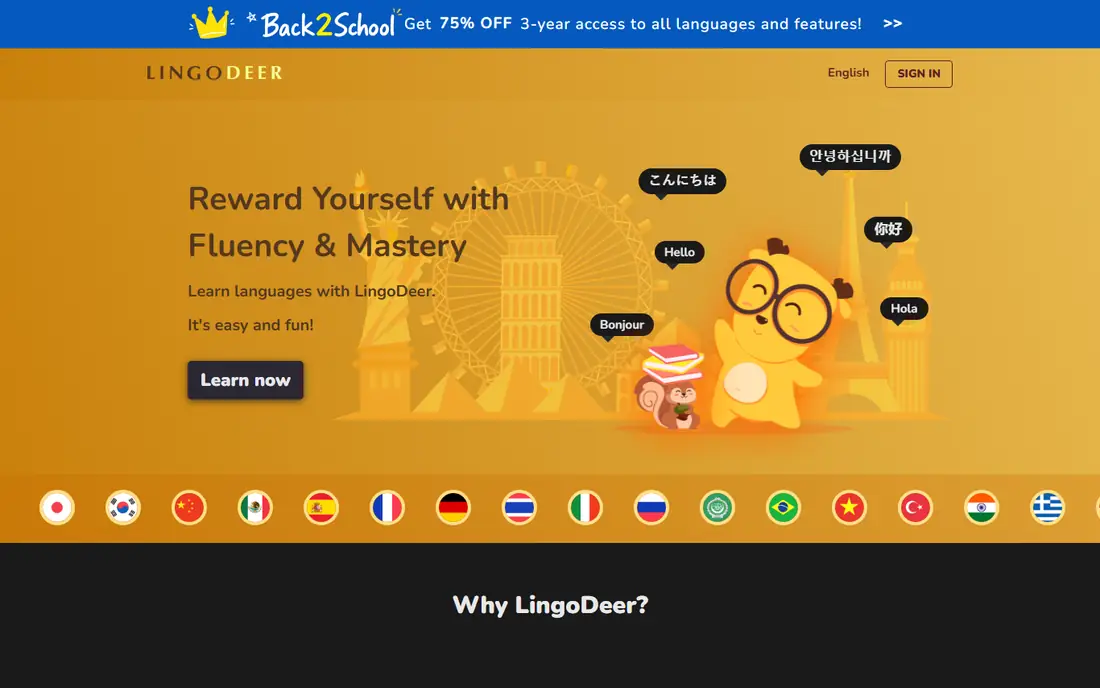
LingoDeer is built for languages with unique complexity, and Korean is one of its flagship courses. Its grammar-based curriculum is crafted by language teachers and helps you gain a deep understanding of Korean with no extra effort, with detailed explanations that remove the guessing around particles, verb endings, and honorific levels.
Lessons use HD audio voiced by native speakers from the beginning, so robotic text-to-speech never compromises your listening and speaking skills. Built-in flashcards target weak areas and review key grammar points, and hundreds of engaging stories introduce cultural facts while teaching new words and expressions. Learners praise LingoDeer for finally helping them understand the Korean script and follow Korean dramas without subtitles.
Pricing is not shown plainly on the homepage, and LingoDeer covers fewer languages than Duolingo. For learners who want to understand Korean grammar properly rather than just memorize phrases, LingoDeer is the best app here.
What we like- Expert grammar-based curriculum, detailed explanations for Korean complexity, HD audio from native speakers, built-in flashcards, engaging stories
Watch out for- Pricing not shown plainly on the homepage, fewer languages than Duolingo, less gamification
Starting priceFree
Free planYes
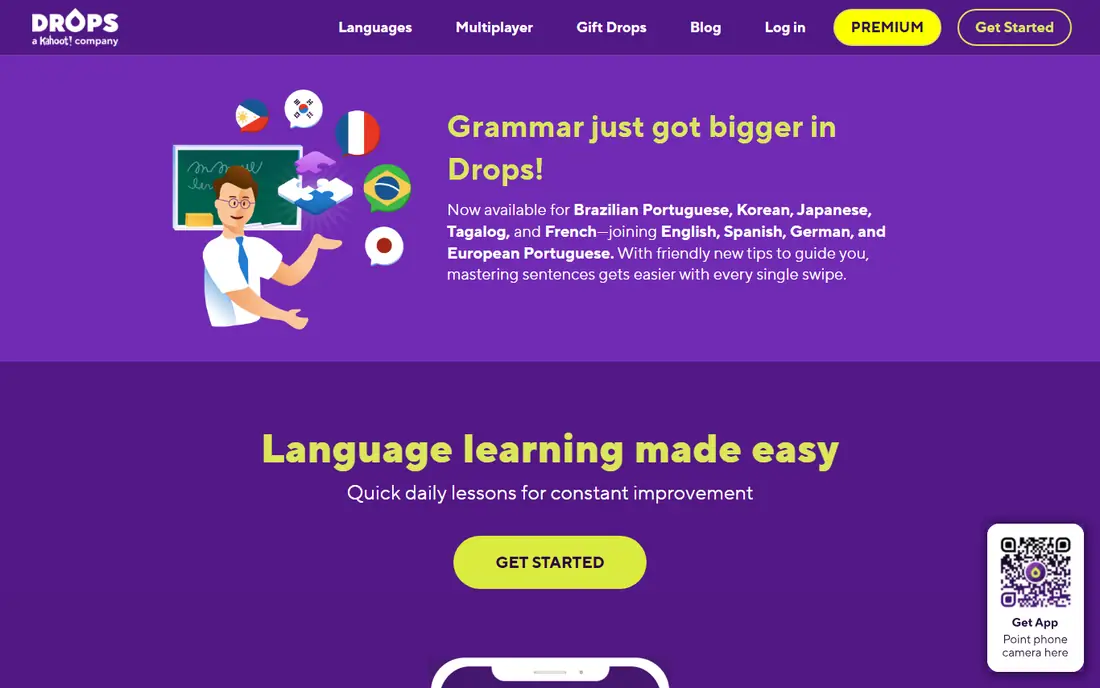
Drops makes language learning fast and fun, with quick daily lessons that build vocabulary in just five minutes a day. Its method combines spaced repetition, contextual learning, and visual association, so words stick through images and games rather than rote lists. For Korean, Drops now includes grammar features alongside vocabulary, joining English, Spanish, German, and other languages with expanded sentence learning.
The app covers over 5,000 words and phrases for real conversations, with flexible learning at your own pace, reminders, and streaks to keep you on track. Speaking confidence grows through pronunciation and listening practice, and the app holds a 4.8 out of 5 rating from more than 300,000 reviews, with over 50 million learners worldwide.
Drops Premium offers unlimited learning time, ad-free play, offline learning, all content, and exclusive gameplay, with learners progressing twice as fast on average. The trade-off is scope: Drops builds vocabulary brilliantly but does not teach grammar as deeply as LingoDeer or TTMIK. As a daily vocabulary companion, it is excellent.
What we like- Free to start, 5-minute daily lessons, over 5,000 words and phrases, science-backed spaced repetition, 4.8 out of 5 from 300,000 plus reviews, 50 million learners
Watch out for- Premium needed for unlimited time and all content, vocabulary focus over grammar, grammar features only for some languages
#5
Memrise
Best for: Learners who want to understand and sound like native Korean speakers
Visit memrise.com
Starting priceFree
Free planYes
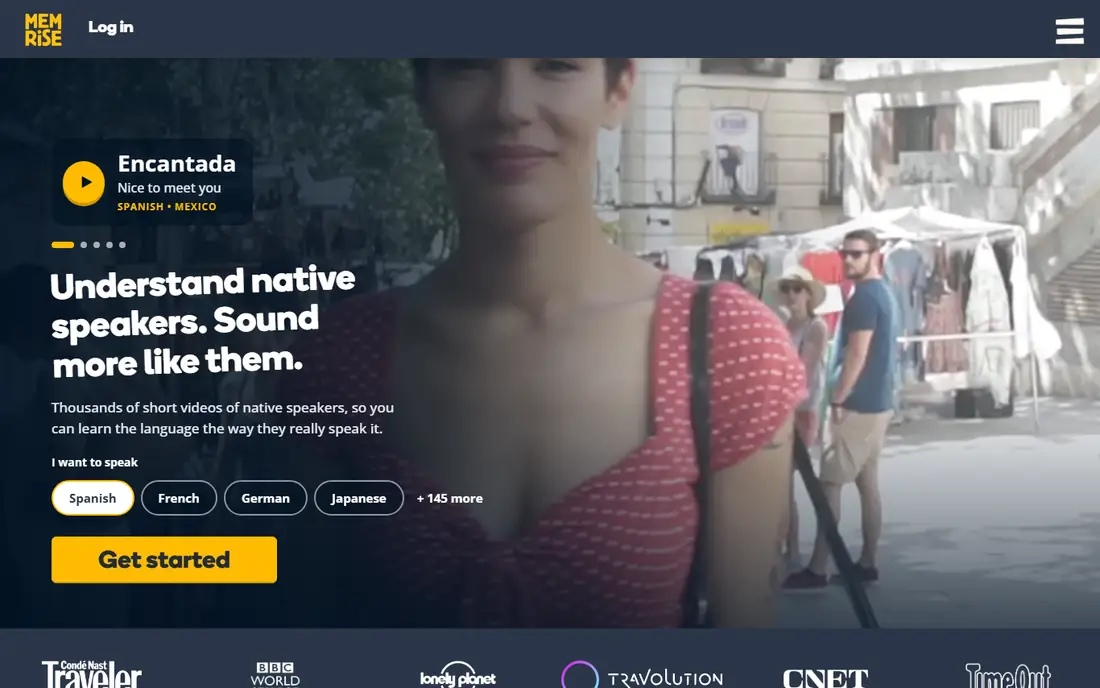
Memrise teaches language the way people actually speak it, with thousands of short videos of native speakers. Its method has three steps: hear a phrase from a real person, learn what it means and how to remember it, then copy the speaker's rhythm, stress, and pronunciation. That focus on real speech is valuable for Korean, where intonation and polite forms change meaning.
The app covers useful phrases fast, with smart review that reinforces what you learn and private AI practice for speaking confidence. Learners report that Memrise helped their Korean sound less like reading from a page and more like natural speech. You can start learning free, with a paid plan unlocking extra features.
The limitations are structure and writing. Memrise is less of a step-by-step grammar course than LingoDeer, and its strength is speaking and listening rather than writing Hangul. As a complement to a structured course, or as your main tool for sounding natural, Memrise is excellent.
What we like- Thousands of native speaker videos, learn phrases the way they are really spoken, smart review, free to start, AI practice
Watch out for- Paid plan needed for extra features, less structured grammar path than LingoDeer, focus is on speaking over writing
#6Busuu
Best for: Learners who want feedback from native speakers4.4/5 on
G2 (71 reviews, checked Oct 2026)
Visit busuu.com
Starting priceFree
Free planYes
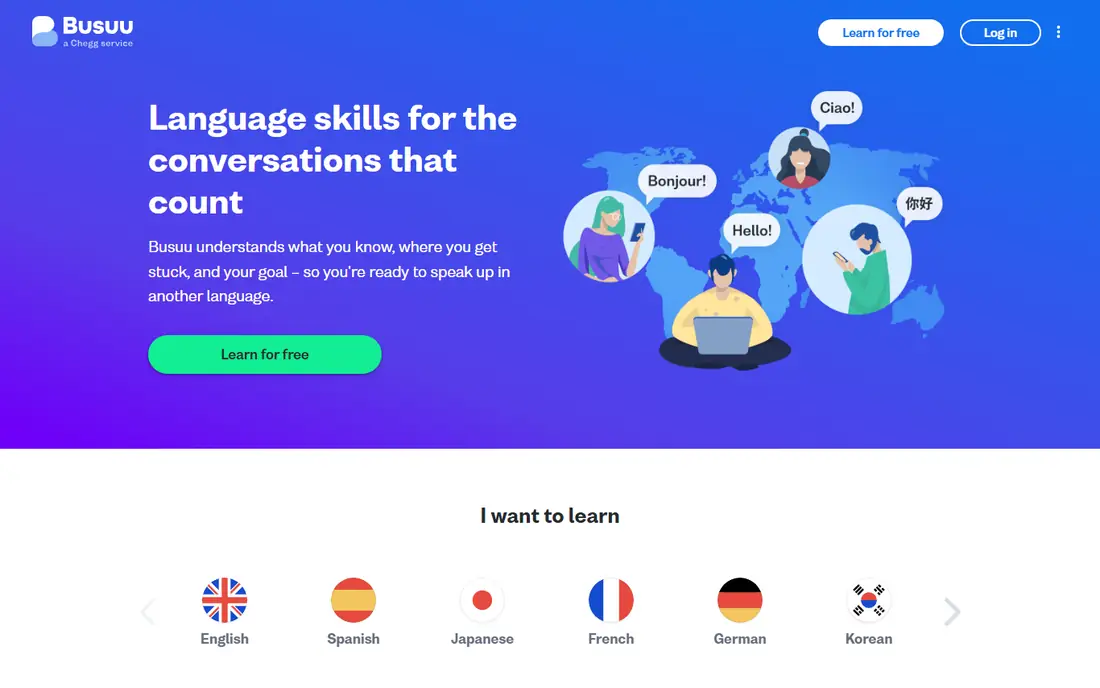
Busuu is an award-winning language platform with more than 120 million learners, built around learning together. Its courses go beyond the textbook, with pronunciation practice, cultural insights, and exchange with a global community of learners who correct your exercises and share local language tips.
The method covers speaking, listening, reading, and writing, with personalized pronunciation feedback and immersive videos featuring native speakers. Short, focused lessons fit any schedule, and study plans keep you on track toward your goal, whether that is travel, work, or watching dramas without subtitles.
Busuu is free to start, with paid plans unlocking the full feature set. Community feedback quality varies, since it comes from fellow learners rather than teachers, and course depth varies by language. For learners who value human feedback and community, Busuu offers something most apps here do not.
What we like- Free to start, community corrections from native speakers, pronunciation practice with native videos, study plans, 120 million learners
Watch out for- Full features need a paid plan, course depth varies by language, community feedback quality varies
#7
Mondly
Best for: Learners who want quick daily lessons across many topics
Visit mondly.com
Starting priceFree
Free planYes
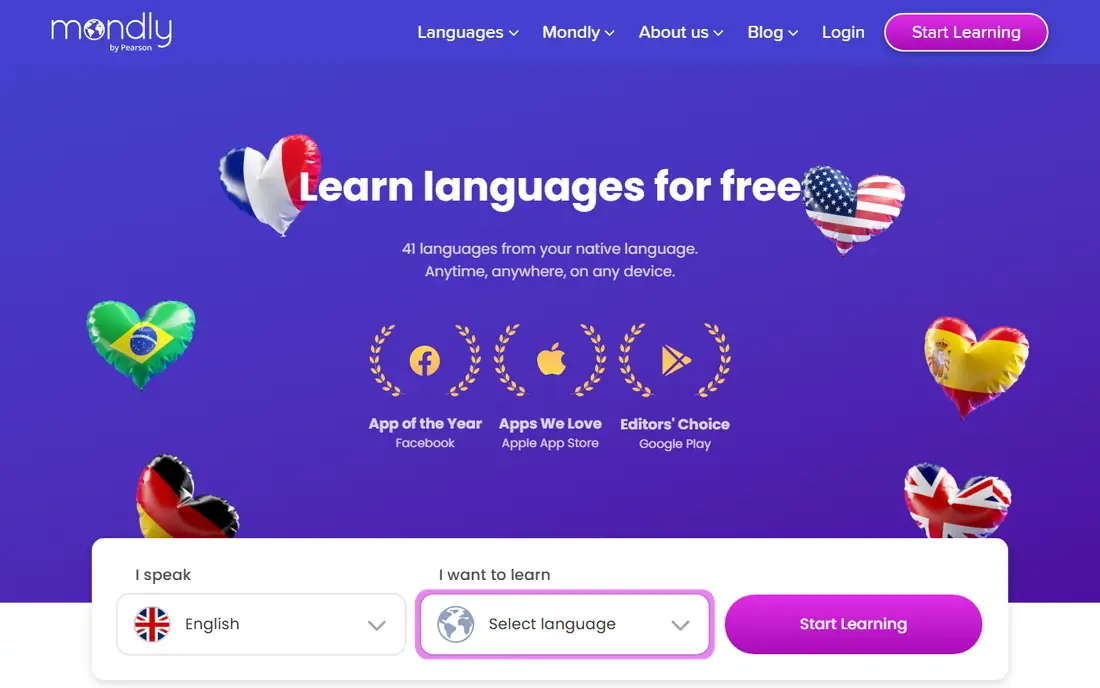
Mondly by Pearson is a language app offering 41 languages from your native language, with more than 1,000 language combinations, 50 practical topics, and 41 real conversations designed to build fluency. Daily lessons keep practice short and consistent, and the app has earned Editors' Choice on Google Play and Best New App from Apple, with more than 1 million ratings.
The app is backed by Pearson's Global Scale of Languages, which helps track progress against a research-based framework. A VR version offers immersive practice from your couch, and a business version serves companies that want to train staff. For Korean learners, Mondly's topic-based lessons cover the most common situations, from greetings to travel to work.
The trade-offs are depth and community. Mondly's lessons are quicker and less structured than LingoDeer or TTMIK, and it lacks Busuu's native-speaker correction community. As a free, fast, daily practice app, though, Mondly is an easy and enjoyable way to keep Korean in your day.
What we like- Free to start, 41 languages and 1,000 plus combinations, 50 practical topics, daily lessons, VR option, backed by Pearson
Watch out for- Depth is thinner than LingoDeer or TTMIK, some features need a paid plan, less community than Busuu
#8Pimsleur
Best for: Audio-first learners who want to speak Korean hands-free4.3/5 on
G2 (2 reviews, checked Oct 2026)
Visit pimsleur.com
Starting priceSee website
Free planSee website
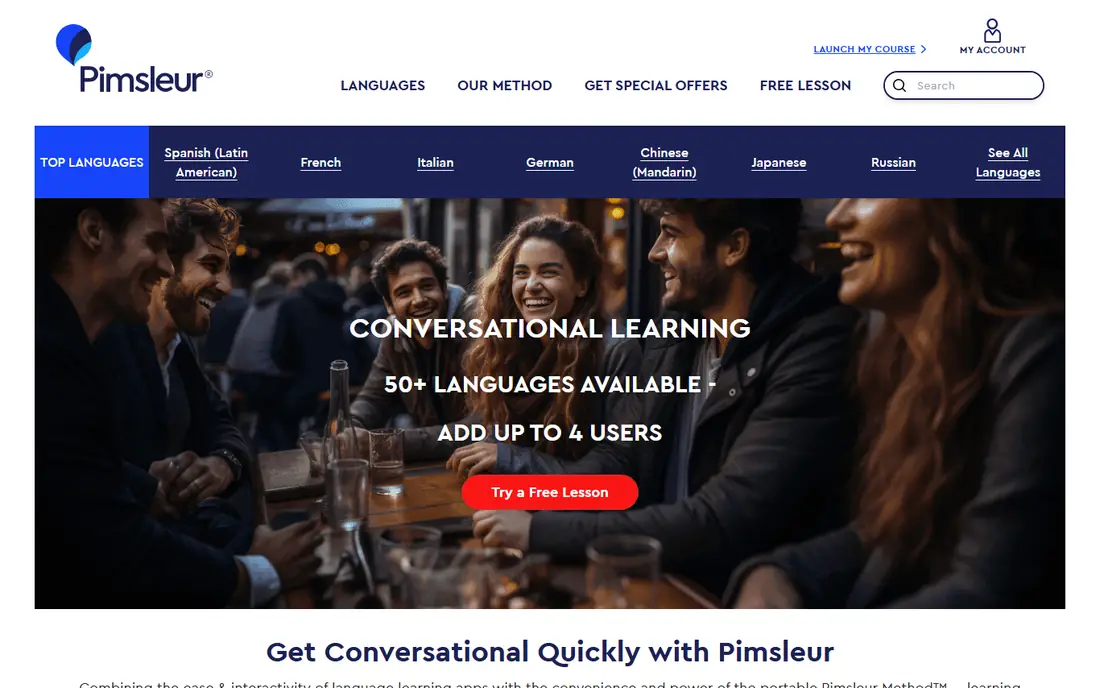
Pimsleur is the audio-first language program built on the Pimsleur Method, a scientifically proven technique that uses spaced repetition and oral practice to embed language in long-term memory. Lessons are audio-led: you listen, recall, and respond, building confidence through speaking rather than reading. Many learners report their first conversation after a single lesson.
The app adds digital flashcards, Quick Match and Speed Round games, role play, and a Voice Coach AI that gives instant pronunciation feedback and scores your speech. A driving mode lets you learn hands-free, so Korean practice fits into commutes, workouts, and chores. An All Access subscription covers more than 50 languages, while a Premium subscription covers a single language.
The trade-offs are format and price. Pimsleur emphasizes listening and speaking over reading Hangul and writing, and subscription pricing is not published plainly on the homepage. For learners who want to speak Korean confidently and learn on the move, Pimsleur is the best audio option available.
What we like- Proven Pimsleur Method with spaced repetition, audio lessons for driving or chores, voice coach AI for pronunciation, 50 plus languages
Watch out for- Subscription pricing not shown plainly on the homepage, less visual and reading practice, app features vary by course
How we chose
We compared apps genuinely built for learning Korean, with real Korean courses, not just a language list. We checked each vendor homepage to confirm the app exists and matches its description, and we used published prices where the vendor shows them. Where a vendor does not publish a price, we wrote "See website" rather than guessing. Apps were kept only if they are actively offered and usable for learning Korean, not just similar in name.
Pick by how you learn best
If you are serious about Korean, start with Talk To Me In Korean for the curriculum and add Duolingo free for daily habit. If grammar confuses you, LingoDeer's explanations will help most. If vocabulary is your gap, Drops fills it in 5 minutes a day. If you learn by listening, Pimsleur will get you speaking fastest. And if you want natural speech and community, Memrise and Busuu add what structured courses miss. Most successful learners combine two tools: one for daily habit and one for depth. Try the free tiers first, practice a little every day, learn Hangul early, and speak out loud from day one, even when it feels awkward.
Frequently asked questions
What is the best app to learn Korean for beginners?
Talk To Me In Korean is the best Korean-specific starting point, with a clear path from your first sentence to natural conversation. Duolingo is the best free starting point, with gamified lessons that build a daily habit.
Can I learn Korean free with an app?
Yes. Duolingo, Drops, Memrise, Busuu, and Mondly all offer free tiers that cover real Korean learning, and Talk To Me In Korean offers a free lesson plus a 7-day trial. Free tiers usually limit some features, but they are enough to build a strong foundation.
How long does it take to learn Korean with an app?
It depends on your time and consistency. Learning Hangul takes a few days to a few weeks, basic conversation typically takes a few months of daily practice, and confident intermediate Korean takes many months plus real speaking with other people.
Is Talk To Me In Korean better than Duolingo?
Talk To Me In Korean is better for a serious, structured Korean curriculum, with 1,700 plus lessons built specifically for Korean. Duolingo is better for free, habit-forming daily practice. Many learners use both: Duolingo for habit and TTMIK for depth.
Which app is best for Korean grammar?
LingoDeer is the best app for Korean grammar, with expert curricula and detailed explanations for particles, verb endings, and honorific levels. Talk To Me In Korean is a close second, with its four-step lesson system and structured path.
Do I need to learn Hangul before using these apps?
Most apps teach Hangul as part of their Korean course, so you do not need to learn it first. Learning Hangul early helps a great deal, though, since it unlocks reading and pronunciation across every app on this list.
Sources we checked (0)
Is your product missing or out of date?
We review this list regularly. Vendors can request a listing, send updated pricing or ask about featured placement.

Shihab Mia · Founder, Rankite
Shihab has 5+ years in B2B and SaaS SEO. He writes Rankite's software buying guides from pricing pages, documentation and public user reviews. More about Shihab.