How we make this list: we compare pricing pages, product documentation and public user reviews. Ratings come from G2, Capterra or Trustpilot, with the date we checked them.
Key takeaways
- No single app covers all of Japanese well, so most learners pair a course app with a kanji app and a speaking tool.
- Duolingo is the best free habit builder for beginners, while LingoDeer gives stronger grammar explanations for serious starters.
- WaniKani is the best kanji system in this list, and Bunpro is the best grammar review system for JLPT study.
- Pimsleur and italki lead for speaking, since apps alone rarely build real conversation skill.
- Anki remains the best free review tool for custom vocabulary, but it needs setup time that course apps handle for you.
Quick comparison
| Tool | Best for | Starting price | Free plan |
|---|
 Duolingo | Daily habit building | Free | Yes |
 LingoDeer | Structured grammar courses | See website | Yes |
 Bunpro | JLPT grammar review | $5 per month | Free trial |
 WaniKani | Kanji mastery | $9 per month | Yes |
 Pimsleur | Speaking and listening | See website | Free trial |
 JapanesePod101 | Audio lessons | $4 per month | Yes |
 italki | Live tutor lessons | See website | No |
 Renshuu | Gamified JLPT study | Free | Yes |
 Anki | Custom flashcard review | Free | Yes |
Is your product missing or out of date?
We review this list regularly. Vendors can request a listing, send updated pricing or ask about featured placement.
The best app to learn japanese
#1Duolingo
Best for: Daily habit building4.5/5 on
G2 (145 reviews, checked Oct 2026)
Visit duolingo.com
Starting priceFree
Free planYes
Duolingo is the easiest way to start Japanese and keep going. Lessons are short, streaks and leaderboards push daily practice, and the free course covers kana, basic vocabulary, and simple sentences without a subscription. For a beginner who has never studied Japanese, Duolingo builds a daily habit faster than a textbook.
The limit appears after a few months. Grammar explanations stay light, sentence patterns repeat, and speaking practice does not prepare you for real conversation. Recent pricing coverage puts Super at about $12.99 per month or about $83.99 per year, which mainly removes ads and limits. Duolingo fits best as a starter and habit tool, paired with LingoDeer, Bunpro, or a tutor for grammar and speaking.
What we like- Free course with gamified streaks and short lessons
- Covers hiragana, katakana, vocabulary, and basic grammar
- Works well on mobile
Watch out for- Grammar explanations are thin
- Speaking practice is limited
- Free tier has ads and energy limits
Starting priceSee website
Free planYes
LingoDeer is the structured alternative to Duolingo for learners who want to understand grammar, not just memorize phrases. Each lesson explains the grammar point, shows example sentences, and drills it with listening, reading, and writing exercises. Its Japanese course is built for Asian languages from the start, which shows in kana, particle, and verb explanations.
Full access needs a paid plan, with recent coverage putting monthly pricing around $14.99, though annual and lifetime options lower the monthly cost. LingoDeer fits beginners and lower-intermediate learners who want a course path with explanations, and who will add WaniKani for kanji and italki for speaking later.
What we like- Clear grammar notes with each lesson
- Native audio and sentence building drills
- JLPT-aligned progression
Watch out for- Paid plans are needed for full access
- Speaking practice still needs a tutor or exchange partner
Starting price$5 per month
Free planFree trial
Bunpro turns grammar into a review system. Each grammar point becomes a study item with example sentences, and spaced repetition schedules reviews based on your errors. You can follow JLPT levels or a textbook path, which makes it easy to match Bunpro to a class or self-study book you already use.
Bunpro works best after you have learned a grammar point somewhere else, since its strength is retention, not first explanation. Recent coverage puts pricing around $5 per month, with a 30-day free trial that is long enough to test the method. Bunpro fits JLPT students and intermediate learners who know grammar exists but keep forgetting it in real sentences.
What we like- Grammar points organized by JLPT level from N5 to N1
- Spaced repetition with example sentences
- Textbook paths including Genki and Tobira
Watch out for- Best as a review tool, not a first course
- Interface is functional rather than polished
Starting price$9 per month
Free planYes
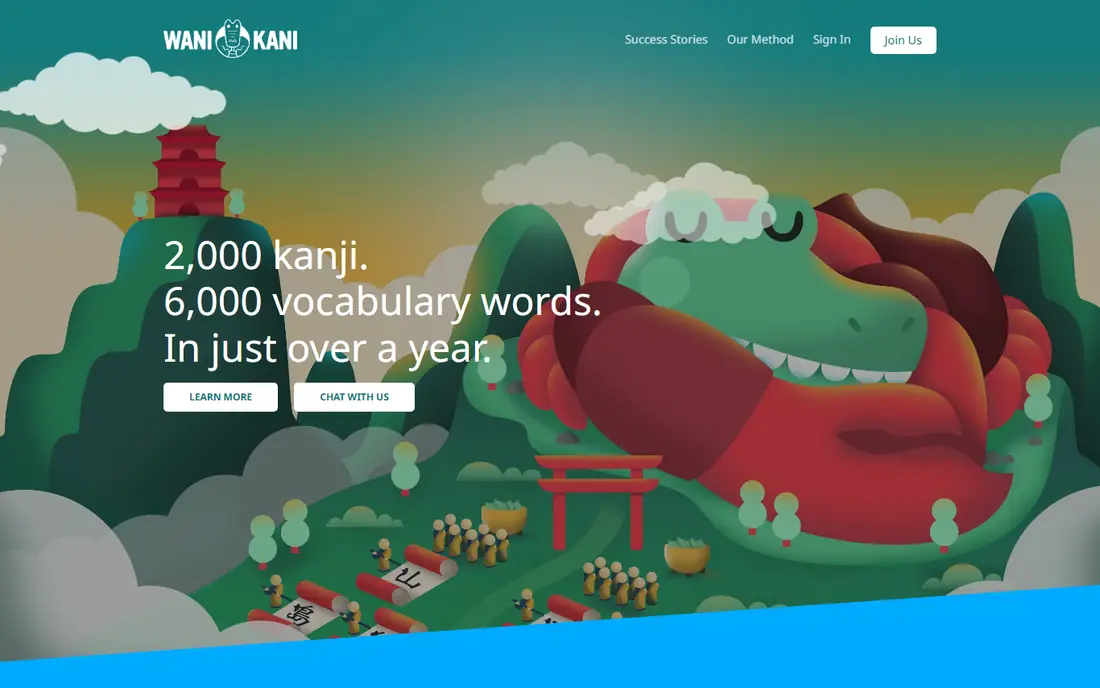
WaniKani is the most effective kanji system for learners who want a set path. It teaches radicals first, then kanji built from those radicals, then vocabulary using those kanji, with mnemonics for readings and meanings. Levels stay locked until spaced repetition shows mastery, which prevents the common problem of racing ahead and forgetting everything.
Pricing is $9 per month, $89 per year, or $299 for lifetime access in recent coverage, with the first three levels free. The fixed pace frustrates some learners, and WaniKani does not teach speaking or grammar, so it must sit alongside a course app. For reading Japanese, though, few tools match its structure and retention.
What we like- Structured kanji curriculum with radicals and mnemonics
- Spaced repetition locks levels until mastery
- Covers over 2,000 kanji and 6,000 words
Watch out for- Reading focus only, with little speaking or grammar
- Pace is fixed and can feel slow for fast learners
#5Pimsleur
Best for: Speaking and listening4.3/5 on
G2 (2 reviews, checked Oct 2026)
Visit pimsleur.com
Starting priceSee website
Free planFree trial
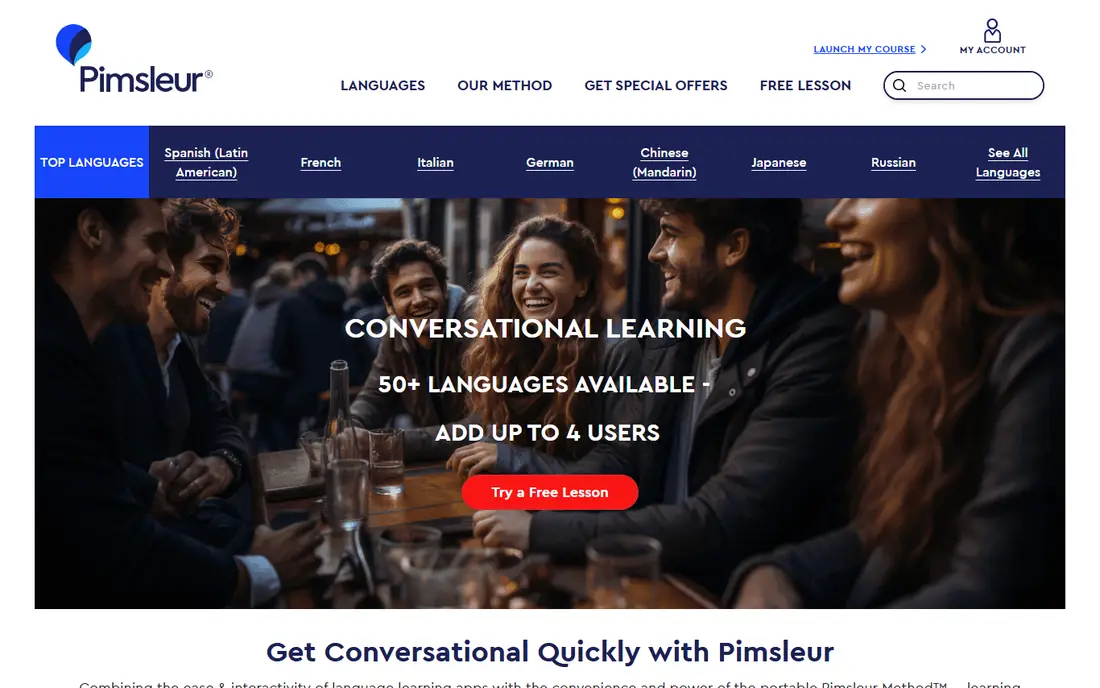
Pimsleur is the speaking-first choice. Its audio lessons teach you to hear, repeat, and respond in conversation, with spaced recall that brings back words just as you start to forget them. You can study while driving, walking, or doing chores, which makes it easier to fit Japanese into a busy day than a screen-based course.
Reading, writing, and kanji get less attention, so Pimsleur alone will not teach you to read Japanese. Recent coverage puts pricing around $14.99 to $19.99 per month, depending on plan and language access. Pimsleur fits learners who want to speak first, travelers who need conversation fast, and commuters who want audio study time to count.
What we like- Audio-first lessons built for speaking
- Spaced recall and conversation practice
- Hands-free learning for commutes
Watch out for- Reading and kanji coverage is limited
- Subscription cost is higher than Duolingo or Bunpro
Starting price$4 per month
Free planYes

JapanesePod101 offers one of the largest Japanese lesson libraries available. Lessons are organized by level, from absolute beginner to advanced, with audio dialogues, explanations, transcripts, and vocabulary lists. Recent coverage puts basic pricing from about $4 per month, with higher tiers adding more features and personal guidance.
The size of the library is both a strength and a weakness. You can find a lesson for almost any topic, but you must choose a path and stick to it, or study becomes scattered. JapanesePod101 fits listeners who like podcast-style learning, want a lot of native audio, and will pair it with a grammar or kanji tool for structured review.
What we like- Large library of audio and video lessons from beginner to advanced
- Lesson notes, transcripts, and vocabulary lists
- Flexible self-paced study
Watch out for- Lesson quality and style vary across the large library
- Full features need higher tiers
#7italki
Best for: Live tutor lessons3.8/5 on
G2 (19 reviews, checked Oct 2026)
Visit italki.com
Starting priceSee website
Free planNo
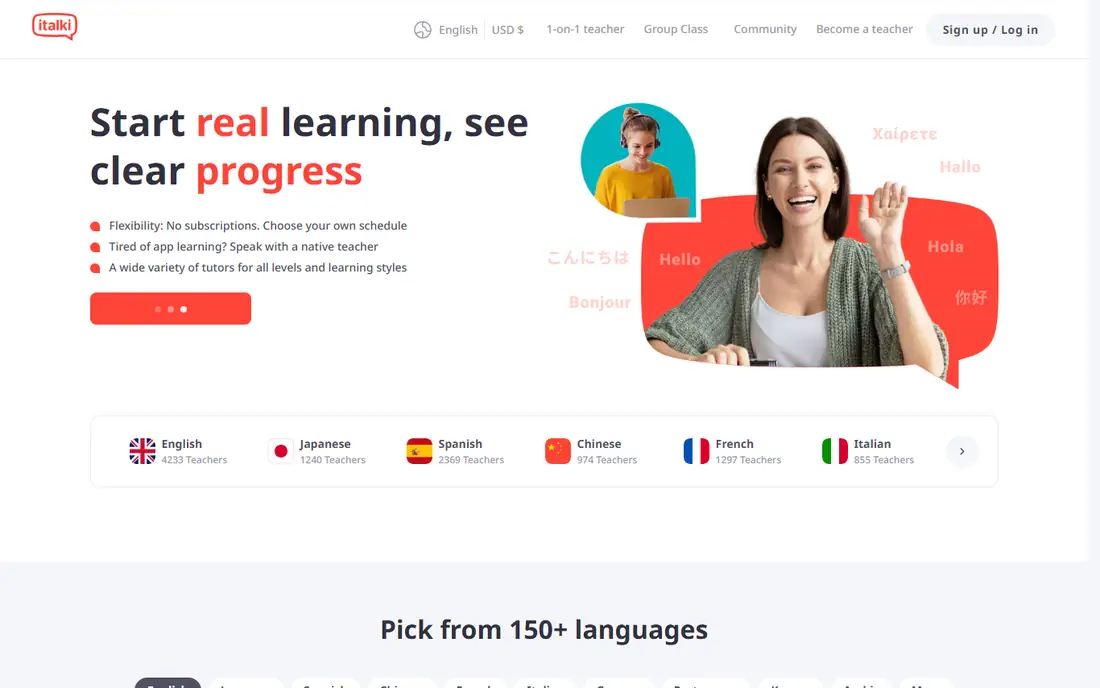
italki is where app learning becomes real speaking. You book one-on-one video lessons with native Japanese tutors, choose a community tutor for conversation or a professional teacher for structured study, and set a schedule that fits your week. Recent coverage puts lessons from about $4, with most tutors priced higher depending on experience and lesson length.
The flexibility needs direction. Without a curriculum, a tutor can drift into casual chat that feels fun but teaches little, so set goals for each lesson: JLPT grammar, interview practice, or travel conversation. italki fits learners who have basic vocabulary and grammar from an app, and who now need live correction, natural phrasing, and confidence speaking with a real person.
What we like- One-on-one lessons with native tutors
- Flexible scheduling and price range
- Community tutors and professional teachers
Watch out for- Prices vary by tutor and lesson length
- No set curriculum unless you and your tutor build one
Starting priceFree
Free planYes
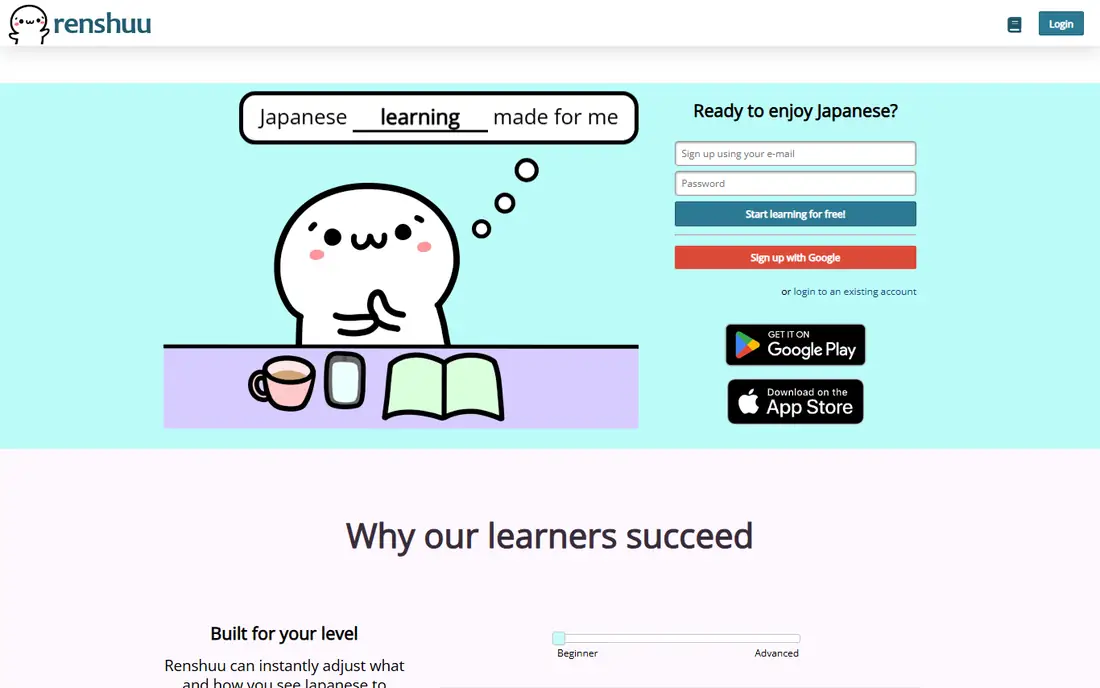
Renshuu is a strong free complement to Duolingo or LingoDeer. It covers kanji, vocabulary, grammar, and JLPT preparation with quizzes, games, and spaced review, and its free tier is more generous than most course apps. Recent coverage puts Pro around $5 per month, but many learners use the free tier for months without hitting a wall.
The interface packs a lot of options onto each page, which can feel busy at first. Renshuu fits learners who want a free all-around study tool after Duolingo, JLPT students who want extra drills, and anyone who likes gamified quizzes but wants more grammar depth than Duolingo offers.
What we like- Free core study for kanji, vocabulary, and grammar
- Gamified quizzes and JLPT paths
- Generous free tier
Watch out for- Interface is busier than Duolingo or LingoDeer
- Pro features need a paid plan for full customization
Starting priceFree
Free planYes
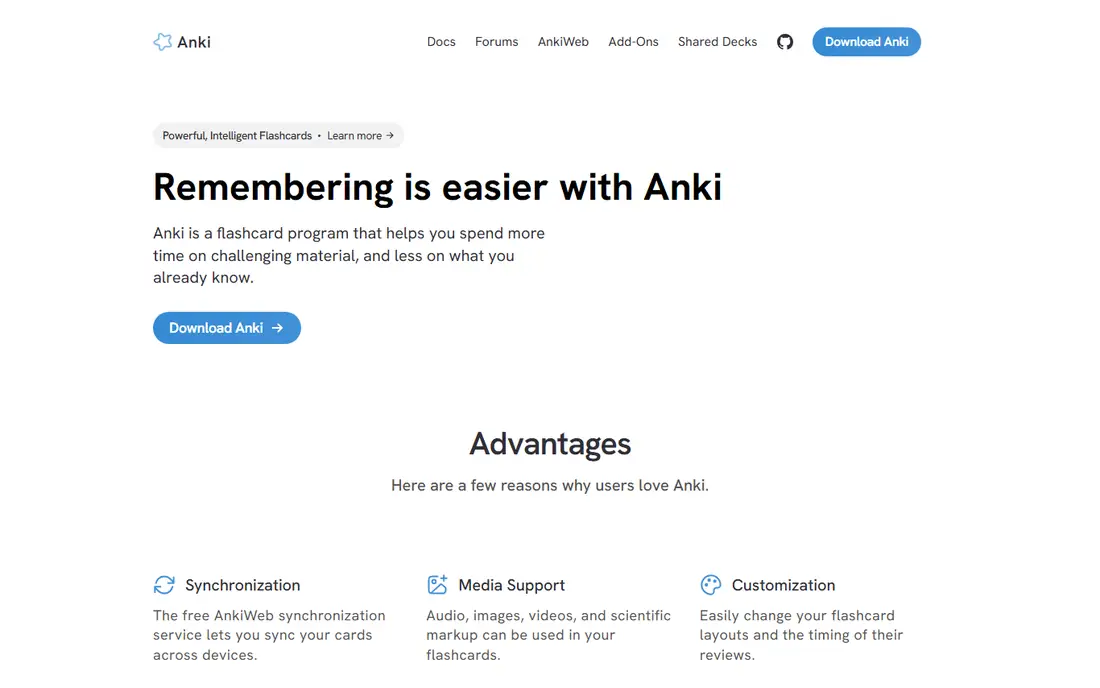
Anki is the review engine behind many serious Japanese learners. Its spaced repetition algorithm schedules cards based on your recall, and its shared deck library includes Japanese vocabulary, kanji, and sentence decks built by other learners. You can also build your own decks from words you meet in books, shows, and lessons, which makes review personal and relevant.
Anki needs setup. Choosing a good deck, learning the scheduling options, and building a daily review habit take more effort than opening Duolingo. The desktop app is free, while the iOS app is paid at about $24.99 in recent coverage. Anki fits intermediate learners, JLPT students, and anyone who wants full control over vocabulary review rather than a fixed course path.
What we like- Free on desktop with powerful spaced repetition
- Huge shared deck library including Japanese decks
- Full control over cards and scheduling
Watch out for- Setup and deck choice take time
- IOS app is paid
- Interface looks dated to new users
How we chose
We compared course structure, grammar coverage, kanji systems, speaking options, pricing pages, and public reviews on G2, Capterra, and Reddit, with attention to whether an app teaches a skill or only drills it. We favored apps that exist today, cover Japanese specifically rather than only general language learning, and fit a distinct job: habit building, grammar, kanji, listening, or live speaking. We left out general phrasebook apps with no progression system.
How to build a Japanese study stack that works
Pick one course, one kanji tool, and one speaking tool
A common stack is Duolingo or LingoDeer for daily lessons, WaniKani for kanji, and italki or Pimsleur for speaking. Adding a fourth or fifth app usually splits your time without adding skill. Start with three tools, use them for a month, then adjust.
Study a little every day, not a lot once a week
Spaced repetition works on daily reviews. Fifteen to thirty minutes a day beats a three-hour weekend session for vocabulary and kanji retention. Set a fixed time, such as morning or commute, and protect it like an appointment.
Use Japanese you learn in real contexts
Read simple news, watch shows with Japanese subtitles, and use new grammar in tutor lessons the same week you learn it. Apps build recognition, but reading, listening, and speaking turn recognition into usable skill. If you only study in an app, progress will stall at the intermediate plateau.
Frequently asked questions
What is the best app to learn Japanese for beginners?
Duolingo is the best free starting app for building a daily habit, and LingoDeer is the best paid course for learners who want clear grammar explanations. Most beginners benefit from starting with one of these, then adding WaniKani for kanji after a few weeks.
Can I become fluent using only an app?
No app alone reliably produces fluency. Apps build vocabulary, grammar, and reading skill, but speaking, listening to natural speed, and writing need tutors, conversation partners, and real reading. Pair an app with italki, Pimsleur, or language exchange for speaking practice.
Is WaniKani worth the price?
For learners who struggle with kanji, yes. Its structured path, mnemonics, and spaced repetition cover over 2,000 kanji in a set order, which is hard to replicate with random flashcards. Try the first three levels free before paying, since the fixed pace suits some learners better than others.
How long does it take to learn Japanese with an app?
It depends on daily time and goals. Basic conversation and kana reading can take a few months of daily study, while JLPT N3 or comfortable reading usually takes one to three years. Consistency matters more than app choice: daily study with review beats switching apps every month.
What is the best free app to learn Japanese?
Duolingo, Renshuu, and Anki on desktop are the strongest free options. Duolingo builds habits, Renshuu adds JLPT drills, and Anki gives full control over vocabulary review. Tae Kim's Guide to Learning Japanese is also a strong free grammar reference for self-study learners.
Should I learn hiragana and katakana first?
Yes. Learning kana first makes every later lesson easier, since you can read real Japanese words instead of relying on romaji. Most course apps teach kana early, and WaniKani and LingoDeer both assume kana knowledge for later lessons. Spend one to two weeks on kana before focusing on kanji.
Sources we checked (9)
- https://www.duolingo.com
- https://www.lingodeer.com
- https://www.bunpro.com
- https://www.wanikani.com
- https://www.pimsleur.com
- https://www.japanesepod101.com
- https://www.italki.com
- https://www.renshuu.org
- https://apps.ankiweb.net
Is your product missing or out of date?
We review this list regularly. Vendors can request a listing, send updated pricing or ask about featured placement.

Shihab Mia · Founder, Rankite
Shihab has 5+ years in B2B and SaaS SEO. He writes Rankite's software buying guides from pricing pages, documentation and public user reviews. More about Shihab.