How we make this list: we compare pricing pages, product documentation and public user reviews. Ratings come from G2, Capterra or Trustpilot, with the date we checked them.
Key takeaways
- Babbel is the best structured course app for Portuguese, with grammar and conversation lessons built for adults.
- Duolingo suits beginners who want free, game-like daily practice in European or Brazilian Portuguese.
- Pimsleur suits learners who want to speak first, with audio lessons for commutes and hands-free practice.
- Rosetta Stone suits visual learners who want immersion without English translations.
- Most apps teach Brazilian Portuguese, so check the variant before subscribing if you need European Portuguese.
Portuguese is spoken by over 250 million people, but most apps teach Brazilian Portuguese, with European Portuguese coverage thinner. The eight apps below differ in variant, method and price, and the best one depends on whether you want conversation, grammar, vocabulary or listening practice. All of them cover Portuguese as a full course, not just a phrasebook.
Prices run as monthly or annual subscriptions, with free tiers on several apps. Prices below are marked "See website" where subscription tiers change often. A free trial week shows more than any review, so test two apps on the same topic and keep the one whose lessons you actually finish.
Quick comparison
| Tool | Best for | Starting price | Free plan |
|---|
 Babbel | Structured adult courses | See website | Free trial |
 Duolingo | Free game-like practice | Free | Yes |
 Rosetta Stone | Immersion learning | See website | Free trial |
 Busuu | Community feedback | See website | Yes |
 Pimsleur | Audio and speaking | See website | Free trial |
 Memrise | Vocabulary and video | See website | Yes |
 Mondly | Quick daily lessons | See website | Yes |
 Drops | Visual vocabulary | See website | Yes |
Is your product missing or out of date?
We review this list regularly. Vendors can request a listing, send updated pricing or ask about featured placement.
The best apps to learn Portuguese
Starting priceSee website
Free planFree trial
Babbel's Portuguese course follows a structured path, with lessons that teach grammar in context, conversation phrases and pronunciation practice through speech recognition. Lessons run ten to fifteen minutes and suit adults who want a clear progression rather than games. Review sessions reinforce vocabulary on a spaced schedule.
Coverage leans Brazilian Portuguese, so European Portuguese learners should check the current course before subscribing. For a learner who wants a proper course with grammar and conversation, Babbel is the strongest structured option.
What we like- Structured lessons with grammar and conversation
- Speech recognition for pronunciation
- Lessons built for adult learners
Watch out for- Variant coverage leans Brazilian
- Less game-like than Duolingo
#2Duolingo
Best for: Free game-like practice4.5/5 on
G2 (145 reviews, checked Oct 2026)
Visit duolingo.com
Starting priceFree
Free planYes
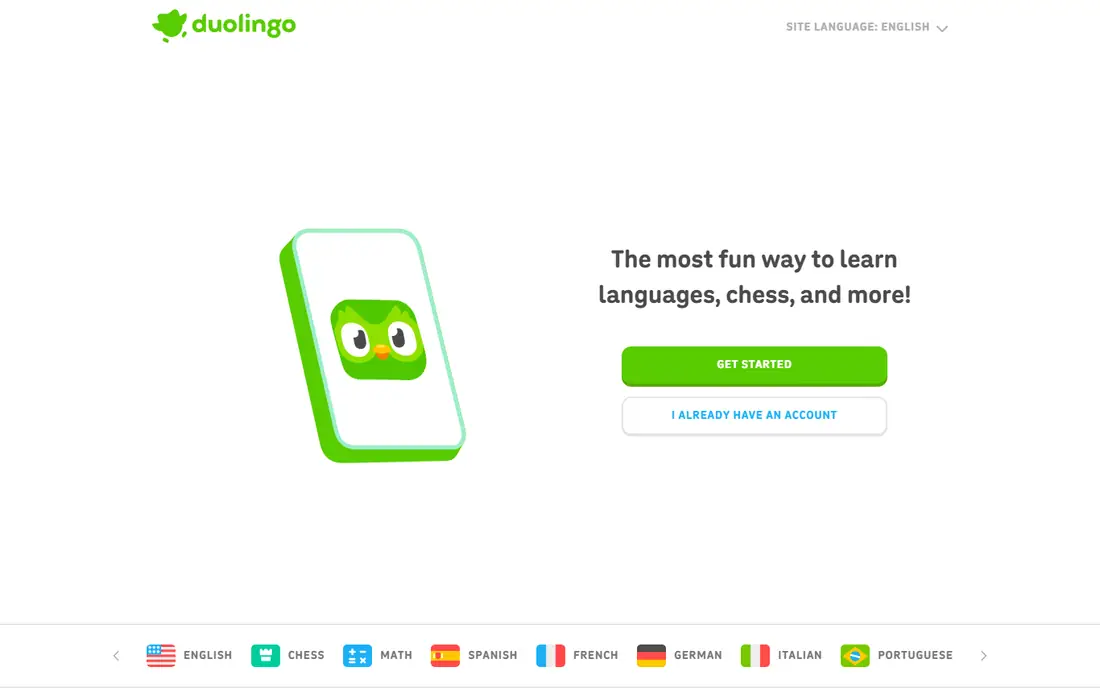
Duolingo is the most popular way to start Portuguese, with a free course built on short exercises, streaks and rewards that keep daily practice going. The app covers both European and Brazilian Portuguese paths, and the bite-size format suits busy learners. A paid tier removes ads and adds offline lessons and extra practice.
Grammar explanations stay thin, and speaking practice is limited compared with Pimsleur. For a beginner who wants free, habit-forming daily practice, Duolingo is the easiest start.
What we like- Free core course
- Game-like streaks and rewards keep habits going
- Covers European and Brazilian variants
Watch out for- Grammar explanations are thin
- Speaking practice is limited
Starting priceSee website
Free planFree trial
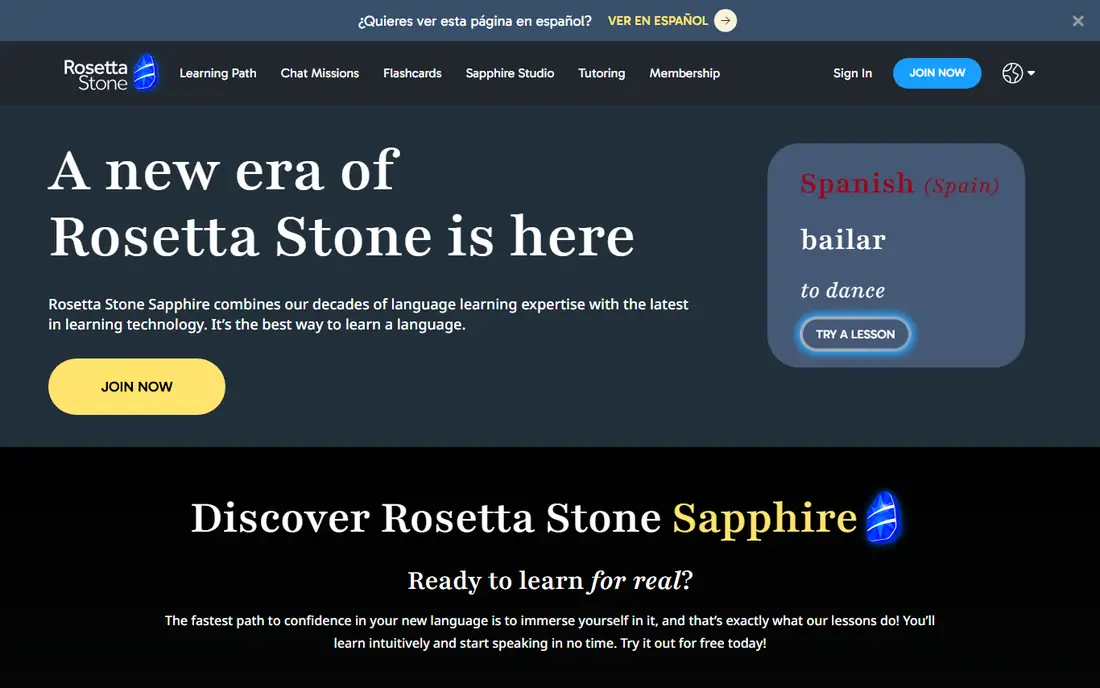
Rosetta Stone teaches Portuguese through immersion, matching words to images and audio without English translations. The method builds intuition for the language, and speech recognition trains pronunciation from the first lesson. The course covers all levels from beginner to advanced.
Learners who want explicit grammar rules will miss them, since the method avoids explanations. For a visual learner who prefers immersion to translation, Rosetta Stone is the most distinctive approach here.
What we like- Immersion method without translations
- Speech recognition
- Good pronunciation training
Watch out for- No explicit grammar explanations
- Higher price than rivals
#4Busuu
Best for: Community feedback4.4/5 on
G2 (71 reviews, checked Oct 2026)
Visit busuu.com
Starting priceSee website
Free planYes
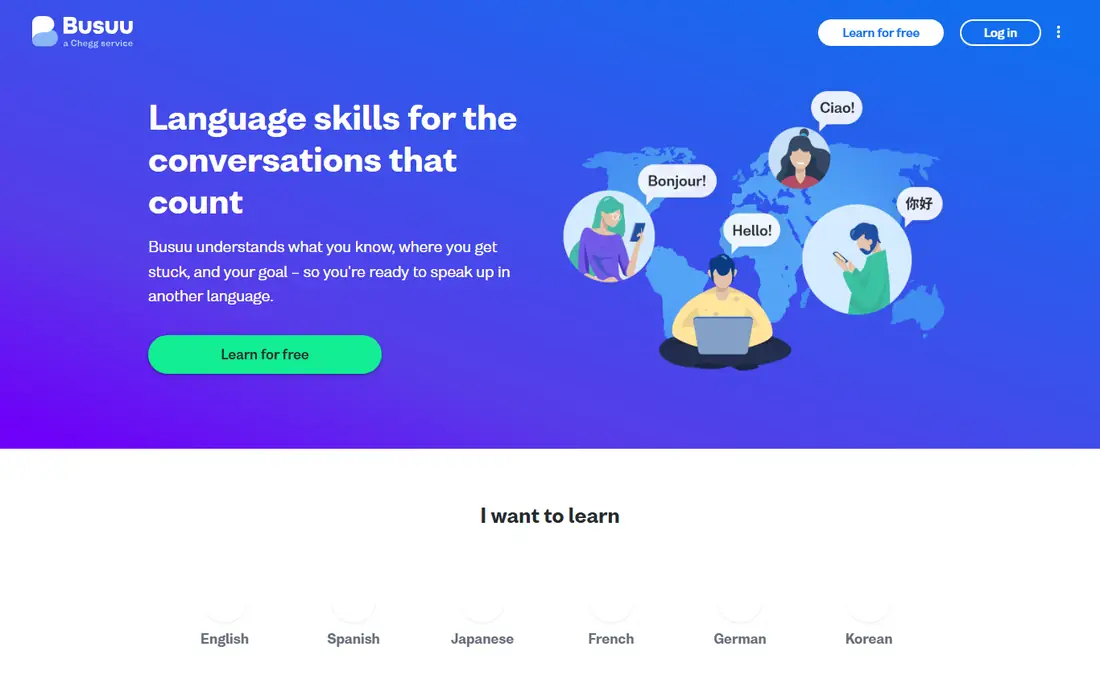
Busuu combines structured courses with a community of native speakers who correct written and spoken exercises. That feedback catches mistakes a machine misses, and the study plan sets a weekly goal based on your target date. Grammar lessons sit alongside vocabulary and conversation practice.
Portuguese course depth trails Babbel's, and community response times vary. For a learner who values human feedback on real writing and speech, Busuu adds something no other app here offers.
What we like- Native-speaker corrections on exercises
- Structured courses with grammar
- Personalised study plan
Watch out for- Portuguese course depth trails Babbel
- Community activity varies by language
Starting priceSee website
Free planFree trial
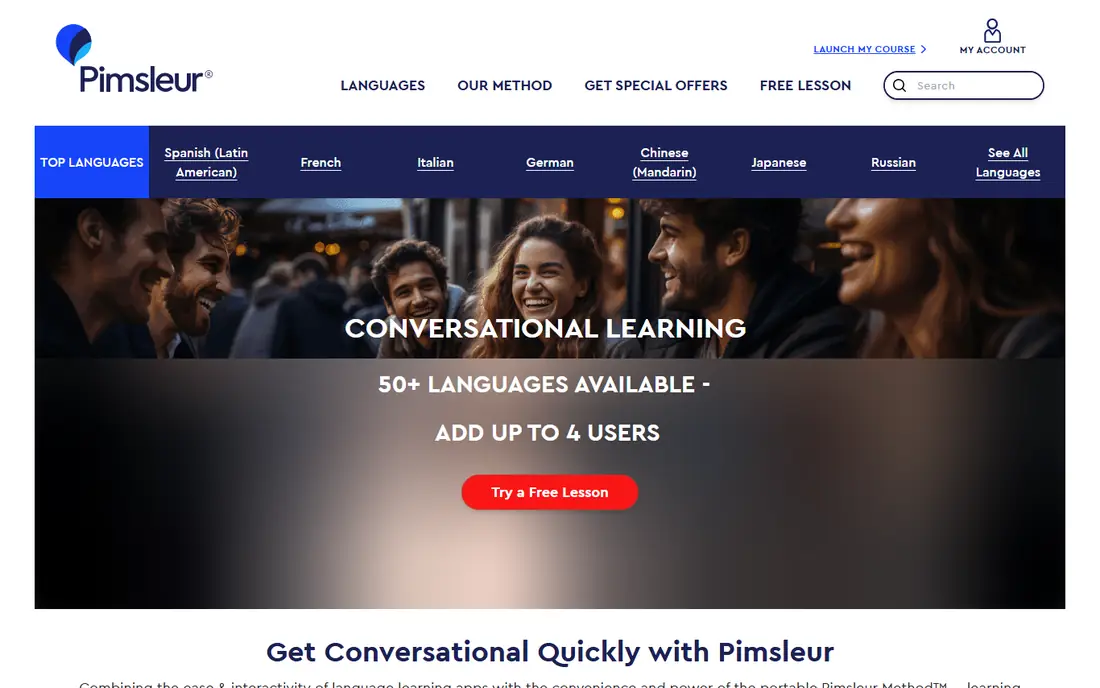
Pimsleur teaches Portuguese through audio lessons, with call-and-response drills that build speaking confidence from day one. Lessons run about thirty minutes and work hands-free on commutes, walks or chores. The method suits learners whose goal is conversation, not reading.
Reading and writing practice is thinner than Babbel or Duolingo, and the subscription costs more than most app rivals. For a learner who wants to speak Portuguese first, Pimsleur is the best audio method available.
What we like- Audio-first method builds speaking confidence
- Hands-free lessons for commutes
- Strong pronunciation training
Watch out for- Less reading and writing practice
- Subscription costs more than app rivals
Starting priceSee website
Free planYes
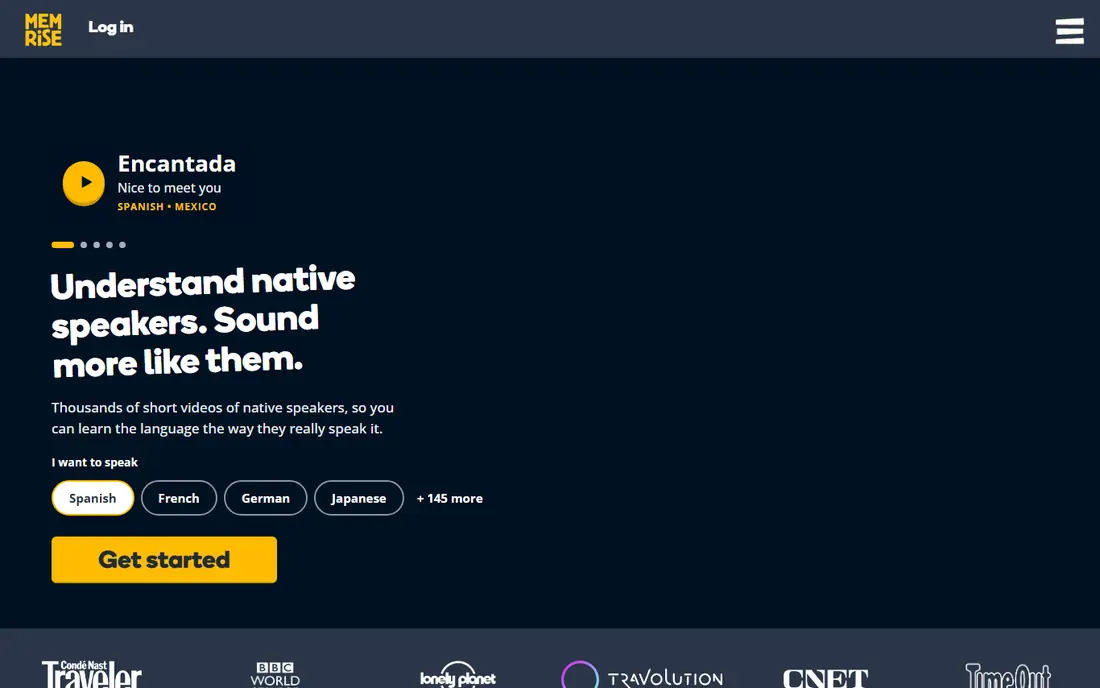
Memrise builds vocabulary through spaced repetition and video clips of native speakers using words in real contexts. Short sessions suit daily habits, and the app's courses cover Portuguese vocabulary from beginner to intermediate levels. The video element helps learners hear natural pronunciation and speed.
Grammar teaching is less structured than Babbel, and course depth varies by language. For a learner who wants vocabulary and listening practice in short daily sessions, Memrise is a strong companion app.
What we like- Video clips of native speakers
- Spaced repetition for vocabulary
- Fun, short sessions
Watch out for- Less structured grammar teaching
- Course depth varies by language
Starting priceSee website
Free planYes
Mondly offers daily Portuguese lessons, vocabulary builders and chatbot conversations that practise dialogues. Speech recognition checks pronunciation, and the app tracks progress with stats and streaks. Lessons are short and varied, which suits learners who want a quick daily habit.
Depth trails Babbel for serious learners, and grammar explanations stay light. For a casual learner who wants quick, varied daily lessons, Mondly is an easy and affordable choice.
What we like- Daily lessons and conversations with a chatbot
- Speech recognition
- Covers Brazilian Portuguese
Watch out for- Depth trails Babbel for serious learners
- Grammar explanations are light
Starting priceSee website
Free planYes
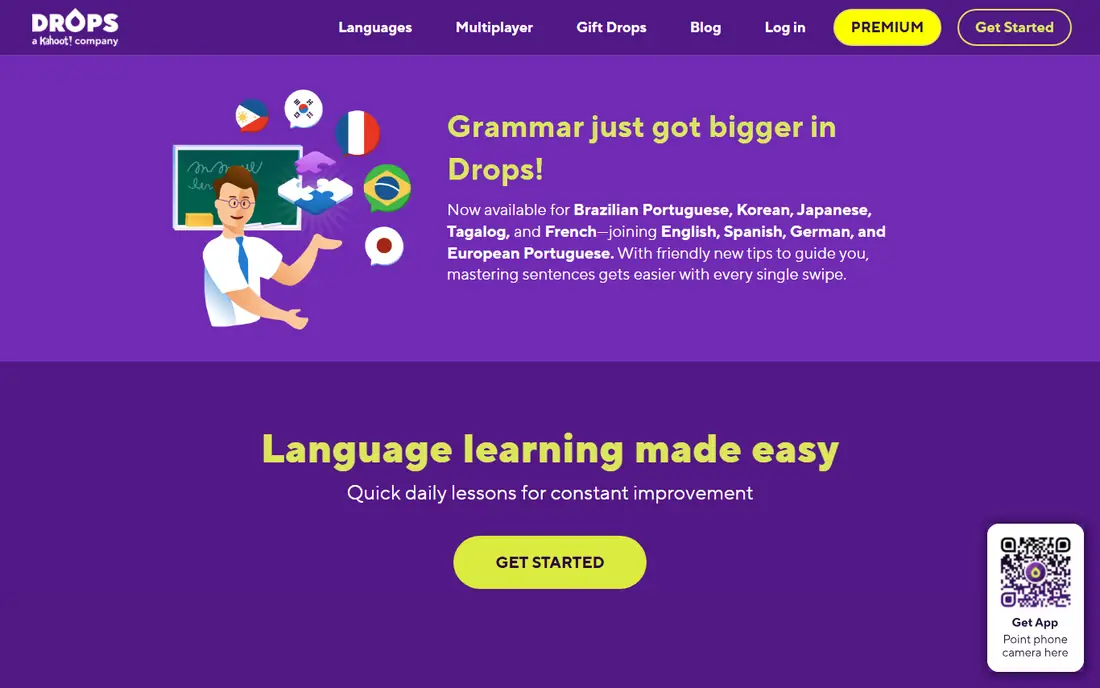
Drops teaches Portuguese vocabulary through illustrations and quick word games in five-minute sessions. The visual approach suits beginners and children, and the free tier covers daily practice with a time limit. Topics range from food and travel to business vocabulary.
There is no grammar or conversation course, so Drops works best as a supplement, not a main course. For a beginner who wants to build vocabulary fast in tiny sessions, Drops is the most visual option here.
What we like- Visual vocabulary learning with illustrations
- Five-minute sessions
- Good for beginners
Watch out for- No grammar or conversation courses
- Free tier limits daily time
How we chose
We compared apps on their published Portuguese courses, variant coverage, pricing pages and public reviews from learners. We favoured apps with full Portuguese courses, clear methods and a usable free tier or trial, and we noted variant coverage where it matters. Prices were marked "See website" because subscription tiers change often. We did not claim hands-on testing.
Brazilian or European Portuguese
Most apps teach Brazilian Portuguese, which has different pronunciation, vocabulary and some grammar from European Portuguese. The difference matters for learners moving to Portugal, working with Portuguese clients or taking a European Portuguese exam. Duolingo offers a European path, while several other apps lean Brazilian or mix variants.
Check the variant before subscribing. Open the app's Portuguese course, listen to sample audio and confirm whether the accent and vocabulary match your goal. If your target is Portugal, a tutor or a dedicated European Portuguese course may beat a general app.
Portuguese learning speeds up when study matches a real deadline. Set a concrete goal, such as holding a ten-minute conversation on a trip in six months or passing a specific exam, then plan backward: vocabulary and phrases for that situation first, grammar as needed to support them, and general study second. Spend at least half of study time on listening and speaking, since reading skill alone leaves learners unable to follow fast Brazilian or European speech. Watch shows or listen to podcasts in Portuguese with subtitles in Portuguese, not English, once you reach a basic level, because same-language subtitles connect sound to spelling. Keep a small notebook of phrases you actually needed and lacked, and review it weekly, since those personal gaps matter more than any course's next lesson. Revisit the notebook before each tutor session, so lesson time targets your real gaps instead of generic material. Celebrate small milestones, such as your first full conversation without switching to English, since visible progress keeps motivation alive through the long middle phase of learning.
European and Brazilian Portuguese differ enough to plan around. Pronunciation, some vocabulary and a few grammar points vary, so learners heading to Portugal should favour European audio and materials, while learners heading to Brazil should favour Brazilian ones. Mixing both early on confuses listening, though the written language stays largely shared. If your app teaches the other variant, supplement with podcasts or shows from your target country to tune your ear. Tell tutors and language partners your target variant from the first session, so corrections match the Portuguese you actually need. Either variant is understood in both countries, but matching your destination removes friction from real conversations.
Frequently asked questions
What is the best app to learn Portuguese?
Babbel is the best structured course for most learners, with grammar and conversation built for adults. Duolingo suits free beginners, Pimsleur suits speakers, and Rosetta Stone suits visual immersion learners. The best app depends on your goal and the Portuguese variant you need.
Do these apps teach Brazilian or European Portuguese?
Most teach Brazilian Portuguese, with Duolingo offering a European path and others varying. Check the variant in the app before subscribing, especially if your goal is Portugal or a European Portuguese exam. Pronunciation and vocabulary differ between the variants.
How long does it take to learn Portuguese with an app?
Basic conversation takes several months of daily practice, while fluency takes a year or more plus real conversation. Apps build vocabulary and grammar, but speaking with native speakers speeds progress far more than lessons alone. Pair an app with conversation practice for the best results.
Is Duolingo enough to learn Portuguese?
Duolingo builds a good beginner base in vocabulary and simple sentences, but grammar depth and speaking practice are limited. Pair it with a structured course like Babbel or conversation practice with a tutor to move beyond beginner level.
Which app is best for speaking Portuguese?
Pimsleur is the best app for speaking, with audio lessons built around call-and-response conversation. Busuu adds native-speaker corrections on spoken exercises, and Babbel includes pronunciation practice with speech recognition. All three beat text-only apps for speaking confidence.
Can I learn Portuguese for free?
Yes. Duolingo's core course is free, and Busuu, Memrise, Mondly and Drops offer free tiers. Free tiers cover beginner material well, while paid plans add depth, offline lessons and advanced courses. Start free and pay only when you outgrow the free material.
Sources we checked (8)
- https://www.babbel.com
- https://www.duolingo.com
- https://www.rosettastone.com
- https://www.busuu.com
- https://www.pimsleur.com
- https://www.memrise.com
- https://www.mondly.com
- https://languagedrops.com
Is your product missing or out of date?
We review this list regularly. Vendors can request a listing, send updated pricing or ask about featured placement.

Shihab Mia · Founder, Rankite
Shihab has 5+ years in B2B and SaaS SEO. He writes Rankite's software buying guides from pricing pages, documentation and public user reviews. More about Shihab.