How we make this list: we compare pricing pages, product documentation and public user reviews. Rankite is independent; if a vendor ever pays for a featured spot, that listing is clearly labeled Partner.
Key takeaways
- SoFi and Ally are the closest to full-service digital banks, combining checking, savings, investing, and lending in one app.
- Chime and Current compete on fee-free everyday banking, with early direct deposit and no overdraft fees as the headline features.
- Varo stands out as a chartered bank built mobile-first, with cash advances and credit-building tools in the same app.
- Revolut, N26, and Monzo are the international picks, strongest for travelers and anyone managing money across currencies.
- Every app on this list offers free core banking; the real differences are in savings rates, fee structures, and which extras you will actually use.
Quick comparison
| Tool | Best for | Starting price | Free plan |
|---|
 SoFi SoFi | All-in-one digital banking and investing | Free | Yes |
 Chime Chime | Fee-free checking and savings | Free | Yes |
 Current Current | Early payday and teen banking | Free | Yes |
 Varo Varo | Chartered digital bank with credit building | Free | Yes |
 Revolut Revolut | International money and multi-currency | Free | Yes |
 N26 N26 | European mobile banking | Free | Yes |
 Monzo Monzo | UK budgeting-first banking | Free | Yes |
 Ally Ally | Online bank with high-yield savings | Free | Yes |
Is your product missing or out of date?
We review this list regularly. Vendors can request a listing, send updated pricing or ask about featured placement.
The best fintech software for personal banking
#1
SoFi
Best for: All-in-one digital banking and investing
Visit sofi.com
Starting priceFree
Free planYes
Chime's homepage calls itself the most loved banking app in America, and NerdWallet named it best overall checking account of 2026. That tells you how fierce this category has become, and SoFi is the contender that tries to win by being everything at once. Checking and savings come from SoFi Bank, a real chartered bank, and the same app handles investing, personal loans, mortgages, and credit cards.
The pitch is consolidation. Instead of a bank for deposits, a broker for investing, and a lender for loans, SoFi members manage all of it in one place, with perks that stack across products. Savings rates are competitive when you set up direct deposit, and there are no monthly account fees. For people who want their whole financial life in one app, the integration is genuinely convenient.
The catch is that the best terms orbit direct deposit and product bundling. If you only want a simple checking account, SoFi's breadth is noise. And as with any all-in-one, compare each product on its own merits: the investing platform or loan rates may or may not beat specialists. SoFi wins for consolidators, not for minimalists.
What we like- Checking, savings, investing, loans, and credit cards in one ecosystem
- Competitive savings APY with direct deposit
- No account fees
Watch out for- Best rates require direct deposit
- Breadth can feel like a financial supermarket if you only want simple banking
Starting priceFree
Free planYes
Chime built its name on a simple promise: banking without the fees that traditional banks live on. No monthly maintenance fees, no overdraft fees, no minimum balance. Direct deposits can arrive up to two days early, and the app includes automatic savings features and a credit-builder product. Banking services run through partner banks, The Bancorp Bank and Stride Bank, so deposits are FDIC-insured.
What keeps Chime popular is that the free tier is the real product, not a teaser. SpotMe covers small overdrafts without a fee, the savings account pays interest, and the app now even includes investing with no commissions. For people living paycheck to paycheck, or anyone tired of fee schedules, the value proposition is immediately legible.
The trade-offs are structural. There are no branches, so everything happens in the app or at ATMs, and depositing cash means visiting a retail partner, sometimes with a fee. Customer service is app and phone based. If you want in-person banking or complex products like mortgages, Chime is not the place. For fee-free digital checking, it remains the benchmark.
What we like- No monthly fees and no overdraft fees
- Early direct deposit up to two days
- Large fee-free ATM network
Watch out for- No physical branches
- Cash deposits can involve fees at some retailers
Starting priceFree
Free planYes
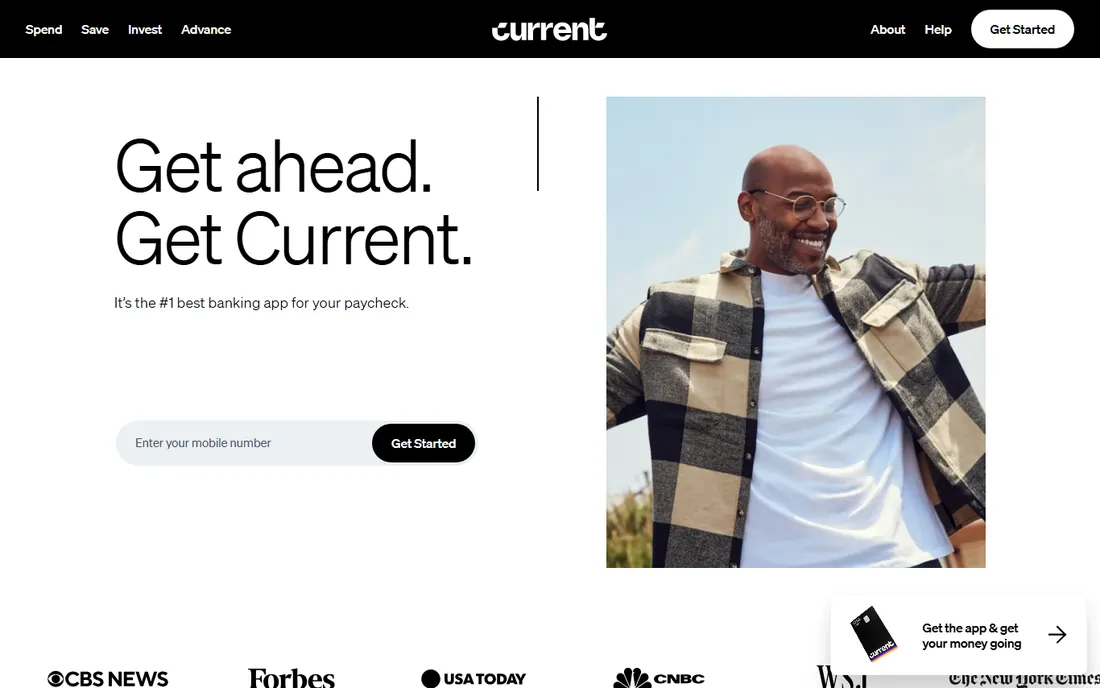
Current targets the same fee-free audience as Chime but differentiates with paycheck-focused features. Members can get paycheck advances up to $1,000, access fee-free overdraft, and receive direct deposits up to two days early. Banking runs through partner banks, and the app layers on savings pods, round-ups, and even fee-free crypto trading for the curious.
The teen banking product is a genuine differentiator. Parents can open accounts for kids with automatic allowances, instant transfers, and real-time spending alerts, which makes Current a family onboarding tool as well as a personal bank. Few competitors package teen banking this cleanly.
The honest weakness is yield. Current's savings interest does not lead the market, so rate-chasers will find better numbers at SoFi, Ally, or Varo. The advance features also depend on your direct deposit history and eligibility. Current fits people who value paycheck flexibility and family features over maximizing interest.
What we like- Pay advances up to $1,000
- Fee-free overdraft
- Teen accounts with parental controls
- Crypto trading in-app
Watch out for- Savings rates trail the highest-yield competitors
- Advance features depend on eligibility and direct deposit history
Starting priceFree
Free planYes
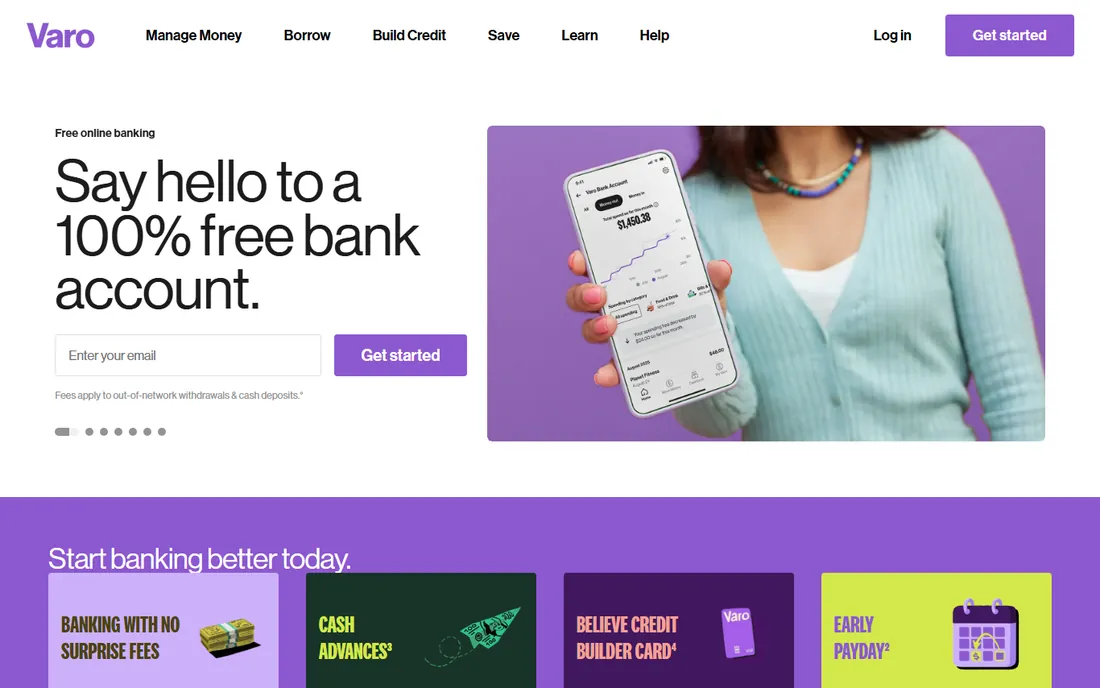
Varo holds a distinction in this list: it is an actual chartered national bank, the first all-digital bank to receive a national charter from the OCC, rather than a fintech operating through partner banks. That matters less day to day than Varo's marketing suggests, but it does mean one institution holds your deposits directly.
The product lineup centers on no-fee banking with practical extras. Savings earns a strong APY, early direct deposit is standard, and Varo layers on short-term credit products: cash advances up to a few hundred dollars with flat fees and no interest, plus a personal line of credit for larger needs. The Believe credit card helps members build credit with on-time payments.
Varo's range is narrower than the super-apps. There is no investing platform and no mortgage desk. Cash deposits run through retail partners like CVS. But for straightforward digital banking from a real bank, with credit-building tools built in rather than bolted on, Varo is one of the cleanest options available.
What we like- Real bank charter, not a fintech riding on partners
- No hidden fees
- Cash advance and line of credit options
- High-yield savings
Watch out for- Product depth is narrower than SoFi or Ally
- No branches and limited cash deposit options
Starting priceFree
Free planYes
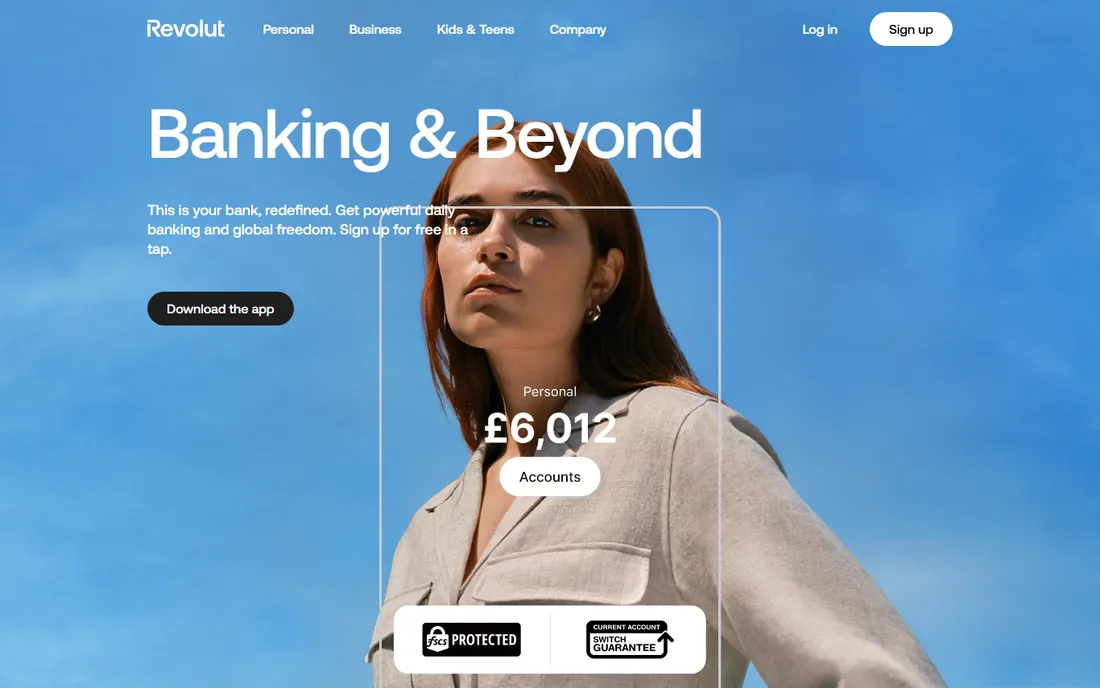
Revolut started as a travel money card and grew into a global financial super-app with over 80 million customers. The core strength remains international money: hold and exchange dozens of currencies at competitive rates, spend abroad without the markups traditional banks add, and send money across borders cheaply. For travelers, expats, and freelancers with international clients, that is the whole game.
Around that core, Revolut has built savings with daily interest, commission-free stock investing within allowances, crypto trading, budgeting analytics, and an AI assistant. The free Standard plan covers the basics, while paid tiers raise exchange limits, boost savings rates, and add perks like travel insurance and lounge access.
The catch is the freemium structure. The free plan's exchange and ATM allowances are enough for occasional travel but not for heavy use, and the best savings rates sit behind paid plans. Customer support for free users is primarily in-app. Revolut is the pick when your money crosses borders regularly; for purely domestic US banking, local options are simpler.
What we like- Multi-currency accounts with strong exchange rates
- Investing, crypto, and budgeting in one app
- Huge global customer base
Watch out for- Free plan has limits on exchanges and ATM withdrawals
- Paid tiers needed for the best rates and features
Starting priceFree
Free planYes
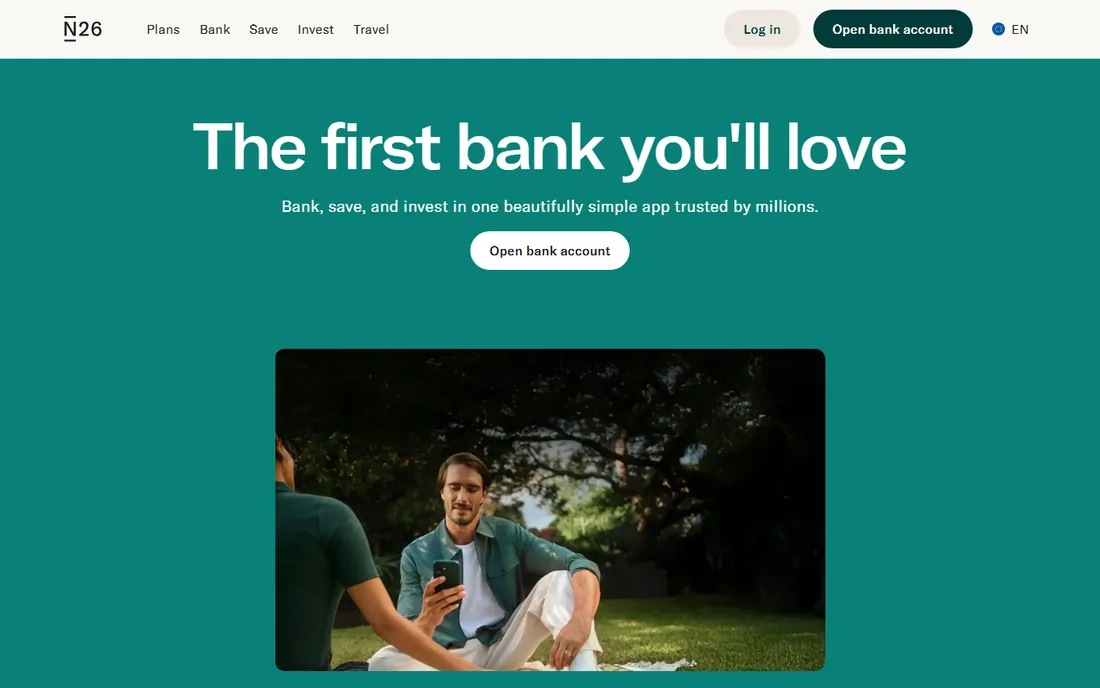
N26 is Europe's answer to the digital bank, operating with a full German banking license across two dozen European markets. The standard account is free with no opening or maintenance fees, and the app covers spending, saving in Spaces sub-accounts, and investing in stocks and ETFs from as little as one euro.
The experience is deliberately minimal. Where Revolut piles on features, N26 keeps the interface clean and the product focused on banking done well: instant notifications, easy transfers, shared Spaces for splitting costs, and a free virtual card from the moment your account opens. Paid tiers add higher savings interest, travel insurance, and cashback.
The limitation is geography. N26 serves Europe only, having exited the US market, so American readers should look elsewhere. Within Europe, it is the calm, licensed alternative to Revolut's maximalism. Choose N26 if you want a proper European bank account with a great app and no interest in a financial theme park.
What we like- Full German banking license with deposit protection
- Clean mobile-first design
- Free standard account with virtual card
Watch out for- Only available in Europe
- Investing and advanced features trail Revolut
Starting priceFree
Free planYes
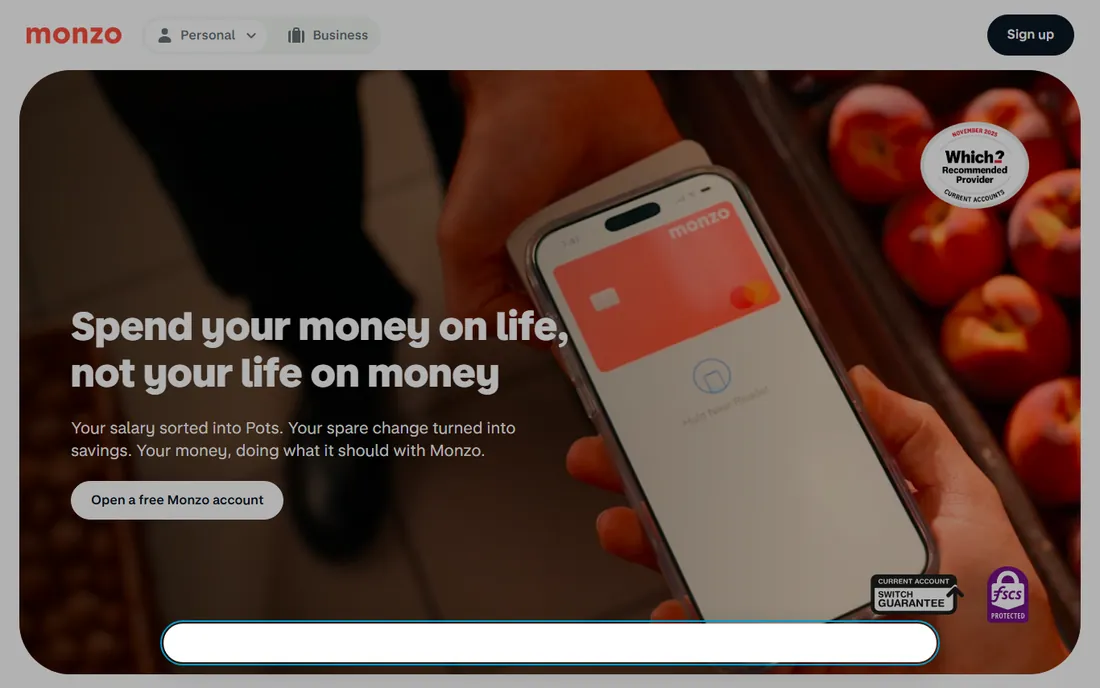
Monzo built its reputation on helping people understand their spending. Instant transaction notifications, automatic categorization, spending budgets, and Savings Pots make it the most budgeting-forward bank on this list. The coral debit card became a cultural marker in the UK for a generation that manages money on phones.
As a fully licensed UK bank, Monzo holds deposits directly with FSCS protection, and the free current account charges no monthly fees and no foreign transaction fees, which makes it a strong travel companion. Savings run through partner products including ISAs, and the app handles bills, subscriptions, and salary sorting with unusual polish.
Monzo's world is the UK. International readers get little from it, and even within the UK, the highest savings rates require looking at partner products rather than Monzo's own balance. But for British users who want their bank to actively help them budget, Monzo's combination of analytics, fee-free travel spending, and genuine banking license is hard to match.
What we like- Excellent budgeting and spending analytics
- No foreign transaction fees
- FSCS-protected deposits
- Free current account
Watch out for- UK-focused
- Savings rates depend on partner products
- Paid tiers for premium features
Starting priceFree
Free planYes
Ally is the veteran of online banking, and it shows in the product's steadiness. The online savings account consistently pays a competitive rate with no monthly maintenance fees, and the spending account offers early direct deposit and no overdraft fees. Savings buckets let you organize money by goal without opening multiple accounts.
What distinguishes Ally from the neobanks is the breadth behind the bank. Ally Invest offers self-directed trading with no commissions on eligible stocks and ETFs, and Ally remains one of America's largest auto lenders. For customers who want savings, checking, investing, and a car loan from one institution, that matters.
There are no branches, which will not surprise anyone shopping online banks, and the app, while capable, lacks the design flair of Chime or Monzo. Ally is the choice for rate-conscious savers who want an established online bank rather than a startup, and who value having investing and lending under the same roof.
What we like- Competitive savings rates with no monthly fees
- Spending and savings buckets for organizing money
- Investing and auto finance in the same brand
Watch out for- No physical branches
- App experience is solid but less playful than neobank rivals
How we chose
We focused on fintech products that serve as a person's primary banking relationship: checking, savings, and everyday money management in a mobile-first app. We verified each company's current homepage and confirmed that core banking is free at every vendor on this list. We checked availability honestly, noting that N26 serves Europe and Monzo is UK-centered, rather than presenting them as global options. We did not claim hands-on testing. Instead we weighed fee structures, savings rates as currently advertised, feature breadth, and the trade-offs that matter to real users, like branch access and customer support.
How to compare digital banks
Start with fees, because that is where traditional banks profit and where fintechs compete. Look at monthly maintenance fees, overdraft policies, ATM fees, and foreign transaction fees. Every app on this list eliminates or minimizes the first two, but ATM networks, cash deposit costs, and international fees still vary.
Next, check the savings rate against your actual balance. A high APY on paper may apply only up to a cap, or only with direct deposit. If you keep a large emergency fund, the difference between the highest and lowest rates on this list is real money over a year. If you keep a small balance, prioritize fee avoidance and app quality instead.
Finally, decide how much breadth you want. SoFi, Ally, and Revolut aim to be financial super-apps covering investing and more. Chime, Current, and Varo focus on doing everyday banking well. Neither approach is better in the abstract; it depends on whether you want one app for everything or the best app for banking specifically.
Fees that actually matter
Overdraft fees deserve their reputation as the most punishing bank fee, and their absence is the single biggest reason to switch to a fintech on this list. Chime, Current, Varo, and Ally have all eliminated them, which alone can save frequent overdrafters hundreds per year.
ATM fees are the quiet second. Most of these apps offer large fee-free ATM networks, but using an out-of-network ATM can still cost you on both ends. If you use cash often, check the network size and whether your app reimburses third-party ATM fees.
Foreign transaction fees matter if you travel. Revolut, Monzo, and N26 are built for fee-free international spending, while US-focused apps vary. And watch cash deposit fees: digital banks without branches route cash through retail partners, and some of those partners charge. If your income arrives as cash, confirm the deposit cost before you commit.
Frequently asked questions
Are fintech banking apps safe?
Reputable ones are. SoFi, Varo, Ally, N26, and Monzo are chartered or licensed banks, while Chime, Current, and Revolut provide banking through licensed partner banks, with deposits insured up to the standard limits. Check whether a given app is itself a bank or works through partners, and confirm the insurance backing before depositing large sums.
Can I get paid early with these apps?
Most of them offer early direct deposit, typically up to two days before your scheduled payday. The mechanism is the same everywhere: the app credits your account when the employer's payment instruction arrives rather than waiting for settlement day. Availability can depend on your employer and account standing.
Do these apps charge monthly fees?
Core checking and savings are free at every app on this list. Revenue comes from interchange fees, premium tiers, lending products, and optional services. Paid tiers exist at Revolut, N26, and Monzo for users who want higher limits, better rates, or travel perks, but none is required for basic banking.
Which app is best for international travel?
Revolut is the strongest for multi-currency holding and exchange, with Monzo and N26 close behind for fee-free card spending abroad. US-focused apps like Chime and Ally work internationally through their card networks but may add foreign transaction fees, so check the fee schedule before you fly.
Can I deposit cash into a digital bank account?
Yes, through retail partners. Chime, Current, and Varo accept cash deposits at chains like Walgreens or CVS, though some locations charge a service fee. If cash deposits are central to how you bank, compare the partner network and fees, since this is one area where branch banks still have an edge.
Should I close my traditional bank account?
Not necessarily right away. Many people run a fintech app alongside a traditional account during a transition period, moving direct deposit and bills over gradually. Keep the old account until every automatic payment has cleared through the new one at least once.
Sources we checked (8)
- https://www.sofi.com/
- https://www.chime.com/
- https://current.com/
- https://www.varomoney.com/
- https://www.revolut.com/
- https://n26.com/
- https://monzo.com/
- https://www.ally.com/
Is your product missing or out of date?
We review this list regularly. Vendors can request a listing, send updated pricing or ask about featured placement.

Shihab Mia · Founder, Rankite
Shihab has spent more than a decade helping SaaS and e-commerce brands grow through search. He writes Rankite's software buying guides from pricing pages, documentation and public user reviews. More about Shihab.