How we make this list: we compare pricing pages, product documentation and public user reviews. Rankite is independent; if a vendor ever pays for a featured spot, that listing is clearly labeled Partner.
Key takeaways
- Ramp and Brex give small businesses corporate cards plus expense management for $0, earning on card interchange instead.
- Expensify from $5 per user per month is the classic choice when the team uses its own bank cards.
- Zoho Expense is the budget standalone pick, free for 3 users with paid plans from $4 per user per month.
- BILL Spend & Expense (formerly Divvy) is the best free card-based budgeting tool for cost control.
Quick comparison
| Tool | Best for | Starting price | Free plan |
|---|
 Ramp Ramp | Free cards plus spend control | $0 | Free plan |
 Brex Brex | Startups wanting cards and banking | $0 | Free plan |
 Expensify Expensify | Classic expense reports | $5/user/month | Free plan |
 BILL Spend & Expense BILL Spend & Expense | Free card-based budgeting | $0 | Free plan |
 Zoho Expense Zoho Expense | Budget standalone tracking | $4/user/month | Free plan |
 Navan Navan | Travel plus expenses | $0 | Free plan |
 Emburse Emburse | Mid-size policy compliance | See website | No |
 Fyle Fyle | Real-time expense tracking | See website | Free trial |
 Pleo Pleo | Small teams wanting cards | See website | Free trial |
Is your product missing or out of date?
We review this list regularly. Vendors can request a listing, send updated pricing or ask about featured placement.
The best expense software for small business
Starting price$0
Free planFree plan
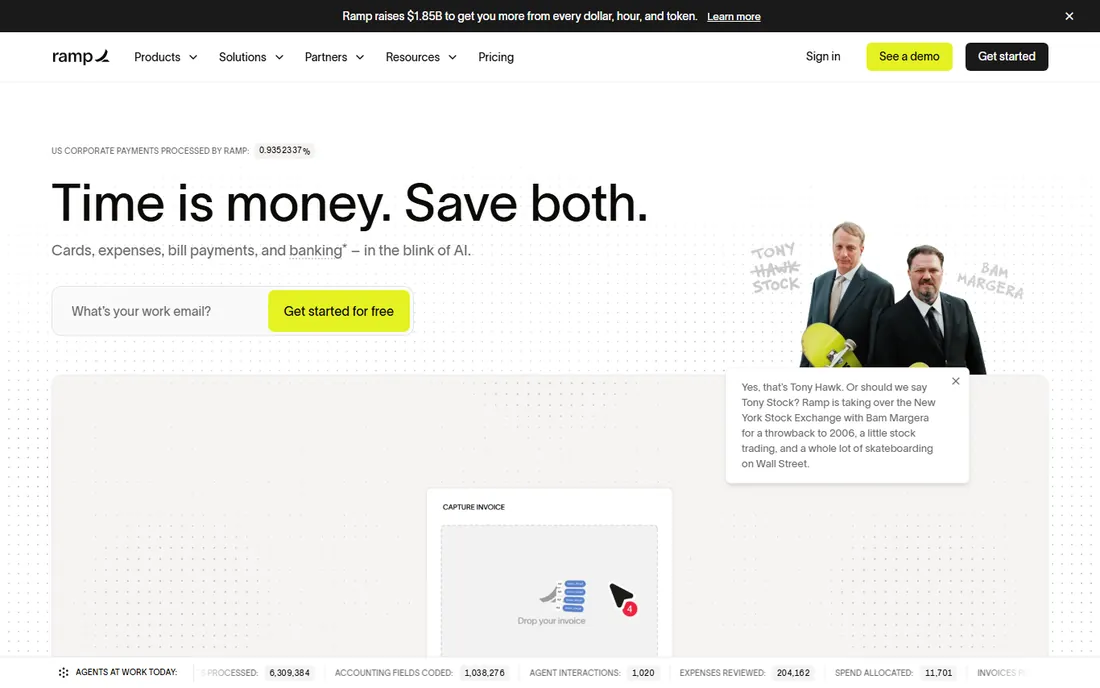
Ramp changed the economics of expense software by making the core platform free. Corporate cards, expense management, bill pay and accounting automation cost $0 because Ramp earns on card interchange. Pre-spend controls, receipt matching and policy enforcement come standard, and integrations cover QuickBooks, Xero, NetSuite and Sage.
The model requires using Ramp's cards, which suits most small businesses but not those locked into bank card programs. Ramp Plus at $15 per user per month adds advanced features for larger teams. For a small business starting fresh, Ramp is the value benchmark everything else must beat.
What we like- Core platform free
- Corporate cards with controls
- Strong automation and integrations
Watch out for- Requires using Ramp cards
- Advanced features need Ramp Plus at $15/user/month
Starting price$0
Free planFree plan
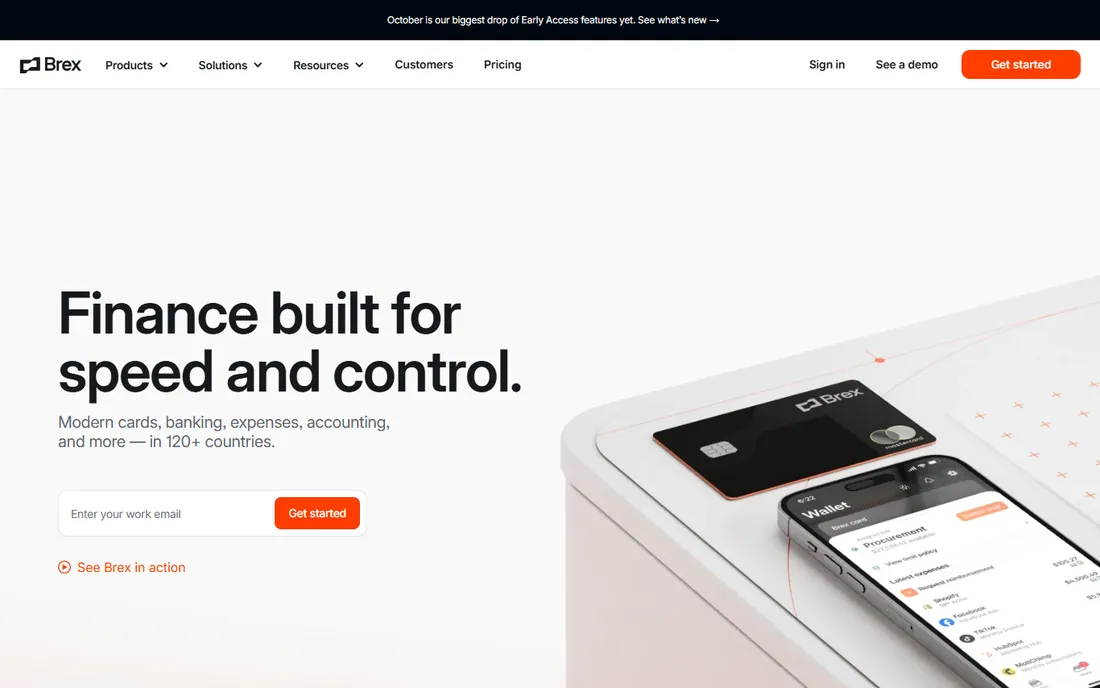
Brex bundles corporate cards, business banking, expense management and bill pay into one startup-friendly stack. The Essentials tier is free, with AI expense reviews, live budgets and global reimbursements that suit distributed teams. Venture-backed startups adopted Brex early, and the product matured with them.
Brex underwrites customers rather than selling simple seats, so eligibility applies. The Premium tier runs about $12 per user per month. For a startup that wants finance infrastructure in one place rather than five vendors, Brex is the integrated choice.
What we like- Free Essentials tier
- Cards, banking and expenses in one
- Global reimbursements
Watch out for- Eligibility requirements
- Premium tier around $12/user/month
Starting price$5/user/month
Free planFree plan
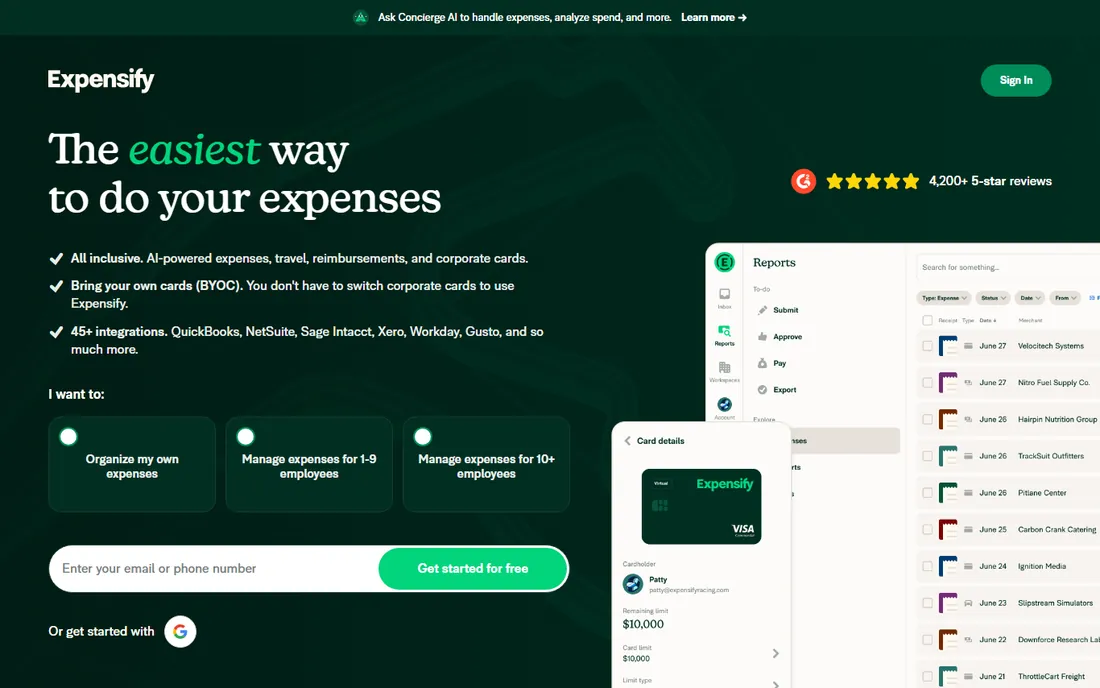
Expensify is the classic expense report tool: scan a receipt with SmartScan, the data extracts automatically, and reports route for approval. It works regardless of which cards the team carries, which matters when switching cards is not an option. Plans start at $5 per user per month for Collect, $9 for Control, with a free tier for very small use.
Per-user pricing means costs scale linearly with headcount, unlike the free card-first platforms. For small teams with existing bank cards and straightforward reimbursement needs, Expensify remains the simplest fit.
What we like- Works with any cards
- SmartScan receipt capture
- Simple for employees
Watch out for- Per-user fees add up
- Interface aging in places
#4
BILL Spend & Expense
Best for: Free card-based budgeting
Visit bill.com
Starting price$0
Free planFree plan
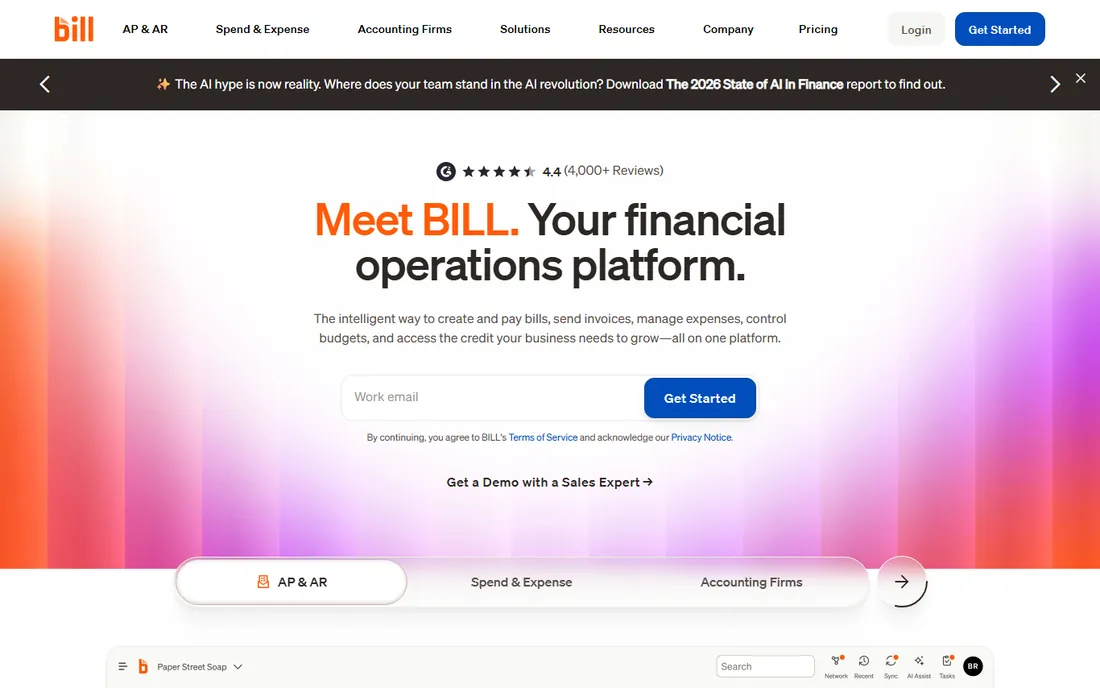
BILL Spend & Expense (the former Divvy) gives small businesses corporate cards with real budget controls for $0. Set budgets by team or project, issue virtual cards, and let AI categorize transactions. It earns on interchange like Ramp, so the software is genuinely free.
You must use BILL's cards, and the product is US-focused. For a small business whose main problem is controlling who spends what, the budget-first design is exactly right, and the price cannot be beaten.
What we like- Completely free
- Smart cards with budget controls
- AI categorization
Watch out for- Requires BILL cards
- US-focused
Starting price$4/user/month
Free planFree plan
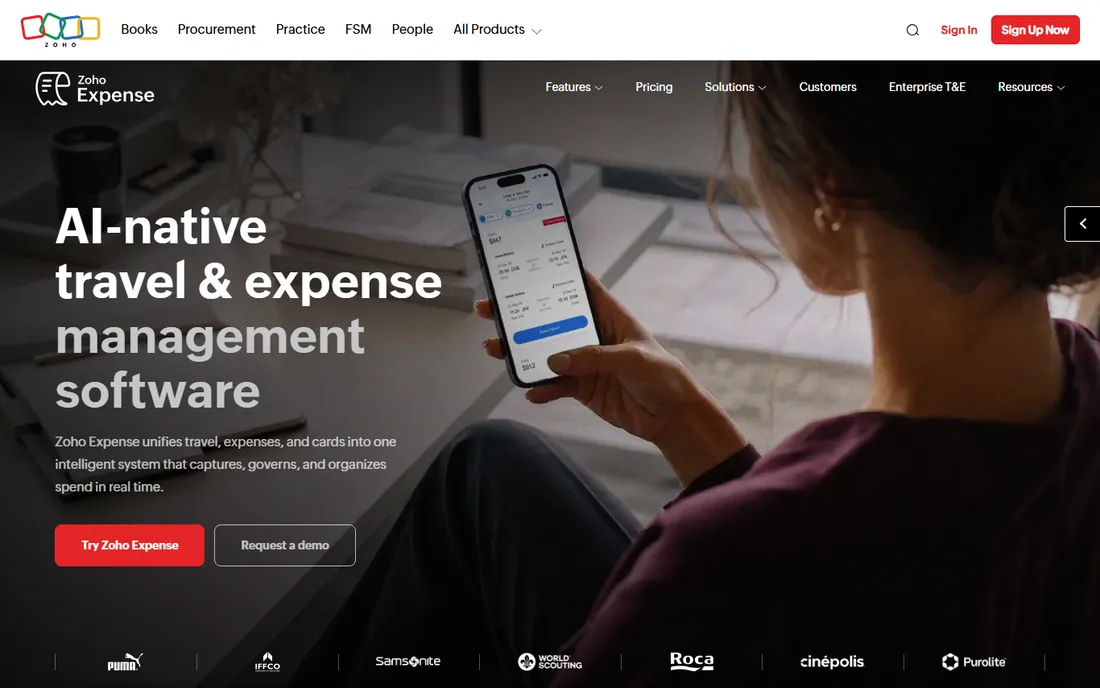
Zoho Expense is the budget standalone option: real expense management without requiring a card switch. The free plan covers 3 users, and paid plans start around $4 per user per month. Per diem automation, multi-currency support and approvals cover the essentials, and it plugs into Zoho Books naturally.
There are no corporate cards, so it is report-first rather than card-first. For a small team on Zoho, or any team that wants inexpensive expense tracking with its existing cards, Zoho Expense is the value pick.
What we like- Free for up to 3 users
- Per diem automation
- Good Zoho integration
Watch out for- No corporate cards
- Receipt OCR lags the leaders slightly
Starting price$0
Free planFree plan
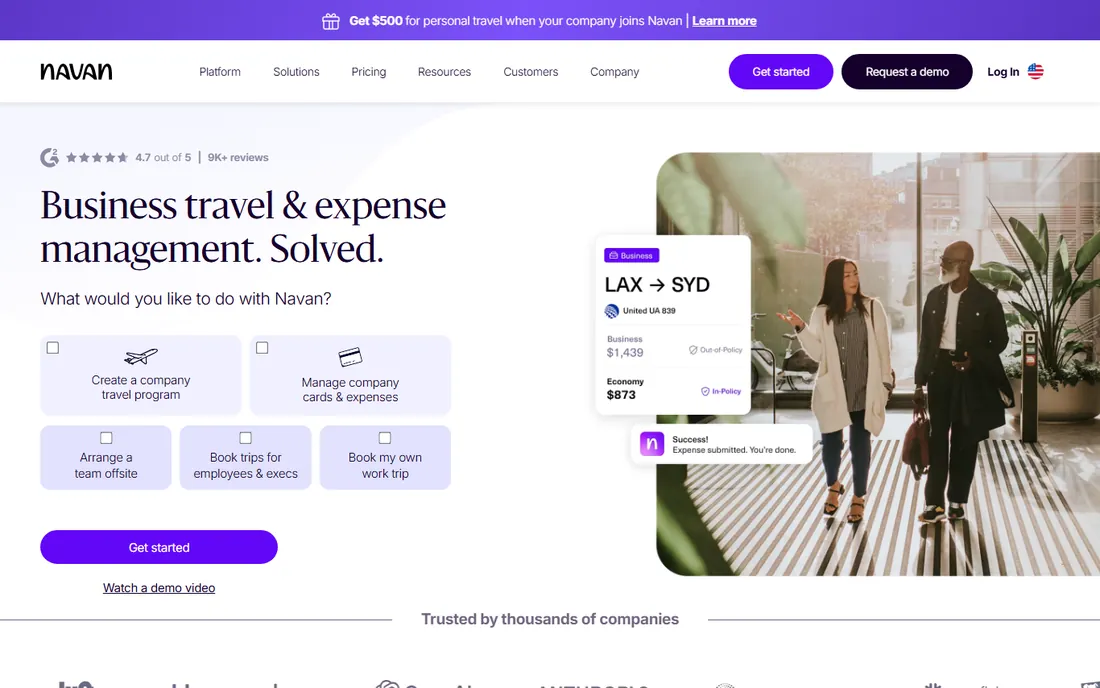
Navan (formerly TripActions) unifies business travel booking with expense management. Book flights and hotels in the app, and expenses flow automatically with receipts attached. Expense plans are $0 for eligible companies, which makes it compelling for travel-heavy small teams.
If the team rarely travels, the travel-centric design adds less value than Ramp or Brex. For consultants, sales teams and anyone living on the road, combining travel and expenses in one system eliminates the worst reconciliation headaches.
What we like- Travel booking and expenses unified
- $0 for eligible expense plans
- Good mobile app
Watch out for- Best value tied to travel usage
- Enterprise features are custom-priced
Starting priceSee website
Free planNo
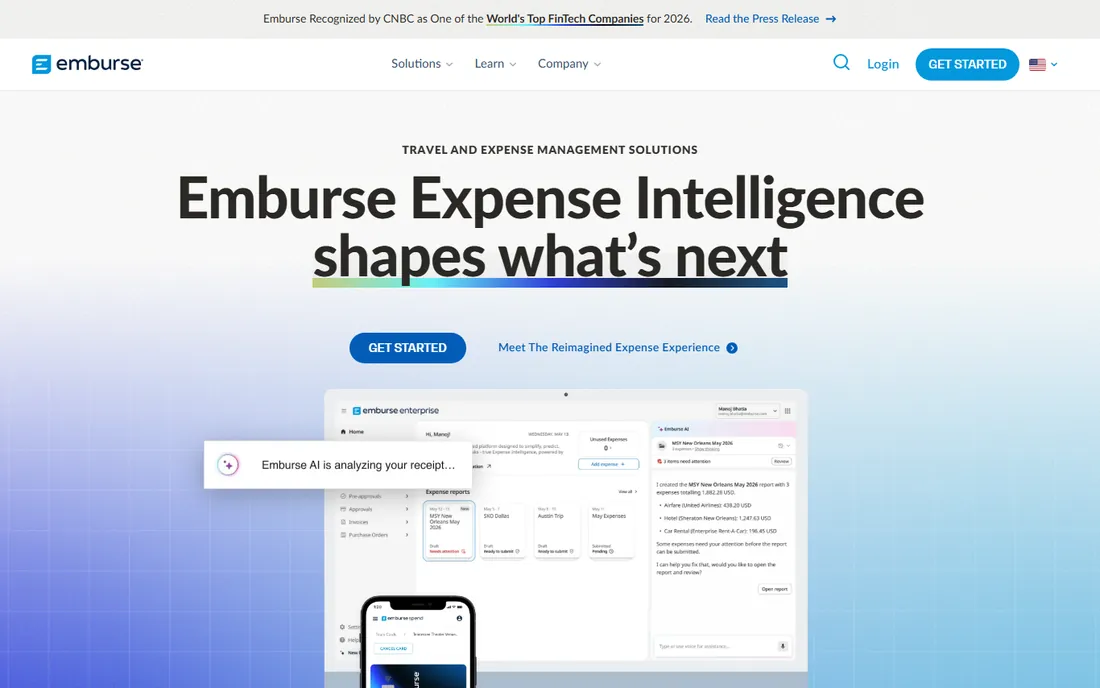
Emburse (which absorbed Certify, Chrome River and Abacus) serves mid-size companies with real compliance needs. Multi-level approvals, policy engines, audit trails and integrations with SAP, Oracle and NetSuite handle complexity that simpler tools cannot. Per-user pricing typically runs $8 to $12.
This is more than most small businesses need, and pricing requires a conversation. For a growing company where expense policy actually matters (regulated industries, grant funding, multi-entity), Emburse is the step up from consumer-simple tools.
What we like- Strong policy enforcement
- Handles complex approval chains
- Enterprise integrations
Watch out for- Quote-based pricing
- Overkill for very small teams
Starting priceSee website
Free planFree trial
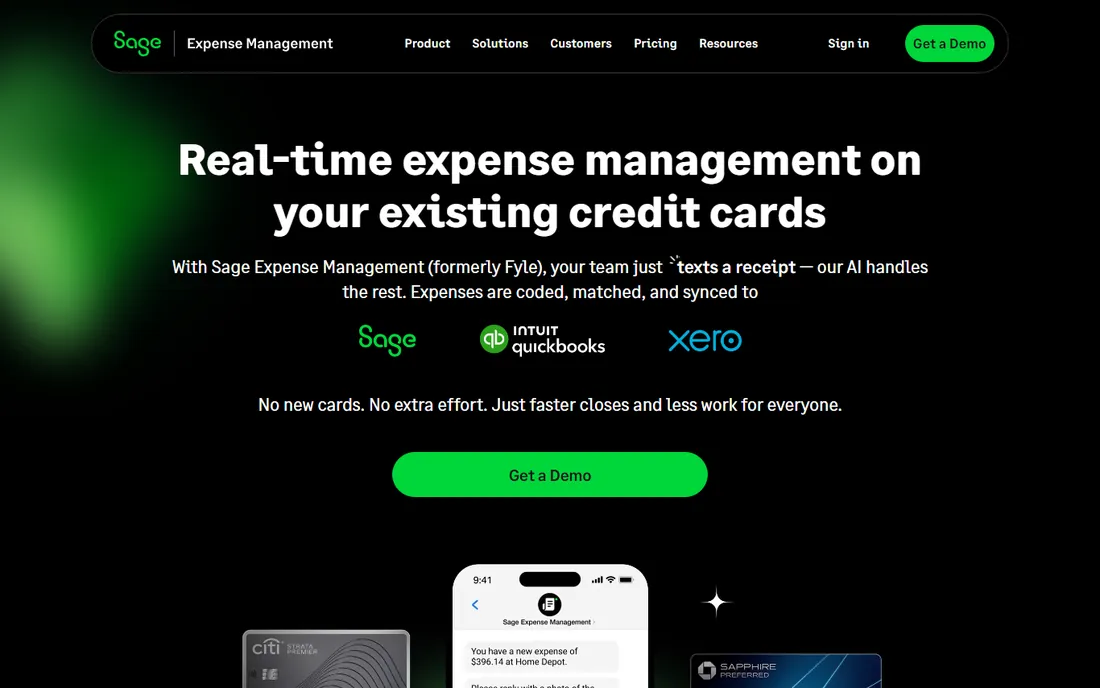
Fyle focuses on real-time expense visibility: card transactions appear instantly with receipt prompts, and the system works inside tools teams already use. It suits distributed teams where finance needs to see spending as it happens, not at month end.
Brand recognition trails the leaders, and pricing is not published, so expect a sales conversation. For small businesses that want modern expense tracking without switching cards, Fyle is worth a demo.
What we like- Real-time card feeds
- Works inside existing tools
- Good for distributed teams
Watch out for- Less known than leaders
- Pricing not published
Starting priceSee website
Free planFree trial
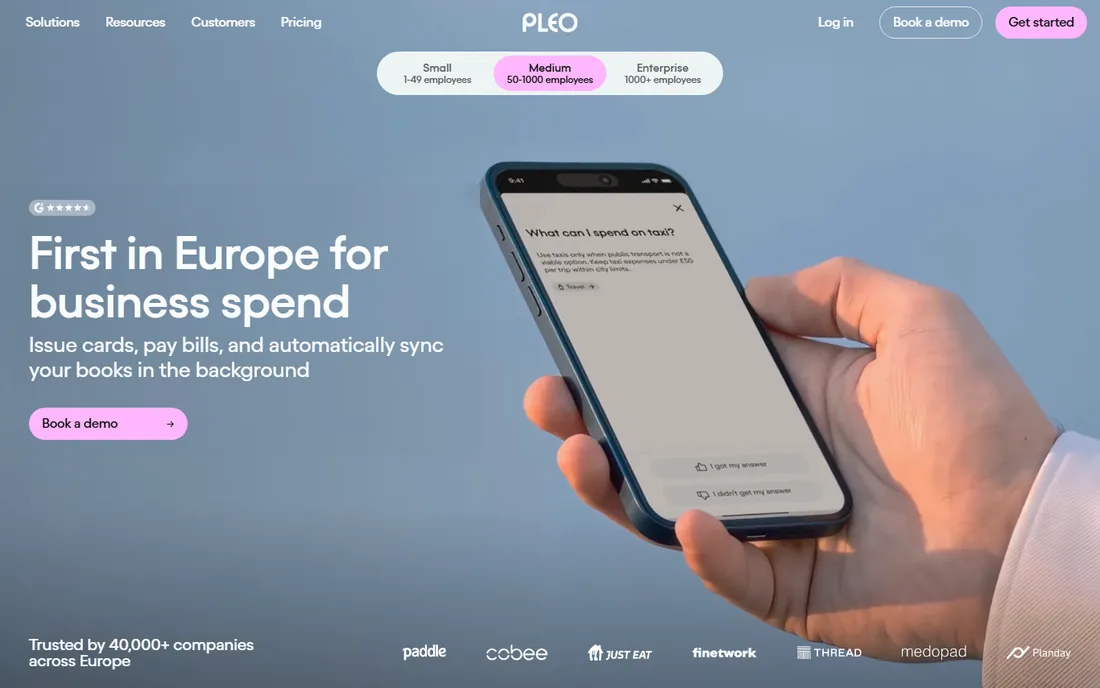
Pleo gives small teams smart company cards with built-in spending limits and automatic receipt capture. Employees buy what they need within limits; finance sees everything categorized in real time. UK plans run from around 8 pounds per user per month, with regional pricing elsewhere.
The US presence is smaller than Ramp or Brex, so American teams should compare carefully. For small European teams, or any team that likes the card-first model, Pleo is the established alternative.
What we like- Smart company cards
- Simple spending controls
- Popular with European startups
Watch out for- Pricing varies by region
- Smaller US presence
Card-first vs report-first: the pricing split
The category has split in two. Card-first platforms (Ramp, Brex, BILL, Navan, Pleo) give the software away free and earn on card interchange. Report-first tools (Expensify, Zoho Expense, Emburse, Fyle) charge per user and work with whatever cards you already carry.
If you can switch cards, card-first is usually cheaper and more controlled. If corporate cards are fixed by policy or banking relationships, report-first is the answer. Decide this before comparing features, because it determines which half of the market applies to you.
What to check before you buy
Confirm the accounting integration syncs the way you need. Every tool lists QuickBooks and Xero, but sync direction, timing and error handling differ. Test with your real chart of accounts.
Check reimbursement speed and method. ACH timing, international reimbursements and multi-currency support vary widely. Ask how long a reimbursement actually takes.
Read the card terms. Credit limits, qualification requirements and personal guarantees differ between card-first vendors. The software being free does not make the underwriting disappear.
Per diem vs actuals: the policy decision that shapes everything
Before choosing software, decide the policy question that determines how the software gets used: do you reimburse actual expenses or pay per diems? The choice shapes the entire expense workflow. Actuals (receipts for everything) give precise cost control and satisfy accountants, but they generate receipt-chasing overhead that everyone hates. Per diems (fixed daily rates for meals and incidentals) eliminate most receipts and most arguments, but they can overpay frugal travelers and underpay in expensive cities. Most small businesses end up hybrid: per diems for meals, actuals for lodging and transport. Whatever you choose, encode it in the software's rules so the policy enforces itself instead of living in a PDF nobody reads.
The IRS rules set the boundaries. For actuals, the accountable plan requirements are clear: expenses must have a business purpose, be substantiated within a reasonable time (typically 60 days), and excess advances returned. Per diems can use the federal GSA rates or company-set rates; amounts above federal rates become taxable wages. International travel complicates both. Your expense software should handle the substantiation workflow (receipt capture, approval chains, deadline reminders) and flag policy violations automatically. During evaluation, configure your actual policy in the trial, not the vendor's demo policy. The demo always looks smooth; your policy is where the friction hides.
Receipt requirements deserve explicit decisions, not defaults. Common sensible thresholds: no receipt needed under $25 for most categories, receipts required for all lodging and airfare regardless of amount, and per diem meals needing no receipts at all. The $25 threshold comes straight from IRS guidance and saves enormous hassle. Whatever thresholds you set, the software's mobile capture must make compliance easy: snap a photo at the point of purchase, auto-extract the amount and vendor, done in ten seconds. If capturing a receipt takes longer than the purchase did, employees will batch them monthly and finance will drown. Test the mobile capture with real crumpled receipts in bad lighting, not the vendor's pristine demo images.
Approval chains should match your trust level, not your org chart. The classic mistake is routing every $12 coffee through two managers. Sensible design: auto-approve expenses under a threshold that match policy, require one approval for normal expenses, and escalate only exceptions and large amounts. Managers should see a clean queue with policy flags highlighted, not a raw dump. Approval on mobile is non-negotiable; managers who can only approve at their desks become the bottleneck everyone complains about. Also decide what happens to rejected expenses: clear resubmission guidance, not silent limbo. An expense report stuck in approval for three weeks teaches employees that the system does not work.
Reimbursement speed is the metric employees actually care about. Finance teams optimize for control; employees optimize for getting their money back. Both matter. Set a published SLA (reimbursements within five business days of approval, for example) and track it. Direct deposit beats checks. The software should show employees exactly where their report sits: submitted, approved, paid. Transparency eliminates most complaints. Companies that reimburse fast get honest, timely expense reports. Companies that take a month get creative expense reports filed at the last minute. The policy and the software create the behavior; choose both deliberately.
Frequently asked questions
Is free expense software really free?
For card-first platforms, yes: Ramp, Brex and BILL charge $0 for the core software and earn on card interchange. You still pay payment processing on transactions, and premium tiers cost extra. Report-first tools charge per user instead.
What is the cheapest expense software for a 10-person company?
Ramp, Brex, BILL Spend & Expense and Navan all offer $0 core plans, making them the cheapest options. Zoho Expense is the cheapest paid standalone at around $4 per user per month. Expensify starts at $5 per user per month.
Do employees need to change how they spend?
With card-first tools, employees use the company card and snap receipt photos. With report-first tools, they keep existing cards and file expense reports. Card-first is less work for employees; report-first is less change for the company.
How does receipt scanning work?
Snap a photo and OCR extracts the merchant, amount, date and category. Accuracy is high for printed receipts and lower for handwritten ones. All the tools here include it; Expensify's SmartScan and Ramp's matching are among the most polished.
Can expense software handle per diems and mileage?
Yes. Zoho Expense automates per diems, and most tools calculate mileage from GPS or map distances. Confirm your specific per diem rules are supported during the trial.
What accounting software do these integrate with?
All integrate with QuickBooks and Xero. Most also support NetSuite, Sage and Microsoft Dynamics. Emburse and Ramp have the broadest enterprise integration lists. Test the actual sync before committing.
How we chose
We compared the expense tools small businesses actually buy, split between card-first and report-first models. Pricing comes from vendor pages and recent published comparisons; quote-based tools are marked as such. We weighted true cost for a small team, ease of use for non-finance employees, accounting integrations and receipt capture quality. No hands-on testing was performed; assessments rest on documentation and public reviews.
Sources we checked (11)
- https://ramp.com/pricing
- https://www.brex.com/pricing
- https://www.expensify.com/pricing
- https://www.bill.com/product/spend-and-expense
- https://www.zoho.com/expense/pricing/
- https://www.navan.com/
- https://www.emburse.com/
- https://www.fylehq.com/
- https://www.pleo.io/pricing
- https://ramp.com/blog/best-spend-management-software
- https://www.business-software.com/blog/4-budget-and-expense-tracking-apps/
Is your product missing or out of date?
We review this list regularly. Vendors can request a listing, send updated pricing or ask about featured placement.

Shihab Mia · Founder, Rankite
Shihab has spent more than a decade helping SaaS and e-commerce brands grow through search. He writes Rankite's software buying guides from pricing pages, documentation and public user reviews. More about Shihab.