How we make this list: we compare pricing pages, product documentation and public user reviews. Rankite is independent; if a vendor ever pays for a featured spot, that listing is clearly labeled Partner.
Key takeaways
- The winning operators treat EV charging as an energy management problem, not a parking amenity. Smart charging, load balancing and time-of-use billing decide profitability far more than the app design.
- Hardware-agnostic platforms (Driivz, ChargeLab, be.ENERGISED) now beat bundled hardware-plus-software deals for most buyers, because they let you swap chargers later without migrating your whole backend.
- Pricing is quote-based across the board. Nobody publishes per-charger rates, so budget on the commercial model instead: per-connector SaaS fees, transaction revenue shares, and energy management add-ons.
- Fleet depots and public networks need different tools. Ampcontrol and GreenFlux optimize depot energy costs, while Ampeco and Virta are built for branded public networks with roaming.
Quick comparison
| Tool | Best for | Starting price | Free plan |
|---|
 ChargePoint ChargePoint | Integrated network plus hardware | See website | No |
 EV Connect EV Connect | Utility programs and fleets | See website | No |
 Driivz Driivz | Large-scale network operations | See website | No |
 Ampcontrol Ampcontrol | Fleet depot energy optimization | See website | No |
 ChargeLab ChargeLab | Hardware-agnostic commercial sites | See website | No |
 Ampeco Ampeco | White-label charging businesses | See website | No |
 Monta Monta | Ease of use across segments | See website | No |
 GreenFlux GreenFlux | Smart charging at scale | See website | No |
 Virta Virta | European networks and grid services | See website | No |
Is your product missing or out of date?
We review this list regularly. Vendors can request a listing, send updated pricing or ask about featured placement.
The best EV charging software
Starting priceSee website
Free planNo
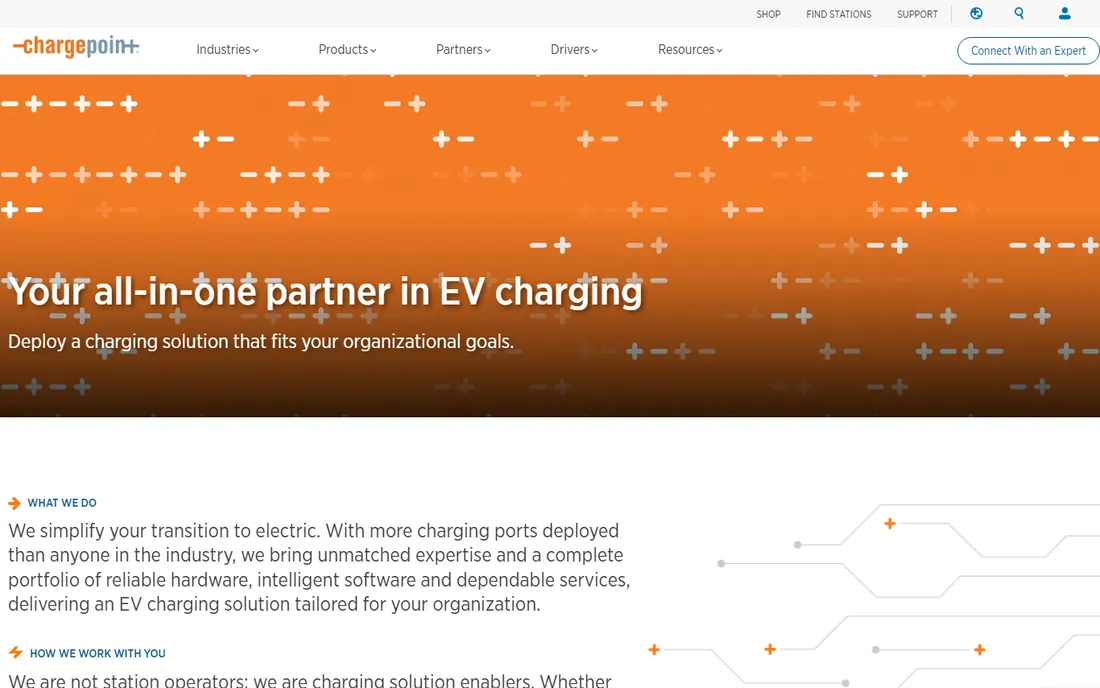
ChargePoint is the name most US drivers already know, and the software behind it is more flexible than the brand suggests. The be.ENERGISED platform lets businesses build and run their own charging networks on third-party hardware, more than 900 station models from over 100 manufacturers, with automated billing across time-of-day tariffs, customer groups and tax rules. OCPI-based roaming puts your chargers in front of hundreds of thousands of drivers.
The honest catch is the commercial model. ChargePoint sells networks, not just software, and the bundled deals that make procurement easy can make switching painful later. If you want their software without their hardware, confirm the hardware-agnostic terms in writing before you sign.
What we like- Largest integrated charging network with mature cloud services
- Be.ENERGISED software is hardware-agnostic and supports 900+ charger models
- Deep roaming integrations
Watch out for- Quote-based enterprise pricing
- Bundled hardware deals can lock you into their ecosystem
Starting priceSee website
Free planNo
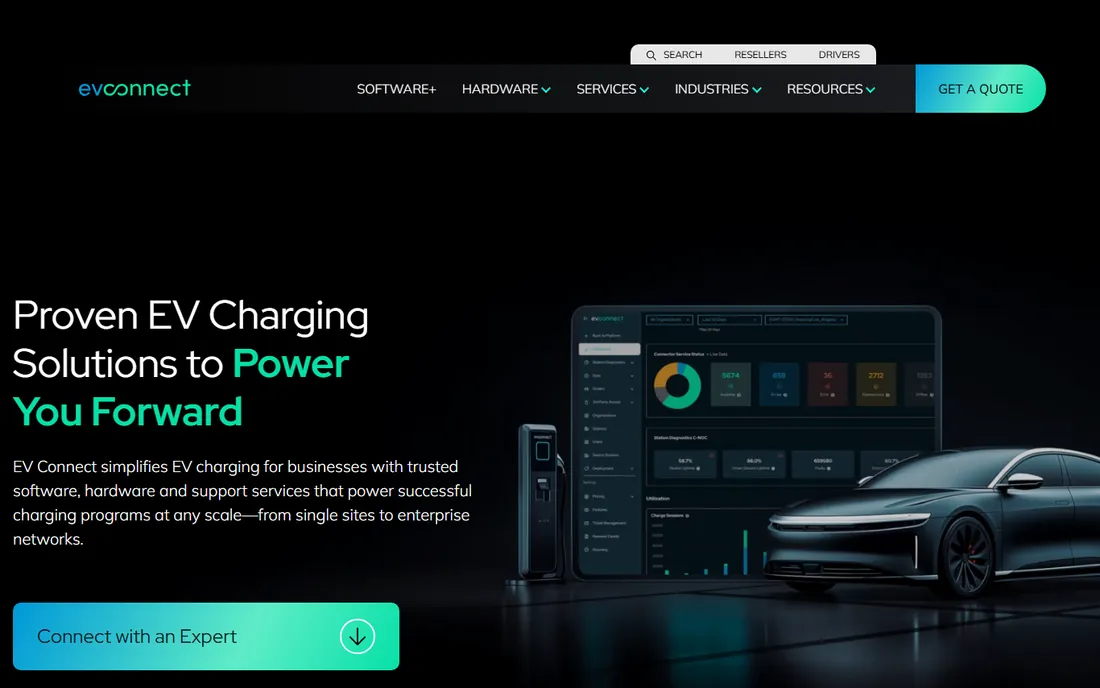
EV Connect built its reputation with utilities and fleets rather than consumer branding, and it shows in the product. The cloud platform handles charger management, driver access, billing and reporting with the kind of program-administration tooling that utility rebate programs demand. Fleet operators get depot scheduling and vehicle-aware charging windows.
It will not win on consumer name recognition, which matters if driver acquisition is your job. But for managed charging programs where the utility or the fleet is the customer, that trade rarely matters, and the platform's reliability record is one of the better ones in the industry.
What we like- Strong utility partnerships and program experience
- Reliable cloud platform with fleet management depth
- Open standards support
Watch out for- Smaller brand footprint than ChargePoint
- Enterprise sales cycle
Starting priceSee website
Free planNo
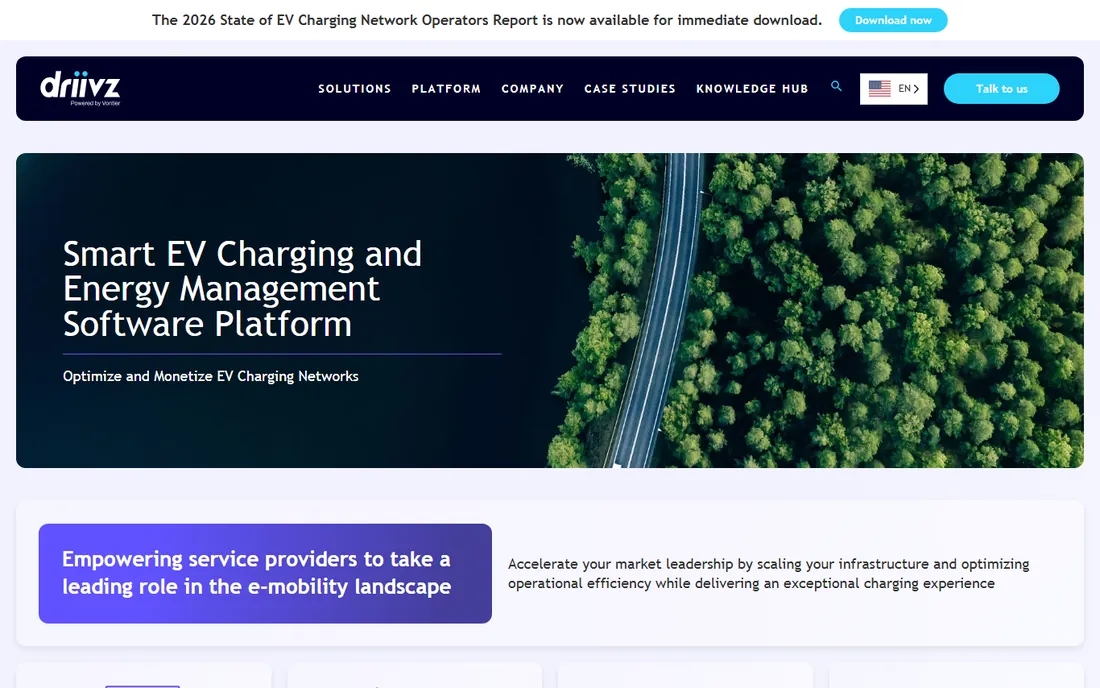
Driivz is the operating system for networks that cannot afford downtime. Now owned by Vontier, the platform monitors charger health centrally, detects faults automatically and attempts remote fixes before dispatching a technician. Its power management can distribute available capacity across plugged-in EVs by priority or battery state, letting operators install up to six times more chargers on a constrained site.
This is unapologetically enterprise software: quote-based pricing, implementation projects, and a feature set aimed at operators running hundreds or thousands of connectors. Small site hosts with a handful of chargers will find it oversized and overpriced.
What we like- Connects to 2,000+ OCPP charger models
- Automated fault detection with remote fixes
- Smart power distribution installs more chargers per site
Watch out for- Enterprise-grade complexity and pricing
- Now part of Vontier, so roadmap follows the parent
Starting priceSee website
Free planNo
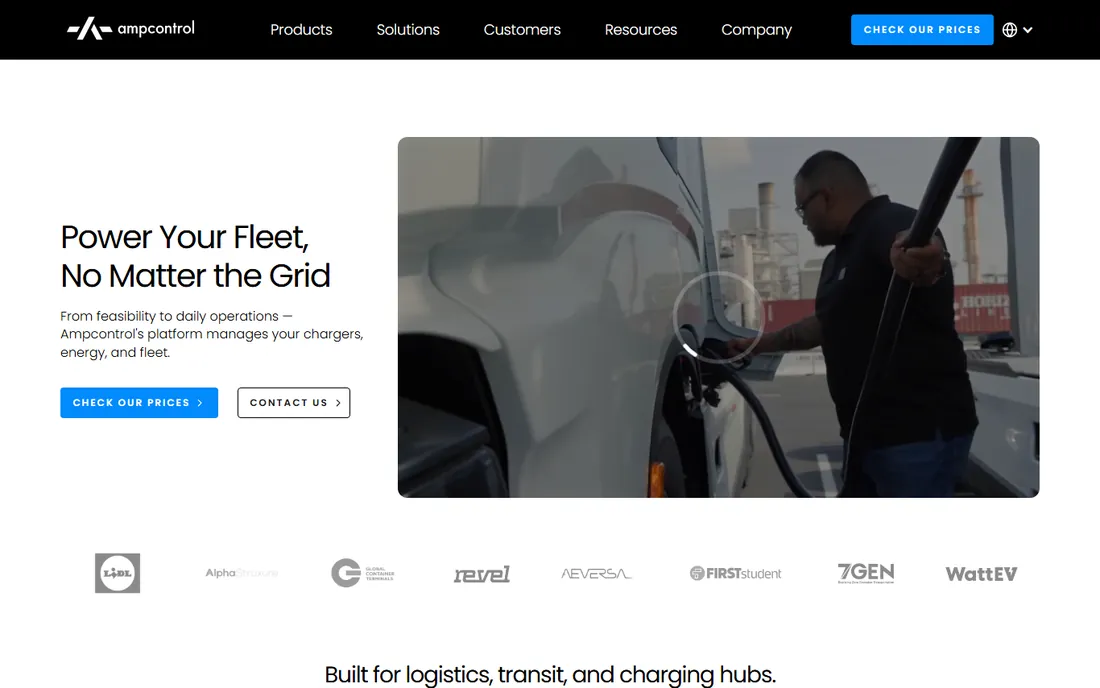
Ampcontrol does one thing: make fleet charging cheap and reliable. The platform optimizes when each vehicle charges against utility rates, demand charges and departure schedules, which is where depot operators actually lose money. For a fleet transitioning dozens or hundreds of vehicles, the energy savings dwarf the software cost.
Do not evaluate it as a public charging platform, because it is not one. There is no driver app, no roaming, no public billing. It is infrastructure software for depots, and within that lane it is among the sharpest tools available.
What we like- AI-driven charging optimization cuts depot energy costs
- Built specifically for electric fleet operations
- Integrates with fleet management systems
Watch out for- Narrow focus means it is not a public network platform
- Pricing is custom per deployment
Starting priceSee website
Free planNo
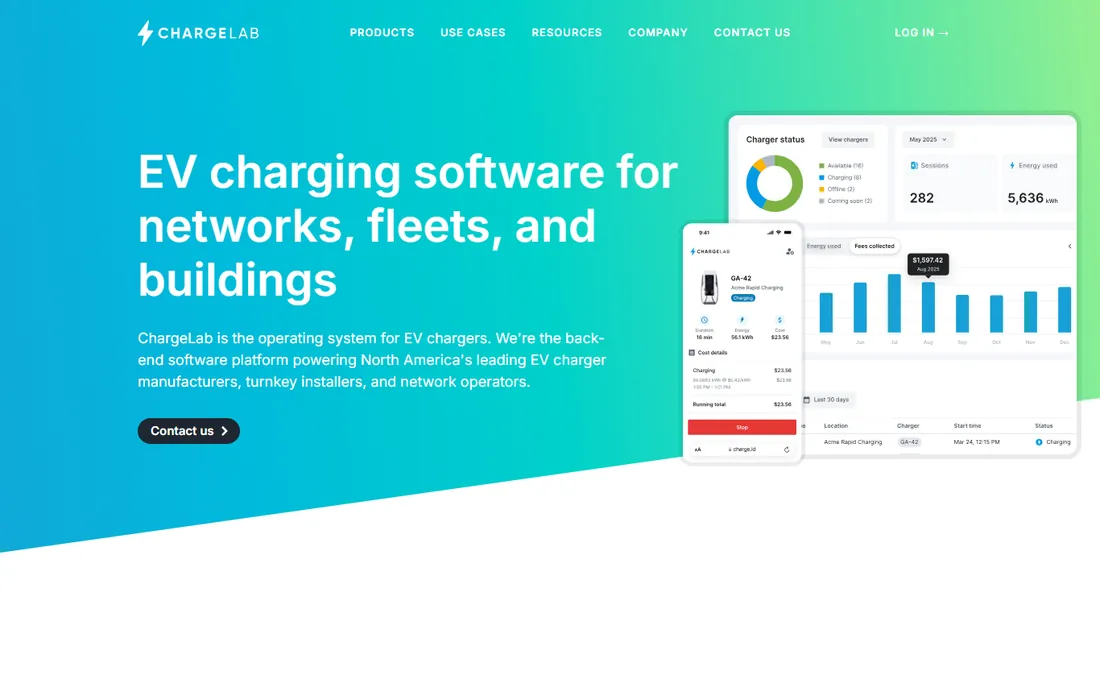
ChargeLab pitches itself as the Android of EV charging: an open operating system that runs on whatever hardware you buy. The API-first design appeals to operators and integrators who want to build custom experiences, and the platform has found a strong niche in commercial real estate and multifamily properties where the site owner, not a network brand, is the customer.
The trade-off is vendor scale. ChargeLab is smaller than ChargePoint or Driivz, so diligence on financial stability and support capacity is reasonable before a large deployment. For mid-size commercial portfolios, though, the hardware freedom is worth it.
What we like- API-first platform that works with any OCPP hardware
- Strong fit for commercial and multifamily sites
- Clean operator and driver experience
Watch out for- Quote-based pricing with no public tiers
- Smaller company than the enterprise incumbents
Starting priceSee website
Free planNo
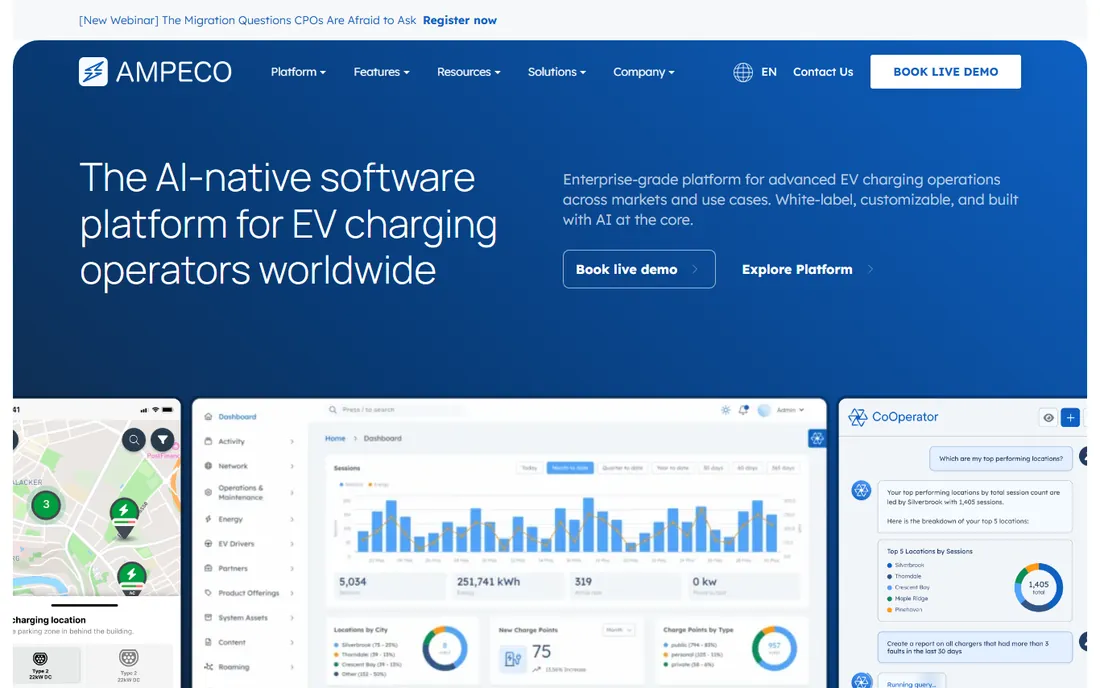
If your business is selling charging under your own brand, Ampeco is the platform most purpose-built for the job. The white-label stack covers the driver app, operator portal, billing and roaming, all skinnable to your brand, and the modular architecture lets you start with core charging management and add energy or fleet modules later.
Expect a real implementation project rather than a signup form. White-label platforms need brand assets, tariff structures and payment configuration, which takes weeks. The payoff is a network that looks and feels like yours, with the operator keeping the customer relationship and the data.
What we like- Full white-label platform for branded networks
- Modular architecture scales from startups to large operators
- Strong European and global footprint
Watch out for- Enterprise pricing with no public numbers
- Implementation effort for custom branding
Starting priceSee website
Free planNo
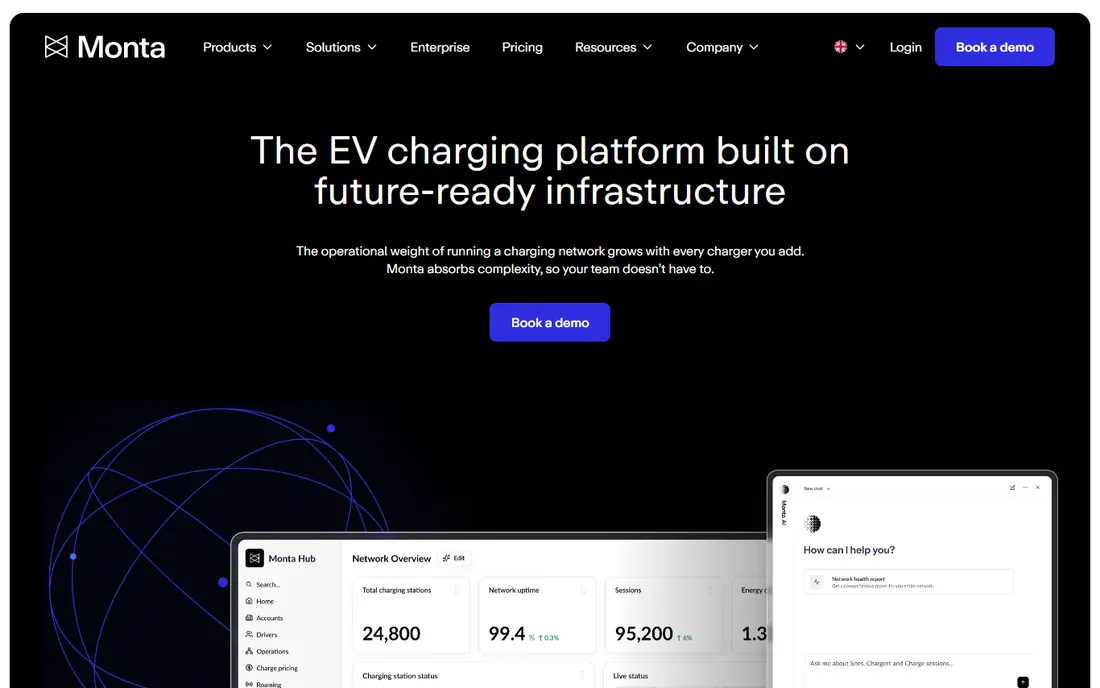
Monta takes the friendliest approach in the category: one platform for home chargers, workplace charging and public sites, with an installer network that brings new sites onto the software. The user experience is consistently praised, and the company has grown fast by making charging management feel simple for site hosts who are not energy experts.
US buyers should note the geographic history. Monta scaled first in Europe and is still building its American footprint, so check charger compatibility and support coverage for your specific hardware and region. For mixed home-and-workplace deployments, though, few platforms are as pleasant to run.
What we like- All-in-one platform covering home, workplace and public charging
- Strong installer ecosystem
- Polished user experience
Watch out for- Newer to the US market than incumbents
- Pricing is quote-based
Starting priceSee website
Free planNo
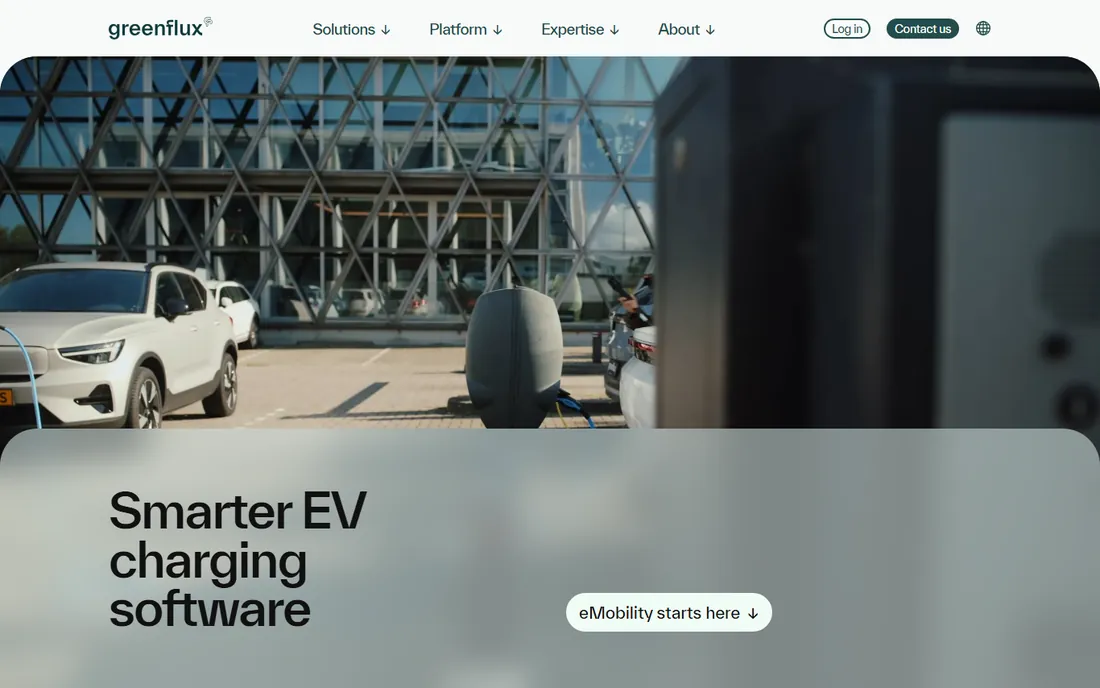
GreenFlux sells a platform-as-a-service for charging operations with smart charging and roaming at its core. Operators get load management, billing and driver services on infrastructure that has already proven itself at significant European scale. The roaming integrations make it a solid pick for networks that need drivers to find and pay across borders.
As with several European vendors on this list, US buyers should verify specifics: utility program compatibility, payment compliance and support hours in American time zones. Where those check out, the smart-charging depth is genuinely strong.
What we like- PaaS model for charging operations and smart energy management
- Extensive roaming network
- Proven at large European scale
Watch out for- Quote-based enterprise pricing
- European roots mean verifying US-specific compliance
Starting priceSee website
Free planNo

Virta rounds out the list as the grid-services specialist. Beyond standard network management, the platform is built for the coming wave of vehicle-to-grid and grid-balancing services, where chargers become flexible grid assets rather than dumb loads. European operators facing strict regulations like AFIR already rely on it for compliance.
The honest limitation is geography. Virta's strength is concentrated in Europe, and North American operators should treat it as a specialist pick for grid-interactive projects rather than a default network platform. If V2G is in your roadmap, though, few vendors are further ahead.
What we like- Leader in grid integration and vehicle-to-grid services
- End-to-end e-mobility platform
- Strong regulatory compliance track record
Watch out for- Europe-first product and support
- Less presence in the North American market
What to look for before you buy
Start with the hardware question, because it decides everything downstream. Hardware-agnostic platforms (Driivz, ChargeLab, be.ENERGISED, Ampeco) let you mix charger brands and swap hardware later without migrating software. Bundled hardware-plus-software deals simplify procurement but create lock-in. For a ten-year infrastructure asset, the agnostic route is usually the safer bet.
Second, match the platform to the business model. Public networks need driver apps, roaming and public billing. Fleet depots need energy optimization and vehicle scheduling. Workplaces and multifamily sites need access control and simple billing. No platform is best at all three, so name your primary use case before comparing features.
Third, verify the unglamorous integrations: OCPP compliance of your specific charger models, OCPI roaming partners, payment processor support, and utility program APIs. A beautiful dashboard means nothing if your chargers cannot talk to it or your drivers cannot pay.
How we chose
We did not operate any charging networks for this guide. The shortlist comes from vendor documentation, industry analyses from EV Magazine and market research firms, and operator discussions in industry publications. We required every platform to be a real, currently offered charging management product with a verifiable vendor behind it, and we weighted hardware flexibility, energy management depth and operator track record over marketing claims.
Pricing explained
Nobody in this category publishes per-charger pricing, and that is not an accident. Commercial models mix per-connector SaaS fees, transaction revenue shares, onboarding charges and energy-management add-ons, and the blend differs by vendor and deal size. Expect quotes to scale with connector count, with enterprise networks negotiating custom terms.
When comparing quotes, normalize to total cost per connector per month over three years, including onboarding, payment processing and any revenue share. Ask specifically about price escalators, because multi-year contracts with annual uplifts are common. And confirm what happens to your data and your chargers if you leave; migration costs are the hidden term in every charging software contract.
Frequently asked questions
What is EV charging management software?
It is the cloud platform that operates charging stations: monitoring charger health, controlling who can charge, setting prices, processing payments, balancing electrical load, and reporting on usage. Think of it as the operating system between the physical charger and the business running it.
Should I buy software bundled with chargers or separately?
Separate, hardware-agnostic software usually wins for networks meant to last. Bundles simplify the first purchase but tie your software future to one hardware vendor. If you already own chargers, agnostic software is the obvious choice.
What are OCPP and OCPI?
OCPP (Open Charge Point Protocol) is the standard language chargers use to talk to management software; OCPI (Open Charge Point Interface) lets networks share roaming access so drivers can charge across providers. Confirm your chargers support the OCPP version your software needs.
How does smart charging save money?
Smart charging shifts charging to off-peak hours, caps power during demand-charge windows, and distributes limited capacity across vehicles. For fleet depots, demand-charge avoidance alone can cut the electricity bill dramatically.
Can one platform handle fleets and public charging?
Some try, but specialists win. Fleet tools optimize energy cost and vehicle readiness; public network tools optimize driver experience and roaming revenue. If you run both, expect either two platforms or one platform doing one job well and the other adequately.
How long does deployment take?
A small commercial site can go live in weeks. Enterprise networks with custom branding, tariff structures, roaming agreements and utility integrations typically take two to six months from contract to full operation.
Sources we checked (5)
- https://mspcost.com/c/ev-charging-network-management/guide/pdf
- https://mspcost.com/c/charging-station-software/guide/pdf
- https://evmagazine.com/top10/top-10-charge-point-management-systems
- https://dailyguardian.ca/global-ev-charging-management-software-market-set-to-skyrocket-projected-to-reach-8-billion-by-2030-with-ai-cloud-advancements/
- https://legalitcost.com/c/ev-charging-networks/guide/pdf
Is your product missing or out of date?
We review this list regularly. Vendors can request a listing, send updated pricing or ask about featured placement.

Shihab Mia · Founder, Rankite
Shihab has spent more than a decade helping SaaS and e-commerce brands grow through search. He writes Rankite's software buying guides from pricing pages, documentation and public user reviews. More about Shihab.