How we make this list: we compare pricing pages, product documentation and public user reviews. Rankite is independent; if a vendor ever pays for a featured spot, that listing is clearly labeled Partner.
Key takeaways
- Carta is the industry standard cap table platform, with the deepest feature set and the largest startup customer base.
- Pulley suits early-stage startups that want modern cap table management at accessible prices.
- Ledgy leads for European startups navigating multi-country equity regulations.
- Astrella, Eqvista, and Cake Equity offer capable alternatives with different pricing and service models.
- Gust covers formation through equity for very early startups, while J.P. Morgan Workplace Solutions serves larger private companies.
Quick comparison
| Tool | Best for | Starting price | Free plan |
|---|
 Carta Carta | industry-standard cap tables | See website | Free trial |
 Pulley Pulley | early-stage startups | See website | Free trial |
 Ledgy Ledgy | European startups | See website | Free trial |
 Astrella Astrella | flexible cap table management | See website | Free trial |
 Eqvista Eqvista | affordable valuations plus cap table | See website | Free trial |
 Cake Equity Cake Equity | simple employee equity | See website | Free trial |
 Gust Gust | formation through equity | See website | Free trial |
 J.P. Morgan Workplace Solutions J.P. Morgan Workplace Solutions | larger private companies | See website | No |
Is your product missing or out of date?
We review this list regularly. Vendors can request a listing, send updated pricing or ask about featured placement.
The best equity management software
Starting priceSee website
Free planFree trial
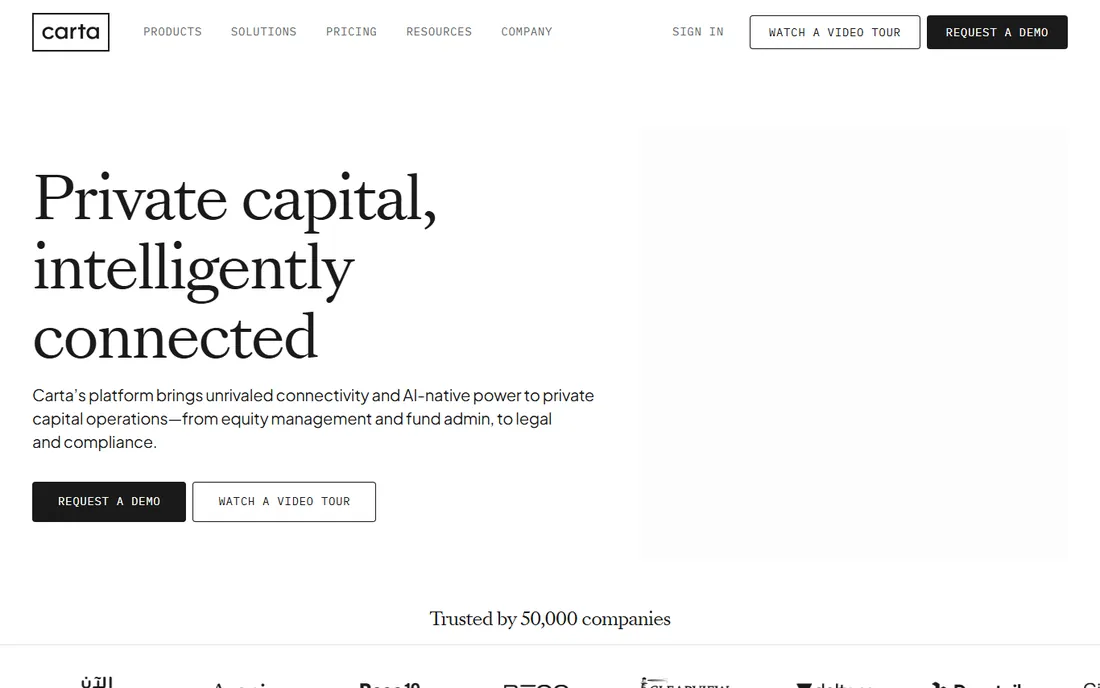
Carta manages equity for more startups than every competitor combined. Cap tables, option grants, 409A valuations, tender offers, and investor relations live in one platform that lawyers, investors, and acquirers all know. The network effect matters: when everyone uses Carta, transactions close faster.
Pricing climbs as the company grows, and startups sometimes feel upsold. But the standardization value is real: clean Carta cap tables reduce legal bills in every financing. For venture-backed startups planning to raise institutional money, Carta is the default for good reason.
What we like- Deepest feature set
- Huge startup adoption
- 409A valuations available
Watch out for- Pricing scales steeply
- Can feel enterprisey
Starting priceSee website
Free planFree trial
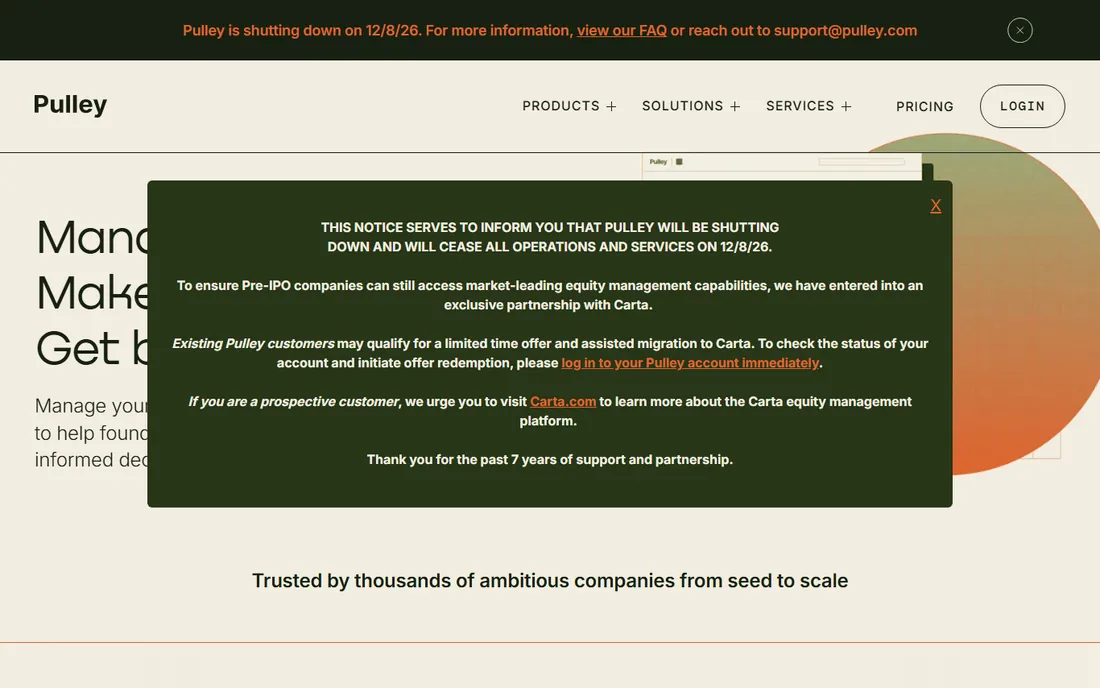
Pulley built the cap table platform founders wish Carta was: clean, fast, and priced for early-stage companies. Onboarding takes hours, the interface needs no training, and core workflows like option grants and 409A valuations work smoothly. Seed and Series A startups get professional equity management without enterprise overhead.
Deep enterprise features and the investor network effects trail Carta. But most startups do not need those for years. Pulley wins the early-stage segment by respecting startup budgets and time, then grows with the company.
What we like- Modern intuitive interface
- Founder-friendly pricing
- Fast onboarding
Watch out for- Fewer enterprise features
- Smaller ecosystem
Starting priceSee website
Free planFree trial
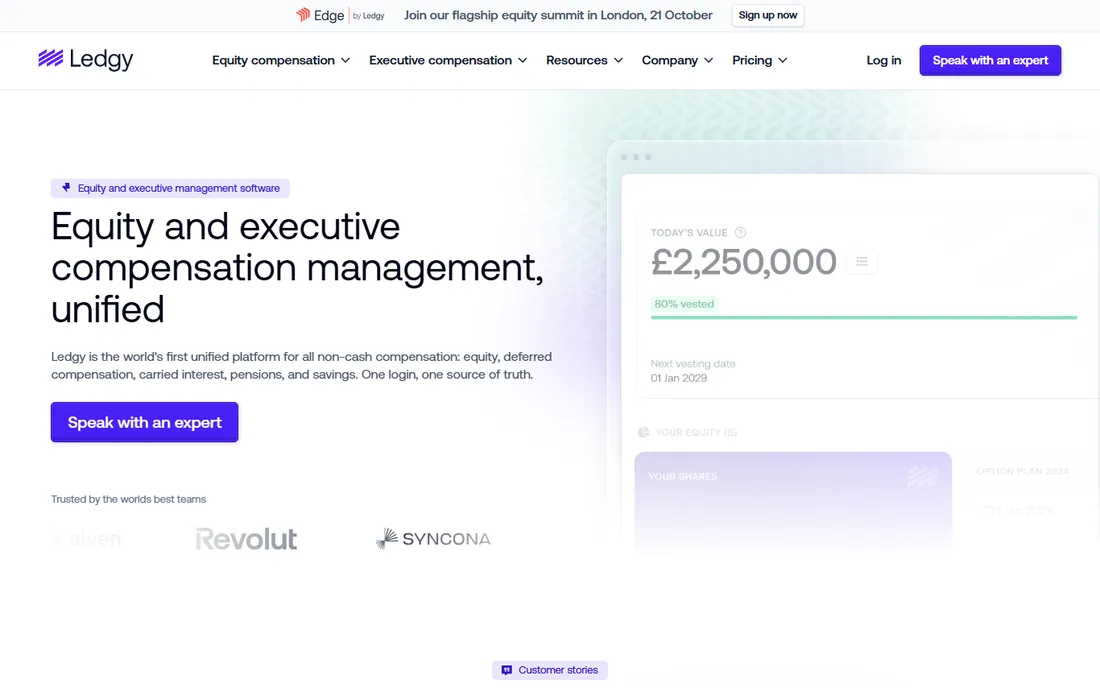
Ledgy solves the problem US platforms ignore: European equity complexity. Multi-country option plans, local tax treatments, and jurisdiction-specific compliance come standard rather than as workarounds. Startups across the UK, Germany, France, and beyond manage equity correctly from day one.
US-centric features and the American investor ecosystem integration trail Carta. But European founders should not adapt US software to European law. Ledgy's regulatory depth in its home markets makes it the clear choice for startups incorporated in Europe.
What we like- Built for European regulations
- Multi-country support
- Clean design
Watch out for- US feature depth less
- Smaller market
Starting priceSee website
Free planFree trial
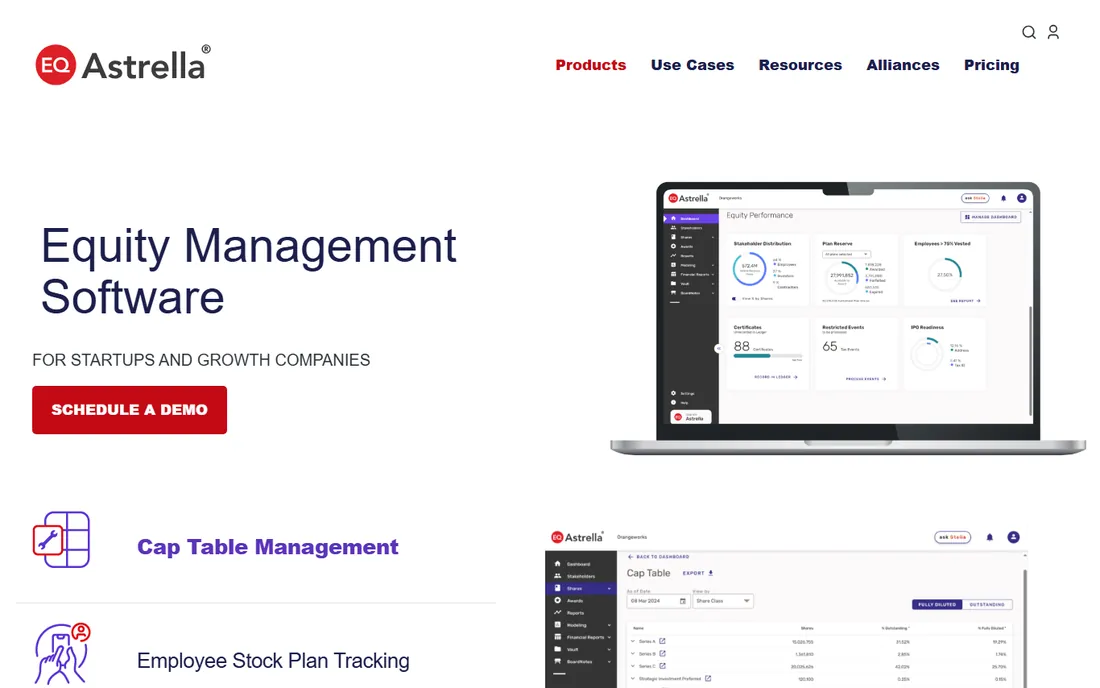
Astrella handles cap tables that do not fit standard templates: complex waterfalls, unusual security types, and intricate ownership structures. The flexible data model adapts where rigid platforms force workarounds. Support gets praise for responsiveness.
Brand recognition lags the leaders, which matters when investors ask what platform you use. But companies with genuinely complex equity structures care more about accuracy than logos. Astrella's flexibility serves funds, complex startups, and unusual entities well.
What we like- Flexible data model
- Good for complex structures
- Responsive support
Watch out for- Smaller brand
- Fewer integrations
Starting priceSee website
Free planFree trial
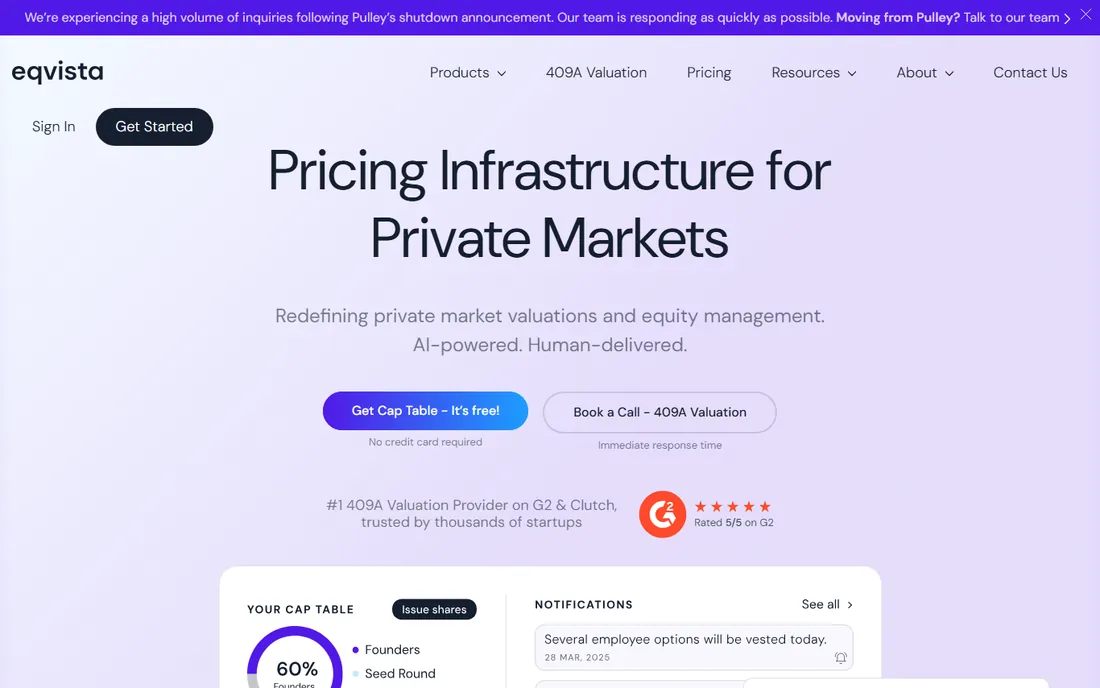
Eqvista bundles what early startups need most: affordable 409A valuations with cap table management attached. The valuations meet auditor standards at prices well under traditional firms, and the cap table tools cover standard startup needs. Budget-conscious founders get compliance without the premium.
Advanced features for later-stage companies are thinner. But the 409A-plus-cap-table bundle addresses the exact pain of seed-stage startups: staying compliant affordably. For companies that need valuations more than they need platform depth, Eqvista's focus fits.
What we like- Affordable 409A valuations
- Cap table included
- Good for small startups
Watch out for- Less full-featured
- Smaller team
Starting priceSee website
Free planFree trial
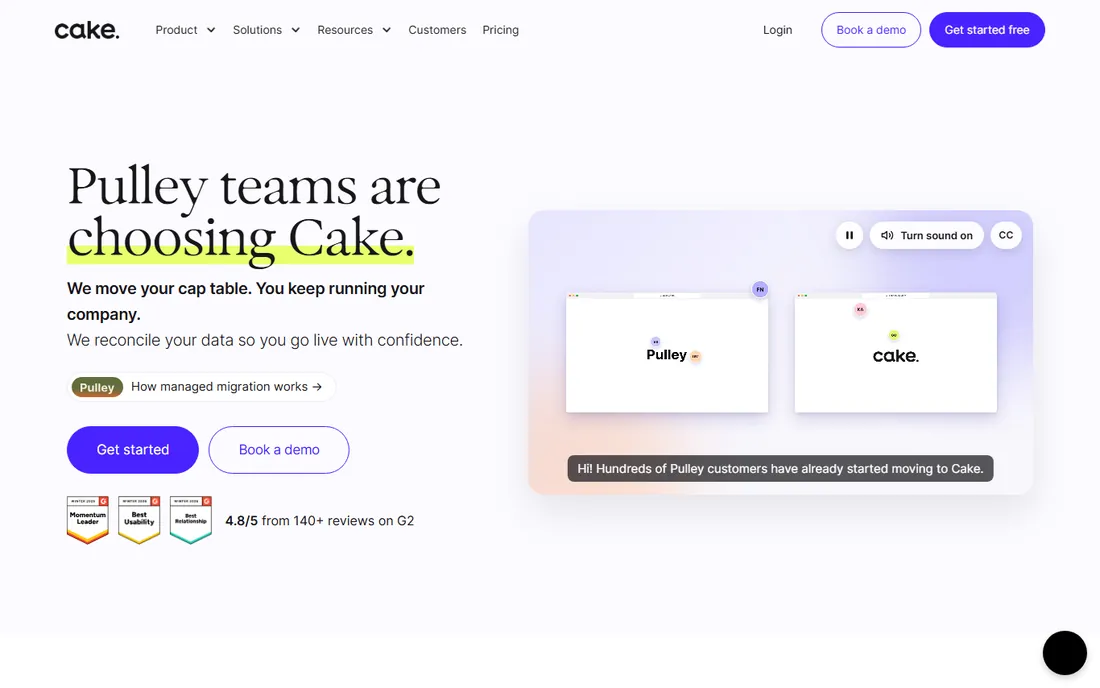
Cake Equity focuses on the employee experience of equity: clear grant dashboards, vesting visualizations, and exercise workflows that demystify stock options for staff. Employers get straightforward cap table management without complexity they will not use.
Sophisticated financing structures exceed its scope. But most startups need their team to understand and value their equity more than they need exotic cap table features. Cake's employee-centric design serves that goal directly at accessible prices.
What we like- Simple employee-facing experience
- Affordable
- Quick setup
Watch out for- Less depth for complex caps
- Smaller ecosystem
Starting priceSee website
Free planFree trial

Gust starts earlier than everyone else: incorporation, founder agreements, and initial equity setup for brand-new companies. Very early founders get the legal and equity foundations right from day one at minimal cost. The platform guides first-time founders through unfamiliar territory.
Venture-backed startups outgrow it quickly; the cap table features are basic by design. But the earliest stage is where equity mistakes are cheapest to prevent and most expensive to fix later. Gust's formation-to-equity flow serves pre-seed founders well.
What we like- Covers incorporation to equity
- Founder-friendly
- Affordable
Watch out for- Basic cap table features
- Not for funded startups
Starting priceSee website
Free planNo

J.P. Morgan Workplace Solutions, built on the Global Shares acquisition, manages equity compensation for larger private and public companies: stock plans, ESPPs, and executive compensation at institutional scale. Global workforces get consistent administration across jurisdictions.
Early startups should look elsewhere; this is enterprise infrastructure with matching processes. But growth-stage and late-stage companies with complex equity programs and international employees get bank-grade administration. The institutional backing reassures boards and auditors.
What we like- Institutional-grade plan management
- Global capabilities
- Bank backing
Watch out for- Enterprise orientation
- Not for early startups
When to start managing equity properly
From the first option grant. Spreadsheet cap tables work until the first priced round, then errors compound: miscalculated dilution, forgotten grants, and messy records that cost legal fees to clean. Professional platforms pay for themselves in the first financing.
The 409A valuation requirement drives timing too: companies need current valuations for option grants, typically annually or after material events. Platforms bundling valuations with cap tables, like Carta, Pulley, and Eqvista, simplify compliance significantly.
What investors expect to see
Clean, current cap tables in a recognized platform. Investors and their lawyers diligence equity records closely; messy spreadsheets slow financings and signal operational sloppiness. The platform choice matters less than the hygiene: every grant documented, every transfer recorded, every valuation current.
Ask your lead investors what they prefer before choosing. Their familiarity with the platform speeds every future transaction. In practice this often means Carta for US venture-backed startups and Ledgy for European ones, with Pulley gaining ground at early stages.
Frequently asked questions
What is equity management software?
Equity management software tracks company ownership: cap tables, stock option grants, vesting schedules, 409A valuations, and investor records. Startups use it to manage equity compensation accurately and to present clean records during financings and acquisitions.
How much does cap table software cost?
Early-stage plans typically start in the tens of dollars monthly, scaling with securities outstanding and features. 409A valuations add hundreds to thousands per valuation. Enterprise platforms are quote-based. Most vendors publish starting prices for standard plans.
When does a startup need a 409A valuation?
When granting stock options, to set the fair market value for tax compliance. Most startups get valuations annually and after material events like financings. The IRS penalizes options granted below fair market value, so current valuations protect both company and employees.
Carta vs Pulley: which should I choose?
Carta offers the deepest features and strongest network effects for venture-backed startups planning institutional financings. Pulley offers a cleaner experience at better early-stage prices. Many startups begin with Pulley and migrate to Carta at later stages, though migration has its own costs.
Can I manage a cap table in a spreadsheet?
Technically yes, and many pre-seed startups do. But errors compound with each financing, and investors expect professional platforms by Series A. The legal fees to clean a messy spreadsheet cap table exceed years of software costs. Switch before the first priced round.
409A valuations, explained
Every startup granting stock options needs to know its common stock fair market value, and the 409A valuation provides the IRS-accepted answer. Without a current 409A, options granted below fair market value trigger immediate tax penalties for employees, which makes the valuation a compliance necessity rather than a nice-to-have.
The process is straightforward: an independent valuation firm analyzes the company's financials, market comparables, and recent financings, then delivers a report supporting the common stock value. Most startups refresh valuations annually and after material events like new funding rounds or major pivots. Costs range from a few thousand dollars through valuation firms to bundled pricing inside equity platforms like Carta, Pulley, and Eqvista.
Timing matters. Get the valuation before granting options, not after; backdated valuations invite trouble. And understand what the number means: the 409A values common stock, which typically prices well below the preferred share price investors pay, reflecting the common stock's lack of liquidation preferences. Founders sometimes balk at the gap, but it is standard and expected. Keep valuations current, document the board's approval, and the option grants stay clean.
Explaining equity to employees
Most employees do not understand their stock options, which wastes the motivational value companies pay for. Explain the basics plainly: what an option grant means, how vesting works, what a strike price is, and when they can actually turn options into money. Use concrete numbers from their own grants, not abstract examples.
Address taxes honestly and early. ISO versus NSO treatment, the AMT trap on exercise, and the 83(b) election deadline for restricted stock all carry real financial consequences that surprise employees. You are not their tax advisor, but flagging the issues beats silence. Refresh the education at liquidity events: acquisitions and IPOs trigger decisions with deadlines, and employees who understand their equity make better choices. Companies that invest in equity education retain better; the equity only motivates when people understand it.
How we chose
We focused on startup equity management: cap table accuracy, 409A support, and founder experience. We verified each vendor's current site, noting Captable.io's move under LTSE, and compared pricing models and stage fit. We covered US leaders, European specialists, and value options. No vendor paid for placement, and we did not claim hands-on testing.
What happens to employee equity when a startup is acquired?
It depends on the deal structure and the employee's vesting. Typically, unvested options either accelerate, vest immediately on acquisition, or convert to acquirer equity with continued vesting. Vested options usually get cashed out or converted. The specific outcomes live in each company's equity plan and grant agreements, which is why employees should read them before the event. Good equity platforms model acquisition scenarios so everyone understands the implications in advance.
Sources we checked (8)
- https://carta.com
- https://pulley.com
- https://ledgy.com
- https://astrella.com
- https://gust.com
- https://eqvista.com
- https://www.cakeequity.com
- https://www.jpmorganworkplacesolutions.com
Is your product missing or out of date?
We review this list regularly. Vendors can request a listing, send updated pricing or ask about featured placement.

Shihab Mia · Founder, Rankite
Shihab has spent more than a decade helping SaaS and e-commerce brands grow through search. He writes Rankite's software buying guides from pricing pages, documentation and public user reviews. More about Shihab.