How we make this list: we compare pricing pages, product documentation and public user reviews. Rankite is independent; if a vendor ever pays for a featured spot, that listing is clearly labeled Partner.
Key takeaways
- Fivetran is the default for automated, zero-maintenance pipelines; Airbyte is the open-source alternative with the largest connector library.
- Informatica and Talend (now Qlik) serve enterprises needing governance, data quality and complex transformations, not just data movement.
- Matillion targets cloud data warehouse ELT specifically; Rivery adds orchestration and transformation in one SaaS platform.
- The expensive mistake is buying pipeline software for a governance problem or vice versa; define whether you need movement, transformation or control first.
Quick comparison
| Tool | Best for | Starting price | Free plan |
|---|
 Fivetran Fivetran | Teams that want pipelines they never think about | See website | Free trial |
 Airbyte Airbyte | Teams wanting open-source flexibility and connector breadth | See website | Yes |
 Informatica Informatica | Enterprises needing data management, not just movement | See website | Free trial |
 Talend Talend | Broad integration with strong data quality (now part of Qlik) | See website | Free trial |
 Matillion Matillion | Cloud data warehouse teams doing ELT at performance | See website | Free trial |
 Stitch Stitch | Simple, fast ELT without enterprise overhead (now part of Qlik) | See website | Free trial |
 Hevo Data Hevo Data | No-code teams needing real-time pipelines | See website | Free trial |
 Rivery Rivery | SaaS ELT with ingestion, transformation and orchestration together | See website | Free trial |
Is your product missing or out of date?
We review this list regularly. Vendors can request a listing, send updated pricing or ask about featured placement.
Enterprise data lives in dozens of systems: SaaS apps, databases, warehouses, files. ETL (extract, transform, load) tools move it where analysis happens, reliably and at scale. The category has split into automated pipeline platforms, open-source frameworks and governance-heavy suites. Eight that define enterprise data integration in 2026.
Starting priceSee website
Free planFree trial
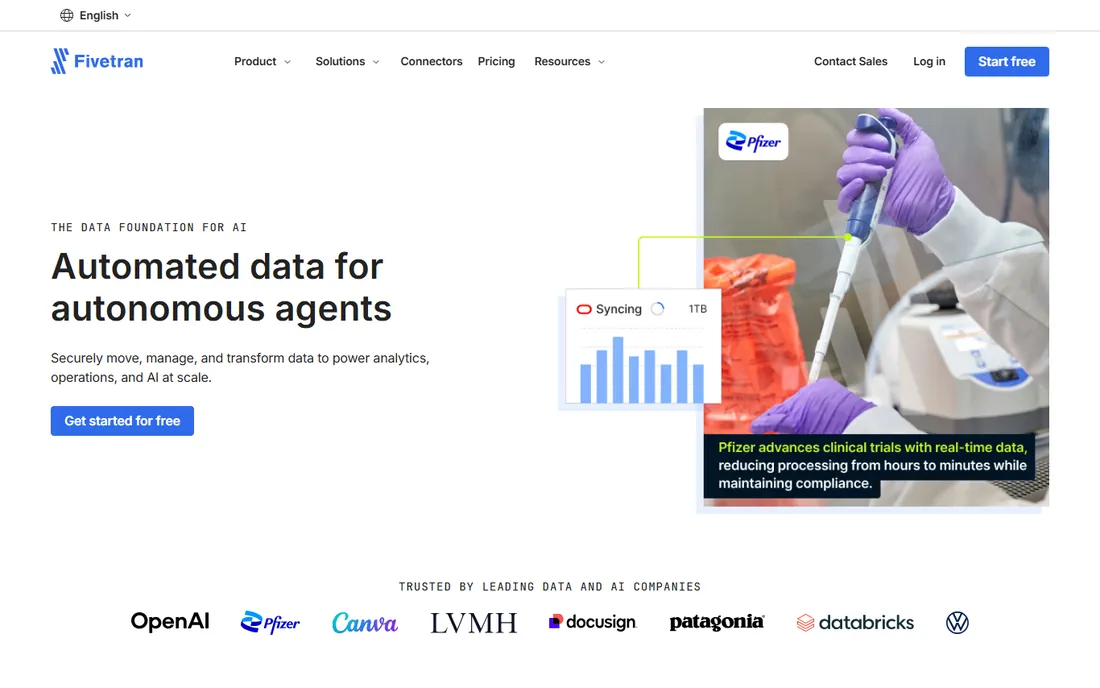
Fivetran is the gold standard for automated data movement: point it at a source, and it handles extraction, schema changes, incremental updates and loading into your warehouse without ongoing maintenance. Data teams buy Fivetran to stop babysitting pipelines; the connector reliability (adapting when source APIs change) is what justifies the premium over building in-house.
The honest trade-offs are cost and control. High-volume pipelines get expensive on consumption pricing, and Fivetran deliberately loads raw data (transformations happen in the warehouse with dbt or similar). If you need heavy pre-load transformation or absolute cost control, look at Airbyte or Matillion. For reliable, hands-off pipelines, Fivetran remains the benchmark.
What we like- Fully managed connectors with automatic schema handling
- 500-plus prebuilt connectors
- Consumption-based pricing that scales with use
Watch out for- Premium pricing at high volumes
- Limited custom transformation before loading
#2
Airbyte
Best for: Teams wanting open-source flexibility and connector breadth
Visit airbyte.com
Starting priceSee website
Free planYes
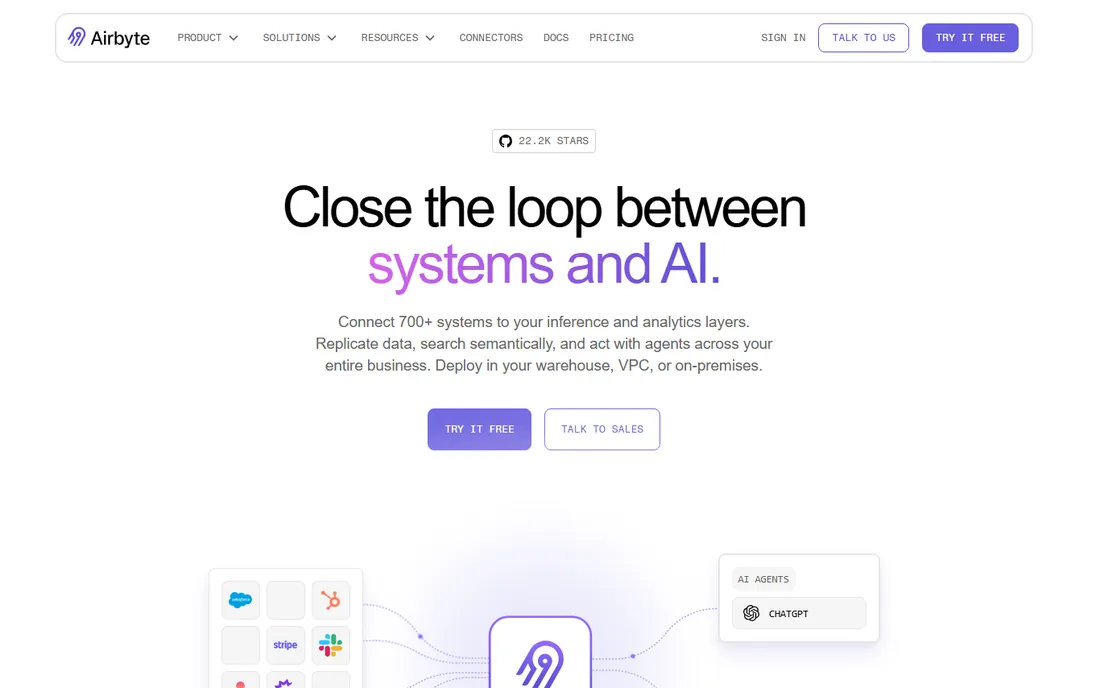
Airbyte is the most popular open-source data integration platform, and its connector library (hundreds of community and official connectors) is the reason. Teams that need long-tail or custom sources build or adapt connectors instead of waiting on a vendor roadmap. The open core means no lock-in: self-host, run the cloud, or move between them.
The honest cost is operations. Self-hosted Airbyte needs infrastructure care; the managed cloud removes that at usage-based prices comparable to Fivetran at scale. Data teams with engineering capacity love the flexibility; teams wanting zero-maintenance should compare total cost against Fivetran before assuming open-source means cheaper.
What we like- Open-source core with the largest community connector library
- Self-hosting option for data control
- Transparent, usage-based cloud pricing
Watch out for- Self-hosting is operational work
- Managed cloud costs add up at scale like Fivetran
Starting priceSee website
Free planFree trial
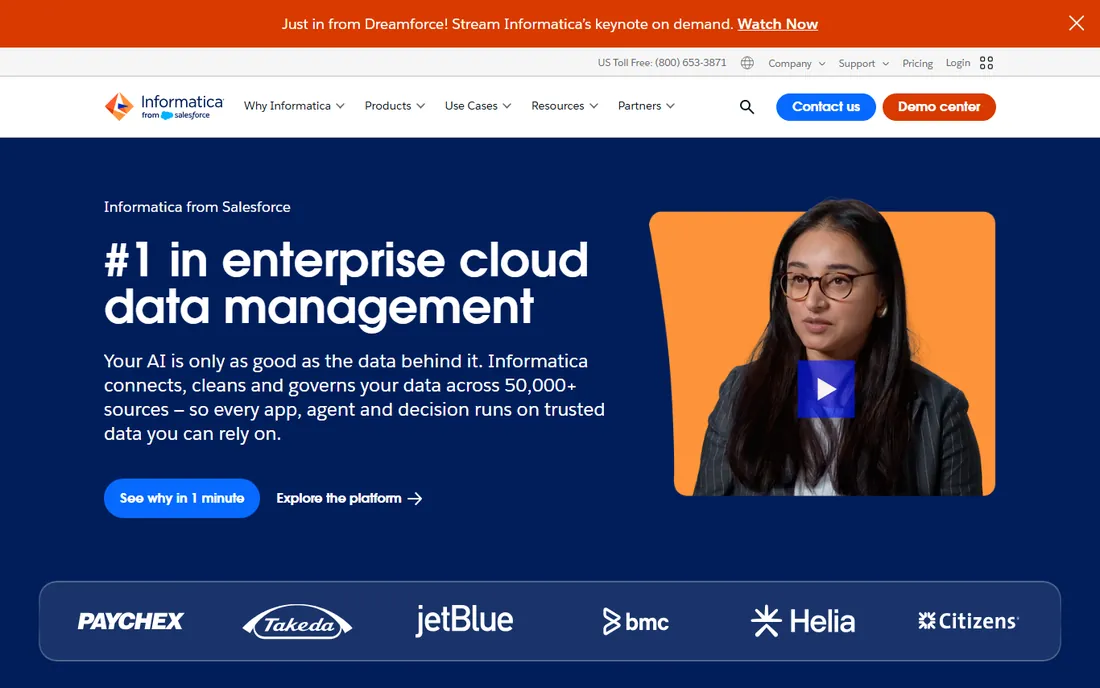
Informatica is the incumbent for a reason: when the requirement includes data quality, governance, master data management and complex transformations across hybrid estates, few platforms match its breadth. Regulated enterprises standardize on it because the compliance, lineage and stewardship tooling is built in, not bolted on.
The honest fit is large and complex. Pricing, implementation and staffing all run enterprise-scale, and simple "move Salesforce to Snowflake" jobs do not need this machinery. Buy Informatica when data management is the program; buy a pipeline tool when movement is the job.
What we like- The enterprise standard for data integration plus governance, quality and MDM
- Handles the most complex transformation scenarios
- Deep compliance tooling
Watch out for- Enterprise pricing and implementation complexity
- Overkill for simple pipeline needs
#4
Talend
Best for: Broad integration with strong data quality (now part of Qlik)
Visit talend.com
Starting priceSee website
Free planFree trial
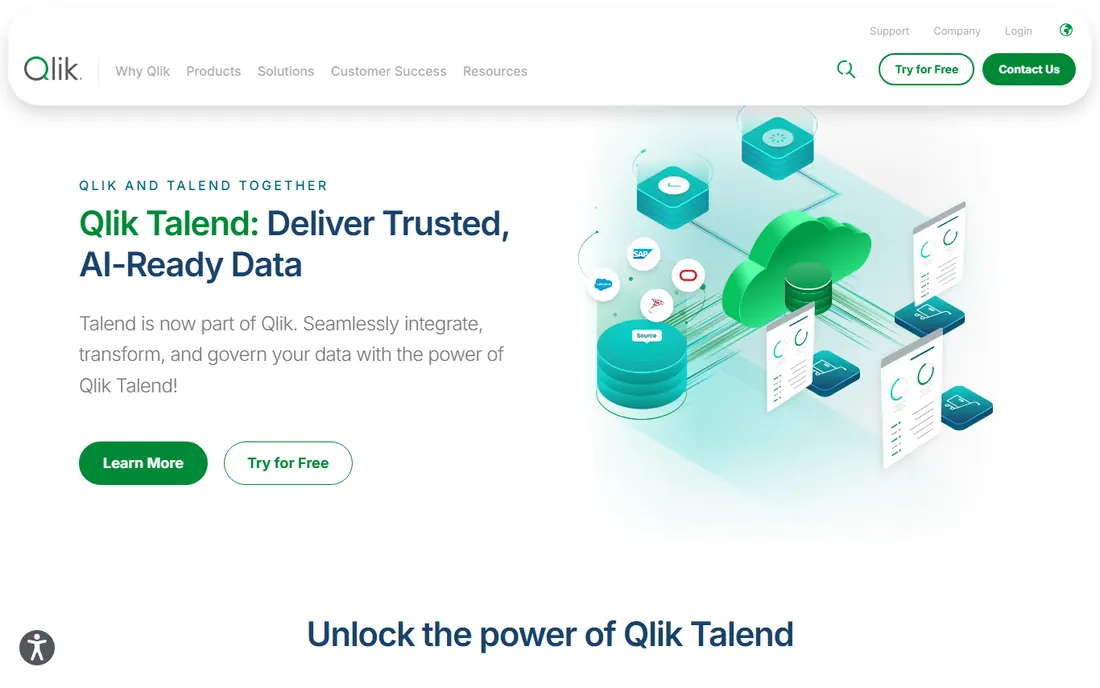
Talend (now part of Qlik) covers the broad enterprise integration surface: data integration, data quality, governance and application integration, with strong support for hybrid and on-premise estates that cloud-native tools underserve. The Qlik combination adds analytics adjacency for organizations standardizing on one vendor.
The honest caveat is transition. Acquisitions reshape roadmaps, so buyers should confirm the product direction for their specific use case. And like Informatica, Talend is real enterprise software with real enterprise overhead. For complex hybrid integration needs, it remains a top-tier option.
What we like- Wide integration, quality and governance capabilities in one platform
- Strong on-premise and hybrid support
- Now backed by Qlik's analytics ecosystem
Watch out for- Platform transitions under Qlik ownership create roadmap questions
- Complexity for simple use cases
Starting priceSee website
Free planFree trial
Matillion is built for the modern data stack's center of gravity: the cloud data warehouse. It extracts and loads data, then runs transformations inside Snowflake, BigQuery or Redshift using their compute, which is both fast and cost-efficient. The visual designer plus code options suit mixed teams of analysts and engineers.
The boundary is architectural: if your destination is not a cloud warehouse, Matillion's advantages fade. It is ELT for the warehouse era, not a general integration bus. For warehouse-centered enterprises, though, its performance-first design beats generic ETL tools.
What we like- Cloud-native ELT designed for Snowflake, BigQuery and Redshift
- High-performance transformations push down to the warehouse
- Visual plus code-friendly
Watch out for- Warehouse-centric by design
- Less suited to non-warehouse destinations
#6
Stitch
Best for: Simple, fast ELT without enterprise overhead (now part of Qlik)
Visit stitchdata.com
Starting priceSee website
Free planFree trial
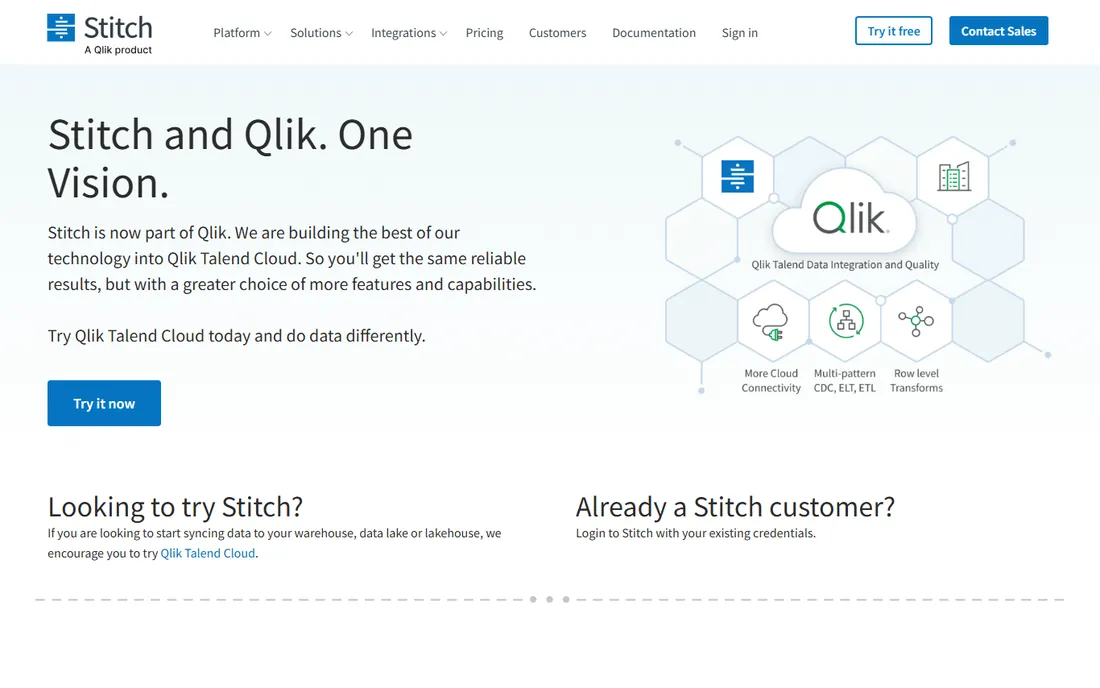
Stitch (now part of Qlik, like Talend) is the simple ELT service: connect sources, pick a warehouse, data flows. It targets teams that need reliable pipelines without enterprise ceremony, and its developer-friendly design made it popular with startups and mid-market data teams.
The honest position is the middle: less automation depth than Fivetran, less flexibility than Airbyte, less governance than Informatica. Its virtue is simplicity at a fair price. Teams with straightforward pipeline needs should shortlist it; teams with complex requirements should look upmarket.
What we like- Developer-friendly, quick to set up
- Straightforward pricing for predictable pipelines
- Solid connector coverage for common sources
Watch out for- Fewer advanced features than Fivetran or Airbyte
- Roadmap under Qlik ownership worth confirming
Starting priceSee website
Free planFree trial
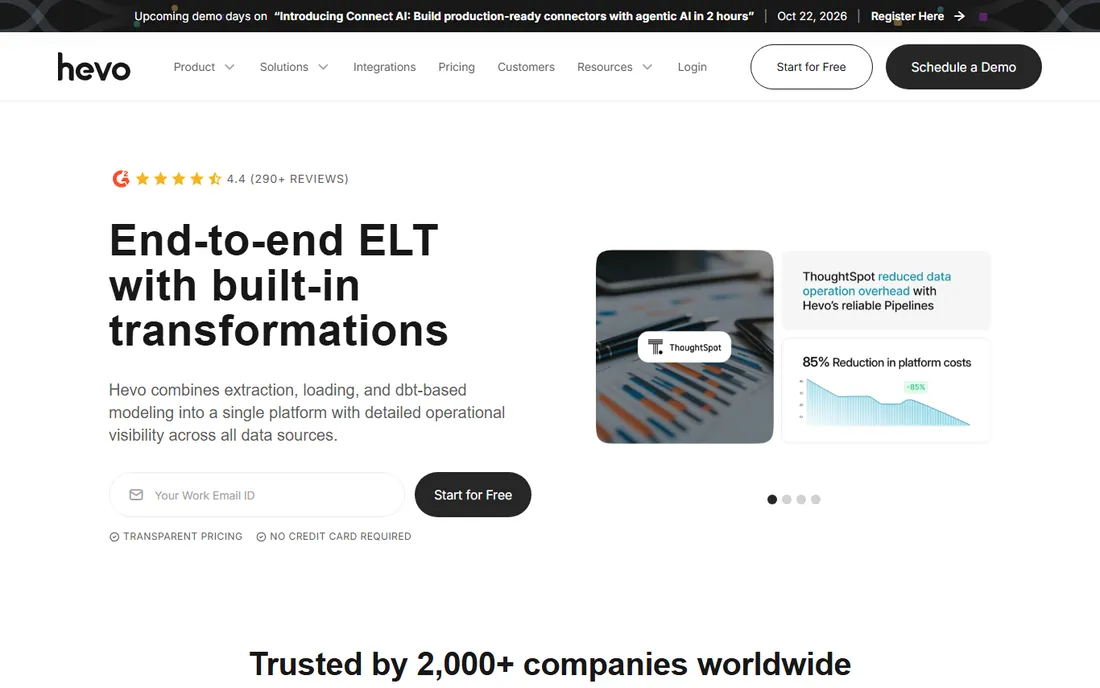
Hevo Data targets the team without data engineers: a no-code interface for building real-time pipelines from 150-plus sources to warehouses, with schema management handled automatically. Marketing ops, RevOps and analytics teams run their own pipelines instead of waiting on engineering.
The limits are transformational depth and ecosystem. Complex business logic belongs in dbt or a warehouse-native tool; Hevo moves data faithfully and fast. For the no-code real-time use case, though, it is one of the most approachable enterprise-grade options.
What we like- No-code pipeline builder non-engineers can operate
- Real-time data movement
- 150-plus connectors with automatic schema management
Watch out for- Less depth for complex transformations
- Smaller ecosystem than the leaders
#8
Rivery
Best for: SaaS ELT with ingestion, transformation and orchestration together
Visit rivery.io
Starting priceSee website
Free planFree trial
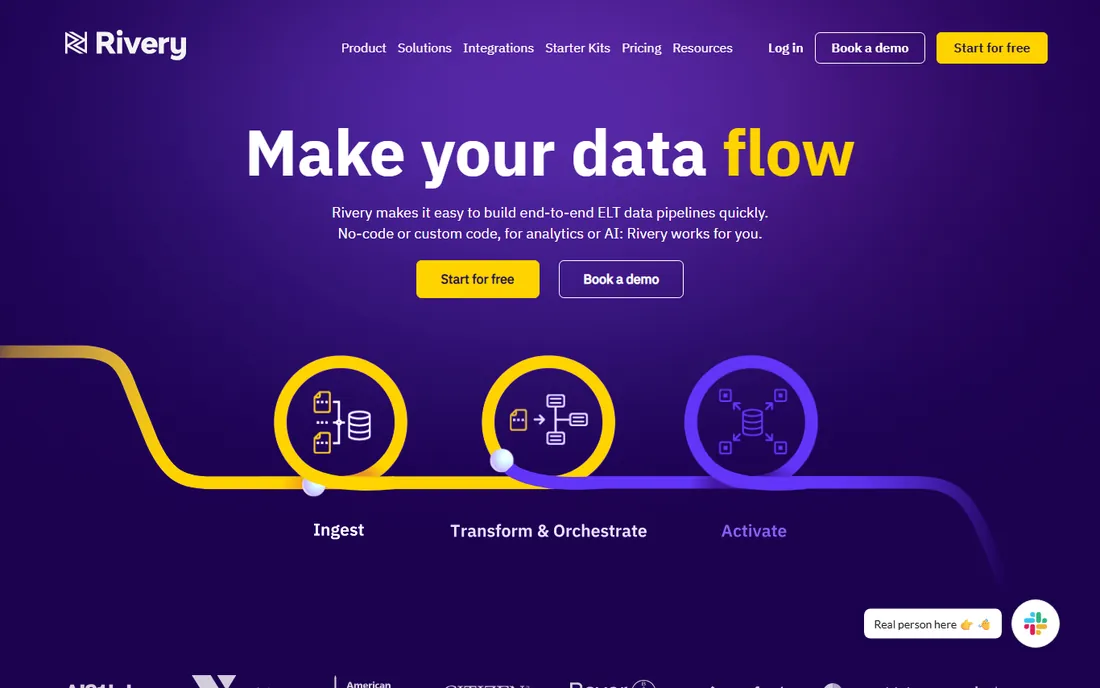
Rivery is the all-in-one SaaS alternative: data ingestion, transformation logic and workflow orchestration in a single platform, so centralized data teams manage the whole pipeline lifecycle in one place. For organizations that want SaaS simplicity without stitching ingestion to orchestration to transformation tools, Rivery's completeness is the appeal.
The honest trade-off is ecosystem maturity. Fewer community resources, fewer prebuilt patterns than the giants. But the product's scope (ingest through orchestrate) reduces tool sprawl, which has real operational value for lean data teams.
What we like- Complete SaaS platform: ingestion, transformation and orchestration in one
- Handles complex multi-step data workflows
- Good for centralized data teams
Watch out for- Smaller brand than Fivetran or Informatica
- Pricing conversations for enterprise scale
How we chose
We compared platforms across the enterprise ETL jobs: automated pipelines, open-source flexibility, governance-heavy integration, warehouse-native ELT and no-code operation. We weighed connector breadth, transformation capability, pricing transparency, operational overhead and how honestly each tool fits its stated buyer. Pricing comes from each vendor's own pricing page; unverifiable plans are marked "See website." No hands-on testing was performed.
What to look for before you buy
Define the job precisely. Data movement (Fivetran, Airbyte, Stitch), transformation (Matillion, dbt), governance (Informatica, Talend) and orchestration (Rivery) are different purchases. The most expensive mistake is buying one for another's job.
Count your sources honestly, including the weird ones. Connector library claims deserve verification against your actual stack: the three niche SaaS apps nobody has heard of determine whether "500 connectors" helps you.
Model total cost at scale, not at trial. Consumption and volume pricing mean the pilot price is never the production price. Get the cost at your real data volumes in writing.
Finally, assess the operational burden. Managed platforms cost more and need less staffing; open-source costs less and needs engineers. The cheapest license is rarely the cheapest total solution.
ETL total cost: beyond the license
Enterprise ETL pricing pages show platform fees, but the real investment spans connectors, compute, people and pipeline operations. Decision-makers who budget only the license get surprised; those who model the full cost choose more wisely.
Compute and consumption costs scale with usage. Consumption-based platforms (Fivetran's MAR model, Matillion usage credits, cloud data warehouse compute) grow with data volume and sync frequency. That is fair and predictable if you forecast volume, but a surprise if you do not. Model costs at 2x your current volume: data estates grow, and the platform that is cheap at 10 tables can be painful at 500. Ask vendors for the cost formula in writing and run your numbers through it.
Connector coverage determines build-vs-buy economics. Every source without a prebuilt connector becomes a custom pipeline your team builds and maintains. Count your sources honestly, including the awkward ones (legacy databases, niche SaaS, flat files from partners). A platform with 300 connectors that lacks your three critical sources is more expensive than a platform with 150 that has them all.
People cost dominates at scale. Someone designs the pipelines, someone monitors them, someone fixes them at 3am. Whether that is a dedicated data engineering team or a fraction of an analytics engineer's time, it is the largest line item over three years. Platforms that reduce pipeline babysitting (good alerting, automatic schema handling, clear lineage) pay back in staffing efficiency, not just license savings.
Pipeline operations are the ongoing tax. Monitoring, alerting, backfills, schema change handling and documentation never end. Evaluate the operational tooling as carefully as the transformation features: how do you know a pipeline broke, how do you replay a failed day, how do you trace a number back to its source? The answers determine your team's quality of life.
Finally, price the exit. Data contracts, proprietary transformation languages and deeply embedded pipelines create switching costs. Prefer platforms with open standards (SQL-based transforms, portable pipeline definitions) where the economics are close. The cheapest platform to adopt is not always the cheapest to leave, and you will eventually leave or renegotiate.
Frequently asked questions
What is ETL and how is it different from ELT?
ETL transforms data before loading it into the destination; ELT loads raw data first and transforms it in the warehouse. Modern cloud tools mostly do ELT, leveraging warehouse compute; the terms are often used interchangeably now.
Fivetran vs Airbyte: which should I choose?
Fivetran for zero-maintenance reliability when the budget allows; Airbyte for open-source flexibility, custom connectors and data control. Total cost often converges at scale; the real difference is operational philosophy.
Do I still need ETL if I have a data warehouse?
Yes. The warehouse stores and transforms data, but something has to move data into it reliably: handling API changes, incremental loads and schema drift. That is the ETL tool's job.
What does ETL software cost?
From free open-source (self-hosted Airbyte) to usage-based pricing that scales with data volume (Fivetran, Airbyte Cloud), to enterprise contracts for Informatica and Talend. Price at production volumes, not trial sizes.
Can non-engineers manage ETL pipelines?
With no-code tools like Hevo Data, yes for standard pipelines. Complex transformations and custom sources still need data engineering. Match the tool's technical demands to your team's skills.
How do I handle real-time vs batch pipelines?
Define latency requirements per use case: operational dashboards may need real-time (Hevo, Rivery, streaming tools), while daily reporting runs fine on batch. Most enterprises run both; do not pay real-time prices for batch needs.
Sources we checked (9)
- https://www.fivetran.com
- https://www.airbyte.com
- https://www.informatica.com
- https://www.talend.com
- https://www.matillion.com
- https://www.stitchdata.com
- https://www.hevodata.com
- https://www.rivery.io
- https://healthitcost.com/c/data-integration-etl/guide/pdf
Is your product missing or out of date?
We review this list regularly. Vendors can request a listing, send updated pricing or ask about featured placement.

Shihab Mia · Founder, Rankite
Shihab has spent more than a decade helping SaaS and e-commerce brands grow through search. He writes Rankite's software buying guides from pricing pages, documentation and public user reviews. More about Shihab.