How we make this list: we compare pricing pages, product documentation and public user reviews. Rankite is independent; if a vendor ever pays for a featured spot, that listing is clearly labeled Partner.
Key takeaways
- RevolutionEHR and Eyefinity Encompass lead the optometry-specific field: the former is month-to-month with no long contract, the latter is the natural choice for VSP-heavy practices.
- Crystal PM and LiquidEHR are the smaller, independent-friendly options: deep customization, human support, and pricing that tends to fit solo ODs better than enterprise quotes.
- MaximEyes and Compulink are the heavyweights for larger eye care groups that need optical POS, image management, and 150-plus equipment integrations.
- General EHRs like DrChrono, ModMed, AdvancedMD, and athenahealth work for optometrists who already know them, but none are built around the eye exam the way the optometry-first tools are.
- Nobody publishes real pricing: every optometry EHR on this list is quote-based, so budget demos and ask about per-doctor monthly rates before anything else.
Quick comparison
| Tool | Best for | Starting price | Free plan |
|---|
 RevolutionEHR RevolutionEHR | Independent optometry practices that want one cloud platform | See website (priced per doctor per month, no published number) | No |
 Eyefinity Encompass Eyefinity Encompass | Practices where VSP insurance dominates the schedule | See website (custom quote, enterprise pricing) | No |
 Crystal PM Crystal PM | Practices that want the EHR molded to their workflow | See website (custom quote) | No |
 MaximEyes MaximEyes | Large eye care groups that also run optical retail | See website (custom quote) | No |
 Compulink Advantage Compulink Advantage | Practices that want single-screen charting built for eye care | See website (custom quote) | No |
 LiquidEHR LiquidEHR | Solo ODs and small practices that want a simple optometry EHR | See website (custom quote) | No |
 DrChrono DrChrono | Independent ODs who want to chart on iPad | See website (custom quote) | No |
 ModMed ModMed | Ophthalmology-leaning practices with an optometry component | See website (custom quote) | No |
 AdvancedMD AdvancedMD | Independent practices that want EHR, PM, and engagement in one cloud suite | See website (custom quote) | Free trial (3 months) |
 athenahealth athenahealth | Practices that want the vendor to run billing for them | See website (custom quote, percentage of collections) | No |
Is your product missing or out of date?
We review this list regularly. Vendors can request a listing, send updated pricing or ask about featured placement.
Optometry EHR, explained through your actual day
A general EHR thinks in notes. An optometry EHR thinks in an exam lane: refraction, slit lamp, IOP, fundus findings, optical orders, contact lens prescriptions, and the insurance maze of vision plans sitting next to medical plans. That difference shows up in every click count, every template, and every piece of equipment that either connects or does not.
The market breaks into two camps. Six of the tools below were built for eye care (RevolutionEHR, Eyefinity Encompass, Crystal PM, MaximEyes, Compulink Advantage, LiquidEHR). Four are general medical EHRs that plenty of optometrists use successfully (DrChrono, ModMed, AdvancedMD, athenahealth), trading eye-specific depth for broader ecosystems and mobile design. Your starting question is simple: do you want software built around the way ODs work, or software built around the way medicine works?
Starting priceSee website (priced per doctor per month, no published number)
Free planNo
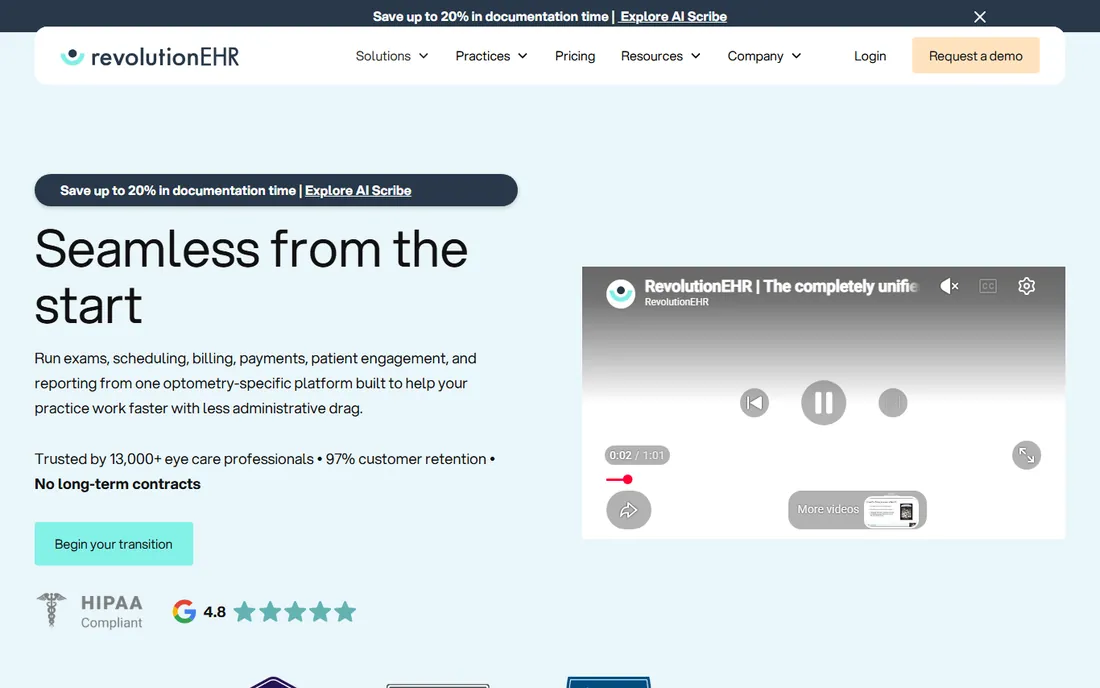
RevolutionEHR markets itself as the market-leading optometry-first platform, and the product backs that positioning with exam documentation built around the OD workflow rather than adapted from general medicine. Online booking, intake forms, reminders, billing, claims, payments, and patient engagement all sit in one cloud system. The vendor reports a 97 percent customer retention rate, which is the kind of figure that suggests practices stay once they migrate.
The pricing model deserves a close look because it is genuinely unusual in this category. RevolutionEHR charges by the number of doctors and bills month to month with no commitment, which lowers the risk of a bad fit. Recent product work has centered on AI: an AI Scribe that captures exam notes during the encounter and a payments module that ties transactions directly to patient records.
What we like- Optometry-built exam workflows with diagnostic equipment integrations
- Month-to-month billing with no long-term contract
- AI Scribe built into encounters at no extra cost
Watch out for- Pricing only available through a sales conversation
- Add-on modules raise the total
- Less suited to mixed-specialty groups
#2
Eyefinity Encompass
Best for: Practices where VSP insurance dominates the schedule
Visit eyefinity.com
Starting priceSee website (custom quote, enterprise pricing)
Free planNo
Eyefinity, a VSP Vision company, merged its Practice Management and EHR products into Eyefinity Encompass, a single cloud platform with a unified login. Mention of the old names matters because long-time users still search for Eyefinity EHR and ExamWRITER: both now live under the Encompass brand. The standout feature set is the VSP integration, which pulls insurance verifications up to seven days ahead of the visit and handles bulk eligibilities and authorizations.
The company cites 20 million exams processed annually and a footprint of 9,300 locations, which makes Encompass one of the most widely deployed optometry systems in the US. A PECAA Max member offer currently advertises reduced onboarding and subscription costs, a useful negotiating detail if your practice belongs to that network.
What we like- Practice management, EHR, engagement, and analytics under one login
- VSP eligibility and authorization integration
- SOC 2 Type 2 certified
Watch out for- No published pricing
- Recent rebrand may confuse returning users
- Least compelling for practices outside the VSP orbit
#3
Crystal PM
Best for: Practices that want the EHR molded to their workflow
Visit crystalpm.com
Starting priceSee website (custom quote)
Free planNo
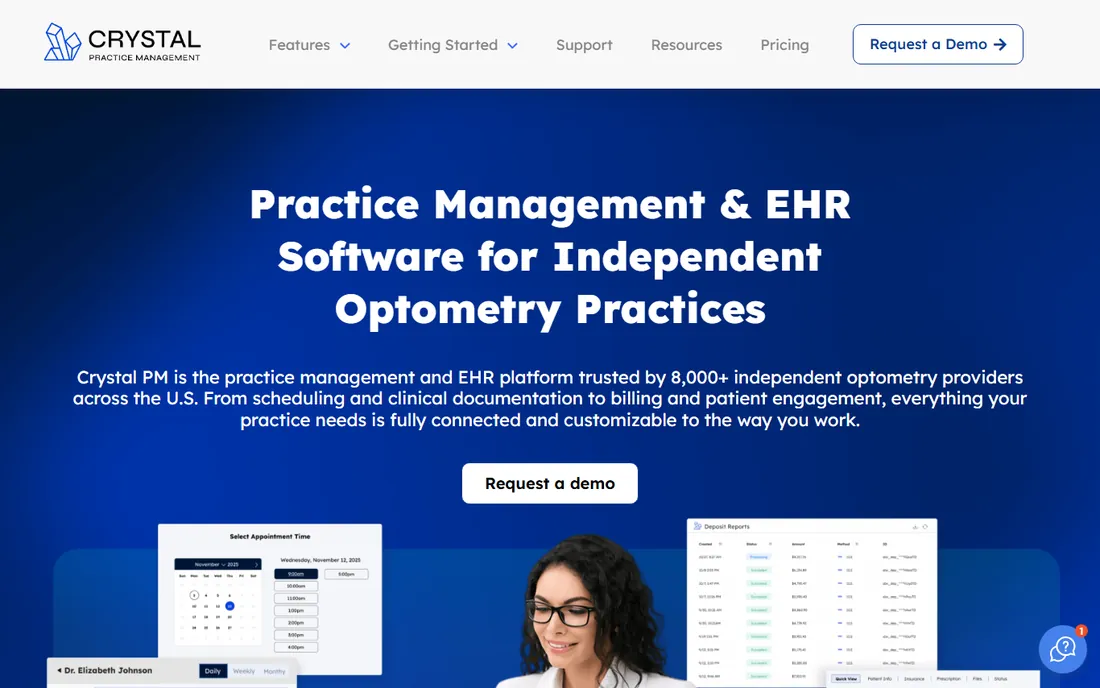
Crystal PM, from Abeo Solutions, pitches itself at independent practices that have been burned by one-size-fits-all templates. Everything from exam templates to billing rules is configurable, and the vendor backs the product with same-day, human support rather than a ticket queue. With more than 8,000 independent providers on the platform, it has quietly become one of the larger players in the independent OD segment.
The deployment choice is a real differentiator. Practices that distrust the cloud, or that have invested in on-premise infrastructure, can keep everything local, while new practices can go cloud-hosted. The catch is that flexibility costs setup time: expect the implementation to be a project, not a plug-in.
What we like- Deep customization with 55-plus integrations
- Choice of cloud-hosted or on-premise deployment
- Same-day support from an optometry-focused team
Watch out for- Pricing is not published
- Older desktop design language
- More setup work before go-live
Starting priceSee website (custom quote)
Free planNo
MaximEyes, from First Insight, is the choice for practices that want everything under one roof: clinical documentation, scheduling, optical inventory and dispensing, lab ordering, claims, and analytics. The 270-plus integrations cover the diagnostic equipment list most ODs actually own, from OCT to autorefractors, and the vendor has added AI assistants for overflow calls, note drafting, and billing checks.
This is enterprise-grade software with enterprise-grade complexity. Multi-location groups with a real optical business will use every module; a two-doctor practice will use half of them and still pay for all of them. Get the quote in writing before you fall in love with the demo.
What we like- EHR, practice management, optical POS, and image management in one interface
- More than 270 supported integrations
- AI helpers for voice, scribe, and billing
Watch out for- Custom quoting only
- Dense interface takes training
- Oversized for a solo OD starting out
Starting priceSee website (custom quote)
Free planNo

Compulink Healthcare Solutions has been building specialty EHRs for decades, and Eyecare Advantage shows it. The headline feature is OneTab, a single-page layout that lets the doctor chart a full exam without bouncing between screens. The optical module covers POS, inventory, lab orders, and job costing, which makes it a genuine alternative to the bigger names for practices that live on optical revenue.
The vendor leans hard on customization, which is both the strength and the warning. Advantage can be shaped around almost any exam workflow, but someone has to do the shaping, and practices that skimp on implementation report longer ramp-ups. It is a power tool for practices willing to configure it.
What we like- OneTab single-page charting layout
- 150-plus equipment interfaces
- Optical POS and analytics included
Watch out for- Customization learning curve
- No public pricing
- Some interfaces show their age
#6
LiquidEHR
Best for: Solo ODs and small practices that want a simple optometry EHR
Visit liquidehr.com
Starting priceSee website (custom quote)
Free planNo
LiquidEHR is the quiet option on this list. It is a small, optometry-only vendor that sells on simplicity and support: the software does EHR, practice management, and billing for eye care practices and does not try to be everything else. Customer reviews consistently highlight support quality, which matters more than any feature list when the server hiccups on a Monday morning.
The tradeoff is scale. LiquidEHR cannot match the integration catalogs of MaximEyes or Compulink, and the interface looks its age. For a solo OD or a two-doctor practice that wants an affordable, uncomplicated system and a phone number that reaches a human, it is worth a demo.
What we like- Focused, optometry-only design without enterprise bloat
- Strong reputation for personal support
- Multi-location access included
Watch out for- Small company with fewer resources than the big vendors
- Dated interface
- No published pricing
Starting priceSee website (custom quote)
Free planNo
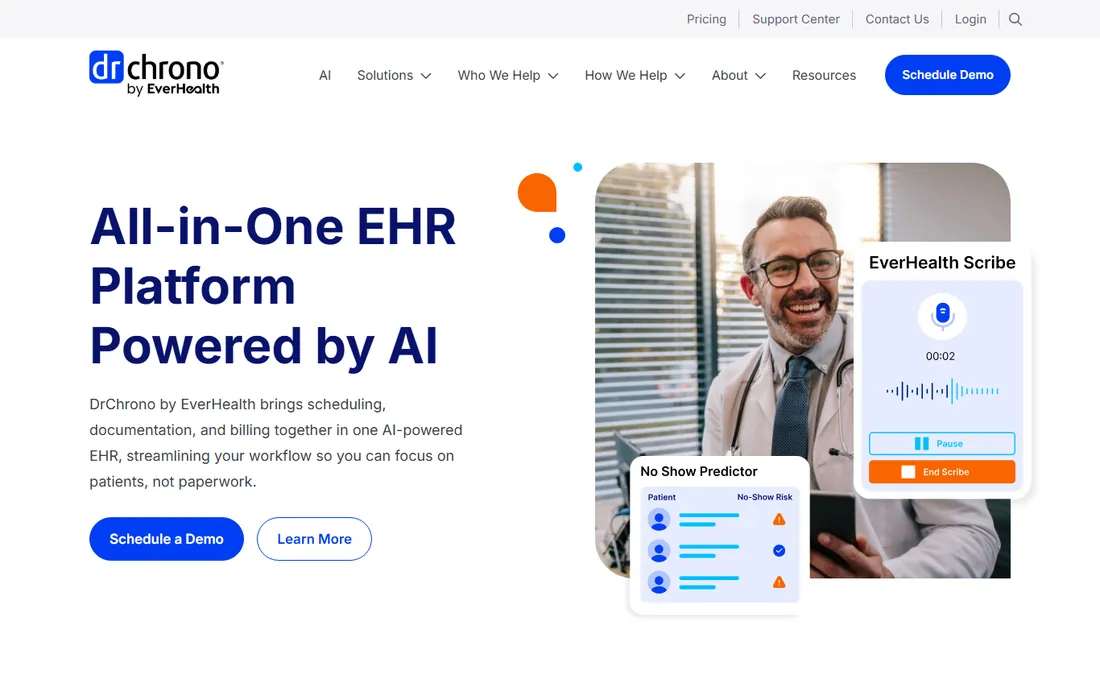
DrChrono is the general medical EHR that optometrists adopt when mobility matters more than specialty depth. It was the first mobile EHR to become an Apple Mobility Partner, and Black Book has rated it the top mobile EHR for years running. The customizable templates can be shaped into an optometry workflow, and the all-in-one bundle covers scheduling, intake, telehealth, billing, and patient communication.
The catch is the obvious one: DrChrono was built for general medicine, so the optical side of your practice gets nothing purpose-built. Practices with a large optical retail operation will miss the integrated POS and lab ordering of the optometry-first tools. If your practice is exam-heavy and you love the iPad, it works; if optical drives your revenue, look above.
What we like- Genuinely mobile-first EHR with Apple Mobility partnership
- Customizable templates for many specialties
- Integrated telehealth, billing, and patient portal
Watch out for- Not built specifically for optometry
- Pricing only available on request
- Support experience varies by plan
#8
ModMed
Best for: Ophthalmology-leaning practices with an optometry component
Visit modmed.com
Starting priceSee website (custom quote)
Free planNo
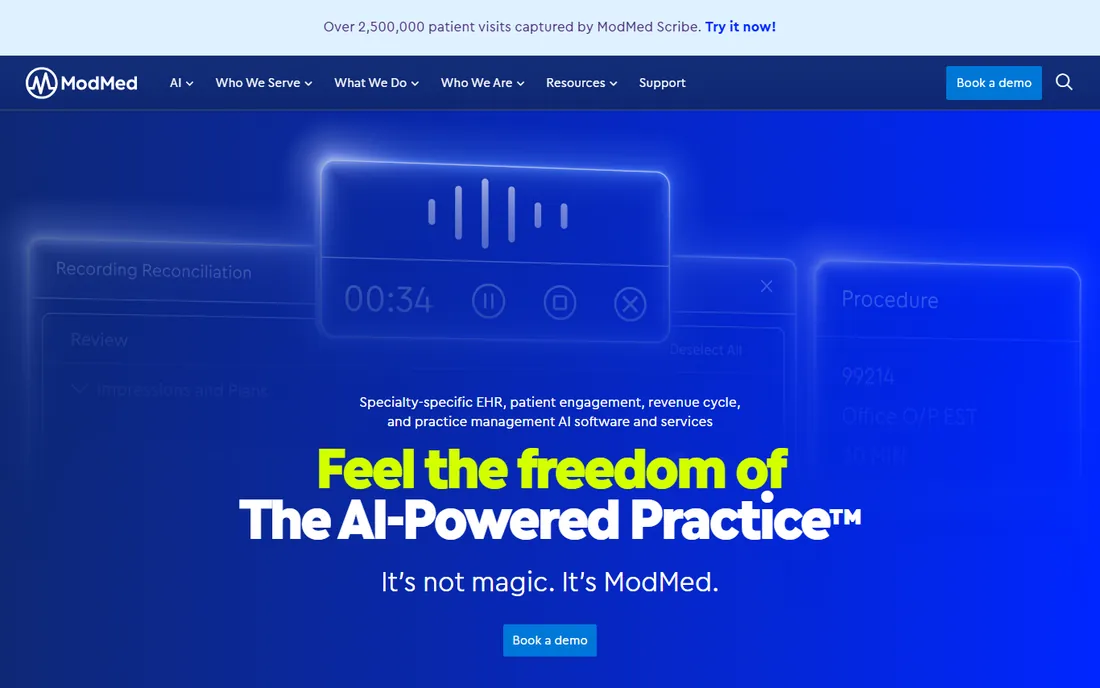
ModMed is a specialty EHR company, but its flagship EMA product was built for ophthalmology, not optometry. That matters less than it sounds: many optometry practices that co-manage surgical patients, or that sit inside ophthalmology groups, run happily on EMA because the eye-specific clinical content is richer than anything a general EHR offers. The adaptive learning engine adjusts templates based on usage, which shortens charting time once trained.
Solo ODs should think twice. ModMed prices and implements like a specialty enterprise platform, and the optometry-specific niceties, like optical POS, are thinner than at RevolutionEHR or Compulink. It shines in the OD-plus-MD group setting where both sides share one system.
What we like- EMA ophthalmology suite with adaptive learning that improves with use
- All-in-one EHR, PM, engagement, and revenue cycle
- Deep specialty clinical content
Watch out for- Ophthalmology first, optometry second
- Premium pricing tier
- Longer and heavier onboarding
#9
AdvancedMD
Best for: Independent practices that want EHR, PM, and engagement in one cloud suite
Visit advancedmd.com
Starting priceSee website (custom quote)
Free planFree trial (3 months)
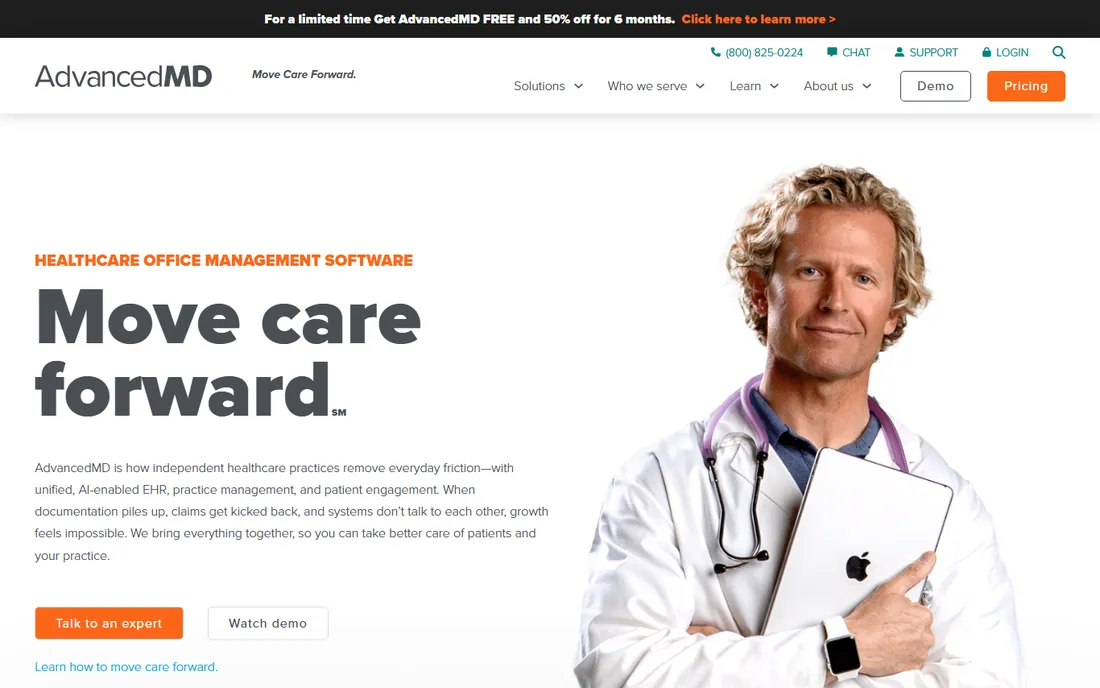
AdvancedMD is the broadest generalist on this list: a full cloud suite for independent practices spanning EHR, practice management, patient engagement, and outsourced billing services. The platform supports configurable specialty workflows, ambient AI documentation, real-time eligibility verification, and automated claim scrubbing. Support is a genuine selling point, with 90-second average response times and round-the-clock live chat.
The homepage currently advertises a three-month free offer, which is worth asking about during the demo. The caveat for ODs is the same as with any generalist: exam lane workflows, equipment integrations, and optical management are serviceable but generic. Practices that prioritize billing efficiency and support coverage over eye-specific tooling will get the most from it.
What we like- Unified cloud suite covering clinical, billing, and engagement
- AI documentation and automated claim scrubbing
- 24/7 support with fast response times
Watch out for- Not purpose-built for eye care
- Feature breadth means longer training
- Quote-based pricing
Starting priceSee website (custom quote, percentage of collections)
Free planNo
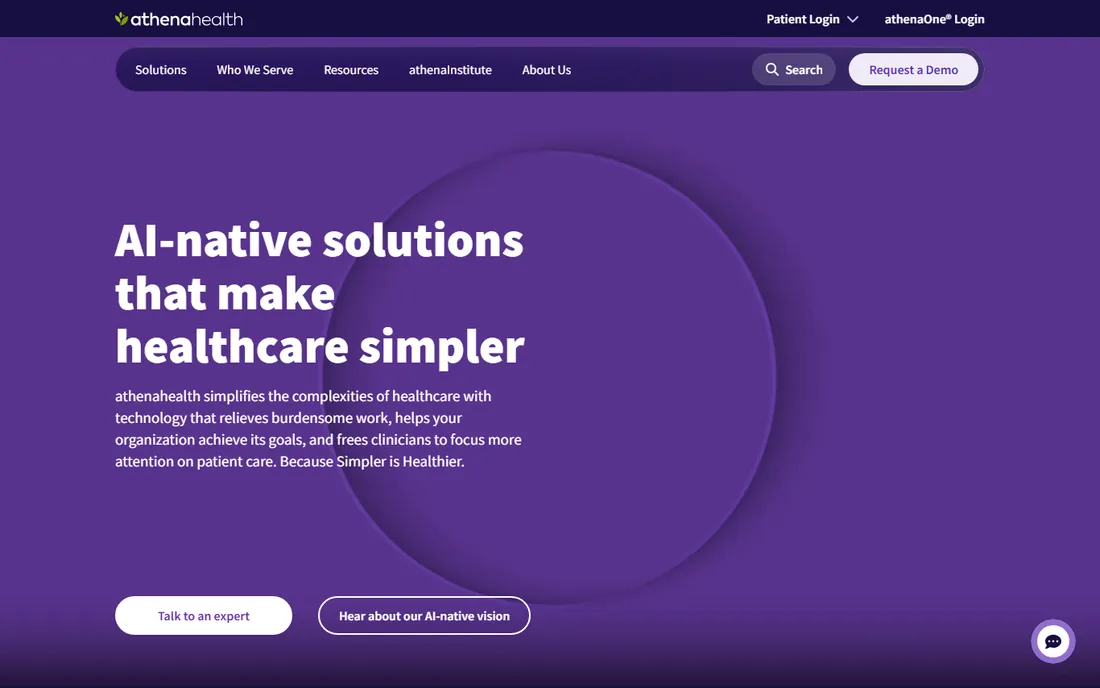
athenahealth serves optometrists through athenaOne, its flagship ambulatory suite, which combines EHR, practice management, and patient engagement with a network model where claims data across customers improves payer rules for everyone. The vendor's billing performance figures, including collection increases for switching practices, are the reason many smaller practices choose it: you effectively outsource the revenue cycle.
That outsourcing is priced as a percentage of collections, which means the bill grows with your revenue. For a growing practice, that can exceed the cost of a flat-rate optometry EHR within a few years. Choose athenahealth when billing relief is the priority; choose an optometry-first tool when exam workflow is.
What we like- AthenaOne bundles EHR, practice management, and patient engagement
- Network-based claims intelligence improves billing performance
- Consistently top-rated by KLAS
Watch out for- Pricing tied to collections can be expensive at scale
- No optometry-specific exam tooling
- Heavyweight implementation
How we chose
We started from vendor homepages and documentation, verifying that every product on this list is live and actively sold in 2026. We then checked pricing pages for published numbers, and where vendors quote by phone, we said so plainly rather than copying directory estimates. Public reviews on G2, Capterra, and Software Advice informed the strengths and weaknesses, and we weighted optometry-specific depth, integration breadth, and company-size fit for the final ordering. We did not test any of these systems hands-on; this is a research comparison, not a product review.
What to actually compare in an optometry EHR
The demos all look the same after the third one. These are the comparisons that separate them.
Exam documentation speed
Count the clicks for a complete routine exam, including refraction, slit lamp, and fundus. OneTab-style single-screen layouts (Compulink) and adaptive templates (ModMed) exist precisely because click counts are the biggest predictor of whether doctors hate their EHR after month six.
Equipment and lab integrations
Your OCT, autorefractor, and visual fields should feed the chart directly, and your lab orders should flow out without retyping. MaximEyes advertises more than 270 integrations, Compulink more than 150; ask each vendor which of your specific devices are supported before you sign.
Vision plan versus medical billing
Optometry practices bill vision plans and medical plans, often for the same visit. The optometry-first tools handle this split natively, including VSP workflows in Eyefinity's case. General EHRs can be configured for it, but configuration is work you pay for.
Optical retail depth
If glasses and contacts drive your revenue, the EHR's optical module matters as much as its charting. POS, inventory, lab ordering, and job costing vary enormously; LiquidEHR and the smaller tools are thinner here, MaximEyes and Compulink are strongest.
The migration mistake most practices make
The biggest failure mode in optometry EHR projects is not picking the wrong software. It is underestimating data migration and training. Years of charts, recall lists, optical orders, and insurance records have to move cleanly, and staff have to unlearn the old system while seeing full schedules.
Three things prevent it. First, get the migration plan in writing: who converts the data, what gets converted, and what it costs. Second, ask for the names of two practices of your size that went live in the last year and call them. Third, budget for a productivity dip in the first month; the practices that plan for it come out fine, and the ones that do not blame the software. Every vendor on this list offers implementation support, but the quality of that support varies, so ask the reference practices about it directly.
Frequently asked questions
Do I need an optometry-specific EHR, or will a general EHR work?
A general EHR can work if your practice is exam-focused and light on optical retail. But optometry-specific systems come with eye exam templates, diagnostic equipment integrations, vision plan billing, and optical POS built in, which saves months of configuration. Most ODs find the specialty tools worth it.
How much does optometry EHR software cost?
Almost every vendor quotes by phone, typically priced per doctor per month for cloud systems or with a one-time license plus maintenance for on-premise ones. Expect quotes in the mid-hundreds of dollars per doctor per month for cloud optometry EHRs, though this varies widely. Get at least three quotes before deciding.
Are there free EMR options for optometrists?
There are no credible free optometry EHRs in 2026. Open-source general EHRs exist, but they lack the eye-specific workflows, integrations, and support that a practice needs. Budget for a real system; the EHR is the wrong place to cut corners.
How long does implementation take?
Most optometry practices go live in six to twelve weeks, depending on practice size, data conversion complexity, and training schedules. Multi-location groups should plan for longer. Ask the vendor for a written timeline with milestones before signing.
Can I keep my on-premise server, or is cloud required?
Several vendors still offer on-premise options, including Crystal PM and MaximEyes. That said, the industry is moving toward cloud, and most new features, AI tools, and integrations arrive on cloud versions first. If you choose on-premise, confirm the vendor's long-term roadmap for it.
What is the difference between Eyefinity EHR and Eyefinity Encompass?
Encompass is the current product name. Eyefinity merged its Practice Management and EHR products under the Encompass brand with a single login. If you see the older names in reviews or marketing, they refer to what is now Encompass.
Sources we checked (10)
- https://revolutionehr.com/
- https://eyefinity.com/
- https://www.crystalpm.com
- https://www.first-insight.com/maximeyes/
- https://compulinkadvantage.com/
- https://www.liquidehr.com
- https://www.drchrono.com/
- https://www.modmed.com/
- https://www.advancedmd.com
- https://www.athenahealth.com
Is your product missing or out of date?
We review this list regularly. Vendors can request a listing, send updated pricing or ask about featured placement.

Shihab Mia · Founder, Rankite
Shihab has spent more than a decade helping SaaS and e-commerce brands grow through search. He writes Rankite's software buying guides from pricing pages, documentation and public user reviews. More about Shihab.