How we make this list: we compare pricing pages, product documentation and public user reviews. Rankite is independent; if a vendor ever pays for a featured spot, that listing is clearly labeled Partner.
Key takeaways
- Takeoff and estimating are different jobs: Bluebeam, On-Screen Takeoff, and STACK measure quantities from plans, while Sage Estimating, HCSS HeavyBid, and ProEst turn those quantities into priced bids.
- Almost every serious commercial tool is quote-priced; STACK is the only one here with a genuinely free plan for getting started.
- Heavy civil and infrastructure bidding is its own world, and HCSS HeavyBid is the specialist built for DOT work and large earthwork and paving bids.
- Cloud estimating (STACK, ProEst, Methvin) suits distributed teams and quick collaboration; desktop-heritage tools (On-Screen Takeoff, Sage Estimating, Bluebeam) suit estimators who want local control and speed.
- For general contractors already running Sage accounting, Sage Estimating's integration with the accounting side is a practical reason to shortlist it.
Quick comparison
| Tool | Best for | Starting price | Free plan |
|---|
 Procore Procore | large GCs managing the full project lifecycle | See website | No |
 STACK STACK | cloud takeoff for growing contractors | See website | Yes (limited) |
 Bluebeam Revu Bluebeam Revu | PDF-based takeoff and markup | See website | No (free trial available) |
 On-Screen Takeoff On-Screen Takeoff | dedicated digital takeoff teams | See website | No (free demo available) |
 Sage Estimating Sage Estimating | Sage accounting ecosystem users | See website | No |
 HCSS HeavyBid HCSS HeavyBid | heavy civil and infrastructure bidders | See website | No (free demo available) |
 ProEst ProEst | cloud estimating with cost databases | See website | No (free trial available) |
 Methvin Methvin | subcontractors needing fast estimates | See website | No (free trial available) |
Is your product missing or out of date?
We review this list regularly. Vendors can request a listing, send updated pricing or ask about featured placement.
The most expensive estimate is the wrong one
Every estimator has a story about the bid that won the job and lost the company money. A missed scope item here, a quantity taken from an outdated plan revision there, and suddenly a profitable project becomes a year of damage control. The best commercial construction estimating software exists to make that outcome less likely: accurate takeoffs, current cost data, and a bid process the whole team can check.
Commercial work raises the stakes beyond residential estimating. Plans are bigger, specs run hundreds of pages, bid deadlines are hard, and owners compare your number against three competitors line by line. The eight tools below cover the category from different angles: cloud takeoff, PDF markup, dedicated estimating engines, heavy civil specialists, and full project platforms. Choose based on the work you bid most, because a tool tuned for highway work and one tuned for commercial interiors solve different problems.
Note on pricing: our research tools were unavailable on the day of writing, so starting prices are listed as "See website." Plan structures and feature notes below reflect each vendor's long-standing public offerings. Commercial estimating tools are mostly quote-priced anyway, so request a demo and a written quote before deciding.
Starting priceSee website
Free planNo

Procore is not just estimating software; it is a construction management platform that includes estimating among many modules. For large general contractors, that is the appeal. Takeoffs and estimates feed into bid management, buyout, budgeting, and field production without re-entering data, so the number you bid is the number the project team manages against.
The estimating tools handle quantity takeoff from drawings and build estimates that flow into the project budget. Bid management lets you invite subcontractors, compare proposals side by side, and level bids. The trade-offs are scope and price. Procore is quote-priced and aimed at firms with real volume, and smaller contractors will find it more platform than they need. If you are a GC running multiple commercial projects and want one system from preconstruction through closeout, start here.
What we like- Estimating connects directly to project management, bidding, and field tools
- Strong subcontractor bid management
- Scales across large portfolios
Watch out for- Quote-based pricing aimed at larger firms
- More platform than a small shop needs
Starting priceSee website
Free planYes (limited)

STACK tookoff and estimating to the cloud at a time when most competitors were still desktop-bound. Estimators upload plans, perform on-screen takeoffs with count, linear, area, and volume measurements, and build estimates from those quantities, all in a browser. For contractors with estimators in different offices or working remotely, that accessibility matters.
The limited free plan is unusual in this category and makes STACK the easiest tool here to evaluate hands-on. Paid plans add more projects, advanced takeoff features, and deeper estimating and reporting. The honest limitation is depth: for complex commercial bids with intricate assemblies and cost breakdowns, dedicated estimating engines go further. STACK's sweet spot is subcontractors and growing GCs who want fast, collaborative takeoff without legacy software overhead.
What we like- Cloud-based takeoff accessible from anywhere
- Free plan for getting started
- Fast to learn compared to legacy desktop tools
Watch out for- Full estimating depth less than dedicated engines like Sage or HeavyBid
- Advanced features need higher tiers
Starting priceSee website
Free planNo (free trial available)
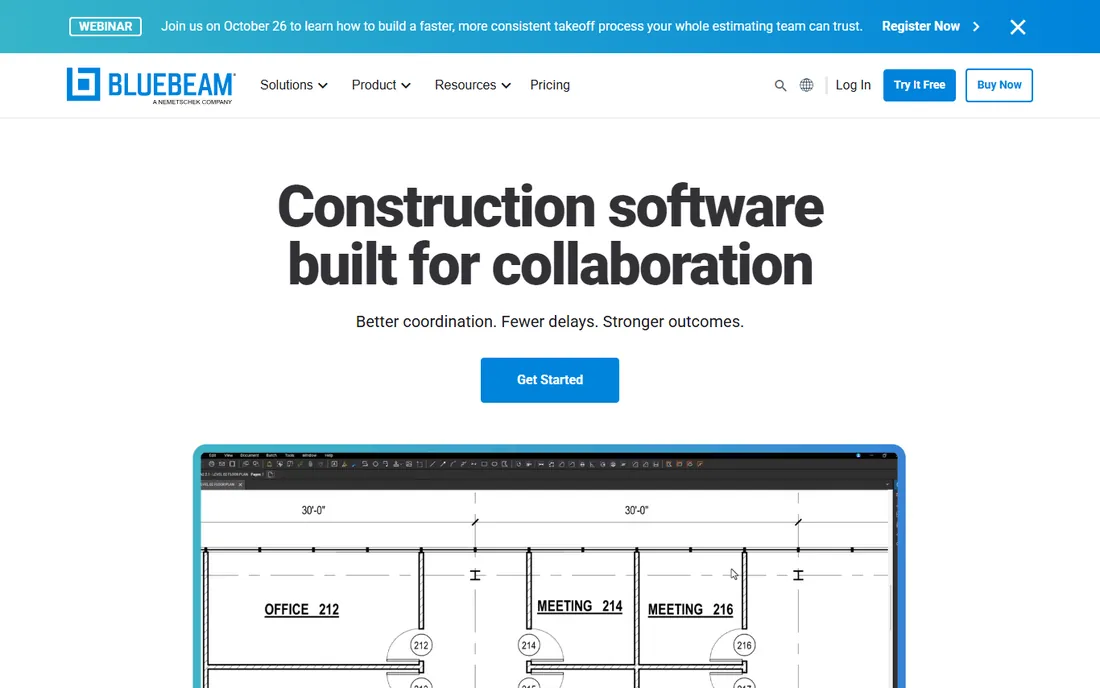
Bluebeam Revu is the closest thing construction has to a universal document tool. Nearly every commercial project runs on PDFs, and Revu's markup, measurement, and takeoff tools are the industry standard for working with them. Estimators who live in drawings often do their quantities in Revu and price them elsewhere, and that workflow is fast once learned.
The measurement tools handle counts, lengths, areas, volumes, and perimeters, with custom measurement types and legends for organizing takeoffs by trade or scope. Batch tools process whole plan sets, and Studio sessions let teams mark up the same documents together. Revu is sold per user on subscription. It will not build your estimate's cost side or manage bids, so most estimators pair it with Excel or a dedicated estimating tool. As a takeoff and markup engine, though, nothing is more widely adopted.
What we like- Industry-standard PDF markup trusted across construction
- Powerful measurement and takeoff tools
- One-time learning curve, long-term speed
Watch out for- Estimating beyond takeoff needs spreadsheets or another tool
- Collaboration features depend on Studio setup
Starting priceSee website
Free planNo (free demo available)
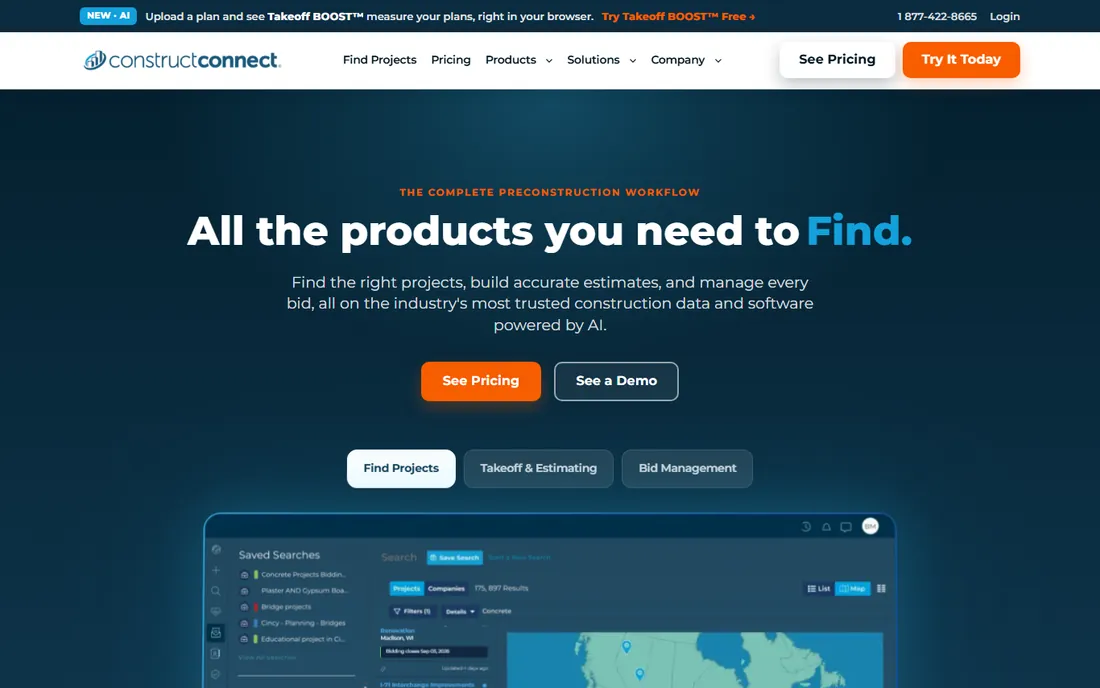
On-Screen Takeoff, from ConstructConnect, is the classic dedicated takeoff application. Where Bluebeam is a general PDF tool adapted for takeoff, OST was designed for it: conditions, takeoff styles, and organized quantity tracking built for estimators who measure all day. Large commercial GCs and takeoff service firms run whole departments on it.
OST pairs with Quick Bid, ConstructConnect's estimating application, so quantities flow into priced estimates with labor, material, equipment, and subcontractor costs. The combination covers the full preconstruction workflow for contractors who bid a high volume of commercial work. The downsides are generational: it is desktop software that feels its age next to cloud tools, and pricing goes through sales. For firms with dedicated estimators doing serious quantity work, it remains a workhorse.
What we like- Purpose-built takeoff with conditions and takeoff styles
- Integrates with Quick Bid for estimating
- Trusted by professional takeoff departments
Watch out for- Desktop software with a dated feel
- Pricing requires talking to sales
#5
Sage Estimating
Best for: Sage accounting ecosystem users
Visit sage.com
Starting priceSee website
Free planNo
Sage Estimating is the estimating arm of the Sage construction suite, and its biggest selling point is what happens after the bid. Estimates flow into Sage 300 Construction and Real Estate for job costing, project management, and accounting, giving GCs one data thread from bid to final cost. For firms already on Sage accounting, that integration is hard to give up.
The estimating itself is deep: digitizer and on-screen takeoff options, comprehensive cost databases, assembly-based estimating, and subcontractor bid comparison. It handles the complexity of large commercial bids with many divisions and alternates. This is not casual software. Pricing is quote-based, and getting full value takes training and setup. But for established commercial GCs in the Sage ecosystem, it is the natural estimating choice.
What we like- Deep integration with Sage 300 CRE accounting
- Extensive cost databases and assemblies
- Proven on large commercial bids
Watch out for- Quote-based pricing
- Implementation and training take real effort
#6
HCSS HeavyBid
Best for: heavy civil and infrastructure bidders
Visit hcss.com
Starting priceSee website
Free planNo (free demo available)

HeavyBid, from HCSS, owns the heavy civil estimating niche. Highway, bridge, utility, and site-work contractors bid work with thousands of bid items, complex specifications, and DOT-specific requirements, and HeavyBid is built for exactly that. It manages bid item libraries, handles unbalanced bidding analysis, and supports the quote comparison workflows that heavy civil bids demand.
Integration with the rest of the HCSS suite connects estimates to field operations, equipment costs, and safety, so bid assumptions carry into execution. This specialization is also the limitation: a commercial building contractor will find it tuned for a different industry. Pricing is quote-based and aimed at serious heavy civil firms. If you bid DOT and infrastructure work, there is no closer fit.
What we like- Built for DOT, highway, and heavy civil bidding
- Handles complex bid items and price adjustments
- Integrates with HCSS field and fleet tools
Watch out for- Specialized for heavy civil, overkill for building construction
- Quote-based enterprise pricing
Starting priceSee website
Free planNo (free trial available)
ProEst, part of ConstructConnect, is a cloud estimating platform aimed at the gap between basic takeoff tools and enterprise suites. It combines on-screen takeoff, a digitizer-free estimating engine, subcontractor bid management, and reporting in one browser-based system. Built-in cost databases give estimators a starting point for labor and material pricing.
Integrations matter here: ProEst connects with Procore for project handoff and QuickBooks for accounting, covering the two systems many mid-sized contractors run. The free trial lets teams test real bids before committing. As a mid-market cloud option, it competes with STACK on accessibility while offering more estimating structure. Very large GCs may still prefer Procore or Sage, but for commercial contractors who want cloud estimating without enterprise complexity, ProEst deserves a demo.
What we like- Cloud platform combining takeoff, estimating, and bid management
- Built-in cost databases
- Integrates with Procore and QuickBooks
Watch out for- Smaller vendor footprint than Procore or Sage
- Advanced customization has limits
Starting priceSee website
Free planNo (free trial available)
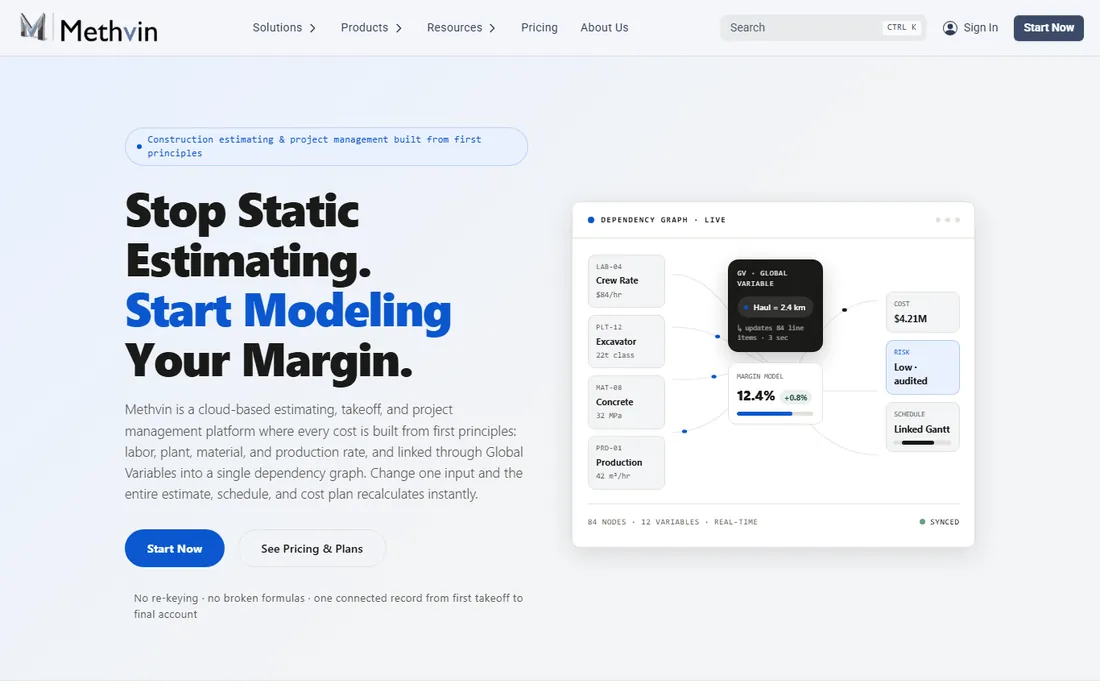
Methvin is a cloud estimating and takeoff platform that has found its audience among subcontractors and smaller commercial contractors. The interface is modern and fast, plans upload to the cloud, and estimators can go from takeoff to priced proposal quickly. For trades bidding a high volume of smaller commercial jobs, that speed is the whole game.
Takeoff tools cover the standard measurements, and the estimating side builds quotes with labor, materials, and markups, producing professional proposals. Collaboration features let teams work the same bid together. The free trial is the way in. Methvin does not match the depth of Sage Estimating or HeavyBid for complex multi-division GC bids, and cost data coverage depends on your trade and region. For subcontractors who need to turn bids around fast, it is one of the most approachable options here.
What we like- Fast, modern cloud interface popular with subcontractors
- Takeoff and estimating in one subscription
- Quick onboarding
Watch out for- Less depth for large GC multi-division bids
- Cost database coverage varies by region and trade
How to choose commercial construction estimating software
Commercial estimating tools differ more than their marketing suggests. Evaluate against the work you actually bid.
Takeoff method
How do quantities get measured? On-screen takeoff from digital plans is standard now, but the experience varies: Bluebeam excels at PDF measurement, OST and STACK are purpose-built takeoff environments, and some estimators still prefer digitizer tablets. If your plans arrive as PDFs from architects, prioritize strong PDF takeoff. If you receive BIM models, ask about model-based quantity extraction.
Cost databases and assemblies
An estimate is only as good as its costs. Check whether the tool includes maintained cost databases for labor, material, and equipment in your region, and whether it supports assemblies (grouped costs for common systems like a restroom rough-in or a curtain wall section). Tools with strong databases, Sage, ProEst, HeavyBid, save enormous setup time. Without them, you are building and maintaining your own costs.
Bid management and subcontractor coverage
For GCs, half of estimating is managing subcontractor bids: soliciting quotes, comparing them apples to apples, and leveling scope gaps. Procore, ProEst, and Sage Estimating include bid management workflows. If you self-perform most work, this matters less; if you manage 20 sub bids per project, it is essential.
Integrations with accounting and project management
The estimate should flow downstream, not die in a spreadsheet. Sage Estimating feeds Sage accounting, HeavyBid feeds HCSS field tools, ProEst connects to Procore and QuickBooks. Decide which systems the estimate must talk to, and confirm the integration is real, not just a CSV export.
Cloud versus desktop, and how pricing works
Cloud tools (STACK, ProEst, Methvin) offer anywhere access and simpler IT, while desktop tools (OST, Sage, Bluebeam) offer speed and local control. Most commercial tools are quote-priced per user or per company, so budget a sales conversation, not just a credit card. Only STACK offers a free entry point; everyone else starts with a trial or demo.
Why estimates go wrong, and how software helps
The classic estimating failures are depressingly consistent. Using outdated plan revisions is the big one: an addendum changes the scope, the estimator works from the old set, and the bid misses real work. Tools with plan versioning and revision comparison catch this. Second is inconsistent takeoff: two estimators measure the same scope differently. Standardized takeoff styles and conditions, like OST's, enforce consistency.
Third is stale cost data. Material prices move, and an estimate built on last year's numbers is fiction. Maintained cost databases and regular updates address this, but only if the team actually applies them. Fourth is missed scope in bid leveling: the low sub bid excluded something, and nobody caught it. Side-by-side bid comparison tools surface gaps.
Software does not replace estimator judgment. It removes the mechanical errors, the version mix-ups, the arithmetic mistakes, and the lost bid emails, so judgment applies to the parts that actually need it: strategy, risk, and margin.
How we chose
We started from each vendor's public documentation and product materials, focusing on capabilities that matter in commercial bidding: takeoff methods, cost databases, bid management, and integrations with accounting and project management systems. We read public reviews on G2, Capterra, and Reddit to learn where each tool frustrates working estimators, and we compared deployment models and pricing approaches across the category. We weighted fit for commercial contractors, from subcontractors to large GCs, favoring tools with real takeoff depth, current cost data, and honest bid workflows. We never claim hands-on testing. Our browser-based research tools were down on the day of writing, so prices are listed as "See website" and should be confirmed with each vendor.
Frequently asked questions
What is commercial construction estimating software?
It is software that helps contractors calculate what a construction project will cost before bidding. It typically combines takeoff (measuring quantities like square feet of drywall or cubic yards of concrete from plans) with cost databases (labor, material, and equipment prices) to produce a priced bid or proposal.
What is the difference between takeoff and estimating?
Takeoff is measuring: determining quantities from drawings and specs. Estimating is pricing: applying labor, material, equipment, and markup costs to those quantities to reach a bid price. Some tools do both; specialists like Bluebeam and On-Screen Takeoff focus on takeoff, while Sage Estimating and HeavyBid focus on the pricing engine.
How much does commercial construction estimating software cost?
Most commercial tools are quote-priced based on users and company size, so there is no standard sticker price. Expect per-user subscriptions for cloud tools and larger annual licenses for enterprise suites. STACK offers a limited free plan; the rest start with trials or demos. Always get a written quote for your team size.
Can estimating software integrate with my accounting system?
The better ones can. Sage Estimating integrates with Sage 300 CRE, HeavyBid connects with HCSS field and cost tools, and ProEst integrates with QuickBooks and Procore. Confirm the specific integration you need exists and understand whether it is a live sync or a file export before you commit.
Do I need BIM for accurate estimates?
No. Most commercial estimating still runs on 2D plans and PDFs, and every tool here handles that workflow. BIM-based quantity takeoff is a growing capability, useful on large projects with good models, but model quality varies and most estimators verify against 2D drawings anyway.
How accurate is digital takeoff compared to manual methods?
Digital takeoff is generally more accurate and much faster than manual scale-and-highlight methods, mainly because it eliminates arithmetic errors and makes revisions traceable. Accuracy still depends on the estimator: the software measures what you tell it to measure, so missed scope remains a human problem.
Sources we checked (8)
- https://www.procore.com/
- https://www.stackct.com/
- https://bluebeam.com/
- https://www.constructconnect.com/
- https://www.sage.com/
- https://www.hcss.com/
- https://proest.com/
- https://methvin.org/
Is your product missing or out of date?
We review this list regularly. Vendors can request a listing, send updated pricing or ask about featured placement.

Shihab Mia · Founder, Rankite
Shihab has spent more than a decade helping SaaS and e-commerce brands grow through search. He writes Rankite's software buying guides from pricing pages, documentation and public user reviews. More about Shihab.