How we make this list: we compare pricing pages, product documentation and public user reviews. Rankite is independent; if a vendor ever pays for a featured spot, that listing is clearly labeled Partner.
Key takeaways
- Epic and Oracle Health (formerly Cerner) dominate large hospitals and health systems; independent practices should look at athenahealth, eClinicalWorks, AdvancedMD, DrChrono and Tebra instead.
- NextGen Healthcare, now owned by Thoma Bravo, remains a strong ambulatory pick with deep specialty templates.
- EHR pricing is almost entirely quote-based: expect per-provider licensing plus implementation, training and data-migration costs on top.
- Mobile-first practices should shortlist DrChrono (Black Book's number one mobile EHR, 2013 through 2026), while billing-heavy practices should weigh athenahealth's revenue-cycle services.
Quick comparison
| Tool | Best for | Starting price | Free plan |
|---|
 Epic Epic | Large hospitals, academic medical centers and multi-hospital systems | See website | No |
 Oracle Health Oracle Health | Health systems already invested in Oracle's cloud and applications | See website | No |
 athenahealth athenahealth | Ambulatory practices that want the vendor to handle revenue cycle work | See website | No |
 eClinicalWorks eClinicalWorks | Ambulatory practices wanting a full cloud suite with telehealth built in | See website | No |
 NextGen Healthcare NextGen Healthcare | Specialty and multi-specialty practices needing deep configurability | See website | No |
 AdvancedMD AdvancedMD | Independent practices wanting EHR, practice management and billing unified | See website | No |
 DrChrono DrChrono | Mobile-first independent practices and physicians who chart on iPad | See website | No |
 Tebra Tebra | Private practices that want EHR plus patient growth tools in one platform | See website | No |
Is your product missing or out of date?
We review this list regularly. Vendors can request a listing, send updated pricing or ask about featured placement.
The best electronic health records software
Nobody buys an EHR the way they buy other software. The decision lasts a decade, the implementation takes months, and the switching costs are brutal enough that most buyers only do it once. That is exactly why the demos all look good and the regret stories all sound the same: the wrong system was chosen for the wrong size of organization. Match the system to your setting first, then compare features.
#1
Epic
Best for: Large hospitals, academic medical centers and multi-hospital systems
Visit epic.com
Starting priceSee website
Free planNo
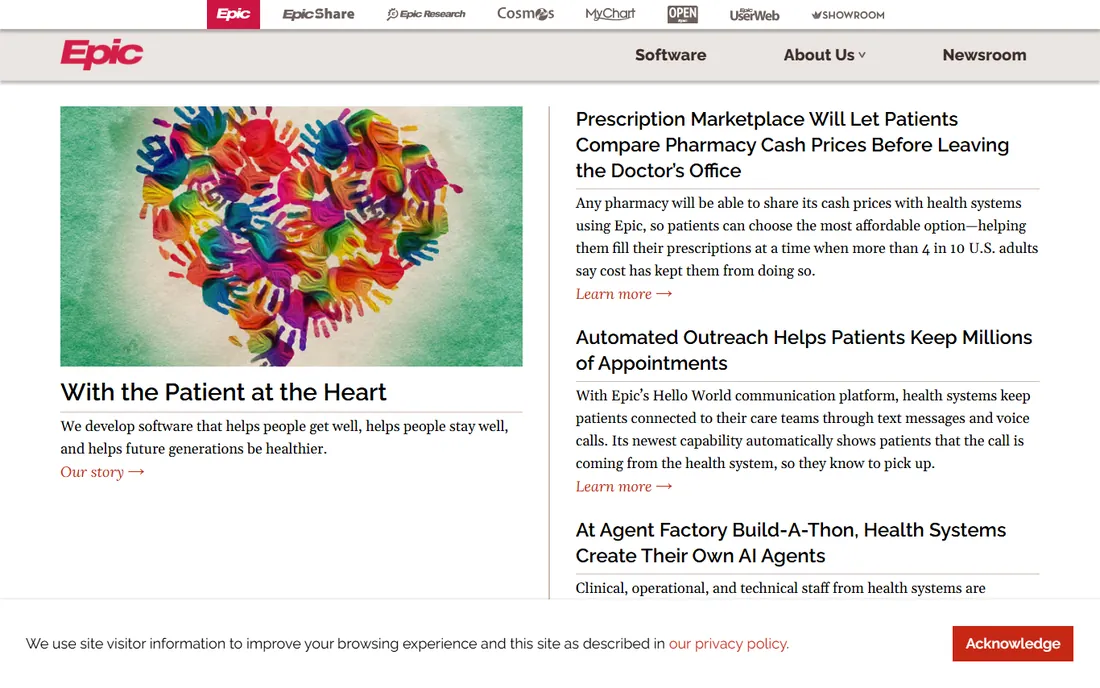
Epic is the system large health systems standardize on when they want one record for everything. The pitch is a single comprehensive chart that follows the patient across settings, informed by every encounter, with MyChart as the patient-facing front door. Recent development has pushed hard into AI: native AI charting that drafts notes, and tools that help patients understand test results.
The honest caveat is fit. Epic implementations are measured in years and tens of millions of dollars, and the company has historically focused on larger organizations. A five-physician practice should not be reading this section. But if you run a hospital or a growing multi-specialty group that plans to become a system, Epic is the reference standard everything else gets compared to.
What we like- The deepest functionality in the industry, with one comprehensive record spanning inpatient, ambulatory, revenue cycle and patient engagement
- Unmatched interoperability within the Epic customer community
- Continuous AI investment, including native AI charting
Watch out for- Implementation costs and timelines are the industry's highest
- Overkill (and overpriced) for small independent practices
- The company is famously selective about new customers
#2
Oracle Health
Best for: Health systems already invested in Oracle's cloud and applications
Visit oracle.com
Starting priceSee website
Free planNo
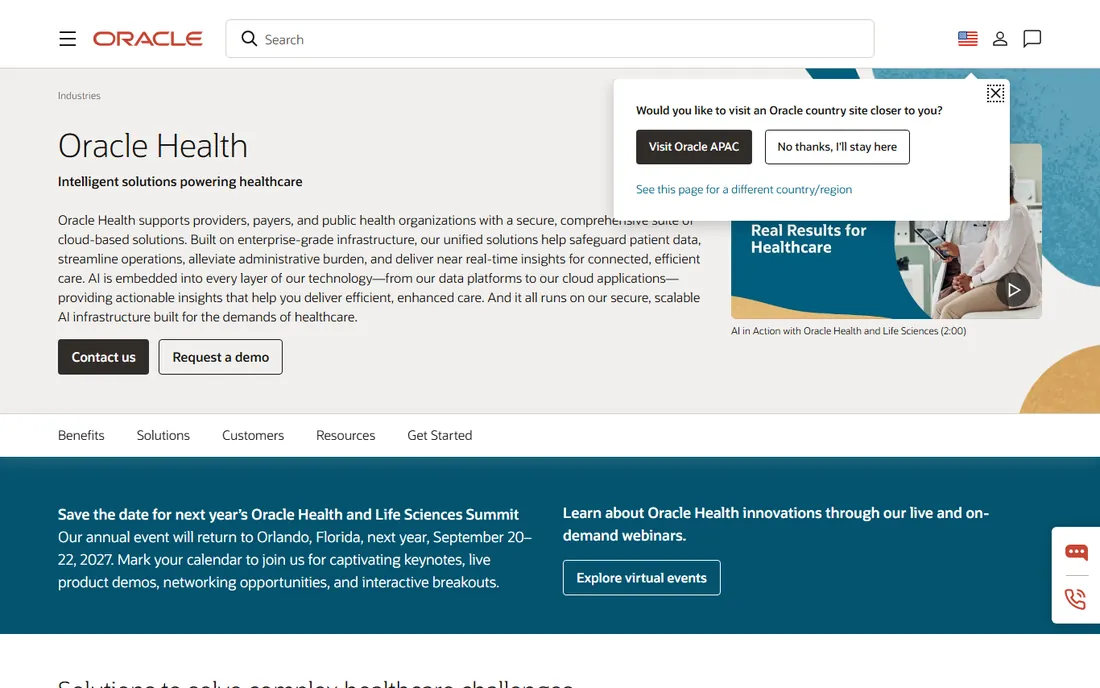
Oracle Health is the former Cerner, now rebuilt inside Oracle's cloud. The strategy is to make the EHR one piece of an intelligent health platform: clinical documentation, revenue cycle, population health and analytics running on Oracle Cloud Infrastructure with AI embedded throughout. For systems already running Oracle ERP or cloud, the integration story is compelling.
Buyers should go in with eyes open about the transition. Long-time Cerner customers have lived through roadmap changes since the acquisition, and Oracle's healthcare messaging leans heavily on future AI capability. Evaluate the clinical suite as it exists today, talk to current customers of similar size, and treat the Oracle ecosystem synergy as the real buying reason.
What we like- Deep integration with Oracle Cloud Infrastructure and the broader Oracle application stack
- AI embedded across clinical, operational and financial workflows
- Strong population health and analytics tooling
Watch out for- The Cerner-to-Oracle transition has been bumpy for some long-time customers
- Pricing and roadmaps are enterprise-opaque
- Smaller practices are not the target
#3
athenahealth
Best for: Ambulatory practices that want the vendor to handle revenue cycle work
Visit athenahealth.com
Starting priceSee website
Free planNo
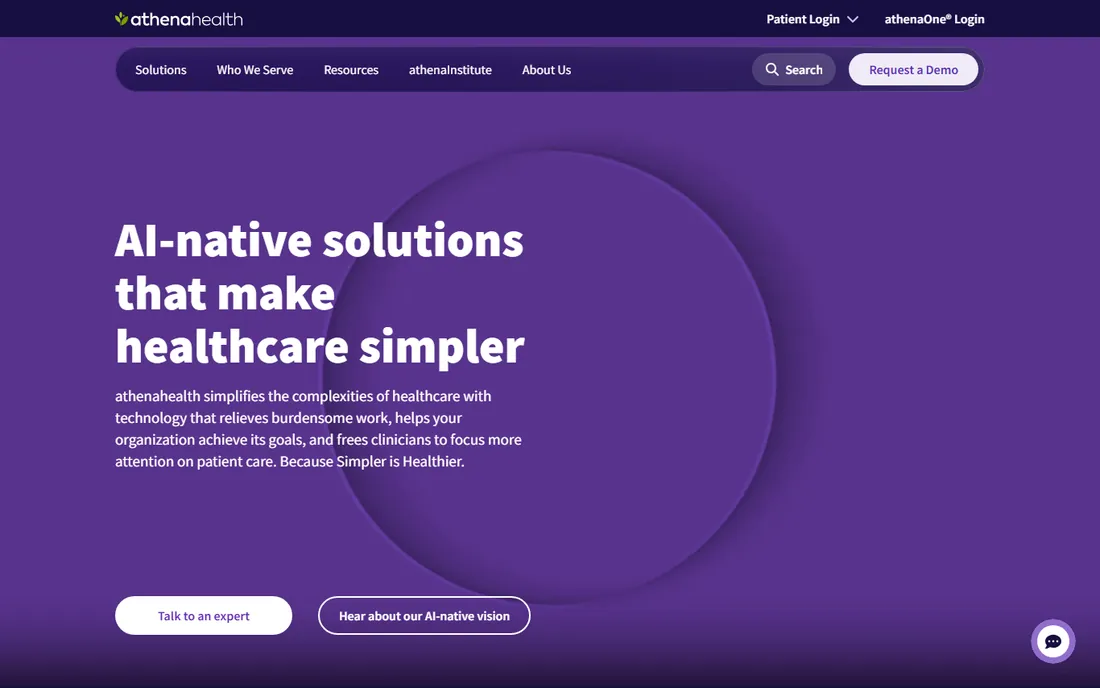
athenahealth's distinctive offer is that it does not just sell software: with athenaOne, its teams work your claims, chase denials and keep up with payer rules. Practices that switch often report improved collections, and the company publishes its own data on the point. For physicians who want to practice medicine rather than manage a billing department, that division of labor is the whole appeal.
The tradeoff is the pricing model. Because athenahealth typically charges as a percentage of collections, a thriving practice can end up paying more than it would for a flat-fee EHR. Run the math at your current revenue before signing. But for practices drowning in claim complexity and short on billing staff, the service component is genuinely differentiating.
What we like- AthenaOne bundles EHR, practice management and revenue-cycle services, with the vendor's team working denials and claims
- Rated Best in KLAS for the independent physician practice suite three years running
- Cloud-native with continuous updates
Watch out for- The service-heavy model means less direct control over billing operations
- Pricing is a percentage of collections, which can exceed flat-fee EHR costs for high-revenue practices
#4
eClinicalWorks
Best for: Ambulatory practices wanting a full cloud suite with telehealth built in
Visit eclinicalworks.com
Starting priceSee website
Free planNo
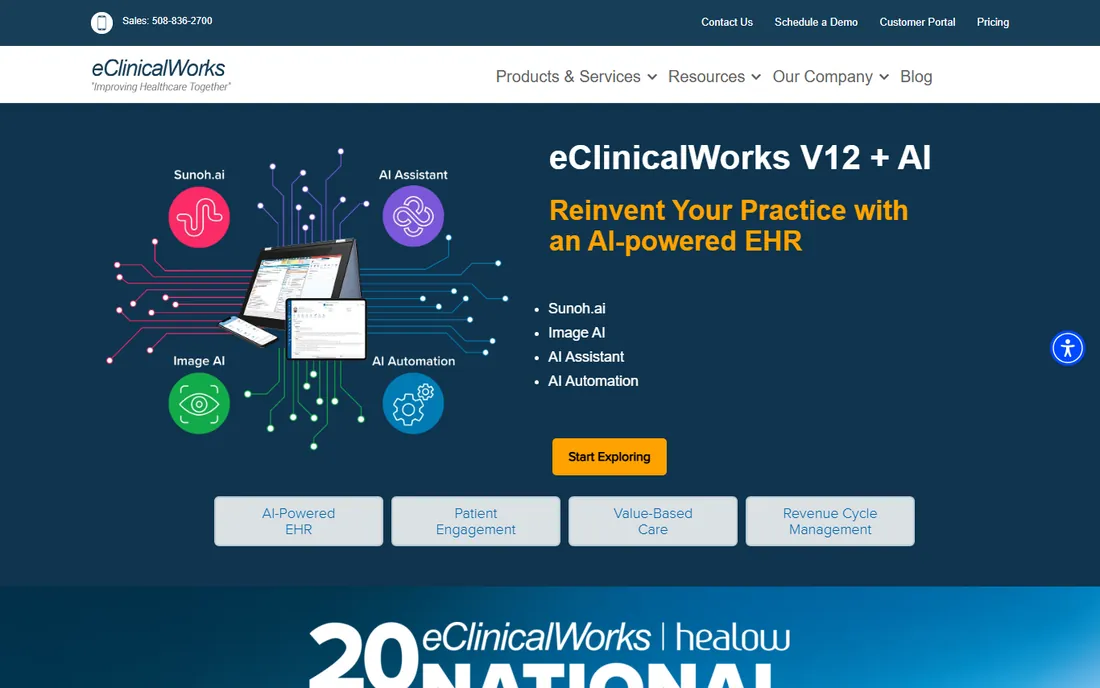
eClinicalWorks is the workhorse of independent ambulatory care: cloud EHR, practice management, telehealth, patient messaging and an AI scribe, all from one vendor. The scale matters for a practical reason: payer rules, regulatory updates and integrations get attention when 110,000-plus facilities run on the platform. The healow patient engagement tools and Sunoh.ai documentation assistant round out a genuinely complete suite.
It is not the prettiest system here, and new staff will need training time. But for a practice that wants one contract covering clinical, operational and patient-facing needs, eClinicalWorks is the value play among the full-suite vendors. Get the quote in writing with implementation and training itemized.
What we like- One of the largest ambulatory footprints in the US, with 180,000-plus physicians and NPs on the platform per the company
- Integrated telehealth, patient engagement and AI scribe (Sunoh.ai)
- Specialty-specific workflows across dozens of specialties
Watch out for- The interface carries the weight of two decades of feature accumulation
- Some users report a learning curve
- Pricing is quote-based with no public tiers
#5
NextGen Healthcare
Best for: Specialty and multi-specialty practices needing deep configurability
Visit nextgen.com
Starting priceSee website
Free planNo
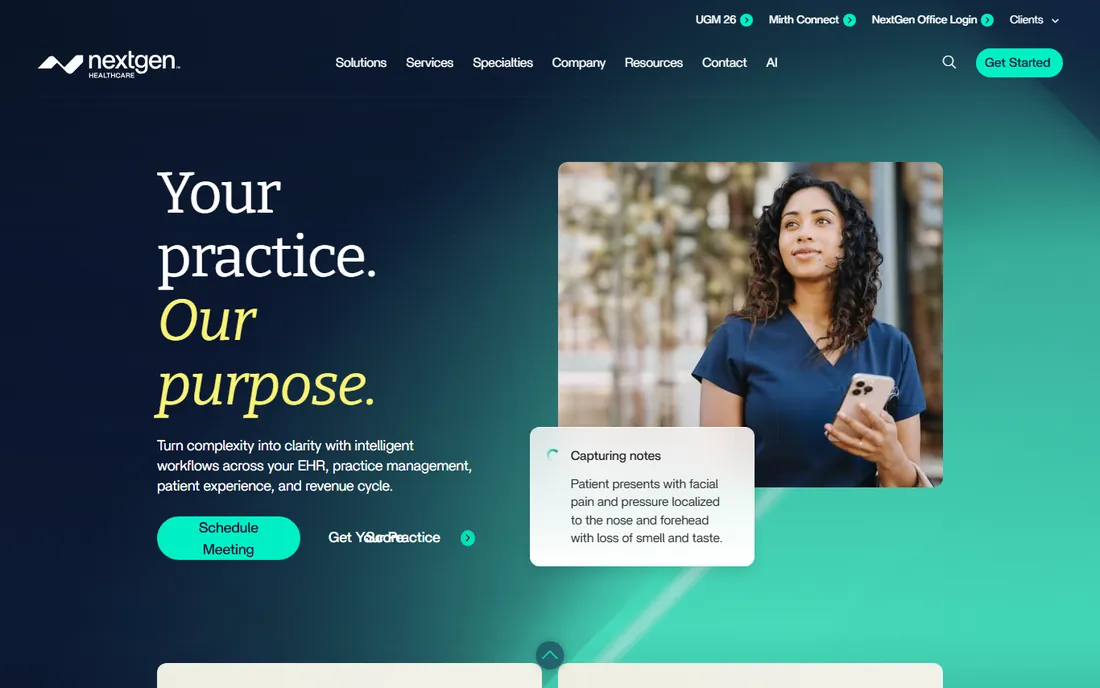
NextGen Healthcare has served ambulatory practices for decades, and its strength is configurability: specialty-specific templates, workflows and documentation that bend to the practice rather than forcing the reverse. The platform covers EHR, practice management, revenue cycle and population health, making it a full-suite option for groups that have outgrown simpler tools.
Since Thoma Bravo's 2023 acquisition took the company private, the roadmap has focused on modernization and integration. Buyers should still plan for a real implementation: NextGen rewards practices that invest in setup and training, and punishes those that expect it to work perfectly on day one. For specialty groups with complex documentation needs, that investment pays off.
What we like- Deep specialty content and customizable templates that adapt to how each specialty documents
- Integrated practice management, revenue cycle and patient engagement
- Private ownership under Thoma Bravo since 2023 has brought renewed investment focus
Watch out for- Implementations reward practices that invest in configuration and training
- The user interface feels enterprise-traditional next to newer entrants
- Pricing is quote-based
#6
AdvancedMD
Best for: Independent practices wanting EHR, practice management and billing unified
Visit advancedmd.com
Starting priceSee website
Free planNo
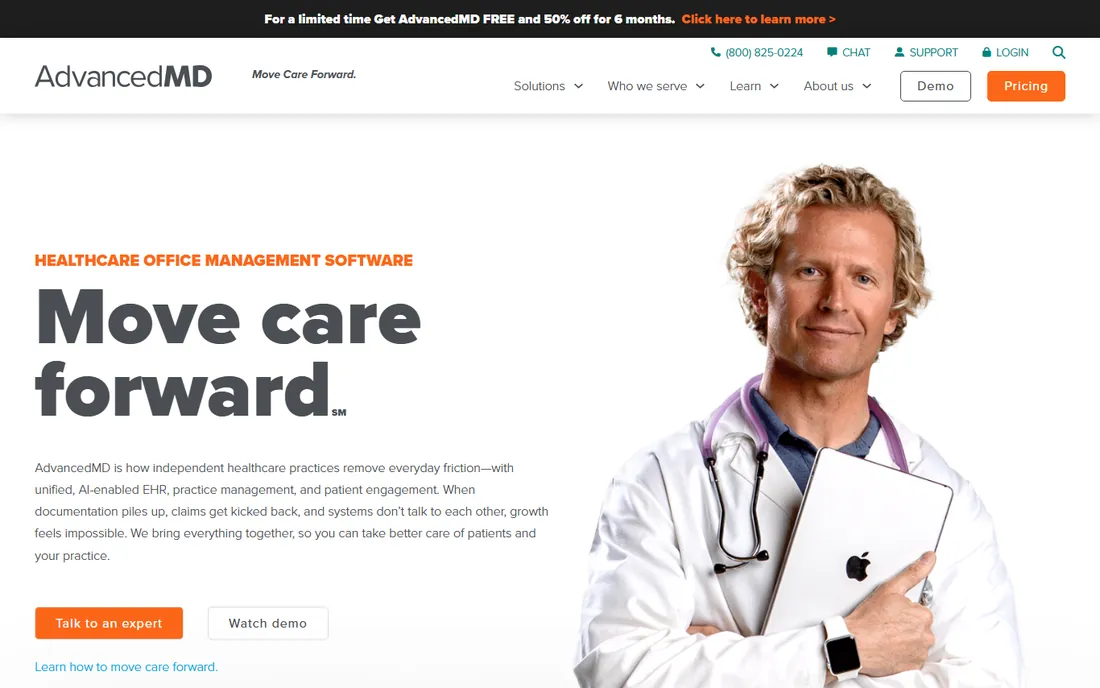
AdvancedMD targets the exact pain of independent practice: documentation spilling into evenings, claims bouncing back, and disconnected systems. Its answer is one cloud platform where charting, scheduling, billing and patient engagement share data. The company reports 9.5 million claims processed monthly, which speaks to the revenue-cycle depth, and AI features now assist with documentation and eligibility checks.
For the independent practice that wants to consolidate vendors without going enterprise, AdvancedMD hits the sweet spot between capability and manageability. The 24/7 support is a real differentiator for practices without IT staff. As always in this category, insist on an itemized quote covering implementation, training and any per-claim fees.
What we like- Single cloud platform for EHR, practice management, patient engagement and revenue cycle, trusted by 13,000-plus practices per the company
- AI-assisted charting and automated claim scrubbing
- 24/7 support with fast response times
Watch out for- The breadth means a learning curve across modules
- Pricing is quote-based
- Very small practices may find simpler tools easier to adopt
#7
DrChrono
Best for: Mobile-first independent practices and physicians who chart on iPad
Visit drchrono.com
Starting priceSee website
Free planNo
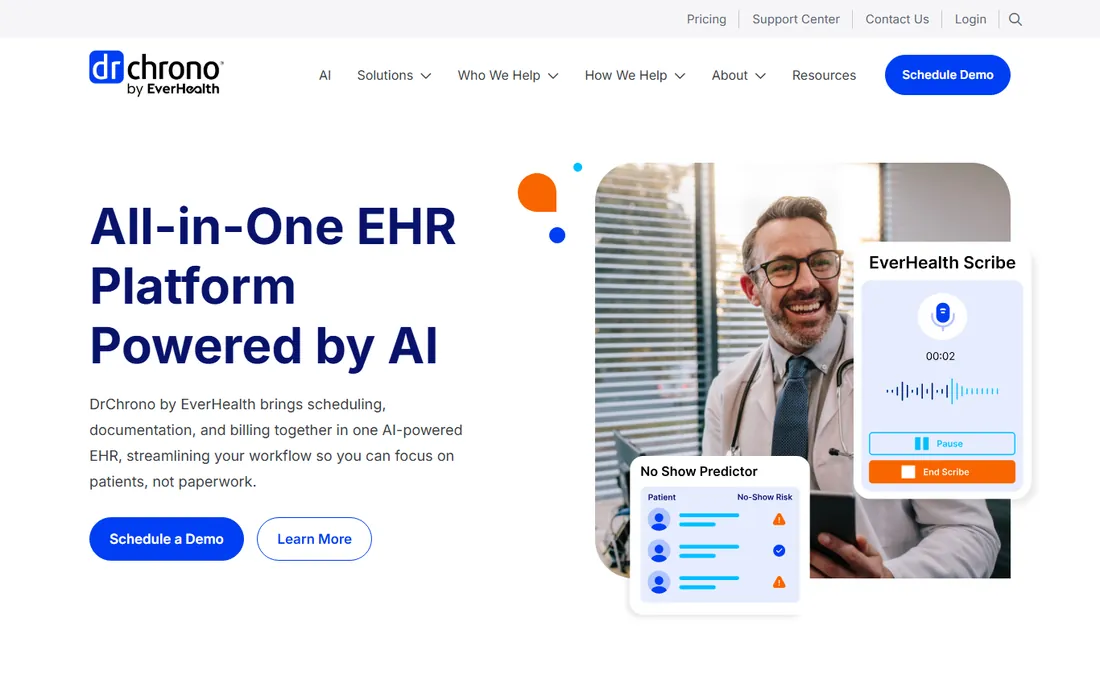
DrChrono was built for the iPad before mobile EHR was a category, and it still leads there: chart at the bedside, e-prescribe, capture charges and run telehealth from one app. Around that mobile core sits a complete platform with scheduling, billing, patient reminders and an API for integrations. Now part of EverHealth, it continues to target independent practices that want modern tooling without enterprise weight.
The buying question is workflow: if your physicians live on tablets and want to document during the visit, DrChrono is purpose-built for that. If your practice is desktop-centric with heavy administrative complexity, compare it against AdvancedMD or athenahealth. Either way, the mobile experience is the best in this lineup.
What we like- The original mobile EHR, rated Black Book's number one mobile EHR every year from 2013 through 2026
- Full practice management, billing and telehealth alongside charting
- Customizable specialty templates with an open API
Watch out for- The mobile-first design means desktop power users sometimes want more
- Billing features are strong but practices with complex revenue cycles may need add-ons
- Pricing requires a sales conversation
#8
Tebra
Best for: Private practices that want EHR plus patient growth tools in one platform
Visit tebra.com
Starting priceSee website
Free planNo
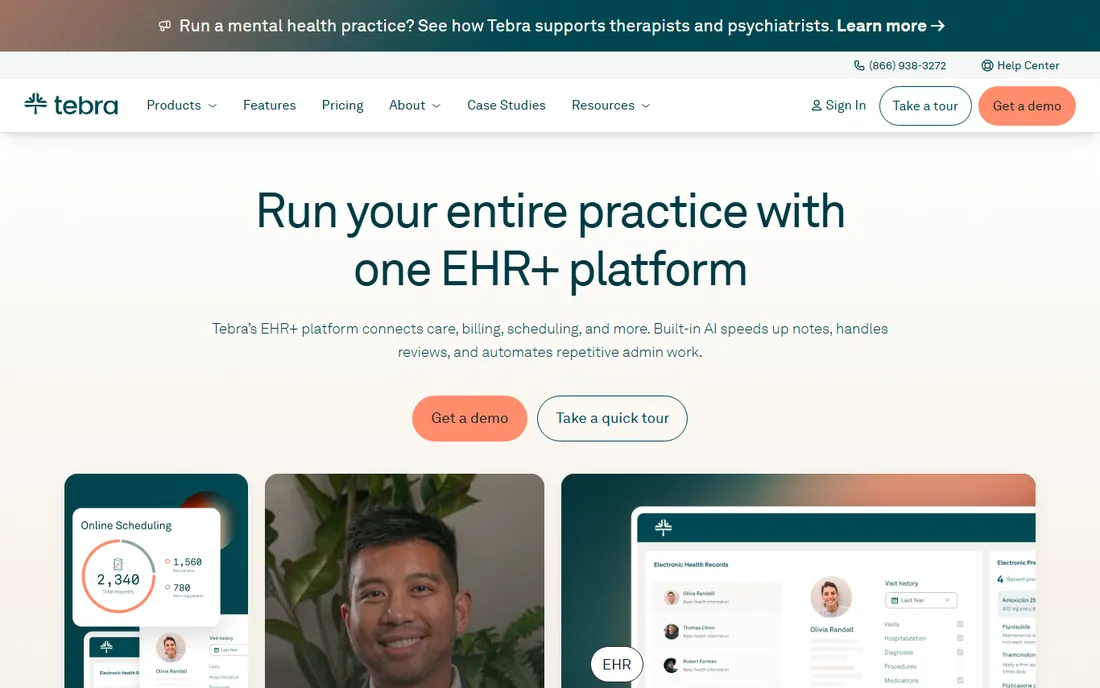
Tebra (the merged Kareo and PatientPop) pitches the independent practice a single platform: EHR, billing, scheduling, online reputation and patient engagement, with AI-generated clinical notes. The pricing model is provider-based rather than per-seat, so the whole staff can use the system under the provider subscriptions, with scaled pricing for low-volume clinicians. That structure is genuinely cost-effective for growing practices.
The differentiator is the growth layer: review management, online scheduling and patient messaging sit alongside the chart. Practices that see the EHR as a business tool, not just a documentation burden, will get the most from it. Confirm exactly which modules are in your quote, since the platform bundles can be configured several ways.
What we like- EHR+ platform unifies clinical, billing, scheduling and reputation management
- AI Note Assist cuts documentation time
- Per-provider pricing with unlimited staff seats, plus lower tiers for low-volume providers
Watch out for- The former Kareo/PatientPop merger means some long-time users are still adjusting
- Pricing is quote-based despite the "transparent pricing" messaging
- Growth and marketing tools add cost beyond core EHR
The implementation question nobody asks early enough
Every EHR vendor sells software; what you are actually buying is a multi-month change project. Before signing, get written answers to four questions: who does the data migration from your current system (and what does it cost), how many hours of training are included, what the support SLAs are after go-live, and what happens to your data if you leave. The vendors that answer crisply are the vendors that implement well.
Also budget for the hidden line items: interface fees for labs and clearinghouses, e-prescribing of controlled substances setup, per-claim or per-statement fees, and annual increases. A quote that looks 20 percent cheaper can easily cost more by year two once the add-ons land. Ask for a three-year total cost projection, not a year-one license fee.
Frequently asked questions
What is the best EHR for a small private practice?
For small practices, athenahealth, eClinicalWorks, AdvancedMD, DrChrono and Tebra are the realistic shortlist. Epic and Oracle Health target hospitals and large systems. The right pick depends on whether you prioritize billing services (athenahealth), mobile charting (DrChrono), or an all-in-one growth platform (Tebra).
How much does EHR software cost?
Nearly all EHR vendors quote custom pricing based on provider count, specialty, modules and implementation scope. Expect per-provider licensing plus one-time implementation, training and data migration fees. Always ask for a three-year total cost including interfaces and per-claim fees.
What is the difference between EHR and EMR?
The terms are used interchangeably, but strictly an EMR is the digital chart within one practice while an EHR is designed to share records across organizations. Modern systems marketed as EHRs emphasize interoperability: the record follows the patient between providers.
How long does EHR implementation take?
For small practices, typically 2 to 6 months from contract to go-live. For hospitals, 12 to 24 months is common. Data migration quality and staff training time are the two variables that most affect the timeline.
Can I switch EHR vendors later?
Yes, but it is expensive and disruptive: data migration, retraining and workflow rebuilding. That is why the initial selection matters so much. Before signing, confirm in writing how you can export your data (format, cost, timeline) if you ever leave.
Is cloud-based EHR better than on-premise?
For most practices, yes: no servers to maintain, automatic updates, and remote access. All eight systems here are cloud-delivered. On-premise persists mainly in very large systems with specific data-control requirements.
How we chose
We started with the EHR category as healthcare buyers search it, then verified each vendor's live homepage and current brand (using Oracle Health for the former Cerner, Tebra for the merged Kareo/PatientPop, and DrChrono under EverHealth). We checked pricing pages and wrote "See website" wherever pricing was quote-based rather than repeating third-party estimates. We excluded discontinued or fully absorbed products and favored systems with distinct, verifiable positioning for different practice sizes.
Sources we checked (9)
- https://www.epic.com/
- https://www.oracle.com/health/
- https://www.athenahealth.com/
- https://www.eclinicalworks.com/
- https://www.nextgen.com/
- https://www.advancedmd.com/
- https://www.drchrono.com/
- https://www.tebra.com/
- https://www.tebra.com/pricing/
Is your product missing or out of date?
We review this list regularly. Vendors can request a listing, send updated pricing or ask about featured placement.

Shihab Mia · Founder, Rankite
Shihab has spent more than a decade helping SaaS and e-commerce brands grow through search. He writes Rankite's software buying guides from pricing pages, documentation and public user reviews. More about Shihab.