How we make this list: we compare pricing pages, product documentation and public user reviews. Rankite is independent; if a vendor ever pays for a featured spot, that listing is clearly labeled Partner.
Key takeaways
- Dragon Medical One remains the default choice for direct dictation, especially in hospitals already running Microsoft and Nuance infrastructure.
- Augnito and Dolbey Fusion Narrate are the strongest cloud challengers, with Augnito winning on price and Dolbey on mobile flexibility.
- Solventum Fluency Direct, formerly 3M M*Modal, suits large health systems that want speech recognition tied to documentation improvement.
- Voice assistants like Suki and Tali AI change the workflow from dictation to commands, which suits some clinicians and annoys others.
Quick comparison
| Tool | Best for | Starting price | Free plan |
|---|
 Dragon Medical One Dragon Medical One | Hospital clinicians wanting the market standard | See website | Free trial |
 Augnito Augnito | Affordable cloud dictation with high accuracy | See website | Free trial |
 Solventum Fluency Direct Solventum Fluency Direct | Large health systems with CDI programs | See website | No |
 Dolbey Fusion Narrate Dolbey Fusion Narrate | Fast cloud dictation with strong mobile features | See website | Free trial |
 Philips SpeechLive Philips SpeechLive | Practices wanting hardware plus software | See website | Free trial |
 VoiceBoxMD VoiceBoxMD | Budget-friendly dictation for small practices | See website | Free trial |
 Mobius Scribe Mobius Scribe | Dictate into any EHR from a phone | See website | Free trial |
 INVOX Medical INVOX Medical | Spanish and multilingual clinical dictation | See website | Free trial |
 Tali AI Tali AI | Voice assistant for dictation and EHR commands | See website | Free trial |
 Suki Suki | AI assistant for notes, codes and admin tasks | See website | No |
Is your product missing or out of date?
We review this list regularly. Vendors can request a listing, send updated pricing or ask about featured placement.
The best medical speech recognition software
Starting priceSee website
Free planFree trial
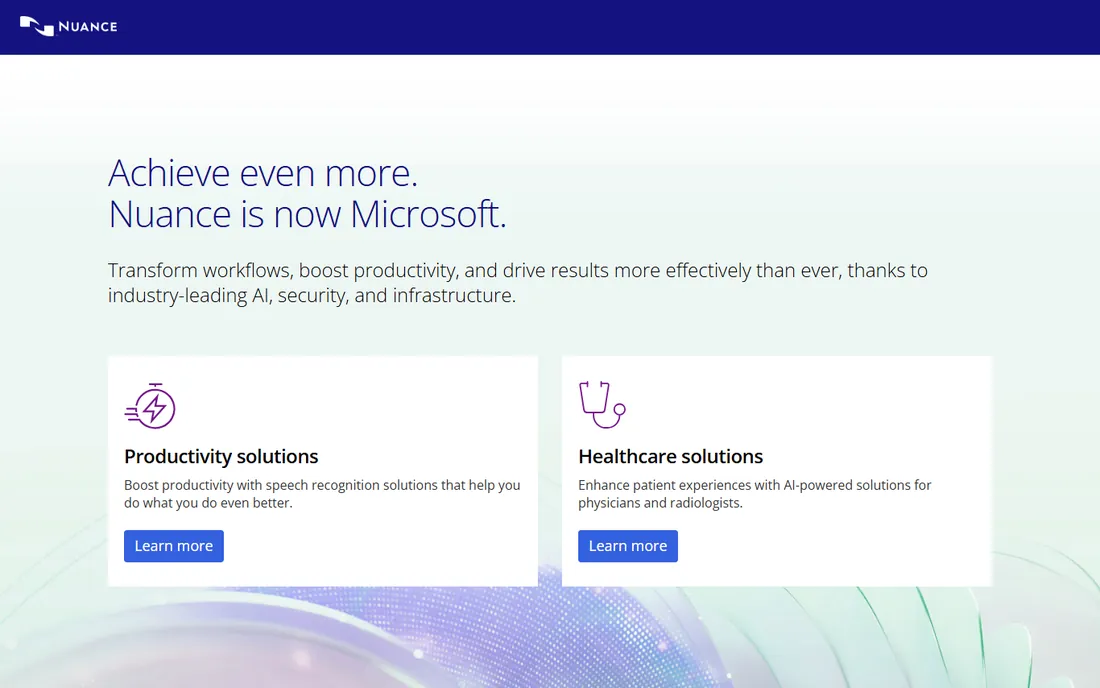
The clinic day ends, and the notes do not. Dragon Medical One exists because physicians were spending hours typing after hours, and it remains the tool most hospitals standardize on. Now part of Microsoft after the Nuance acquisition, it offers cloud-based speech recognition with a medical vocabulary that understands specialties out of the box. Dictation lands directly in the EHR, including deep Epic integration, and the PowerMic Mobile app turns a phone into a secure wireless microphone for clinicians moving between rooms.
Accuracy is the reason for its dominance. Medical terms, drug names and complex phrasing come through correctly far more often than with general-purpose dictation, which means less proofreading. The trade-offs are cost and commitment. Per-clinician subscription pricing makes enterprise rollouts a significant budget line, and while the cloud version needs less voice training than the old desktop Dragon, clinicians still do better with some onboarding. For hospitals and large practices that want the proven standard, Dragon Medical One is the safest choice.
What we like- Highest medical vocabulary accuracy in its class
- Deep EHR integration including Epic
- PowerMic Mobile for roaming dictation
Watch out for- Subscription pricing adds up per clinician
- Training still helps for best results
- Microsoft ecosystem lock-in deepens yearly
#2
Augnito
Best for: Affordable cloud dictation with high accuracy
Visit augnito.ai
Starting priceSee website
Free planFree trial
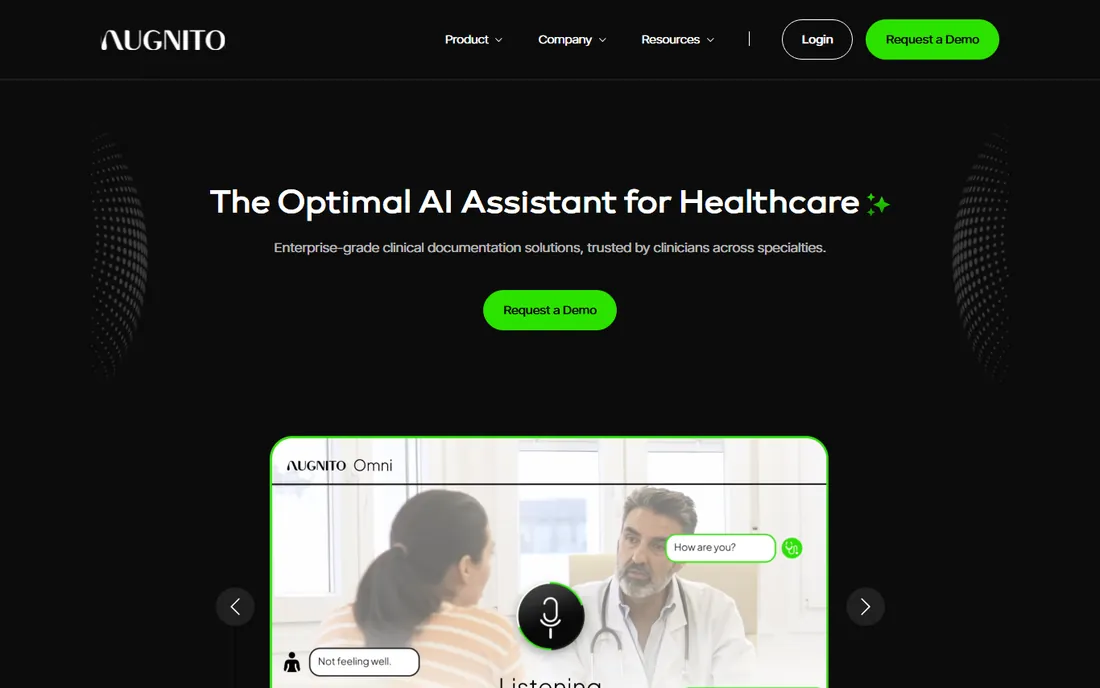
Augnito has built its reputation as the value challenger to Dragon. The pitch is straightforward: comparable accuracy, no voice training required, and pricing that runs noticeably lower. For private practices and smaller hospitals watching budgets, that combination is compelling. Implementation is light, with no large upfront fees, and clinicians can be dictating quickly.
Reviewer feedback highlights the Windows experience as the strong suit. Mac users report a weaker experience, relying on web and browser extensions rather than a dedicated app, which is worth knowing before committing a Mac-based practice. The US presence is smaller than Nuance's, and EHR integration depth does not match Dragon's. But for Windows-based practices that want accurate medical dictation without enterprise pricing, Augnito is the most credible alternative.
What we like- Strong accuracy without voice training
- Pricing well below Dragon
- Fast implementation with no heavy setup fees
Watch out for- Mac support is weaker than Windows
- Smaller US footprint
- Fewer deep EHR integrations than the market leader
#3
Solventum Fluency Direct
Best for: Large health systems with CDI programs
Visit solventum.com
Starting priceSee website
Free planNo
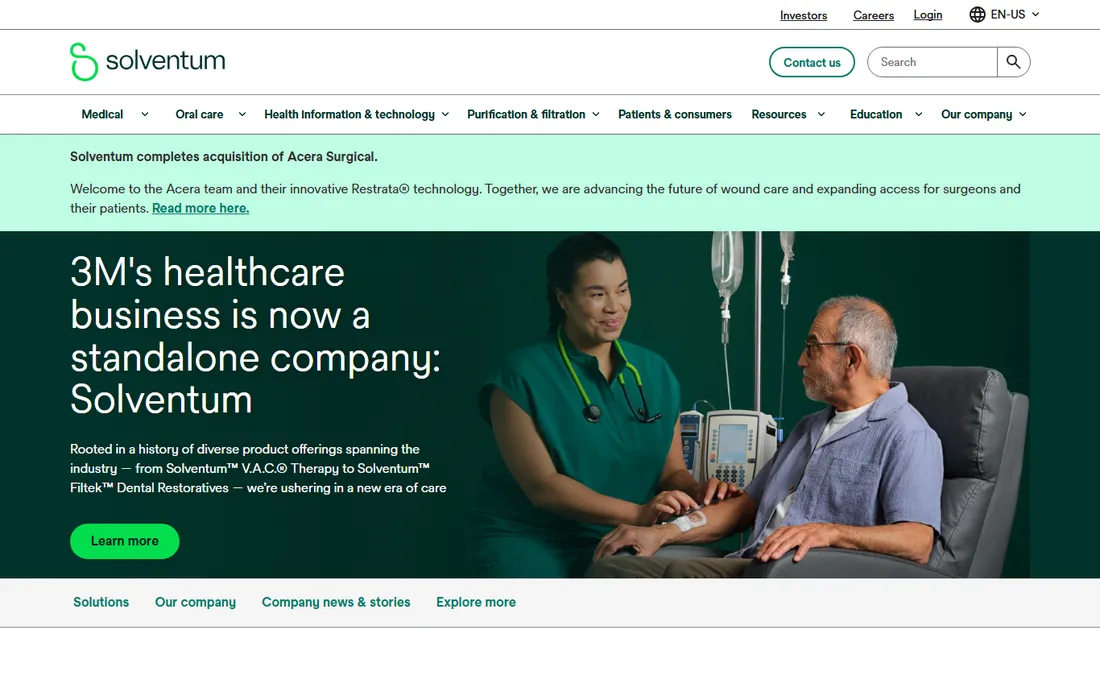
Fluency Direct, formerly 3M M*Modal before the health division became Solventum, plays at the enterprise end of clinical speech recognition. Its distinctive angle is the connection to clinical documentation improvement: the system does not just transcribe, it helps ensure the documentation supports accurate coding and quality reporting. For large health systems where documentation quality directly affects revenue and compliance, that matters.
The product is strong in specialties where precise phrasing is nonnegotiable, like radiology and pathology. Ambient and front-end workflows are both supported. The buying experience is enterprise through and through: quotes, contracts and implementation projects. Small practices will find it heavy and expensive relative to their needs. For health systems already in the Solventum ecosystem, Fluency Direct is the natural speech layer.
What we like- Enterprise-grade speech recognition
- Ties into clinical documentation improvement
- Strong for radiology and complex reporting
Watch out for- Enterprise sales process
- Pricing by quote
- Overkill for small practices
#4
Dolbey Fusion Narrate
Best for: Fast cloud dictation with strong mobile features
Visit dolbey.com
Starting priceSee website
Free planFree trial
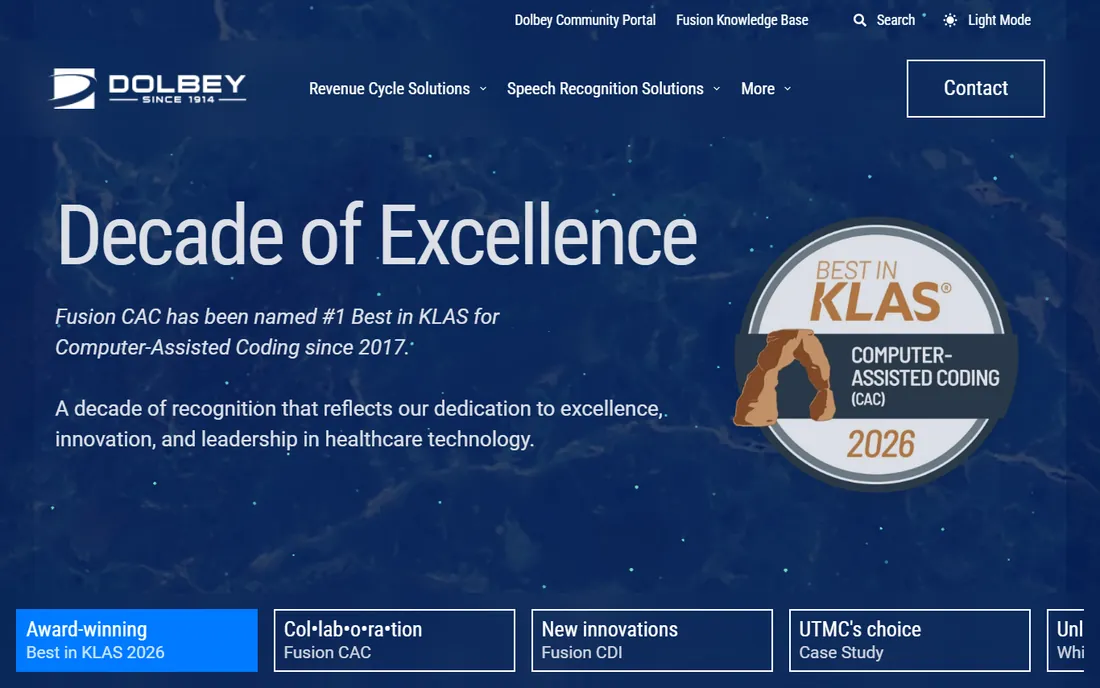
Dolbey has been in medical transcription technology for decades, and Fusion Narrate is its cloud answer to Dragon Medical One. The emphasis is on speed and flexibility: fast transcription, customizable vocabularies and workflows, and mobile features that let clinicians dictate wherever they are. Practices that found Dragon rigid or expensive often evaluate Dolbey next.
The customization deserves attention. Departments with unusual terminology or specific workflow needs can tune the system more than the bigger platforms typically allow. The trade-off is ecosystem. Dolbey's brand is smaller, the integration catalog is shorter, and peer communities are thinner, which means less crowdsourced troubleshooting. For practices that want a capable, flexible dictation platform from a specialist vendor, Fusion Narrate merits a trial.
What we like- Fast, customizable cloud dictation
- Strong mobile dictation features
- Positioned as a flexible Dragon alternative
Watch out for- Smaller brand recognition
- Integration list is shorter
- Support resources are thinner than Nuance
Starting priceSee website
Free planFree trial
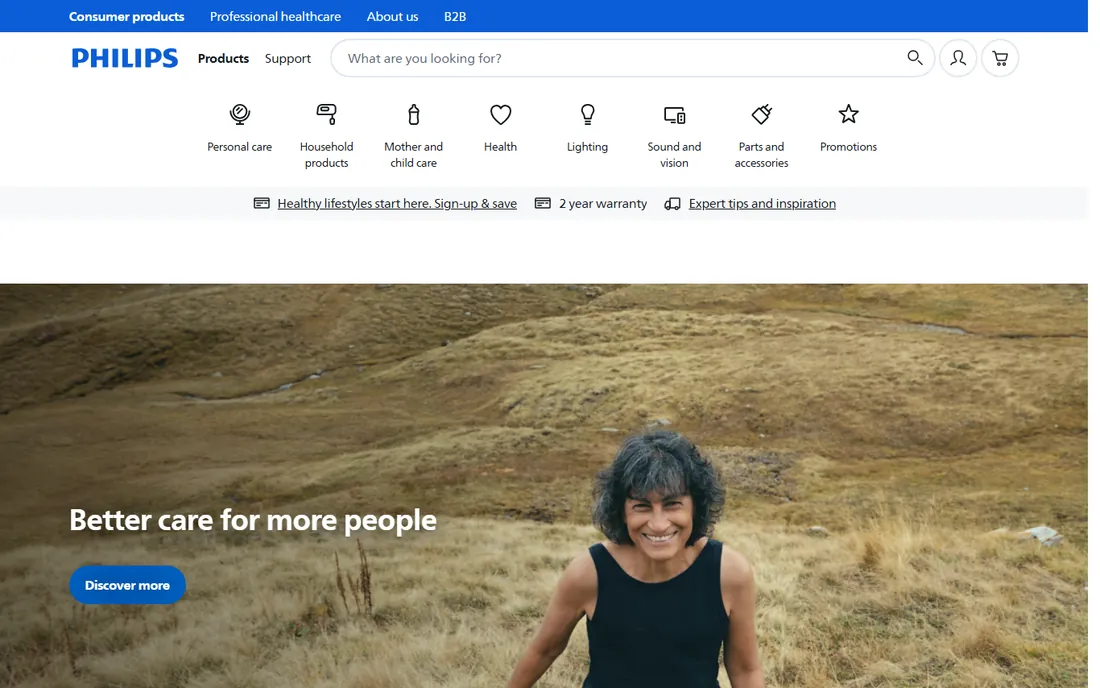
Philips approaches speech recognition from the hardware side. Its SpeechMike dictation microphones are fixtures in hospitals, and SpeechLive is the cloud software that completes the workflow: dictate, upload, transcribe, review. For practices that already use Philips hardware or want a single vendor for the whole chain, the integration is tidy.
The workflow orientation suits practices with transcription teams or heavy dictation volumes. The software can transcribe in the cloud and route work efficiently. Bought as software alone, without the hardware, it is less distinctive than the pure speech engines. And the hardware adds upfront cost that pure-cloud competitors avoid. Evaluate Philips when the dictation hardware decision matters as much as the software.
What we like- Pairs with Philips dictation hardware like SpeechMike
- Cloud workflow for transcription
- Trusted hardware brand
Watch out for- Hardware-centric approach costs more upfront
- Software alone is less distinctive
- Workflow suits transcription teams best
Starting priceSee website
Free planFree trial
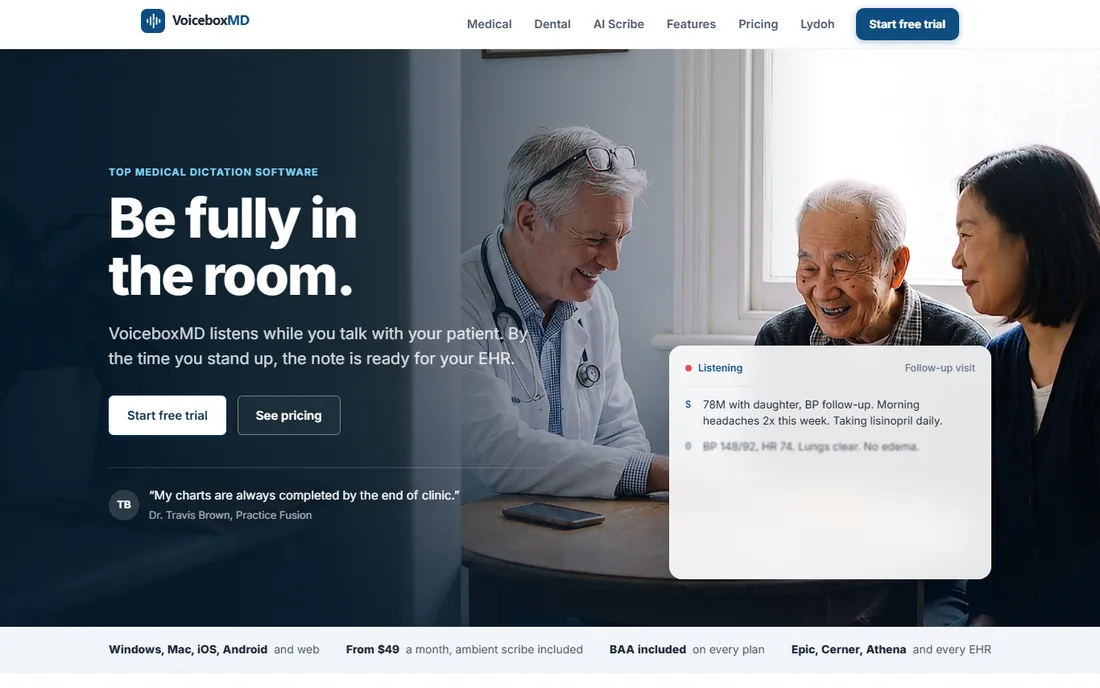
Not every practice needs an enterprise platform. VoiceBoxMD targets the small-practice end of the market with affordable medical dictation that covers the essentials: accurate medical vocabulary, EHR compatibility and simple deployment. For a solo practitioner or small group that just wants to stop typing notes, the value proposition is clear.
The simplicity is deliberate. There are fewer workflow features, fewer integrations and less administrative tooling than the enterprise products. The company is smaller, which means buyers should evaluate support responsiveness during the trial. But the core job, turning speech into accurate clinical text affordably, is handled well. Small practices comparing VoiceBoxMD against Dragon's per-user pricing often find the math persuasive.
What we like- Affordable pricing aimed at small practices
- Medical vocabulary included
- Simple to deploy
Watch out for- Fewer advanced features
- Smaller company
- Limited enterprise track record
#7
Mobius Scribe
Best for: Dictate into any EHR from a phone
Visit mobius.md
Starting priceSee website
Free planFree trial
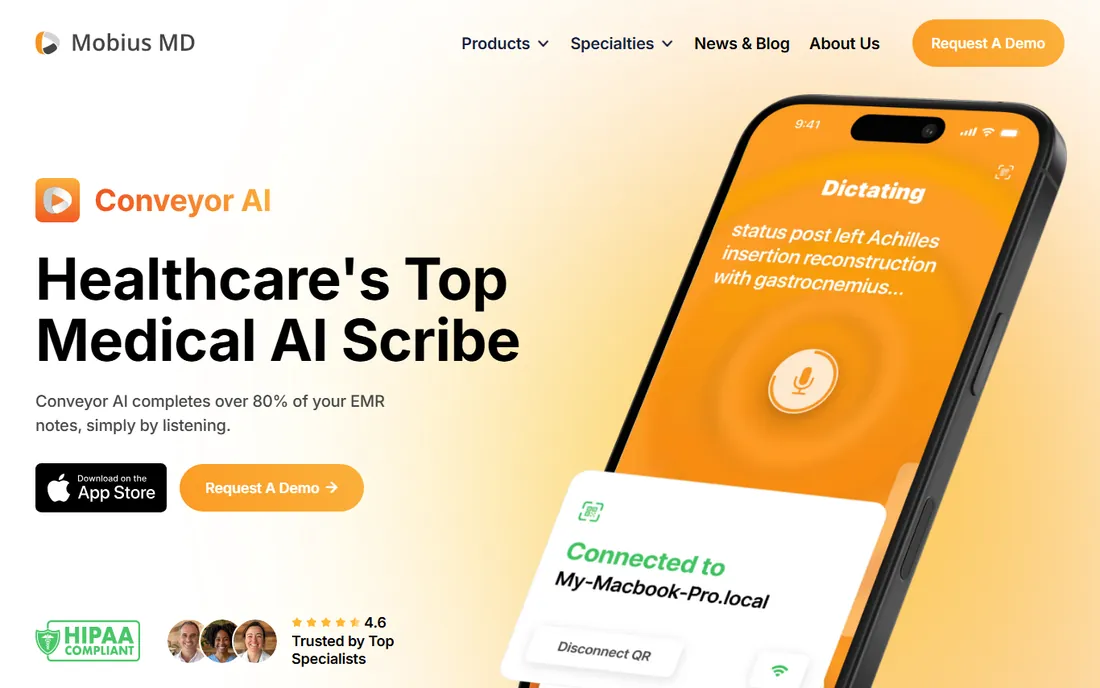
Mobius takes a refreshingly simple approach: the clinician's phone becomes the dictation device, and the spoken words appear wherever the cursor sits, in any EHR or application. No special hardware, no complex integration project. Month-to-month subscriptions keep the commitment low, and personal vocabularies and macros follow the clinician from clinic to clinic.
That flexibility suits locum physicians, residents and anyone working across multiple systems. The phone-as-microphone model means accuracy depends on the environment, and noisy wards will challenge any mobile dictation. It is a smaller vendor without the enterprise sales apparatus, which is either a benefit or a concern depending on the buyer. For clinicians who want personal dictation that works everywhere, Mobius is worth a trial.
What we like- Phone-based dictation into any EHR or application
- Month-to-month subscriptions
- Personal vocabulary and macros travel with the clinician
Watch out for- Depends on the phone as the microphone
- Accuracy varies by environment
- Smaller vendor
Starting priceSee website
Free planFree trial
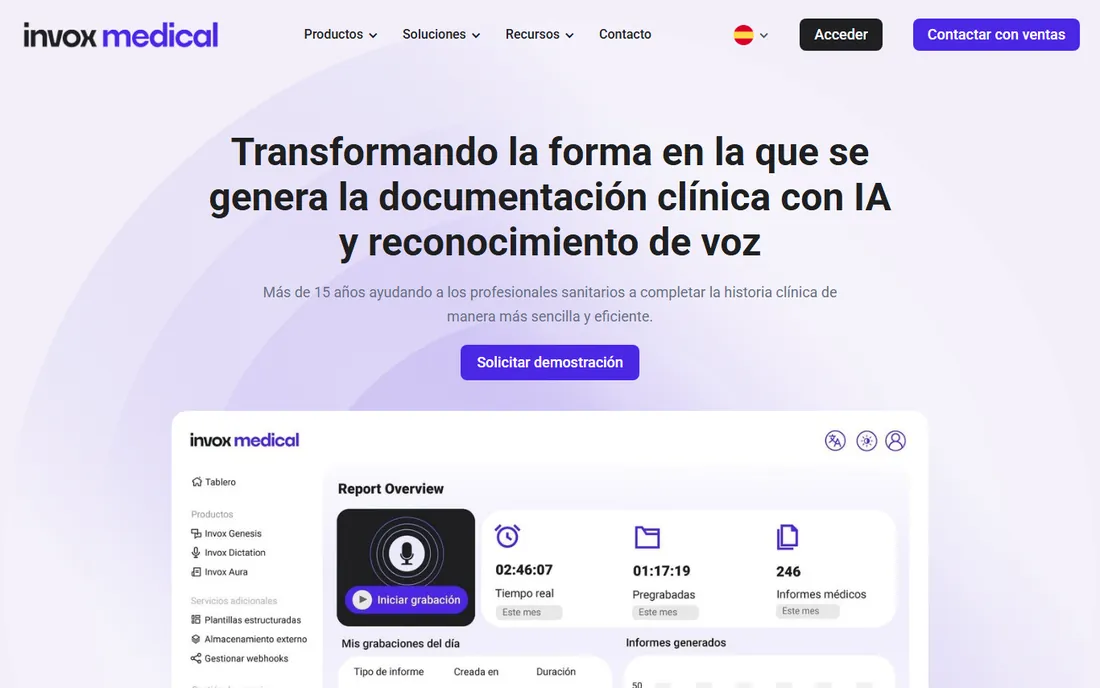
Most medical speech recognition is optimized for English, which leaves Spanish-speaking clinicians underserved. INVOX Medical, founded in Spain, built its reputation on Spanish-language clinical dictation with proper medical vocabulary. For practices and hospitals with Spanish-speaking physicians, that specialization matters more than any feature checklist.
Multilingual support extends beyond Spanish, and the clinician-founded background shows in workflow choices. The trade-off is market presence. In the English-speaking market, INVOX is a niche player with fewer integrations and a smaller support footprint than the giants. For the right buyer, though, niche is exactly the point. Language fit beats feature count when the alternative is dictation software that misunderstands every other sentence.
What we like- Strong Spanish-language medical recognition
- Multilingual support
- Founded by clinicians
Watch out for- Smaller English-market presence
- Fewer EHR integrations
- Niche positioning
#9
Tali AI
Best for: Voice assistant for dictation and EHR commands
Visit tali.ai
Starting priceSee website
Free planFree trial
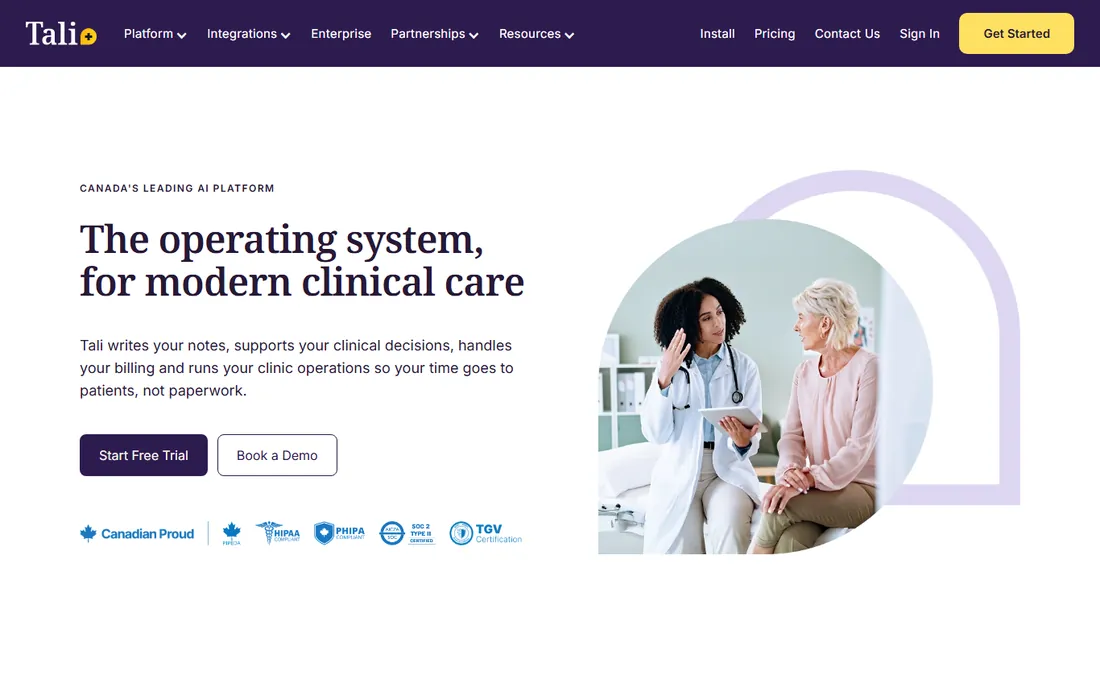
Tali AI blends dictation with a voice assistant that can perform EHR tasks by command. Instead of only transcribing speech, clinicians can navigate records, enter orders and complete documentation steps by voice. That assistant layer is the differentiator: it aims to reduce clicks as well as typing.
The company is newer than the established players, so buyers should test integration with their specific EHR during the trial. The assistant capabilities vary by system, and the full vision depends on how deeply the EHR allows voice control. Pricing is accessible, positioning Tali as an option for practices that want more than transcription without enterprise cost. For clinicians frustrated by click-heavy EHRs, the command aspect may matter more than raw dictation accuracy.
What we like- Combines dictation with voice commands for EHR tasks
- Designed for the clinical workflow
- Accessible pricing
Watch out for- Newer company
- Narrower integration footprint
- Assistant features vary by EHR
#10
Suki
Best for: AI assistant for notes, codes and admin tasks
Visit suki.ai
Starting priceSee website
Free planNo
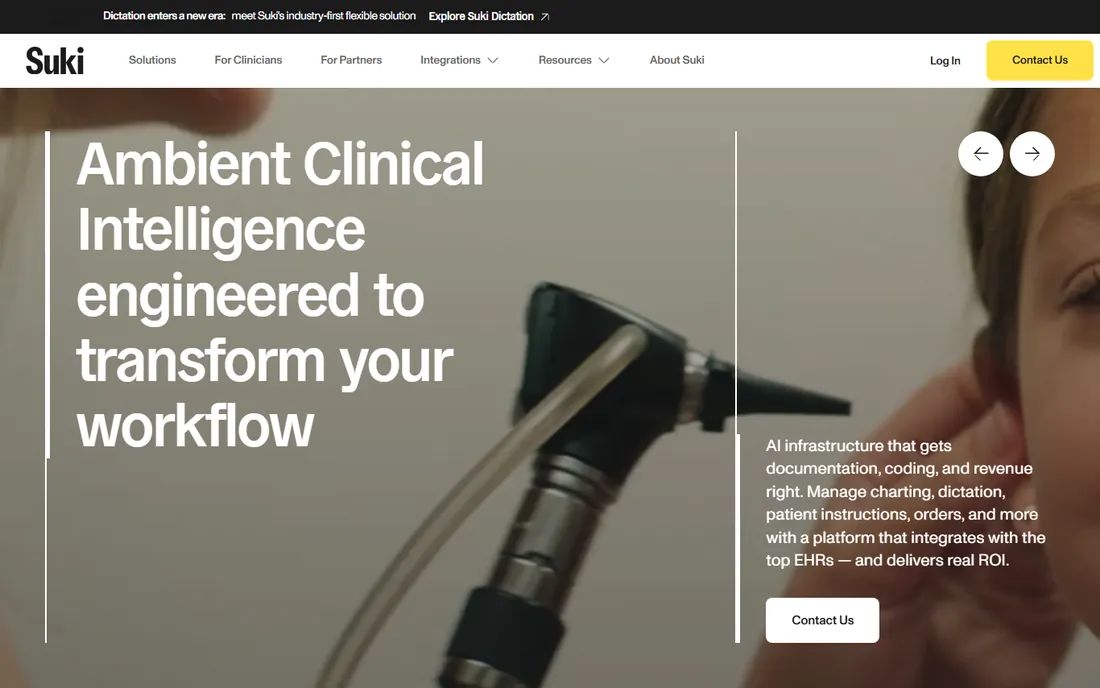
Suki positions itself as an AI clinical assistant rather than a dictation tool. It handles notes, helps with coding questions and takes on administrative tasks that eat clinician time. The ambition is bigger than transcription: reduce the total documentation burden, not just the typing part. Strong funding and partnerships have given it real momentum.
That breadth comes at a premium price, and realizing the full value requires clinicians to change workflows, not just dictate into the same boxes. Practices that only want transcription will find simpler, cheaper tools. But for organizations looking at the total cost of documentation, including coding queries and inbox management, Suki's assistant model addresses more of the problem than dictation alone.
What we like- Handles dictation, coding queries and admin tasks
- Broad specialty coverage
- Strong backing and momentum
Watch out for- Premium pricing
- Full value needs workflow change
- Smaller practices may not use the depth
How we chose
We mapped the current clinical speech recognition market, including the shift from pure dictation toward ambient AI scribes and voice assistants. Each product was verified as currently offered, with attention to corporate changes like 3M's health division becoming Solventum. Pricing in this category is largely quote-based, so we marked it honestly. We weighed recognition accuracy, medical vocabulary depth, EHR integration, mobile support, specialty fit and company stability, drawing on vendor documentation and independent comparisons. No vendor paid for placement and we claimed no hands-on testing. The list covers direct dictation, enterprise platforms and assistant-style tools because clinicians buy across all three.
What to check before you buy
Test with your specialty's vocabulary, not a generic demo script. Orthopedics, psychiatry and radiology stress speech engines differently, and a demo that nails cardiology terms may stumble on yours. Bring real, de-identified phrasing from your daily notes to the trial. Accuracy on your words is the only metric that matters.
Confirm the EHR integration in writing. "Works with Epic" can mean anything from deep integration to dictating into a text box. Ask whether dictation lands in the right note sections, whether voice commands work inside the EHR, and who supports the integration when it breaks. The answers separate real partnerships from marketing claims.
Evaluate the microphone situation honestly. Accuracy depends heavily on input quality. Some clinicians do fine with a phone app, others need a dedicated microphone in a noisy ward. Budget for hardware if your environment demands it, and trial in the actual rooms where dictation will happen.
Finally, check HIPAA posture directly. Ask about encryption, data retention, business associate agreements and where transcription processing occurs. Reputable vendors answer these questions crisply. Vague answers are a reason to walk away, regardless of accuracy claims.
Dictation vs ambient AI: which do you need
Direct dictation and ambient AI scribes solve different problems. Dictation suits clinicians who think in complete sentences and want precise control, which is why radiologists and surgeons still prefer it. The clinician speaks the note, reviews it and signs. Ambient scribes suit visit-heavy specialties like primary care, where the value is in capturing the conversation without the clinician narrating.
Many practices end up with both: dictation for procedures and complex reporting, ambient tools for routine visits. The products on this list lean toward dictation and voice assistance. If the main pain is visit documentation in primary care, also evaluate ambient scribes alongside these tools. Buying dictation software for a problem that ambient AI solves better is an expensive mismatch.
Frequently asked questions
What is the most accurate medical speech recognition software?
Dragon Medical One is widely regarded as the accuracy leader for direct medical dictation, with deep medical vocabularies across specialties. Augnito and Dolbey Fusion Narrate are credible challengers. Real-world accuracy depends on specialty vocabulary, microphone quality and background noise, so trial with your own phrasing.
How much does Dragon Medical One cost?
Nuance and Microsoft price Dragon Medical One by subscription per clinician, typically quoted rather than published. Costs vary by organization size and contract terms. Smaller practices often find alternatives like Augnito or VoiceBoxMD more affordable for equivalent core dictation.
Does medical dictation software work with Epic?
Yes, the major products integrate with Epic, though depth varies. Dragon Medical One has the deepest Epic integration. Others range from native-feeling integration to dictating into text fields. Confirm the exact integration behavior with your Epic version before buying.
Is cloud-based medical dictation HIPAA compliant?
Reputable vendors offer HIPAA-compliant cloud dictation with encryption, business associate agreements and controlled data retention. Always verify the vendor's specific compliance documentation rather than assuming. On-premise options still exist for organizations with strict data policies.
What is the difference between Dragon Medical One and Dragon Professional?
Dragon Medical One is the cloud-based clinical product with medical vocabularies and EHR integration, sold by subscription. Dragon Professional targets general business and legal users without the medical specialization. Clinicians should use the medical product for accurate terminology.
Sources we checked (10)
- https://dragon.nuance.com/en-us/home
- https://augnito.ai
- https://www.solventum.com/en-us/home/
- https://www.dolbey.com
- https://usa.philips.com
- https://voiceboxmd.com
- https://www.mobius.md
- https://www.invoxmedical.com
- https://tali.ai
- https://www.suki.ai
Is your product missing or out of date?
We review this list regularly. Vendors can request a listing, send updated pricing or ask about featured placement.

Shihab Mia · Founder, Rankite
Shihab has spent more than a decade helping SaaS and e-commerce brands grow through search. He writes Rankite's software buying guides from pricing pages, documentation and public user reviews. More about Shihab.