How we make this list: we compare pricing pages, product documentation and public user reviews. Rankite is independent; if a vendor ever pays for a featured spot, that listing is clearly labeled Partner.
Key takeaways
- Ansys HFSS remains the reference standard for high-frequency EM simulation, especially antennas and RF components.
- CST Studio Suite offers the broadest solver portfolio in one environment, with strong time-domain and multiphysics capability.
- COMSOL Multiphysics is the pick when electromagnetics couples to heat, structural mechanics or other physics.
- Altair Feko, now part of Siemens, excels at electrically large problems like vehicles, aircraft and installed antenna performance.
- Tidy3D and EMWorks represent the newer wave: cloud-native speed and accessible pricing against the enterprise incumbents.
Quick comparison
| Tool | Best for | Starting price | Free plan |
|---|
 Ansys HFSS Ansys HFSS | high-frequency antennas and RF components | See website | Free trial |
 CST Studio Suite CST Studio Suite | broad solver portfolio and EMI/EMC work | See website | Free trial |
 COMSOL Multiphysics COMSOL Multiphysics | coupled multiphysics simulation | See website | Free trial |
 Altair Feko Altair Feko | electrically large structures and installed performance | See website | Free trial |
 Ansys Maxwell Ansys Maxwell | low-frequency motors, transformers and actuators | See website | Free trial |
 EMWorks EMWorks | accessible CAD-integrated electromagnetic simulation | See website | Free trial |
 Tidy3D Tidy3D | fast cloud-based FDTD simulation | See website | Free trial |
 Keysight ADS Keysight ADS | RF and microwave circuit design | See website | Free trial |
 Sonnet Suites Sonnet Suites | planar structures, interconnects and LTCC | See website | Free trial |
 Remcom XFdtd Remcom XFdtd | full-wave 3D simulation with bio-electromagnetics | See website | Free trial |
Is your product missing or out of date?
We review this list regularly. Vendors can request a listing, send updated pricing or ask about featured placement.
The best electromagnetic simulation software
#1
Ansys HFSS
Best for: high-frequency antennas and RF components
Visit ansys.com
Starting priceSee website
Free planFree trial
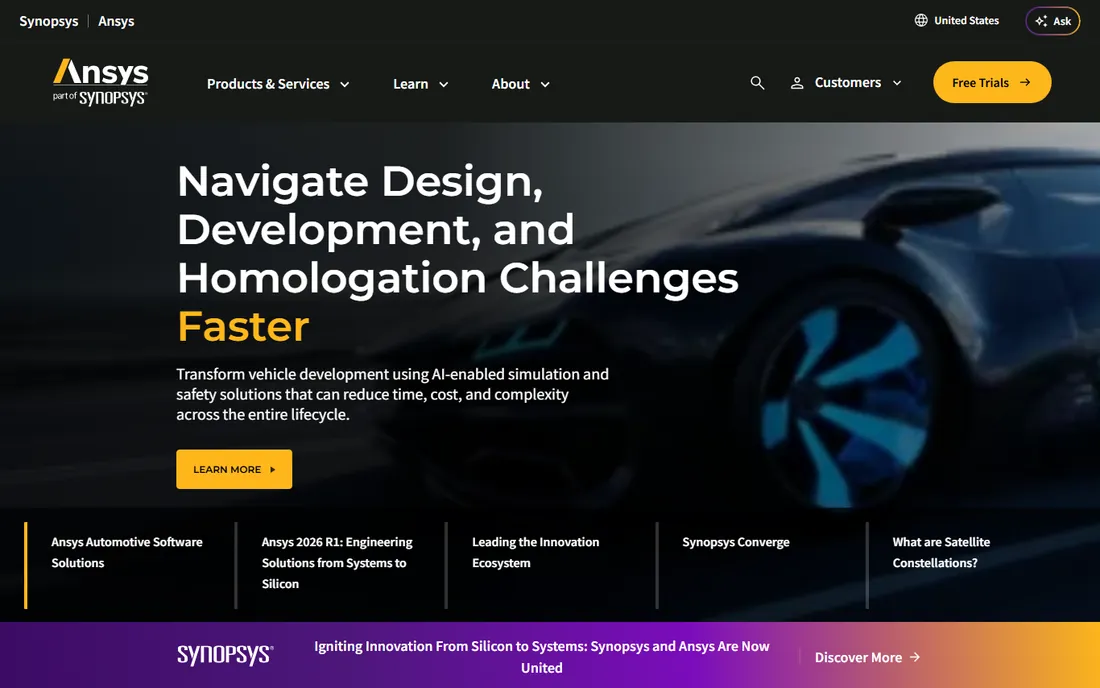
When engineers say "run it in HFSS," they mean the finite element solver that has defined high-frequency simulation for decades. HFSS handles antennas, RF and microwave components, connectors, and high-speed interconnects with accuracy that the industry treats as a reference. Adaptive meshing refines the solution automatically, and the integration with Ansys Electronics Desktop connects it to circuit simulation, thermal analysis and mechanical tools.
The costs are what you would expect from the market leader. Licensing is enterprise-grade and quote-based, effective use requires training, and large models want workstation or HPC hardware. For companies where antenna performance or signal integrity determines product success, that investment is routine. Smaller teams should evaluate the trial against their actual models before committing, because the learning curve is real.
What we like- Gold-standard finite element accuracy for high-frequency structures
- Deep integration with the Ansys Electronics Desktop workflow
- Extensive validation history in industry
Watch out for- Enterprise pricing with quote-based licensing
- Demands serious hardware and training investment
#2
CST Studio Suite
Best for: broad solver portfolio and EMI/EMC work
Visit 3ds.com
Starting priceSee website
Free planFree trial

CST's answer to the solver question is to offer all of them. Studio Suite packages finite integration, finite element, transmission line matrix and method of moments solvers in a single environment, so engineers pick the numerical method that fits the problem instead of fitting the problem to one method. Time-domain simulation is a particular strength, which makes it popular for EMI/EMC compliance work and transient analysis.
As part of Dassault Systemes, CST integrates with the 3DEXPERIENCE platform and CAD tools like SOLIDWORKS, which helps organizations that already live in that ecosystem. Pricing is enterprise and modular, so scoping the right license takes a real conversation with sales. For teams that face varied EM problems, antennas one month, EMC the next, signal integrity after that, the multi-solver approach avoids buying three separate tools.
What we like- Multiple solvers (FIT, FEM, TLM, MoM) in one environment
- Strong time-domain simulation for EMI/EMC
- Part of the Dassault 3DEXPERIENCE platform
Watch out for- Enterprise pricing
- The breadth of modules complicates licensing decisions
#3
COMSOL Multiphysics
Best for: coupled multiphysics simulation
Visit comsol.com
Starting priceSee website
Free planFree trial
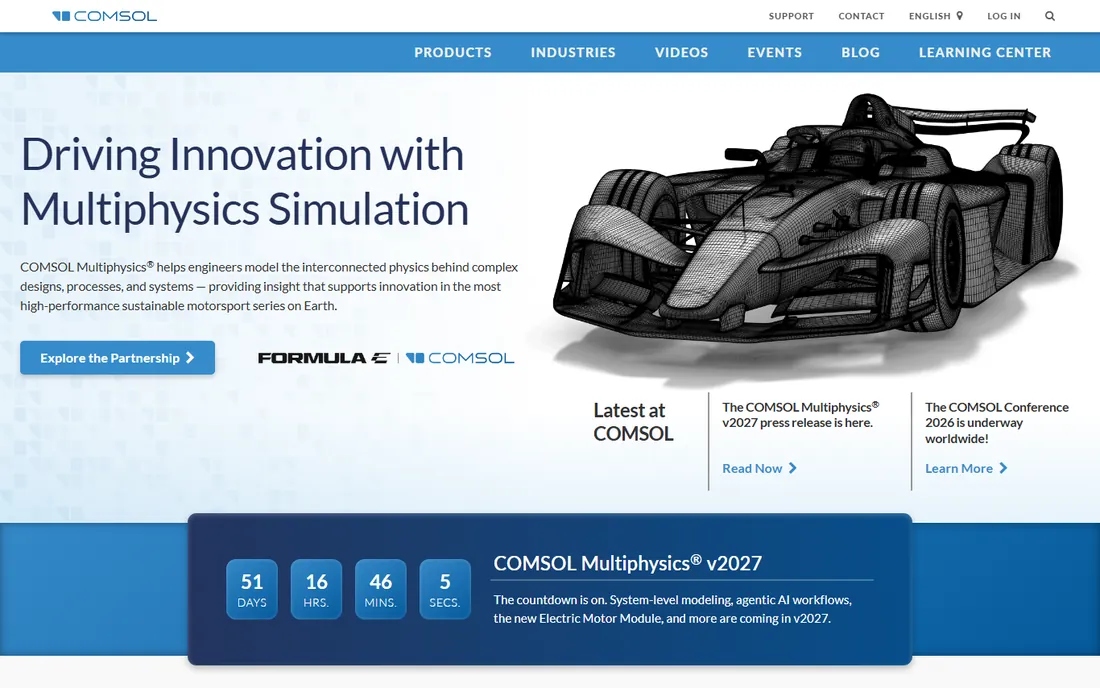
Most real devices are not purely electromagnetic. The motor heats up, the antenna housing vibrates, the sensor sits in a fluid flow. COMSOL's strength is modeling those couplings in a single environment: electromagnetic losses feed the thermal model, thermal expansion feeds the structural model, all with one consistent interface. The RF and AC/DC modules cover the EM side from static fields to wave propagation.
That generality is also the tradeoff. For pure high-frequency antenna work, specialists like HFSS or CST may be more efficient. But for R&D teams, universities and companies designing devices where physics interact, COMSOL is often the only tool that models the whole problem. Licensing is modular, with the base platform plus physics modules, so price depends on configuration. The trial and the extensive model library make evaluation straightforward.
What we like- Electromagnetics coupled to thermal, structural, acoustic and fluid physics in one model
- Consistent interface across all physics
- Strong in academia and R&D
Watch out for- Generalist tool, less specialized for pure high-frequency workflows
- Pricing scales with add-on modules
#4
Altair Feko
Best for: electrically large structures and installed performance
Visit altair.com
Starting priceSee website
Free planFree trial
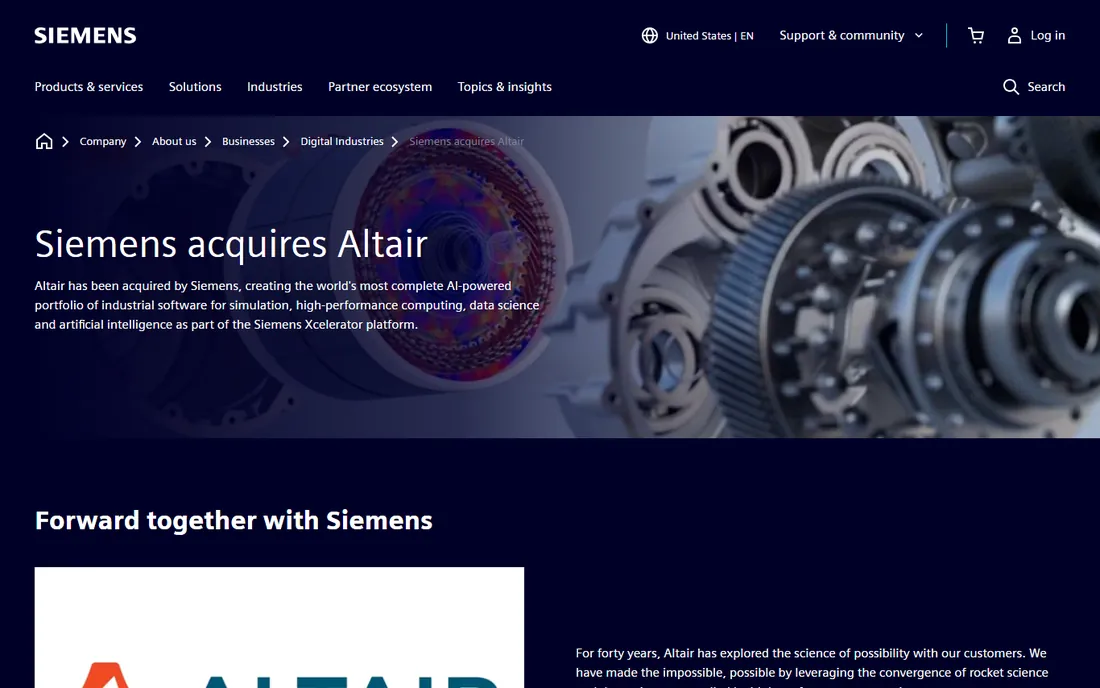
Feko's home turf is the electrically large problem: an antenna on a vehicle, a radar on an aircraft, EMC across a whole platform. Its hybrid solvers combine methods of moments, physical optics and other techniques to solve structures that pure finite element tools cannot touch at reasonable cost. Antenna placement, coupling analysis and cable harness EMC are classic Feko applications.
One thing to know: Siemens acquired Altair, and the portfolio is being integrated into the Siemens Xcelerator platform. The Feko technology continues, but buyers should confirm current product naming and licensing with the vendor. For automotive, aerospace and defense teams working at platform scale, Feko's large-problem capability remains distinctive.
What we like- Hybrid solvers handle vehicles, aircraft and large installations
- Strong antenna placement and EMC analysis
- Optimization tools built in
Watch out for- Siemens acquisition is reshaping the product portfolio
- Enterprise licensing complexity
#5
Ansys Maxwell
Best for: low-frequency motors, transformers and actuators
Visit ansys.com
Starting priceSee website
Free planFree trial
Maxwell is the low-frequency counterpart to HFSS in the Ansys portfolio, and it dominates its niche. Electric motors, transformers, actuators, sensors and magnetic devices are designed and optimized in Maxwell across the automotive, industrial and energy sectors. It computes torque profiles, core and copper losses, demagnetization and electromagnetic forces with the accuracy that motor designers stake products on.
Like all Ansys flagships, it is enterprise software with quote-based pricing and a real training requirement. It is not the tool for antennas or wave propagation; that is HFSS territory. But if your product has windings and a magnetic circuit, Maxwell is the benchmark everything else is measured against, and the integration with Ansys motion, thermal and systems tools covers the full device.
What we like- Industry standard for low-frequency electromagnetic device design
- Accurate torque, loss and force computation
- Integrates with Ansys motion and thermal tools
Watch out for- Focused on low frequency, not a high-frequency tool
- Enterprise pricing
#6
EMWorks
Best for: accessible CAD-integrated electromagnetic simulation
Visit emworks.com
Starting priceSee website
Free planFree trial
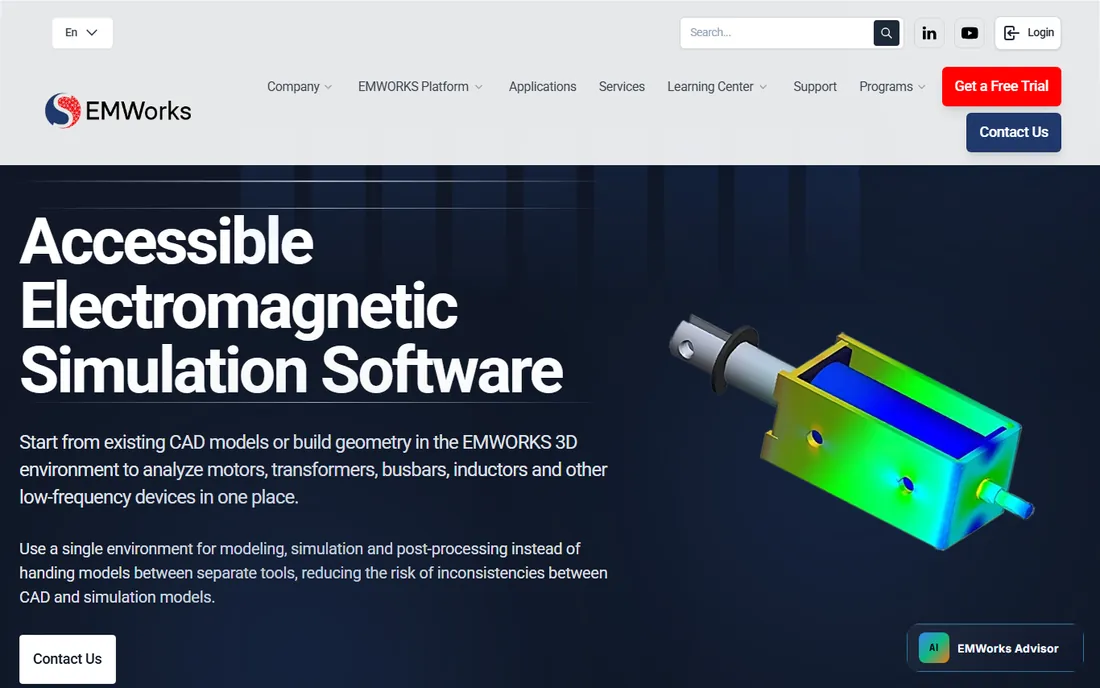
EMWorks takes a different route to the engineer: instead of a standalone simulation monolith, it embeds in the CAD tools engineers already use. The EMS product simulates motors, transformers, actuators and sensors inside SOLIDWORKS and Autodesk Inventor, while the RF modules handle antennas, filters and high-speed interconnects. Modeling, simulation and post-processing happen in one environment, which cuts the CAD-to-simulation translation errors that plague other workflows.
The company positions itself as the accessible alternative to the enterprise suites, with pricing and usability aimed at small and mid-size engineering teams rather than only large corporations. The tradeoff is scale: for the largest high-frequency problems and the most exotic applications, the big suites have deeper validation. For product teams designing electromechanical devices in SOLIDWORKS, the integrated workflow is a genuine advantage.
What we like- Runs inside SOLIDWORKS and Autodesk Inventor
- Covers low-frequency devices through RF and microwave
- More accessible pricing than enterprise suites
Watch out for- Smaller company with a narrower validation history
- Less suited to extremely large high-frequency models
Starting priceSee website
Free planFree trial
Tidy3D represents the architectural bet that EM simulation belongs in the cloud. Built by Flexcompute on GPU-native finite-difference time-domain solvers, it runs simulations far faster than traditional desktop tools, with the browser interface and Python API making large parametric sweeps and optimization practical. Photonics, metasurfaces and antenna designers who iterate heavily feel the speed difference immediately.
The model is usage-based cloud pricing with a free tier, which flips the economics: no six-figure license, no workstation farm, just compute cost per simulation. The constraints are real too. Cloud-only means no air-gapped or export-controlled work, and the feature set is narrower than decades-old incumbents. For teams that can work in the cloud and value iteration speed, it is the most interesting new option in EM simulation.
What we like- GPU-accelerated FDTD runs dramatically faster than desktop solvers
- Browser-based with Python API for automation
- Free tier for evaluation and learning
Watch out for- Cloud-only, so ITAR or air-gapped work is excluded
- Newer product with a smaller feature footprint than incumbents
Starting priceSee website
Free planFree trial
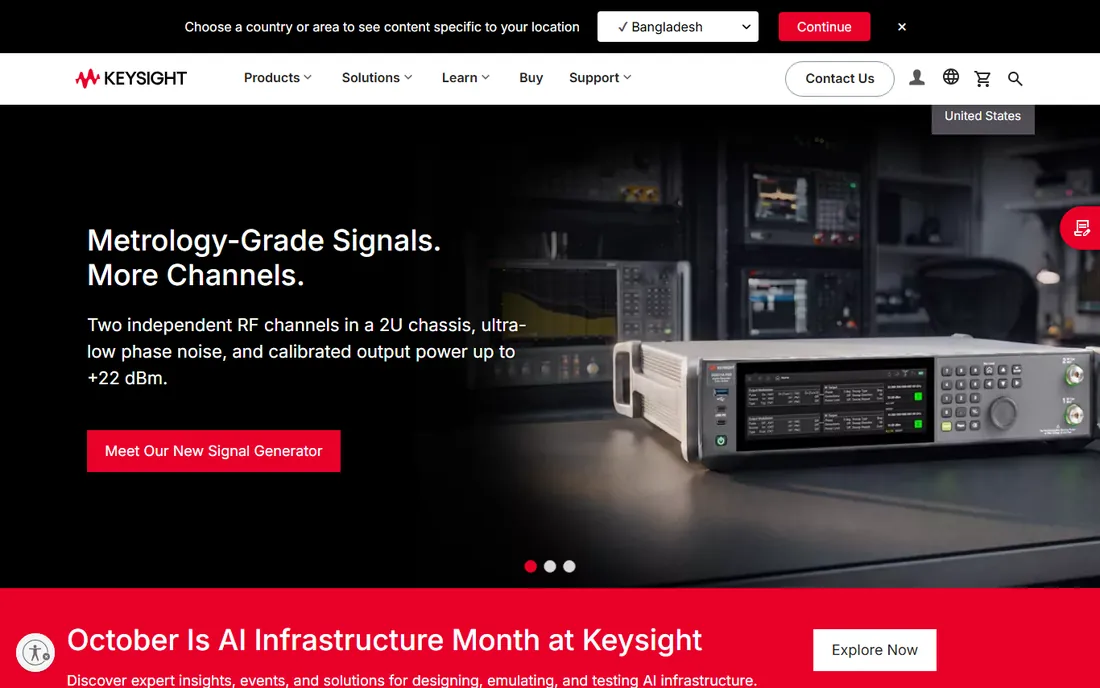
Keysight ADS (Advanced Design System) is where RF circuits get designed. Amplifiers, mixers, oscillators, filters and full RF system chains are simulated with harmonic balance, circuit envelope and transient solvers that handle the nonlinear behavior real RF circuits exhibit. The EM side comes through integrated planar and 3D solvers, plus links to dedicated full-wave tools.
The Keysight connection is a real asset: simulation correlates with measurement on Keysight instruments, which shortens the lab loop. Pricing is enterprise and modular, and the learning curve reflects the depth. For RF and microwave design teams, ADS is infrastructure, not a nice-to-have. Pure antenna or large-platform problems belong with the full-wave tools above; the circuit itself belongs here.
What we like- The standard for RF/microwave circuit and system design
- Strong harmonic balance and circuit-envelope simulation
- Ties to Keysight measurement hardware
Watch out for- Full 3D EM requires add-on solvers
- Pricing is enterprise and modular
Starting priceSee website
Free planFree trial
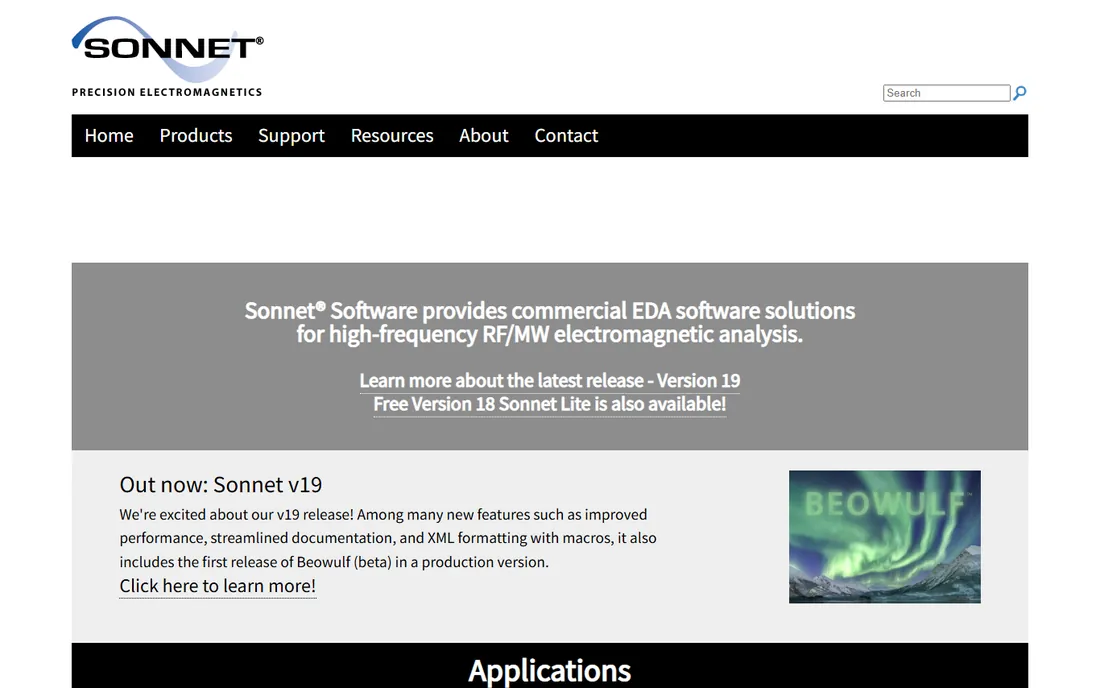
Sonnet does one thing with unusual precision: planar electromagnetic structures. Microstrip, stripline and coplanar interconnects, filters, couplers, LTCC modules and package interconnects are modeled with a method-of-moments solver that the RF industry has trusted for decades. For signal integrity on PCBs and planar filter design, its accuracy per compute dollar is hard to beat.
The specialization is the limitation. Truly 3D structures, antennas in free space and large installations belong elsewhere. But within its domain, Sonnet is the reference: foundries have used it to build PDK models, and its published accuracy is a selling point in industries where first-pass success matters. For high-speed digital and RF teams working in planar technologies, it earns its place.
What we like- Exceptionally accurate planar method-of-moments solver
- Trusted for PCB interconnects, filters and LTCC
- Efficient for shielded and multilayer structures
Watch out for- Focused on planar geometries, not general 3D
- Smaller vendor with a specialized user base
#10
Remcom XFdtd
Best for: full-wave 3D simulation with bio-electromagnetics
Visit remcom.com
Starting priceSee website
Free planFree trial
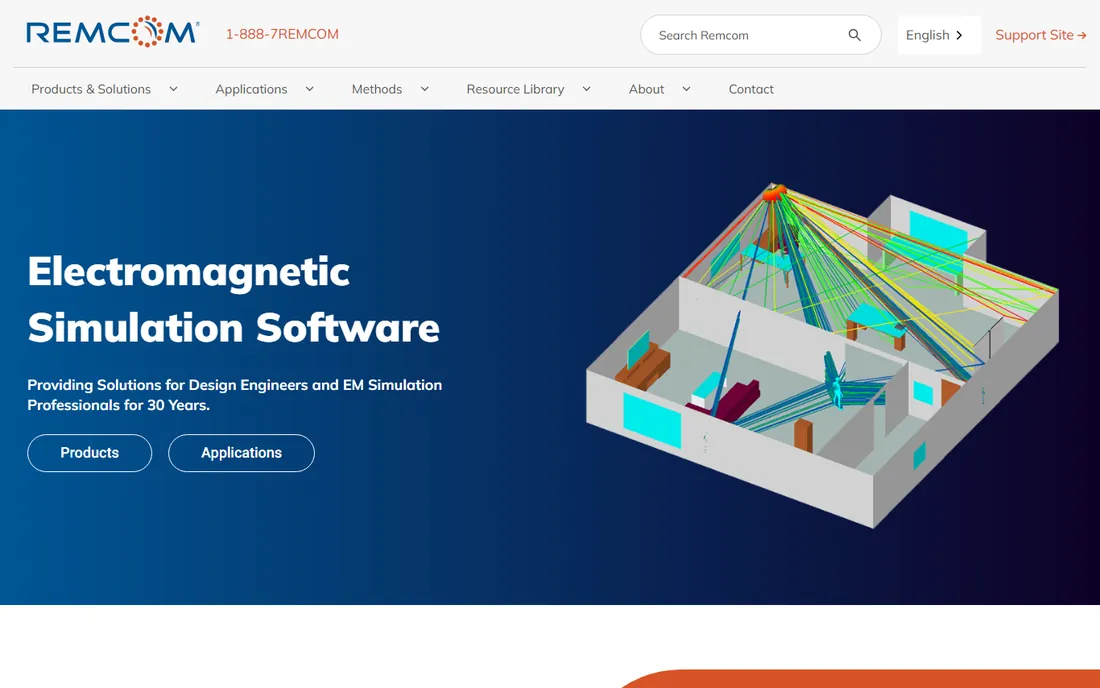
Remcom's XFdtd is a full-wave 3D FDTD solver covering antennas, microwave components, radar and EMC applications, with a distinctive strength in bio-electromagnetics: specific absorption rate (SAR) analysis for phones and wearables, and medical device modeling. That niche matters because wireless compliance increasingly runs through bio-EM simulation.
GPU acceleration speeds the FDTD computations, and the tool covers the standard antenna and microwave workflow competently. The company is smaller than the enterprise giants, which shows in third-party resources and community size. For teams with bio-EM or compliance-driven antenna work, the specialized capability justifies a look alongside the bigger names.
What we like- Full-wave FDTD for antennas, microwave devices and EMC
- Strong bio-EM capability for SAR and medical device compliance
- GPU acceleration available
Watch out for- Smaller market presence than Ansys or CST
- Pricing information not published
Matching the solver to the problem
Buying EM software starts with naming the physics, because no tool covers everything well. High-frequency problems, antennas, RF components, wave propagation, belong to HFSS, CST, Tidy3D, Sonnet or XFdtd. Low-frequency problems, motors, transformers, actuators, belong to Maxwell or EMWorks. Platform-scale problems, vehicles and aircraft, belong to Feko. Coupled problems, where heat or mechanics interact with fields, belong to COMSOL. Circuit-level RF design belongs to ADS.
The second question is scale. Electrically small structures suit finite element and FDTD methods. Electrically large structures need method of moments, physical optics or hybrid approaches, which is why the solver list matters more than the brand. Ask vendors to run a benchmark on a model like yours before buying; reputable ones will, and the results tell you more than any datasheet.
The hidden costs: hardware, training and licenses
The license quote is only part of the price. Full-wave 3D simulation is computationally hungry: large models want workstation-class CPUs, plenty of RAM and often GPU acceleration or HPC access. Budget the hardware alongside the software, or choose a cloud option like Tidy3D that rents the compute per simulation.
Training is the second hidden cost. These are expert tools, and productive use takes weeks to months of learning. Vendors offer training courses, which are worth the money for teams adopting their first serious EM tool. Finally, understand the license model: named-user, floating network, token-based and usage-based cloud pricing all behave differently as teams grow. Model the three-year cost, not the first-year quote, and confirm what happens to your models and scripts if you switch vendors later.
How we chose
We verified each product against its vendor's own site: the product is current, actively developed, and genuinely an electromagnetic simulation tool. Pricing in this category is quote-based, so we do not publish numbers we cannot verify. We weighed technical documentation, industry adoption, review and community discussion, and fit for different engineering problems, from antennas to motors to multiphysics. We did not run hands-on simulations. Solver-method fit and vendor stability matter most here, which is why we weighted them heavily, and we noted the Siemens acquisition of Altair since it affects the Feko buying decision.
Frequently asked questions
What is the difference between HFSS, CST and Feko?
They are optimized for different problem classes. HFSS uses finite elements and excels at high-frequency component accuracy. CST offers multiple solvers including time-domain methods, suiting EMI/EMC and transient work. Feko uses hybrid methods for electrically large structures like vehicles and aircraft. Many large organizations own more than one.
Do I need a supercomputer to run EM simulation?
Not necessarily. Small models run on engineering workstations, and cloud options like Tidy3D rent high-performance compute per simulation. Large full-wave models of complex structures do benefit from HPC or GPU acceleration. Start with a benchmark of your typical model to size the hardware need.
Can open-source tools replace commercial EM solvers?
For some problems, partially. Tools like openEMS and MEEP handle FDTD simulation competently for research and learning. Commercial tools add validated accuracy, technical support, CAD integration, optimization workflows and the documentation trail that regulated industries require. Most commercial product development still runs on commercial solvers.
How long does it take to learn EM simulation software?
Expect weeks to become productive and months to become proficient, depending on your electromagnetics background. The physics knowledge matters as much as the tool skill: a solver amplifies understanding, it does not replace it. Vendor training courses meaningfully shorten the ramp.
What should I ask for in a vendor benchmark?
Provide a model representative of your real work, with the frequency range, materials and accuracy targets you need. Ask for solve time, memory use, mesh statistics and comparison against measurement if you have it. Run the same benchmark with two vendors when the purchase is significant.
Sources we checked (11)
- https://ansys.com/
- https://www.3ds.com/
- https://comsol.com/
- https://www.altair.com/
- https://www.emworks.com/
- https://www.flexcompute.com/
- https://www.keysight.com/
- https://www.sonnetsoftware.com/
- https://www.remcom.com/
- https://vocal.media/education/optimizing-designs-with-electromagnetic-simulation-a-guide-for-engineers
- https://www.gsc-3d.com/blog/what-electromagnetic-simulation-software-is-the-best/
Is your product missing or out of date?
We review this list regularly. Vendors can request a listing, send updated pricing or ask about featured placement.

Shihab Mia · Founder, Rankite
Shihab has spent more than a decade helping SaaS and e-commerce brands grow through search. He writes Rankite's software buying guides from pricing pages, documentation and public user reviews. More about Shihab.