How we make this list: we compare pricing pages, product documentation and public user reviews. Rankite is independent; if a vendor ever pays for a featured spot, that listing is clearly labeled Partner.
Key takeaways
- District-wide K-12 systems (PowerSchool, Infinite Campus, Skyward) run the whole student record operation but price by quote and take months to implement.
- Private and independent K-12 schools get a tighter fit from Veracross, FACTS, and Alma, which bundle admissions, billing, and academics without district-scale overhead.
- Colleges and universities should start with Ellucian, the only vendor here built specifically for higher-ed enrollment, aid, and advancement workflows.
- Small schools on a budget: Gradelink keeps pricing simple and per-student, while Alma delivers a modern interface at a lower entry point than the big district suites.
Quick comparison
| Tool | Best for | Starting price | Free plan |
|---|
 PowerSchool PowerSchool | Large K-12 districts standardizing on one platform | See website (quote-based) | No |
 Infinite Campus Infinite Campus | Districts that want SIS and add-ons from a single codebase | See website (quote-based) | No |
 Skyward Skyward | Districts that need SIS and ERP (finance/HR) together | See website (quote-based) | No |
 Ellucian Ellucian | Colleges and universities modernizing student systems | See website (quote-based) | No |
 Veracross Veracross | Private and independent K-12 schools | See website (quote-based) | No |
 FACTS FACTS | Faith-based and independent K-12 schools | See website (quote-based) | No |
 Gradelink Gradelink | Small schools that need SIS basics at a predictable price | See website (quote-based, per-student tiers) | No |
 Alma Alma | Schools wanting a modern, cloud-native SIS | See website (quote-based) | No |
Is your product missing or out of date?
We review this list regularly. Vendors can request a listing, send updated pricing or ask about featured placement.
The best education management software
A school runs on its student information system the way a business runs on its accounting software. Pick wrong and every registrar, teacher, and front-office staffer pays for it daily: double-entered attendance, report cards that take a week, state reports that never quite reconcile. The eight platforms below cover the real options for K-12 districts, independent schools, and higher education, with the pricing reality spelled out for each.
Starting priceSee website (quote-based)
Free planNo
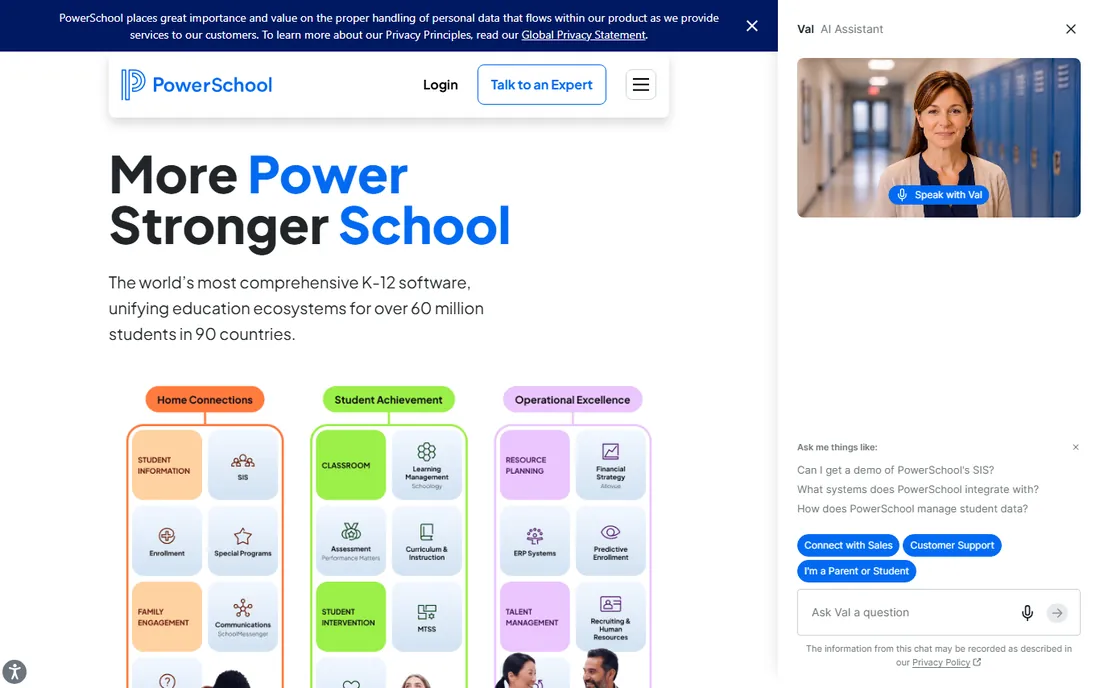
PowerSchool is the default answer for big districts, and the scale explains why: the company describes its platform as serving more than 60 million students across 90 countries, with products spanning the student information system, Schoology Learning, enrollment, talent management, and analytics. When a district wants attendance, grades, HR, and state reporting from one vendor, PowerSchool can do it.
The catch is everything around the software. Pricing is quote-based and contracts look like enterprise deals, so a 2,000-student district pays a very different number than a 40,000-student one, and you will not know yours until late in the sales process. Implementation is a project, not a setup wizard: data migration from a legacy SIS, state-reporting validation, and staff training stretch across months. Schools that already run PowerSchool tend to stay because switching costs are high, which is both a compliment to the product and a warning.
What we like- Broadest K-12 product suite, covering SIS, LMS, enrollment, HR, and analytics
- Serves over 60 million students in 90 countries
- Deep state-reporting coverage
Watch out for- Quote-only pricing with enterprise-style contracts
- Implementations routinely take months and need dedicated project staff
Starting priceSee website (quote-based)
Free planNo
Infinite Campus takes the opposite approach from the suite-of-acquisitions model: one student information system with more than 1,500 core tools built in, plus add-on products that integrate natively rather than through third-party connectors. For a district technology team, that means fewer integration points to babysit and one vendor to call when the gradebook disagrees with the transcript.
Where it shows its age is the user experience. Longtime users praise reliability but describe the interface as functional rather than modern, and teachers moving from a consumer-grade LMS sometimes grumble. Pricing is quote-based, and while the single-codebase pitch reduces integration spend, districts should budget for implementation services and the internal staff time to configure 1,500 tools down to the ones they actually use.
What we like- Single integrated SIS with 1,500-plus built-in tools and native add-ons
- Real-time parent and student portal included
- Strong district-to-state reporting
Watch out for- Interface feels dated in places
- Customization beyond the standard workflows usually needs their professional services
#3
Skyward
Best for: Districts that need SIS and ERP (finance/HR) together
Visit skyward.com
Starting priceSee website (quote-based)
Free planNo
Skyward has served K-12 since 1980 and now counts more than 2,500 school districts, with a distinctive pitch: one vendor for both the student information system and the business office. Districts that run payroll, HR, and finance on Skyward alongside attendance and grading get a single database for employees who are also parents, and one login for administrators.
The product lineup needs explanation, which Skyward's own site does not always make easy. Districts choose between SMS 2.0 and Qmlativ, and picking the wrong one for your size means a migration later. Like its big-district rivals, Skyward prices by quote, so expect a discovery process before numbers appear. Schools that value the SIS-plus-ERP combination and plan to stay for a decade tend to be happy; schools that just need a gradebook should look at the smaller vendors below.
What we like- Combined SIS and ERP covers student data plus finance, HR, and payroll
- Serving schools since 1980 with 2,500-plus districts
- Two product lines for different district sizes
Watch out for- Two overlapping products (SMS 2.0 and Qmlativ) can confuse buyers
- Quote-only pricing makes early budgeting hard
#4
Ellucian
Best for: Colleges and universities modernizing student systems
Visit ellucian.com
Starting priceSee website (quote-based)
Free planNo
Ellucian is the higher-ed specialist on this list. Its platform covers the full student lifecycle that universities actually run: recruiting and admissions, enrollment, financial aid, student accounts, advising, and alumni advancement. The company reports nearly 3,000 institutions and more than 21 million students on its systems, and its SaaS products now bundle AI features into the subscription price rather than metering them.
None of that comes cheap or fast. Ellucian sells to institutions, not schools, and the sales cycle, implementation timeline, and contract values reflect it: think months of implementation and a dedicated internal team. Small colleges sometimes find the platform more than they need, and K-12 districts should not be here at all. For a mid-size university replacing a legacy Banner or Colleague install, though, Ellucian is the incumbent for a reason.
What we like- Purpose-built for higher education, from admissions to advancement
- Serves nearly 3,000 institutions and 21 million students
- SaaS delivery with AI features included in subscription
Watch out for- Enterprise sales cycle and implementation measured in months
- Overkill and overpriced for K-12 or small colleges
Starting priceSee website (quote-based)
Free planNo

Veracross built its SIS around the way independent schools actually operate: one person, one record, from first admissions inquiry through alumni donation. That single-record model means the admissions office, the business office, and the development office stop maintaining three versions of the same family. With more than 3,300 schools on the platform, it is the standard choice in the private-school world.
The trade-off is focus. Veracross optimizes for independent and private K-12, including boarding schools, and its admissions and enrollment-contract workflows reflect that. Public districts with heavy state-reporting obligations will find gaps. Pricing is quote-based and calibrated to schools that charge tuition, so small independents should get the number early and compare it against FACTS and Alma before committing.
What we like- Single-record data model spans admissions, academics, billing, and development
- Built for independent-school workflows like enrollment contracts
- 3,300-plus schools on the platform
Watch out for- Quote-based pricing aimed at tuition-charging schools
- Public districts will find the feature set mismatched to state reporting needs
Starting priceSee website (quote-based)
Free planNo
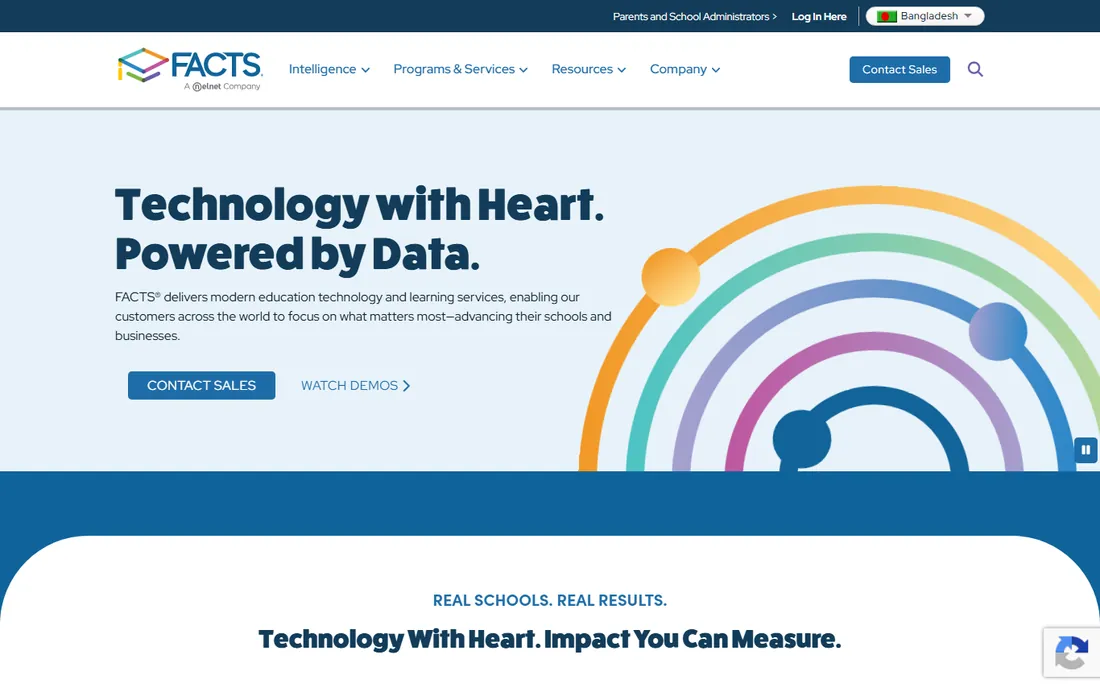
FACTS started in tuition management and grew into a full K-12 platform covering the SIS, admissions and enrollment, financial aid assessment, and payment processing. That history is its strength for faith-based schools: more than 12,000 schools and 2 million families use FACTS products, and diocesan systems in particular value the combination of grant-and-aid assessment with enrollment.
Buyers should price the whole stack, not just the SIS. FACTS sells modules that each carry per-student or per-family fees, and a school using tuition billing plus aid assessment plus the SIS can see the total climb. The interface reflects the company's long history; it is capable rather than pretty. For Catholic, Christian, and other faith-based schools that want one vendor from application to tuition collection, FACTS remains the practical pick.
What we like- End-to-end K-12 stack: SIS, admissions, tuition management, and financial aid in one
- 40-plus years serving schools with 12,000-plus school customers
- Strong in Catholic and Christian school markets
Watch out for- Tuition-management roots show in an interface some admins call dated
- Per-student pricing across multiple modules adds up
#7
Gradelink
Best for: Small schools that need SIS basics at a predictable price
Visit gradelink.com
Starting priceSee website (quote-based, per-student tiers)
Free planNo
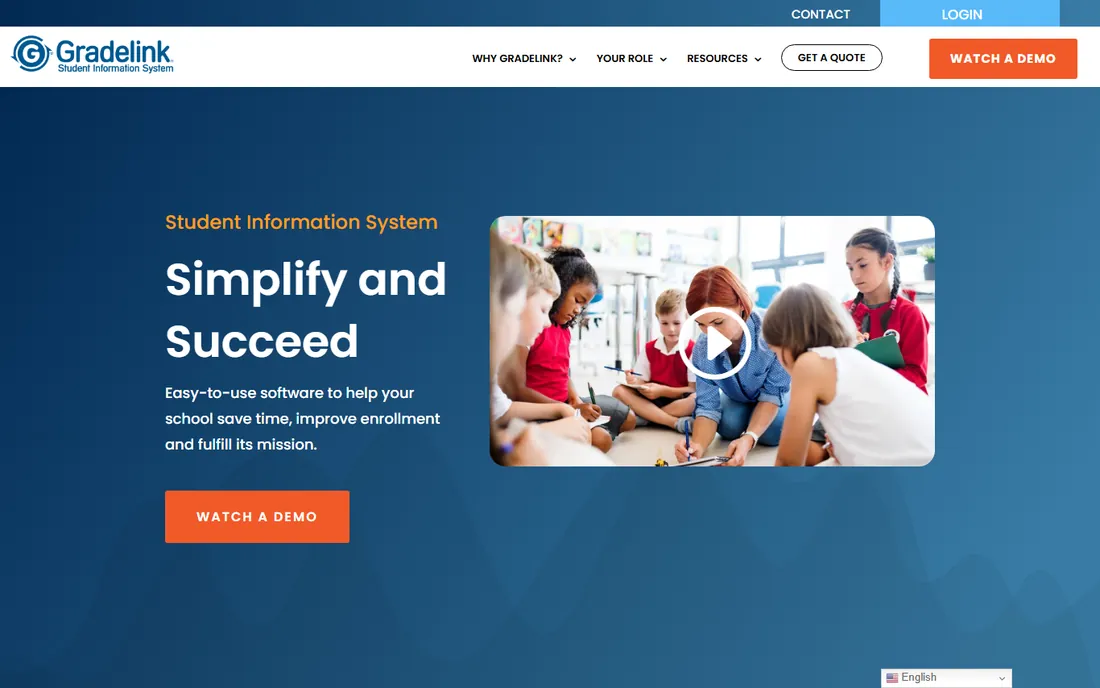
Gradelink is the plain-spoken option for small schools. Where the district platforms sell transformation, Gradelink sells a student information system you can set up quickly: attendance, gradebook, report cards, transcripts, parent communication, and billing, priced in per-student enrollment bands. Support by phone and email is included rather than sold as a package, which small schools notice.
The simplicity is the limit. Schools that outgrow Gradelink usually do so on reporting depth, custom workflows, or integrations with district-level systems. State reporting coverage is narrower than the big-district platforms. But for an independent school under a few hundred students that needs to stop running grades in spreadsheets, Gradelink's price-to-hassle ratio is hard to beat, and the quote process takes minutes rather than months.
What we like- Simple per-student pricing tiers published by enrollment band
- Quick setup with minimal training
- Phone and email support included
Watch out for- Fewer advanced features than district-scale platforms
- Reporting and customization depth lag the enterprise suites
Starting priceSee website (quote-based)
Free planNo
Alma is the modernizer: a cloud-based SIS designed to feel like current software instead of a database with a web form on top. Teachers get gradebook, attendance, and communication tools in an interface that does not require training to navigate, and districts get state reporting, custom report builders, and data dashboards. The company reports supporting organizations serving more than 6 million students, across independent schools and districts.
Being newer cuts both ways. Alma does not have PowerSchool's forty-year installed base or its encyclopedic state-reporting library, though it covers the states it serves well. Very large districts with exotic requirements may hit the edges of its customization. For schools that want current UX without enterprise bloat, and for districts willing to bet on a modern codebase, Alma is the most pleasant SIS to actually use day to day.
What we like- Modern interface teachers actually like using
- State reporting and district-level tools included
- Serves education organizations covering 6 million-plus students
Watch out for- Younger company than the incumbents, so the longest track records belong to rivals
- Advanced customization trails the biggest suites
How we chose
We started from the products schools actually buy: district RFP shortlists, state approved-vendor lists, and the platforms that dominate G2, Capterra, and school-technology forums. Every product above is live, sold, and supported in 2026, and each serves a distinct buyer: large districts, independent schools, faith-based schools, small schools, and higher education. We checked each vendor's homepage and pricing page directly; all eight price by quote, which is standard in this market, so we say so plainly instead of printing third-party guesses. We did not test-drive any system; the assessments come from documentation, public reviews, feature lists, and how each vendor positions its own product.
What to check before you sign an education software contract
Price is only the first line of the real cost. Ask every finalist for the implementation timeline in writing, including who does data migration and how state or diocesan reporting gets validated. A SIS that goes live in six weeks on paper can take a full semester once your historical transcripts, IEP records, and attendance archives enter the picture. Get the names of two reference schools your size that went live in the last year, and call them.
Second, map your non-negotiable integrations before the demo. Your SIS has to talk to your LMS, your cafeteria point-of-sale, your transportation routing, your special-education case management, and your state reporting pipeline. Vendors demo the happy path; ask specifically about the systems you already own, who builds each integration, and whether it is included or billed as professional services. Finally, read the data contract: who owns student data, how you export everything if you leave, and what happens to historical records at contract end. Switching a SIS is painful enough without a hostage negotiation over your own transcripts.
Implementation timelines: what to expect
District-scale platforms (PowerSchool, Infinite Campus, Skyward) typically plan implementations in phases across 6 to 18 months, with data migration and state-reporting validation consuming most of it. Independent-school platforms (Veracross, FACTS, Alma) more often go live in 8 to 16 weeks, since the data volume is smaller and the workflows are closer to out-of-the-box. Gradelink can be fastest of all for small schools, sometimes inside a month, because there is less to migrate and configure.
Whatever the vendor promises, protect your academic calendar. Never schedule a SIS cutover for August. Run the new system in parallel for at least one grading period, migrate a full year of historical data before you need transcripts, and keep the old system read-only for a year. The schools that report smooth implementations almost always credit the same thing: a named internal project owner with real authority, not a committee.
Frequently asked questions
What is education management software?
Education management software is the administrative backbone of a school or district: the student information system that holds enrollment, attendance, grades, schedules, and transcripts, plus related tools for admissions, billing, HR, and reporting. K-12 districts, independent schools, and universities all use some version of it, though the products differ sharply by market.
How much does a student information system cost?
Nearly every SIS vendor prices by quote, based on enrollment, modules, and implementation services. Small-school platforms like Gradelink publish per-student tiers and cost a few hundred dollars a month; district platforms run into five or six figures annually; university systems like Ellucian are enterprise contracts. Always get the quote in writing with implementation broken out.
What is the difference between an SIS and an LMS?
The SIS is the system of record: who the students are, where they are enrolled, what grades they earned. The LMS (like Canvas or Schoology) is where teaching happens: assignments, discussions, course content. Most schools run both, integrated so grades flow from the LMS into the SIS.
How long does SIS implementation take?
Small schools can go live in 4 to 12 weeks. Districts typically need 6 to 18 months across phased rollouts. Universities replacing core student systems should plan for a year or more. Data migration and reporting validation, not software installation, consume most of the timeline.
Can a small private school use the same software as a public district?
Technically yes, practically it is a poor fit. District platforms are built around state reporting, union payroll rules, and tens of thousands of students; independents pay for complexity they will never use. Veracross, FACTS, Alma, and Gradelink are built for the independent-school operating model instead.
Do these platforms handle state reporting?
The district-scale vendors (PowerSchool, Infinite Campus, Skyward, Alma) maintain state-specific reporting modules and update them as requirements change. Independent-school platforms cover the states their customers need but with narrower libraries. Confirm your specific state's reports are supported before you sign, and ask how quickly the vendor ships updates when requirements change.
Sources we checked (9)
- https://powerschool.com/
- https://infinitecampus.com/
- https://skyward.com/
- https://ellucian.com/
- https://www.veracross.com
- https://factsmgt.com
- https://gradelink.com/
- https://gradelink.com/pricing/
- https://www.getalma.com
Is your product missing or out of date?
We review this list regularly. Vendors can request a listing, send updated pricing or ask about featured placement.

Shihab Mia · Founder, Rankite
Shihab has spent more than a decade helping SaaS and e-commerce brands grow through search. He writes Rankite's software buying guides from pricing pages, documentation and public user reviews. More about Shihab.