How we make this list: we compare pricing pages, product documentation and public user reviews. Rankite is independent; if a vendor ever pays for a featured spot, that listing is clearly labeled Partner.
Key takeaways
- BigCommerce B2B Edition gives mid-size wholesalers the strongest out-of-the-box quote and price-list workflow on a SaaS platform.
- Shopify works best if you already sell direct to consumers and want to bolt a wholesale channel onto the same catalog.
- OroCommerce and Adobe Commerce fit complex operations with deep ERP integration needs and the budget for implementation partners.
- Marketplaces like Faire, NuORDER and RangeMe put you in front of retailers fast, but you rent the audience instead of owning it.
- WooCommerce is the cheapest way to launch a wholesale portal if you have WordPress skills in-house.
Quick comparison
| Tool | Best for | Starting price | Free plan |
|---|
 BigCommerce BigCommerce | Mid-market wholesalers on SaaS | $29/month | Free trial |
 Shopify Shopify | Adding wholesale to a DTC store | $39/month | Free trial |
 OroCommerce OroCommerce | Complex B2B with ERP integration | Free (Community Edition) | Yes |
 Adobe Commerce Adobe Commerce | Enterprise wholesale operations | See website | No |
 WooCommerce WooCommerce | Budget wholesale portal on WordPress | Free | Yes |
 Pepperi Pepperi | Rep-driven and field sales ordering | See website | Free trial |
 NuORDER NuORDER | Selling into retail buyers | See website | Free trial |
 Faire Faire | Wholesale marketplace for indie brands | See website | No |
 RangeMe RangeMe | Getting products in front of retail buyers | See website | Free trial |
Is your product missing or out of date?
We review this list regularly. Vendors can request a listing, send updated pricing or ask about featured placement.
Starting price$29/month
Free planFree trial
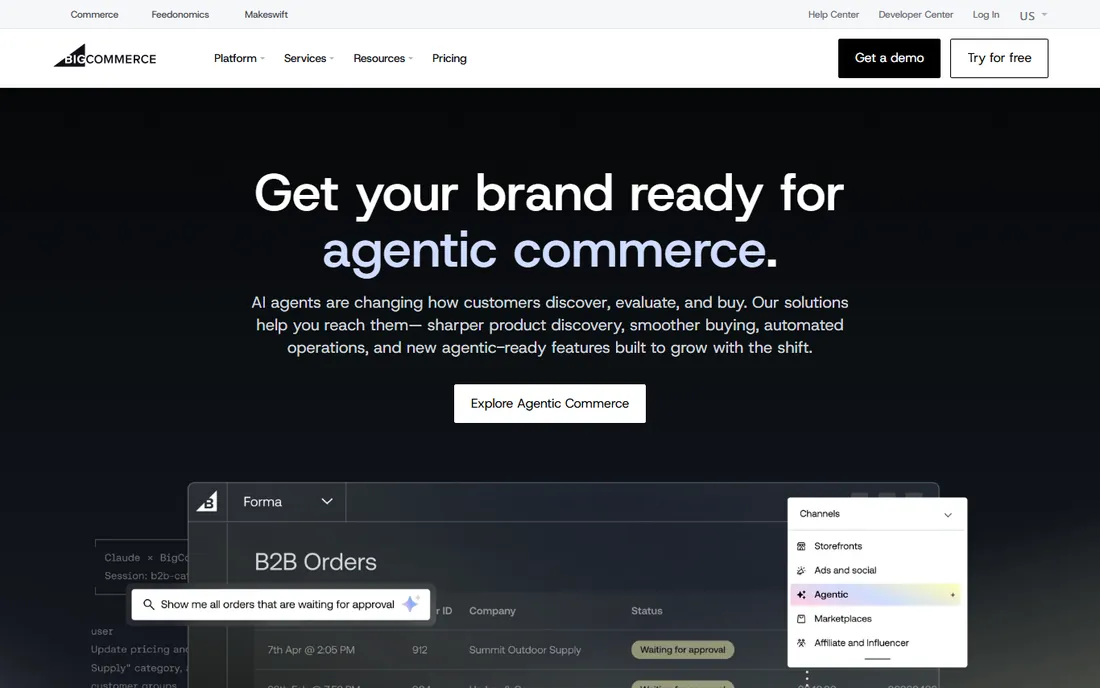
If you want a wholesale store running without hiring developers, BigCommerce is the most practical starting point. The B2B Edition layer adds company accounts, customer-specific price lists, quote negotiation, net payment terms and an invoice portal on top of the standard storefront. You can run retail and wholesale from one backend with shared inventory.
The catch is that the B2B features worth having sit in the add-on, which is priced separately and often needs a partner to configure fully. Standard plans run from $29 per month, and BigCommerce does not take a cut of your transactions. For a wholesaler doing under a few million a year, that combination is hard to beat.
What we like- B2B Edition adds quotes, price lists and buyer portals
- No transaction fees on any plan
- Strong API for ERP integration
Watch out for- B2B Edition is a paid add-on with custom pricing
- Revenue-tier pricing can force plan upgrades as you grow
Starting price$39/month
Free planFree trial

Most wholesale sellers on Shopify started as direct-to-consumer brands. That is where the platform shines: you keep your retail store and add company profiles, volume pricing and wholesale catalogs without rebuilding. Shopify extended core B2B features to standard plans in 2026, so smaller brands can test wholesale before committing to Plus.
Serious wholesale operations usually land on Shopify Plus, which starts at $2,300 per month and adds deeper catalog controls. The tradeoff is flexibility. Shopify's checkout and pricing logic are less customizable than BigCommerce or OroCommerce, so businesses with complicated negotiated pricing will feel the limits.
What we like- B2B features now available on standard plans
- Huge app ecosystem
- Easiest storefront builder of the bunch
Watch out for- Advanced wholesale pricing tiers need Shopify Plus
- Checkout customization is limited
- Transaction fees without Shopify Payments
Starting priceFree (Community Edition)
Free planYes
OroCommerce is the only platform here designed exclusively for B2B. Customer-specific catalogs, tiered pricing, quotes, order approvals and multi-organization account structures are native features, not plugins. The Community Edition is genuinely free and open source, which makes it the cheapest serious option for a technically capable team.
The Enterprise Edition is priced on gross merchandise value and user count, so costs scale with your business. This is a platform for manufacturers and distributors with complex pricing and ERP integration needs, not for a brand that just wants a simple order form. If your sales process involves quotes and approvals, OroCommerce fits better than any SaaS option.
What we like- Built for B2B from the ground up, no add-ons needed
- Free open-source Community Edition
- Built-in CRM and workflow automation
Watch out for- Enterprise Edition is quote-priced
- Needs developers or a partner for a serious build
Starting priceSee website
Free planNo
Adobe Commerce (the former Magento Commerce) remains the default choice for large wholesalers that need deep customization. The B2B module covers negotiated quotes, requisition lists, credit limits, company accounts and approval workflows. Multi-store setups let you run separate wholesale and retail storefronts with different catalogs and pricing.
Nobody buys Adobe Commerce casually. Pricing is custom, implementations run months and usually involve an agency. Companies choose it when the wholesale operation is complex enough that SaaS platforms start requiring workarounds. If that describes you, the investment pays off in flexibility.
What we like- Deepest B2B feature set in the SaaS/open-source hybrid space
- Strong multi-brand and multi-region support
- Large partner ecosystem
Watch out for- Quote-based enterprise pricing
- Implementations are long and expensive
- Overkill below mid-market
Starting priceFree
Free planYes
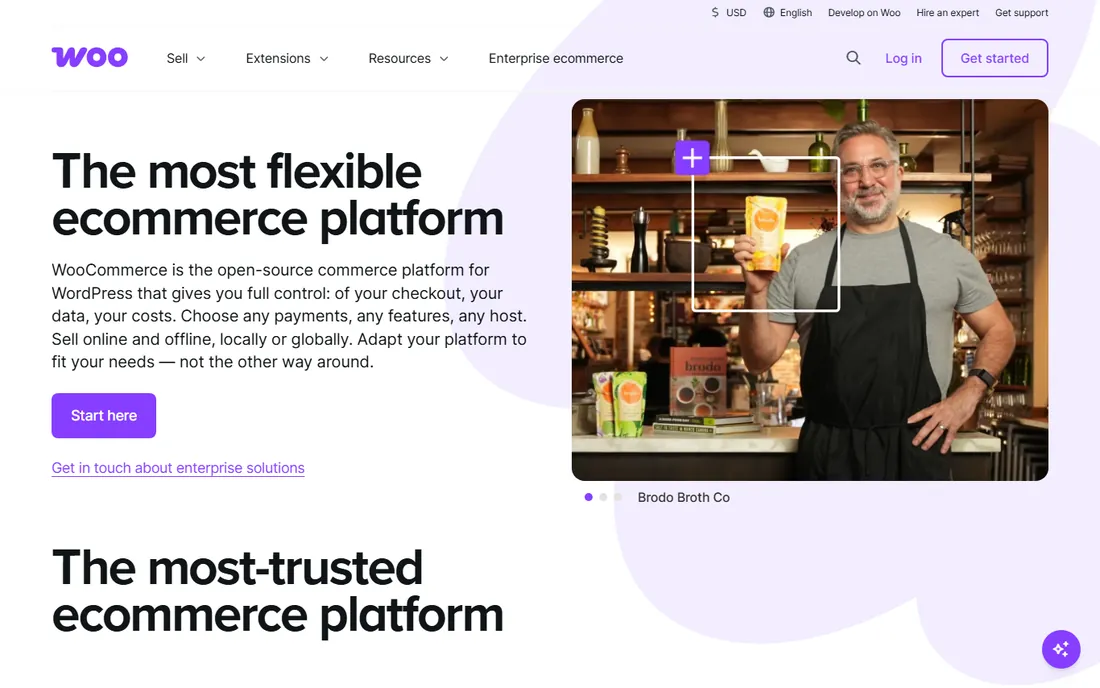
WooCommerce plus a wholesale plugin is the lowest-cost path to a working B2B portal. The core is free, and mature extensions add tiered pricing, bulk order forms, minimum order quantities and tax-exempt checkout. For a small manufacturer or distributor already on WordPress, this can be live in days.
The honest tradeoff is maintenance. You are responsible for hosting, updates, security and making a half-dozen plugins work together. At higher order volumes, performance and reliability become real projects. WooCommerce is a great launchpad and a questionable forever home for a growing wholesaler.
What we like- Core plugin is free
- Wholesale pricing and ordering via established extensions
- You own the stack and the data
Watch out for- B2B features come from third-party plugins
- You handle hosting, security and updates
- Performance tuning is on you
Starting priceSee website
Free planFree trial
Pepperi approaches wholesale from the sales rep side rather than the website side. Reps get a mobile app with the full catalog, customer-specific pricing and offline ordering for trade shows and store visits. Brands also get a B2B web storefront, but the field sales workflow is the core strength.
If your wholesale business still runs on reps with printed catalogs, Pepperi digitizes that motion directly. Companies that want buyers to self-serve online will find the storefront thinner than BigCommerce or Shopify. Pricing is quote-based, so budget a sales conversation.
What we like- Built for sales reps taking orders in the field
- Offline mobile ordering
- Strong B2B catalog and pricing rules
Watch out for- Less of a self-service ecommerce storefront
- Pricing not published
- Smaller ecosystem than the big platforms
Starting priceSee website
Free planFree trial
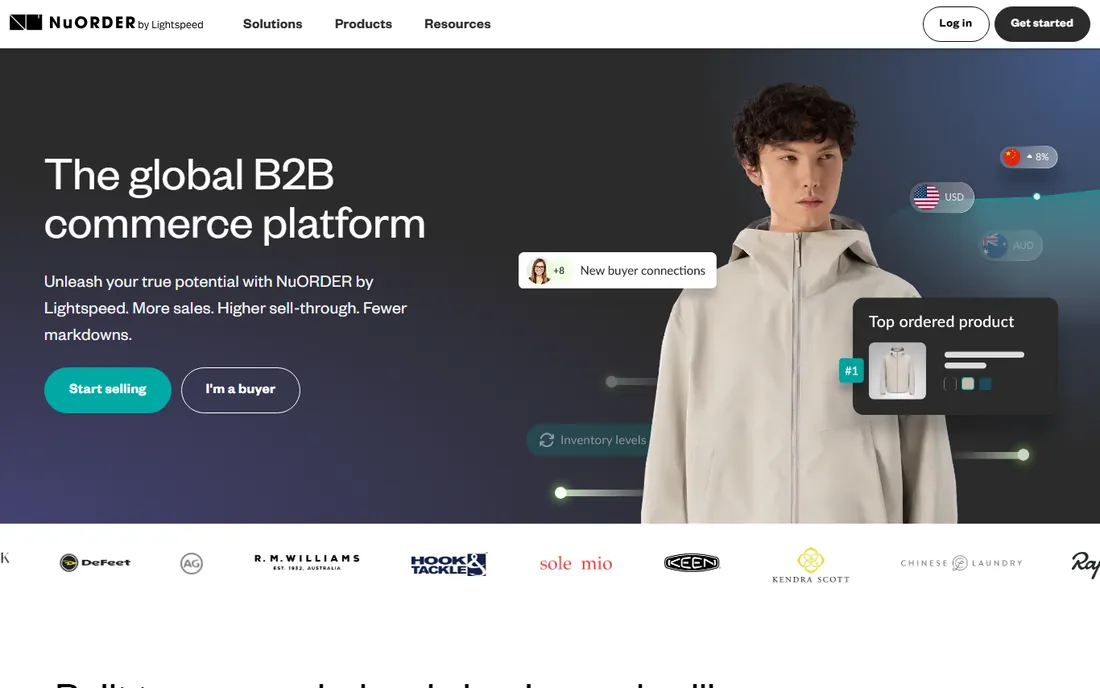
NuORDER is a wholesale marketplace where brands present digital catalogs to retail buyers. Instead of building your own portal and driving traffic to it, you list where buyers already shop. Virtual showrooms and digital line sheets replaced a lot of trade show activity, and the platform handles the order workflow.
The tradeoff is the classic marketplace deal: you get distribution but share the shelf with competitors and pay platform fees. NuORDER suits brands expanding into new retail accounts more than established wholesalers with a direct buyer list. Use it for discovery, not as your only channel.
What we like- Large network of retail buyers already on the platform
- Digital line sheets and virtual showrooms
- Order and payment workflow built in
Watch out for- You compete with other brands in front of the same buyers
- Platform fees apply
- Less control over branding
Starting priceSee website
Free planNo

Faire connects independent brands with retail shops, and it has become one of the main ways small brands get wholesale distribution. Listing is free; Faire takes a commission on orders. For retailers, the net-60 payment terms and free returns on first orders lower the risk of trying new products.
Brand control is limited compared to your own storefront, and popular categories are competitive. Faire works best as a discovery and first-order channel: win the retailer there, then move the relationship to direct ordering where your margins are better.
What we like- Huge retailer network actively sourcing new products
- Net-60 terms for retailers reduce their risk
- Free to list as a brand
Watch out for- Commission on orders
- Limited control over how your brand is presented
- Crowded categories
Starting priceSee website
Free planFree trial
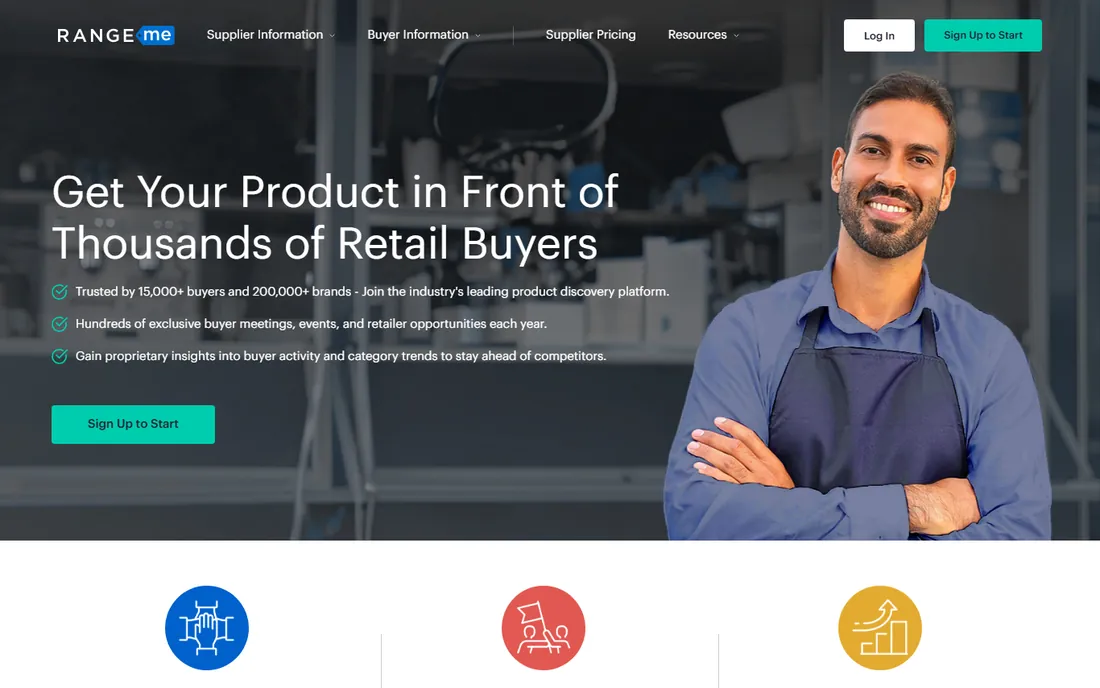
RangeMe is where brands submit products for review by buyers at large retailers. If you sell packaged goods and want shelf space at a national chain, this is the most direct digital path to the buyer. The platform standardizes your product pitch so buyers can evaluate quickly.
RangeMe is not an ecommerce platform in the storefront sense; there is no checkout or customer portal. Think of it as a submission and discovery tool. Free accounts exist, but brands serious about placement usually pay for premium visibility. Pair it with your own wholesale portal for reorders.
What we like- Direct pipeline to buyers at major US retailers
- Submission-based, so no storefront to build
- Strong in grocery, wellness and CPG
Watch out for- Premium plans needed for full visibility
- Competitive categories
- Not a storefront or ordering platform
How we chose
We looked for platforms and marketplaces that wholesalers actually use in 2026, covering both owned storefronts and wholesale marketplaces. Research drew on vendor pricing pages, feature documentation, public reviews on G2 and Capterra, and wholesale industry coverage. We favored tools with real B2B ordering features (price lists, quotes, net terms) over generic carts, and we mixed SaaS, open-source and marketplace models so different business types find a fit. Prices come from vendor pricing pages; where vendors do not publish prices we say so.
The first decision is not which tool, but which model. An owned platform (BigCommerce, Shopify, OroCommerce, Adobe Commerce, WooCommerce) gives you control over pricing, branding and customer data, but you have to bring the buyers. A marketplace (Faire, NuORDER, RangeMe) brings the buyers but takes a cut and limits control.
Most growing wholesalers end up with both: a marketplace for discovery and new accounts, and an owned portal for reorders and key accounts where margins matter. Start with whichever side your business needs more urgently. If you already have a buyer list, build the portal. If you have great products and no distribution, list on the marketplaces first.
What wholesale ordering actually requires
Whatever platform you pick, confirm it handles the mechanics of B2B ordering. Customer-specific price lists are non-negotiable for most wholesalers; if every buyer sees the same price, the tool is a retail cart. Net payment terms and invoice workflows matter as soon as you extend credit. Bulk order forms and quick reorder from past orders save your best customers real time every week.
Check tax handling too. Wholesale orders are often tax-exempt with resale certificates on file, and the platform should handle exemption status per customer without manual workarounds. Finally, ask how the platform syncs with your ERP or accounting system. Manual order re-entry is where wholesale operations go to die.
Frequently asked questions
What is the best ecommerce platform for wholesale?
For most mid-size wholesalers, BigCommerce B2B Edition offers the best balance of wholesale features and manageable cost. Shopify suits brands adding wholesale to an existing DTC store. Complex operations with ERP integration needs should look at OroCommerce or Adobe Commerce.
Can I use Shopify for wholesale?
Yes. Shopify includes B2B features like company profiles and volume pricing on standard plans, with deeper catalog controls on Shopify Plus. It works best for brands that already sell direct to consumers and want to add a wholesale channel to the same catalog.
Is there a free wholesale ecommerce platform?
WooCommerce is free at its core, with wholesale features added through plugins. OroCommerce offers a free open-source Community Edition. Marketplaces like Faire let brands list for free but take commission on orders.
What is the difference between Faire and NuORDER?
Both are wholesale marketplaces, but Faire focuses on independent brands selling to small retail shops, while NuORDER serves larger brands selling into bigger retail buyers with digital line sheets and virtual showrooms. Many brands list on both.
How much does a wholesale ecommerce platform cost?
SaaS platforms start around $29 to $39 per month, with B2B add-ons and higher tiers adding cost. Open-source options like WooCommerce and OroCommerce Community are free but need hosting and usually developer help. Enterprise platforms like Adobe Commerce are quote-priced and typically run into five or six figures per year with implementation.
Sources we checked (9)
- https://www.bigcommerce.com
- https://www.shopify.com
- https://oroinc.com
- https://business.adobe.com
- https://woocommerce.com
- https://www.pepperi.com
- https://www.nuorder.com
- https://www.faire.com
- https://www.rangeme.com
Is your product missing or out of date?
We review this list regularly. Vendors can request a listing, send updated pricing or ask about featured placement.

Shihab Mia · Founder, Rankite
Shihab has spent more than a decade helping SaaS and e-commerce brands grow through search. He writes Rankite's software buying guides from pricing pages, documentation and public user reviews. More about Shihab.