How we make this list: we compare pricing pages, product documentation and public user reviews. Rankite is independent; if a vendor ever pays for a featured spot, that listing is clearly labeled Partner.
Key takeaways
- Shopify is the default for fashion DTC brands, with the best app ecosystem and theme selection for apparel.
- BigCommerce suits growing fashion retailers that need built-in B2B and multi-storefront features.
- Adobe Commerce and Salesforce Commerce Cloud power enterprise fashion houses with complex needs.
- Centra is the fashion-native headless option built specifically for apparel brands.
- WooCommerce, Squarespace, Wix and Big Cartel cover indie labels and small boutiques at low cost.
- Shopware is the strong European alternative with fashion-ready features.
Quick comparison
| Tool | Best for | Starting price | Free plan |
|---|
 Shopify Shopify | Fashion DTC brands of all sizes | See website | Free trial |
 BigCommerce BigCommerce | Growing retailers needing B2B | See website | Free trial |
 Adobe Commerce Adobe Commerce | Enterprise fashion houses | See website | No |
 WooCommerce WooCommerce | WordPress-based fashion stores | See website | Yes |
 Squarespace Squarespace | Designer-led boutiques | See website | Free trial |
 Wix Wix | Small labels wanting simplicity | See website | Free plan |
 Salesforce Commerce Cloud Salesforce Commerce Cloud | Global enterprise fashion retail | See website | No |
 Shopware Shopware | European fashion retailers | See website | Yes |
 Centra Centra | Fashion-native headless commerce | See website | No |
 Big Cartel Big Cartel | Indie designers and small drops | See website | Free plan |
Is your product missing or out of date?
We review this list regularly. Vendors can request a listing, send updated pricing or ask about featured placement.
Starting priceSee website
Free planFree trial

Shopify is where most fashion brands end up, from bedroom labels to nine-figure DTC companies. The theme store has more fashion-ready designs than any competitor, the app ecosystem covers everything from size recommenders to pre-order management, and the platform handles traffic spikes during drops without drama. Editorial storytelling, lookbooks, video, shoppable Instagram, all work well.
The costs go beyond the subscription. Transaction fees apply unless you use Shopify Payments, and premium themes and essential apps add up. Truly custom storefronts need developers or a Shopify Plus budget. But for a fashion brand that wants to launch fast, look good and scale, nothing else combines ease, ecosystem and reliability as well. Start here unless you have a specific reason not to.
What we like- Largest fashion theme and app ecosystem
- Excellent for lookbooks and editorial content
- Scales from startup to enterprise with Shopify Plus
Watch out for- Transaction fees unless using Shopify Payments
- Deep customization needs developers
- B2B wholesale features trail BigCommerce
Starting priceSee website
Free planFree trial
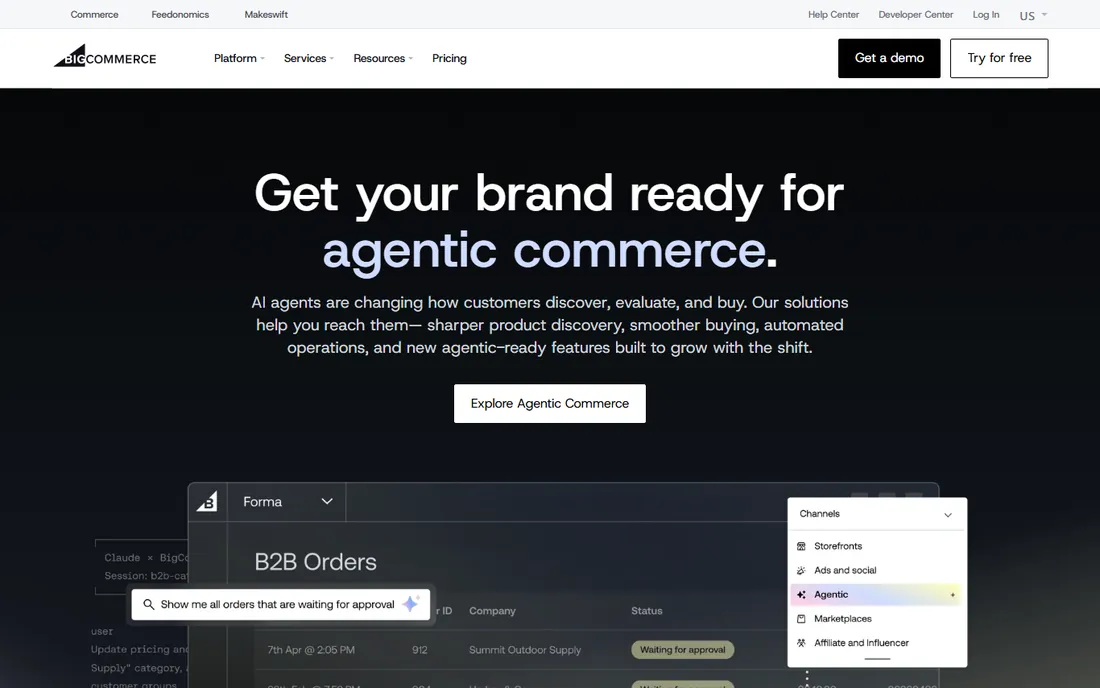
BigCommerce appeals to fashion retailers that sell both direct and wholesale, because the B2B features, customer groups, price lists, quote management, are built in rather than bolted on via apps. Multi-storefront management lets brands run regional or sub-brand stores from one backend. And there are no transaction fees on any plan, which matters at volume.
The ecosystem is the tradeoff: fewer themes, fewer apps, and less fashion-specific tooling than Shopify. Design customization beyond the theme defaults usually needs a developer. For a fashion retailer doing meaningful wholesale alongside DTC, or running multiple storefronts, BigCommerce's native features beat Shopify's app stack. For pure DTC startups, Shopify's ecosystem usually wins.
What we like- Strong built-in B2B and wholesale features
- No transaction fees
- Multi-storefront from one account
Watch out for- Theme and app ecosystem is smaller than Shopify's
- Design flexibility needs developer help
- Fashion-specific apps are fewer
Starting priceSee website
Free planNo
Adobe Commerce, formerly Magento, powers many of the world's largest fashion ecommerce sites for a reason: when you need custom product configurators, complex global inventory, multi-brand architectures and deep personalization, it can be built. The open-source heritage means no platform constraint is truly hard, and integration with Adobe Analytics and Experience Manager suits enterprise marketing teams.
The price of that freedom is total cost of ownership. Development, hosting, maintenance and upgrades run into six or seven figures annually for serious implementations. Small and mid-size brands should not touch it; the SaaS platforms deliver 90 percent of the value at a fraction of the cost. For enterprise fashion groups with dedicated engineering, it remains the most capable option.
What we like- Nearly unlimited customization for complex catalogs
- Strong for global multi-brand fashion groups
- Deep integration with Adobe's marketing stack
Watch out for- Expensive to build and maintain
- Needs skilled developers or an agency
- Overkill for small brands
Starting priceSee website
Free planYes
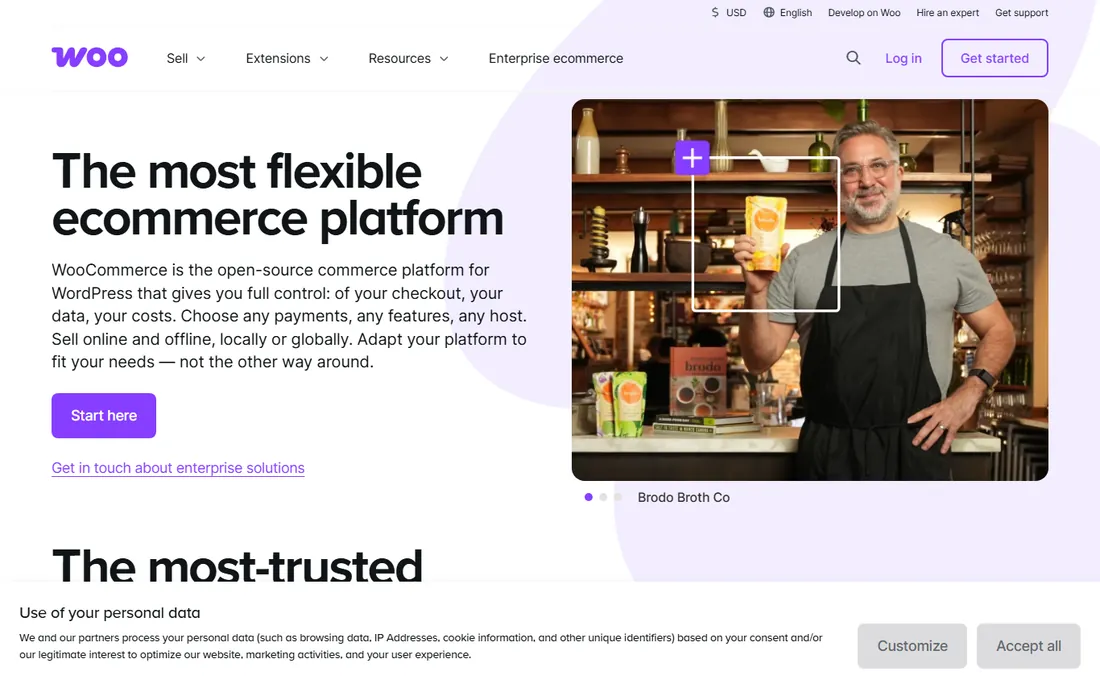
WooCommerce turns WordPress into a fashion store for the price of hosting. The core is free, the theme selection for fashion is enormous, and plugins cover everything from bookings to subscriptions. Brands that already run content-heavy WordPress sites, fashion blogs turned stores, get commerce without rebuilding. There is no revenue share and no platform lock-in.
The catch is that you are the platform team. Hosting, security patches, plugin conflicts and performance tuning are your responsibility or your developer's. Costs hide in premium plugins and developer hours rather than a subscription. For technically comfortable teams and content-driven fashion brands, WooCommerce offers unmatched control per dollar. For everyone else, the SaaS platforms' managed simplicity is worth the fee.
What we like- Free core plugin with total ownership
- Huge WordPress theme and plugin ecosystem
- No platform lock-in
Watch out for- You manage hosting, security and updates
- Costs shift to plugins and developers
- Scaling needs technical skill
Starting priceSee website
Free planFree trial
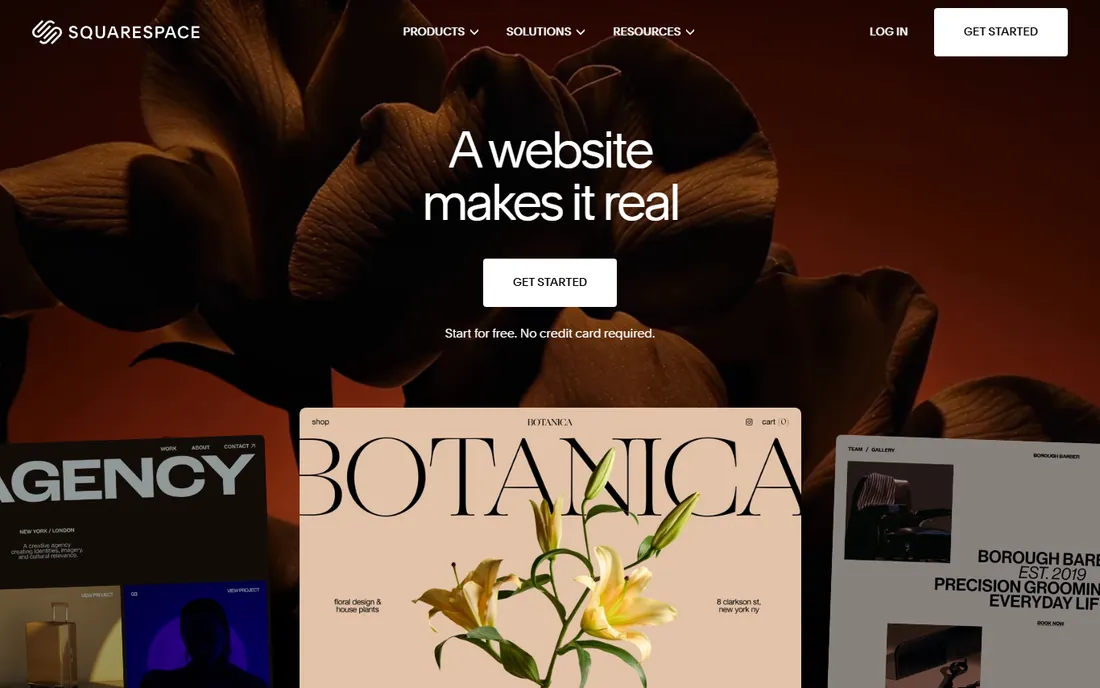
Squarespace is the choice for fashion brands where aesthetics lead: independent designers, small boutiques and labels whose site is a portfolio that happens to sell. The templates are genuinely beautiful, editorial layouts and large imagery work out of the box, and the all-in-one pricing covers hosting, templates and basic commerce without app-hunting.
Commerce depth is the limit. Product variants, discounting, international selling and integrations are all thinner than Shopify's. A boutique doing a few hundred orders a month will be happy; a brand scaling to thousands will outgrow it. If your brand lives on visual identity and your catalog is small, Squarespace delivers the best-looking store for the least effort.
What we like- Beautiful fashion-ready templates
- Excellent for lookbook-style storytelling
- Simple all-in-one pricing
Watch out for- Ecommerce features are basic next to Shopify
- Limited payment and shipping options
- Scaling past boutique size is hard
Starting priceSee website
Free planFree plan
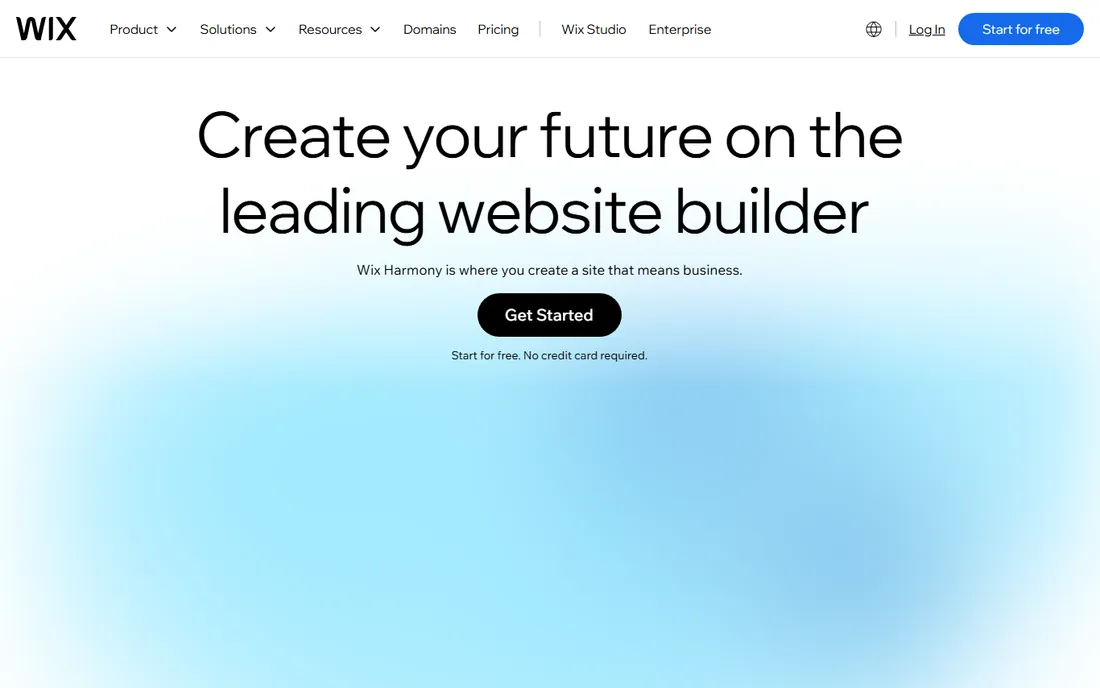
Wix is the simplest path to a selling fashion site for owners with no technical skills. Drag-and-drop building, fashion templates that look good immediately, and a free plan for experimenting make it approachable. Small labels testing an idea can be selling within a day.
It is not a growth platform. The ecommerce engine is less capable than Shopify or BigCommerce, SEO controls are weaker, and exporting your store to move elsewhere is notoriously difficult. Treat Wix as a starter home: fine for validating a label, but plan to migrate to Shopify or similar when the business proves itself. Starting on Wix and succeeding is a good problem that means it is time to move.
What we like- Easiest builder for non-technical owners
- Free plan to start
- Decent fashion templates
Watch out for- Ecommerce is less powerful than specialists
- SEO and scale limitations
- Migrating away is painful
Starting priceSee website
Free planNo
Salesforce Commerce Cloud, formerly Demandware, runs global fashion retail for major brands: multi-region, multi-currency, multi-brand from one platform, with Einstein AI driving personalization. Integration with Salesforce's marketing, service and data clouds makes it the choice for enterprises already committed to the Salesforce world.
Pricing is enterprise and typically includes a revenue-share component, so costs scale with success. Implementations need specialized partners and real budgets. Mid-size brands get more agility per dollar from Shopify Plus or BigCommerce Enterprise. For global fashion enterprises with complex operations and Salesforce everywhere, Commerce Cloud is the strategic fit.
What we like- Built for global scale with multi-brand and multi-region
- Strong AI personalization
- Deep Salesforce ecosystem integration
Watch out for- Enterprise pricing with revenue-share elements
- Complex implementations
- Needs specialized partners
Starting priceSee website
Free planYes
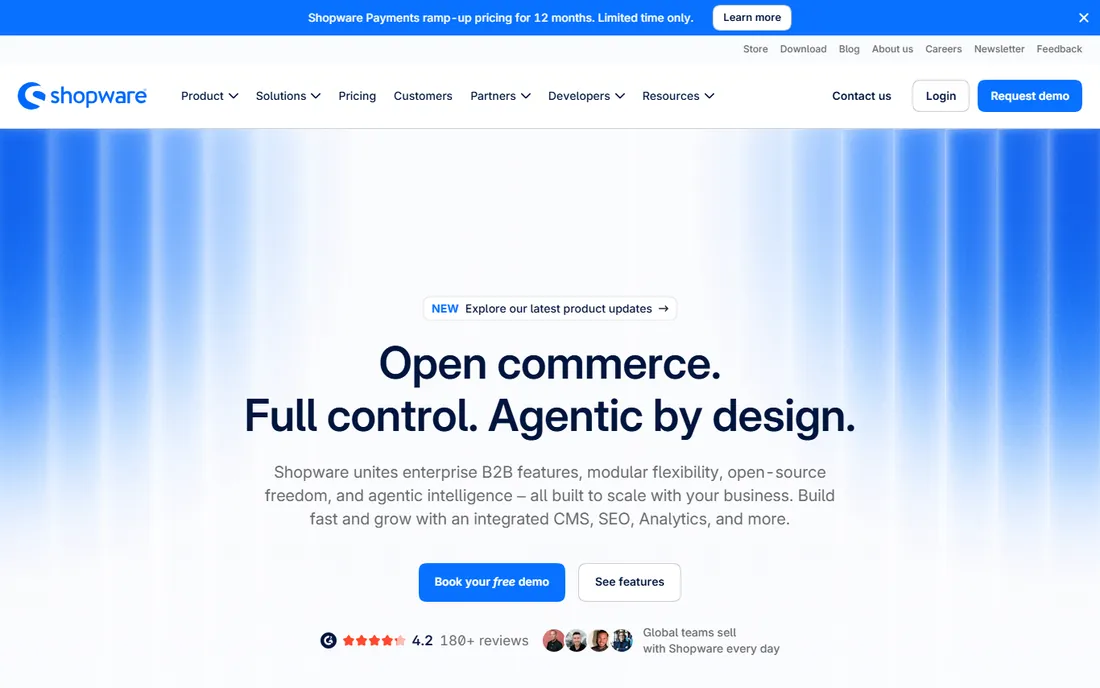
Shopware is Europe's leading open commerce platform, with deep roots in German retail and growing fashion adoption. It offers both open-source self-hosting and SaaS, a rule builder for promotions and pricing that merchandisers like, and solid B2B features. European fashion brands get local payment methods, tax handling and partners that understand their market.
Outside Europe the ecosystem thins: fewer apps, fewer agencies, less community content in English. US brands usually find Shopify or BigCommerce better supported. For European fashion retailers, especially in DACH markets, Shopware combines flexibility, local expertise and freedom from US platform lock-in in a way no American platform matches.
What we like- Strong European fashion and retail footprint
- Flexible open-source roots with SaaS options
- Good B2B features
Watch out for- Smaller ecosystem outside Europe
- Fewer fashion apps than Shopify
- US support presence is thinner
Starting priceSee website
Free planNo

Centra is the rare commerce platform designed from scratch for fashion: product data models that understand collections, seasons and variants the way apparel brands think, plus wholesale and DTC in one system. The headless architecture lets brands build completely custom storefronts while Centra handles the commerce engine. Fashion labels that outgrow Shopify's constraints but do not want Adobe's complexity land here.
It is priced for established brands, not startups, and the ecosystem is small by design. You will need frontend developers to realize the headless promise. For fashion brands doing serious revenue with specific merchandising needs, Centra's fashion-native approach beats adapting a generic platform. For everyone earlier in the journey, the mainstream platforms are more practical.
What we like- Built specifically for fashion brands
- Headless architecture for custom storefronts
- Strong wholesale and DTC in one
Watch out for- Premium pricing for mid-size and up
- Smaller ecosystem
- Needs frontend development resources
Starting priceSee website
Free planFree plan
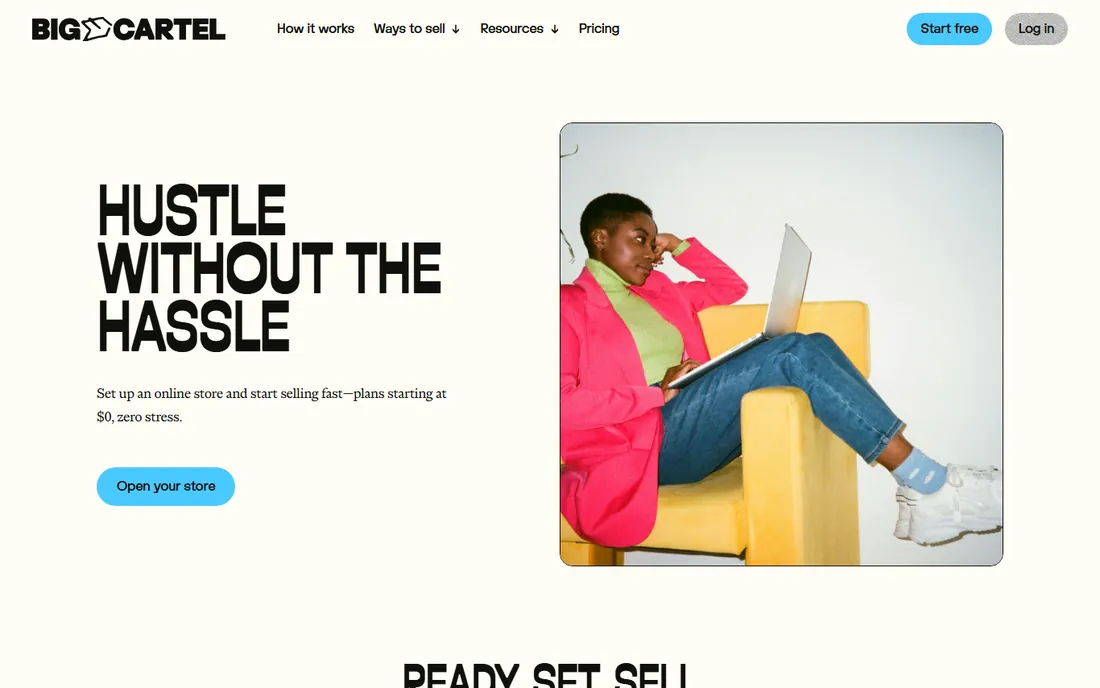
Big Cartel serves the smallest sellers: indie designers, artists and makers with a handful of products. The free plan covers up to a few products, setup takes minutes, and the whole product assumes you would rather be making things than managing software. For a first drop or a side project, it is perfect.
It is not a business platform. Inventory management, marketing tools, SEO and integrations are minimal, and any real growth means migrating. That is fine; Big Cartel knows what it is. Use it to validate designs and build an audience, then move to Shopify or Squarespace when the label becomes a business.
What we like- Free plan for tiny catalogs
- Dead simple to set up
- Made for artists and indie makers
Watch out for- Very limited features
- Not for growing businesses
- Basic customization only
Fashion has specific commerce needs
Fashion is not generic retail. Product variants explode: one dress in six sizes and four colors is twenty-four SKUs with shared imagery. Lookbooks and editorial content sell as much as product pages. Drops and seasons create traffic spikes that would cripple weak platforms. Wholesale often matters as much as DTC. When evaluating platforms, check variant handling, image management, content flexibility and traffic resilience specifically, not just the feature checklist.
Returns deserve special attention. Fashion return rates run far above other categories, so the platform's returns workflow, integrations with returns software, and ability to handle exchanges cleanly affect margins directly. A platform that makes returns painful costs more than its subscription suggests.
How we chose
We prioritized platforms with real fashion brand adoption, from indie labels to global houses. We reviewed vendor documentation and pricing pages, fashion industry case studies, and merchant reviews about reliability during peak seasons. We included SaaS, open-source and headless options because fashion brands genuinely span that range, and we noted where pricing is quote-based.
What to check before you commit
Run a real product through the catalog: create your most complex product with all variants, images and size guides, and see how painful it is. Test the mobile experience ruthlessly, because fashion traffic is overwhelmingly mobile. Check the available themes or templates for fashion specifically; a platform with a thousand generic themes and three fashion ones tells you where its heart is.
Verify the integrations you need: your email platform, your returns software, your 3PL, your wholesale tools. Price the full stack including apps and themes, not just the subscription. And ask about traffic: what happens during a hyped drop, and what does the platform charge when you succeed. Finally, confirm data export and contract terms, because migrating a fashion catalog with thousands of variant images is nobody's idea of fun.
Frequently asked questions
What is the best ecommerce platform for a new clothing brand?
Shopify. It has the most fashion themes and apps, handles traffic spikes, and scales from first sale to millions in revenue. Squarespace suits designer-led labels prioritizing aesthetics; Big Cartel suits tiny test drops.
How much does it cost to run a fashion store online?
Platform subscriptions run from free (Big Cartel, WooCommerce core) to $30-400 monthly for SaaS plans, plus themes, apps, payment fees and marketing. Budget the full stack: a $39 platform plan often needs $50-150 more in apps and fees.
Do fashion brands need headless commerce?
Most do not. Headless makes sense for established brands with custom design needs and developer resources; Centra and Shopify's headless options serve them. New and growing brands get better ROI from a good theme on a standard platform.
Which platform is best for fashion wholesale?
BigCommerce has the strongest built-in B2B features among SaaS platforms. Centra handles wholesale and DTC natively for fashion specifically. Adobe Commerce and Salesforce Commerce Cloud serve enterprise wholesale complexity.
Can I sell clothes on Squarespace or Wix?
Yes, for small catalogs. Both handle boutique-scale selling well. Plan to migrate to Shopify or BigCommerce when order volume, variant complexity or wholesale needs grow beyond their comfort zone.
What is Centra?
Centra is a headless commerce platform built specifically for fashion brands, handling both DTC and wholesale with fashion-native product data models. It suits established apparel brands that need custom storefronts without enterprise platform complexity.
Sources we checked (10)
- https://www.shopify.com/
- https://www.bigcommerce.com/
- https://business.adobe.com/products/commerce.html
- https://woocommerce.com/
- https://www.squarespace.com/
- https://www.wix.com/
- https://www.salesforce.com/commerce/
- https://www.shopware.com/en/
- https://centra.com/
- https://www.bigcartel.com/
Is your product missing or out of date?
We review this list regularly. Vendors can request a listing, send updated pricing or ask about featured placement.

Shihab Mia · Founder, Rankite
Shihab has spent more than a decade helping SaaS and e-commerce brands grow through search. He writes Rankite's software buying guides from pricing pages, documentation and public user reviews. More about Shihab.