How we make this list: we compare pricing pages, product documentation and public user reviews. Rankite is independent; if a vendor ever pays for a featured spot, that listing is clearly labeled Partner.
Key takeaways
- Developer-friendly ecommerce splits into two camps: API-first SaaS (Shopify, BigCommerce, Adobe Commerce) and open-source frameworks (Medusa, Saleor, Spree, Sylius, WooCommerce).
- Medusa and Saleor are the strongest open-source headless options for teams that want full ownership of their stack.
- Shopify and BigCommerce give developers mature APIs plus managed hosting, so the team ships faster.
- WooCommerce is free and unmatched for WordPress-based stores, with the largest extension ecosystem.
- Adobe Commerce suits enterprises that need deep customization and already run on Adobe's stack.
Quick comparison
| Tool | Best for | Starting price | Free plan |
|---|
 Shopify Shopify | Shipping fast on managed infrastructure | $29/month (billed annually) | Free trial |
 BigCommerce BigCommerce | Open SaaS with fewer platform constraints | $39/month | Free trial |
 Medusa Medusa | Open-source headless builds on Node.js | Free | Yes |
 Saleor Saleor | GraphQL-first commerce for Python-friendly teams | Free | Yes |
 Spree Commerce Spree Commerce | B2B portals and multi-vendor marketplaces | Free | Yes |
 WooCommerce WooCommerce | WordPress sites that need commerce | Free | Yes |
 Sylius Sylius | Custom commerce on the Symfony stack | Free | Yes |
 Adobe Commerce Adobe Commerce | Enterprise brands on the Adobe stack | See website | No |
Is your product missing or out of date?
We review this list regularly. Vendors can request a listing, send updated pricing or ask about featured placement.
Starting price$29/month (billed annually)
Free planFree trial

Shopify is the pragmatic pick for teams that want to focus on the storefront, not the infrastructure. The Admin API, Storefront API, and Functions framework cover most customization needs, and the app ecosystem means common features already exist. Hosting, PCI compliance, and scaling during traffic spikes are Shopify's problem, not yours.
The developer trade-off is control. You work within Shopify's architecture, and some customizations (especially checkout) are gated behind pricier plans. Transaction fees on third-party gateways add to the monthly cost. For agencies and in-house teams that value shipping speed over total ownership, it is the most productive platform here.
What we like- Mature APIs, webhooks, and app framework with 21,000+ apps
- Managed hosting, security, and scaling handled for you
- Headless storefront support via Hydrogen and Storefront API
Watch out for- Monthly fees plus transaction fees add up
- Deep checkout customization requires higher-tier plans
Starting price$39/month
Free planFree trial
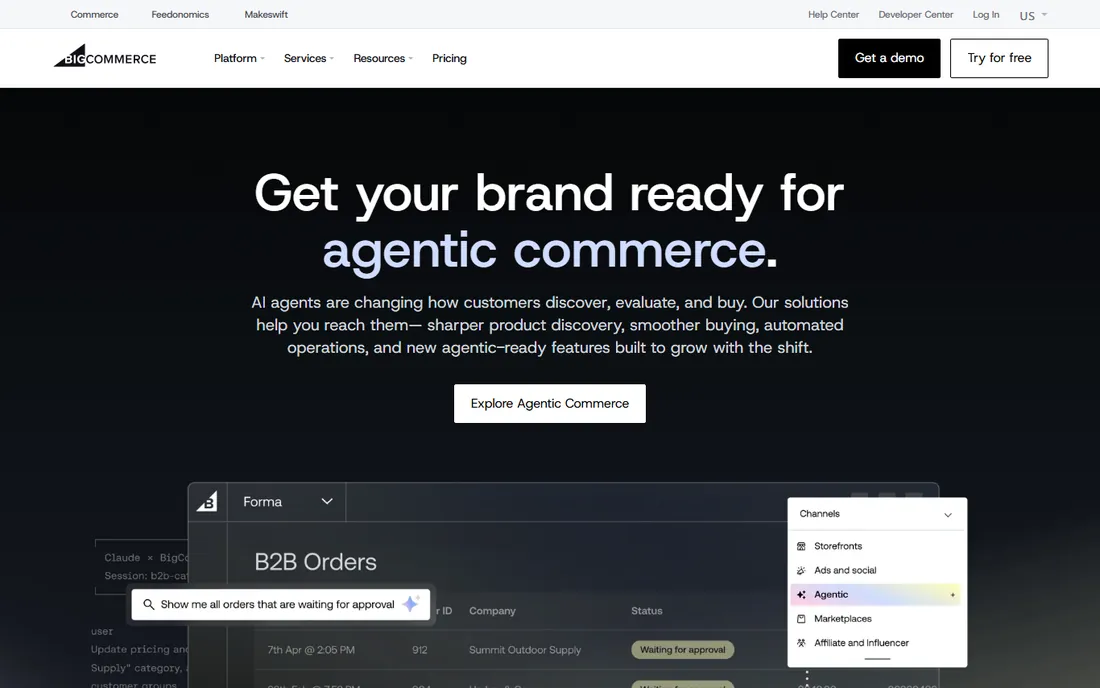
BigCommerce positions itself as the more open SaaS option, and for developers that claim holds up reasonably well. You get full API access and the ability to customize checkout on every plan, which Shopify gates more tightly. The headless story is solid, with reference architectures for popular frontend frameworks.
Pricing starts at $39 a month on the Core plan, with a fully functional 15-day free trial. One quirk to know: plans are tied to trailing twelve-month sales volume, so a growing store gets bumped up automatically. For B2B projects, the native quote and company account features save real development time.
What we like- Full API and code access on every plan
- No transaction fees on embedded payment providers
- Strong headless and multi-storefront support
Watch out for- Smaller app marketplace than Shopify
- Plan upgrades trigger automatically as sales grow
Starting priceFree
Free planYes
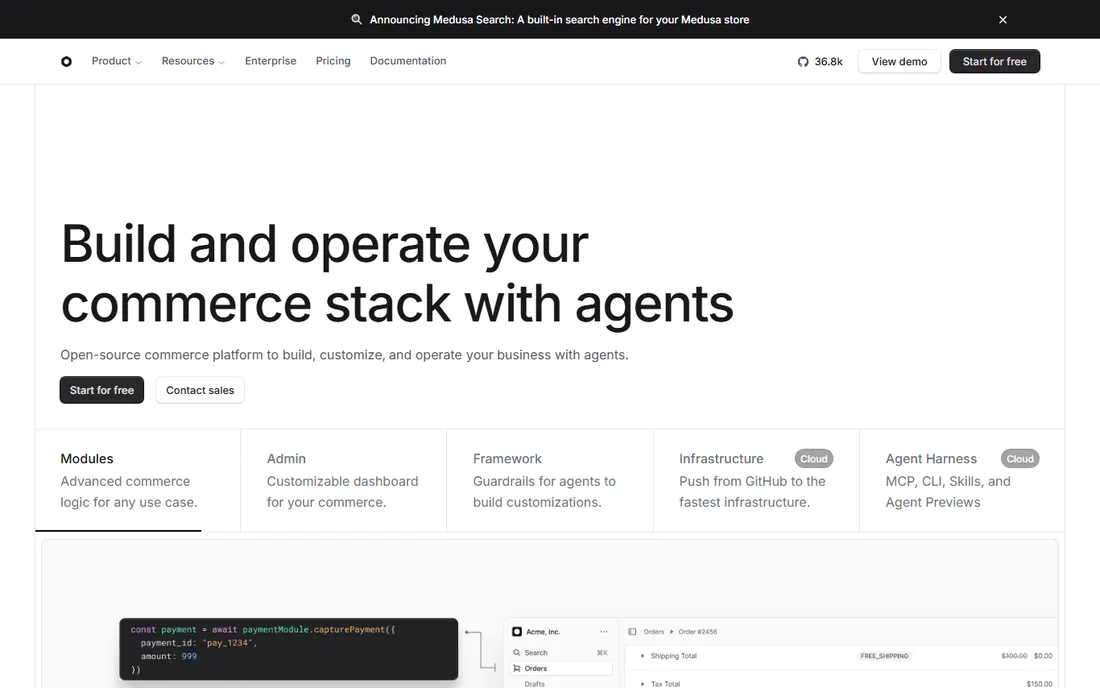
Medusa has become the default answer when a Node.js team wants headless commerce without a SaaS bill. The platform is genuinely open source, so you can read, modify, and extend everything. The modular design means you compose the commerce engine from building blocks rather than fighting a monolith.
The honest catch is operational. Self-hosting means your team owns uptime, security patches, and upgrades. Medusa Cloud removes that burden from $29 a month, which is still cheap compared with SaaS platform fees. For teams with DevOps capacity that want zero platform fees and full code ownership, Medusa is the strongest modern option.
What we like- Fully open source under a permissive license
- Modular architecture built for customization
- Medusa Cloud offers managed hosting starting from $29 a month
Watch out for- You own hosting, security, and upgrades on self-hosted setups
- Smaller ecosystem than the SaaS giants
#4
Saleor
Best for: GraphQL-first commerce for Python-friendly teams
Visit saleor.io
Starting priceFree
Free planYes
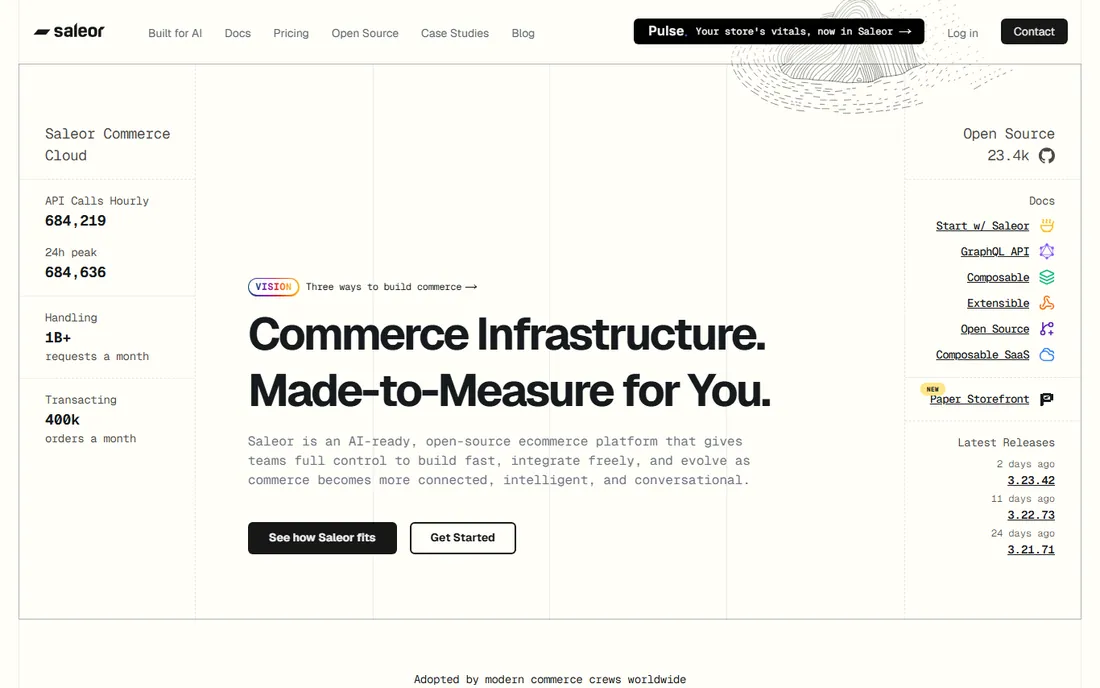
Saleor takes a different technical path from Medusa: Python and Django under the hood, with a GraphQL-first API on top. It is one of the most starred open-source commerce projects on GitHub, and the feature set reflects that maturity: multi-channel, multi-currency, multi-warehouse, and a fast admin dashboard included.
The trade-off is stack fit. If your team lives in JavaScript, Medusa feels more natural; if you are comfortable with Python, Saleor rewards you with a deep, well-documented API. Saleor Cloud handles hosting for teams that do not want to operate infrastructure. For complex, international commerce requirements, it punches above its free price tag.
What we like- Mature GraphQL API with 160+ webhooks
- Open source with a large GitHub community
- Built for multi-channel, multi-currency commerce from the start
Watch out for- Python/Django stack may not match a JavaScript team's skills
- Managed cloud adds cost on top of the free core
Starting priceFree
Free planYes
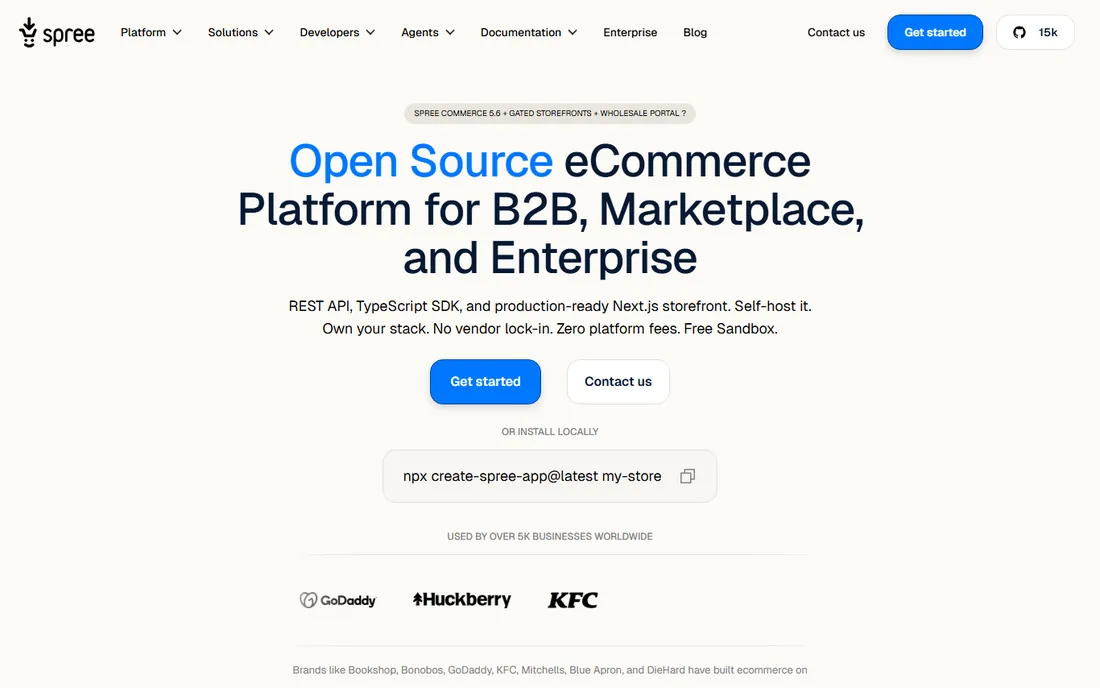
Spree has been around since 2007, and that longevity shows in the breadth of the platform. The open-source Community Edition ships with B2B wholesale portals, multi-vendor marketplaces, multi-store, and cross-border commerce built in, not bolted on. The REST APIs are fully documented with OpenAPI specs, and there is a production-ready Next.js storefront starter.
The catch is partly generational. The Ruby on Rails core is battle-tested but less fashionable than newer stacks, and the fanciest B2B features (like approval workflows) live in the paid Enterprise Edition. Still, for marketplaces and B2B projects on a budget, the free edition covers remarkable ground.
What we like- B2B, marketplace, and multi-store modules in the open-source release
- Complete REST APIs with a TypeScript SDK and Next.js starter
- Zero platform fees and no vendor lock-in
Watch out for- Ruby on Rails core may feel dated to some teams
- Advanced B2B features sit in the paid Enterprise Edition
Starting priceFree
Free planYes
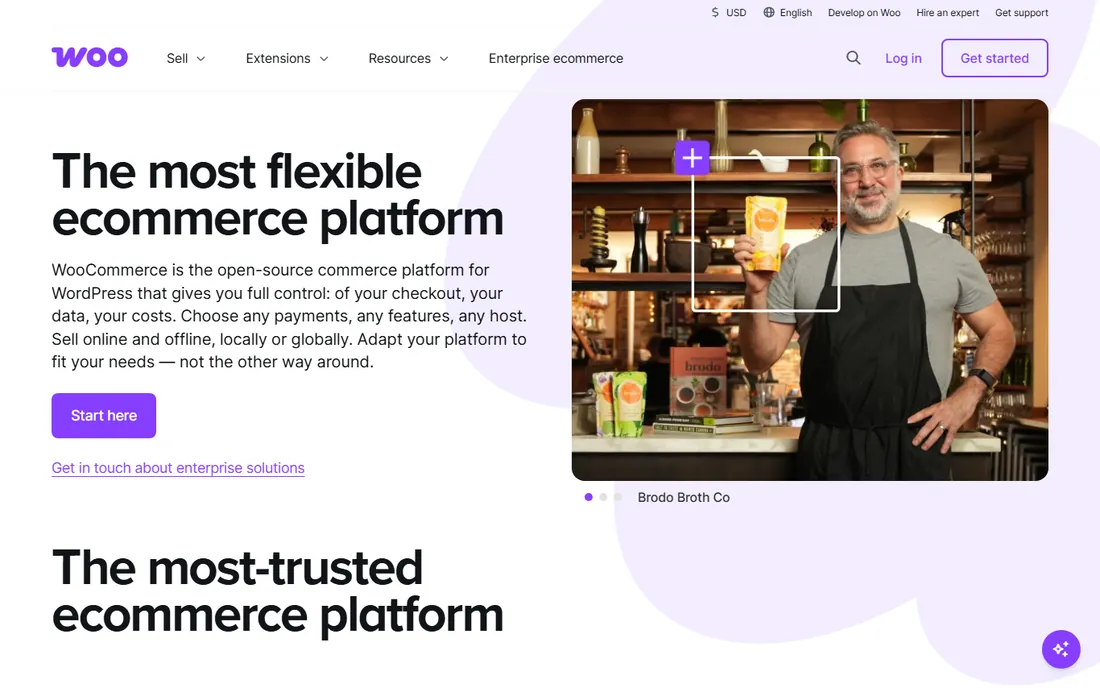
WooCommerce is the open-source commerce plugin for WordPress, and its scale is unmatched: millions of stores run on it. The core is free, the code is yours to modify, and the extension marketplace covers nearly every feature you can imagine. For content-driven brands already on WordPress, it is the natural choice.
The honest catch is that "free" needs an asterisk. Hosting, security, backups, and performance tuning are your responsibility, and the extensions you actually need often cost money. A WooCommerce store can end up costing as much as a SaaS platform once you add it all up. But nothing beats it for flexibility on WordPress, and developer talent is everywhere.
What we like- Free core plugin with the largest extension ecosystem in ecommerce
- Full code access on your own hosting
- Powers over 4 million stores, so help is easy to find
Watch out for- You manage hosting, security, and performance
- Costs creep up through paid extensions
Starting priceFree
Free planYes
Sylius is the developer's framework among these options: an open-source ecommerce platform built on Symfony with an emphasis on code quality and testing. Everything is a decoupled bundle, so you can use the product catalog, promotions, or shipping components independently. The REST API supports headless builds.
The trade-off is ecosystem size. The PHP and Symfony talent pool is solid but smaller than the JavaScript world, and the community is strongest in Europe. Sylius Plus adds commercial features and support for companies that want a vendor relationship. For Symfony shops building custom commerce, it is the most natural fit available.
What we like- Clean, well-tested codebase built on Symfony
- Modular bundles let you use only what you need
- Strong agency ecosystem in Europe
Watch out for- PHP/Symfony niche limits hiring pool in some markets
- Sylius Plus commercial features cost extra
#8
Adobe Commerce
Best for: Enterprise brands on the Adobe stack
Visit adobe.com
Starting priceSee website
Free planNo
Adobe Commerce, formerly Magento, is the enterprise heavyweight on this list. The platform handles millions of SKUs, complex B2B buying workflows, and multi-brand, multi-region operations from one admin. The API-first architecture and Adobe ecosystem integrations (analytics, personalization, CDP) make it powerful for large organizations.
The catch is cost and complexity. Pricing is quote-based and enterprise-scale, and implementations usually require certified partners. There is no free trial, only demos. For mid-market and smaller companies, the open-source options above deliver more value per dollar. For enterprises already invested in Adobe, it is the logical center of the commerce stack.
What we like- Deep customization with an API-first composable architecture
- Strong B2B feature set with quotes and company accounts
- Tight integration with Adobe Experience Cloud
Watch out for- Quote-based pricing puts it out of reach for small teams
- Implementation typically needs specialized agency help
How we chose
We started with each vendor's own pricing pages, product documentation, and feature lists to confirm current plans and developer capabilities. We then checked public reviews on G2, Capterra, and developer discussions on Reddit and GitHub to see how each platform behaves in real projects. We weighed API quality, customization depth, hosting responsibility, ecosystem size, and fit for small and mid-size company teams. We did not claim hands-on testing of any product.
SaaS or open source: how to decide
The fundamental choice is who owns the infrastructure. SaaS platforms (Shopify, BigCommerce, Adobe Commerce) handle hosting, security, scaling, and PCI compliance. You pay monthly and work within their architecture. Open-source platforms (Medusa, Saleor, Spree, WooCommerce, Sylius) give you the code and full control, but your team owns uptime, upgrades, and security.
Match the platform to your team's skills
A Node.js team will be productive fastest on Medusa. A Python shop fits Saleor. PHP and WordPress experience points to WooCommerce, while Symfony developers belong on Sylius. Ruby teams can still do great work on Spree. Fighting your team's existing skills to adopt a fashionable stack is a reliable way to blow a deadline.
Count the total cost, not the license
SaaS looks expensive until you price the alternative: servers, DevOps time, security audits, and the opportunity cost of building commodity features. Open source looks free until you add hosting and maintenance. Model three years of both, including the salaries of the people who will run the platform, before deciding.
Headless commerce, explained simply
Headless means the storefront (the "head") is separated from the commerce engine (the "body"). Your developers build the customer-facing experience in any framework, like Next.js or a mobile app, while the platform handles catalog, cart, checkout, and payments through APIs.
The benefit is freedom: one backend can power a website, a mobile app, and in-store kiosks. The cost is complexity: you build and maintain the storefront yourself. Headless makes sense when the customer experience is a competitive advantage. For a standard online store, a traditional coupled storefront ships faster and costs less.
Frequently asked questions
Which ecommerce platform is best for developers?
It depends on your constraints. Medusa and Saleor are best for open-source headless builds with full code ownership. Shopify and BigCommerce are best when you want mature APIs without managing infrastructure. WooCommerce wins for WordPress sites, and Adobe Commerce for enterprises.
Is headless commerce worth it for a small business?
Usually not at first. Headless adds development and maintenance cost that only pays off when the storefront itself differentiates you. Most small businesses do better with a standard SaaS storefront and invest the savings in marketing and product.
How much does it cost to run an open-source ecommerce platform?
The software is free, but hosting, maintenance, security, and developer time are not. A small self-hosted store can run on modest cloud hosting, while a serious operation needs DevOps attention. Budget for ongoing maintenance, not just the launch.
Can I migrate from WooCommerce to Shopify later?
Yes, migration tools and agencies handle this regularly. Product, customer, and order data move over, though themes and custom code do not transfer directly. Plan for a redesign of the storefront and reimplementation of custom features.
Do I need a developer to run Shopify or BigCommerce?
Not for day-to-day operation. Both are designed for merchants to manage products, orders, and content without code. You need a developer for custom themes, integrations, and anything beyond the built-in features.
What is the difference between Medusa and Saleor?
Both are open-source headless commerce platforms. Medusa is built on Node.js and TypeScript, which suits JavaScript teams. Saleor is built on Python and Django with a GraphQL-first API, which suits Python teams. Choose based on your team's stack.
Sources we checked (8)
- https://www.shopify.com
- https://www.bigcommerce.com
- https://medusajs.com/
- https://saleor.io/
- https://spreecommerce.org
- https://woocommerce.com
- https://sylius.com/
- https://www.adobe.com/commerce/magento.html
Is your product missing or out of date?
We review this list regularly. Vendors can request a listing, send updated pricing or ask about featured placement.

Shihab Mia · Founder, Rankite
Shihab has spent more than a decade helping SaaS and e-commerce brands grow through search. He writes Rankite's software buying guides from pricing pages, documentation and public user reviews. More about Shihab.