How we make this list: we compare pricing pages, product documentation and public user reviews. Rankite is independent; if a vendor ever pays for a featured spot, that listing is clearly labeled Partner.
Key takeaways
- The most expensive mistake in multichannel selling is overselling: one SKU with wrong stock counts across Amazon and your storefront can trigger account penalties and refunds.
- If you sell on your own website plus marketplaces, you need either a storefront with channel integrations (Shopify, BigCommerce, WooCommerce) or a dedicated multichannel layer (Sellbrite, Linnworks, ChannelEngine).
- Shopify and BigCommerce both start at $29 a month billed annually and publish channel apps for Amazon, eBay, and Walmart.
- Multichannel specialists like Linnworks and ChannelEngine price by order volume with custom quotes, which suits sellers past a few hundred orders a month.
- Pick the platform around where you already sell most: WooCommerce wins for content-driven brands, Sellbrite for marketplace-first sellers, Linnworks for inventory-heavy operations.
Quick comparison
| Tool | Best for | Starting price | Free plan |
|---|
 Shopify Shopify | brands that want one storefront plus every marketplace channel | $29 per month (billed annually) | Free trial |
 BigCommerce BigCommerce | merchants who want more built in and fewer apps | $29 per month (billed annually) | Free trial |
 WooCommerce WooCommerce | brands that want to own their stack on WordPress | Free (hosting from $25 per month) | Yes |
 Ecwid Ecwid | adding ecommerce to a website you already have | See website | Yes |
 Sellbrite Sellbrite | marketplace sellers who need listing and inventory sync fast | See website | Free trial |
 ChannelEngine ChannelEngine | brands and retailers selling on many marketplaces at scale | See website | No |
 SellerActive SellerActive | marketplace sellers who live and die by the buy box | See website | No |
 Linnworks Linnworks | inventory-heavy sellers who need one source of truth | See website | No |
Is your product missing or out of date?
We review this list regularly. Vendors can request a listing, send updated pricing or ask about featured placement.
#1
Shopify
Best for: brands that want one storefront plus every marketplace channel
Visit shopify.com
Starting price$29 per month (billed annually)
Free planFree trial

Shopify is the safe default for multichannel selling, and its advantage is ecosystem depth. The core storefront handles your branded site, while marketplace channel apps push products to Amazon, eBay, Walmart, and social commerce from the same catalog. Inventory stays consistent because everything flows through one admin, and the app store fills gaps like repricing, feed management, and cross-channel analytics.
The catch is that Shopify charges for its convenience twice: once in the subscription and again in the fees. Third-party payment gateways carry transaction fees, and the apps you need for serious multichannel work (feed tools, inventory sync, reviews) each add $20 to $200 a month. Still, for a small to mid-size brand selling across two to five channels, nothing else gets you live faster, and the $29 a month billed-annually entry point is honest money for what you get.
What we like- Marketplace channel integrations for Amazon, eBay, Walmart, and TikTok
- 21,000+ apps extend almost anything
- Checkout converts well and handles international selling
Watch out for- Transaction fees apply when you skip Shopify Payments
- App subscriptions stack up fast on top of the plan
- Advanced B2B features need the expensive Plus tier
Starting price$29 per month (billed annually)
Free planFree trial

BigCommerce's multichannel argument is that you should not need ten apps to sell on ten channels. The platform ships with a channel manager, feed management through its Feedonomics acquisition, and marketplace integrations out of the box. The Core plan at $29 a month billed annually matches Shopify's entry price but includes features Shopify gates behind apps.
The honest trade-off is the GMV caps. BigCommerce automatically upgrades you when your trailing-twelve-month sales cross thresholds, which means a successful store can wake up on a pricier plan without choosing it. The platform also takes a 2% open provider fee on non-embedded gateways at the entry tier. If you sell on your own site plus Amazon and eBay and want the integrations native rather than app-dependent, BigCommerce is the stronger pick than Shopify.
What we like- Channel manager and feed capabilities built into the platform
- No transaction fees on any plan
- Strong B2B features like customer groups and tiered pricing on higher tiers
Watch out for- Annual GMV caps force automatic plan upgrades as you grow
- Theme and app ecosystem is smaller than Shopify's
- The 2026 plan names changed, so older pricing guides are outdated
Starting priceFree (hosting from $25 per month)
Free planYes
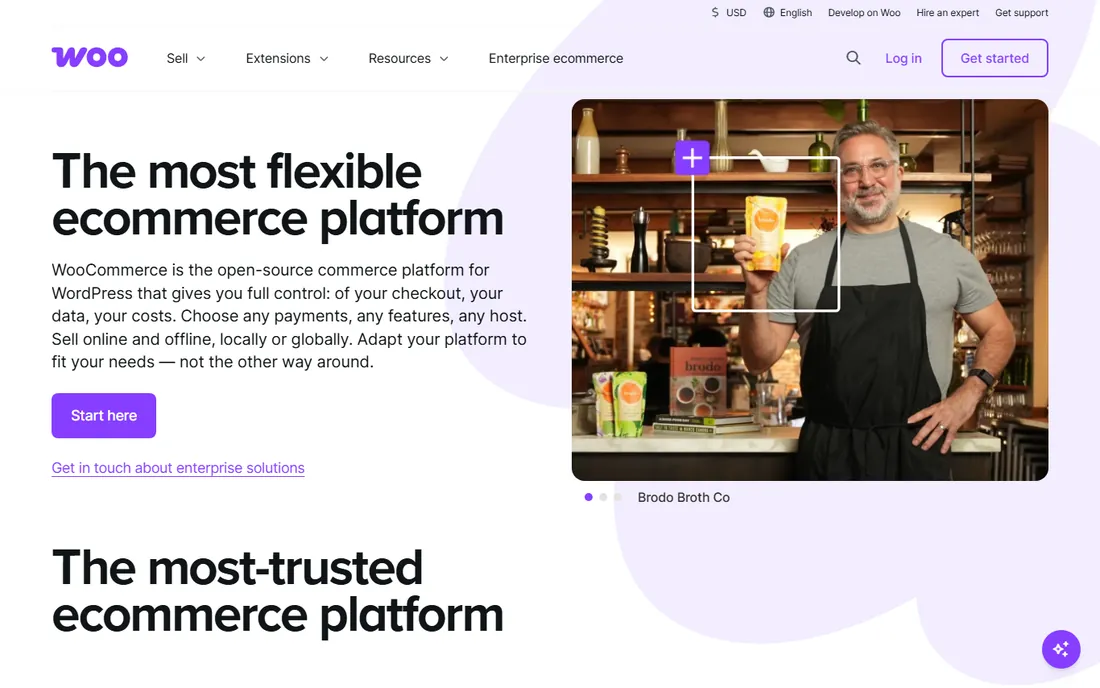
WooCommerce is the only platform here where you own everything: the code, the data, the checkout, the hosting bill. For a brand built on content marketing or SEO, that ownership is decisive, because your store lives inside your WordPress site rather than on someone else's platform. Marketplace selling comes through extensions that sync products to Amazon, eBay, and TikTok, with official and third-party connectors covering the major channels.
The cost model is genuinely different: the core is free, and you pay for hosting (WooCommerce's own pricing page cites $25 to $350 a month for most stores), extensions ($29 to $299 a year each), and any developer help. A lean store can run for less than Shopify; a complex multichannel setup with premium sync extensions and custom development can cost more. Choose WooCommerce when control and content matter more than convenience.
What we like- Core platform is free and open source with no monthly subscription
- Total control over checkout, data, and costs
- Marketplace connector extensions for Amazon, eBay, and TikTok
Watch out for- Multichannel sync depends on third-party extensions that vary in quality
- You manage hosting, security, and updates yourself
- Costs scale with extensions and developer time
#4
Ecwid
Best for: adding ecommerce to a website you already have
Visit ecwid.com
Starting priceSee website
Free planYes
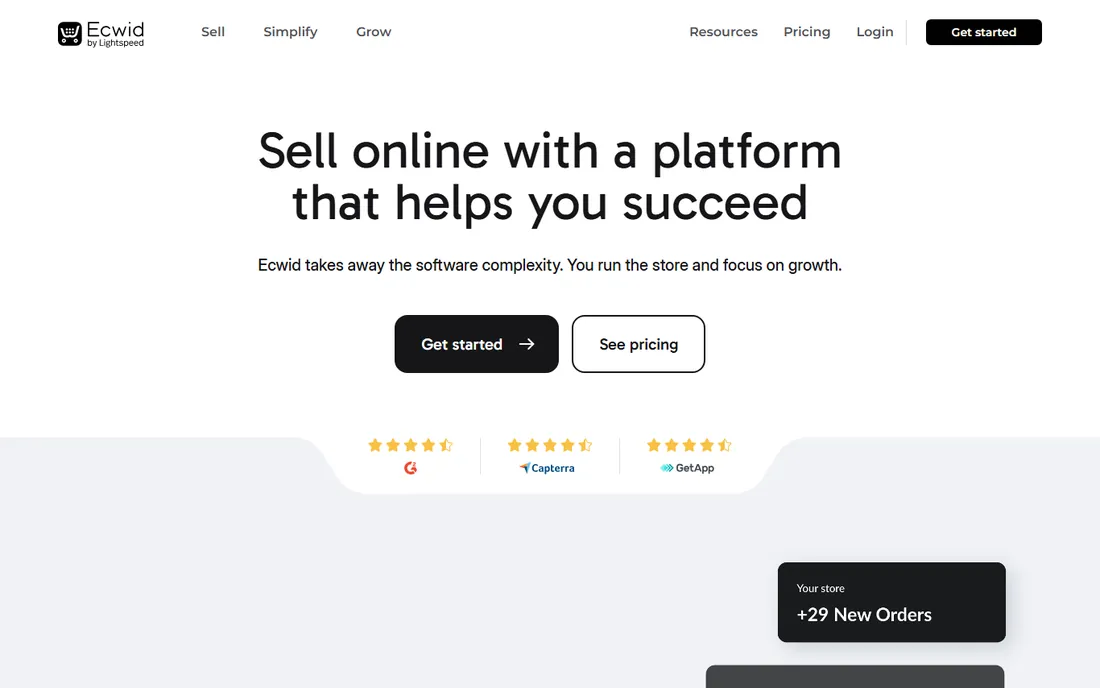
Ecwid answers a different question than the other storefronts: what if you already have a website and just want to sell on it? Instead of rebuilding your site on a commerce platform, you embed Ecwid's store widget into your existing pages. Customers check out without leaving your domain, and you get a free Instant Site if you need a standalone storefront.
For multichannel sellers, the Business plan adds Amazon and eBay selling plus abandoned cart recovery, which covers the basics of a small marketplace operation. The free plan (up to 5 products) is genuinely useful for testing. Ecwid is not the choice for a brand building its whole business on ecommerce; it is the choice for businesses where selling is one function of an existing website, like a restaurant adding online ordering or a publisher selling merch.
What we like- Embeds into any existing website (WordPress, Wix, Squarespace, custom HTML) with a few lines of code
- Permanent free tier for up to 5 products
- Marketplace selling on Amazon and eBay on higher plans
Watch out for- Design control is limited because the store inherits your site's styling
- Product limits on lower tiers cap catalog growth
- App ecosystem is far smaller than Shopify's
#5
Sellbrite
Best for: marketplace sellers who need listing and inventory sync fast
Visit sellbrite.com
Starting priceSee website
Free planFree trial

Sellbrite is built for the seller whose real storefronts are marketplaces. You list products in bulk across Amazon, eBay, Walmart, and Etsy with templates, inventory syncs automatically when anything sells anywhere, and all orders flow into one shipping interface with discounted labels. For a seller doing a few hundred orders a month across three marketplaces, it replaces a shocking amount of spreadsheet work.
Now owned by GoDaddy, Sellbrite positions itself as the easy button for multichannel operations. The honest catch is that it is a marketplace tool first: if your own branded website is the center of your business, pair Sellbrite with a real storefront rather than treating it as one. Pricing is not published as simple tiers, so get a quote against your actual order volume before budgeting.
What we like- Bulk listing to Amazon, eBay, Walmart, Etsy, and more from one interface
- Automatic inventory sync prevents overselling across channels
- Discounted shipping labels and FBA order routing built in
Watch out for- Pricing scales with order volume, so costs grow as you do
- Advanced features sit on higher tiers
- Support response times draw mixed reviews
Starting priceSee website
Free planNo
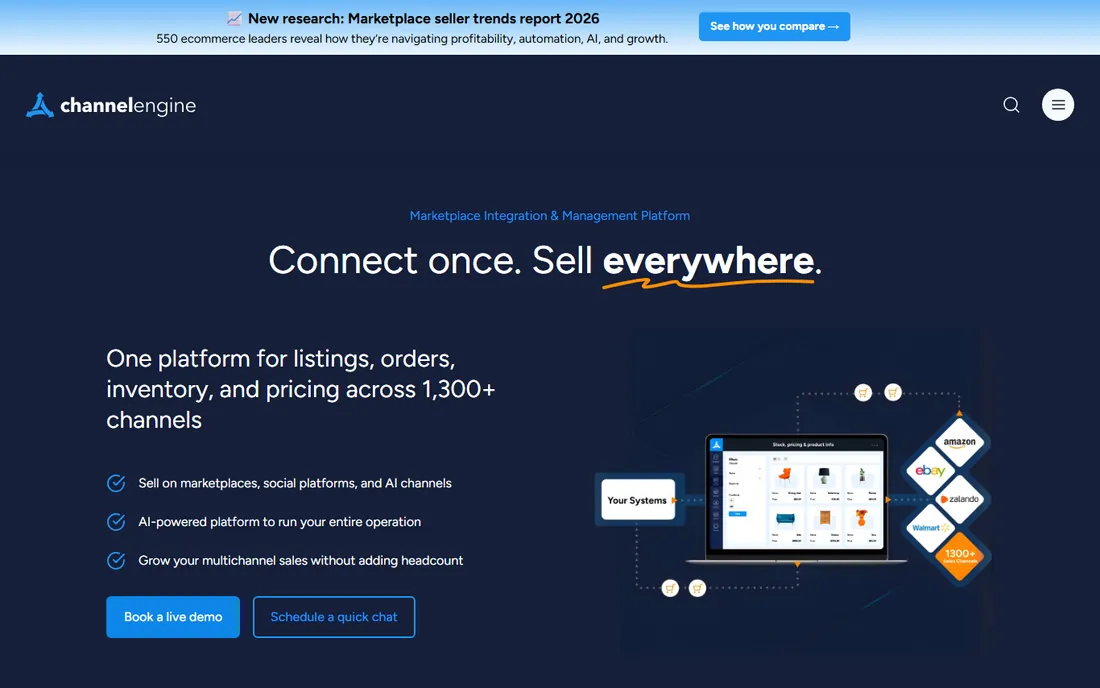
ChannelEngine is the enterprise end of this list. It connects your product catalog to over 1,300 marketplaces, automates listings, pricing, stock, and orders, and plugs into your ERP or PIM so the whole operation runs from existing systems. The dynamic pricing engine factors in taxes, shipping, fees, and competitor prices per channel, which is the kind of margin protection that matters when you sell the same SKU on fifteen marketplaces.
This is not a tool for a seller doing 200 orders a month. Pricing is custom, onboarding is guided, and the platform assumes you have operational complexity worth automating. But for brands and retailers expanding across European and global marketplaces, ChannelEngine's direct API integrations and channel expertise solve problems that app-based tools cannot touch.
What we like- Connects to 1,300+ marketplaces through direct API integrations
- Dynamic pricing with margin guardrails protects profitability across channels
- ERP, PIM, and WMS integrations for serious operations
Watch out for- Quote-based pricing puts it out of reach for small sellers
- Implementation is a project, not a signup
- Overkill if you sell on two or three channels
Starting priceSee website
Free planNo
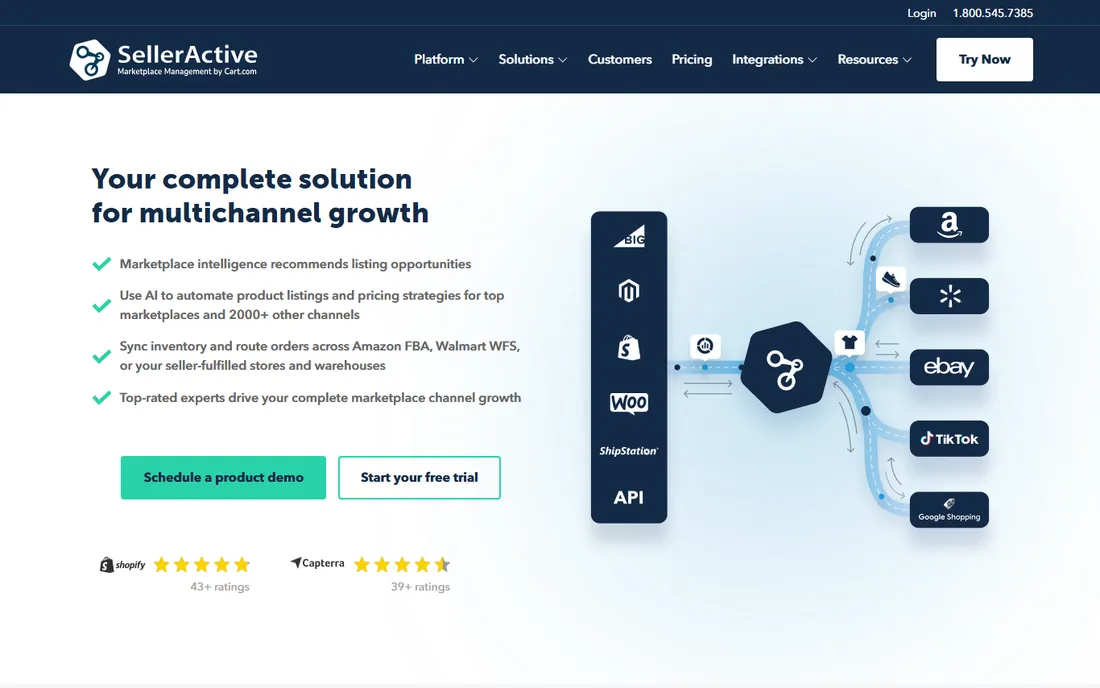
SellerActive, now part of Cart.com, combines multichannel management with one of the stronger repricing engines in the category. The automated repricer adjusts your prices across Amazon and eBay based on rules you set: stay competitive, protect margin, or mirror pricing across channels. For sellers in competitive categories where the buy box decides everything, that automation is the whole game.
The listing management and inventory sync cover the standard multichannel bases, and the managed services option means you can hand the marketplace operation to their team entirely. The platform is aimed at brands and sellers with real volume, so early-stage sellers will find it heavy. If repricing is your primary pain and you sell on Amazon and Walmart at scale, SellerActive deserves a demo.
What we like- Automated repricing across Amazon and eBay with rule-based strategies
- Multichannel listing management and inventory sync in one dashboard
- Managed marketplace services available for hands-off growth
Watch out for- Pricing is quote-based and aimed at established sellers
- The platform assumes marketplace-first selling
- Smaller sellers may find simpler tools sufficient
Starting priceSee website
Free planNo
Linnworks is the operations backbone for sellers whose problem is inventory, not listings. Every sale on any of 100+ connected channels updates stock instantly, orders route to the right warehouse or dropshipper by rules you define, and shipping labels print from one place. For a seller with multiple warehouses, a 3PL, and SKUs spread across Amazon, eBay, Walmart, and a Shopify store, that single source of truth is transformative.
The platform is built for operations teams rather than solo founders: setup is guided and measured in weeks, and pricing depends on your order volume. But if your multichannel pain is oversells, stockouts, and fulfillment chaos rather than getting listed, Linnworks attacks the right problem. Pair it with your existing storefront and let it run the back end.
What we like- Connects inventory, orders, warehouses, and shipping across 100+ channels
- Rules-based automation for order routing and carrier selection
- Works with own warehouses, 3PLs, and dropship suppliers
Watch out for- Pricing is quote-based on order volume
- Setup takes 30 to 40 days per the vendor
- Aimed at operations teams, not solo sellers
How we chose
We separated this category into two layers: storefronts with multichannel integrations (Shopify, BigCommerce, WooCommerce, Ecwid) and dedicated multichannel management tools (Sellbrite, ChannelEngine, SellerActive, Linnworks), because most sellers need one of each or a platform that covers both. We verified each vendor's homepage directly, checked official pricing pages for current plans, and reviewed product documentation and public user feedback on G2, Capterra, and seller communities for inventory accuracy, channel coverage, and support quality. We weighted real channel counts, inventory sync reliability, and fit for small to mid-size US sellers over feature-list length. We did not test any product hands-on.
Decide by your sales mix, not by the feature list
The wrong way to pick a multichannel platform is to compare feature checklists. The right way is to map where your revenue actually comes from and buy for that shape.
If your own website is the center
Start with a storefront: Shopify for speed and ecosystem, BigCommerce for built-in depth, WooCommerce if you run on WordPress and want ownership. Then add one multichannel layer only when manual channel management breaks, usually around the third channel or the first oversell. Most sellers do not need a dedicated multichannel tool until marketplace orders pass a few hundred a month.
If marketplaces are the center
Start with the multichannel tool: Sellbrite for simplicity, Linnworks for inventory operations, SellerActive for repricing-driven categories, ChannelEngine at real scale. Your branded website can be a simple storefront that feeds the same inventory system. Marketplace-first sellers who start with a storefront usually end up bolting on the multichannel layer anyway, so skip the detour.
Count the real cost before you commit
The subscription is the smallest line item. Add marketplace referral fees (typically 6 to 15 percent per sale), payment processing, shipping, app or extension subscriptions, and the labor of managing listings. A platform that saves $100 a month on subscriptions but costs you two oversell refunds a month is the expensive choice. Model the full cost per order before you sign.
The oversell problem that defines this category
Every multichannel seller eventually meets the oversell: the same SKU sells on Amazon and eBay within minutes, inventory only covered one of them, and now you are canceling an order, refunding a customer, and explaining yourself to a marketplace algorithm that punishes cancellations.
This is the problem the whole category exists to solve, and it is worth evaluating tools specifically on it. How fast does inventory sync after a sale? Does the platform hold buffer stock per channel? What happens when a channel's API goes down? The answers matter more than the dashboard design. When you demo any tool on this list, ask the vendor to walk you through an oversell scenario, not the feature tour.
Also plan for channel expansion deliberately. Each new marketplace adds listing work, fee structures, customer service load, and return policies. The sellers who win at multichannel expand one channel at a time, get it profitable, and only then add the next. A platform that makes adding a channel take minutes instead of weeks helps, but it does not replace the operational discipline.
Frequently asked questions
What is the best multi channel ecommerce software for small businesses?
For small businesses selling on their own site plus one or two marketplaces, Shopify or BigCommerce at $29 a month billed annually covers the storefront and channel integrations. Add Sellbrite when marketplace orders grow past what manual management handles. Start simple and add the multichannel layer when you feel the pain.
Do I need a separate multichannel tool if I use Shopify?
Not at first. Shopify's marketplace channel apps handle Amazon, eBay, Walmart, and TikTok for most sellers. A separate tool like Sellbrite or Linnworks becomes worth it when you need bulk listing management, cross-channel repricing, or inventory rules that Shopify's native sync cannot express. Many sellers run Shopify plus one specialist quite happily.
How do multichannel platforms prevent overselling?
They keep one central inventory record and sync stock counts to every connected channel after each sale, usually within minutes. When stock hits zero, listings pause or close across channels. Buffer stock settings let you hold back units from specific channels. The speed and reliability of that sync is the core quality metric for this category.
What are multichannel listing fees?
Marketplaces charge their own fees per sale (Amazon referral fees run roughly 6 to 15 percent depending on category, eBay around 13 percent for most categories), separate from your platform subscription. The multichannel tool's subscription is on top of those. Budget both: a $99 a month tool is cheap next to 15 percent of revenue, but only if the tool actually grows that revenue.
Can WooCommerce sell on Amazon and eBay?
Yes, through marketplace connector extensions that sync products, inventory, and orders between WooCommerce and the marketplaces. The quality varies by extension, so check recent reviews and update frequency before buying. For heavy marketplace volume, many WooCommerce sellers pair the store with a dedicated tool like Linnworks for the sync layer.
Is selling on multiple marketplaces worth it?
It is when one channel is profitable and operationally stable before you add the next. Each marketplace diversifies your revenue but multiplies operational complexity: different fees, different customers, different rules. Sellers who expand deliberately, one channel at a time, usually see the diversification pay off. Sellers who launch on five channels at once usually drown in the operations.
Sources we checked (8)
- https://www.shopify.com
- https://www.bigcommerce.com
- https://woocommerce.com
- https://www.ecwid.com
- https://www.sellbrite.com
- https://channelengine.com
- https://www.selleractive.com
- https://linnworks.com
Is your product missing or out of date?
We review this list regularly. Vendors can request a listing, send updated pricing or ask about featured placement.

Shihab Mia · Founder, Rankite
Shihab has spent more than a decade helping SaaS and e-commerce brands grow through search. He writes Rankite's software buying guides from pricing pages, documentation and public user reviews. More about Shihab.