How we make this list: we compare pricing pages, product documentation and public user reviews. Rankite is independent; if a vendor ever pays for a featured spot, that listing is clearly labeled Partner.
Key takeaways
- Cin7 and Brightpearl are the full inventory and order management suites for growing multichannel sellers.
- Extensiv (formerly Skubana) targets high-volume sellers who live on operational analytics.
- ShipStation is the shipping specialist: the fastest way to get orders out the door across carriers.
- Linnworks, Veeqo, ChannelEngine, and SellerCloud cover listing management, Amazon-focused operations, and marketplace expansion.
Quick comparison
| Tool | Best for | Starting price | Free plan |
|---|
 Cin7 Cin7 | inventory and order management | See website | No |
 Extensiv Extensiv | high-volume operational analytics | See website | No |
 ShipStation ShipStation | multi-carrier shipping | See website | Free trial |
 Linnworks Linnworks | multichannel listing management | See website | No |
 Veeqo Veeqo | Amazon and multichannel fulfillment | See website | See website |
 Brightpearl Brightpearl | retail operations suite | See website | No |
 ChannelEngine ChannelEngine | marketplace expansion | See website | No |
 SellerCloud SellerCloud | enterprise multichannel commerce | See website | No |
Is your product missing or out of date?
We review this list regularly. Vendors can request a listing, send updated pricing or ask about featured placement.
The best ecommerce management software
Starting priceSee website
Free planNo
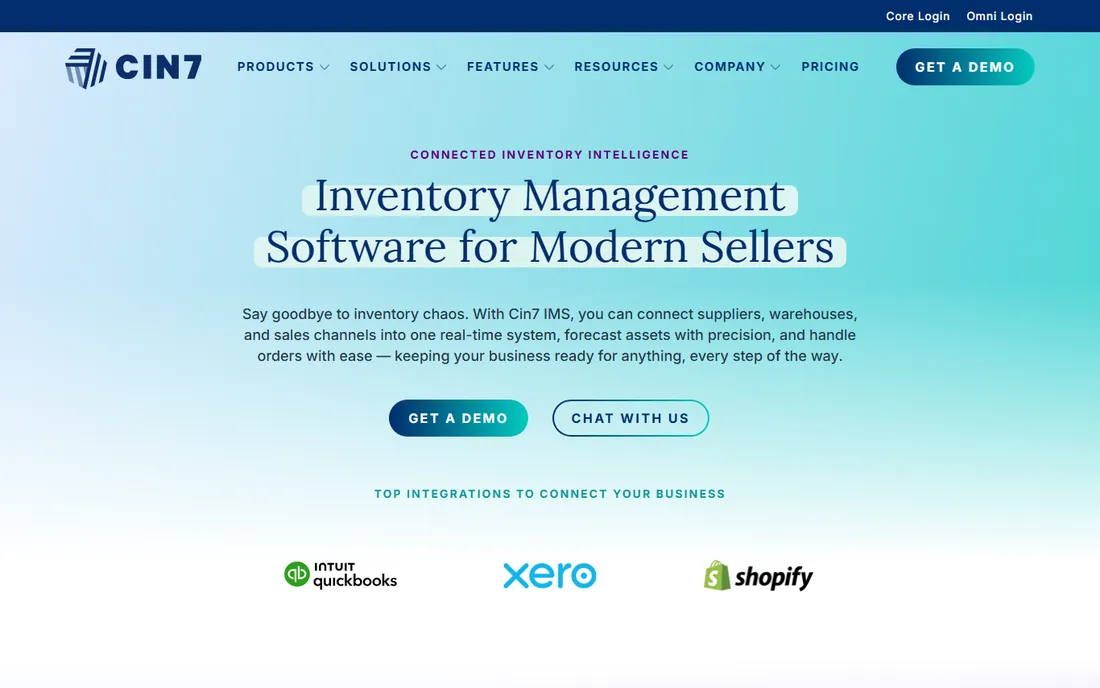
Cin7 is inventory and order management for sellers operating across multiple channels. Stock levels sync across Shopify, Amazon, wholesale, and retail POS, so the overselling that plagues multichannel sellers stops.
The B2B capabilities distinguish it: wholesale price lists, B2B portals, and EDI support serve sellers with both direct and wholesale businesses. Manufacturing and assembly features handle sellers who produce what they sell.
Implementation is a real project, and pricing requires a quote. But for growing sellers whose inventory complexity exceeds what their ecommerce platform handles natively, Cin7 provides the operational backbone.
What we like- Strong inventory across channels
- Good B2B and DTC support
- Solid integrations
Watch out for- Implementation takes effort
- Pricing is quote-based
Starting priceSee website
Free planNo
Extensiv (formerly Skubana) serves high-volume sellers who manage operations by the numbers. The analytics show profitability by channel, SKU, and order, turning operational data into decisions about what to sell where.
Automation handles the volume: order routing, purchase orders, and warehouse workflows run with minimal manual touch. The platform assumes serious order counts and is built to keep them flowing accurately.
Small sellers will find it more than they need at prices beyond their budgets. But for established sellers doing thousands of orders monthly, Extensiv's analytical depth justifies the investment.
What we like- Excellent operational analytics
- Built for high volume
- Strong automation
Watch out for- Overkill for small sellers
- Enterprise-oriented pricing
Starting priceSee website
Free planFree trial
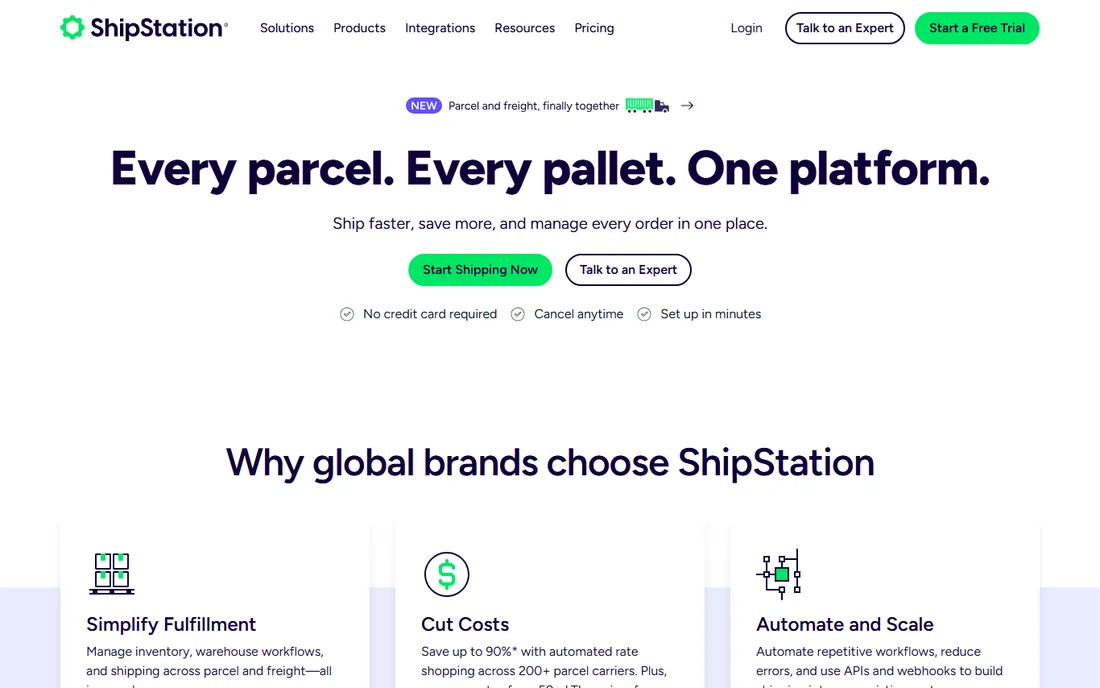
ShipStation does one job extremely well: getting orders shipped. Connect your stores, import orders, compare carrier rates, print labels in batches, and send tracking automatically. The discounted carrier rates alone often cover the subscription.
The carrier breadth is the asset: USPS, UPS, FedEx, DHL, and regional carriers in one interface, with automation rules that pick the right service per order. High-volume shippers process hundreds of orders an hour.
It is not inventory management; sellers with stock complexity need a companion tool. But for the specific pain of shipping efficiently across carriers, ShipStation is the standard that competitors are measured against.
What we like- Connects every major carrier
- Discounted rates
- Fast label printing
Watch out for- Shipping-focused, not full inventory
- Costs scale with volume
Starting priceSee website
Free planNo
Linnworks helps sellers manage listings and inventory across marketplaces from one system. Create a product once, list it across Amazon, eBay, and your webstore, and keep stock synchronized everywhere.
The marketplace depth is real, particularly for Amazon and eBay sellers with large catalogs. Repricing, listing templates, and bulk management handle the scale that manual marketplace dashboards cannot.
The interface shows its age, and onboarding a large catalog takes effort. But sellers with hundreds or thousands of SKUs across marketplaces find the centralized control worth the learning curve.
What we like- Strong listing tools
- Good Amazon and eBay depth
- Automation rules
Watch out for- Interface feels dated
- Onboarding takes time
Starting priceSee website
Free planSee website
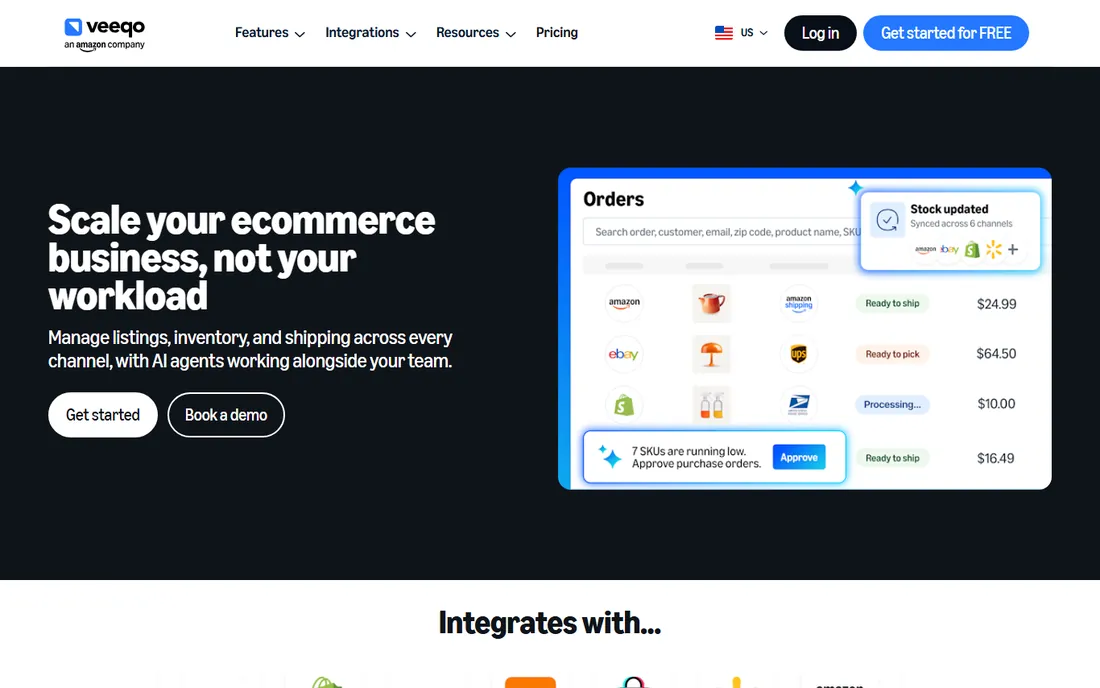
Veeqo, owned by Amazon, combines shipping software with inventory management, and its FBA integration is naturally deep. Sellers manage Amazon and other channels from one system, with the Amazon connection working the way you would expect from the owner.
The pricing disrupted the market at launch, and the combination of shipping discounts with inventory features gives small and mid-size sellers real value. Multichannel inventory sync prevents the stockouts and oversells that hurt seller metrics.
Sellers who avoid Amazon find less to love; the platform's center of gravity is clearly the Amazon ecosystem. But for Amazon-first sellers expanding to other channels, Veeqo's integration advantage is significant.
What we like- Amazon-owned, deep FBA integration
- Shipping plus inventory
- Competitive pricing
Watch out for- Amazon-centric
- Less suited to non-Amazon sellers
Starting priceSee website
Free planNo
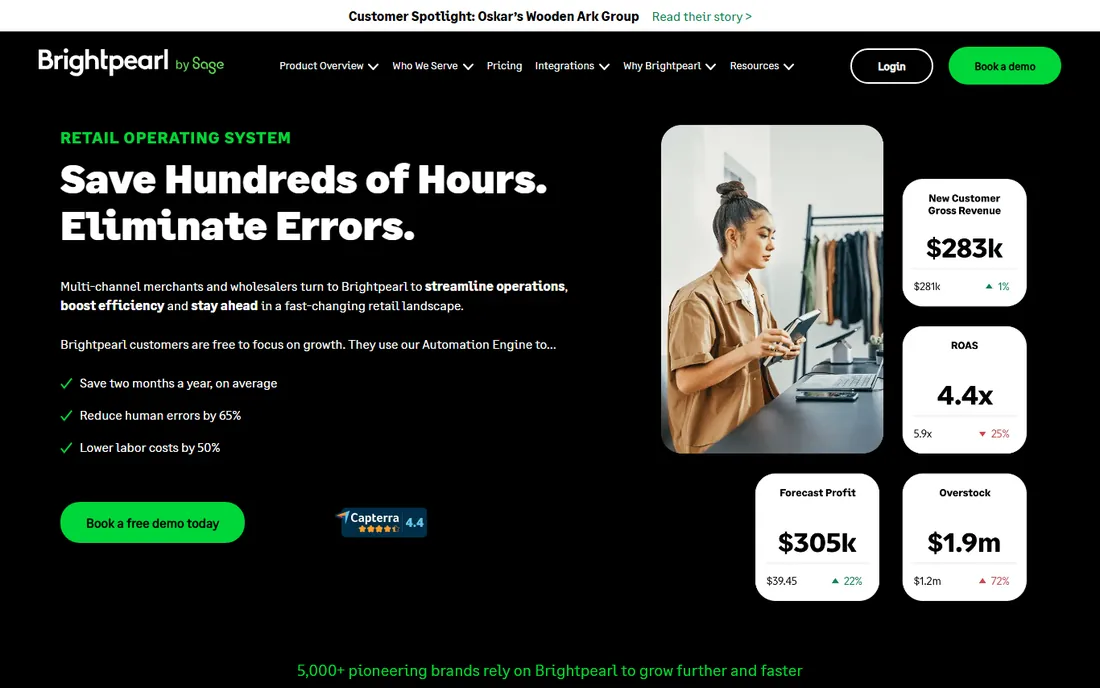
Brightpearl is closer to retail ERP than to simple inventory software: orders, inventory, purchasing, warehousing, accounting, and reporting in one system built for retail complexity. Growing retailers graduate to it when point solutions stop fitting together.
The financial depth distinguishes it. Real accounting, not just operational reports, means the finance team works in the same system as operations. Multi-warehouse, multi-currency, and complex tax scenarios are handled natively.
Implementation is a genuine project with real costs, and pricing suits established retailers rather than startups. But for retail businesses whose operational complexity demands a unified system, Brightpearl delivers ERP depth without traditional ERP pain.
What we like- True retail ERP depth
- Strong financials
- Handles complexity well
Watch out for- Implementation is significant
- Priced for established retailers
Starting priceSee website
Free planNo
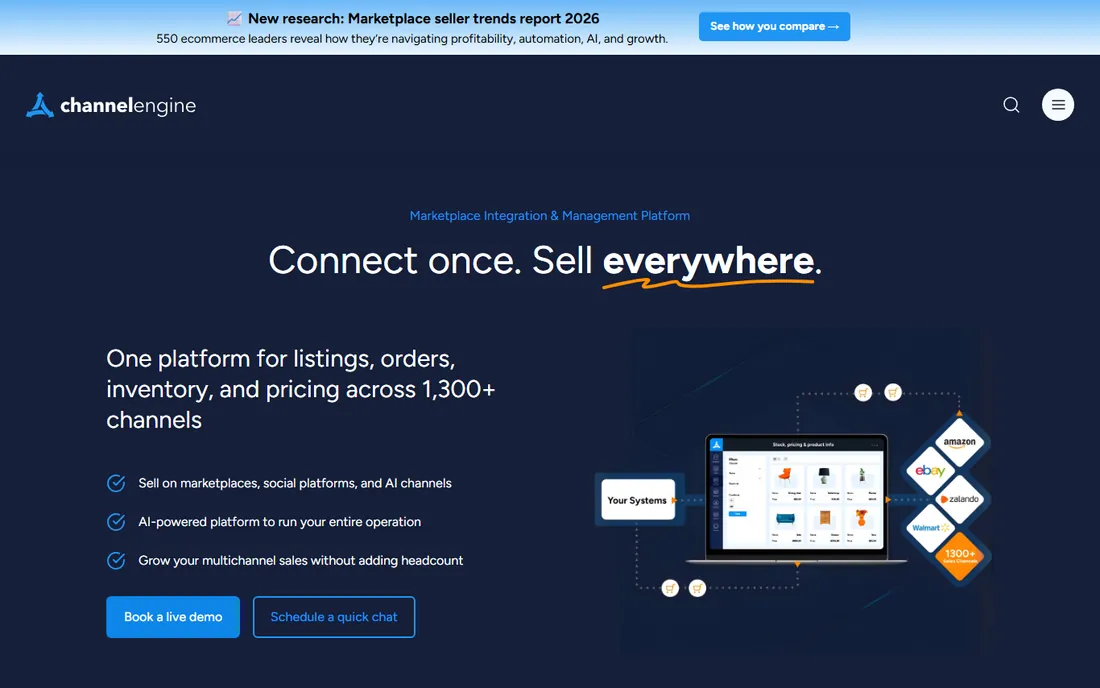
ChannelEngine's pitch is marketplace expansion: connect your product catalog to hundreds of marketplaces and manage listings, pricing, and orders centrally. European sellers expanding across the continent's fragmented marketplaces find it particularly valuable.
The product data tools handle the unglamorous work of marketplace selling: mapping attributes, managing translations, and keeping listings compliant with each marketplace's requirements. That operational detail is where expansion projects usually stall.
It is a marketplace connector more than a full operations suite; inventory and fulfillment depth trail the dedicated tools. Pricing per marketplace adds up as you expand. But for the specific job of selling on many marketplaces efficiently, it is purpose-built.
What we like- Connects to hundreds of marketplaces
- Strong European coverage
- Good product data tools
Watch out for- Marketplace focus means thinner operations
- Pricing per marketplace
Starting priceSee website
Free planNo
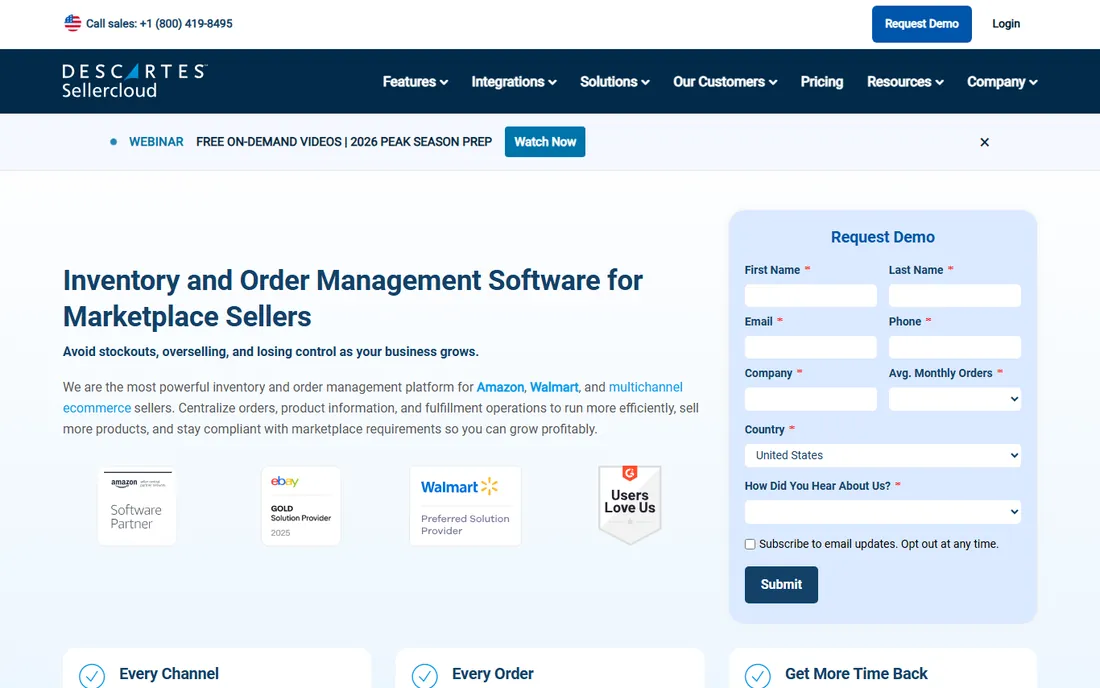
SellerCloud serves sellers with serious operational complexity: many channels, multiple warehouses, high order volumes, and custom workflows. The platform's depth covers inventory, orders, purchasing, and warehouse management with extensive customization.
The warehouse management features stand out. Sellers operating their own fulfillment get receiving, putaway, picking, and packing workflows that rival dedicated WMS products. API access and customization handle the edge cases that standard tools cannot.
Complexity is the price. Implementation requires expertise, and the interface prioritizes power over simplicity. But for sellers whose operations exceed what mid-market tools handle, SellerCloud provides enterprise depth without enterprise software bloat.
What we like- Deep multichannel capabilities
- Strong warehouse management
- Customizable
Watch out for- Complex
- Implementation requires expertise
Matching software to seller stage
Early sellers need shipping and listing tools, not ERP. ShipStation plus your ecommerce platform handles the first phase; adding complexity too early just slows you down.
Growth brings inventory pain: oversells, stockouts, and manual reconciliation across channels. That is when Cin7, Linnworks, or Veeqo earn their keep. The trigger is usually operational errors costing real money, not a revenue milestone.
Established sellers face a different question: unify or specialize. Suites like Brightpearl and SellerCloud consolidate everything; best-of-breed stacks combine specialists like Extensiv and ShipStation. Unification simplifies; specialization optimizes. Choose based on whether your bottleneck is coordination or capability.
The Amazon question
Every tool on this list handles Amazon, but the depth varies enormously. Amazon-first sellers should weight FBA integration, repricing, and Amazon-specific workflows heavily; Veeqo and Linnworks lead here.
Diversification is the strategic point. Sellers dependent on one marketplace live with platform risk: policy changes, fee increases, and account suspensions. Multichannel tools reduce that risk, but only if you actually sell meaningfully on multiple channels.
Whatever you choose, keep your product data clean and centralized. Marketplace expansion, inventory accuracy, and reporting all depend on one trustworthy product record.
Taming multichannel complexity
Every new sales channel multiplies operational complexity: another listing format, another fee structure, another set of rules, another inbox of customer messages. The tools on this list exist because spreadsheets collapse under that weight around the third or fourth channel.
Centralize product data first. One system should own the truth about every SKU: titles, descriptions, images, prices, and stock levels. Every channel listing derives from that record. Sellers who let each channel drift into its own version of the catalog spend their lives reconciling.
Automate the routine decisions. Reorder points, repricing rules, and order routing should run without daily judgment calls. Reserve human attention for exceptions and strategy. The sellers who scale are the ones whose operations run while they sleep.
The profitability blind spot
Revenue by channel is visible; profit by channel usually is not. Marketplace fees, advertising costs, shipping, returns, and payment processing vary enormously across channels, and sellers routinely discover their biggest channel is their least profitable.
Build channel-level P&Ls monthly. Allocate all costs, including your time, to each channel honestly. The results often surprise: the "free" organic channel with high return rates, the marketplace with fees that eat margins, the wholesale account that is actually the profit engine.
Let the data drive channel strategy. Double down on profitable channels, fix or exit unprofitable ones. The operational tools provide the data; the discipline to act on it separates thriving sellers from busy ones.
How we chose
We compared software that ecommerce sellers use to manage inventory, orders, listings, and shipping across channels, based on vendor documentation, pricing pages, and seller community discussion. We covered inventory suites, shipping specialists, marketplace connectors, and enterprise platforms, spanning seller sizes from growing to established. Pricing is typically quote-based, so we link to vendors for current numbers.
Frequently asked questions
When do we outgrow our ecommerce platform's built-in tools?
When inventory errors cost real money: overselling across channels, stockouts from poor visibility, or hours daily on manual reconciliation. Most sellers feel this between high six and seven figures in revenue, though complex catalogs hit it earlier.
Should we choose one suite or multiple specialized tools?
Suites reduce integration headaches and give one system to learn. Specialists do their one job better. Companies with straightforward operations usually prefer suites; companies with a critical function (like complex warehousing) often keep a specialist for it.
How long does implementation take?
Shipping tools deploy in days. Inventory suites take weeks to months depending on catalog size and process complexity. ERP-like implementations run several months. Budget the internal time alongside the vendor's timeline; your team's availability is usually the constraint.
What about 3PL vs. self-fulfillment?
Software supports both, but the choice shapes which features matter. Self-fulfillment needs warehouse management depth; 3PL users need EDI and integration reliability. Decide the fulfillment strategy before evaluating software, not after.
Can these tools handle B2B and wholesale?
Some better than others. Cin7 and Brightpearl have real B2B capabilities: price lists, portals, and terms. Shipping-focused tools assume DTC. If wholesale is significant, weight B2B features heavily in evaluation.
How do we handle returns across channels?
Process returns centrally with clear policies per channel, and track return rates by SKU and channel. High-return products need listing or quality fixes; the data usually points at specific issues.
Should we sell on every marketplace?
No. Each marketplace adds operational overhead; expand where the audience fits your products and the fees leave margin. Two or three profitable channels beat six thin ones.
Sources we checked (8)
- https://www.cin7.com/
- https://www.extensiv.com/
- https://www.shipstation.com/
- https://www.linnworks.com/
- https://www.veeqo.com/
- https://www.brightpearl.com/
- https://www.channelengine.com/
- https://sellercloud.com/
Is your product missing or out of date?
We review this list regularly. Vendors can request a listing, send updated pricing or ask about featured placement.

Shihab Mia · Founder, Rankite
Shihab has spent more than a decade helping SaaS and e-commerce brands grow through search. He writes Rankite's software buying guides from pricing pages, documentation and public user reviews. More about Shihab.