How we make this list: we compare pricing pages, product documentation and public user reviews. Rankite is independent; if a vendor ever pays for a featured spot, that listing is clearly labeled Partner.
Key takeaways
- The best ecommerce inventory management software keeps stock accurate across every sales channel. Cin7 ($349/mo) leads for multichannel brands. Zoho Inventory ($0) and Sortly ($0) are the free starters.
- inFlow ($161/mo) suits B2B and wholesale. Fishbowl ($229/mo annual) is the QuickBooks-native choice. Katana ($0) serves makers and manufacturers.
- Watch order volume caps and user limits; they drive the real cost. Most tools price by orders, users or locations, not just the headline plan.
- Spreadsheets break at multichannel scale. The right time to buy is when stockouts, oversells or manual reconciliation cost more than the software.
Quick comparison
| Tool | Best for | Starting price | Free plan |
|---|
 Cin7 Cin7 | multichannel brands | $349/mo | No |
 inFlow inFlow | B2B and wholesale | $161/mo | No |
 Zoho Inventory Zoho Inventory | free-to-start sellers | $0 | Yes |
 Ordoro Ordoro | shipping plus inventory | $349/mo | No |
 Sortly Sortly | visual inventory tracking | $0 | Yes |
 Fishbowl Fishbowl | QuickBooks-native inventory | $229/mo (billed annually) | No |
 Katana Katana | makers and manufacturers | $0 | Yes |
 Extensiv Extensiv | omnichannel fulfillment | See website | No |
 Linnworks Linnworks | multichannel listing management | See website | No |
 Megaventory Megaventory | mid-market inventory and orders | See website | No |
Is your product missing or out of date?
We review this list regularly. Vendors can request a listing, send updated pricing or ask about featured placement.
The best ecommerce inventory management software
Starting price$349/mo
Free planNo
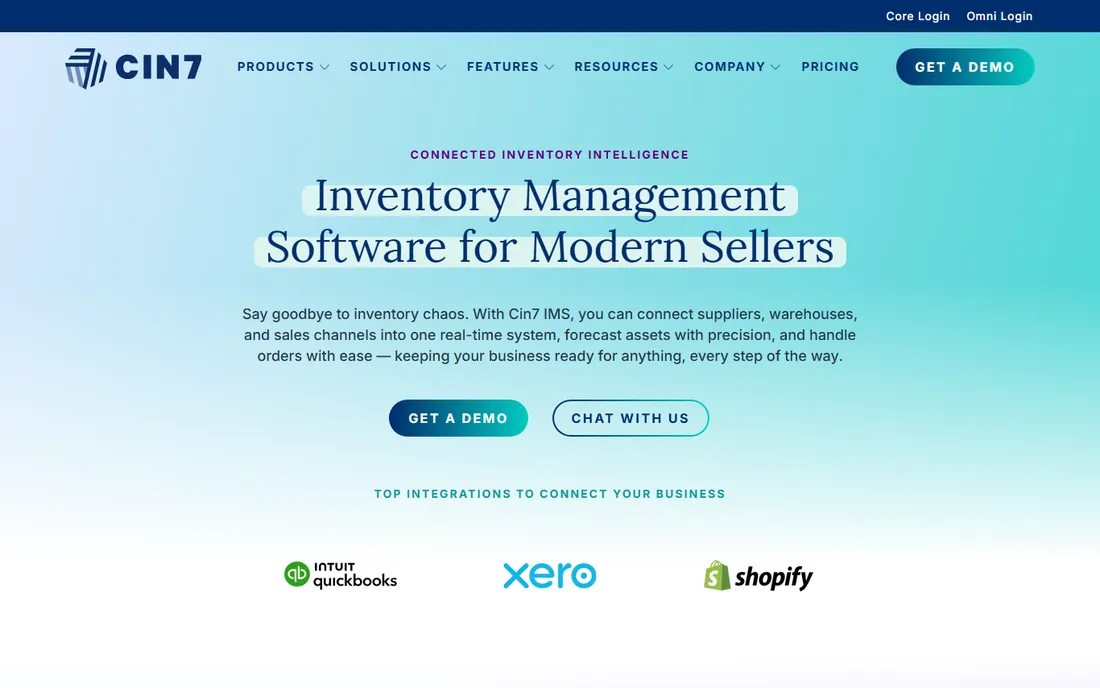
Cin7 is the multichannel inventory platform for brands that sell everywhere. Pricing starts at $349 per month for Core Standard, with Pro at $599 and Advanced at $999. The platform connects Shopify, Amazon, WooCommerce, Xero, QuickBooks and 700+ other apps, keeping one stock record across every channel.
The depth suits growing brands. Sales demand forecasting, assemblies and BOMs, batch and expiry tracking, B2B portal and EDI connections cover retail, wholesale and DTC from one dashboard. Unlimited inventory locations come standard.
The cost and complexity are real. Standard caps at 6,000 sale orders a year and 2 ecommerce integrations. For multichannel sellers who have outgrown entry-level tools, Cin7 is the best ecommerce inventory management software in its class.
What we like- 700+ integrations
- Strong multichannel sync
- AI demand forecasting
- EDI for B2B
Watch out for- $349/mo entry is steep for small sellers
- Order and user caps on lower tiers
Starting price$161/mo
Free planNo
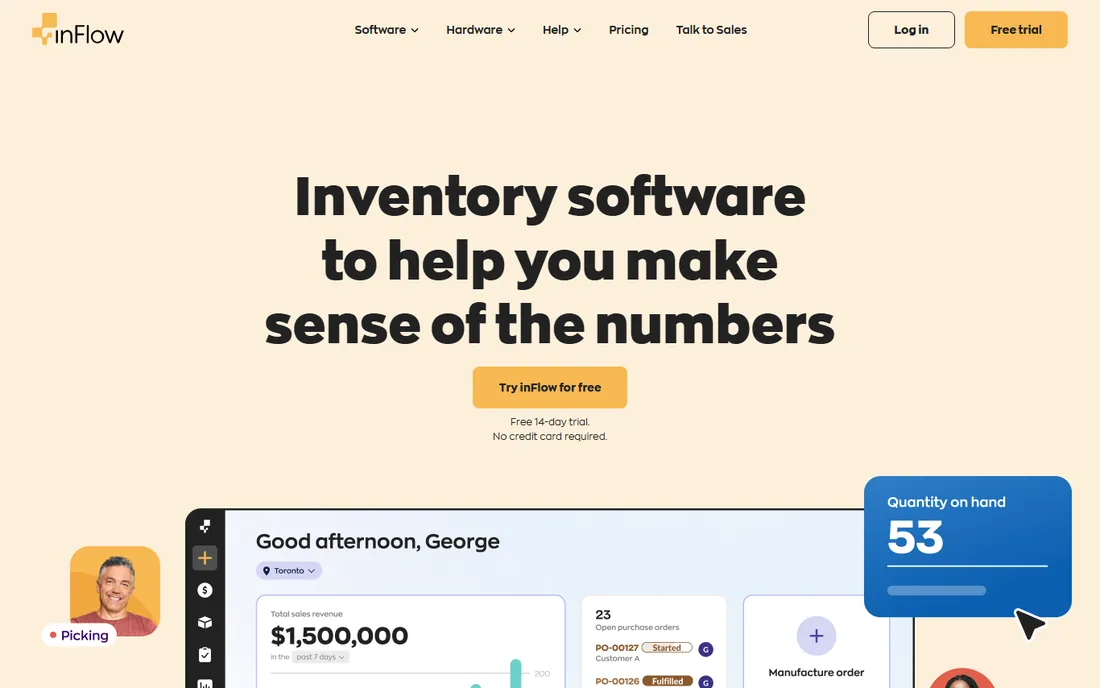
inFlow is the B2B-friendly inventory tool. The vendor's own pricing starts from $161 per month for the Entrepreneur tier on monthly billing, with Small Business, Mid-Size and Enterprise above. Plans are priced by tier with team members included, not per seat.
The B2B features stand out. Showrooms let wholesale customers browse and order, invoicing automation streamlines the back office, and the interface is genuinely easy for non-technical staff. Serial tracking, label printing and solid reporting round out the package.
Integrations are thinner than Cin7 or Zoho, and the entry price is high for solo sellers. For B2B and wholesale sellers who need showrooms and straightforward inventory, inFlow is the pick.
What we like- Strong B2B showrooms and invoicing
- Easy to use
- Priced by tier not per seat
Watch out for- Limited integrations vs competitors
- Higher cost for small teams
Starting price$0
Free planYes
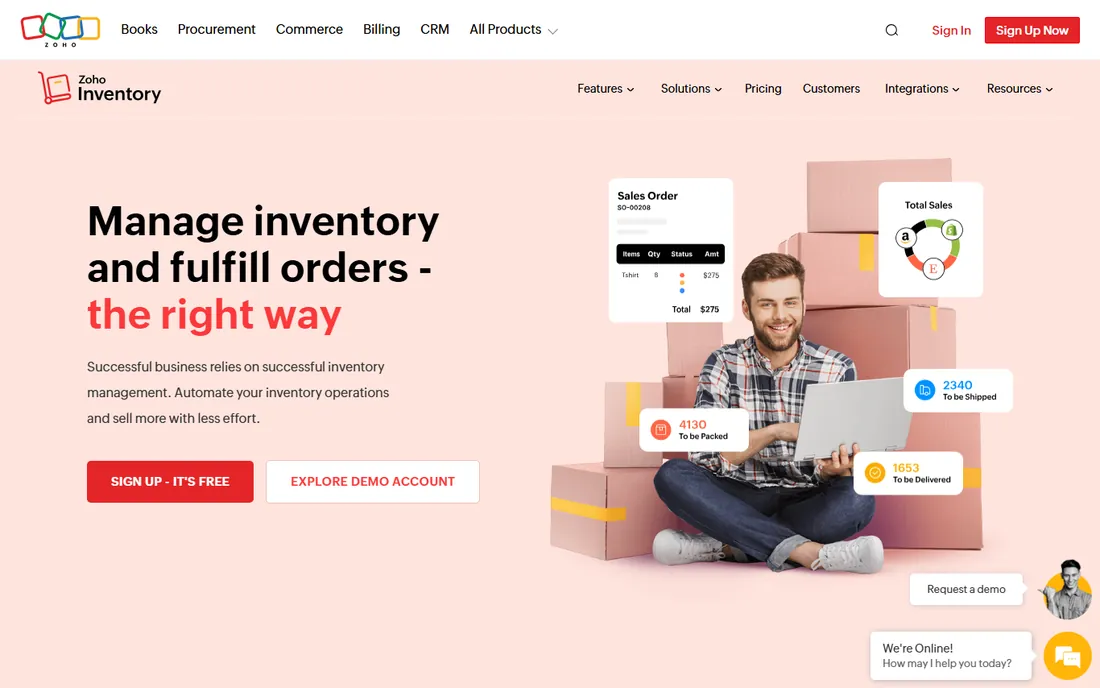
Zoho Inventory is the free-to-start option. The forever-free plan covers 50 orders, 1 user and 1 location. Standard is $29 per organization per month billed annually, with Premium, Plus and Enterprise above. A 15% nonprofit discount is available.
The value is strong. Composite items, dropshipping, backordering, customer portal, barcode generation and batch tracking come at prices that undercut most competitors. Inside the Zoho ecosystem, it syncs with Zoho Books, CRM and Commerce.
Order caps constrain growth on cheaper plans. For startups and small sellers that want capable multichannel inventory at minimal cost, Zoho Inventory is the value leader.
What we like- Free plan ($0, 50 orders)
- Standard from $29/org/mo
- Deep Zoho ecosystem
- 15% nonprofit discount
Watch out for- Order caps on lower tiers
- Best inside the Zoho suite
Starting price$349/mo
Free planNo
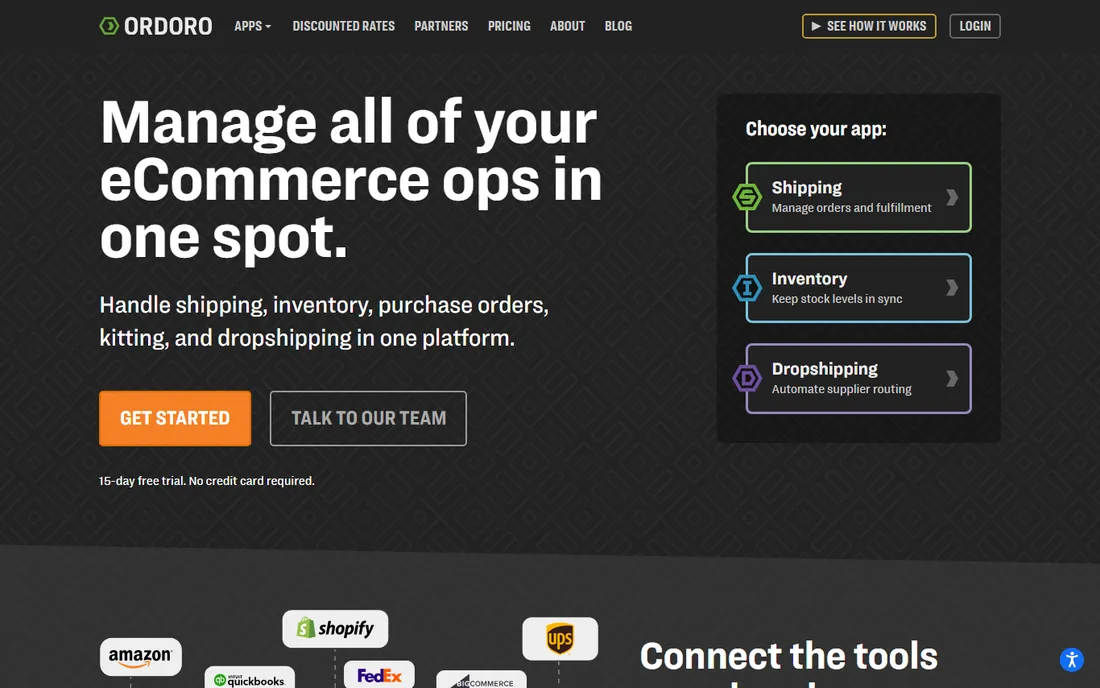
Ordoro is the shipping-plus-inventory combo. The Inventory app starts at $349 per month. Shipping starts free (Essential) with paid tiers at $59 and $149. Dropshipping starts at $299. A 15-day free trial requires no credit card.
The combination is the appeal. Sellers that ship their own orders get inventory tracking, shipping labels, dropship management and automation in one platform, with unlimited warehouses, sales channels and users on inventory plans. Kitting, purchase orders and forecasting cover the operational side.
The inventory price matches Cin7 without the same integration depth. For sellers where shipping and inventory are equally important, Ordoro's unified approach wins.
What we like- Combines shipping, inventory and dropshipping
- Free shipping plan
- Strong automation
Watch out for- $349/mo inventory entry
- Modular pricing adds up
Starting price$0
Free planYes
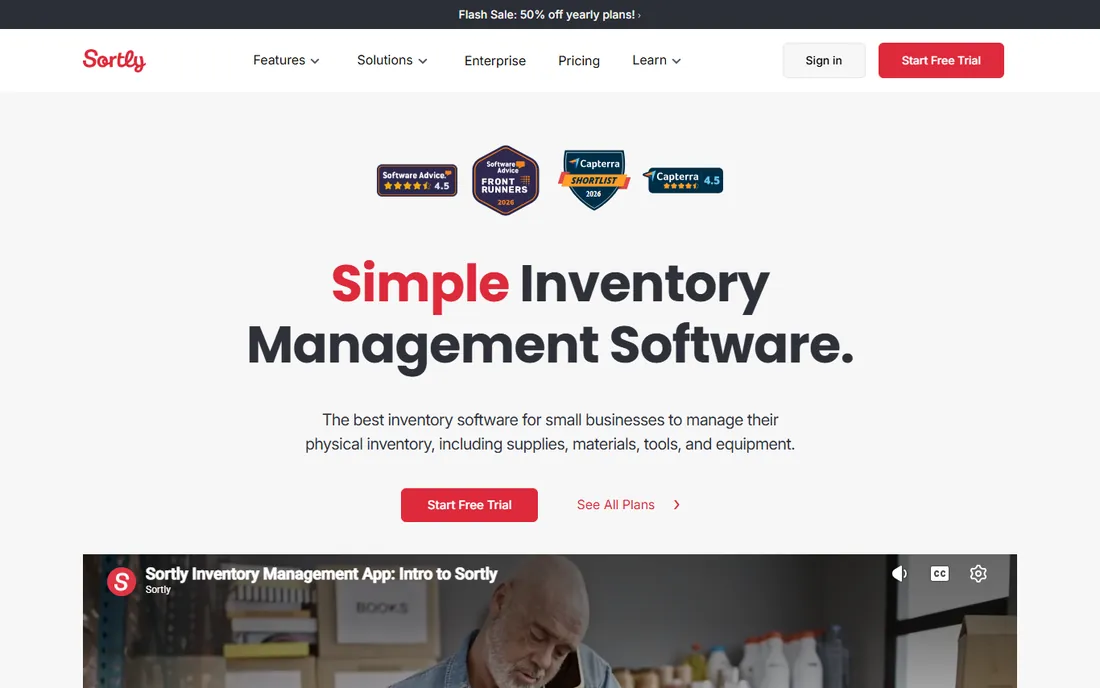
Sortly is the visual inventory tracker. The Free plan costs $0 per month for 100 unique items and 1 user. Advanced is $24 per month billed annually (first-year discount), Ultra $74, Premium $149. A 14-day trial is available.
The simplicity is unmatched. Photo-based cataloging, QR and barcode labels, and a polished mobile app make it the easiest tool here for non-technical teams. Small sellers, warehouses and field teams adopt it fast.
It is not a high-volume ecommerce engine; automation and multichannel sync are thin. For simple stock tracking, asset management and small catalogs, Sortly is the easiest start.
What we like- Free plan ($0, 100 items)
- Extremely easy to use
- Great mobile app with QR/barcode
Watch out for- Limited automation
- Not built for high-volume ecommerce
Starting price$229/mo (billed annually)
Free planNo
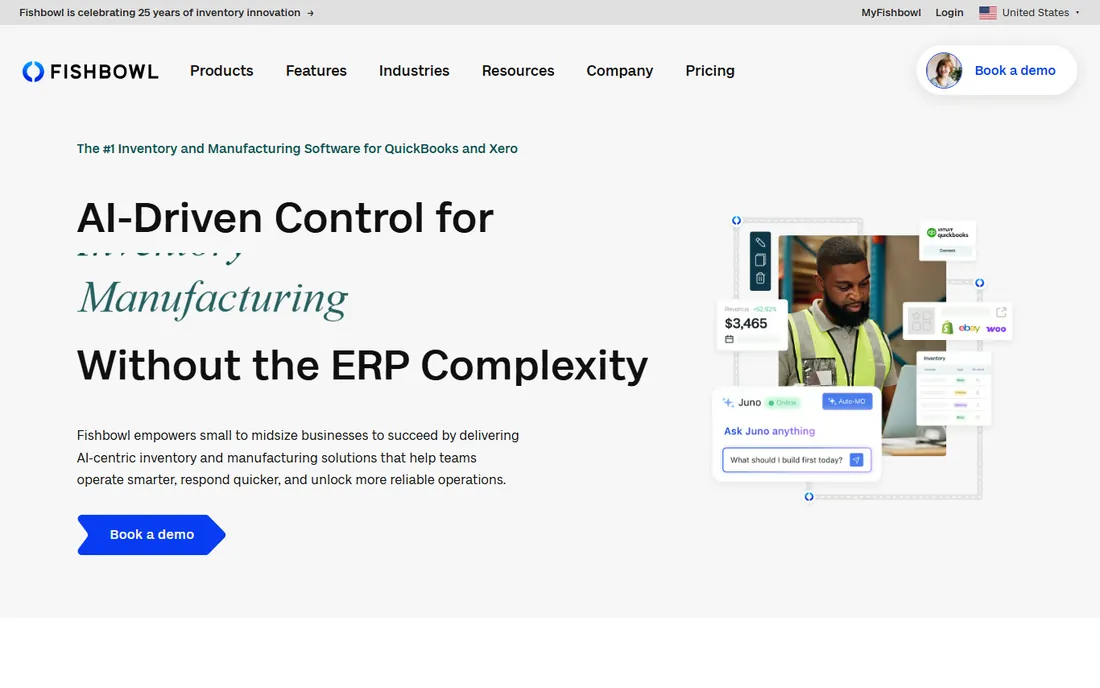
Fishbowl is the QuickBooks-native inventory system. Cloud Inventory starts from $229 per month billed annually. Fishbowl Advanced, for manufacturing and multi-warehouse operations, starts from $595 per month. The two-way QuickBooks sync is the deepest in the category.
The product serves businesses that make, move and sell physical products. Barcode scanning, reorder points, lot and batch traceability, demand forecasting and EDI cover the operational spectrum. The Advanced platform adds BOMs, MRP and work orders.
Fishbowl requires an implementation package, and the QuickBooks focus is a constraint for Xero shops. For QuickBooks-based sellers and manufacturers, it is the natural inventory choice.
What we like- Deep QuickBooks two-way sync
- From $229/mo annual
- Manufacturing and warehouse options
Watch out for- QuickBooks-centric
- Implementation package required
Starting price$0
Free planYes
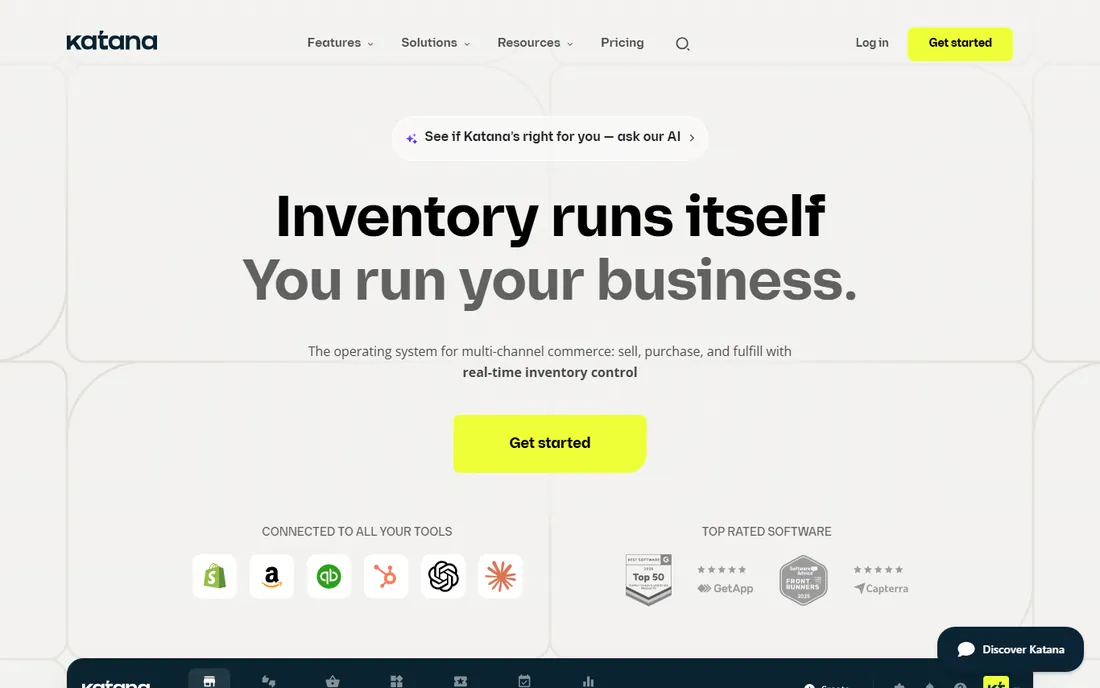
Katana is the manufacturing-first inventory tool. The Free plan costs $0 with up to 30 SKUs, unlimited users, integrations and locations. Advantage is a custom annual contract with implementation included.
The product is built for makers. Bills of materials, production planning, shop floor app, traceability and purchasing serve small manufacturers that also sell online. The visual interface is cleaner than traditional MRP tools.
The Free plan only integrates with Shopify for ecommerce. For small manufacturers and artisan brands that need production plus inventory, Katana is the best fit.
What we like- Free plan ($0, 30 SKUs)
- Manufacturing-first with BOMs and shop floor
- Unlimited users
Watch out for- Advantage pricing is custom
- Ecommerce integrations limited on Free
Starting priceSee website
Free planNo
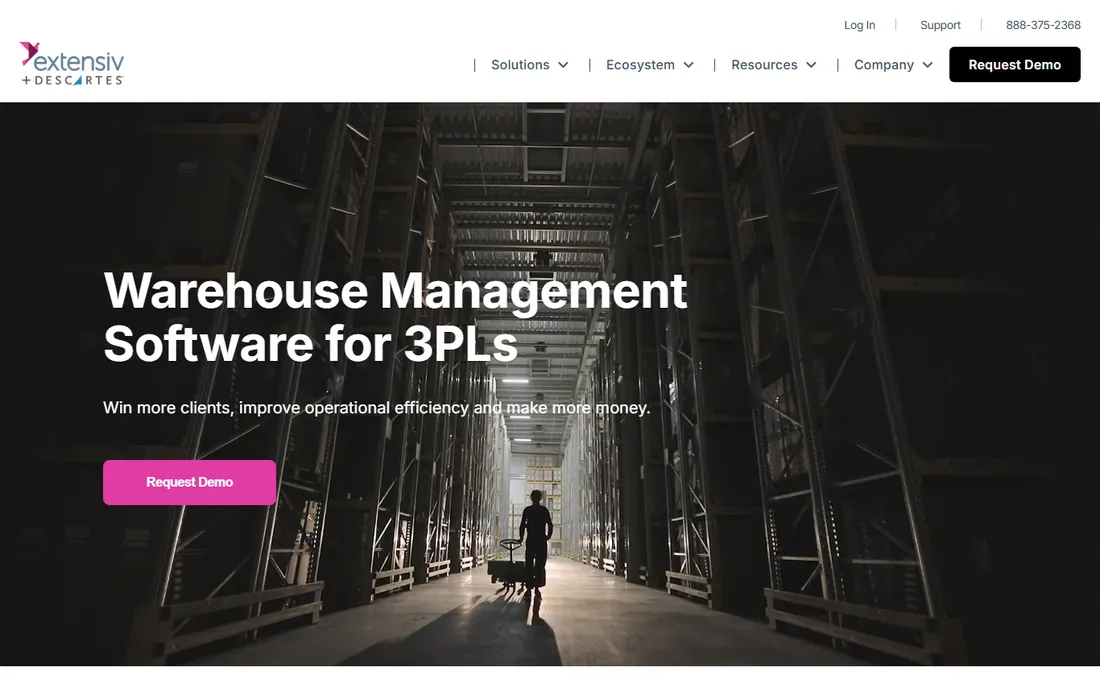
Extensiv is the omnichannel fulfillment platform. Pricing is quote-based. The product combines inventory management with a 3PL network, automated dropshipping and marketplace connections, serving brands that outsource fulfillment.
The fulfillment angle differentiates it. Rather than just tracking stock, Extensiv connects sellers to warehouses and automates the flow from order to delivery across channels. For brands scaling past self-fulfillment, that matters.
Pricing is not published, and the platform targets larger operations. For growing brands moving to 3PL fulfillment, Extensiv is worth a demo.
What we like- Strong 3PL and fulfillment network
- Automated dropshipping
- Marketplace connections
Watch out for- Pricing not published on the site
- Enterprise-oriented
Starting priceSee website
Free planNo
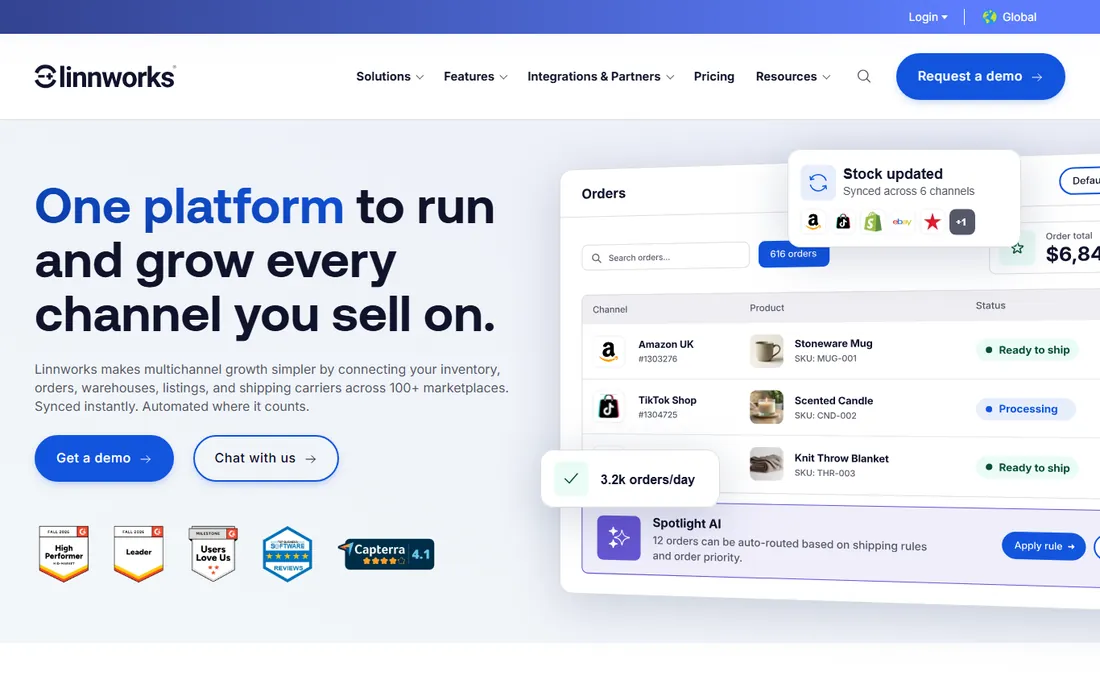
Linnworks is the multichannel listing manager. Pricing is custom. The platform centralizes listings, inventory and orders across Amazon, eBay, Shopify, Walmart and dozens more, with automation rules for pricing, shipping and stock allocation.
The multichannel depth is the strength. Sellers with dozens of listings across marketplaces get one inventory truth and automated repricing, which prevents oversells and saves hours of manual work.
Pricing is not published and the interface shows its age. For marketplace-heavy sellers that live on Amazon and eBay, Linnworks is a proven workhorse.
What we like- Strong multichannel listing and order management
- Automation rules
- Established platform
Watch out for- Pricing not published on the site
- Interface feels dated
Starting priceSee website
Free planNo
Megaventory is the mid-market inventory and order manager. Pricing is not published on the vendor's site; third-party sources report from $135 per month billed annually for the Pro plan. A free trial is available.
The product covers inventory, purchasing, sales orders and light manufacturing across multiple locations, with integrations for Shopify, WooCommerce, Magento and QuickBooks. Reviewers praise the interface and real-time visibility.
The lack of published pricing and a free tier makes evaluation slower. For small to mid-size businesses that want a capable middle ground between spreadsheets and ERP, Megaventory deserves a look.
What we like- Solid mid-market feature set
- Multi-location and manufacturing
- Good integrations
Watch out for- Pricing not published on the vendor site
- No free plan
Order volume caps: the hidden cost driver
The headline price is rarely the real price. Cin7's Standard caps at 6,000 sale orders a year. Zoho Inventory's Standard allows 500 orders a month. Ordoro charges $100 per extra 1,000 orders. inFlow tiers step from 100 to 2,000 to 10,000 orders monthly. Exceed the cap and the bill jumps.
Model your actual order volume before choosing. A seller doing 800 orders a month fits Zoho's Standard but blows past it at 1,200. Seasonal spikes matter; a holiday surge that triples volume can trigger overage fees or force a tier jump at the worst moment.
Users and locations are the other levers. Some tools charge per user, others include a bundle. Warehouses, bins and integrations often cost extra. List your must-haves, then price the plan that actually includes them, not the cheapest one on the page.
When to graduate from spreadsheets
Spreadsheets work until they don't. The breaking points are consistent: selling on more than two channels, oversells from stale stock counts, stockouts on bestsellers, hours of manual reconciliation, and no one trusting the numbers.
The cost of staying is hidden but real. Every oversell is a refund plus a bad review. Every stockout is lost margin. Every hour of spreadsheet reconciliation is labor that scales linearly with growth. When those costs exceed $300 to $500 a month, paid inventory software pays for itself.
Start with the free tools if the catalog is small. Zoho Inventory's free plan, Sortly's free tier and Katana's free plan all handle real businesses. Graduate to paid when order volume, channel count or team size forces it. The migration is painful once; pick a tool that scales to your next stage, not just this one.
Frequently asked questions
What is the best ecommerce inventory management software?
For multichannel brands, Cin7 leads with deep integrations and forecasting at $349 per month. For B2B and wholesale, inFlow. For free or budget starts, Zoho Inventory and Sortly. For QuickBooks users, Fishbowl. For makers, Katana. For shipping-heavy sellers, Ordoro. Match the tool to your channels and order volume.
How much does inventory management software cost?
It ranges from $0 to $1,000+ per month. Free options include Zoho Inventory, Sortly and Katana. Entry paid plans run $24 to $29 per month (Sortly, Zoho). Mid-market tools like Cin7, Ordoro and inFlow start at $161 to $349 per month. Enterprise and ERP options are quote-based. Watch order volume caps; they drive overage costs.
Should I use Cin7 or Zoho Inventory?
Cin7 is the more powerful multichannel platform: 700+ integrations, AI forecasting and B2B/EDI at $349 per month. Zoho Inventory is the value pick: free to start, $29 per month for Standard, best inside the Zoho ecosystem. Choose Cin7 for complex multichannel operations; choose Zoho for simpler catalogs and tighter budgets.
What is the best free inventory management software?
Zoho Inventory's free plan (50 orders, 1 user), Sortly's free tier (100 items) and Katana's free plan (30 SKUs) are the strongest free options. Each handles real small businesses. For pure simplicity, Sortly. For ecommerce orders, Zoho. For makers, Katana.
How do I choose between inventory software with shipping vs standalone?
If you self-fulfill, a combined tool like Ordoro saves integration work and keeps shipping and stock in sync. If you use a 3PL or FBA, a standalone inventory tool like Cin7 or inFlow plus the 3PL's system is cleaner. Marketplace-heavy sellers should look at Linnworks or Extensiv.
Sources we checked (17)
- https://www.cin7.com/
- https://www.cin7.com/pricing
- https://www.inflowinventory.com/
- https://www.inflowinventory.com/blog/cloud-based-vs-on-premise-inventory-software/
- https://www.zoho.com/us/inventory/
- https://www.zoho.com/us/inventory/pricing/
- https://www.ordoro.com/
- https://www.ordoro.com/pricing
- https://www.sortly.com/
- https://www.sortly.com/pricing
- https://www.fishbowlinventory.com/
- https://www.fishbowlinventory.com/pricing
- https://katanamrp.com/
- https://katanamrp.com/pricing
- https://www.extensiv.com/
- https://www.linnworks.com/
- https://www.megaventory.com/
Is your product missing or out of date?
We review this list regularly. Vendors can request a listing, send updated pricing or ask about featured placement.

Shihab Mia · Founder, Rankite
Shihab has spent more than a decade helping SaaS and e-commerce brands grow through search. He writes Rankite's software buying guides from pricing pages, documentation and public user reviews. More about Shihab.