How we make this list: we compare pricing pages, product documentation and public user reviews. Rankite is independent; if a vendor ever pays for a featured spot, that listing is clearly labeled Partner.
Key takeaways
- Shopify remains the default for serious online stores, with the deepest app ecosystem and predictable pricing from $39/month.
- WooCommerce is free but not cheap: hosting, extensions and maintenance add up, and you own the technical burden.
- BigCommerce and Shift4Shop appeal to sellers who want strong built-in features without app overload.
- Wix, Squarespace and Ecwid serve smaller catalogs and content-led brands where the store is not the whole business.
Quick comparison
| Tool | Best for | Starting price | Free plan |
|---|
 Shopify Shopify | brands building a real online business | $39/month (Basic) | Free trial |
 WooCommerce WooCommerce | WordPress users who want ownership | Free (plugin); hosting and extensions extra | Yes |
 BigCommerce BigCommerce | sellers who want built-in power without apps | $39/month (Standard) | Free trial |
 Wix Wix | small stores attached to content sites | See website | Free trial |
 Squarespace Squarespace | design-first brands and creative sellers | See website | Free trial |
 Adobe Commerce Adobe Commerce | enterprises with complex requirements | See website (custom quote) | No |
 Shift4Shop Shift4Shop | sellers minimizing platform costs | Free (with Shift4 payments); paid plans available | Yes |
 Ecwid Ecwid | adding commerce to an existing website | Free; paid plans available | Yes |
Is your product missing or out of date?
We review this list regularly. Vendors can request a listing, send updated pricing or ask about featured placement.
Starting price$39/month (Basic)
Free planFree trial

Shopify is the default answer for a reason. The Basic plan at $39 a month includes hosting, checkout, and access to thousands of apps covering everything from subscriptions to loyalty. The checkout converts well, the admin is approachable, and Shopify Plus waits when you outgrow the basics.
Costs accumulate through apps and transaction fees. Budget 2 to 5 percent of revenue for the app stack on top of the subscription, and use Shopify Payments where available to avoid extra fees. For most sellers, it remains the best balance of power and simplicity.
What we like- Largest app and theme ecosystem
- Reliable checkout
- Scales from startup to enterprise
Watch out for- Transaction fees unless you use Shopify Payments
- Advanced customization needs developers
Starting priceFree (plugin); hosting and extensions extra
Free planYes
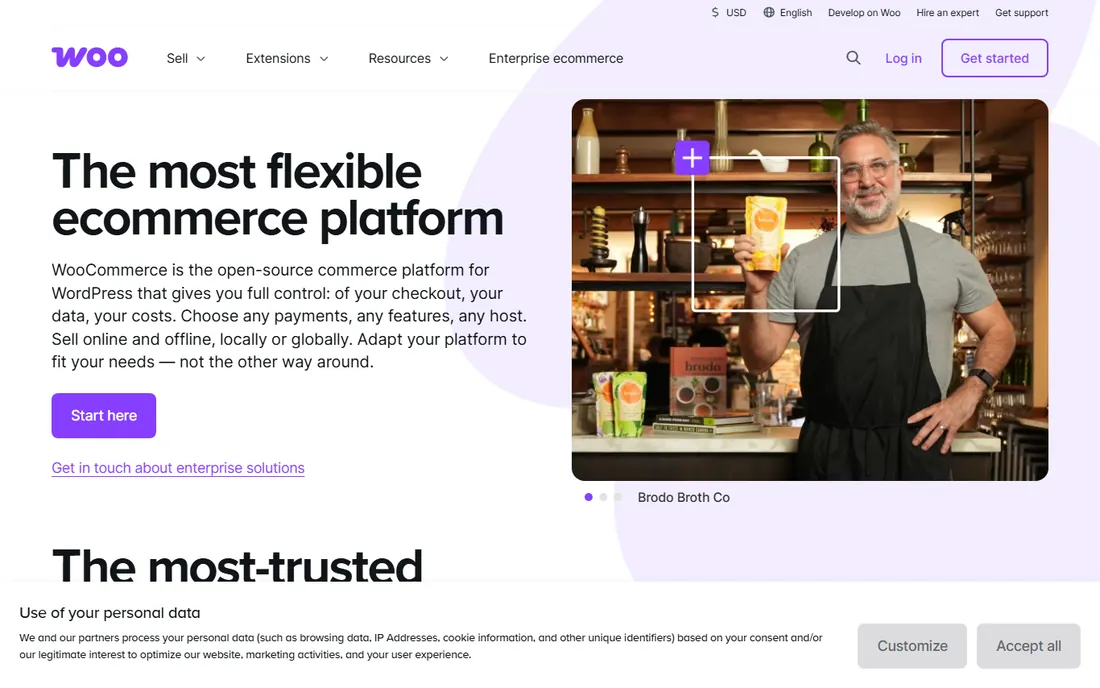
WooCommerce turns any WordPress site into a store for free, which makes it unbeatable on flexibility. You own the code, the data and the hosting relationship. The extension marketplace covers payments, shipping, subscriptions and bookings.
Ownership has a price in effort and money. Good hosting, premium extensions and maintenance typically run $50 to $200 a month for a serious store, and you are responsible when things break. Choose it when control matters more than convenience.
What we like- Free core with total control
- Huge extension library
- No platform lock-in
Watch out for- You manage hosting, security and updates
- Costs hide in extensions
Starting price$39/month (Standard)
Free planFree trial
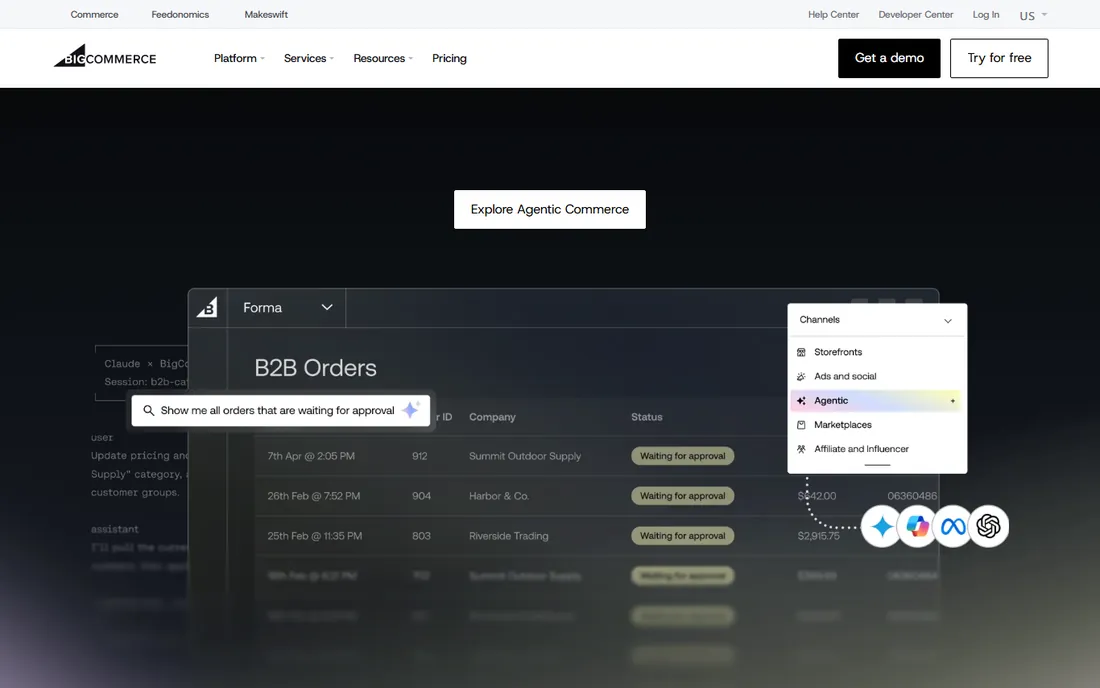
BigCommerce includes natively what Shopify sellers buy as apps: multi-currency, customer groups, advanced discounting. The Standard plan at $39 a month charges no transaction fees, which improves margins as volume grows.
The ecosystem is the tradeoff. Fewer themes, fewer apps, and a smaller developer community mean less choice and sometimes higher customization costs. Sellers who value built-in completeness over ecosystem breadth do well here.
What we like- Strong native features reduce app dependence
- No transaction fees
- Good B2B tools
Watch out for- Theme and app ecosystem smaller than Shopify
- Design flexibility lags
#4
Wix
Best for: small stores attached to content sites
Visit wix.com
Starting priceSee website
Free planFree trial
Wix makes getting online trivially easy, and its store features cover small catalogs competently. Service businesses and creators selling a handful of products get a professional result fast.
It is not built for serious commerce scale. Large catalogs, complex shipping and advanced merchandising strain the platform. If the store is a sideline to your content or services, it fits; if commerce is the business, look at Shopify or BigCommerce.
What we like- Easiest builder for non-technical users
- Good for small catalogs
- All-in-one hosting
Watch out for- Less suited to large catalogs
- Ecommerce features trail specialists
Starting priceSee website
Free planFree trial
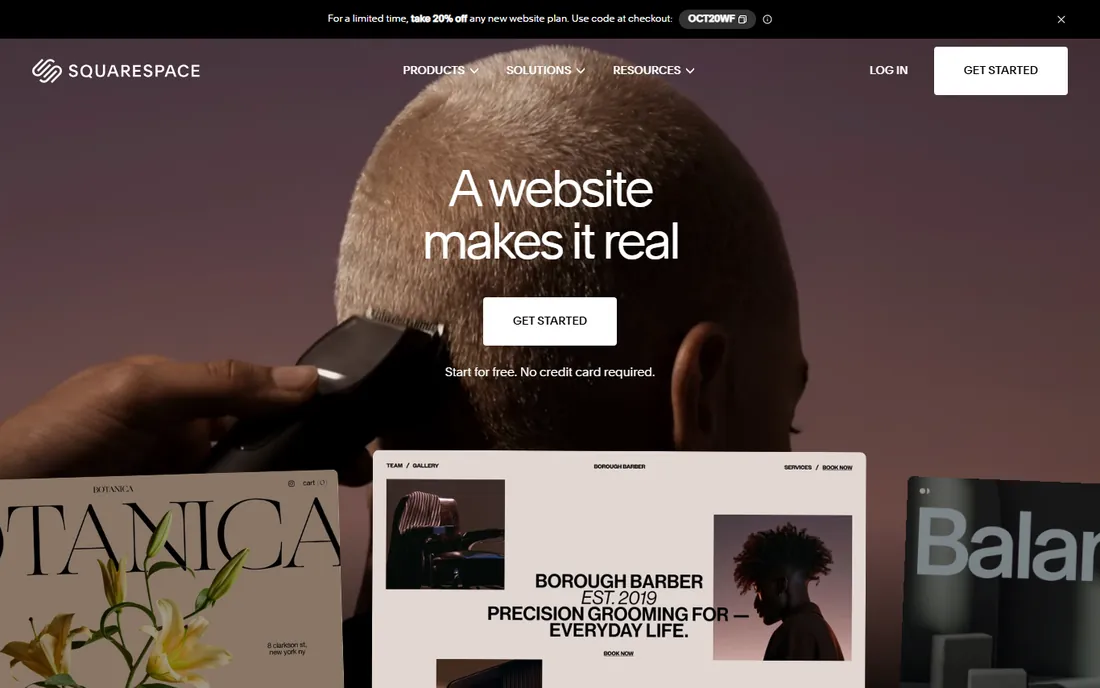
Squarespace wins on aesthetics. Templates look expensive, and the blogging and portfolio tools make it ideal for brands where story drives sales. Checkout and order management handle modest volume well.
Commerce features stay shallow compared with Shopify: fewer payment options, limited shipping logic, smaller app marketplace. Creative businesses selling dozens rather than thousands of SKUs get the best of it.
What we like- Beautiful templates
- Strong blogging and portfolio tools
- Simple management
Watch out for- Ecommerce depth limited
- Fewer integrations than leaders
Starting priceSee website (custom quote)
Free planNo
Adobe Commerce (formerly Magento) remains the heavyweight for complex commerce: intricate pricing, B2B workflows, multi-brand and multi-region setups that SaaS platforms cannot model. The partner ecosystem can build almost anything.
Everything about it is enterprise-grade, including the cost. Licenses, implementation and ongoing development run into six figures annually. Only choose it when your requirements genuinely exceed what SaaS platforms offer.
What we like- Unmatched customization and B2B depth
- Huge partner ecosystem
- Multi-store and global commerce
Watch out for- Expensive licenses and implementation
- Needs specialist developers
Starting priceFree (with Shift4 payments); paid plans available
Free planYes

Shift4Shop's free plan is the real deal for US sellers using Shift4 payments: a full store without a monthly platform fee. Paid plans add features for everyone else. The feature list covers the commerce essentials competently.
The ecosystem and design polish trail the leaders, and the admin shows its age. But on pure cost-to-capability math, it is hard to beat for budget-conscious sellers who find Shopify's total cost uncomfortable.
What we like- Free end-to-end plan
- Solid feature set for the price
- No revenue caps games
Watch out for- Smaller ecosystem
- Interface feels dated
Starting priceFree; paid plans available
Free planYes
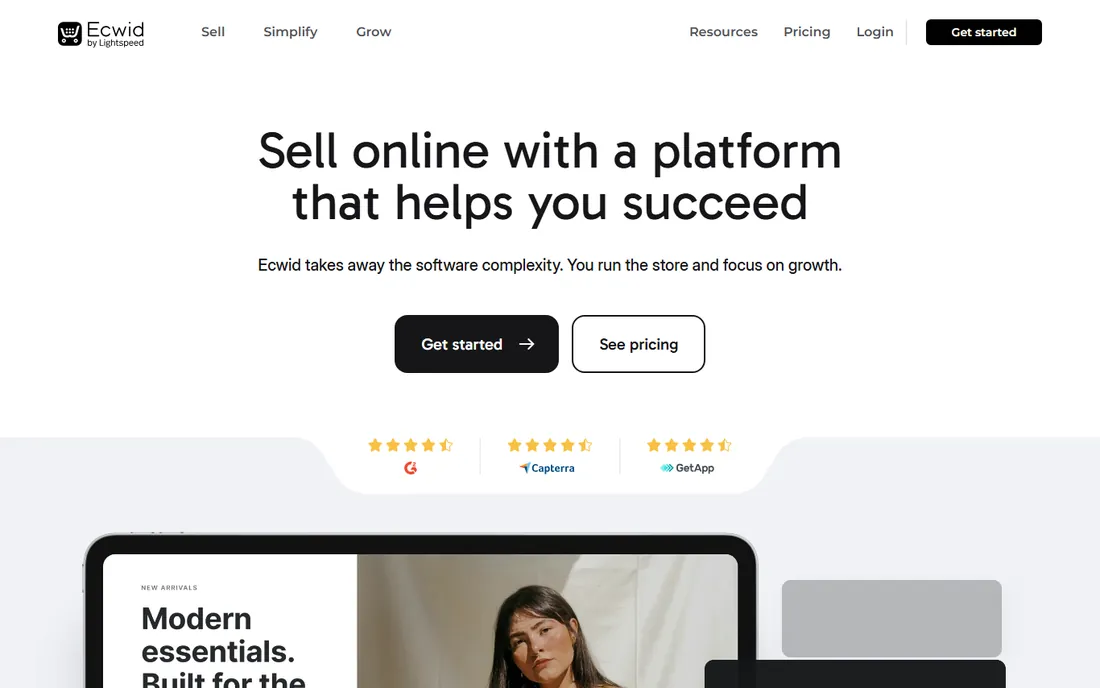
Ecwid is the widget approach: add a store to your existing WordPress, Wix or custom site without rebuilding. The free tier covers ten products, and setup takes an afternoon. Social selling and point-of-sale integrations extend its reach.
As a primary storefront for a serious brand, it feels constrained next to Shopify or WooCommerce. Its sweet spot is established sites and social sellers who need commerce without a replatforming project.
What we like- Embeds in any site
- Generous free tier
- Quick to launch
Watch out for- Less powerful as a standalone store
- Design control limited
What to check before you sign
Start with total cost of ownership, not the subscription price. Add transaction fees, essential apps or extensions, themes, email marketing and payment processing. A $39 platform routinely costs $150 a month all-in, and a "free" platform can cost more once extensions pile up.
Then check the features you will need in year two, not just launch day. Discounts, subscriptions, bundles, B2B pricing, multi-currency and wholesale each eliminate some platforms. Migrating stores later is expensive and SEO-risky, so buy for the business you will be, not just the one you are.
Finally, test the checkout on mobile. Most of your customers will buy from phones. Run a test purchase on every finalist, time it, and note every friction point. Checkout conversion differences of a few percent dwarf subscription price differences within months.
One more factor buyers overlook: the app and extension ecosystem tax. Shopify's app store is a strength, but the average growing store runs 6 to 10 paid apps at $10 to $30 each per month. WooCommerce extensions follow the same pattern. When comparing a $39 SaaS plan against a "free" open-source option, add up the extensions you will actually install. The platform with the higher sticker price sometimes has the lower total once you count everything the business needs to operate. Do this math before the free trial ends, not a year later. Your future self will thank you.
How we chose
We compared current pricing, feature sets and positioning from vendor sites and documentation, cross-checked against merchant reviews and ecommerce practitioner communities. Every platform listed is active with a live homepage as of October 2026. We covered hosted SaaS, open source and enterprise options across the budget spectrum. Prices are the lowest published tier from each vendor's own pricing page; custom-quoted platforms are marked accordingly.
Migration and lock-in: the question nobody asks early
Switching ecommerce platforms is one of the most painful migrations in software: product data, customer accounts, order history, URL redirects, theme rebuilds and SEO risk all at once. Most merchants underestimate it by half.
Reduce the risk upfront. Prefer platforms with solid export tools and open APIs, keep your domain and email separate from the platform, and document customizations as you build them. If you choose WooCommerce or Adobe Commerce, you own the code, which makes future moves easier. On SaaS platforms, your safety net is the export button: test it before you need it.
Frequently asked questions
Which ecommerce platform is best for beginners?
Shopify or Wix. Shopify if selling is the business, Wix if the store supports a service or content business. Both get a beginner selling quickly without technical skills.
Is WooCommerce really free?
The plugin is free, but hosting, a domain, SSL, premium extensions and maintenance typically cost $50 to $200 a month for a real store. It is free as in freedom, not free as in no cost.
How much does it cost to run a Shopify store?
The $39 Basic plan plus apps ($30 to $100 typical) plus transaction fees. Most small stores land between $80 and $200 a month all-in before ad spend.
Can I migrate my store later?
Yes, but it is painful: expect weeks of work, URL redirects, theme rebuilds and some SEO turbulence. Choose carefully now; migration costs usually exceed a year of price differences between platforms.
Do I need a separate payment processor?
Shopify Payments, built-in processors or Stripe/PayPal integrations cover most sellers. Separate merchant accounts only matter at high volume or in restricted categories.
Which platform is best for B2B or wholesale?
BigCommerce and Adobe Commerce have the strongest native B2B features: customer groups, quote workflows and volume pricing. Shopify Plus handles B2B through apps and its wholesale channel.
Should I sell on marketplaces too?
Most sellers should. Amazon, Walmart and eBay reach buyers you will never find on your own site. Use marketplace integrations from your platform to sync inventory, and treat your own store as the higher-margin channel you control. Do not build your entire business on rented marketplace traffic.
How important is page speed for my store?
Very. Slow pages lose mobile shoppers before the checkout loads. Prefer platforms with fast hosted infrastructure, compress your images, and limit heavy apps. A one-second improvement in load time routinely lifts conversion by several percent.
What is the biggest hidden cost in ecommerce platforms?
Transaction fees and app subscriptions. A store doing $50,000 a month in revenue can pay $1,000 or more in transaction fees alone, plus several hundred in apps. Always calculate fees as a percentage of revenue, not as a flat subscription, because that is how they scale.
When should I upgrade from a basic plan?
When the basic plan's limits cost you more than the upgrade. Common triggers: hitting product or staff account limits, needing advanced discounting or subscriptions, and transaction fees exceeding the price difference to a higher tier. Review your plan against actual usage every six months.
Sources we checked (8)
- https://www.shopify.com
- https://woocommerce.com
- https://www.bigcommerce.com
- https://www.wix.com
- https://www.squarespace.com
- https://business.adobe.com/products/magento/magento-commerce.html
- https://www.shift4shop.com
- https://www.ecwid.com
Is your product missing or out of date?
We review this list regularly. Vendors can request a listing, send updated pricing or ask about featured placement.

Shihab Mia · Founder, Rankite
Shihab has spent more than a decade helping SaaS and e-commerce brands grow through search. He writes Rankite's software buying guides from pricing pages, documentation and public user reviews. More about Shihab.