How we make this list: we compare pricing pages, product documentation and public user reviews. Rankite is independent; if a vendor ever pays for a featured spot, that listing is clearly labeled Partner.
Key takeaways
- Upgrading to an SSD? Start free. Clonezilla, Rescuezilla, Samsung Data Migration and the free tiers of EaseUS and AOMEI handle one-time clones without spending a dollar.
- If you clone regularly or manage several machines, paid tools earn their keep through scheduling, incremental backups and faster restores.
- Acronis and Macrium are the premium picks, but both moved toward subscriptions, so check the renewal price before you commit.
- DiskGenius is the dark horse: a free edition that clones plus partitioning and recovery tools the specialists lack.
- Always verify the clone boots before you wipe the old drive. Every tool here can make a perfect copy and still leave you stranded if you skip that check.
Quick comparison
Is your product missing or out of date?
We review this list regularly. Vendors can request a listing, send updated pricing or ask about featured placement.
The best disk clone software
Starting priceSee website
Free planFree trial
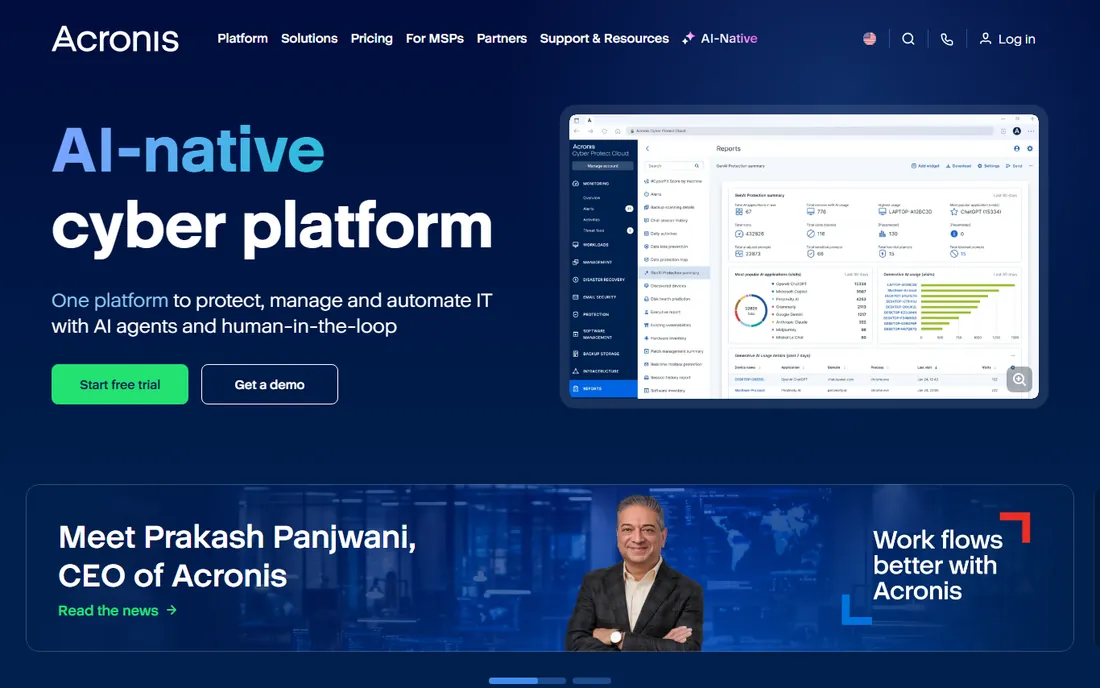
Acronis is the name most people have heard, and the software earns the recognition. True Image (now sold under the Cyber Protect Home Office branding) clones disks, images entire systems, backs up to local drives and Acronis cloud storage, and layers on anti-ransomware protection. If you want one product that handles every "my drive died" scenario, this is the most complete answer.
The catch is that you are buying a backup platform, not a cloning tool. The subscription model means the price never stops, and renewals have crept upward over the years. For a one-time SSD upgrade, it is overkill. For a household or small business that wants set-and-forget protection with cloning as one feature among many, the completeness justifies the cost.
What we like- Complete package: cloning, full imaging, cloud backup and ransomware protection
- Polished interface
- Strong scheduling and versioning
Watch out for- Subscription pricing with renewals that add up
- More than a pure cloner needs
- The product lineup and naming change often
Starting priceSee website
Free planFree trial
Ask a room of IT technicians which imaging tool has never let them down and Macrium wins the vote. Reflect's engine is famous for restoring exactly what it backed up, and Rapid Delta Restore means only changed blocks get rewritten during recovery, cutting restore times dramatically. It handles everything from ancient Windows XP boxes to current releases, which matters in mixed real-world environments.
The 2024 shift to subscription licensing annoyed the loyalists who bought perpetual licenses for years. The software remains excellent, but the value proposition changed: you now rent reliability instead of owning it. Technicians and businesses that image machines regularly will still pay gladly. Home users cloning one drive will find cheaper ways.
What we like- Extremely reliable imaging engine trusted by IT pros
- Rapid delta restore speeds recovery
- Broad Windows version support including legacy systems
Watch out for- Moved to subscription licensing
- Windows only
- The interface prioritizes function over friendliness
Starting priceSee website
Free planYes, limited
When the task is "move everything from this old drive to this new SSD," EaseUS Disk Copy is refreshingly single-minded. Pick the source, pick the target, start the clone. It handles mismatched drive sizes sensibly and can create bootable media for systems that will not start. For the classic hard-drive-to-SSD upgrade, which is most people's actual use case, the workflow takes minutes to understand.
EaseUS funds the free version by nudging you toward its paid products, and the installer and interface both carry that sales energy. Power users will also miss the scheduling and incremental imaging of full backup suites. But as a dedicated, approachable cloning tool with a usable free tier, it does exactly what the box says.
What we like- Built for one job and does it simply
- Sector-by-sector and partition cloning
- Bootable media for unbootable systems
Watch out for- Free version has limits that push toward paid
- EaseUS upsells its other products aggressively
- Fewer advanced features than Acronis or Macrium
Starting priceSee website
Free planYes
AOMEI Backupper's free Standard edition is one of the most generous in this category: real disk cloning, system backup, file sync and bootable rescue media without paying. That makes it a legitimate answer for anyone who needs to clone occasionally and wants a safety net of basic backup too. The wizards walk you through each job without assuming expertise.
The interface looks like it time-traveled from 2012, and while that does not affect reliability, it does not inspire confidence either. Features like universal restore to different hardware, command-line backup and PXE boot sit behind the paid Pro edition. Still, for free cloning that actually works, Backupper belongs on every shortlist.
What we like- Free Standard edition includes disk and partition cloning
- System backup and file sync included
- Straightforward wizard-driven interface
Watch out for- Dated interface
- Advanced features locked behind Pro
- The product family is large and confusing
Starting priceFree
Free planYes
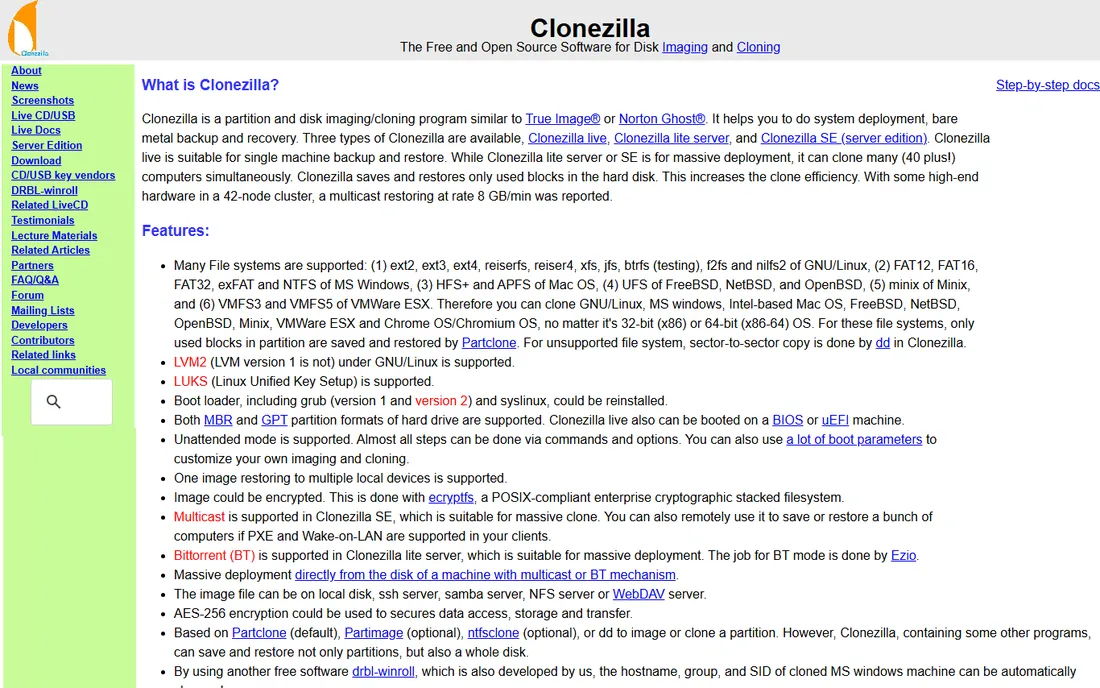
Clonezilla is the tool IT departments have quietly relied on for two decades. It is free, it is brutally efficient, and it runs from a USB stick on nearly anything with an x86 processor. The server edition can image an entire computer lab simultaneously over the network, which is why schools and enterprises keep it around. For a single-machine clone, the Live edition does the job with zero cost and zero licensing headaches.
The price of free is the interface. Clonezilla's menus are text-based and the terminology assumes you know what a partition table is. One wrong choice can overwrite the wrong disk, so beginners should read the prompts twice. There is also no incremental imaging: every backup is a full one. Patient, careful users get professional-grade cloning for nothing.
What we like- Completely free and open source
- Extremely efficient, copies only used blocks
- Server edition clones dozens of machines at once via multicast
Watch out for- Text-based interface intimidates beginners
- No incremental backup
- The destination partition must be as large as the source
Starting priceFree
Free planYes
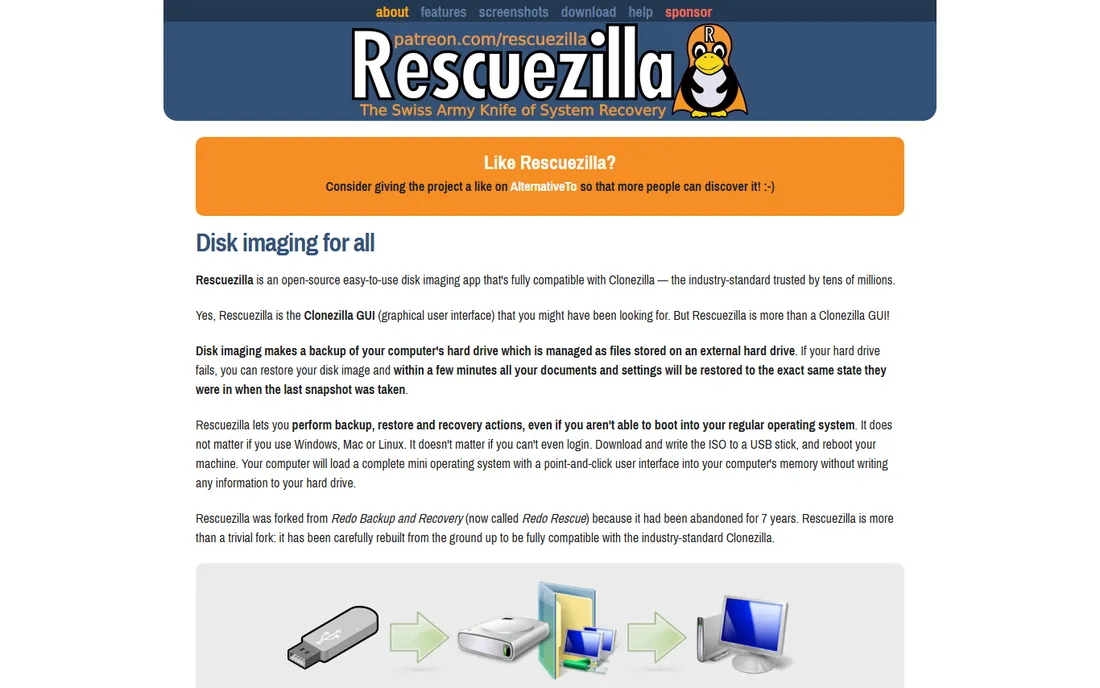
Rescuezilla answers the obvious question: what if Clonezilla had a normal interface? It wraps the same proven imaging engine in a point-and-click GUI that boots from a USB stick, works on Windows, Mac and Linux machines, and stays fully compatible with Clonezilla images. You can even mount a backup image and copy out individual files, something vanilla Clonezilla cannot do.
The trade-off is project scale. Rescuezilla is maintained by a small team funded largely by donations, so releases land when they land and support means community forums. For home users and small shops, that is a fine deal: the core cloning works, the price is zero, and the interface removes the fear factor that keeps people away from Clonezilla.
What we like- Full Clonezilla compatibility behind a friendly graphical interface
- Boots from USB with no installation
- Can mount images to pull out individual files
Watch out for- Smaller volunteer-driven project
- Updates are slower than commercial tools
- Fewer advanced deployment features
Starting priceSee website
Free planFree trial
Paragon Hard Disk Manager is the toolkit for people who do more than clone. Beyond disk copying it handles partitioning, full backups, OS migration to new hardware and secure wiping with proper sanitization standards. The recovery media boots into a familiar environment when Windows will not, and the business editions scale to managing fleets of endpoints.
This is a Windows-first product, and it shows: Mac and Linux users should look elsewhere. Paragon's editions and licensing tiers take real study to navigate, and the interface prioritizes completeness over approachability. For a Windows power user or small IT department that wants one suite for every disk job, it is a strong, if unglamorous, pick.
What we like- Combines cloning, partitioning, backup and OS migration in one suite
- WinPE-based recovery media
- Solid wipe and sanitization tools
Watch out for- Windows-centric
- Edition lineup is confusing
- Interface feels corporate and dense
Starting priceFree with Samsung SSDs
Free planYes
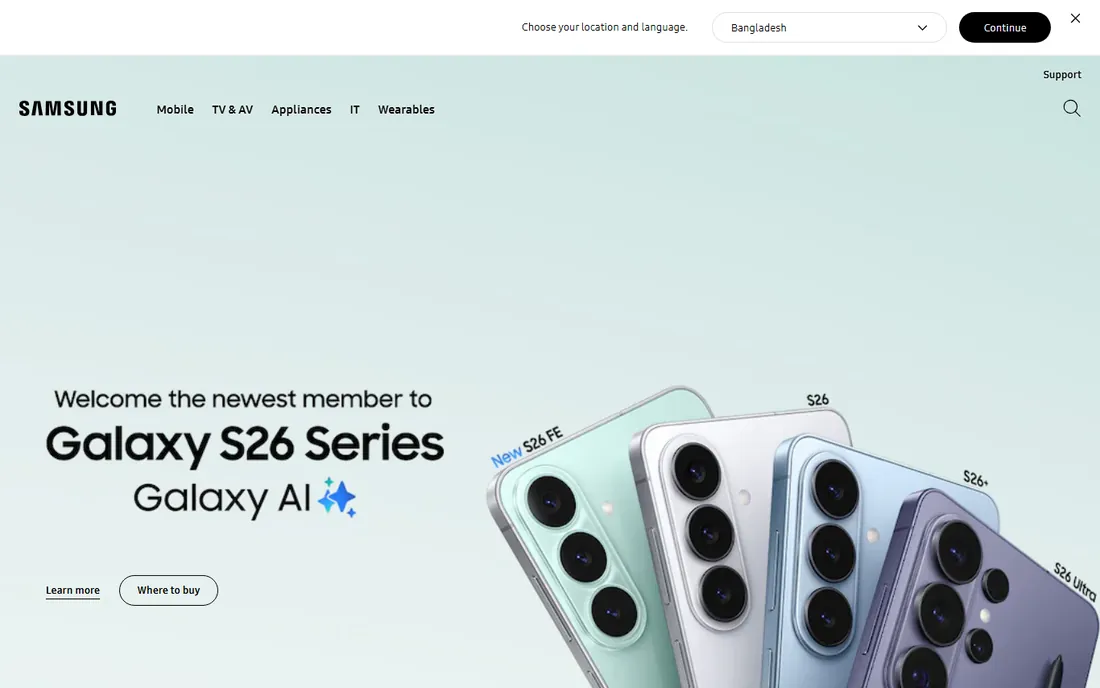
If you just bought a Samsung SSD, stop reading and download this. Samsung Data Migration does exactly one thing, copies your current drive to the new Samsung SSD, in three steps with no decisions to make. It is free, it is official, and it is tuned for Samsung's own drives. For the most common upgrade scenario in existence, nothing beats it on simplicity.
The limits are absolute: the destination must be a Samsung SSD, the OS must be Windows, and there are no extras of any kind. No scheduled backups, no partition management, no rescue media. It is a single-purpose utility bundled with a purchase, and within that narrow job it is flawless.
What we like- Completely free
- Dead simple three-step cloning
- Optimized for Samsung SSDs
Watch out for- Only works with Samsung SSDs as the target
- Windows only
- No imaging, scheduling or advanced features
Starting priceFrom $69.90 (Pro)
Free planYes
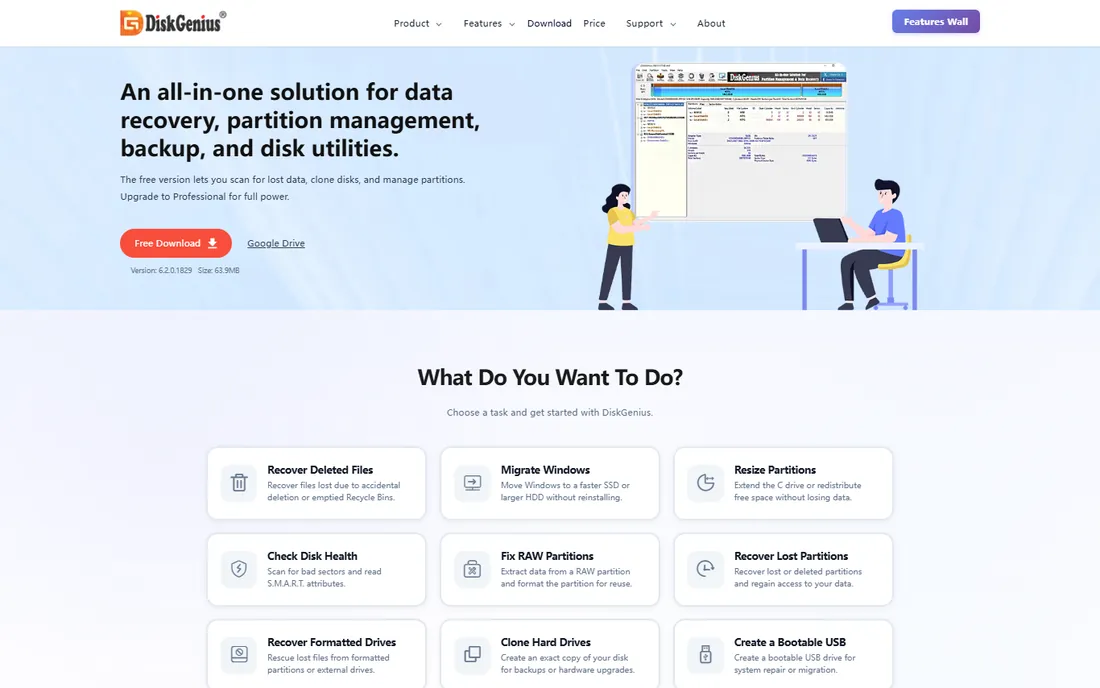
DiskGenius is the Swiss-army knife of this list. The free edition clones disks, migrates Windows to a new drive and handles everyday partition jobs, which already covers most buyers. Pay for Pro (from $69.90) and you add serious data recovery, RAID tools, hex editing and dynamic-disk conversion. One app replaces a partition manager, a cloning tool and a recovery utility.
The interface tries to show you everything at once, and first-time users can feel overwhelmed by the sheer number of buttons. It is also less known than Acronis or EaseUS, which matters if brand trust drives your decision. But the licensing is refreshingly honest, one-time payment, no auto-renewal, and the free tier is genuinely useful rather than a demo.
What we like- Free edition includes disk cloning and OS migration
- Adds partitioning, data recovery and disk utilities in one app
- One-time licensing with no auto-renewal
Watch out for- Dense interface packs in a lot
- Advanced recovery features need Pro
- Smaller brand than the big backup vendors
Clone vs. image: which do you actually need
Cloning copies a drive so the copy can boot immediately, which is what you want when moving to a bigger drive or a faster SSD. Imaging creates a compressed file of the drive that you restore later, which is what you want for backups. Most paid tools do both. Free tools tend to specialize: Clonezilla and Rescuezilla do both well, Samsung Data Migration only clones, and backup-first tools like Acronis lean toward imaging. Decide the job first. An SSD upgrade needs a clone. Protection against drive failure needs scheduled images.
The SSD migration checklist
First, check that the new drive is at least as large as the used space on the old one, not the drive's total size. Second, connect the new drive (a USB-to-SATA or NVMe adapter costs little and saves headaches on laptops). Third, run the clone and let it finish without using the computer. Fourth, and this is the step everyone skips, boot from the new drive before you wipe or remove the old one. Keep the old drive untouched for a week as a fallback. Cloning is reliable, but a spare original is free insurance.
Frequently asked questions
How long does it take to clone a drive?
It depends on how much data is on the drive rather than the drive's size, since good tools copy only used blocks. A typical 500 GB drive with 200 GB used takes 30 to 60 minutes over SATA. NVMe-to-NVMe clones go much faster. Plan for longer on older machines and USB connections.
Can I clone a larger drive to a smaller SSD?
Yes, as long as the used space fits on the smaller drive. Shrink the partitions first if needed; most cloning tools handle this automatically. What you cannot do is clone 800 GB of data onto a 500 GB drive. Check used space, not drive capacity.
Will a cloned drive boot?
It should, if the cloning tool copies the boot sectors and partition table, which all the tools here do. Problems usually come from BIOS/UEFI boot mode mismatches or from cloning a drive with disk encryption. When in doubt, keep the original drive until you have booted the clone twice.
Is cloning the same as backup?
No. A clone is a one-time copy, useful for migration. A backup is a repeated, versioned safety net, useful for recovery. If your drive dies six months after cloning, the clone is six months out of date. Use cloning for upgrades and scheduled imaging for protection.
Do I need to reinstall Windows after cloning to an SSD?
No, that is the whole point of cloning. The new drive is an exact copy, Windows and all, and it boots as if nothing changed. You may want to check that TRIM is enabled and that the partition is aligned for SSD performance, which most modern tools handle automatically.
How we chose
We compared current product pages, pricing and documentation, and weighed owner feedback from tech forums, Reddit and review sites. We prioritized tools that exist and work today, covering free open-source options, generous free tiers and paid suites, and we checked that each tool's cloning actually fits its claimed use case rather than taking marketing copy at face value.
Sources we checked (9)
- https://acronis.com/
- https://macrium.com/
- https://www.easeus.com
- https://aomeitech.com/
- https://clonezilla.org/
- https://rescuezilla.com/
- https://www.paragon-software.com
- https://www.samsung.com
- https://diskgenius.com/
Is your product missing or out of date?
We review this list regularly. Vendors can request a listing, send updated pricing or ask about featured placement.

Shihab Mia · Founder, Rankite
Shihab has spent more than a decade helping SaaS and e-commerce brands grow through search. He writes Rankite's software buying guides from pricing pages, documentation and public user reviews. More about Shihab.
 Acronis True Image
 Macrium Reflect
 EaseUS Disk Copy
 AOMEI Backupper
 Clonezilla
 Rescuezilla
 Paragon Hard Disk Manager
 Samsung Data Migration
 DiskGenius