How we make this list: we compare pricing pages, product documentation and public user reviews. Rankite is independent; if a vendor ever pays for a featured spot, that listing is clearly labeled Partner.
Key takeaways
- Cloudflare is the default for most businesses: unmetered DDoS mitigation on every plan including free, backed by one of the largest networks on earth.
- AWS-hosted companies should evaluate AWS Shield Advanced before third parties; Akamai and Imperva suit enterprises needing managed security operations.
- Application-layer (L7) attacks need different defense than volumetric floods; confirm each vendor covers both, not just big pipes.
- Small sites get meaningful protection free (Cloudflare) or cheap (Sucuri); enterprise DDoS contracts are quote-based and should be negotiated with attack simulations.
Quick comparison
| Tool | Best for | Starting price | Free plan |
|---|
 Cloudflare Cloudflare | Businesses of any size wanting unmetered protection | See website | Yes |
 Akamai Akamai | Enterprises wanting managed edge security at scale | See website | No |
 AWS Shield AWS Shield | AWS workloads wanting native protection | See website | Yes |
 Imperva Imperva | Application-layer defense with managed operations | See website | No |
 Fastly Fastly | Teams wanting edge delivery with security built in | See website | Free trial |
 Sucuri Sucuri | Small sites wanting WAF plus DDoS affordably | See website | No |
 Radware Radware | Hybrid environments needing cloud plus on-premise defense | See website | No |
 Vercara Vercara | DNS-layer and network protection specialists | See website | No |
Is your product missing or out of date?
We review this list regularly. Vendors can request a listing, send updated pricing or ask about featured placement.
The best DDoS protection software
Distributed denial-of-service attacks try to knock you offline with traffic floods or exhaust your application with clever requests. Protection means absorbing the flood and filtering the malicious, at layers 3/4 (network) and 7 (application). Eight vendors, from free tiers to carrier-grade scrubbing.
Starting priceSee website
Free planYes
Cloudflare's DDoS story is simple: every plan, including free, gets unmetered mitigation. Attacks that would cost thousands elsewhere get absorbed by one of the world's largest edge networks as a matter of course. Setup is a DNS change, and protection covers network and application layers with automatic mitigation.
The honest upsell is everything around the DDoS: advanced WAF rules, bot management and page rules sit on paid tiers, and free-plan support is community-based. But for pure DDoS protection, Cloudflare's free tier embarrasses competitors' paid offerings. Most businesses should start here and only look elsewhere for specialized needs.
What we like- Unmetered DDoS mitigation on all plans including free
- Massive global anycast network absorbs the largest attacks
- Easy DNS-change setup
Watch out for- Advanced WAF rules and bot management need paid tiers
- Support responsiveness varies by plan
#2
Akamai
Best for: Enterprises wanting managed edge security at scale
Visit akamai.com
Starting priceSee website
Free planNo
Akamai has defended the internet's biggest properties for decades, and its DDoS portfolio reflects that: Kona Site Defender for web, Prolexic for network-layer scrubbing of enormous attacks, plus managed security services for teams without 24/7 SOC staffing. The edge platform's scale means absorption capacity few can match.
The honest fit is enterprise. Pricing is quote-based, implementation involves professional services, and small teams will find it heavy. But organizations where downtime costs millions per hour buy Akamai for the same reason they buy insurance from the oldest firm: proven capacity under the worst attacks on record.
What we like- One of the largest edge platforms with deep security expertise
- Prolexic scrubbing for massive volumetric attacks
- Managed security services available
Watch out for- Enterprise pricing and sales process
- Complexity for smaller organizations
Starting priceSee website
Free planYes
AWS Shield Standard comes free with every AWS account, providing baseline network and transport layer protection automatically. Shield Advanced adds always-on detection, the DDoS Response Team, WAF integration and cost protection against scaling charges during attacks. For AWS-native architectures, the integration (no traffic hairpinning to third parties) is the argument.
The honest limits are scope and price. Non-AWS infrastructure needs another answer, and Shield Advanced's fixed monthly cost suits serious workloads, not side projects. But if your infrastructure lives in AWS, evaluating Shield Advanced before third-party scrubbing is the obvious first step.
What we like- Shield Standard free with every AWS account
- Shield Advanced adds 24/7 DRT support and cost protection
- Native integration with WAF, CloudFront and Route 53
Watch out for- AWS-centric by design
- Advanced tier is a significant fixed cost
#4
Imperva
Best for: Application-layer defense with managed operations
Visit imperva.com
Starting priceSee website
Free planNo
Imperva's DDoS protection emphasizes the application layer: its always-on proxy filters attack traffic while letting legitimate users through without CAPTCHA challenges or wait screens, which matters for conversion-sensitive sites. The network backs it with multi-terabit scrubbing capacity and defenses against the largest recorded attacks.
The commercial reality is enterprise: quote-based pricing and a sales process. Imperva's value compounds inside its application security platform (WAF, bot management, API security), so point-buyers get less than suite buyers. For organizations wanting managed, transparent application defense, it is a top-tier choice.
What we like- Strong L7 protection with transparent (no-CAPTCHA) mitigation
- 10 Tbps-plus scrubbing capacity
- Managed SOC options for lean security teams
Watch out for- Quote-based enterprise pricing
- Best value requires the broader application security suite
#5
Fastly
Best for: Teams wanting edge delivery with security built in
Visit fastly.com
Starting priceSee website
Free planFree trial
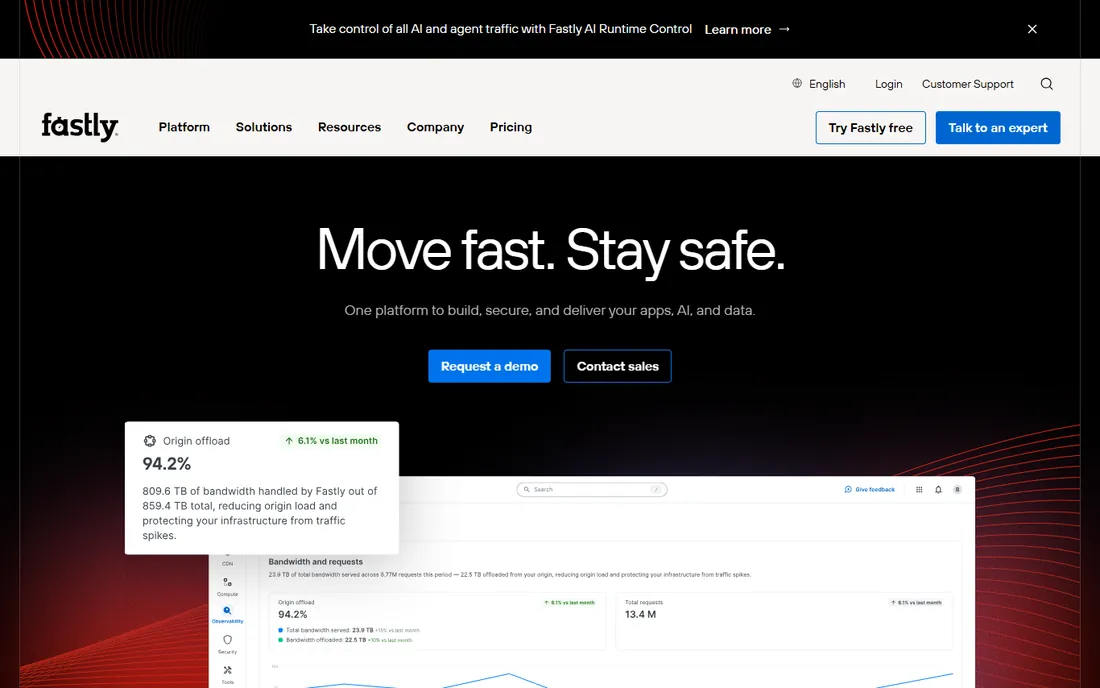
Fastly bundles DDoS protection into its edge cloud: the same platform delivering your content absorbs and filters attacks, with programmable edge logic (VCL/WASM) for custom defense. Performance-obsessed teams like it because security does not come at the cost of speed, and configuration deploys globally in seconds.
The honest profile is developer-first. Fastly assumes technical teams comfortable with edge configuration; organizations wanting managed SOC services should look at Akamai or Imperva. But for engineering-led companies already on (or considering) Fastly for delivery, the built-in protection is a strong consolidation argument.
What we like- DDoS protection included in the edge cloud platform
- Programmable edge with instant configuration
- Strong performance reputation
Watch out for- Developer-centric
- Less managed-security handholding than Akamai or Imperva
#6
Sucuri
Best for: Small sites wanting WAF plus DDoS affordably
Visit sucuri.net
Starting priceSee website
Free planNo
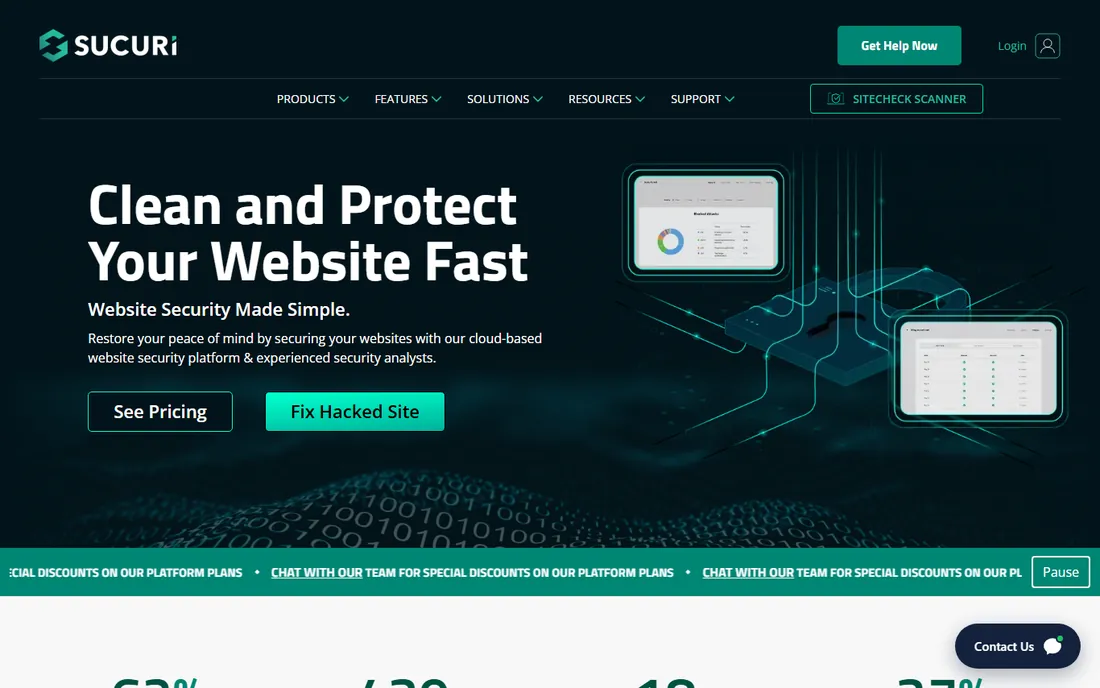
Sucuri (part of GoDaddy) is the small-site answer: a cloud WAF with DDoS protection, malware scanning and cleanup, at prices individual site owners afford. Setup is straightforward, WordPress integration is mature, and the security team behind it handles incidents rather than just selling software.
The honest ceiling is scale. Sucuri will not absorb the internet's largest attacks the way Cloudflare or Akamai do, and enterprise features are thinner. But most small businesses face commodity attacks, not nation-state floods, and for that threat model Sucuri's price-to-protection ratio is excellent.
What we like- Affordable website firewall with DDoS mitigation
- Malware cleanup included in plans
- Simple setup for WordPress and small sites
Watch out for- Less capacity than the giants for massive attacks
- Advanced features trail enterprise vendors
#7
Radware
Best for: Hybrid environments needing cloud plus on-premise defense
Visit radware.com
Starting priceSee website
Free planNo
Radware's differentiator is deployment flexibility: cloud scrubbing, DefensePro on-premise appliances, hybrid models and Kubernetes-native protection, including encrypted-attack blocking without SSL decryption. Organizations with data centers, regulatory constraints or complex hybrid estates get consistent protection across all of it.
The honest trade-offs are price and mindshare. This is enterprise software with enterprise process, and the brand is less known than the giants. But for hybrid infrastructure where pure-cloud answers do not fit, Radware's flexible deployment is the most complete in this list.
What we like- Flexible deployment: cloud, on-premise appliances, hybrid and Kubernetes-native
- AI-driven behavioral mitigation
- Strong in encrypted-attack defense
Watch out for- Enterprise pricing and complexity
- Smaller mindshare than Cloudflare or Akamai
Starting priceSee website
Free planNo
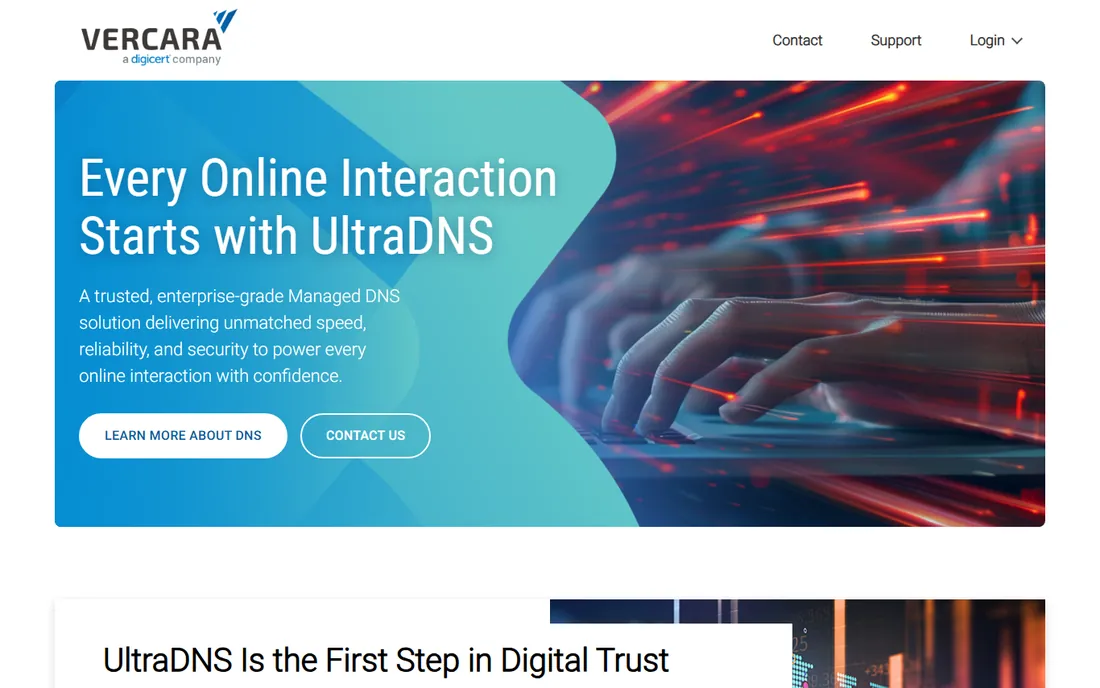
Vercara (the security business formerly under Neustar) brings DNS-layer expertise to DDoS defense: authoritative DNS protection plus network scrubbing, built on infrastructure that has run critical internet services for decades. Organizations where DNS resilience is the priority find a specialist rather than a generalist.
The honest position is niche strength. Vercara's web application security depth trails the suite vendors, and brand recognition is lower. But for DNS-centric protection and network-layer scrubbing from an operator with deep infrastructure roots, it deserves a place on enterprise shortlists.
What we like- Strong DNS security heritage (formerly Neustar/UltraDNS)
- Network-layer scrubbing with global capacity
- Focused security portfolio
Watch out for- Less known than the biggest brands
- Web application features trail suite vendors
How we chose
We compared vendors on genuine DDoS capability: network-layer capacity, application-layer mitigation quality, deployment flexibility, managed service options and pricing accessibility. We included free tiers, SMB options and enterprise scrubbing because the threat (and budget) varies enormously. Pricing comes from each vendor's own pricing page; unverifiable plans are marked "See website." No hands-on testing was performed.
What to look for before you buy
Confirm layer coverage. Volumetric (L3/L4) floods and application (L7) attacks need different defenses; verify each vendor handles both, and ask specifically about encrypted and multi-vector attacks.
Test before the attack. Run a controlled simulation or at minimum a failover drill during the trial. DDoS protection you have never tested is a hope, not a plan.
Check the onboarding path. DNS-change setups (Cloudflare, Sucuri) take minutes; BGP or appliance deployments (Radware, Akamai Prolexic) take weeks. Your timeline determines your options.
Finally, read the SLA and support terms. Time-to-mitigate commitments, 24/7 SOC access and cost protection during attacks (looking at you, cloud autoscaling bills) separate real protection from marketing.
What actually happens during a DDoS attack
Understanding the attack mechanics helps buyers choose the right protection and respond sensibly when (not if) an attack comes. DDoS attacks overwhelm targets with traffic, but the "how" determines the defense.
Volumetric attacks flood the network pipe: gigabits of junk traffic saturate bandwidth so legitimate requests cannot get through. These are the headline attacks (hundreds of Gbps to Tbps) and the reason anycast networks matter: only globally distributed scrubbing capacity absorbs them. No on-premise appliance survives a true volumetric flood; the defense must be upstream in the cloud.
Protocol attacks exploit weaknesses in network protocols (SYN floods, UDP amplification) to exhaust server or firewall resources with relatively little bandwidth. They are cheaper to launch than volumetric attacks and can cripple unprotected infrastructure at tens of Gbps. Stateful firewalls are particularly vulnerable since their connection tables fill up. Cloud scrubbing and protocol-aware filtering handle these; check that your provider covers L3/L4 specifically, not just L7.
Application-layer (L7) attacks are the subtle ones: seemingly legitimate HTTP requests that exhaust application resources (login pages, search functions, API endpoints). They need far less traffic to hurt, they mimic real users, and they are the fastest-growing category. Defense requires behavioral analysis, rate limiting tuned to your app, and often a WAF working alongside DDoS protection. This is where vendor quality varies most; ask for specifics on L7 detection.
Multi-vector attacks combine all three, switching tactics when one is blocked. This is now the norm for serious attacks, and it is why point solutions underperform: you need L3/L4/L7 coverage from one provider with one response team. When evaluating, ask how the vendor handles vector switching, not just each vector alone.
Your response playbook matters as much as the tool. Know who to call at the vendor, what "under attack" mode changes (caching, rate limits, challenge pages), and how you will communicate with customers during an event. Run a tabletop exercise before the attack: the teams that rehearse respond in minutes, the rest in hours. Protection buys capacity; the playbook buys speed.
Frequently asked questions
What is a DDoS attack?
A distributed denial-of-service attack overwhelms your site or network with malicious traffic (or exhausts application resources) until legitimate users cannot get through. Attacks range from volumetric floods to subtle application-layer abuse.
Is Cloudflare's free plan enough for DDoS protection?
For most small and mid-size sites, yes: unmetered mitigation covers the common attack types. Large or high-risk targets need paid tiers for advanced WAF rules, bot management and priority support.
What is the difference between L3/L4 and L7 DDoS protection?
L3/L4 protection absorbs network-layer floods (SYN, UDP amplification); L7 protection filters malicious application requests (HTTP floods, slowloris) that look like legitimate traffic. Serious defense needs both.
How much does DDoS protection cost?
From free (Cloudflare, AWS Shield Standard) to affordable SMB plans (Sucuri) to quote-based enterprise contracts (Akamai, Imperva, Radware) that run from thousands monthly upward. Price the threat model, not the fear.
Do I need DDoS protection if I use a CDN?
CDNs absorb some volumetric attacks incidentally, but dedicated protection adds application-layer filtering, faster mitigation and SLAs. Cloudflare and Fastly blur the line by bundling both.
What should I do during an active DDoS attack?
Engage your provider's SOC immediately, preserve logs, communicate with stakeholders, and avoid hasty infrastructure changes that complicate mitigation. This is why managed response (AWS DRT, Akamai, Imperva SOC) has value.
Sources we checked (8)
- https://www.cloudflare.com
- https://www.akamai.com
- https://www.aws.amazon.com
- https://www.imperva.com
- https://www.fastly.com
- https://www.sucuri.net
- https://www.radware.com
- https://www.vercara.com
Is your product missing or out of date?
We review this list regularly. Vendors can request a listing, send updated pricing or ask about featured placement.

Shihab Mia · Founder, Rankite
Shihab has spent more than a decade helping SaaS and e-commerce brands grow through search. He writes Rankite's software buying guides from pricing pages, documentation and public user reviews. More about Shihab.