How we make this list: we compare pricing pages, product documentation and public user reviews. Rankite is independent; if a vendor ever pays for a featured spot, that listing is clearly labeled Partner.
Key takeaways
- Google Display & Video 360 is the default DCO option for teams already buying media on Google's stack.
- Celtra and Innovid lead for enterprise creative automation across display, video, and CTV.
- DaVinci Commerce (formerly Jivox) has pivoted toward AI-driven commerce media, which suits retail advertisers.
- Smartly, Bannerflow, and Hunch serve performance marketers who need feed-driven creative at speed.
- Flashtalking (by Mediaocean) and Adform fit agencies and advertisers wanting DCO tied to ad serving and measurement.
Quick comparison
| Tool | Best for | Starting price | Free plan |
|---|
 Display & Video 360 Display & Video 360 | Google-stack advertisers | See website | No |
 Celtra Celtra | Enterprise creative automation | See website | No |
 DaVinci Commerce DaVinci Commerce | Commerce media creative | See website | No |
 Smartly Smartly | Social and multi-channel creative | See website | No |
 Bannerflow Bannerflow | Scaling display creative | See website | No |
 Innovid Innovid | CTV and video personalization | See website | No |
 Flashtalking Flashtalking | Creative ad serving and DCO | See website | No |
 Adform Adform | European programmatic DCO | See website | No |
 Hunch Hunch | Feed-driven product ads | See website | No |
Is your product missing or out of date?
We review this list regularly. Vendors can request a listing, send updated pricing or ask about featured placement.
Starting priceSee website
Free planNo
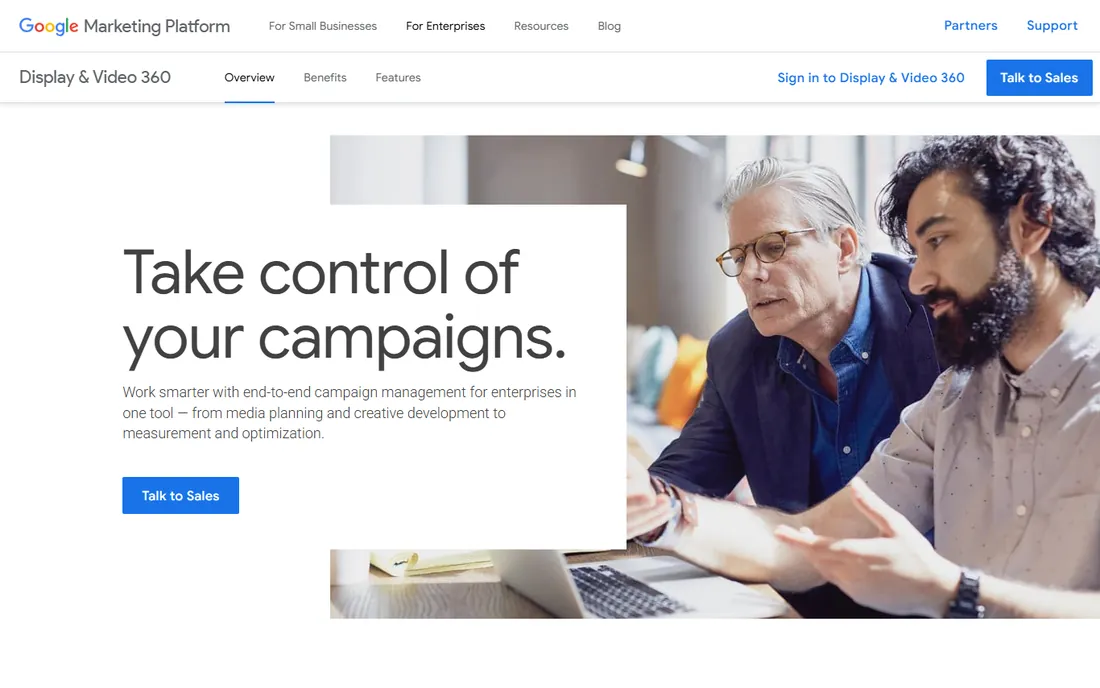
Dynamic creative optimization lives naturally inside Google's buying platform. Display & Video 360 pairs with Studio (formerly Google Web Designer workflows) to assemble personalized display and video creative from data feeds, then serves the right variant to each audience. For advertisers already buying YouTube, Display, and programmatic through Google, the integration removes the usual handoff between creative tools and media buying.
The limitation is the walled garden. DV360's DCO works best with Google inventory and Google data, and pricing reflects enterprise media commitments. Advertisers running significant spend outside Google will need a neutral platform. But for Google-heavy media plans, no third party integrates as deeply.
What we like- Native Google media integration
- Studio for dynamic creative
- Massive reach
Watch out for- Google-centric
- Enterprise pricing and contracts
Starting priceSee website
Free planNo
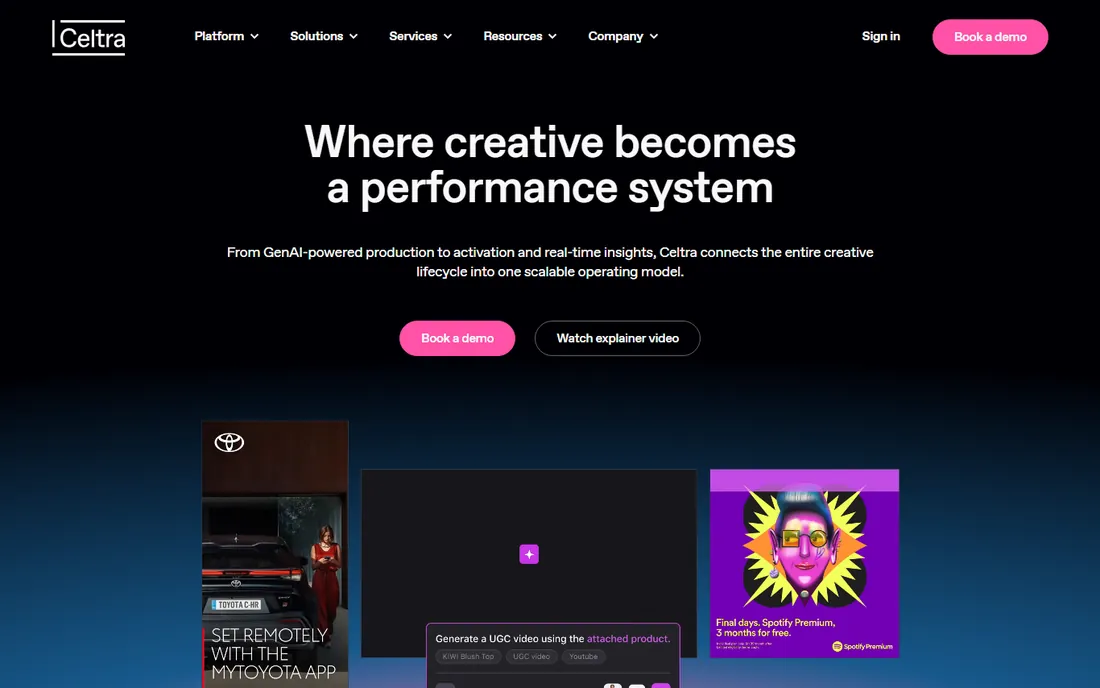
Celtra has spent years refining creative automation for large brands. The platform turns master creative into thousands of on-brand variants for display, social, and video, with rules that keep every version compliant with brand guidelines. Marketing teams like the balance: automation handles the volume, while designers keep control of the look.
This is enterprise software with enterprise pricing and onboarding. Smaller advertisers will find it more than they need. For global brands running always-on campaigns across markets and formats, Celtra's combination of scale and brand governance is the reason it keeps appearing on shortlists.
What we like- Strong cross-channel creative automation
- Brand control features
- Good analytics
Watch out for- Enterprise pricing
- Implementation takes planning
Starting priceSee website
Free planNo
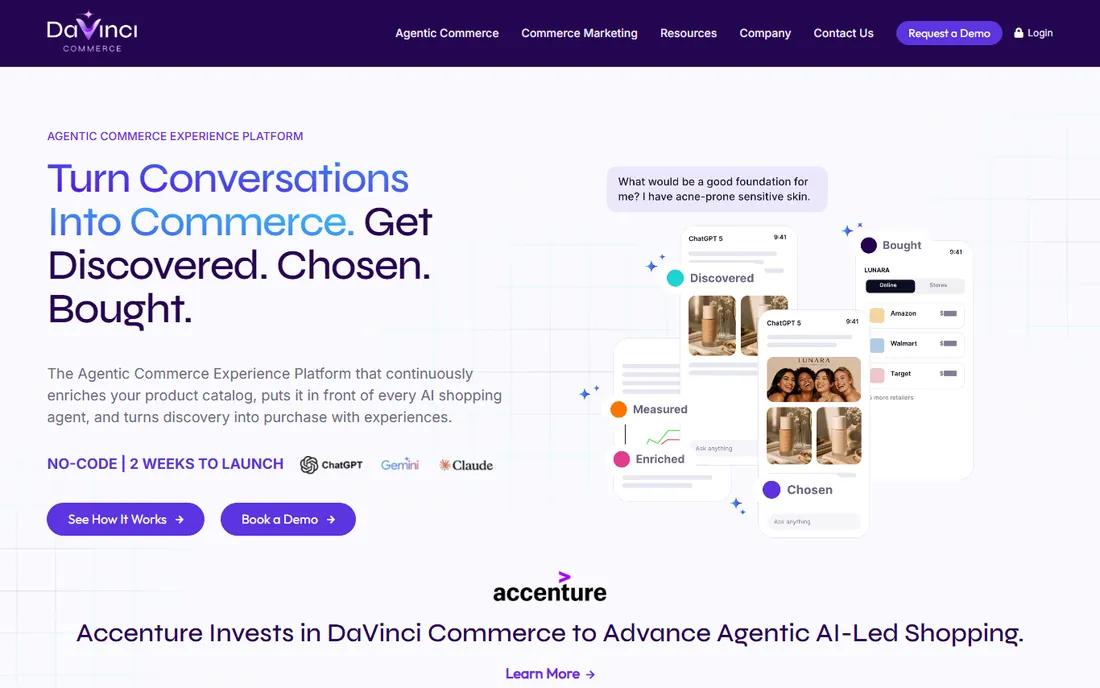
DaVinci Commerce is the new name for Jivox, which rebranded in early 2026 to focus on AI-driven commerce marketing. The platform combines creative optimization with rapid activation across retail media networks, promising campaigns that go from creative to live in minutes. Large consumer brands use it to personalize product ads across retailers and marketplaces.
The rebrand means the Jivox name is history; evaluate it as DaVinci Commerce. The commerce-media focus is a strength for retail advertisers and a limitation for everyone else. If your advertising lives in retail media networks and marketplaces, this is one of the most specialized options. General brand advertisers should look at Celtra or Innovid instead.
What we like- AI-driven commerce creative
- Retail media focus
- Fast campaign activation
Watch out for- New brand identity
- Commerce-centric may not fit all advertisers
Starting priceSee website
Free planNo
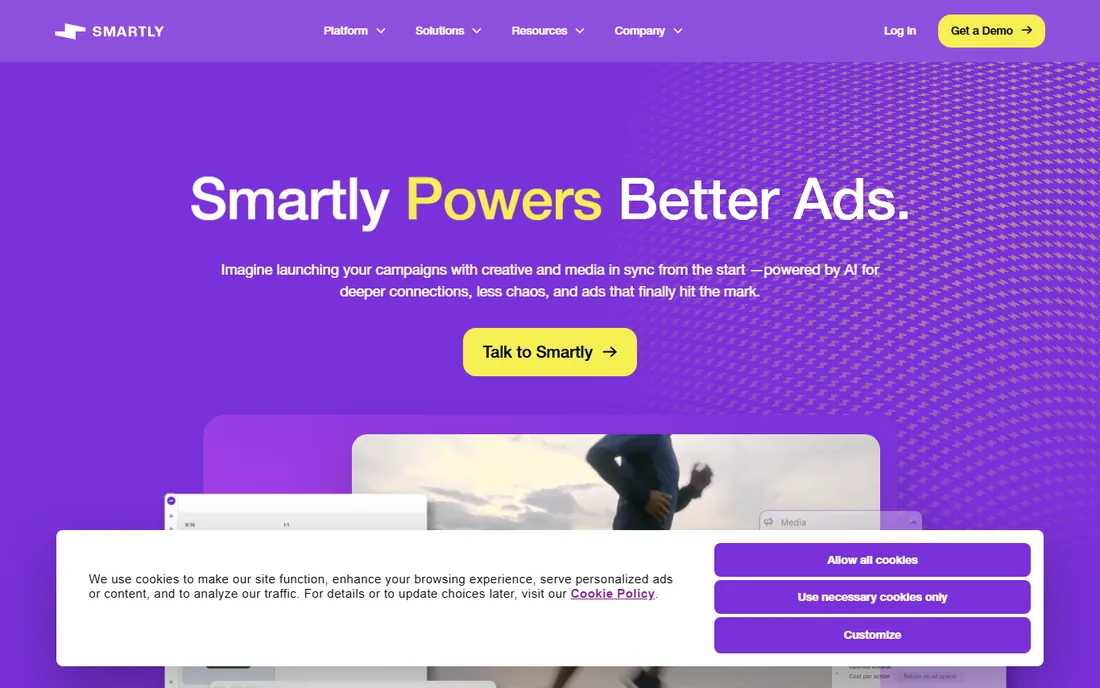
Smartly (formerly Smartly.io) automates creative production across social, programmatic, and emerging channels, with tools that connect creative performance back to media decisions. Agencies and in-house teams use it to generate and test thousands of ad variants, then shift budget toward what works. The platform's roots in social advertising show in its template and automation depth for Meta, TikTok, and Snap.
Pricing is quote-based and aimed at serious advertisers. Teams running small budgets will not get past the sales conversation. For performance marketers spending heavily on social and programmatic, Smartly's creative-to-media feedback loop is genuinely useful.
What we like- Strong social creative automation
- Connects creative to media buying
- Good for agencies
Watch out for- Pricing is custom
- Social-first heritage
Starting priceSee website
Free planNo
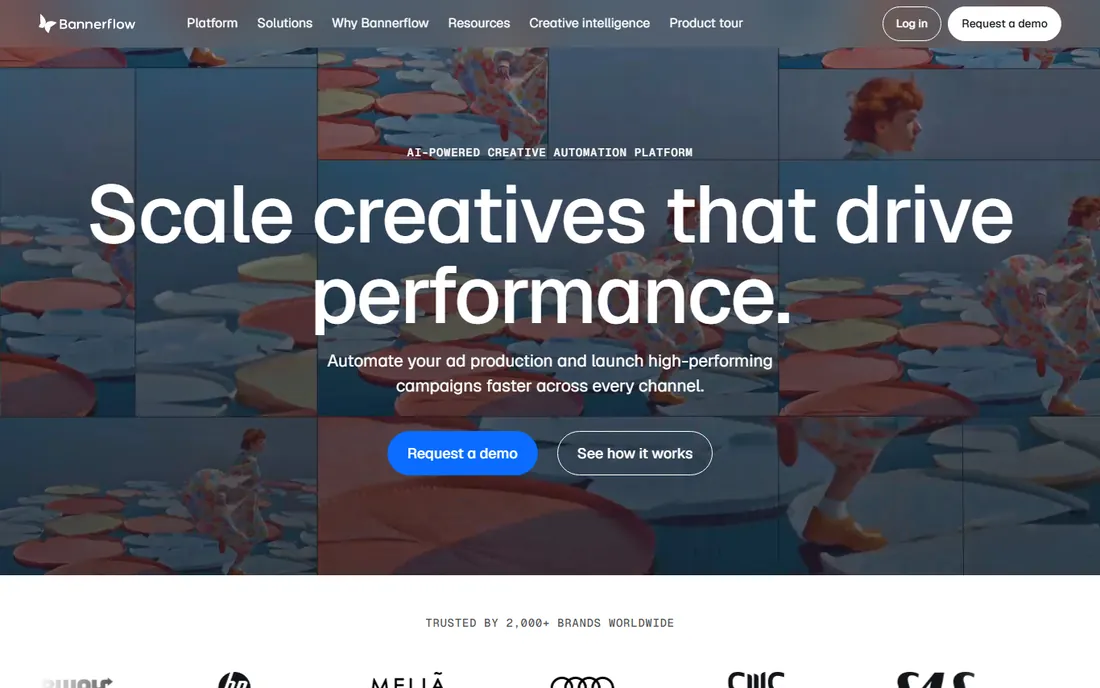
Bannerflow focuses on doing one thing well: scaling HTML5 display creative across markets and formats. Designers build responsive ads in a visual editor, localize them for dozens of markets, and push live updates to running campaigns without re-trafficking. Collaboration features let distributed teams work on the same creative with approval workflows.
The focus is display advertising. Video and CTV capabilities exist but trail the video specialists like Innovid. For advertisers whose media plan is display-heavy, Bannerflow's ease of use and localization workflow are strong advantages. Video-first brands should look elsewhere.
What we like- Intuitive creative builder
- Real-time campaign updates
- Good collaboration tools
Watch out for- Display-focused
- Less depth in video and CTV
Starting priceSee website
Free planNo
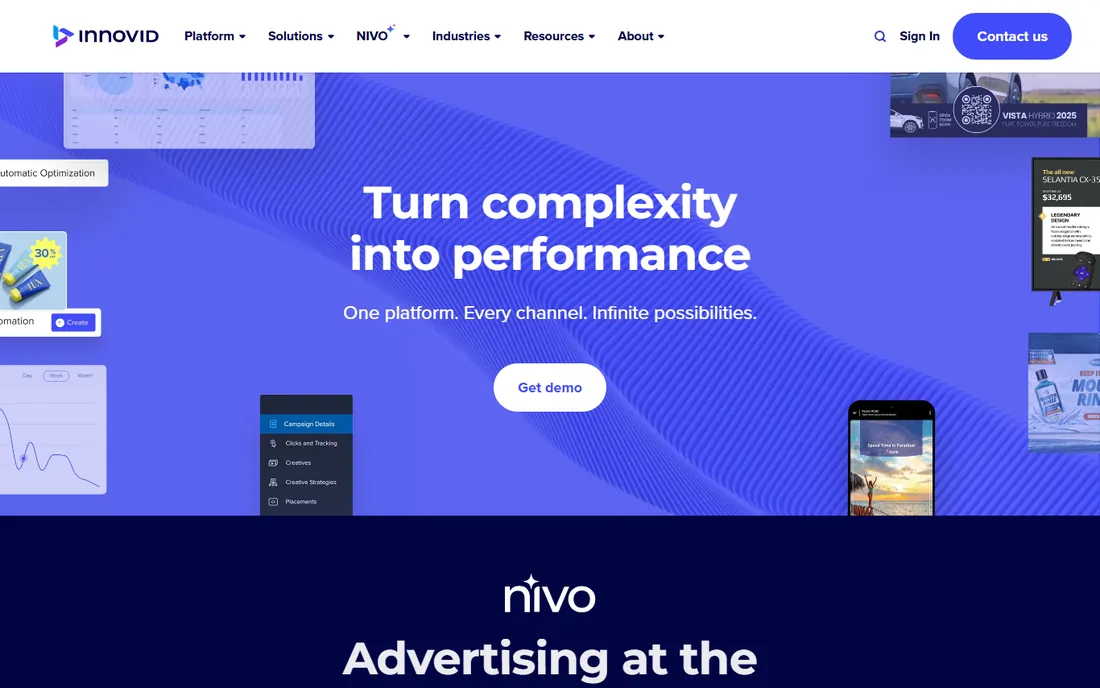
Innovid built its reputation on data-driven video creative, especially for connected TV. The platform combines ad serving with dynamic creative: personalized video ads assembled from data feeds and delivered across CTV, digital video, and display. Mediaocean's acquisition brought it into a larger ad infrastructure family, which strengthens the measurement and omnichannel story.
This is enterprise, video-first software. Display-only advertisers will find better fits. But as CTV budgets grow, the ability to personalize video creative at scale matters more each year, and Innovid is one of the few platforms built specifically for that job.
What we like- CTV and video specialization
- Ad serving plus creative
- Now backed by Mediaocean
Watch out for- Enterprise focus
- Video-centric
Starting priceSee website
Free planNo
Flashtalking, part of Mediaocean, pairs an independent ad server with dynamic creative optimization. The combination matters: creative personalization tied directly to serving and measurement, without depending on a media owner's stack. Cookieless tracking and advanced analytics support advertisers preparing for the post-cookie world.
Like most ad-tech infrastructure, it is sold to sophisticated buyers through enterprise channels. The interface reflects its ad-serving roots rather than modern creative-tool polish. For advertisers who want independent measurement alongside DCO, and especially agencies standardizing on Mediaocean infrastructure, Flashtalking is a natural fit.
What we like- Independent ad serving plus DCO
- Strong measurement
- Cookieless tracking
Watch out for- Enterprise sales motion
- Interface reflects ad-tech heritage
Starting priceSee website
Free planNo
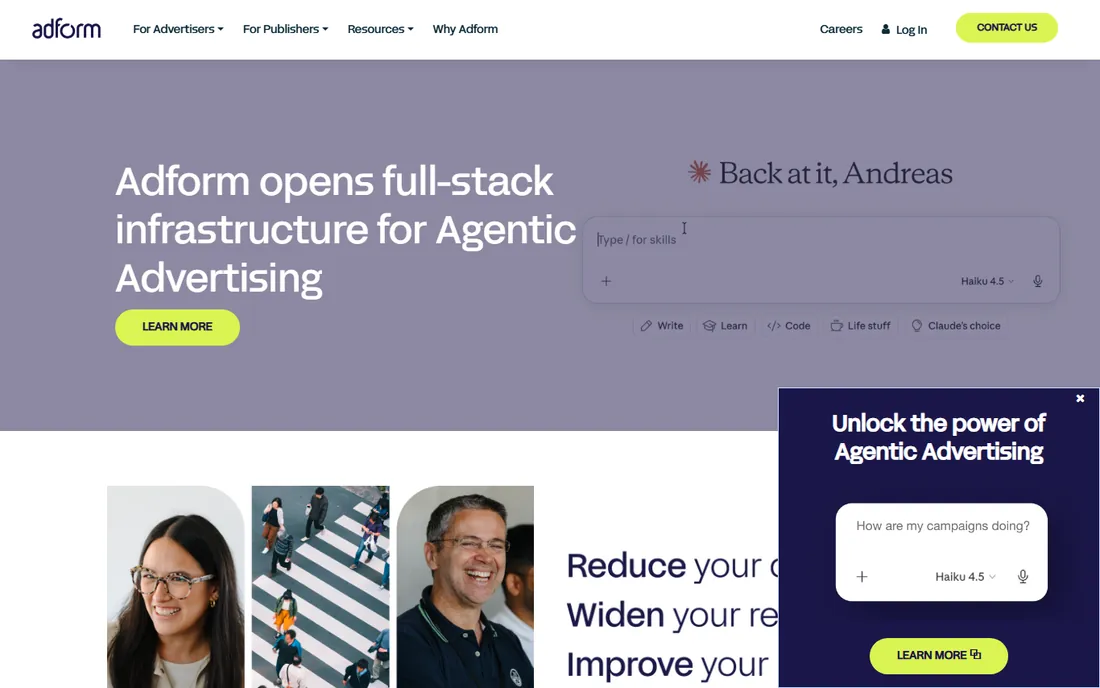
Adform combines a demand-side platform with creative tools including DCO, which means dynamic creative and media buying live in one system. The company is strongest in Europe, where it competes directly with the US giants on transparency and local support. For advertisers running programmatic across European markets, the integrated stack simplifies both buying and creative.
US advertisers will find a smaller footprint and partner network than domestic alternatives. The platform is enterprise-positioned with custom pricing. But the DSP-plus-DCO combination is genuinely convenient: when the same platform buys the media and assembles the creative, optimization loops tighten considerably.
What we like- Integrated DSP and DCO
- Strong in Europe
- Transparent platform
Watch out for- Smaller US presence
- Enterprise positioning
Starting priceSee website
Free planNo
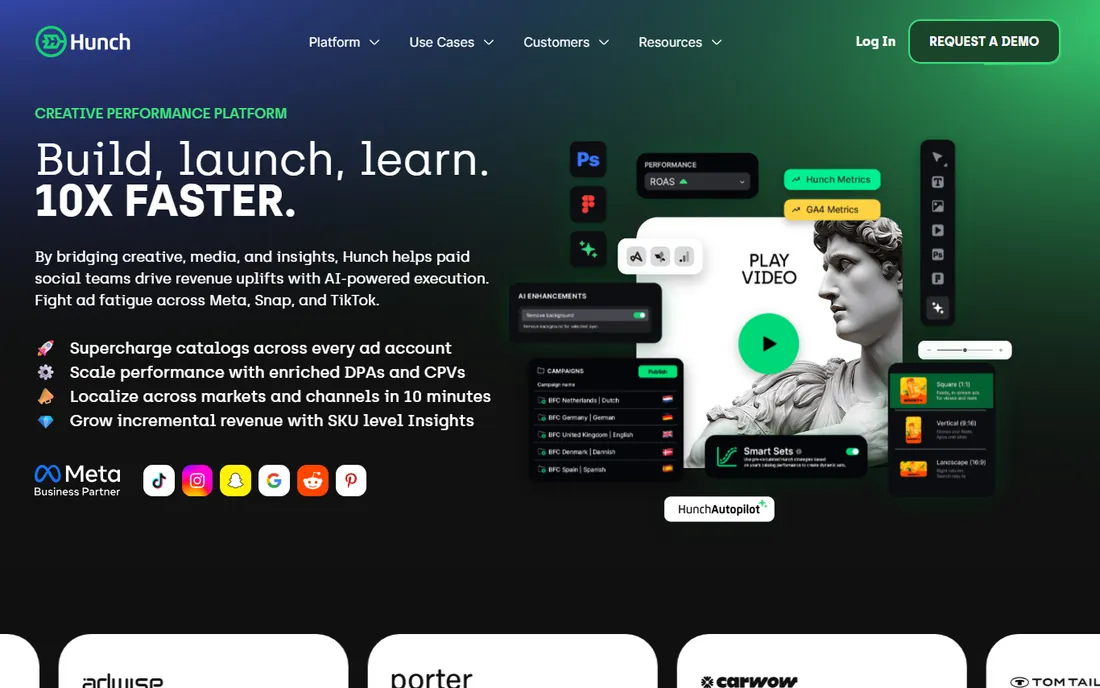
Hunch specializes in the most demanding corner of dynamic creative: product catalog ads. It ingests product feeds and generates thousands of on-brand variants for social and programmatic, updating creative automatically as prices, inventory, and promotions change. Ecommerce and retail advertisers get the highest-volume use case for DCO handled by a purpose-built tool.
The specialization is also the boundary. Brand campaigns without a product feed will not use half of what Hunch does. For retailers and ecommerce advertisers running dynamic product ads at scale, though, a feed-native tool beats a general platform trying to cover the same ground.
What we like- Built for catalog and feed ads
- Fast variant generation
- Ecommerce focus
Watch out for- Narrower than full DCO suites
- Best for product advertisers
How DCO pricing really works
Almost nobody in this category publishes prices, and for good reason: DCO pricing is genuinely complicated. Expect some combination of platform subscription, volume-based fees (impressions served or variants generated), and implementation services. Enterprise platforms typically start in the mid-five figures annually and climb with media volume. A few vendors price per seat for the creative studio plus usage fees for serving. Always clarify what counts as billable (served impressions? generated variants? active campaigns?) and whether ad serving, measurement, and support are included or separate line items. Get a 12-month cost model in writing before committing.
What to check before you buy
Data feed readiness
DCO runs on data: product feeds, CRM segments, weather, location, inventory. Audit your feeds before evaluating platforms. Stale or messy feeds produce broken creative no matter how good the platform is. Ask each vendor what feed formats they accept and how they handle feed errors.
Channel coverage that matches your media plan
A display DCO tool will not solve your CTV needs, and a social creative tool will not personalize video. Map the platform's strengths against where your budget actually goes. The best DCO platform is the one that covers your biggest channels, not the one with the longest feature list.
Brand governance at scale
Generating ten thousand variants is easy; keeping them all on-brand is hard. Check approval workflows, template locking, and legal review features. Regulated industries should test the compliance controls specifically. Ask how the platform prevents an off-brand or non-compliant variant from serving.
Measurement and attribution
DCO's value is performance lift, which you can only prove with measurement. Check whether the platform includes creative-level analytics, supports your attribution setup, and integrates with your DSP or ad server. Independent measurement matters if you do not want the creative vendor grading its own homework.
How we chose
We selected platforms that provide real dynamic creative optimization in 2026: data-driven variant generation, personalization rules, and serving integrations. We based the list on vendor documentation, industry standing, and each platform's fit for different advertiser types. We excluded pure creative automation tools with no dynamic serving and ad servers with no creative capabilities. No vendor paid for placement, and we did not run live campaigns for this guide.
Frequently asked questions
What is dynamic creative optimization?
DCO is technology that assembles personalized ad creative in real time from components (headlines, images, offers, calls to action) based on data about the viewer: their location, behavior, the product feed, or the context of the page. Instead of designing hundreds of ad versions by hand, you build templates and rules, and the platform generates and serves the right variant to each person.
How is DCO different from A/B testing?
A/B testing compares a few fixed versions to find a winner. DCO generates many versions continuously and serves each viewer the variant most likely to perform, often optimizing automatically. A/B testing answers "which ad is best"; DCO answers "which ad is best for this person right now."
Do I need a data feed for DCO?
For the full value, yes. Product catalogs, CRM segments, pricing, and inventory feeds drive the personalization. Basic DCO (location, weather, time of day) works without custom feeds. Before buying, audit what data you can actually provide; the platform is only as smart as its inputs.
What budget do I need for DCO to make sense?
DCO pays off with scale: enough impressions for the personalization to matter and enough creative variation to justify automation. As a rough guide, advertisers spending mid-five figures monthly on digital media start seeing returns. Below that, the platform cost often exceeds the performance lift. Small advertisers should master basic creative testing first.
Will AI replace DCO platforms?
AI is becoming part of DCO, not a replacement for it. Generative AI now drafts creative variants and copy, which platforms like DaVinci Commerce are building in. But the serving infrastructure, brand governance, measurement, and feed management that DCO platforms provide remain necessary. Expect AI-assisted DCO, not AI instead of DCO.
Sources we checked (10)
- https://marketingplatform.google.com/about/display-video-360/
- https://celtra.com
- https://davincicommerce.ai
- https://pulse2.com/jivox-raises-strategic-financing-rebrands-as-davinci-commerce-to-target-agentic-commerce-marketing/
- https://www.smartly.io
- https://www.bannerflow.com
- https://www.innovid.com
- https://flashtalking.com
- https://site.adform.com
- https://www.hunchads.com
Is your product missing or out of date?
We review this list regularly. Vendors can request a listing, send updated pricing or ask about featured placement.

Shihab Mia · Founder, Rankite
Shihab has spent more than a decade helping SaaS and e-commerce brands grow through search. He writes Rankite's software buying guides from pricing pages, documentation and public user reviews. More about Shihab.