How we make this list: we compare pricing pages, product documentation and public user reviews. Rankite is independent; if a vendor ever pays for a featured spot, that listing is clearly labeled Partner.
Key takeaways
- Supabase is the default for full-stack apps that need Postgres plus auth, storage and realtime without stitching services together.
- Neon and Turso win when the database itself should be invisible: serverless Postgres that scales to zero, or SQLite replicated to the edge.
- Firebase and MongoDB Atlas are the proven choices for document-model apps, with free tiers that carry real projects.
- PlanetScale is the pick for MySQL teams that need branching and zero-downtime schema changes, but there is no free tier.
- Convex, Appwrite and Upstash cover the edges: reactive backends, open-source self-hosting and serverless Redis, caches and queues.
Quick comparison
| Tool | Best for | Starting price | Free plan |
|---|
 Supabase Supabase | Full-stack apps on Postgres | $25 per month (Pro plan) | Yes |
 PlanetScale PlanetScale | MySQL teams needing branching and sharding | $5 per month (single-node Postgres) | No |
 Neon Neon | Serverless Postgres with database branching | $19 per month (Launch plan) | Yes |
 Firebase Firebase | Google-backed mobile and web apps | Free; pay-as-you-go (Blaze plan) | Yes |
 MongoDB Atlas MongoDB Atlas | Document-model apps at any scale | Free; pay-as-you-go | Yes |
 Turso Turso | Edge SQLite with embedded replicas | $4.99 per month (Developer, billed annually) | Yes |
 Upstash Upstash | Serverless Redis, caching and queues | Free; pay-as-you-go (fixed plans from $10/month) | Yes |
 Appwrite Appwrite | Open-source all-in-one backend | $15 per month (Pro plan) | Yes |
 Convex Convex | Reactive TypeScript backends | Free; pay-as-you-go (Starter plan) | Yes |
Is your product missing or out of date?
We review this list regularly. Vendors can request a listing, send updated pricing or ask about featured placement.
The best database software for intuitive development
Starting price$25 per month (Pro plan)
Free planYes
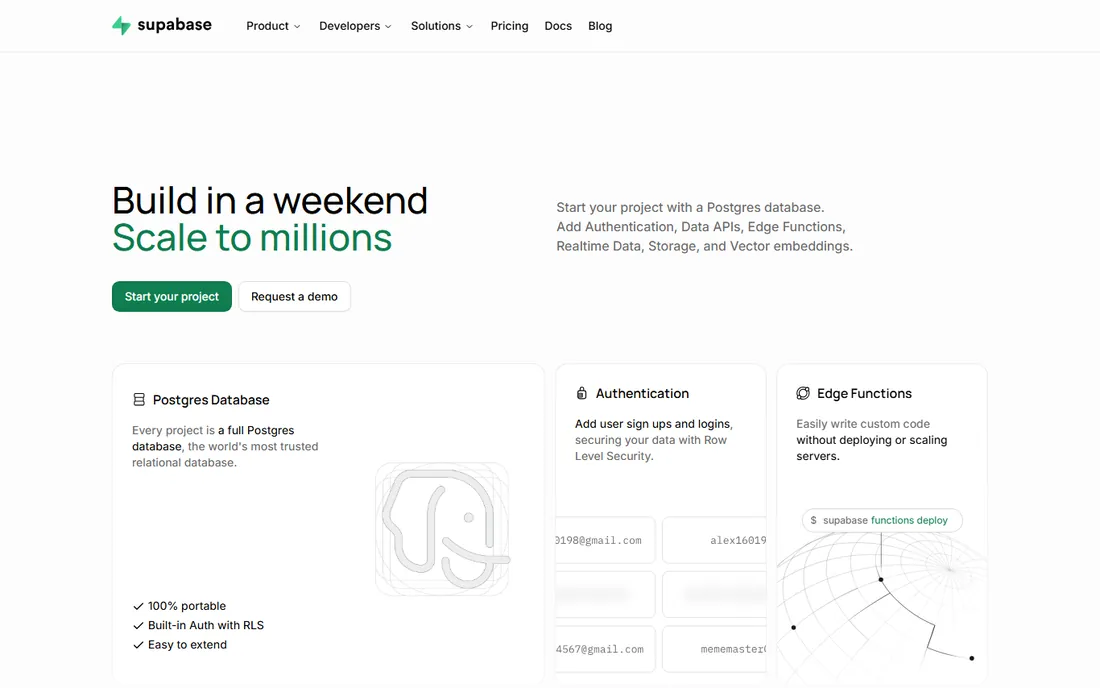
Most developers picking a backend in 2026 start with Supabase, and the reason is consolidation. Instead of wiring Postgres to an auth provider to a storage bucket to a realtime layer, you get all of it with one account and one dashboard. The database is genuine Postgres, so your SQL skills transfer, and row-level security handles authorization close to the data.
The free tier covers 500 MB of database storage, 1 GB of file storage and 50,000 monthly active users for auth, which carries prototypes and side projects comfortably. Pro at $25 per month removes the inactivity pause and adds daily backups, which matters the day your free project naps during a demo.
The honest catch is pricing shape. Per-project billing means every project carries its own compute cost, and the jump from Pro to the $599 Team tier is steep for startups that need compliance features. If you want Postgres without the platform bundle, Neon is the purer pick.
What we like- Real Postgres plus auth, storage, realtime, edge functions and vector search in one platform
- Open source with self-hosting option
- Auto-generated REST and GraphQL APIs from your schema
Watch out for- Free projects pause after a week of inactivity
- Pro billing is per project, which adds up for many projects
- Bundled services are overkill if you only need a database
Starting price$5 per month (single-node Postgres)
Free planNo
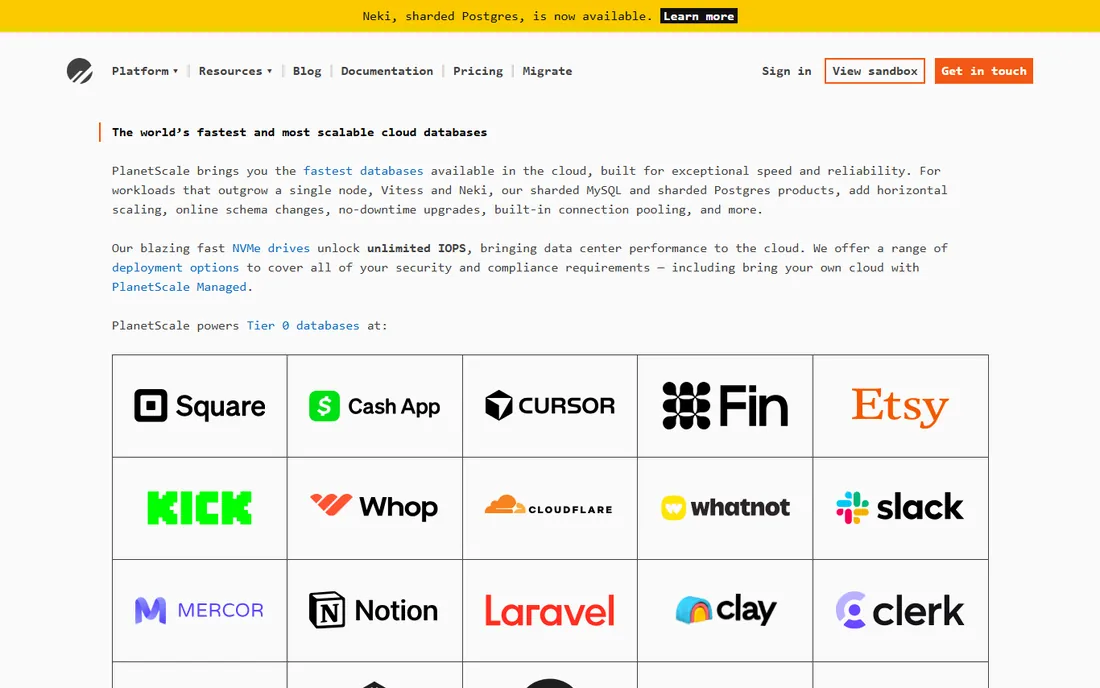
PlanetScale invented the developer-friendly branching workflow for databases, and it remains the reference implementation. Every schema change goes through a branch, gets reviewed and deploys without locking tables, which is how serious teams ship database changes without downtime. The Vitess heritage gives it horizontal sharding for workloads that outgrow a single node.
The product now covers MySQL via Vitess, Postgres including a sharded Postgres option, and single-node databases from $5 per month for development and small projects. Metal tiers with NVMe storage target teams chasing latency.
There is no free tier. That single fact rules it out for hobbyists and makes the entry decision a real budget line. PlanetScale fits teams with production MySQL workloads and strict schema discipline, not developers looking for a free place to start.
What we like- Database branching for safe schema workflows
- Zero-downtime schema changes with no table locks
- Horizontal sharding through Vitess for extreme scale
Watch out for- No free tier since 2024, you pay from day one
- MySQL-first heritage may not suit Postgres teams
- Pricing gets complex with storage, backup and egress charges
#3
Neon
Best for: Serverless Postgres with database branching
Visit neon.tech
Starting price$19 per month (Launch plan)
Free planYes
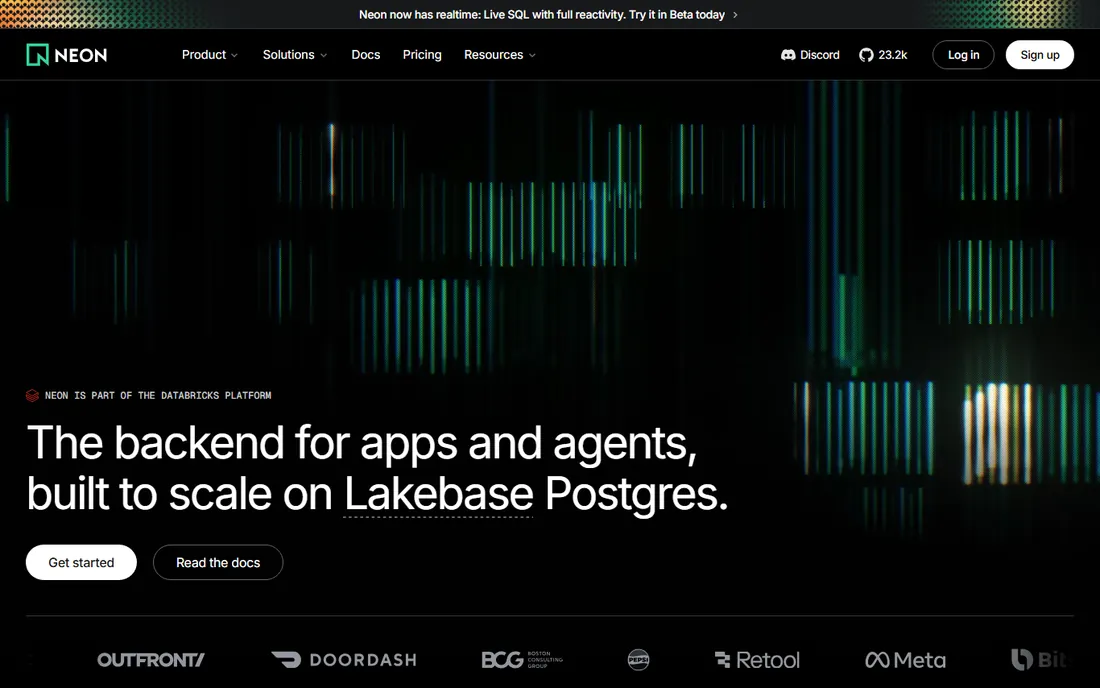
Neon is Postgres and only Postgres, delivered serverless. Compute scales to zero when idle and wakes in milliseconds, so a side project with 0.8 GB of data costs essentially nothing while it sleeps. The standout feature is branching: every pull request gets a copy-on-write database snapshot, which makes preview environments with real data almost free.
The free tier includes 100 projects with generous compute hours and 1 GB of storage per project. Launch has no monthly minimum; you pay for compute hours and storage actually used. That usage-based shape beats fixed instances for anything with idle time, which is most development work.
Neon is now part of the Databricks platform, though it still operates as its own product at neon.tech. If you need auth, storage or realtime alongside the database, you will wire those yourself or pick Supabase. For pure Postgres with the best developer workflow, Neon is the sharpest tool here.
What we like- True scale-to-zero Postgres with usage-based billing
- Database branching gives every pull request its own database
- Generous free tier with 100 projects
Watch out for- Postgres only, no bundled auth or storage
- Cold starts after idle periods add latency
- Part of Databricks now, so roadmap watchers should pay attention
Starting priceFree; pay-as-you-go (Blaze plan)
Free planYes
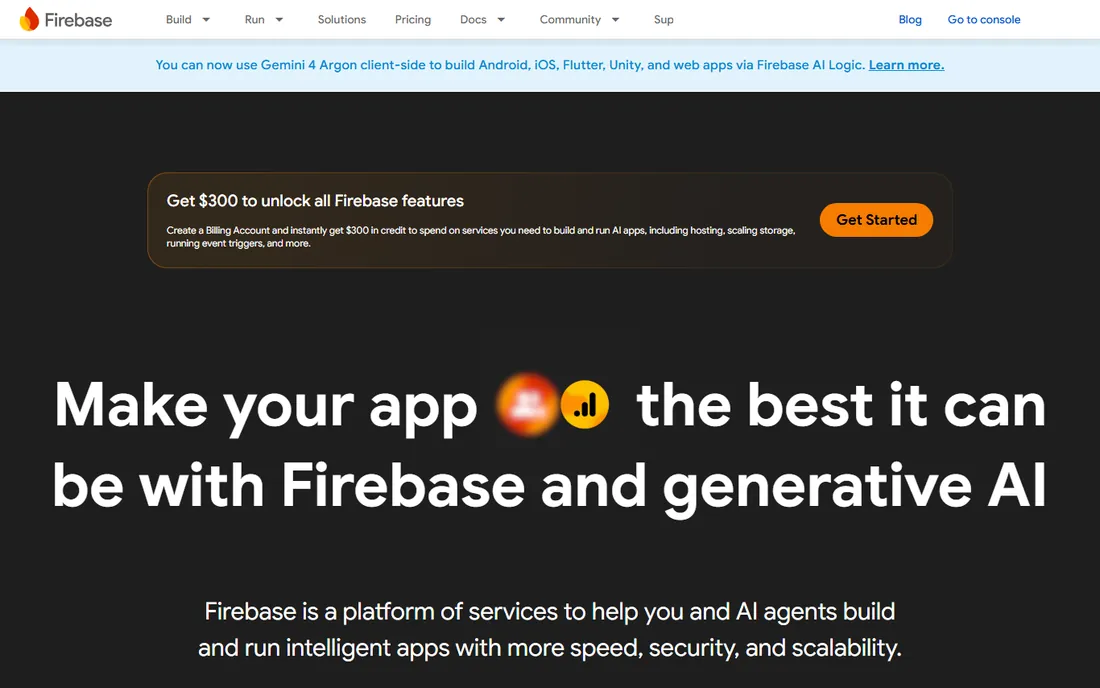
Firebase is the veteran of this list and still the fastest way to ship a mobile or web app with a backend you never think about. Firestore gives you a realtime document database, and around it sit auth, hosting, cloud functions, crash reporting and analytics, all in one console with one billing account.
The Spark plan is free for modest usage, and Blaze is pay-as-you-go, so you pay for what you consume rather than for servers. Cross-platform SDKs cover iOS, Android, web, Flutter, Unity and C++, which is why game and mobile teams keep choosing it.
The document model is the tradeoff. If your data is relational, Firestore fights you, and heavy dashboard-style querying can generate surprising read bills at scale. Firebase is best when your app fits documents and realtime sync, and you value Google's infrastructure over database purity.
What we like- Complete app platform from one vendor: Firestore, auth, hosting, functions, analytics
- Generous Spark free tier for getting started
- Backed by Google's infrastructure and used by Duolingo, Venmo and NPR
Watch out for- Firestore is NoSQL, so relational data models fight the grain
- Costs can spike with unoptimized read patterns at scale
- Vendor lock-in is real since the APIs are proprietary
Starting priceFree; pay-as-you-go
Free planYes
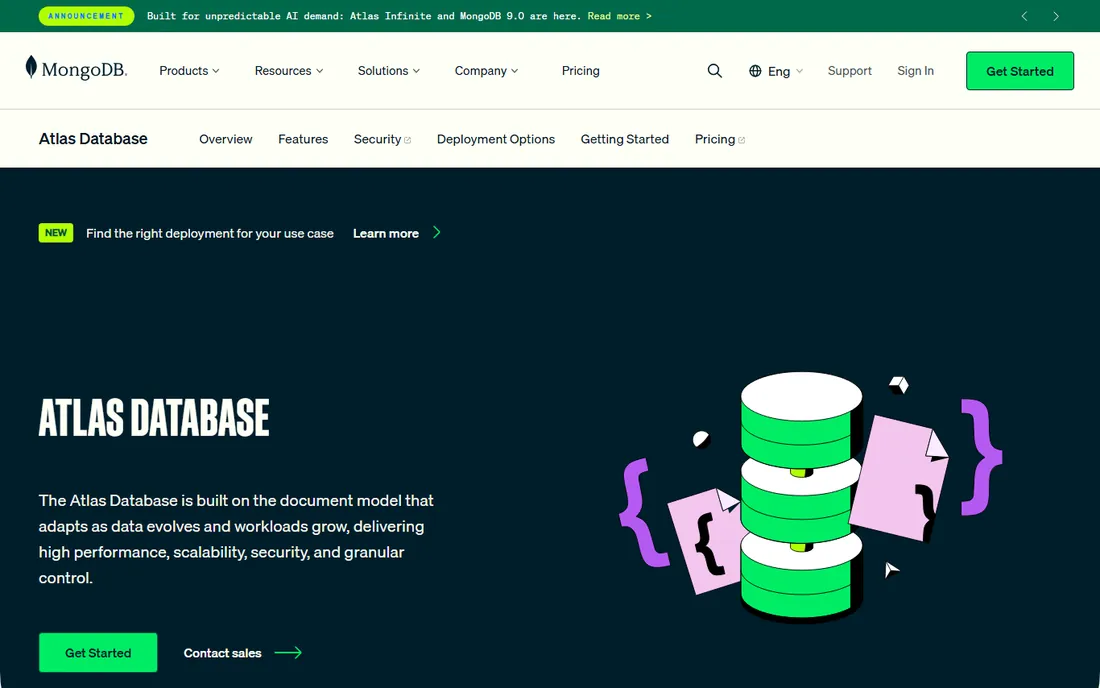
Atlas is MongoDB's managed cloud service, and it remains the standard for document databases. The flexible document model adapts as your schema evolves, which suits apps whose data shapes change fast. Deployments span AWS, Azure and Google Cloud with multi-region replication, automated backups and point-in-time recovery.
Pricing starts with a free tier cluster, then moves through Flex tier pay-as-you-go billing to fixed-price dedicated clusters for predictable production workloads. Newer Atlas Core and Atlas Infinite tiers separate predictable workloads from volatile AI-scale demand.
Atlas is a database service, not a full backend: you bring your own auth, APIs and hosting. Teams that want the document model with serious operational tooling choose Atlas. Teams that want SQL choose one of the Postgres options above.
What we like- Fully managed MongoDB with multi-region, multi-cloud deployments in 125+ regions
- Flexible document model that maps to application objects
- Free tier cluster for learning and prototypes
Watch out for- Usage-based pricing needs monitoring at scale
- The document model is a poor fit for heavily relational data
- Enterprise features push you toward dedicated tiers
Starting price$4.99 per month (Developer, billed annually)
Free planYes
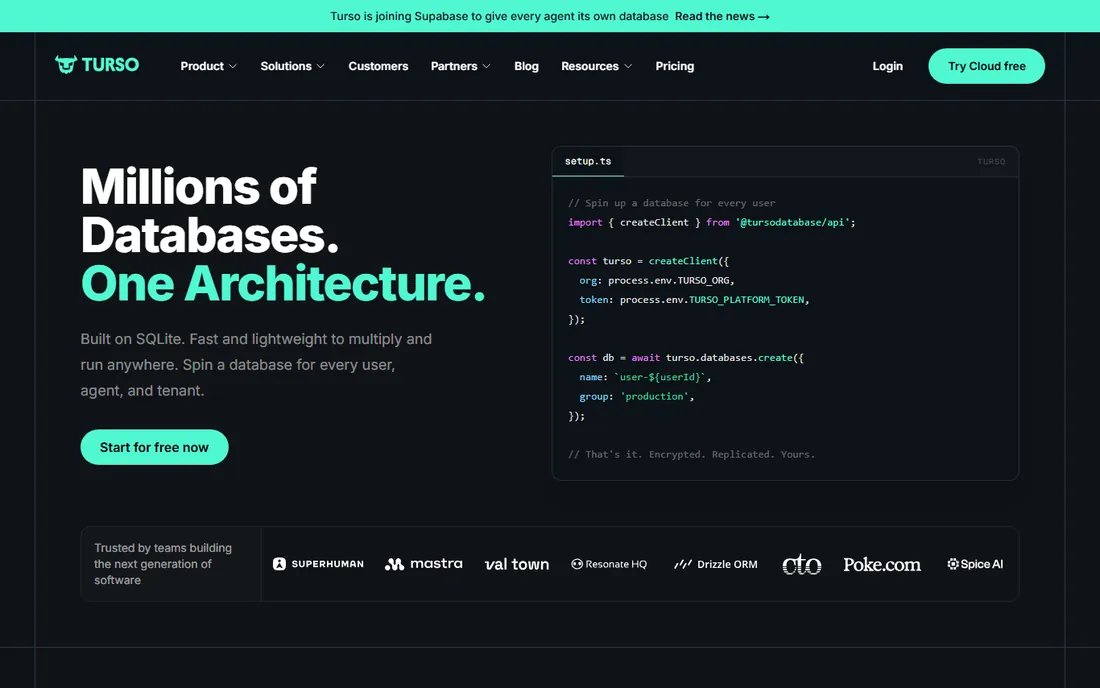
Turso takes a different bet from everyone else here: instead of one big database, give every user, tenant or AI agent its own SQLite database, replicated globally. Reads happen at the edge in milliseconds, and embedded replicas let the same database run on a device and sync to the cloud, which makes offline-first apps and per-user data isolation natural.
The free plan allows 100 databases, and the Developer plan at $4.99 per month on annual billing includes unlimited databases with 9 GB of storage and billions of row reads. That pricing model is built for architectures with thousands of small databases, not one big one.
One caution: in October 2026 Supabase announced it was acquiring Turso, with a plan to move customers toward Postgres over time. The product operates independently today, but confirm current terms before building long-term plans on it.
What we like- SQLite at the edge with sub-10ms global reads
- Embedded replicas let apps run offline and sync later
- Open-source libSQL engine you can run anywhere
Watch out for- SQLite semantics, so no stored procedures and limited types
- Not ideal for write-heavy workloads
- Supabase announced its acquisition in October 2026, so pricing and plans may change
Starting priceFree; pay-as-you-go (fixed plans from $10/month)
Free planYes
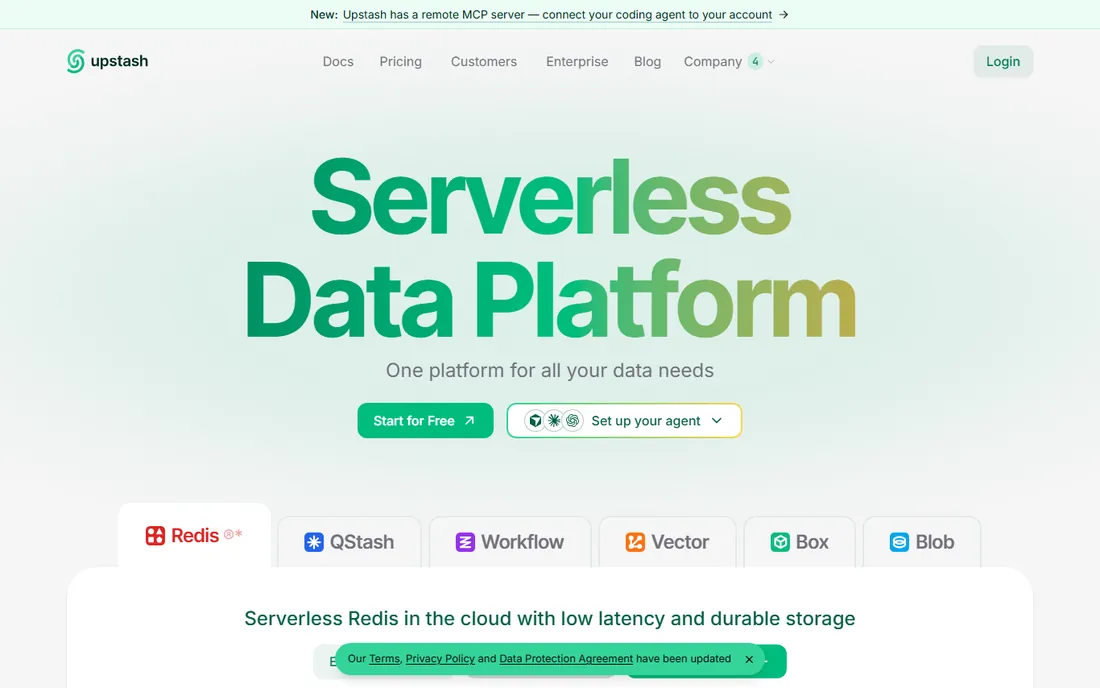
Upstash is not where you store your core relational data. It is the companion layer: Redis-compatible caching, vector search for embeddings, full-text search, message queues and durable workflows, all serverless with per-request pricing. You create a database in seconds and connect over HTTP, which makes it natural for edge functions and serverless apps that cannot hold database connections.
Every product has a free tier, and paid usage is either pay-as-you-go or fixed monthly plans from $10. The HTTP REST API works from any runtime, including Cloudflare Workers and Vercel Edge, without the connection pooling headaches that plague traditional Redis in serverless.
Pair Upstash with a primary database like Neon or Supabase: the primary holds your source of truth, Upstash handles caching, queues and search. As a standalone primary store it does not fit.
What we like- Serverless Redis, Vector, Search, messaging and workflows with per-request pricing
- HTTP API works from serverless and edge runtimes without connection pooling
- Free tier with no credit card
Watch out for- Not a primary database for relational workloads
- Pay-per-request bills can surprise with spiky traffic
- The product lineup keeps expanding, which can confuse new users
Starting price$15 per month (Pro plan)
Free planYes
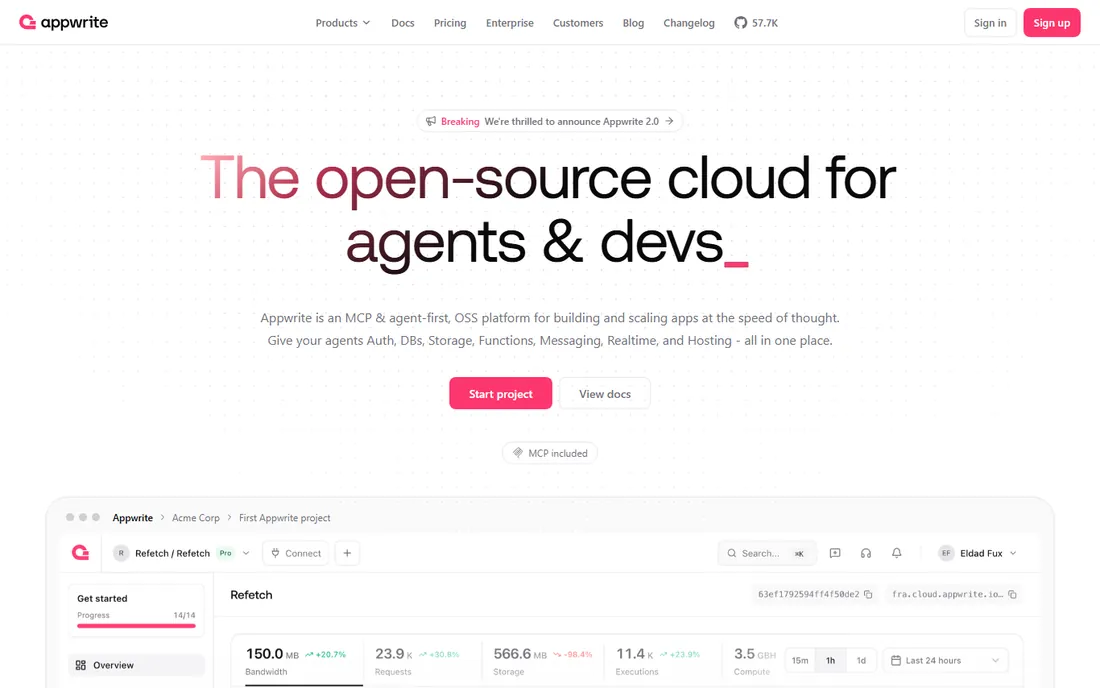
Appwrite is the most direct open-source rival to Supabase. You get auth, databases, storage, functions, messaging and realtime in one platform, with a console that feels designed rather than assembled. The open-source core means you can self-host and walk away from the cloud product entirely, which no other all-in-one here offers as cleanly.
The cloud product has a free tier and a Pro plan at $15 per month, undercutting Supabase on headline price. The community is large, with over 57,000 GitHub stars and hundreds of thousands of cloud projects.
The ecosystem is smaller than Supabase's, so you will find fewer tutorials, integrations and third-party tools. Appwrite wins for teams that want an all-in-one backend with a genuine exit option. If Postgres power and pgvector matter most, Supabase still leads.
What we like- Open source with self-hosting, so you are never locked in
- Auth, databases, storage, functions, messaging and realtime in one console
- 500,000+ developers and a large community
Watch out for- Smaller ecosystem than Supabase or Firebase
- TablesDB is Postgres-based but the platform is less SQL-native
- Enterprise features trail the bigger platforms
Starting priceFree; pay-as-you-go (Starter plan)
Free planYes
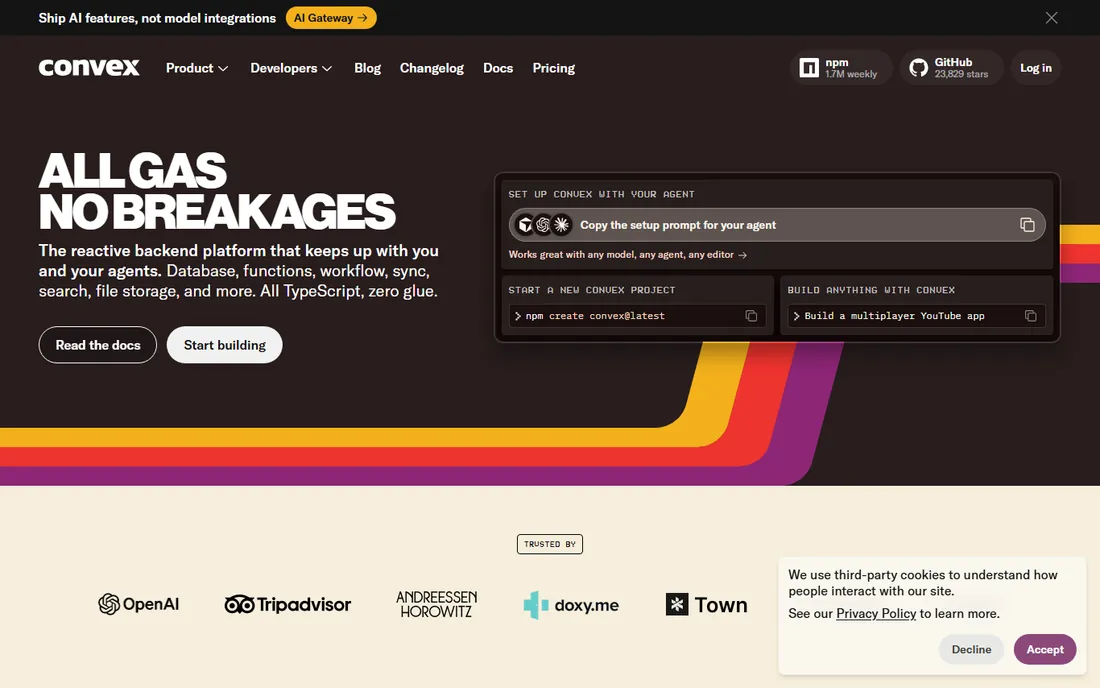
Convex is built for teams that write TypeScript and want the database to feel like part of the app. Queries are reactive: when data changes, subscribed clients update automatically, with no websocket code and no cache invalidation to manage. End-to-end type safety means your schema, functions and frontend share types, which catches whole classes of bugs.
The platform bundles the database, serverless functions, scheduling, search and file storage, all deployed with one command. The free tier covers 1M function calls and 1 GB of database I/O per month without a credit card, and the Starter plan is $0 base with pay-as-you-go usage.
It is a TypeScript-first world. If your team lives in Python, Go or another stack, the developer experience advantage fades. Convex suits product teams building interactive apps who want to move fast and are comfortable with a vendor-specific platform.
What we like- Reactive queries that update clients automatically, with end-to-end TypeScript type safety
- Database, functions, scheduling and file storage with zero glue code
- Generous free tier with no card required
Watch out for- TypeScript-centric, so other stacks are second-class
- Usage-based pricing on bandwidth and function calls needs monitoring
- Smaller community than the incumbents
How we chose
We researched current vendor documentation, pricing pages and developer comparisons published in 2026, then verified that every product is live and purchasable today. We excluded anything shut down: Fauna, for example, ended its service in May 2025, so it does not belong on a 2026 buying list. We also kept this list distinct from migration tooling, focusing on databases you build on, not tools that move data between them.
We favored products with a real free tier, transparent pricing and a developer experience that reduces setup to minutes. We included both SQL and NoSQL options because the intuitive choice depends on your data model, and we weighted open-source availability and self-hosting as meaningful advantages.
How to pick the right engine for your app
Start with your data model. If your data is relational, with joins and transactions, pick a Postgres option: Supabase for the full backend, Neon for pure serverless Postgres, PlanetScale if you are on MySQL. If your data is document-shaped and changes often, Firebase or MongoDB Atlas fit better. If you need per-user or per-tenant isolation at scale, Turso's many-databases model is designed for exactly that.
Then consider what else you need. Supabase, Firebase and Appwrite bundle auth, storage and more, which saves weeks of integration work.
Finally, think about scale shape. Usage-based databases like Neon and Convex win when your app has idle time, because you pay for what you use. Fixed plans like Supabase Pro win for steady, predictable workloads. Model your expected usage at six months out, not just today.
What the free tiers actually give you
Free tiers in this category are genuinely useful, with one big caveat: most of them are designed to convert you to paid. Supabase gives you 500 MB of database and 50,000 auth users but pauses projects after a week of inactivity. Neon gives you 100 projects and generous compute hours but storage is capped per project. Turso gives you 100 databases free.
Firebase's Spark plan and MongoDB Atlas's free cluster are the most generous for learning, with no time bombs attached. Upstash and Convex both offer free tiers without a credit card. PlanetScale is the exception: no free tier at all.
The practical advice is to prototype free everywhere, then upgrade the day you have real users or real revenue. The cost of a paused database during a customer demo always exceeds the price of the entry plan.
Frequently asked questions
What is the easiest database for a beginner developer?
Supabase and Firebase are the easiest on-ramps. Both give you a database plus auth and a dashboard in minutes, with free tiers and enormous tutorial ecosystems. Supabase teaches you real Postgres along the way, while Firebase teaches Google's document model. Pick Supabase if you want SQL skills that transfer anywhere.
Should I use Supabase or Firebase?
Choose Supabase if you want a relational database, SQL, and open-source portability. Choose Firebase if you are building a mobile app that fits the document model and you value Google's integrated platform of hosting, analytics and crash reporting. Both have free tiers, so cost is not the deciding factor.
What is the cheapest database for a side project?
Neon, Turso, Upstash and Convex all have free tiers that carry real side projects, and their usage-based pricing means idle projects cost almost nothing. Supabase's free tier works too if you accept the inactivity pause. Avoid fixed per-project pricing until the project earns money.
Is Postgres or MongoDB better for a new app?
Postgres wins for relational data, complex queries and transactional integrity, which covers most SaaS apps. MongoDB wins for document-shaped data that evolves quickly and for teams that think in objects rather than tables. The honest answer is that most new apps do fine on either; pick the one your team already knows.
What happened to Fauna?
Fauna ended its database service in May 2025. If you are migrating off it, the closest modern equivalents are Supabase for the document-relational model with Postgres, or Convex for the serverless TypeScript-first experience. Export your data before any remaining migration windows close.
Do I need a separate database for caching and search?
Not always, but often. Postgres handles basic full-text search, and every database here caches to some degree. Upstash earns its place when you need Redis-compatible caching, vector search for AI features, or message queues that your primary database does not do well. Add it when you feel the pain, not before.
Sources we checked (18)
- https://supabase.com
- https://planetscale.com
- https://neon.tech
- https://firebase.google.com
- https://www.mongodb.com/cloud/atlas
- https://turso.tech
- https://upstash.com
- https://appwrite.io
- https://convex.dev
- https://scored.tools/blog/supabase-vs-planetscale-which-database-is-better/
- https://dev.to/kubeden/neon-vs-supabase-vs-planetscale-vs-aws-what-postgres-costs-in-2026-59o5
- https://devtoolpicks.com/blog/best-planetscale-alternatives-indie-hackers-2026
- https://www.dbpro.app/blog/planetscale-vs-supabase
- https://aitoolpick.org/blog/turso-vs-neon-vs-supabase-2026/
- https://www.beri.net/article/supabase-turso-acquisition-database-per-agent-sqlite-postgres-pricing-continuity
- https://www.marktechpost.com/2026/05/19/upstash-for-redis-vs-supabase-vs-neon-which-one-fits-vibe-coding-workflows-in-2026/
- https://www.prisma.io/blog/choosing-hosting-and-postgres-after-your-first-100-users
- https://www.g2.com/products/fauna-fauna/pricing
Is your product missing or out of date?
We review this list regularly. Vendors can request a listing, send updated pricing or ask about featured placement.

Shihab Mia · Founder, Rankite
Shihab has spent more than a decade helping SaaS and e-commerce brands grow through search. He writes Rankite's software buying guides from pricing pages, documentation and public user reviews. More about Shihab.