How we make this list: we compare pricing pages, product documentation and public user reviews. Rankite is independent; if a vendor ever pays for a featured spot, that listing is clearly labeled Partner.
Key takeaways
- Database migration breaks into two jobs: one-time moves between databases, and ongoing replication that keeps systems in sync. AWS DMS and Qlik Replicate lead the first job for enterprises, while Fivetran, Airbyte and Hevo Data lead the second for analytics teams.
- The cheapest starting points are real. Debezium and Airbyte's self-hosted editions cost nothing but demand engineering time, while Hevo Data ($239/month) and Stitch ($100/month) give small teams managed pipelines without a hire.
- Usage-based pricing is where migration budgets die. Fivetran bills per monthly active row per connection and Hevo bills per event, so model your real data volume before committing, because the free tier rarely survives first contact with production data.
- If you need sub-minute freshness, check the fine print. Fivetran reserves one-minute syncs for Enterprise plans, while Estuary and Striim were built for streaming from the start.
Quick comparison
| Tool | Best for | Starting price | Free plan |
|---|
 Fivetran Fivetran | Hands-off managed ELT pipelines | Free plan; paid usage-based (MAR pricing) | Yes |
 Hevo Data Hevo Data | No-code pipelines for small teams | From $239/month | Yes |
 Stitch Stitch | Simple row-based ELT | From $100/month | No |
 AWS DMS AWS DMS | Migrations inside AWS | Usage-based (pay-as-you-go) | No |
 Airbyte Airbyte | Open-source connector flexibility | See website | Free trial; free self-hosted edition |
 Estuary Estuary | Real-time streaming without Kafka | See website | Yes |
 Striim Striim | Enterprise streaming integration | See website | Yes |
 Qlik Replicate Qlik Replicate | Real-time database replication | See website | No |
 Debezium Debezium | Free open-source CDC | Free (open source) | Yes |
 CData Sync CData Sync | Broad connector replication | See website | No |
Is your product missing or out of date?
We review this list regularly. Vendors can request a listing, send updated pricing or ask about featured placement.
The best database migration software
Starting priceFree plan; paid usage-based (MAR pricing)
Free planYes
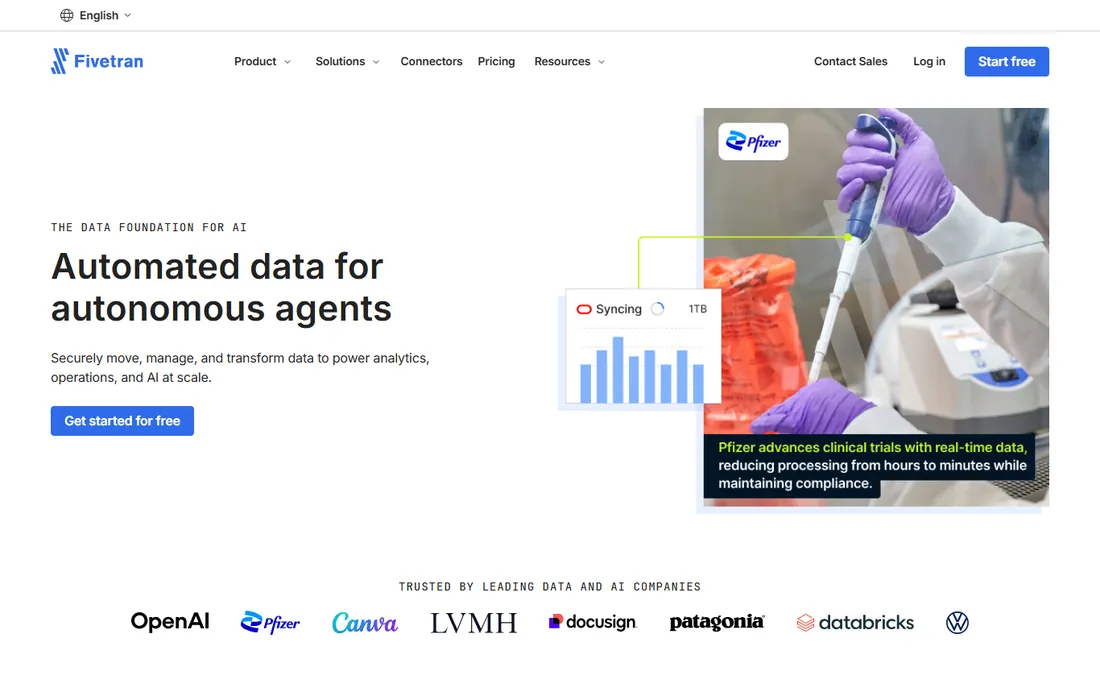
Picture the team that never wants to think about pipelines again. Fivetran is built for them: point it at a source, point it at a warehouse, and the sync runs, the schema changes get absorbed, and the failures retry themselves. The free plan covers 500,000 monthly active rows, which is enough to evaluate it on real workloads rather than a toy demo.
The catch is the bill. Fivetran charges per monthly active row per connection, with a $5 base charge on every paid standard connection, and costs climb fast once several connectors are moving. Annual contracts carry a $12,000 minimum commitment. It is the easiest tool on this list to run and one of the easiest to overspend on.
What we like- Fully managed with 700+ connectors and automatic schema handling
- Free tier covers 500K monthly active rows
- Dbt transformations now under the same roof
Watch out for- Usage-based MAR billing is hard to predict and punishes multi-connector setups
- One-minute syncs require Enterprise
Starting priceFrom $239/month
Free planYes
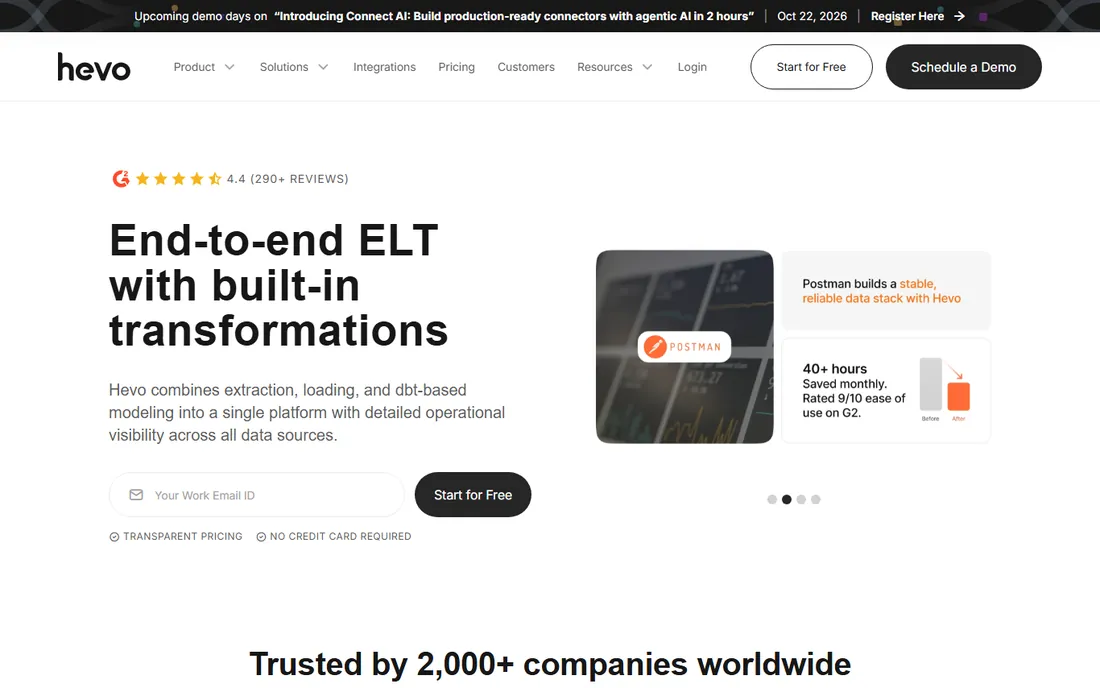
Hevo Data takes the managed-pipeline idea and aims it at teams without data engineers. The no-code interface builds pipelines in minutes, schema mapping is automatic, and monitoring shows pipeline health without a separate observability stack. The free tier (1M events per month) is genuinely useful for a small product database feeding a warehouse.
Pricing is event-based and transparent: Starter from $239 per month, Professional from $679, Business Critical custom. The honest weakness is scale economics. Event-based billing is predictable, but at very high volumes the per-event math stops favoring you, and the cloud-only deployment rules it out for teams with data-residency requirements.
What we like- Free plan handles 1M events per month for five users
- Visual builder needs no engineering
- Predictable event-based pricing
Watch out for- Cloud-only with no self-hosted option
- Costs rise steeply at high event volumes
Starting priceFrom $100/month
Free planNo
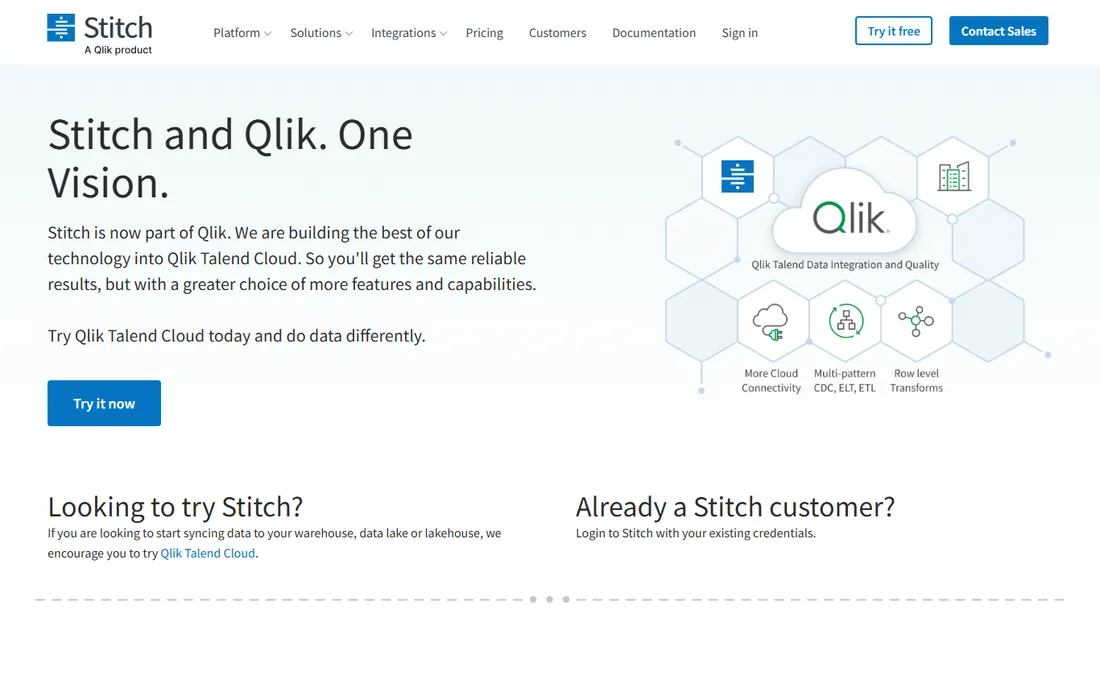
Stitch keeps ELT deliberately simple: pick sources, pick a warehouse, replicate rows. The Standard plan starts at $100 per month for 5 million rows, with one destination, ten standard sources and five users, and the pricing page slider makes it easy to see what 50 or 300 million rows would cost. For a team that wants one predictable ELT bill, that clarity is the selling point.
The trade-off is the staircase. Moving from Standard to Advanced ($1,500/month billed annually) is a fifteen-fold jump, which hurts teams that outgrow the entry tier but are not enterprise yet. There is also no free plan, only paid tiers, so evaluation means paying or leaning on a trial.
What we like- Row-based pricing is easy to understand
- Vendor pricing page with a slider shows cost at any volume
- Part of Qlik with enterprise backing
Watch out for- No free plan
- Advanced ($1,500/month) and Premium ($3,000/month) tiers are a steep jump for growing teams
Starting priceUsage-based (pay-as-you-go)
Free planNo
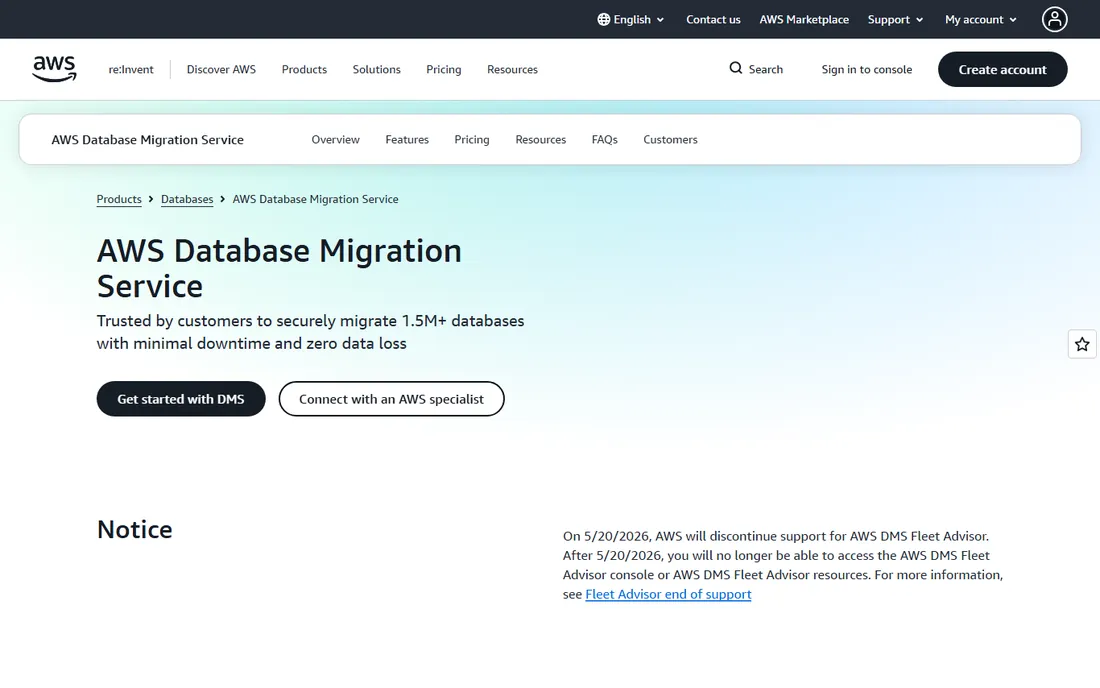
When the source, the target and the team all live in AWS, the Database Migration Service is the path of least resistance. It migrates existing data with a full load, then keeps replicating ongoing changes with CDC, across commercial and open-source engines. DMS Serverless removes the replication-instance sizing exercise that used to trip up first-time users.
It is usage-based, so you pay for the compute and storage the migration consumes rather than a license. There is no free tier, and the value proposition fades quickly outside AWS. If your databases live on-premises or in another cloud and are staying there, a cloud-neutral tool will serve you better.
What we like- Handles homogeneous and heterogeneous migrations, including Oracle to PostgreSQL
- Pay-as-you-go with DMS Serverless
- Native fit for AWS-centric stacks
Watch out for- No free tier
- Outside AWS it loses its advantages fast
Starting priceSee website
Free planFree trial; free self-hosted edition
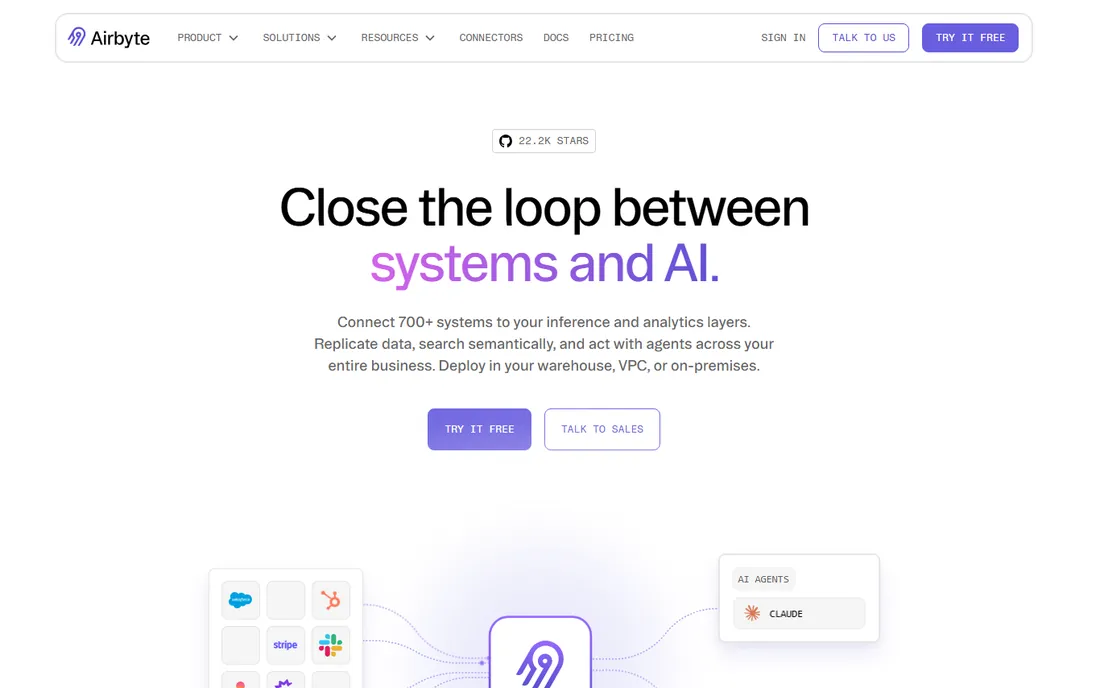
Airbyte is the answer to "our source has no connector." With more than 600 pre-built connectors, a low-code builder and a full connector development kit, engineering-led teams can wire up niche APIs and proprietary systems that managed vendors will never prioritize. The open-source edition is free to self-host, which makes it the cheapest serious option on this list.
The honest catch is the classic open-source trade: free software, paid operations. Someone on your team owns upgrades, scaling and monitoring. Airbyte Cloud removes that burden but charges usage-based credits (roughly $10 per GB for databases and $15 per million rows for APIs), so model your volume before the bill models it for you.
What we like- 600+ connectors with a community building more
- Self-hosted open-source edition is free
- Connector development kit for custom sources
Watch out for- Cloud pricing is usage-based and needs modeling
- Self-hosting shifts the operational burden onto your team
Starting priceSee website
Free planYes
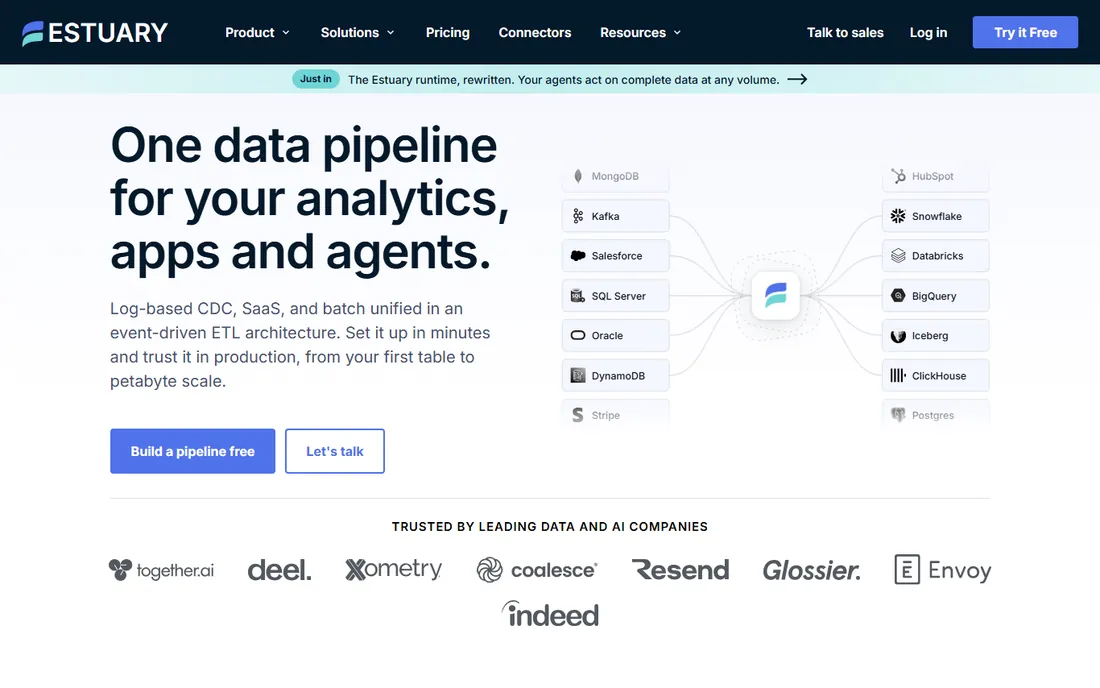
Estuary exists for the team that needs data in seconds but does not want to operate Kafka. Its continuous capture reads database changes and delivers them to destinations on their own schedules, without making the production database the source for every downstream replay. For fraud models, live dashboards and operational analytics, that architecture is a genuine advantage over batch-sync tools.
It is a smaller, younger vendor than Fivetran or Qlik, which shows in the connector catalog and the ecosystem around it. The free tier lets you prove the streaming model on your own data before committing. Paid plans start around $100 per month, with costs scaling on data movement.
What we like- True streaming capture with per-destination scheduling
- No Kafka infrastructure required
- Free tier for evaluation
Watch out for- Smaller connector catalog than the giants
- Younger company with a shorter track record
Starting priceSee website
Free planYes
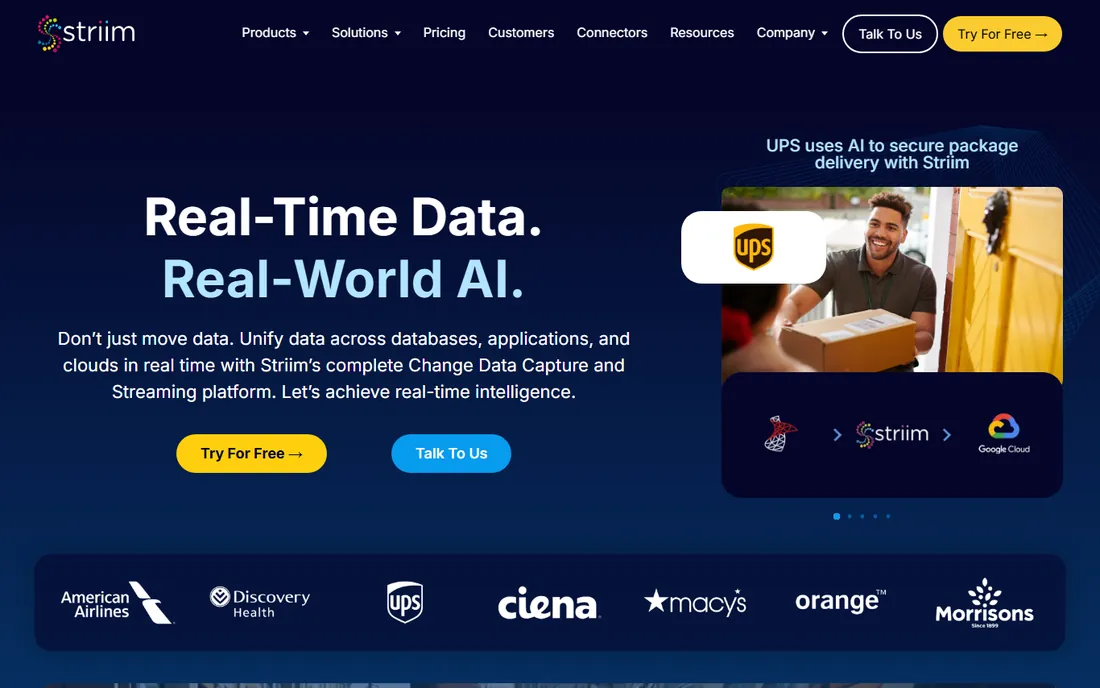
Striim plays in the same streaming space as Estuary but aims upmarket. It combines change data capture with in-flight stream processing, so transformations happen as data moves rather than after it lands. That suits operational workloads, think live inventory, payment processing feeds, where the data has to be usable the moment it arrives.
The buying experience is enterprise: quote-based pricing, sales conversations, and a more involved evaluation. There is a free tier to start with, but expect the procurement cycle to take weeks, not the afternoon it takes to sign up for a self-serve ELT tool.
What we like- Real-time streaming with in-flight processing
- Free tier available
- Strong fit for operational use cases beyond analytics
Watch out for- Enterprise sales motion with quote-based pricing
- Heavier lift to evaluate than simpler ELT tools
#8
Qlik Replicate
Best for: Real-time database replication
Visit qlik.com
Starting priceSee website
Free planNo
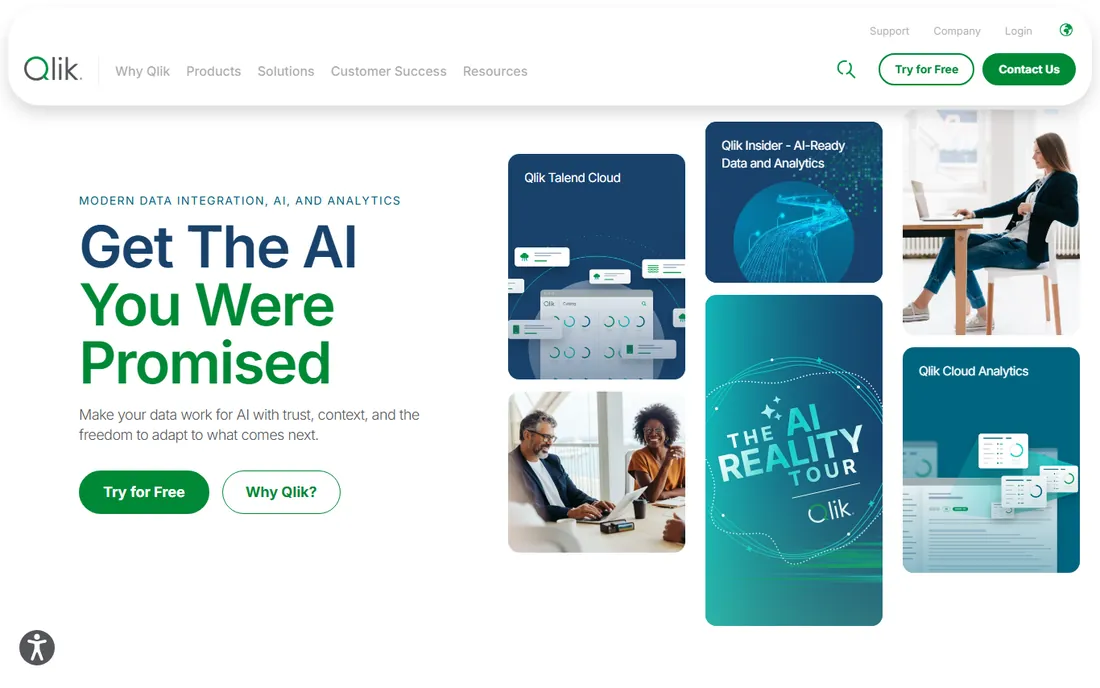
Qlik Replicate (the former Attunity) is the specialist's specialist: real-time, log-based database replication for organizations where downtime during migration is not an option. It handles heterogeneous moves and ongoing replication with the kind of reliability that banks and insurers demand, plus native governance controls.
Everything about the purchase is enterprise: custom licensing, no public prices, no free plan. If you are moving a data warehouse feed into Snowflake, this is ten times the tool you need. If you are migrating a core banking database with zero tolerance for data loss, it is exactly the tool you want.
What we like- CDC is the core strength, not an add-on
- Proven at high-volume enterprise replication
- Native governance and monitoring
Watch out for- Enterprise licensing with no public pricing
- Overkill for simple warehouse loading
Starting priceFree (open source)
Free planYes
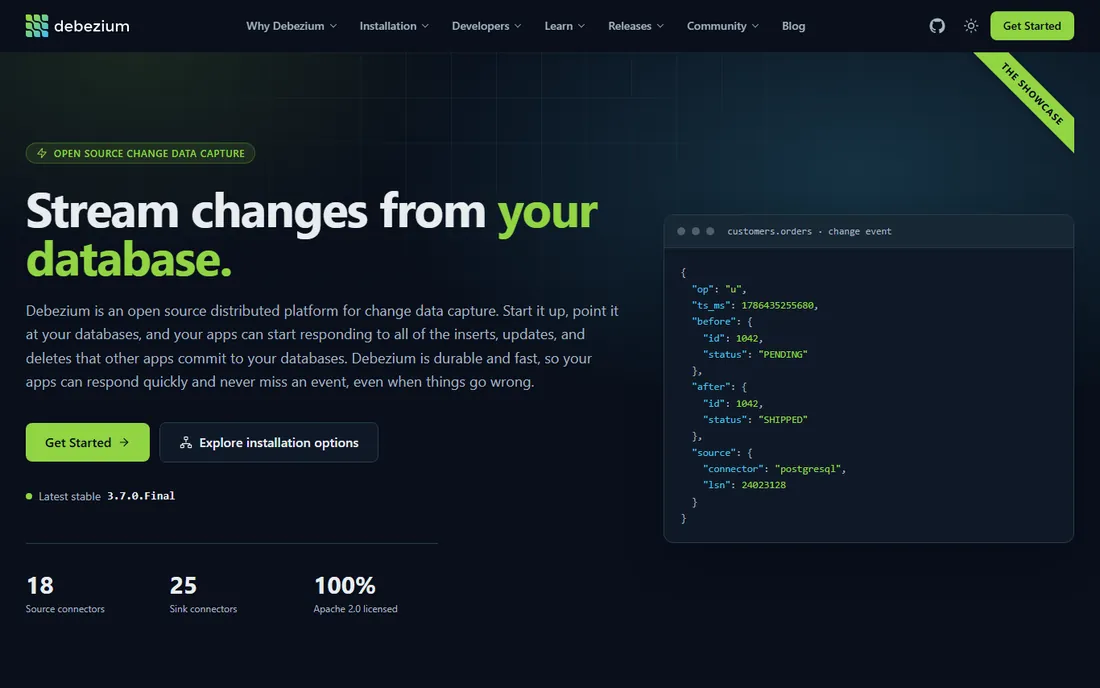
Debezium is the free CDC engine underneath half the streaming architectures in the industry. It tails database transaction logs and publishes row-level changes to Kafka topics, giving you a reliable, low-latency change feed for nothing but the infrastructure to run it. For PostgreSQL logical replication or MySQL binlog capture, it is battle-tested.
Free means you own everything: Kafka clusters, connector operations, schema registry, monitoring, and the 3 a.m. pages. Teams with a Kafka platform already running get enormous value for near-zero marginal cost. Teams without one should price the infrastructure and the engineering time before calling it free.
What we like- Completely free and open source
- Mature CDC for PostgreSQL, MySQL, SQL Server, MongoDB and more
- Huge community and documentation
Watch out for- Requires Kafka infrastructure and real engineering
- No managed service or support contract included
Starting priceSee website
Free planNo
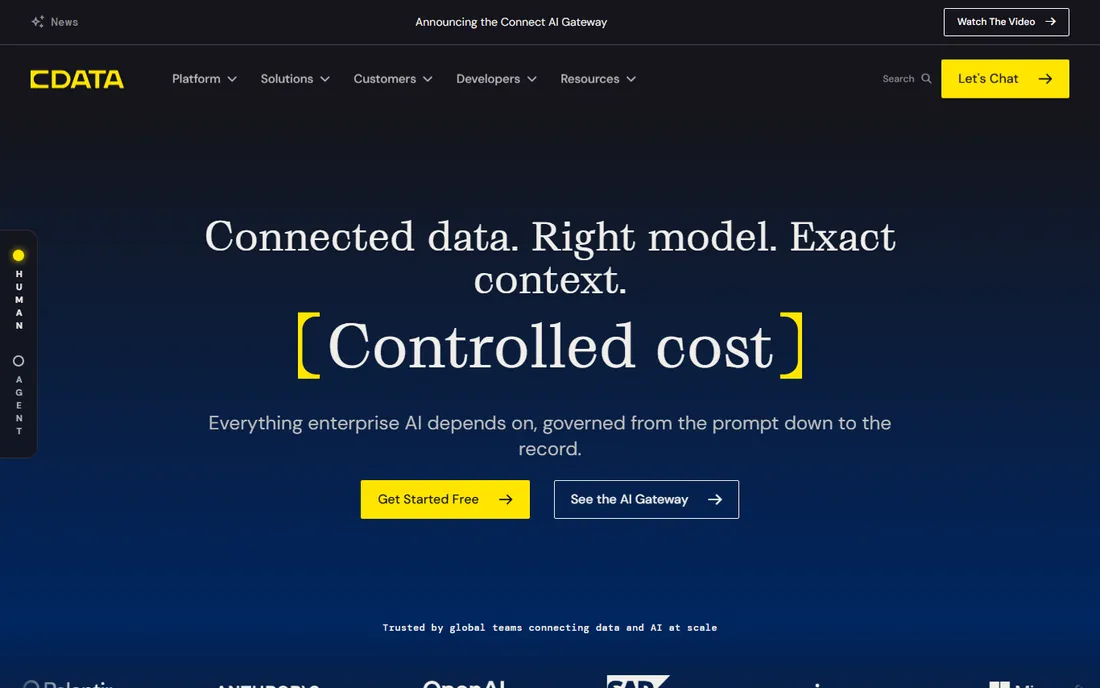
CData Sync is the quiet workhorse for the long tail of data sources. Its connector library covers enterprise applications, niche databases and legacy systems that the trendy ELT vendors never get around to, and it replicates them to warehouses and databases without asking you to adopt a whole platform. Deployment in your own environment suits regulated teams.
There is no free plan, pricing is quote-based, and the product experience reflects its age. It will not win a beauty contest against Airbyte or Hevo. But when the migration source is some industry-specific system nobody else supports, CData is often the only name on the shortlist.
What we like- Enormous library of connectors, including obscure enterprise sources
- Straightforward replication without a full platform to learn
- Deployable in your own environment
Watch out for- No free plan
- Interface and experience feel dated next to modern ELT tools
How we chose
No hands-on testing happened here. We built this list from vendor pricing pages, documentation, and public reviews on G2, Capterra and Reddit, plus analyst comparisons from Domo and Zapier. We required every tool to be available today and genuinely useful for moving or replicating database data, which is why pure ETL suites without migration strength did not make the cut. Prices come from vendor pages where published; where vendors hide pricing, we say so.
What to look for before you buy
Start with the job type. A one-time migration, say Oracle to PostgreSQL during a cloud move, needs schema conversion, validation and a cutover plan; DMS and Qlik Replicate are built for this. Ongoing replication, keeping a warehouse fresh from production databases, needs CDC, monitoring and schema-change handling; that is Fivetran, Airbyte, Hevo and Estuary territory. Buying a replication tool for a one-time move, or vice versa, is the classic expensive mistake.
Second, check CDC support and latency honestly. "Real-time" means different things: Fivetran's one-minute syncs need Enterprise, Stitch and Hevo run on schedules, and only the streaming tools deliver seconds. Match the latency to the actual business need, because you will pay for speed you do not use.
Third, model the pricing on your real volume. Row-based, event-based and MAR-based pricing all look cheap at the free tier and all punish growth differently. Take last month's actual row counts or event counts, run them through the vendor's calculator, and add 50 percent headroom. The vendors with public pricing pages and sliders (Stitch, Hevo) make this easy; the quote-based ones require a sales call, which tells you something too.
Common mistakes teams make
The biggest is treating the free tier as the price. Free tiers are evaluation tools with row, event or connector limits that production data blows past in days. Budget from the first paid tier, not from zero.
The second is ignoring schema changes. Sources change: columns get added, types change, tables get renamed. Tools with automatic schema handling (Fivetran, Hevo, Airbyte) absorb this; script-based approaches break at 2 a.m. Ask every vendor how schema drift is handled before you sign.
The third is forgetting the destination bill. Moving data into Snowflake or BigQuery is only half the cost; the warehouse charges compute and storage on top of the pipeline subscription. Size both, or the migration project gets blamed for a warehouse bill it did not create.
Frequently asked questions
What is the difference between ETL and database migration?
ETL moves data continuously from sources into a warehouse for analytics, usually with transformations along the way. Database migration moves a database from one platform to another, often once, with schema conversion and a cutover. Many tools on this list do both, but they tend to be stronger at one.
What is CDC and do I need it?
Change data capture reads the database transaction log and streams only changed rows instead of re-copying whole tables. You need it for ongoing replication with low latency and low load on the source database. For a one-time move, a full load is enough.
How much does database migration software cost?
Anywhere from free (Debezium, Airbyte self-hosted) to five figures per month (Fivetran Enterprise, Qlik Replicate). Most small teams land between $100 and $1,000 per month on Stitch, Hevo or Airbyte Cloud. Usage-based pricing means your data volume, not the vendor's list price, decides the bill.
Can I migrate from Oracle to PostgreSQL?
Yes. AWS DMS handles heterogeneous migrations including Oracle to PostgreSQL, with schema conversion tooling. Qlik Replicate and Striim also support it. Open-source Debezium can capture Oracle changes but needs more assembly.
How long does a database migration take?
A small database can move in days. Enterprise migrations with schema conversion, testing and cutover planning typically take weeks to months. The tool is rarely the bottleneck; testing and rollback planning are.
Should I choose open source or managed?
Choose managed if your team lacks data engineering capacity or needs support contracts; choose open source if you have the engineers and want to avoid usage-based bills. The break-even usually sits around one full-time engineer: if the managed bill costs less than that hire, buy the tool.
Sources we checked (10)
- https://www.stitchdata.com/pricing
- https://hevodata.com/learn/no-code-data-pipelines/
- https://hevodata.com/learn/fivetran-alternatives/
- https://www.integrate.io/blog/fivetran-cost/
- https://www.integrate.io/blog/stitch-pricing/
- https://www.domo.com/learn/article/data-migration-platforms
- https://zapier.com/blog/etl-tools/
- https://www.itechguides.com/best/data-replication-software/
- https://github.com/bladepipe/bladepipe-official-site-and-docs/blob/HEAD/blog/data_insights/best_data_migration_tools.md
- https://hackernoon.com/cdc-tools-with-the-most-predictable-pricing-for-high-volume-data-pipelines?source=rss
Is your product missing or out of date?
We review this list regularly. Vendors can request a listing, send updated pricing or ask about featured placement.

Shihab Mia · Founder, Rankite
Shihab has spent more than a decade helping SaaS and e-commerce brands grow through search. He writes Rankite's software buying guides from pricing pages, documentation and public user reviews. More about Shihab.