How we make this list: we compare pricing pages, product documentation and public user reviews. Rankite is independent; if a vendor ever pays for a featured spot, that listing is clearly labeled Partner.
Key takeaways
- Recorded Future, Google Threat Intelligence, and Flashpoint lead on breadth of collection, but all three sell through enterprise sales teams with quote-based pricing.
- GreyNoise and SOCRadar are the only options with genuinely free tiers, and both solve real problems: GreyNoise filters internet background noise, SOCRadar offers free dark web and IOC lookups.
- CrowdStrike's adversary intelligence is strongest for teams already running the Falcon platform; buying it standalone makes less sense.
- Anomali and Cyware focus on operationalizing intelligence, aggregating feeds, sharing across teams, and pushing context into the SIEM and SOAR tools you already own.
- Google Threat Intelligence bundles Mandiant research, VirusTotal data, and Google's own telemetry, which is compelling if your security stack already lives in Google Cloud.
Quick comparison
| Tool | Best for | Starting price | Free plan |
|---|
 Recorded Future Recorded Future | large teams wanting broad intel coverage | See website | No |
 Google Threat Intelligence Google Threat Intelligence | Google Cloud and SecOps shops | See website | No |
 CrowdStrike Falcon Adversary Intelligence CrowdStrike Falcon Adversary Intelligence | Falcon users tracking named adversaries | See website | Free trial |
 Flashpoint Flashpoint | dark web, fraud, and vulnerability intel | See website | No |
 Anomali Anomali | SOCs operationalizing threat feeds | See website | No |
 Cyble Cyble | dark web monitoring and brand protection | See website | No |
 Cyware Cyware | intel sharing and cross-team collaboration | See website | No |
 SOCRadar SOCRadar | budget teams starting with threat intel | See website | Yes (free tools) |
 GreyNoise GreyNoise | SOCs drowning in internet scan noise | See website | Yes (community tier) |
Is your product missing or out of date?
We review this list regularly. Vendors can request a listing, send updated pricing or ask about featured placement.
The best cybersecurity threat intelligence software
Starting priceSee website
Free planNo
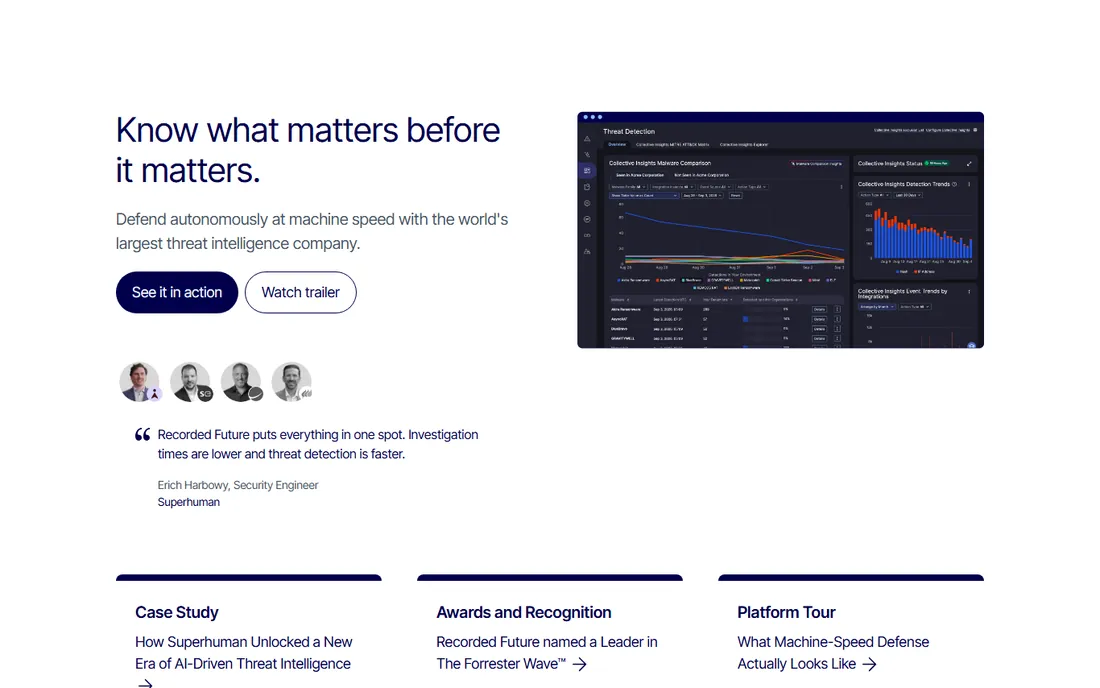
Recorded Future bills itself as the threat intelligence company, and the collection breadth backs up the claim. Its Intelligence Graph ingests signals from technical sources, the dark web, and the open web, then correlates them into a continuously updated picture of threat actors, campaigns, and vulnerabilities. Insikt Group, its research arm, adds analyst-written reporting on top of the machine-collected data.
The platform splits into four areas: cyber operations, digital risk protection, third-party risk, and payment fraud. That modularity helps, but the product is unmistakably enterprise: pricing is quote-based, onboarding is a project, and teams without dedicated intel analysts may struggle to use everything they pay for. Organizations with a mature SOC get the most from it.
What we like- Intelligence Graph correlates technical, dark web, and open sources
- Insikt Group adds human analyst research
- More than 100 native integrations
Watch out for- Enterprise pricing through sales only
- The volume of data can overwhelm small teams
Starting priceSee website
Free planNo
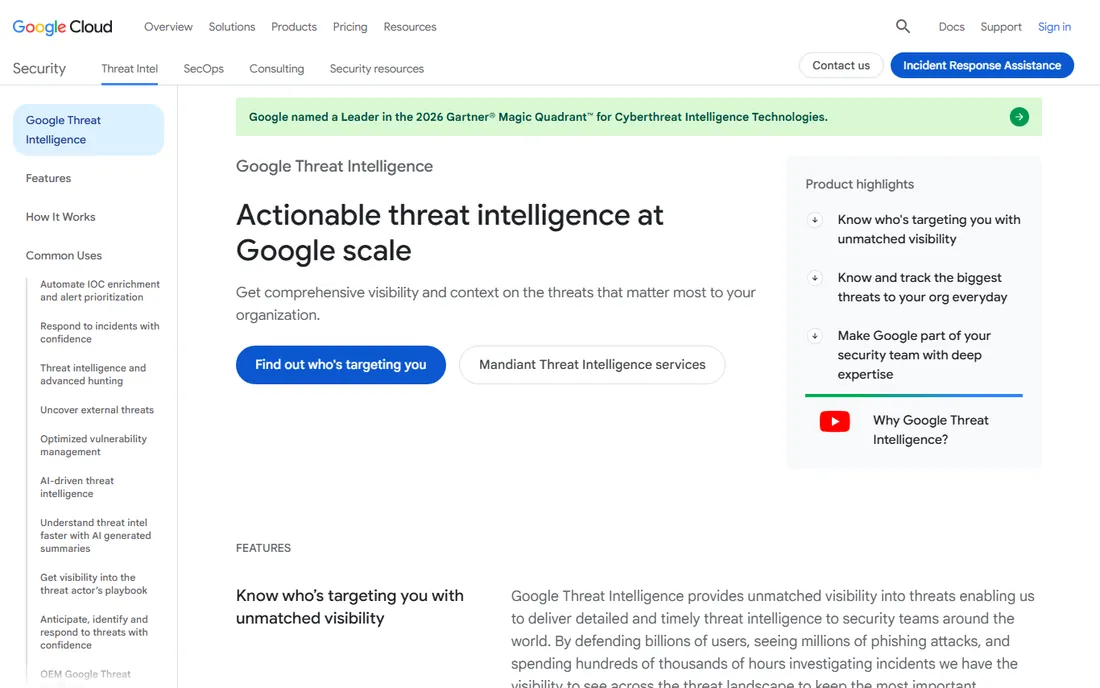
Google Threat Intelligence merges three assets few vendors can match: Mandiant's incident response investigations, the VirusTotal community's million-plus contributors, and Google's visibility across billions of devices and email accounts. A Gemini-powered agent lets analysts query that corpus conversationally instead of writing complex searches, and the threat workbench centralizes malware analysis, hunting, and collaboration.
Pricing runs on flat annual subscriptions (Standard, Enterprise, Enterprise+) with set API call volumes, but Google does not publish the numbers, so budget planning starts with a sales conversation. The product integrates natively with Google SecOps, which makes it a natural choice for shops already committed to Google Cloud. Teams on other clouds can still use the API, but the value proposition is strongest at home.
What we like- Combines Mandiant frontline intel, VirusTotal, and Google telemetry
- Gemini AI agent for conversational analysis
- Flat annual subscription tiers
Watch out for- Strongest inside the Google ecosystem
- No free trial advertised
#3
CrowdStrike Falcon Adversary Intelligence
Best for: Falcon users tracking named adversaries
Visit crowdstrike.com
Starting priceSee website
Free planFree trial
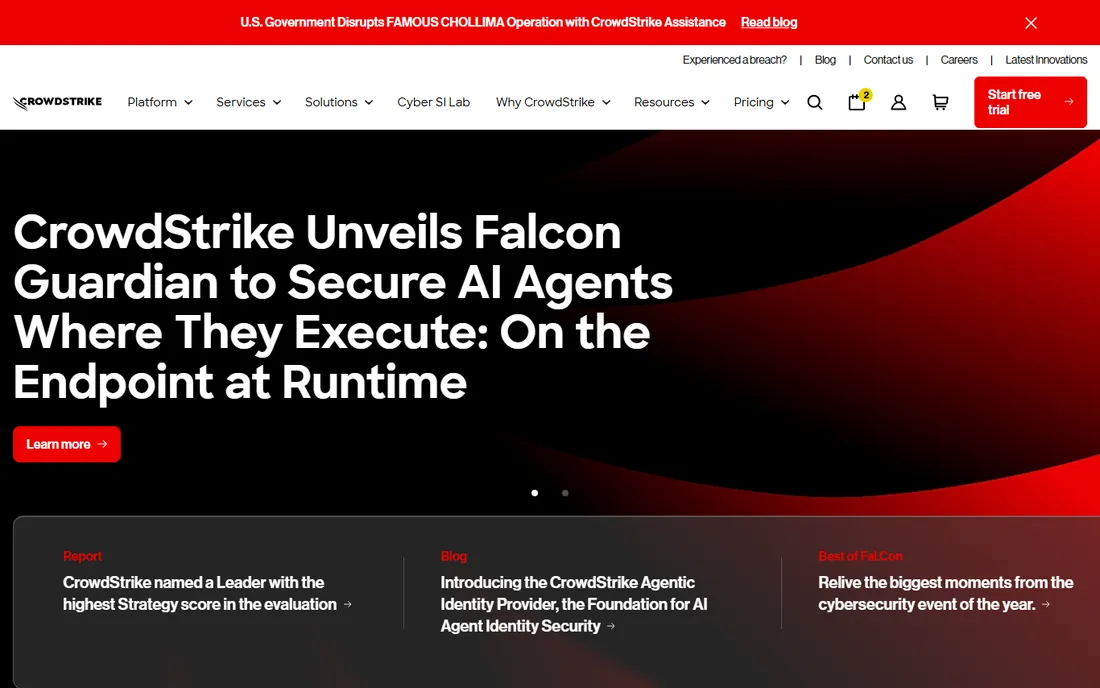
CrowdStrike's threat intelligence grows directly out of the intrusions its teams investigate. Falcon Adversary Intelligence profiles the named adversary groups targeting your industry, maps their tactics to the MITRE ATT&CK framework, and feeds that context into detections and hunting inside the Falcon platform. When an alert fires, the analyst sees not just an indicator but the adversary behind it.
CrowdStrike offers a free trial of the Falcon platform, which is the practical way to evaluate the intel offering. The catch is ecosystem lock-in: the intelligence is most actionable inside Falcon, and pricing for the intel module is bundled into platform deals rather than published separately. If you already run Falcon, adding adversary intelligence is straightforward. If you do not, compare it against standalone platforms before committing.
What we like- Adversary profiles built from real-world intrusions
- Tightly integrated with Falcon EDR and threat hunting
- Platform free trial available
Watch out for- Full value depends on the Falcon ecosystem
- Intel pricing is bundled and opaque
Starting priceSee website
Free planNo
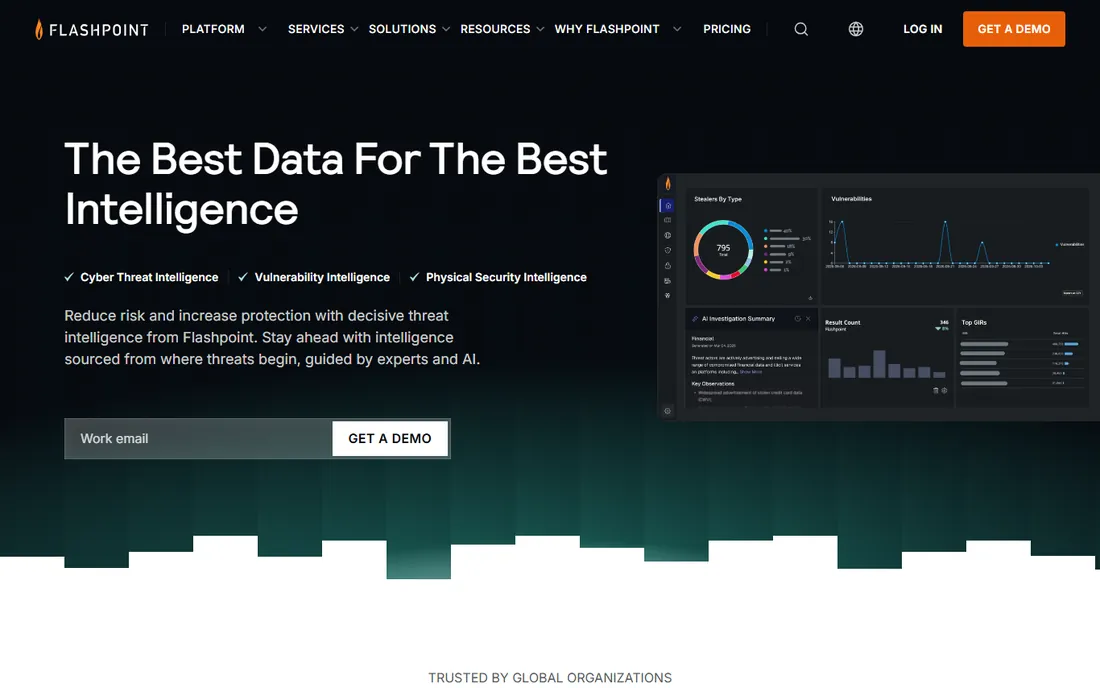
Flashpoint's differentiator is collection. With access to petabytes of data from illicit forums, chat groups, and marketplaces that scrapers cannot reach, it sees fraud schemes, stolen credential sales, and ransomware chatter at the source. Human analysts then filter that firehose against your organization's priorities, and the platform now layers AI-assisted analysis on top.
Beyond classic cyber threat intel, Flashpoint covers vulnerability intelligence and physical security, which suits enterprises with converged security teams. Like its enterprise peers, it sells through demos and quotes rather than self-serve plans. The 4.8-out-of-5 user rating shown on its homepage suggests customers feel the data quality justifies the process. Smaller teams should weigh whether they need this depth or would do fine with a narrower tool.
What we like- Deep primary-source collection from hard-to-reach adversary spaces
- Analyst support tailored to your priorities
- Covers cyber, vulnerability, and physical security
Watch out for- Quote-based enterprise pricing
- Breadth can exceed what a small team needs
Starting priceSee website
Free planNo
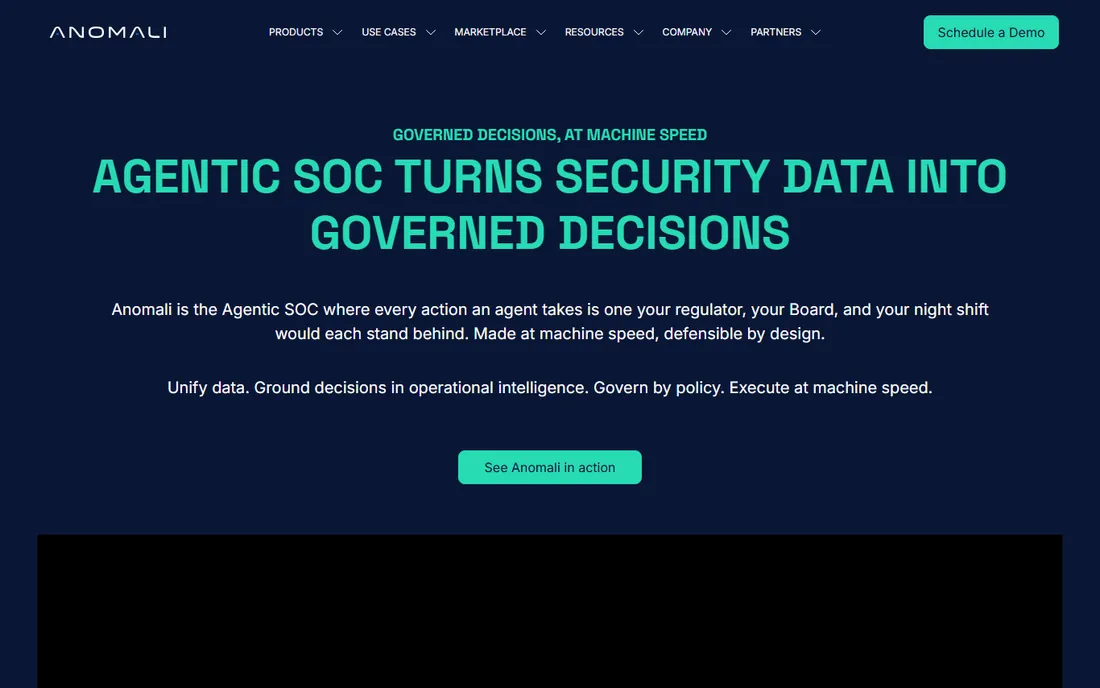
Anomali made its name with ThreatStream, one of the original threat intelligence platforms, and that DNA remains: ingest feeds from many sources, deduplicate and enrich indicators, and push them into enforcement points automatically. The company has since repositioned as an agentic SOC platform, adding investigation agents, a unified data layer, and governed response actions around the intelligence core.
For buyers, this means Anomali now competes both as a TIP and as a broader SOC platform. If your goal is strictly threat intelligence management, confirm during evaluation that the TIP capabilities have not been diluted by the platform expansion. The company counts 400+ enterprise customers across finance, critical infrastructure, and government, and its 80-plus integration approach means the intel lands where your analysts already work.
What we like- ThreatStream heritage in aggregating and operationalizing feeds
- Large integration ecosystem
- Agentic AI for triage and investigation
Watch out for- Platform repositioning toward SOC may confuse TIP buyers
- Enterprise sales motion
Starting priceSee website
Free planNo
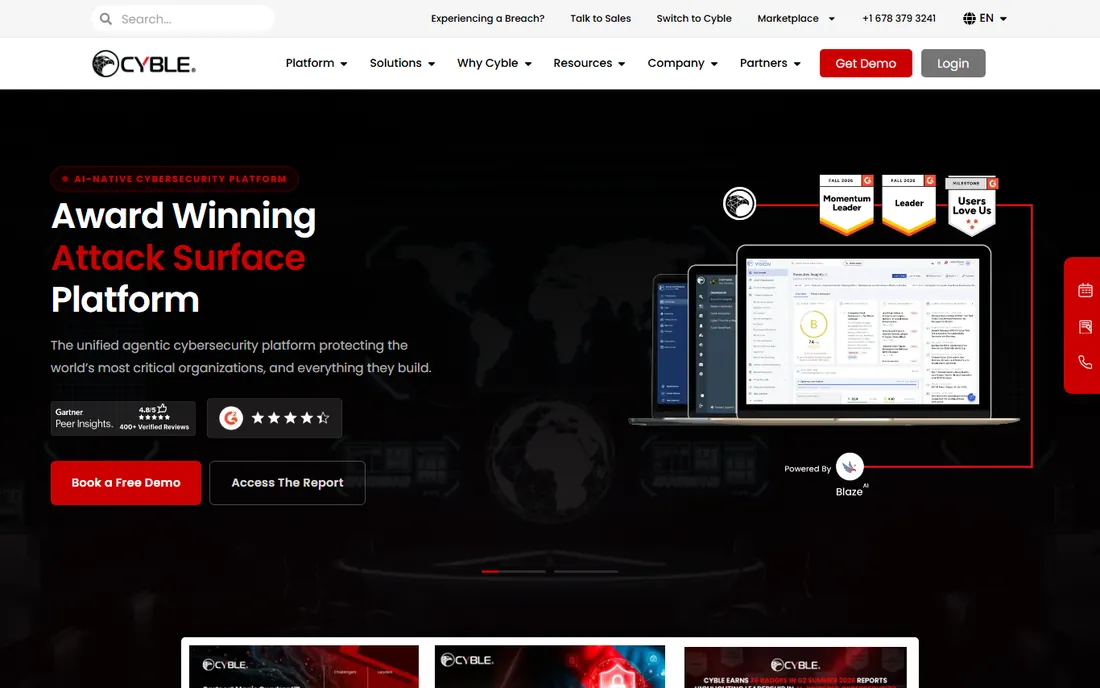
Cyble built its platform around AI from the start rather than bolting it onto a legacy stack, and the product reflects that: continuous correlation across open, deep, and dark web sources, with an agentic AI analyst that hunts, reasons, and acts within policy guardrails. Cyble Vision serves as the threat intelligence platform, surrounded by dark web monitoring, attack surface management, and takedown services.
Analyst recognition has arrived quickly, including Challenger placement in the 2026 Gartner Magic Quadrant for cyberthreat intelligence and strong G2 ratings. The company is younger than Recorded Future or Flashpoint, so reference customers in your industry matter more during evaluation. Pricing is quote-based. Teams that want dark web monitoring and threat intel in one AI-driven platform should put Cyble on the shortlist.
What we like- AI-native architecture built for continuous correlation
- Vision TIP plus dark web, attack surface, and takedown
- Recognized as a Challenger in Gartner's 2026 CTI Magic Quadrant
Watch out for- Pricing is quote-based
- Younger vendor with a shorter track record than incumbents
Starting priceSee website
Free planNo
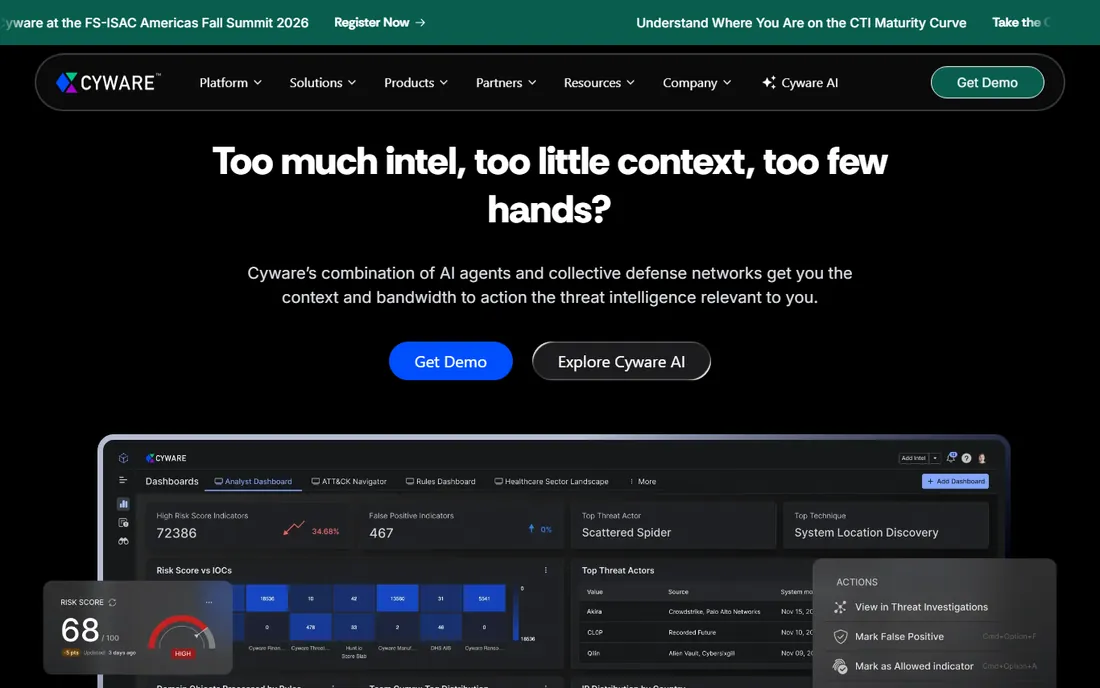
Cyware's standout feature is collective defense: the platform is designed not just to consume intelligence but to share it, with trusted communities exchanging indicators and context in real time. For industry groups, ISACs, and enterprises with subsidiaries, that sharing model multiplies the value of every feed. The core TIP, now called Intel Exchange, handles ingestion, normalization, and operationalization with agentic AI assistance.
With 400+ integrations and 30,000+ organizations claimed on the platform, Cyware positions itself as the connective tissue of threat intel programs. The buying process is enterprise, with demos and quotes rather than trials. If your intel program involves multiple teams or external partners, Cyware's collaboration features justify a look. Solo SOC teams may find simpler tools sufficient.
What we like- Intel Exchange TIP with strong sharing and collaboration
- 400+ integrations into existing stacks
- Agentic AI for detection-to-response workflows
Watch out for- Enterprise-focused sales and pricing
- Platform breadth takes time to evaluate
Starting priceSee website
Free planYes (free tools)
SOCRadar is the rare threat intel vendor with a free tier worth using. Its free tools include a dark web report that scans underground sources for your domain, an IOC radar for looking up domains, IPs, and hashes, and a country threat report. That is enough for a small team to get real value before spending anything, and setup takes hours rather than weeks.
The paid platform extends into full threat intelligence with automation, API integrations, and analyst support. Collection depth does not match Recorded Future or Flashpoint, but the price reflects that, and asset-based licensing means you pay for what you monitor. For organizations building their first intel capability on a budget, SOCRadar is the most practical starting point in this list.
What we like- Genuinely useful free tools including dark web reports and IOC lookup
- Extended TIP with fast setup
- Asset-based pricing keeps costs aligned to coverage
Watch out for- Less collection depth than top-tier vendors
- Free tools naturally lead toward the paid platform
Starting priceSee website
Free planYes (community tier)
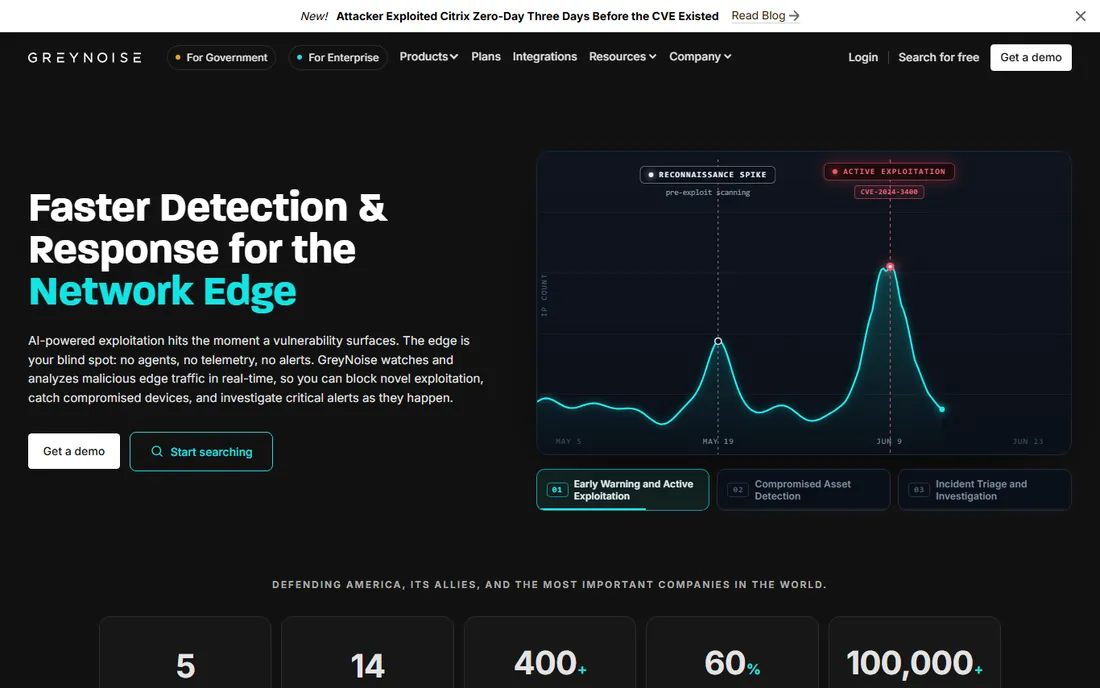
GreyNoise solves a specific, painful problem: most of what hits your perimeter is background noise from mass scanners, and analysts waste hours triaging it. GreyNoise runs a global sensor network that observes internet-wide scanning, tags activity by CVE, tooling, and campaign in real time, and tells you which alerts represent targeted threats versus internet background radiation. The result is fewer false alarms and faster triage.
The free community tier covers basic IP lookups, which is enough to test the concept. Paid plans add blocklists, SIEM integrations, and deeper investigation features, with pricing quoted per deployment. GreyNoise is not a complete threat intelligence platform; it is a specialized instrument that makes everything else in your SOC work better. Pair it with a broader TIP rather than treating it as one.
What we like- Separates mass internet scanning from targeted attacks
- Global sensor network with real-time exploit tagging
- Free community tier for basic lookups
Watch out for- Network-focused, not a full threat intel platform
- Paid tiers are quote-based
Frequently asked questions
What is the difference between a threat intelligence platform and a threat feed?
A feed is a stream of indicators, malicious IPs, domains, and hashes. A platform ingests multiple feeds, deduplicates and enriches them, adds context about actors and campaigns, and pushes actionable intelligence into your SIEM, firewall, and ticketing tools. Feeds are raw material; platforms turn them into decisions.
Do small businesses need threat intelligence software?
Most small businesses get enough from their EDR, firewall vendor, and email security, which all embed threat intel silently. A dedicated platform makes sense once you have a SOC analyst or MSSP who will actually use the context, or when dark web monitoring for stolen credentials becomes a priority.
How does threat intelligence integrate with a SIEM?
Platforms push enriched indicators and context into the SIEM via API or TAXII feeds, where detection rules match them against your logs. Good integrations also pull sightings back, so the intel platform learns which indicators actually appeared in your environment and adjusts confidence scores.
Can free threat intel tools replace a paid platform?
For basic needs, partially. GreyNoise's community tier and SOCRadar's free tools cover IP reputation and dark web exposure checks. What free tools cannot replace is curated analyst research, broad private collection, automated operationalization across your stack, and support. Treat free tiers as a starting point or a supplement.
How long does it take to get value from a threat intel platform?
Cloud-delivered tools like SOCRadar or GreyNoise deliver value in days. Enterprise platforms typically take four to twelve weeks including feed tuning, integration work, and analyst training. The biggest delay is usually internal: without someone assigned to use the intelligence, even the best platform gathers dust.
How we chose
We opened each vendor's homepage on 2026-10-14 and recorded the product positioning, free-tier terms, and trial availability exactly as published. We read product documentation and pricing pages to confirm deployment models and integration claims, then checked public reviews on G2, Gartner Peer Insights, and Reddit for recurring strengths and complaints. We excluded vendors whose products had been acquired into unrelated offerings and used current brand names throughout. No vendor paid for placement, and we did not run hands-on evaluations.
Picking the right feed for your SOC
Match the product to the job. If your analysts are drowning in alerts, GreyNoise's noise filtering or Anomali's operationalization will help more than another data feed. If leadership worries about stolen credentials and brand abuse, prioritize dark web depth from Flashpoint, Cyble, or SOCRadar. If you are standardizing on Google Cloud or CrowdStrike, their native intel offerings integrate with less effort than a third platform.
Then be honest about staffing. Enterprise threat intelligence platforms assume someone reads the reports, tunes the feeds, and acts on the findings. Without that person, an expensive platform performs no better than the free tiers. Start with the free options, prove the workflow, and upgrade when the volume of useful intelligence exceeds what free tools can handle.
Contract structure matters too. Nearly every vendor here prices annually by quote, with tiers based on users, API calls, or monitored assets. Ask what happens to historical data and customizations if you leave, how feed tuning is handled during onboarding, and whether analyst support hours are included or extra. Get two competing quotes even if you have a favorite; the discounts are real.
Why threat intel pricing is never published
Threat intelligence vendors price on value and negotiation, not on a rate card. The same platform might cost a regional bank a fraction of what a global enterprise pays, because pricing reflects monitored assets, API volume, data retention, and included analyst services. Publishing one number would either scare off small buyers or leave money on the table with large ones.
This makes comparison shopping harder but not impossible. Ask every vendor for the same package: same asset count, same retention, same support level. Ask which features in the demo cost extra. And ask for the renewal terms in writing, because first-year discounts of 20 to 40 percent are common and the second-year price is the real price. The free tiers from GreyNoise and SOCRadar give you a cost baseline of zero, which is useful bargaining power in every negotiation.
Sources we checked (9)
- https://recordedfuture.com/
- https://cloud.google.com/security/products/threat-intelligence
- https://www.crowdstrike.com/
- https://flashpoint.io/
- https://anomali.com/
- https://cyble.com/
- https://www.cyware.com/
- https://socradar.io/
- https://www.greynoise.io/
Is your product missing or out of date?
We review this list regularly. Vendors can request a listing, send updated pricing or ask about featured placement.

Shihab Mia · Founder, Rankite
Shihab has spent more than a decade helping SaaS and e-commerce brands grow through search. He writes Rankite's software buying guides from pricing pages, documentation and public user reviews. More about Shihab.