How we make this list: we compare pricing pages, product documentation and public user reviews. Rankite is independent; if a vendor ever pays for a featured spot, that listing is clearly labeled Partner.
Key takeaways
- Yotpo leads retention for e-commerce with loyalty, reviews, and SMS in one platform.
- Smile.io and LoyaltyLion are the go-to loyalty program builders for Shopify and DTC brands.
- Annex Cloud serves enterprises with complex, multi-brand loyalty requirements.
- TrueLoyal (formerly Zinrelo), Gameball, and Marsello offer modern loyalty with different pricing and feature angles.
- TapMango fits brick-and-mortar businesses that need in-store loyalty with branded apps.
Quick comparison
| Tool | Best for | Starting price | Free plan |
|---|
 Yotpo Yotpo | e-commerce retention suite | See website | Yes |
 Smile.io Smile.io | easy Shopify loyalty | See website | Yes |
 LoyaltyLion LoyaltyLion | DTC loyalty programs | See website | Free trial |
 Annex Cloud Annex Cloud | enterprise loyalty | See website | No |
 TrueLoyal TrueLoyal | data-driven loyalty | See website | Free trial |
 Gameball Gameball | gamified loyalty | See website | Yes |
 TapMango TapMango | in-store loyalty apps | See website | Free trial |
 Marsello Marsello | omnichannel retail loyalty | See website | Free trial |
Is your product missing or out of date?
We review this list regularly. Vendors can request a listing, send updated pricing or ask about featured placement.
The best customer retention software
Starting priceSee website
Free planYes
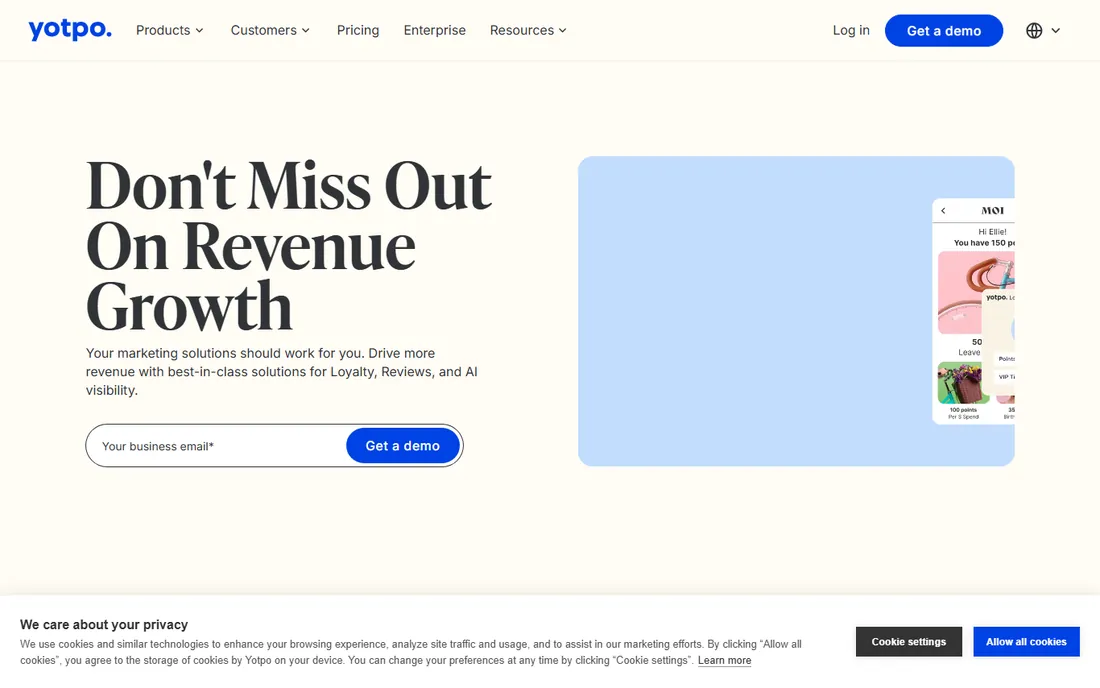
Yotpo consolidated retention into one platform: loyalty programs, product reviews, SMS marketing, and subscriptions share customer data and work together. E-commerce brands run the full retention playbook without stitching vendors. The Shopify integration is the deepest in the category.
Pricing scales with order volume, which surprises growing brands when the bill climbs. The platform's breadth also means complexity. But for DTC brands serious about retention as a growth channel, Yotpo's integrated suite beats point solutions that do not share data.
What we like- Loyalty plus reviews plus SMS
- Deep Shopify integration
- Proven at scale
Watch out for- Pricing scales with order volume
- Platform complexity
Starting priceSee website
Free planYes
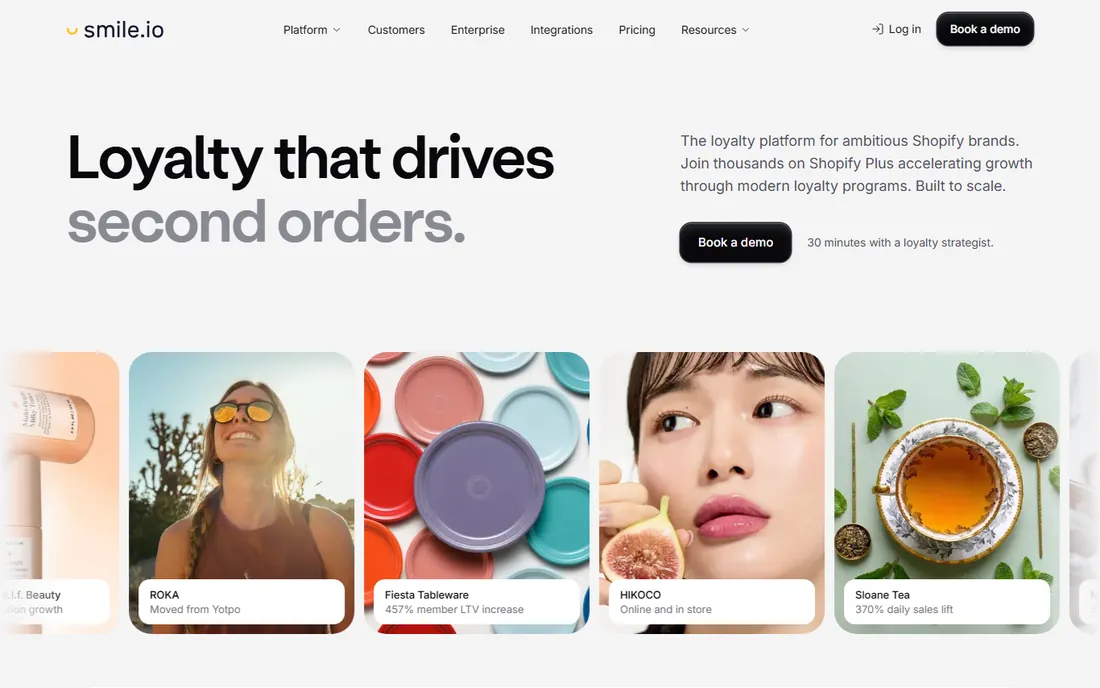
Smile.io is the loyalty program most Shopify stores start with, because setup takes minutes and the free plan covers the essentials: points, referrals, and VIP tiers. The points panel integrates cleanly with Shopify themes. Small brands get professional loyalty without developers.
Customization beyond the templates is limited, and sophisticated program mechanics need higher tiers. But most stores do not need sophistication; they need points for purchases and rewards for referrals running this week. Smile.io delivers exactly that with minimal friction.
What we like- Fastest loyalty setup
- Generous free plan
- Huge Shopify user base
Watch out for- Customization limited
- Advanced features cost more
Starting priceSee website
Free planFree trial
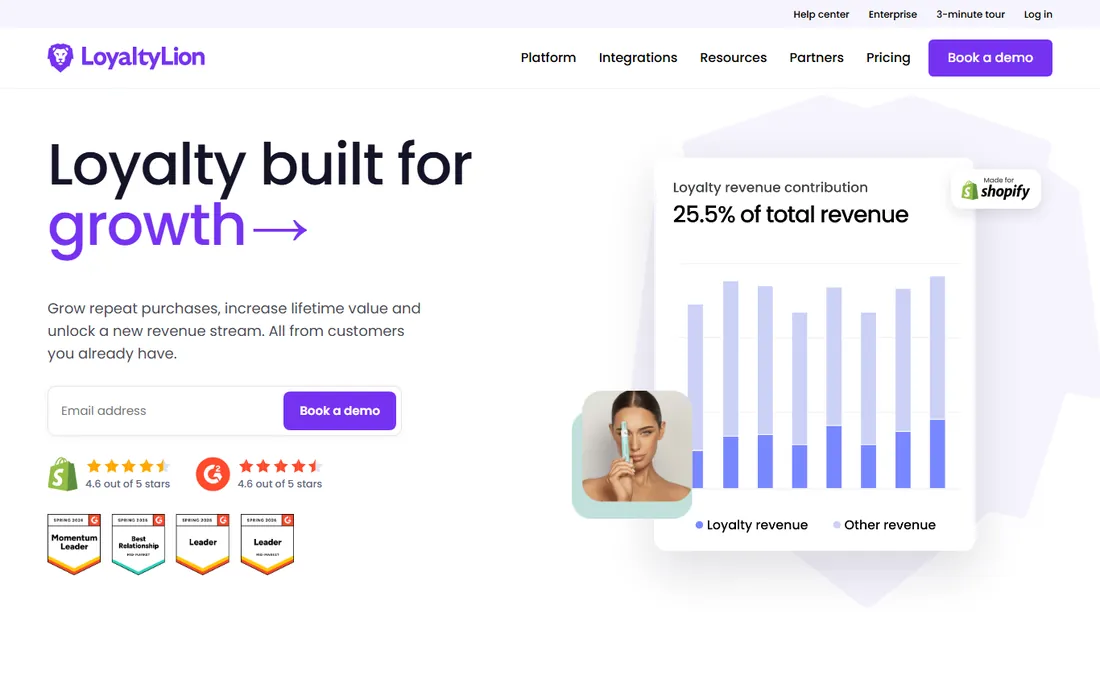
LoyaltyLion targets growing DTC brands that have outgrown basic points programs. Tiers, perks, and custom rewards create differentiated programs, and the Klaviyo integration ties loyalty data to email segmentation. The company publishes credible ROI data from its merchant base.
Pricing sits above Smile.io, which positions it for stores with real revenue to protect. New stores should start simpler. But brands where repeat purchase rate is the key metric get loyalty mechanics sophisticated enough to move it.
What we like- Strong loyalty mechanics
- Good Klaviyo integration
- Proven ROI data
Watch out for- Pricing premium
- Best for established stores
Starting priceSee website
Free planNo
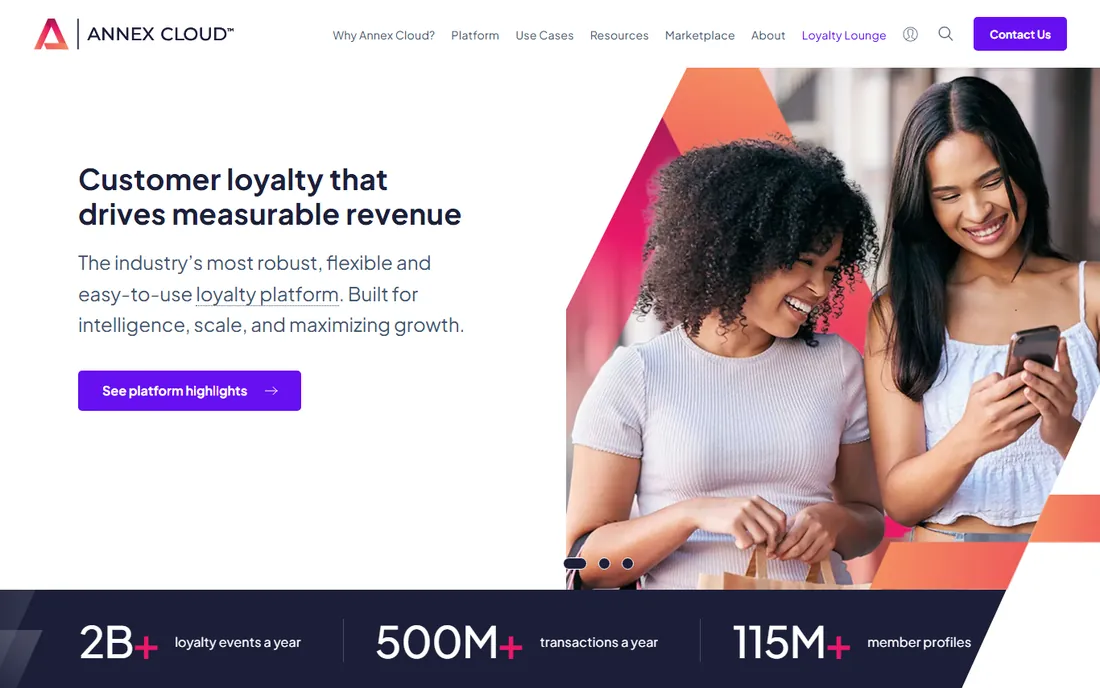
Annex Cloud serves enterprises running loyalty across brands, regions, and channels: complex earning rules, tier structures, and integrations with enterprise commerce stacks. Global brands with millions of members need this depth.
Everything is enterprise: pricing, implementation, timelines. Small and mid-size businesses should not bother. But when loyalty must work across twelve brands in thirty countries with different rules each, Annex Cloud's architecture is built for exactly that.
What we like- Handles complex enterprise programs
- Multi-brand support
- Global scale
Watch out for- Enterprise pricing and timelines
- Overkill for SMBs
Starting priceSee website
Free planFree trial
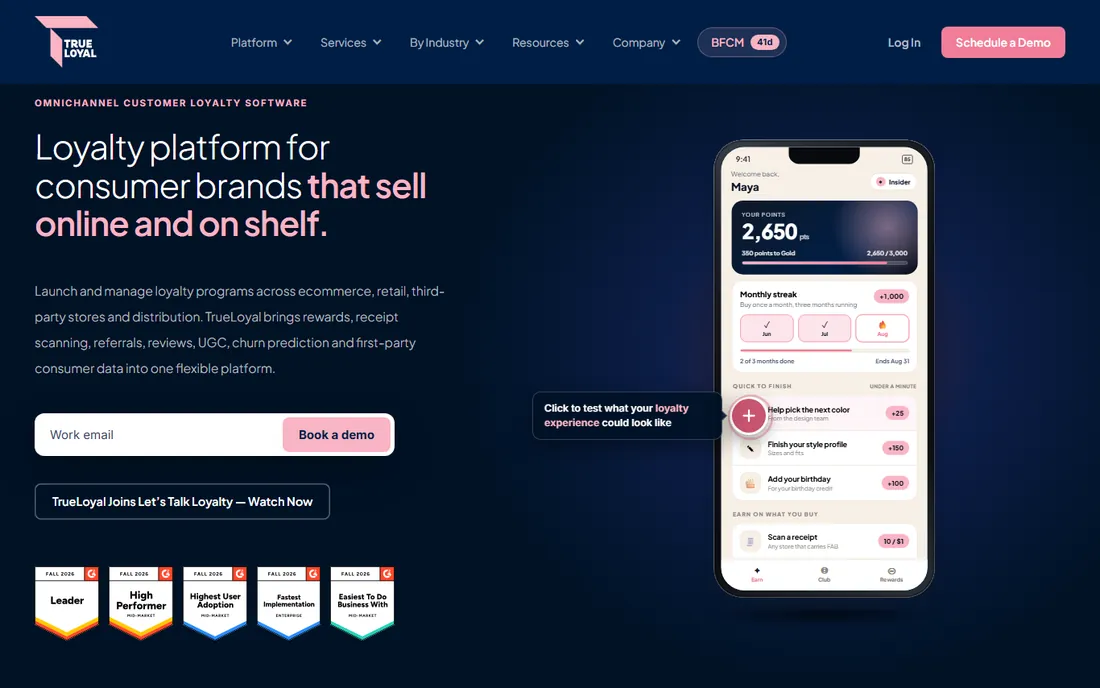
TrueLoyal, formerly Zinrelo, positions loyalty as a data problem: understand customer behavior, then design rewards that change it. The analytics show which segments respond to which incentives, and the program builder supports sophisticated mechanics. Mid-market e-commerce and retail get enterprise-ish thinking without enterprise contracts.
The rebrand from Zinrelo is recent enough that buyers should confirm the product roadmap. But the underlying platform's data-driven approach differentiates it from points-for-purchases simplicity. Brands that want loyalty informed by analytics should evaluate it.
What we like- Strong analytics
- Flexible program design
- Formerly Zinrelo
Watch out for- Rebrand still settling
- Mid-market focus
Starting priceSee website
Free planYes
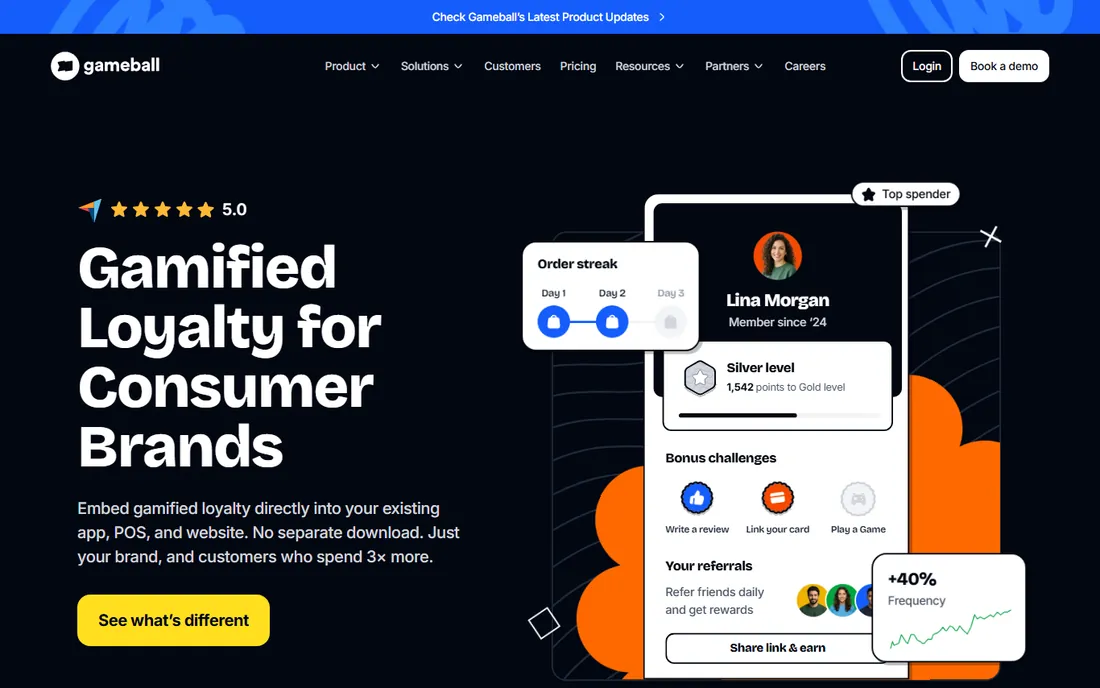
Gameball makes loyalty feel like a game: challenges, badges, levels, and rewards that engage customers beyond transactions. The free tier lets small brands experiment with gamified retention at no cost. Shopify integration covers the core commerce use case.
The ecosystem is smaller than Yotpo's or Smile.io's, and enterprise features are thin. But engagement is the metric that matters, and Gameball's playful mechanics earn it where traditional points programs feel transactional. Brands with younger audiences should test it.
What we like- Gamification mechanics
- Free tier
- Fun customer experience
Watch out for- Smaller ecosystem
- Less enterprise depth
Starting priceSee website
Free planFree trial
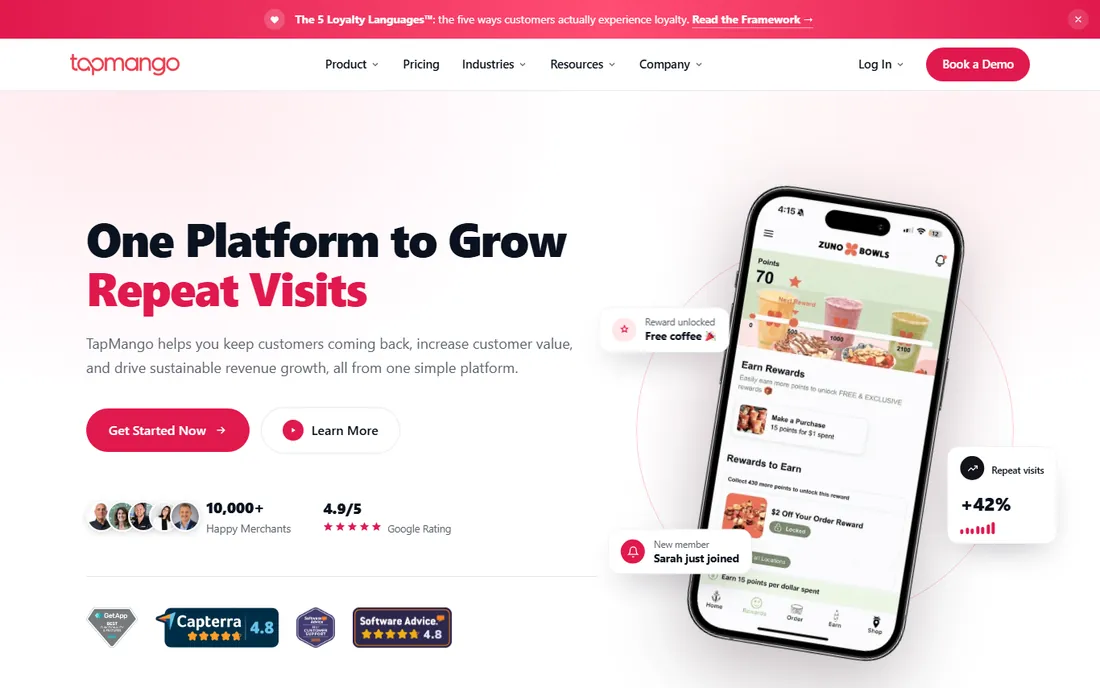
TapMango serves brick-and-mortar businesses that need loyalty at the register: branded mobile apps, tablet-based signup, and POS integrations for restaurants, salons, and retailers. Customers earn and redeem in-store, which is where these businesses live.
E-commerce capabilities trail the DTC-focused tools. Pricing per location adds up for chains. But for single and multi-location physical businesses, TapMango's in-store-first design beats e-commerce loyalty tools adapted awkwardly to the register.
What we like- Branded mobile apps
- In-store focused
- POS integrations
Watch out for- E-commerce features thinner
- Pricing per location
Starting priceSee website
Free planFree trial
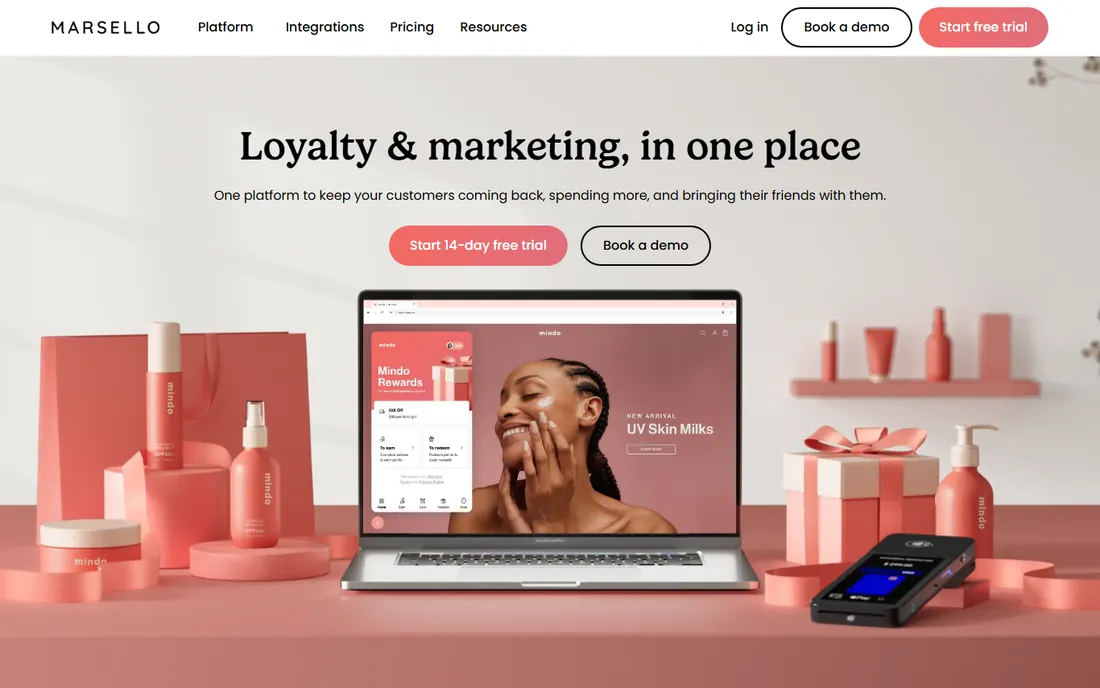
Marsello bridges the online-offline gap for retailers: loyalty, email, and SMS marketing unified across the e-commerce store and physical POS. Customers earn points whether they buy online or in-store, and marketing automation uses the combined data. Shopify and leading POS integrations make setup practical.
The sweet spot is retailers already on its supported platforms; others get less value. Brand recognition trails the leaders. But omnichannel retailers tired of separate online and offline loyalty systems get genuine unification here.
What we like- Connects online and in-store
- Good POS integrations
- Marketing automation
Watch out for- Best for Shopify/POS users
- Smaller brand
What actually drives retention
Software enables retention; fundamentals drive it. Product quality, customer service, and fair pricing retain more customers than any points program. Loyalty software amplifies a good experience and cannot fix a bad one. Fix the product before buying the platform.
The programs that work share traits: rewards customers actually want, achievable thresholds, and communication that reminds without spamming. Test reward structures with real customers before launch. And measure incrementality: compare retention of members versus similar non-members, not just program enrollment counts.
Loyalty economics
Model the program before launching. Reward costs as a percentage of revenue, breakage assumptions, and incremental margin from retained customers determine whether the program profits. Most successful programs cost 1-3% of revenue in rewards while lifting repeat purchase rates meaningfully.
Watch liability: unredeemed points sit on the balance sheet. Set expiration policies that encourage redemption without angering customers. And integrate loyalty data with email marketing; the segments are where the real retention gains hide.
Frequently asked questions
What is customer retention software?
Customer retention software helps businesses keep existing customers buying: loyalty programs, reviews management, win-back campaigns, and repeat-purchase incentives. It typically includes points and rewards, referral programs, and integrations with e-commerce or POS systems.
How much does loyalty software cost?
Free tiers from Smile.io and Gameball cover basic programs. Paid plans generally start in the tens of dollars monthly and scale with orders, locations, or members. Enterprise platforms like Yotpo and Annex Cloud are quote-based and scale with volume.
Do loyalty programs actually work?
Yes, when designed well. Effective programs lift repeat purchase rates and customer lifetime value measurably. The keys are rewards customers value, achievable earning thresholds, and promotion that keeps the program top-of-mind. Poorly designed programs cost money without changing behavior.
What is the best loyalty app for Shopify?
Smile.io is the easiest start, LoyaltyLion suits growing brands, and Yotpo covers the full retention suite. The choice depends on store size and ambition: start with Smile.io's free tier, graduate to LoyaltyLion or Yotpo as revenue justifies it.
Should brick-and-mortar stores use loyalty software?
Yes, with in-store-first tools like TapMango or omnichannel platforms like Marsello. Physical businesses benefit as much as e-commerce from repeat visits; the tools just need to work at the register rather than the checkout page.
Measuring retention properly
Retention metrics mislead when defined casually. Start with cohort analysis: group customers by acquisition month and track what share still buys at 3, 6, and 12 months. Cohorts reveal whether retention is improving or whether growth merely masks churn. A business adding customers while cohorts decay is running to stand still.
Customer lifetime value turns retention into dollars. Simple LTV equals average order value times purchase frequency times lifespan; compare it against customer acquisition cost to see whether the business model works. Repeat purchase rate, the share of customers who buy again, is the operational metric teams can move weekly.
Attribute loyalty program impact honestly. Compare members against similar non-members, not against the overall average; loyalty members self-select as your best customers. Run holdout tests where feasible: withhold the program from a random segment and measure the difference. The programs worth keeping show incremental lift, not just correlated engagement.
Win-back campaigns that work
Lapsed customers are cheaper to reactivate than new ones are to acquire, but only with the right approach. Segment by lapse reason where data allows: one-time buyers need different messaging than former regulars. Time the outreach to natural repurchase cycles; a win-back email arriving when the customer would naturally need you again converts far better than random timing.
Lead with genuine value, not desperation. Acknowledge the absence warmly, remind them what they loved, and offer a concrete reason to return: new products, improved service, or a meaningful incentive. Avoid training customers to lapse for discounts by reserving your best offers for genuinely at-risk segments. Test channels beyond email: SMS win-backs often outperform for younger demographics. And know when to stop: three thoughtful attempts over a quarter, then suppress. Chasing the truly gone wastes money and annoys people who might have returned on their own timeline.
How we chose
We focused on retention as a business outcome: loyalty mechanics, ease of launch, and measurable results. We verified each vendor's current site, noting Zinrelo's rebrand to TrueLoyal, and compared pricing models and platform fit. We covered e-commerce, enterprise, and brick-and-mortar use cases. No vendor paid for placement, and we did not claim hands-on testing.
How do loyalty programs affect profit margins?
Well-designed programs cost 1 to 3 percent of revenue in rewards while lifting repeat purchase rates enough to pay for themselves several times over. The math works because retained customers buy more frequently and cost nothing to acquire. Problems arise when rewards are too generous, thresholds too easy, or breakage too low. Model the program with conservative assumptions before launch, and monitor the actual cost ratio quarterly.
Should small businesses bother with loyalty programs?
Yes, with appropriately simple programs. A punch-card equivalent, buy nine get one free, works for cafes and salons without any software. As the business grows, digital programs from Smile.io or Square Loyalty add tracking and marketing at low cost. The mistake is assuming loyalty needs enterprise software; start with the simplest program customers understand, and add sophistication only when the customer base justifies it.
Sources we checked (8)
- https://www.yotpo.com
- https://smile.io
- https://loyaltylion.com
- https://www.annexcloud.com
- https://www.trueloyal.com
- https://www.gameball.co
- https://www.tapmango.com
- https://www.marsello.com
Is your product missing or out of date?
We review this list regularly. Vendors can request a listing, send updated pricing or ask about featured placement.

Shihab Mia · Founder, Rankite
Shihab has spent more than a decade helping SaaS and e-commerce brands grow through search. He writes Rankite's software buying guides from pricing pages, documentation and public user reviews. More about Shihab.