How we make this list: we compare pricing pages, product documentation and public user reviews. Rankite is independent; if a vendor ever pays for a featured spot, that listing is clearly labeled Partner.
Key takeaways
- Nobody picks a messaging app alone: the best app is the one your people already use.
- Signal is the best default for privacy: free, open source, end-to-end encrypted by default.
- WhatsApp wins on network size; Telegram wins on features and large groups.
- Session and Threema are for the privacy-maximalist: no phone number required.
- Discord is the pick for communities; Element and Wire suit teams wanting open or business-grade options.
Quick comparison
| Tool | Best for | Starting price | Free plan |
|---|
 Signal Signal | Anyone who wants private messaging without thinking about it | Free | Yes |
 WhatsApp WhatsApp | Messaging the largest number of people on earth | Free | Yes |
 Telegram Telegram | Users who want the most features and the biggest groups | Free (optional Premium tier available) | Yes |
 Viber Viber | International communication combining messaging and cheap calls | Free | Yes |
 Discord Discord | Communities, gaming groups and voice-first hangouts | Free (optional Nitro tier available) | Yes |
 Session Session | Users who want private messaging with no phone number or account | Free | Yes |
 Threema Threema | Users who want Swiss-grade privacy and will pay a few dollars for it | See website | No |
 Wire Wire | Teams and businesses needing secure, compliant messaging | Free (personal) | Yes |
 Element Element | Teams and open-source advocates wanting decentralized chat | Free | Yes |
Is your product missing or out of date?
We review this list regularly. Vendors can request a listing, send updated pricing or ask about featured placement.
Nobody picks a messaging app. Your family picks it for you, your clients pick it for you, your gaming group picked it three years ago and never looked back. The honest ranking of messaging apps starts with that reality: the best app is the one your people already use. But when you do get a choice (a new team, a new community, a fresh start), these nine cover every priority from maximum privacy to maximum features. All run on iOS, Android and desktop.
#1
Signal
Best for: Anyone who wants private messaging without thinking about it
Visit signal.org
Starting priceFree
Free planYes
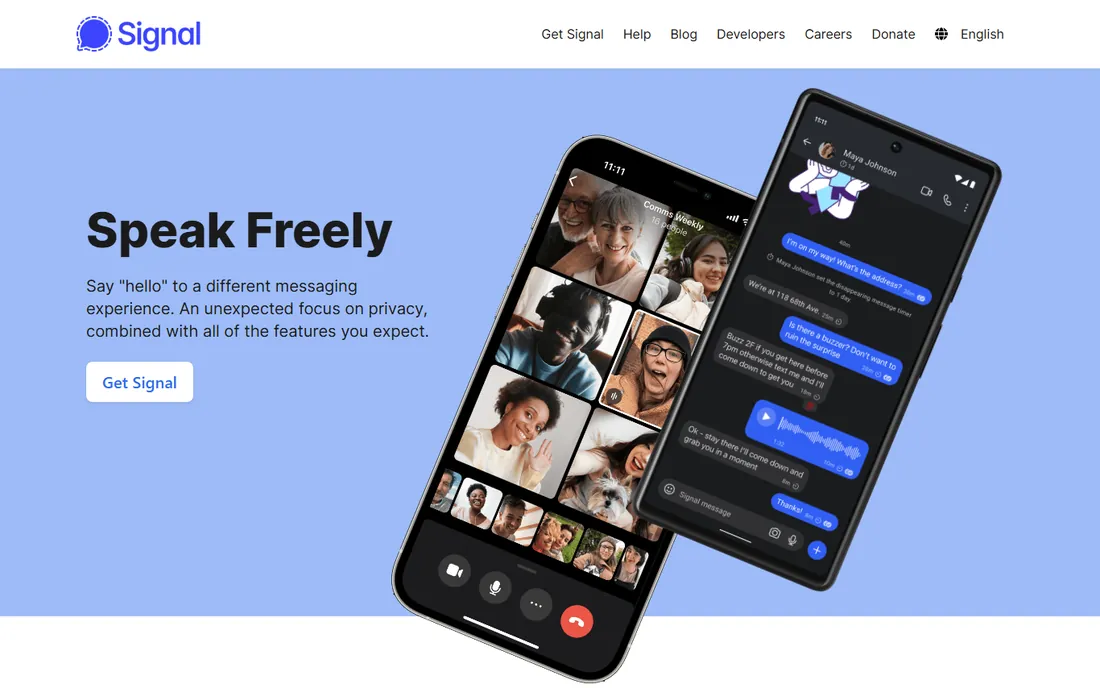
Signal is the app privacy experts actually use, which tells you everything. Every message, call and video chat is end-to-end encrypted by default (the Signal Protocol it pioneered now powers WhatsApp's encryption too). It is free, open source, run by a nonprofit foundation, and collects almost nothing. For the person who wants to stop thinking about messaging privacy, Signal is the answer.
The honest catch is the network. Your contacts need Signal too, and while adoption is strong, it trails WhatsApp massively. It also requires a phone number, so the truly anonymous should look at Session. But as a daily driver that is private by default and free forever, nothing beats it.
What we like- End-to-end encrypted by default for every message and call
- Open source and run by a nonprofit
- No ads, no trackers, minimal data collection
Watch out for- Requires a phone number
- Fewer fun features than Telegram
- Smaller network than WhatsApp
Starting priceFree
Free planYes
WhatsApp wins the only metric that matters for most people: everyone is on it. With over two billion users, it is the default messaging app across Latin America, Europe, Africa and much of Asia. Messages and calls are end-to-end encrypted by default using the Signal Protocol, and it handles groups, broadcast lists, voice notes and video calls competently.
The honest catch is Meta. While message contents are encrypted, metadata (who you talk to, when, how often) feeds Meta's broader data picture, which privacy purists reject. The desktop experience also still leans on the phone. But for reaching actual humans, no app competes with WhatsApp's network.
What we like- Two billion-plus users means your contacts are already there
- End-to-end encrypted by default
- Voice, video, groups and Communities built in
Watch out for- Owned by Meta with metadata collection concerns
- Requires a phone number
- Desktop app depends on the phone
#3
Telegram
Best for: Users who want the most features and the biggest groups
Visit telegram.org
Starting priceFree (optional Premium tier available)
Free planYes
Telegram is the power user's playground: 200,000-member groups, broadcast channels, bots for everything, 2GB file sharing, and cloud sync that works on unlimited devices simultaneously. Development moves fast, the free tier covers nearly everything, and an optional Premium tier adds perks for heavy users. For communities and content distribution, it is unmatched.
The honest catch is the encryption default. Regular Telegram chats are encrypted between you and Telegram's servers, not end-to-end; only opt-in Secret Chats are. Privacy purists consider this disqualifying, though Telegram's distributed infrastructure is designed to resist single-government pressure. Know what you are choosing: features first, default privacy second.
What we like- Fastest feature development in messaging: huge groups, channels, bots, file sharing to 2GB
- Cloud sync across unlimited devices
- Free tier is extremely generous
Watch out for- End-to-end encryption is opt-in (Secret Chats), not default
- Cloud chats are encrypted server-side, not end-to-end
#4
Viber
Best for: International communication combining messaging and cheap calls
Visit viber.com
Starting priceFree
Free planYes
Viber holds strong regional positions (Eastern Europe, parts of Asia, the diaspora communities connecting them) where it is often the default family app. Messaging is end-to-end encrypted by default, and Viber Out lets you call real phone numbers internationally at low rates, bridging the gap to non-users. Stickers, GIFs and public channels keep it lively.
The honest catch is momentum. Viber is not growing the way Telegram is, and outside its strongholds you will struggle to find contacts. The commercial feel (stickers, ads for services) also turns off minimalists. But if your people are on Viber, particularly across borders, it does the job well.
What we like- Strong in Europe and parts of Asia with a loyal user base
- Viber Out offers cheap international calls to non-users
- End-to-end encrypted by default
Watch out for- Smaller global network than WhatsApp or Telegram
- Owned by Rakuten with a commercial, sticker-heavy feel
#5
Discord
Best for: Communities, gaming groups and voice-first hangouts
Visit discord.com
Starting priceFree (optional Nitro tier available)
Free planYes

Discord won the community era: servers with organized channels, granular roles and permissions, a bot ecosystem for moderation and games, and voice channels you can drop in and out of like rooms. Screen sharing and streaming are built in. For gaming groups, study servers, creator communities and open-source projects, it is the obvious home. The free tier is generous; Nitro adds cosmetic and quality perks.
The honest catch is privacy and purpose. Discord messages are not end-to-end encrypted, and the platform is built for public-ish community life, not private conversation. As a WhatsApp replacement for family chat it feels wrong. But for any group that needs structure, voice and bots, nothing else is close.
What we like- Best-in-class community structure: servers, channels, roles, bots
- Excellent voice channels and screen sharing
- Free tier covers everything most communities need
Watch out for- Not end-to-end encrypted
- Designed for communities, awkward for one-to-one messaging
- Gaming-centric culture
#6
Session
Best for: Users who want private messaging with no phone number or account
Visit getsession.org
Starting priceFree
Free planYes
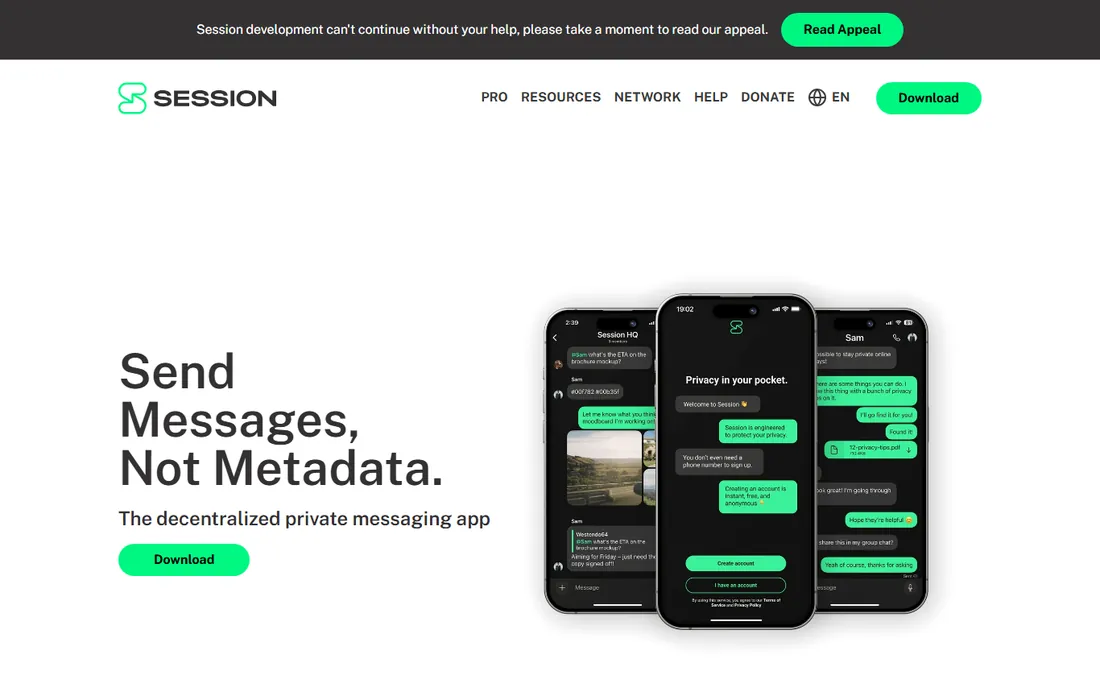
Session is the answer to "what if I trust no one, including the app maker." It needs no phone number: you get a random Session ID, and messages route through a decentralized network of nodes with onion encryption, so no central server knows who talks to whom. It is free, open source, and the closest thing messaging has to true anonymity.
The honest catch is usability. The network is smaller, message delivery can lag, and the app lacks the polish and features of its centralized rivals. Most people do not need this level of protection. But for journalists, activists, or anyone whose threat model includes their own contacts list, Session is purpose-built.
What we like- No phone number, email or account required
- Decentralized onion-routing network
- Open source with end-to-end encryption
Watch out for- Smaller network and slower message delivery than centralized apps
- Fewer features and polish than Signal or Telegram
#7
Threema
Best for: Users who want Swiss-grade privacy and will pay a few dollars for it
Visit threema.ch
Starting priceSee website
Free planNo

Threema is the paid privacy option from Switzerland: no phone number or email needed, minimal metadata, open-source clients, and independent security audits. The one-time purchase (no subscription) aligns the business model with the user instead of advertisers. For the privacy-conscious buyer who distrusts "free," paying for the product is the point.
The honest catch is the network effect squared. Threema has the smallest user base here, and there is no free version to lure contacts in. You are buying excellent software your friends probably do not have. It suits security-minded professionals and Europeans comfortable with Swiss privacy law.
What we like- No phone number or email required
- Swiss jurisdiction with strong privacy laws
- Open source and independently audited
- One-time purchase, no subscription
Watch out for- Paid app with no free version
- Smallest network here, so contacts are unlikely to have it
#8
Wire
Best for: Teams and businesses needing secure, compliant messaging
Visit wire.com
Starting priceFree (personal)
Free planYes
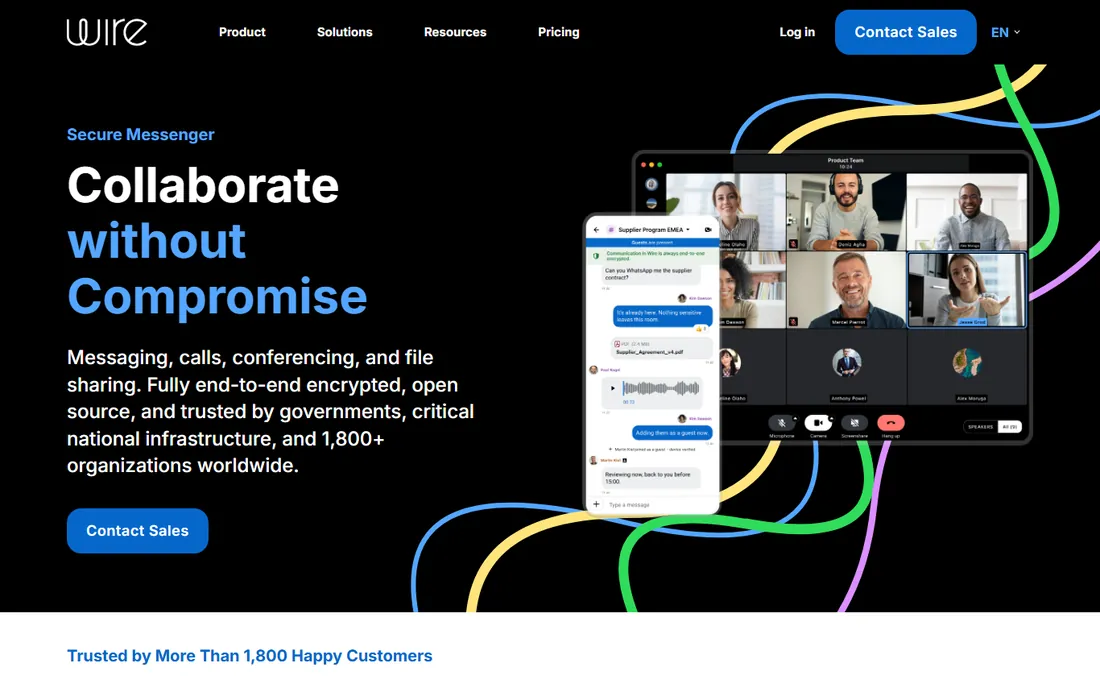
Wire split its personality: a free personal tier for individuals and a serious business product with compliance, admin controls and enterprise deployment. Everything is end-to-end encrypted, the code is open source, and the company has a history serving privacy-sensitive organizations. For a small business that needs secure team chat without consumer-app compromises, Wire is purpose-built.
The honest catch is consumer relevance. As a WhatsApp alternative for friends and family, Wire has little network and less momentum. Its free tier exists; its heart is in business. Evaluate it for your team, not your social life.
What we like- End-to-end encrypted messaging, calls and file sharing
- Business tiers with compliance and admin controls
- Open source with a professional pedigree
Watch out for- Personal free tier is the afterthought
- Smaller consumer network
- Business pricing aimed at organizations
#9
Element
Best for: Teams and open-source advocates wanting decentralized chat
Visit element.io
Starting priceFree
Free planYes
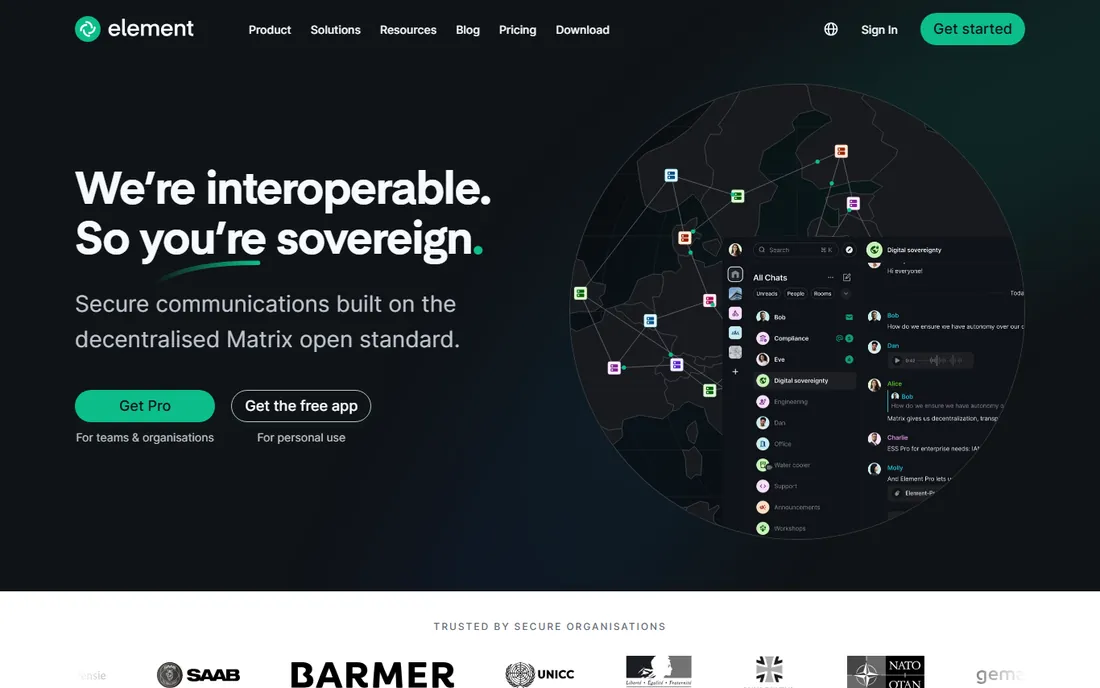
Element is the ideological pick: built on Matrix, an open protocol for decentralized communication, where no single company controls the network and anyone can run a server. Messages are end-to-end encrypted, and bridges connect Matrix to Slack, Discord, IRC and more. For open-source projects, privacy advocates and organizations that refuse vendor lock-in, it is the principled choice.
The honest catch is friction. Explaining homeservers and federation to your family is a losing battle, and the apps lag commercial rivals in polish. Element is for teams that choose it deliberately, not for dragging your contacts onto. When decentralization is a requirement rather than a preference, it stands alone.
What we like- Built on the open Matrix protocol: decentralized, federated, no single company in control
- End-to-end encrypted
- Bridges to other networks (IRC, Slack, Discord)
Watch out for- Setup and concepts (servers, federation) confuse non-technical users
- Smaller network
- Interface less polished than commercial rivals
Privacy vs network: the real tradeoff
Every messaging choice trades privacy against reach. Signal and WhatsApp both encrypt by default; Signal collects almost nothing while WhatsApp feeds Meta metadata. Telegram offers the most features with weaker default encryption. Session and Threema maximize privacy at the cost of network. There is no app that wins both axes, so be honest about which axis matters for each conversation.
The practical answer is plural: use WhatsApp or Telegram for the people who are there, Signal for the conversations that matter, and a specialist (Session, Element, Wire) for the team or cause that needs it. Messaging apps are free; running two or three costs nothing but a little home-screen space.
What to check before you switch
Start with your people, not the feature list. List the five people you message most and check which apps they already have. Switching costs are social, not technical: the best-encrypted app is useless if your mom will not install it.
Then check desktop and multi-device needs. Telegram and Discord sync effortlessly across unlimited devices; WhatsApp and Signal have improved but still center the phone; Session's decentralization complicates multi-device. If you work across a laptop, tablet and phone, test the desktop apps before committing.
Finally, check the encryption default for your threat model. For most people, Signal or WhatsApp's default encryption is plenty. For sensitive work, verify end-to-end encryption is actually on (Telegram's is not, by default). And remember metadata: who you talk to and when is visible even when message contents are not.
How we chose
We started with real usage: most-used messaging apps worldwide, best private messaging app, WhatsApp vs Signal vs Telegram. For each candidate we confirmed true cross-platform support (iOS, Android plus desktop) and checked the vendor's site for the encryption model and pricing. All nine are free at the base tier, so pricing verification focused on confirming free status rather than subscription details. Regional-only apps without global availability were excluded.
Frequently asked questions
What is the best cross-platform messaging app overall?
Signal for privacy, WhatsApp for reach, Telegram for features. There is no single winner: pick by your priority. Most people end up with two: one for their network, one for their privacy.
Is Signal really more private than WhatsApp?
Yes in practice. Both encrypt message contents by default, but Signal collects minimal metadata and is run by a nonprofit, while WhatsApp shares metadata with Meta. If contents-only encryption satisfies you, both work; if metadata matters, choose Signal.
Why isn't Telegram encrypted by default?
Telegram's cloud chats are encrypted between you and Telegram's servers to enable multi-device sync and huge groups, which true end-to-end encryption complicates. Secret Chats provide end-to-end encryption when you opt in. It is a design tradeoff, not an oversight.
Can I use these apps without a phone number?
Session and Threema require no phone number. Element needs only a Matrix account. Signal, WhatsApp, Viber and Telegram require a phone number.
What is the best messaging app for business teams?
Wire for security-conscious businesses, Element for open-source and decentralization fans, Discord for community-style teams. WhatsApp Business also serves small businesses that live where WhatsApp dominates.
Are free messaging apps really free?
The base apps here are free. Revenue comes from optional premium tiers (Telegram, Discord), business products (Wire, Threema's enterprise side), or parent companies (WhatsApp via Meta). Threema is the exception: you pay once for the app.
Sources we checked (2)
- https://www.signal.org
- https://www.telegram.org
Is your product missing or out of date?
We review this list regularly. Vendors can request a listing, send updated pricing or ask about featured placement.

Shihab Mia · Founder, Rankite
Shihab has spent more than a decade helping SaaS and e-commerce brands grow through search. He writes Rankite's software buying guides from pricing pages, documentation and public user reviews. More about Shihab.