How we make this list: we compare pricing pages, product documentation and public user reviews. Rankite is independent; if a vendor ever pays for a featured spot, that listing is clearly labeled Partner.
Key takeaways
- Pipedrive, Close and Freshsales are built for reps first: pipeline-first design that sellers actually update.
- HubSpot and Salesforce serve teams that need marketing alignment or enterprise depth around the rep workflow.
- Copper, Streak and Less Annoying CRM win on simplicity for small teams living in Gmail or Google Workspace.
- Nutshell is the small-business sweet spot between simplicity and sales process structure.
Quick comparison
| Tool | Best for | Starting price | Free plan |
|---|
 Pipedrive Pipedrive | Sales reps who live in their pipeline view | See website | See website |
 Close Close | Inside sales teams that live on the phone and email | See website | See website |
 HubSpot HubSpot | Teams that want CRM, marketing and service connected | See website | Free CRM available |
 Salesforce Salesforce | Enterprises that need the deepest customization and ecosystem | See website (custom quote) | No (trial available) |
 Freshsales Freshsales | Teams that want built-in telephony and AI without add-ons | See website | See website |
 Copper Copper | Sales teams that live in Google Workspace | See website | See website |
 Streak Streak | Reps and founders who refuse to leave Gmail | See website | See website |
 Nutshell Nutshell | Small businesses that want guided selling without complexity | See website | See website |
 Less Annoying CRM Less Annoying CRM | Solo sellers and tiny teams that want the simplest possible CRM | See website | No (trial available) |
Is your product missing or out of date?
We review this list regularly. Vendors can request a listing, send updated pricing or ask about featured placement.
The best CRM software for sales reps
Ask a sales rep what they think of the company CRM and watch their face. Most CRMs were built for managers: reporting up, fields everywhere, workflows designed by someone who never carried a quota. The CRMs on this list flip the priority: they are built for the rep doing the selling, with pipeline clarity, fast logging and communication tools where the work happens. Nine options, from solo sellers to enterprise teams.
Starting priceSee website
Free planSee website
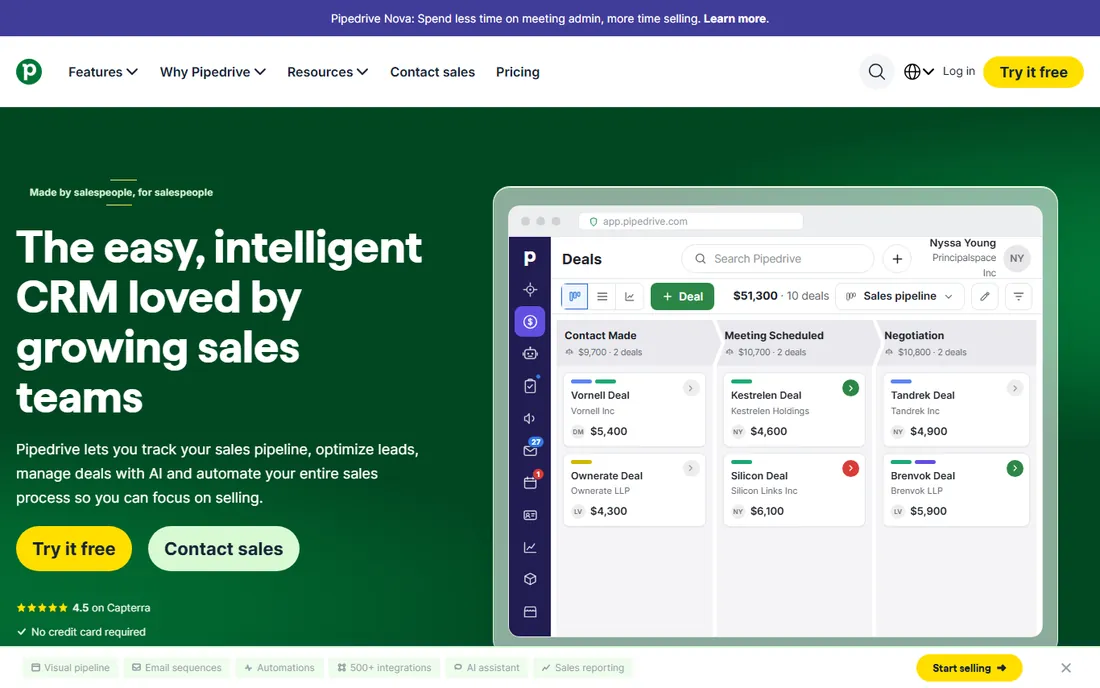
Pipedrive was designed around a single belief: reps should spend time selling, not doing data entry. The kanban pipeline is the home screen, activities drive deals forward, and the interface stays out of the way. It popularized activity-based selling: the system tells the rep the next action instead of waiting to be told. Integrations cover calling, email and the usual stack.
It is a sales tool, not a platform: marketing automation is basic, and complex enterprise processes strain it. For the SMB sales team where rep adoption is the whole game, Pipedrive's usability is the reason it keeps winning evaluations.
What we like- Pipeline-first design reps actually enjoy
- Visual deal management
- Strong activity-based selling approach
Watch out for- Marketing features are thin
- Advanced customization lags Salesforce
#2
Close
Best for: Inside sales teams that live on the phone and email
Visit close.com
Starting priceSee website
Free planSee website
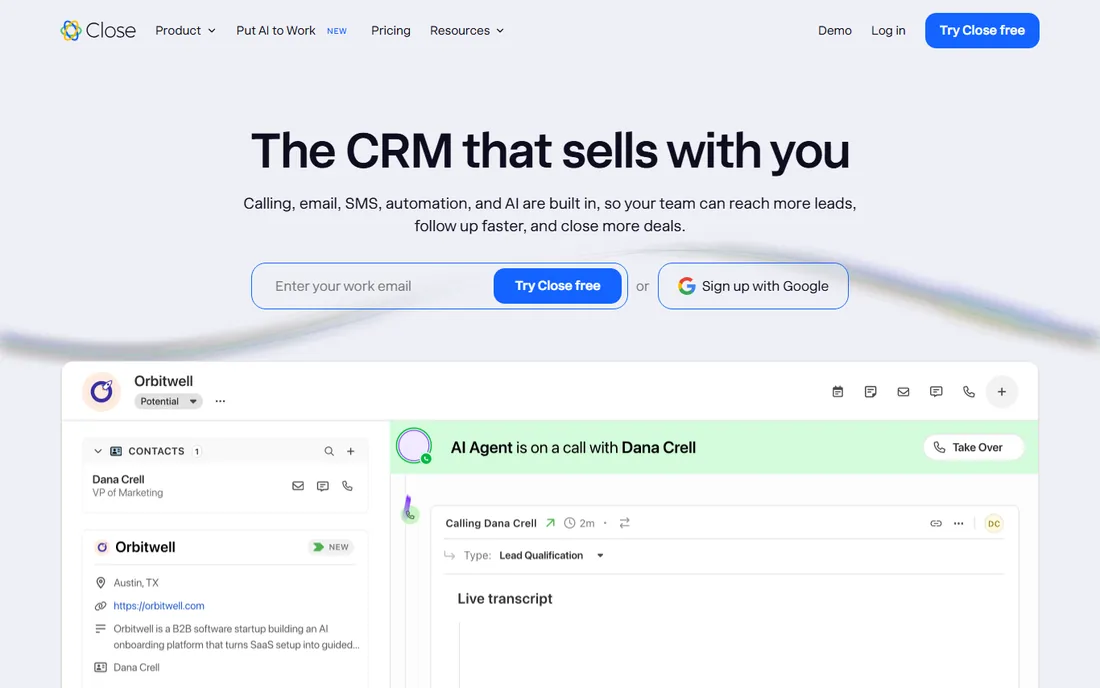
Close bundles the communication stack into the CRM: call, record, SMS and email without leaving the app, with a power dialer and predictive dialing for high-volume prospecting. The philosophy is radical simplicity for the rep: fewer fields, fewer clicks, more conversations. It was built by an inside-sales team that got tired of Salesforce admin.
Field sales teams and enterprises with complex approval processes will find it opinionated. But for the SDR team or inside seller measured on activity and conversations, Close removes more friction than any competitor.
What we like- Calling, SMS and email built in with power dialer
- Minimal data entry
- Built by a sales team for sales teams
Watch out for- Less suited to field sales or complex enterprise processes
- Reporting is functional rather than deep
#3
HubSpot
Best for: Teams that want CRM, marketing and service connected
Visit hubspot.com
Starting priceSee website
Free planFree CRM available
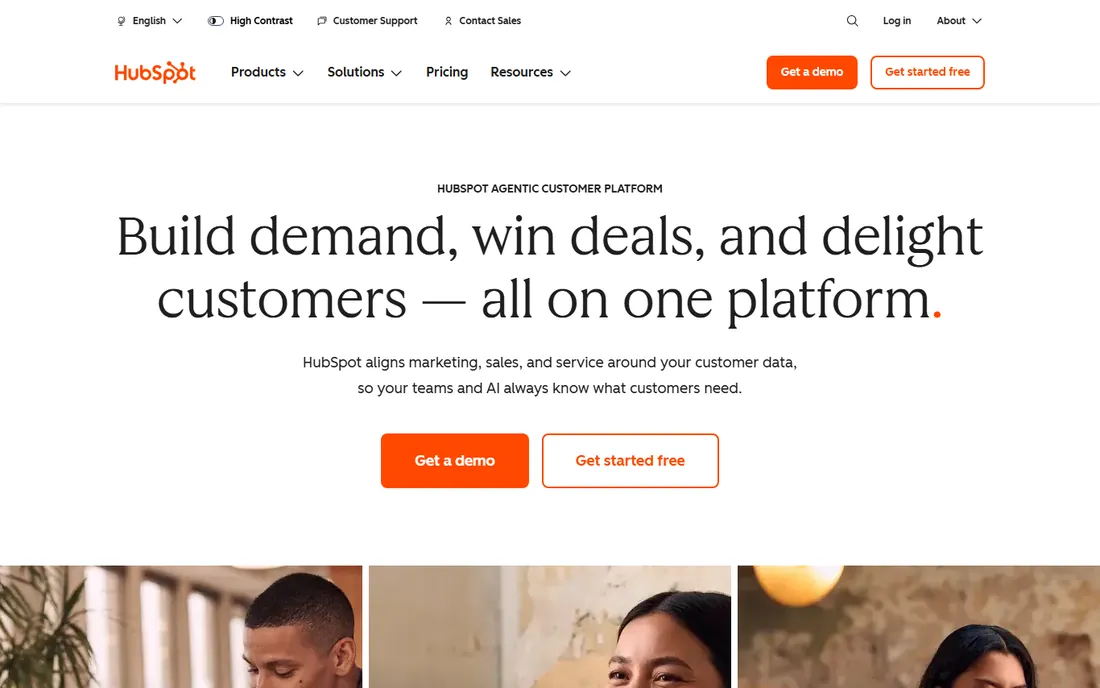
HubSpot's free CRM is the industry's best on-ramp: contacts, pipeline, email tracking and meeting scheduling at no cost, with paid tiers adding automation, sequences and reporting. The real draw is unity: marketing, sales and service data in one system, so reps see the full contact history. The ecosystem of integrations and education content is unmatched.
The pricing curve is the catch: free gets expensive as marketing contacts and sales seats grow. And pure sales teams sometimes find the rep workflow less focused than Pipedrive or Close. For the growing company aligning marketing and sales, though, HubSpot is the natural platform bet.
What we like- Genuinely free CRM tier
- Marketing and sales alignment in one platform
- Huge integration ecosystem
Watch out for- Costs scale steeply as contacts and features grow
- Sales-specific depth trails Pipedrive
#4
Salesforce
Best for: Enterprises that need the deepest customization and ecosystem
Visit salesforce.com
Starting priceSee website (custom quote)
Free planNo (trial available)
Salesforce is the CRM everything else is compared to: Sales Cloud handles any sales process imaginable, the AppExchange extends it anywhere, and reporting answers any question leadership asks. For large sales organizations with dedicated admins, it remains the most capable platform.
Reps famously hate entering data in it, which is why adoption projects exist as a consulting category. The honest guidance: buy Salesforce for the organization's needs, then invest in the UX, integrations and automation that make reps' lives easy. Without that investment, the pipeline data rots.
What we like- Unlimited customization and the largest app marketplace
- Best reporting at scale
- Industry standard for large teams
Watch out for- Rep usability is the classic complaint
- Requires admin investment
- Expensive
#5
Freshsales
Best for: Teams that want built-in telephony and AI without add-ons
Visit freshsales.com
Starting priceSee website
Free planSee website
Freshsales (part of Freshworks) gives reps calling, email, chat and AI-powered insights without bolting on third-party tools. Freddy AI scores leads, suggests next actions and drafts emails. The interface is modern and the pricing undercuts the big platforms, especially bundled with Freshdesk or Freshmarketer.
It sits between Pipedrive's focus and HubSpot's platform: more built-in communication than the former, less ecosystem than the latter. For the SMB that wants one vendor for sales and support with AI included, Freshsales is the value pick.
What we like- Built-in phone, email and AI features
- Clean modern interface
- Good value in the Freshworks bundle
Watch out for- Ecosystem is smaller than HubSpot or Salesforce
- Advanced workflow depth is moderate
Starting priceSee website
Free planSee website
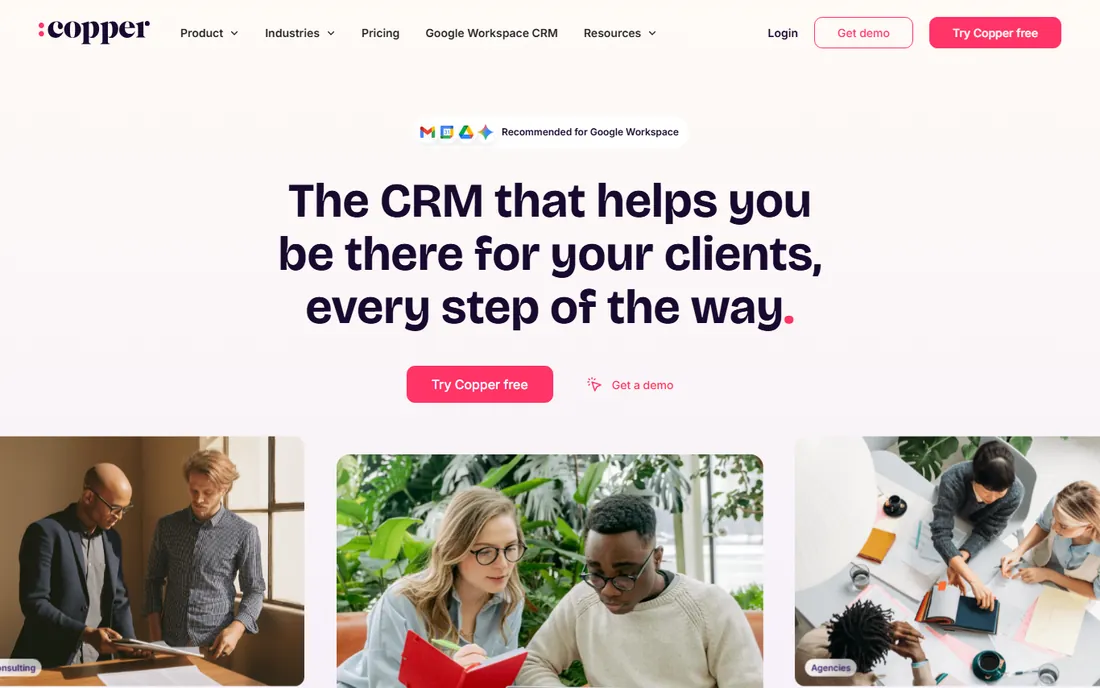
Copper (formerly ProsperWorks) is the CRM for Google Workspace shops: it lives inside Gmail, auto-captures contacts and interactions, and syncs with Drive, Calendar and Docs. Reps never leave their inbox, which is why adoption rates run high. Google's recommendation gives it credibility with Workspace-committed companies.
Microsoft shops should look elsewhere: the magic is Workspace-specific. And complex sales processes fit less naturally than in Salesforce. But for the small business where Gmail is the operating system, Copper is the lowest-friction CRM available.
What we like- Deep Gmail and Google Workspace integration
- No double entry
- Recommended by Google
Watch out for- Tied to the Google ecosystem
- Less depth for non-Google shops
Starting priceSee website
Free planSee website
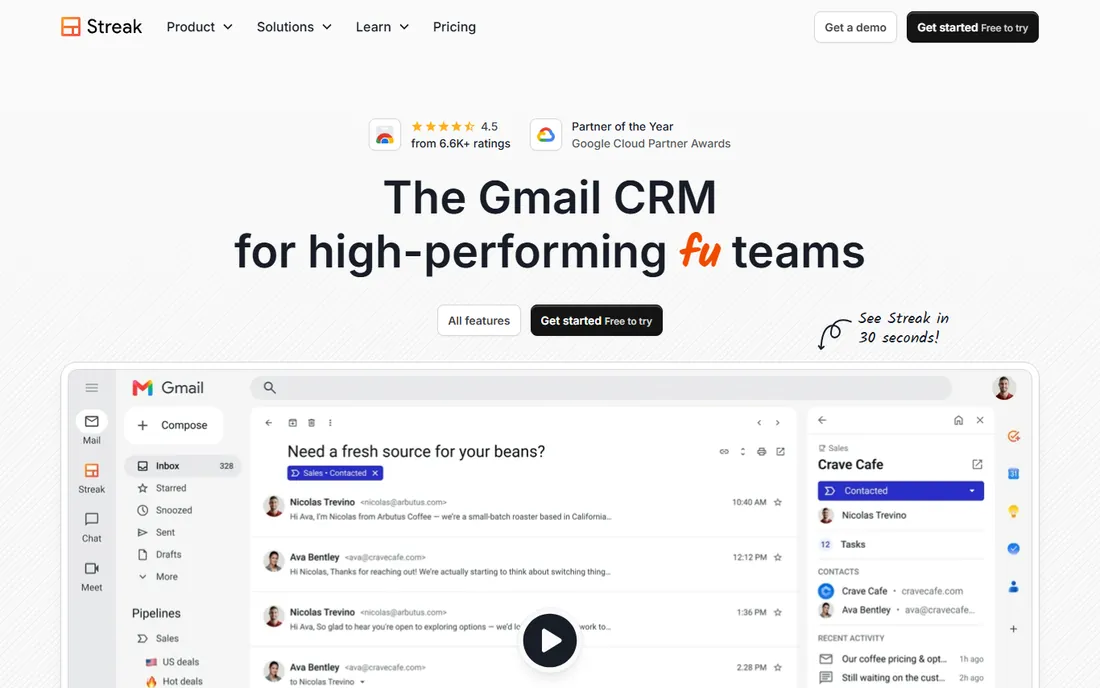
Streak turns Gmail into a CRM: pipelines live as sidebar views in the inbox, emails become deal records, and mail merge plus snippets handle outreach. For a founder doing sales or a tiny team, it is the fastest path from zero to organized pipeline. The free tier covers real usage.
It does not scale into a sales organization: reporting, permissions and process control are thin, and everything depends on Gmail. Think of Streak as the solo seller's CRM and the startup's first CRM, with a planned graduation to Pipedrive or HubSpot later.
What we like- CRM inside Gmail with pipelines in the inbox
- Very fast to start
- Generous free tier
Watch out for- Gmail-dependent
- Limited as a company-wide sales platform
#8
Nutshell
Best for: Small businesses that want guided selling without complexity
Visit nutshell.com
Starting priceSee website
Free planSee website
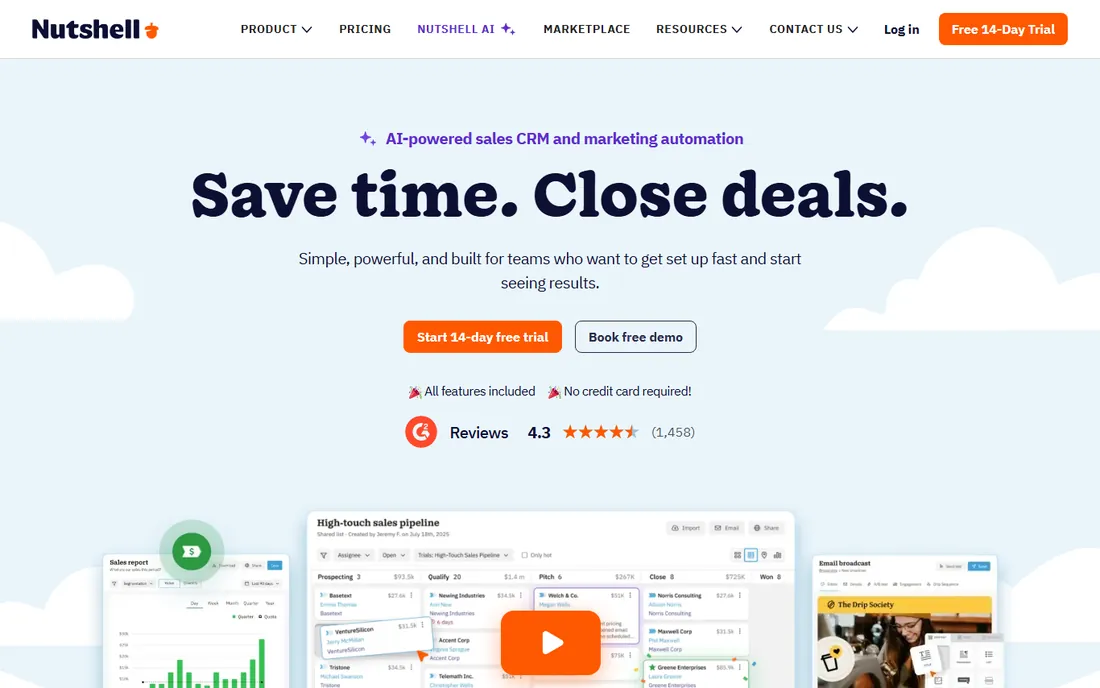
Nutshell targets the small business that knows it needs process but dreads Salesforce: guided pipelines, automated task reminders, email sequences and reporting, with onboarding help included. It bakes in sales methodology rather than presenting a blank canvas, which helps teams without a sales ops function.
Larger or highly custom processes will outgrow it. But for the ten-person company making its first real CRM investment, Nutshell's combination of guidance and simplicity beats both spreadsheets and enterprise overkill.
What we like- Guided sales process with built-in best practices
- Easy onboarding
- Good value for small teams
Watch out for- Less brand recognition
- Customization is moderate
Starting priceSee website
Free planNo (trial available)
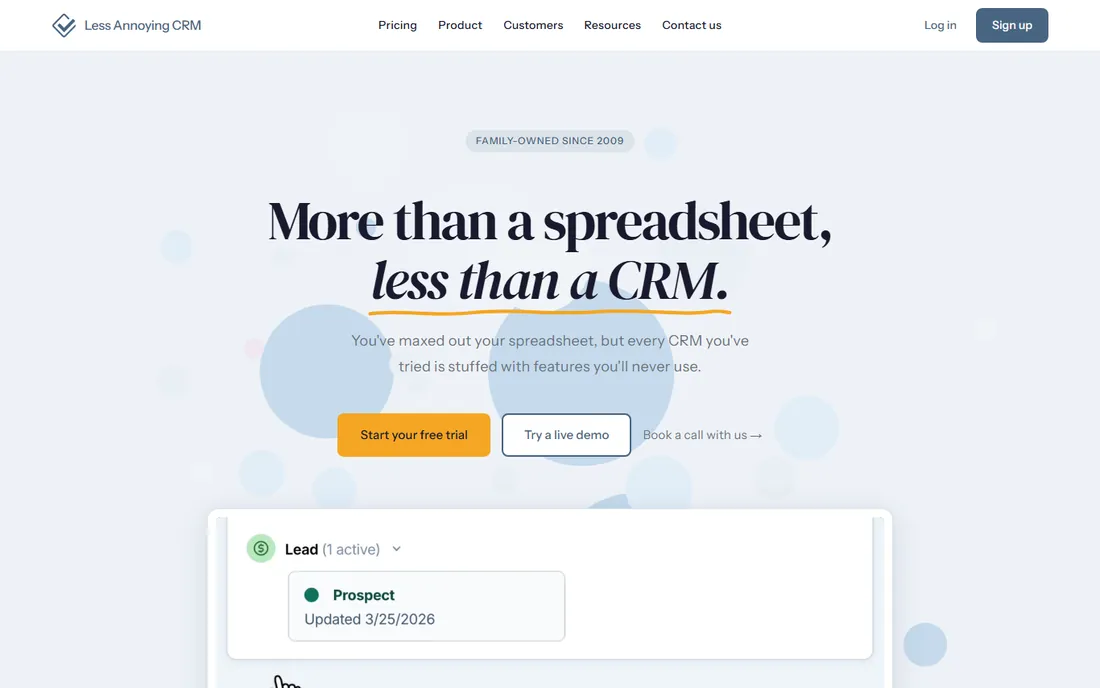
Less Annoying CRM does exactly what the name promises: contacts, calendar, tasks and pipeline with nothing extra. One flat price, no tiers, no upsells, and support from actual humans. For the solo consultant, freelancer or two-person shop, it replaces the spreadsheet without introducing software overhead.
Anyone needing automation, integrations or team workflows will hit the ceiling fast. That is the point: it serves the buyer everyone else ignores, the seller who wants software to remember things so they can go sell.
What we like- Radically simple
- Flat affordable pricing
- Human customer support
Watch out for- Minimal automation and integrations
- Not built for teams with process needs
How we chose
We judged from the rep's chair, not the manager's: pipeline clarity, speed of logging activities, built-in communication tools, and whether sellers actually adopt the thing. For each candidate we confirmed the product is current and checked pricing transparency. Only live products made the list.
The adoption test
CRM failure is almost never a feature problem; it is an adoption problem. Reps who hate the tool enter garbage data, managers get garbage reports, and the company concludes it needs a different CRM instead of a usable one. Before buying, run the adoption test: give three reps the trial, one real week, no training beyond a 15-minute video. Then check: did they log activities without being nagged? Is the pipeline current? Would they keep using it voluntarily?
The CRM that passes that test with your actual reps beats the CRM with the better feature matrix every time. Weight the trial accordingly: 60 percent rep experience, 40 percent everything else.
What reps actually need from a CRM
Strip away the marketing and the rep's needs are short: see every deal and its next step at a glance, log calls and emails in seconds, get reminded about follow-ups automatically, and call or email without switching apps. Everything else (forecasting, territory management, CPQ) serves management.
Evaluate in that order. Open the pipeline view: is it glanceable? Log a call: how many clicks? Set a follow-up: does it happen automatically? Make the call: is the dialer inside the CRM? The tools on this list that score highest on those four questions (Pipedrive, Close, Copper, Streak) are the ones reps recommend to each other.
Frequently asked questions
Which CRM is easiest for sales reps to actually use?
Pipedrive, Close, Copper and Streak consistently win on rep usability because they minimize data entry. HubSpot's free tier is also approachable. Salesforce is the hardest without admin investment. Run the adoption test above before deciding.
Do we need a CRM with built-in calling?
If reps make more than twenty calls a day, yes: built-in dialers (Close, Freshsales, HubSpot Sales Hub) save hours weekly versus switching apps. Occasional callers do fine with click-to-call integrations.
How much should a small team pay for CRM?
Solo to five reps: $0 to $50 per user per month covers Streak's free tier through Pipedrive or Nutshell. Growing teams: HubSpot Starter or Freshsales stay reasonable until contact and feature needs push upgrades. Always model year-two costs, not just the entry tier.
Can a CRM replace our sales engagement tool?
Partially. HubSpot sequences, Close and Freshsales cover basic cadences. Dedicated tools (Outreach, Salesloft) still lead on advanced multichannel sequences and analytics. Teams under ten reps usually do fine with CRM-native sequences.
How long does CRM implementation take?
Simple CRMs (Streak, Less Annoying, Copper): days. Pipedrive, Close, Nutshell: one to three weeks. HubSpot: three to eight weeks with marketing alignment. Salesforce: two to six months with admin and customization. Data migration quality matters more than the software in every case.
Sources we checked (9)
- https://pipedrive.com
- https://close.com
- https://hubspot.com
- https://salesforce.com
- https://freshsales.com
- https://copper.com
- https://streak.com
- https://nutshell.com
- https://lessannoyingcrm.com
Is your product missing or out of date?
We review this list regularly. Vendors can request a listing, send updated pricing or ask about featured placement.

Shihab Mia · Founder, Rankite
Shihab has spent more than a decade helping SaaS and e-commerce brands grow through search. He writes Rankite's software buying guides from pricing pages, documentation and public user reviews. More about Shihab.