How we make this list: we compare pricing pages, product documentation and public user reviews. Rankite is independent; if a vendor ever pays for a featured spot, that listing is clearly labeled Partner.
Key takeaways
- Docker remains the default starting point, now with AI agent sandboxes and governance on top of 20M+ developers.
- Kubernetes is the open standard for orchestration; Rancher and Portainer make multi-cluster management approachable.
- Podman is the daemonless, rootless open source alternative for security-conscious teams.
- Red Hat OpenShift and Amazon ECS suit enterprises that want managed platforms with support.
- Nomad is the simpler scheduler for mixed workloads: containers, binaries, and batch jobs.
Quick comparison
| Tool | Best for | Starting price | Free plan |
|---|
 Docker Docker | Developer container workflow | See website | Yes |
 Portainer Portainer | Multi-cluster GUI management | See website | Yes |
 Rancher Rancher | Enterprise Kubernetes management | See website | Yes |
 Kubernetes Kubernetes | Open orchestration standard | See website | Yes |
 Podman Podman | Daemonless secure containers | See website | Yes |
 Red Hat OpenShift Red Hat OpenShift | Enterprise app platform | See website | No |
 Nomad Nomad | Simple mixed-workload scheduler | See website | Yes |
 Amazon ECS Amazon ECS | AWS-native orchestration | See website | No |
Is your product missing or out of date?
We review this list regularly. Vendors can request a listing, send updated pricing or ask about featured placement.
The best container management software
Starting priceSee website
Free planYes
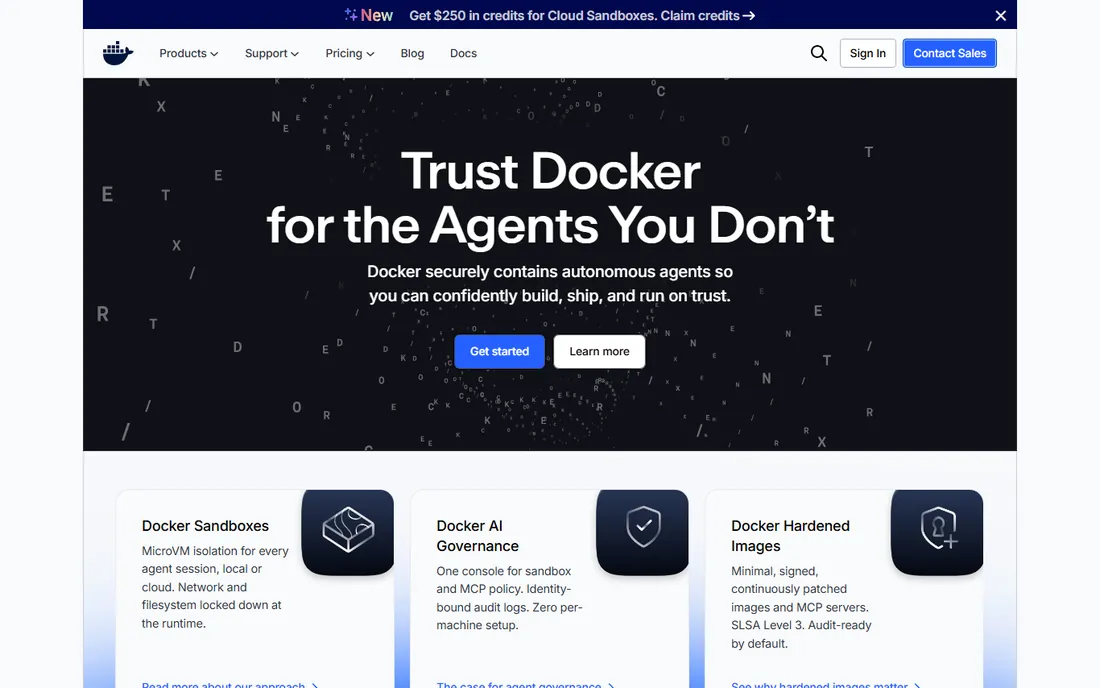
Docker is where containers start. Docker Desktop takes you from a blank file to a running app in minutes, and Docker Hub's 20 billion monthly pulls make it the registry of record. Ninety-one percent of the Fortune 100 run on Docker, and the workflow knowledge transfers to every other tool on this list.
This year Docker bet on AI agents: secure sandboxes, microVMs, AI governance with audit trails, and Cloud Sandboxes for long-running tasks. The honest catch is licensing nuance for large organizations on Docker Desktop, and the AI repositioning may feel like a distraction. For developers, it remains step one.
What we like- The standard container workflow 20M+ developers know
- 20B+ pulls a month on Docker Hub
- New AI governance and Cloud Sandboxes for agent workloads
Watch out for- Docker Desktop licensing gets complicated for large companies
- The 2026 AI pivot may confuse teams that just want containers
Starting priceSee website
Free planYes
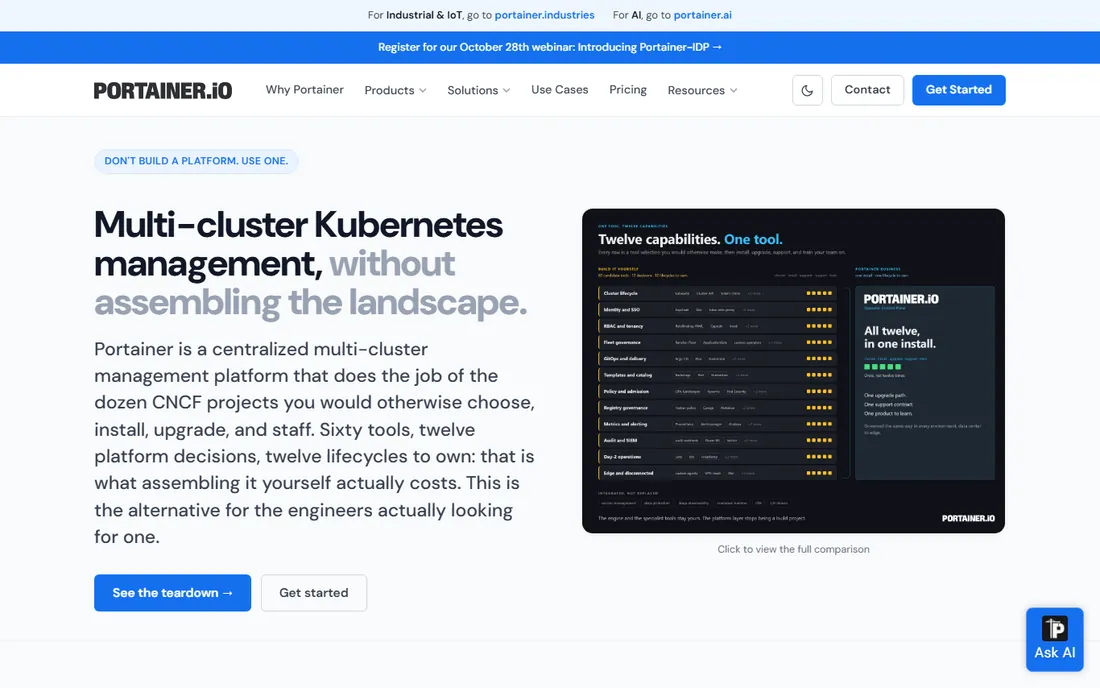
Portainer is the alternative to assembling a dozen CNCF projects yourself. One platform governs Kubernetes clusters across EKS, AKS, GKE, bare metal, and on-prem, while Docker, Swarm, and Podman hosts join the same console under the same RBAC. GitOps deployment workflows with promotion and rollback come built in.
The pitch is pointed: bespoke platform engineering costs eighteen months and a hiring plan; Portainer is a product with an owner and a release cadence. Three nodes are free. The honest catch is that the full governance story needs the Business edition, and huge fleets still want dedicated GitOps. For teams that want operational control without a platform team, it is the pragmatic pick.
What we like- One console for Kubernetes, Docker, Swarm, and Podman
- 3 nodes free to start
- Self-service with guardrails for developer teams
Watch out for- Deepest features need the paid Business edition
- Not a replacement for GitOps tooling at scale
Starting priceSee website
Free planYes
Rancher delivers Kubernetes-as-a-Service from datacenter to cloud to edge. It is a complete open source stack for managing multiple Kubernetes clusters, with integrated DevOps tooling for running containerized workloads. More than 30,000 teams use it daily, and the GitHub community of 19,700+ stars keeps it honest.
SUSE was named a Leader in Gartner's container management Magic Quadrant, and fully managed Rancher runs on Amazon EKS. The honest catch is the commercial layer: enterprise support costs, and the SUSE ecosystem pulls you toward its orbit. For enterprises standardizing on Kubernetes across clouds, it is the proven choice.
What we like- Complete open source Kubernetes management stack
- 30,000+ teams and 5.2M+ containers managed
- Strong edge and multi-cloud story
Watch out for- Enterprise support and advanced features are paid
- SUSE ecosystem adds vendor gravity
Starting priceSee website
Free planYes
Kubernetes is the foundation, not the finished product. The open source orchestrator automates deployment, scaling, and management of containerized applications with self-healing, service discovery, storage orchestration, and horizontal scaling. It is a CNCF graduated project built on Google's experience running billions of containers a week.
The honest catch is the gap between Kubernetes and a platform. You need ingress, monitoring, CI/CD, and security tooling around it, which is exactly why Rancher and Portainer exist. For teams with platform engineering capacity, raw Kubernetes plus chosen tooling is the most flexible path. Everyone else should pick a distribution or management layer.
What we like- The open standard everything else builds on
- Self-healing, autoscaling, and rolling deployments
- Runs on-prem, hybrid, or any cloud
Watch out for- Steep learning curve
- You still need tooling around it for a complete platform
Starting priceSee website
Free planYes
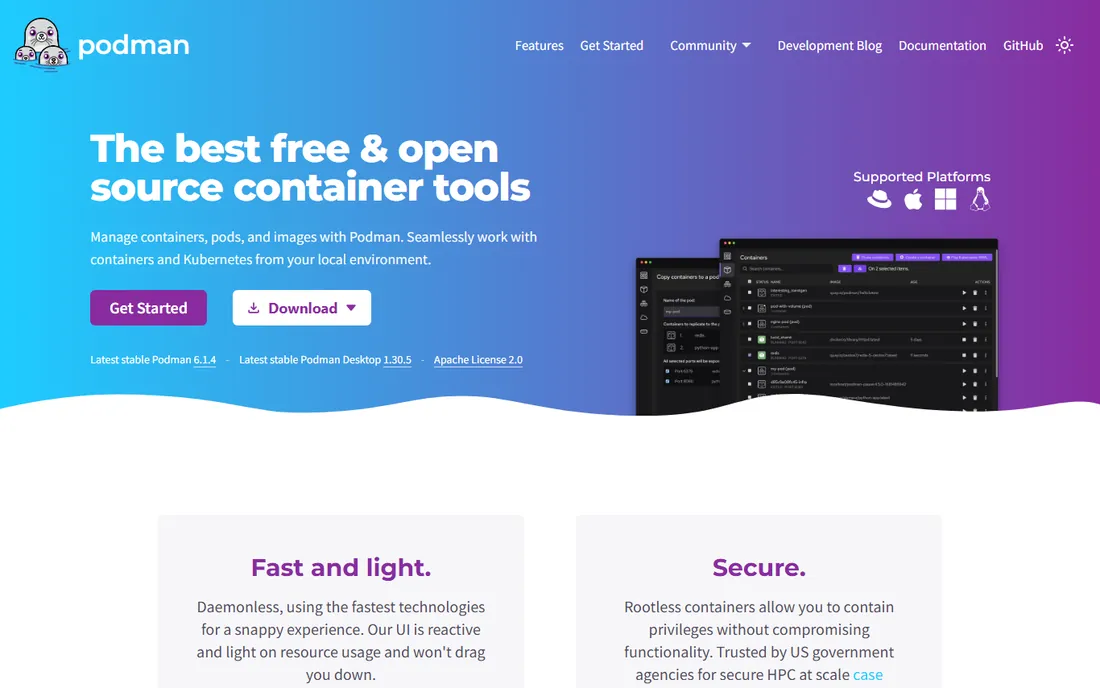
Podman is the security-first container engine. It runs containers without a daemon and without root privileges, which shrinks the attack surface that Docker's daemon presents. The CLI mirrors Docker's, so migration is mostly a matter of aliasing commands, and it plays well with VS Code, GitHub Actions, and Kind for local Kubernetes clusters.
The honest catch is ecosystem size. Docker Hub integrations, third-party tooling, and community answers skew Docker. For regulated industries, government, and teams where rootless operation is a requirement, Podman is the right default. For everyone else, it is a credible alternative worth evaluating.
What we like- Daemonless and rootless by design for better security
- Docker-compatible CLI eases migration
- Fully open source with Kubernetes-ready tooling
Watch out for- Smaller ecosystem than Docker
- Some Docker Compose workflows need adjustment
Starting priceSee website
Free planNo
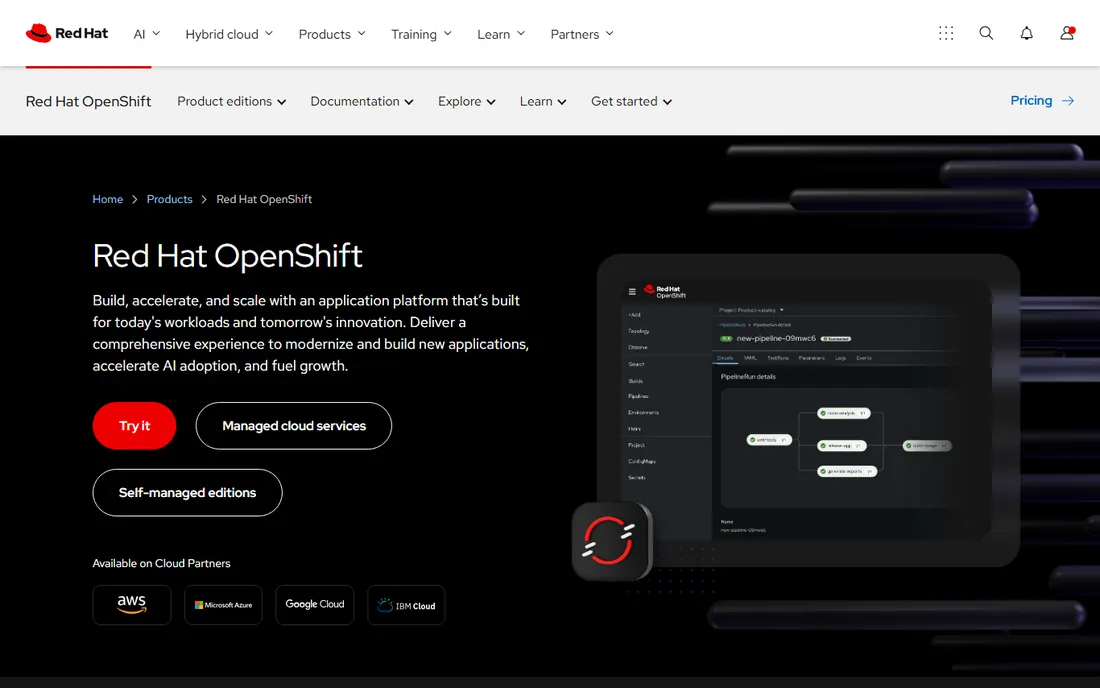
OpenShift is Kubernetes turned into a supported enterprise product. It powers the full application lifecycle from build to scale, with editions for self-managed datacenters and managed cloud services across AWS, Azure, Google Cloud, and IBM Cloud. Built-in security, operators, and dedicated support free teams to focus on applications.
This year the platform leans into AI: managing predictive and generative model lifecycles across hybrid clouds, plus OpenShift Virtualization for migrating VMs. Red Hat was named a Leader in Gartner's 2026 Magic Quadrant for Server Virtualization Platforms. The honest catch is cost and weight. For enterprises that need a supported platform, it is the standard. Small teams should look elsewhere.
What we like- Complete enterprise application platform on Kubernetes
- Self-managed or managed on AWS, Azure, Google, and IBM
- Built-in security and AI workload support
Watch out for- Enterprise pricing with no free tier
- Complexity and resource requirements exceed small teams
Starting priceSee website
Free planYes
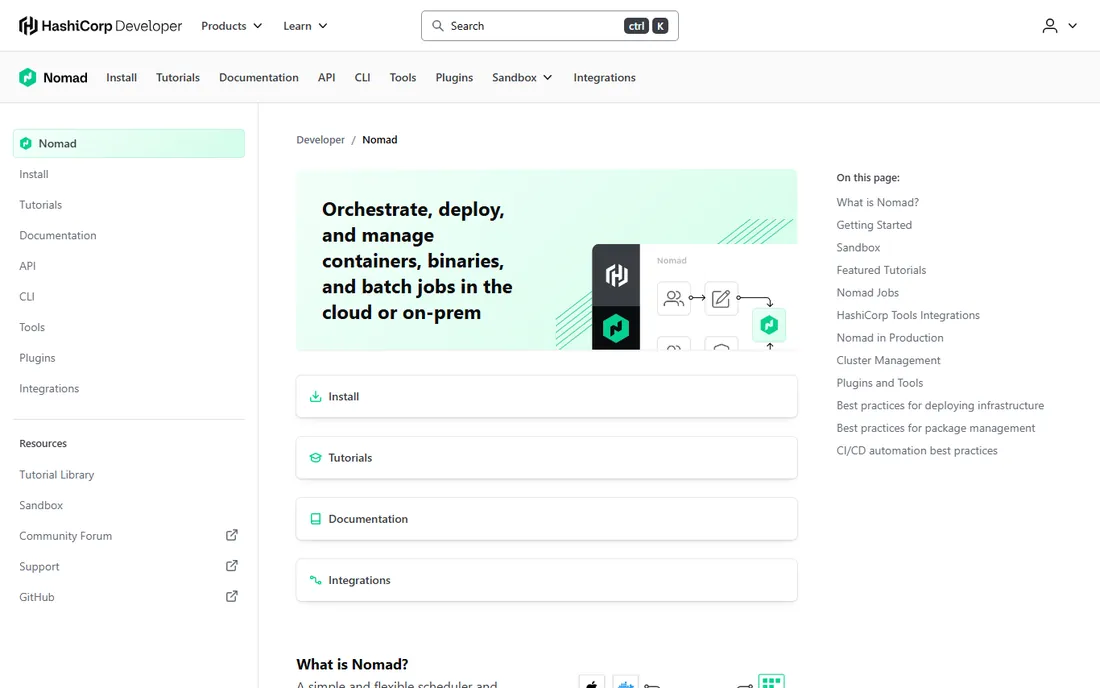
Nomad is the orchestrator for teams that find Kubernetes excessive. A single binary schedules containers, non-containerized applications, and batch jobs across on-prem and clouds. The job specification is simple, Nomad Pack provides reusable templates, and the HashiCorp integrations with Consul for service mesh and Vault for secrets are genuinely good.
This year's tutorials even cover running LLM workloads with Ollama on Nomad clusters. The honest catch is ecosystem gravity: fewer third-party integrations, fewer answers on forums, and enterprise governance features sit in Nomad Enterprise. For mixed workloads and small platform teams, the simplicity is the feature.
What we like- One scheduler for containers, binaries, and batch jobs
- Far simpler than Kubernetes
- Integrates with Consul and Vault
Watch out for- Smaller community and ecosystem than Kubernetes
- Advanced governance needs the Enterprise edition
Starting priceSee website
Free planNo
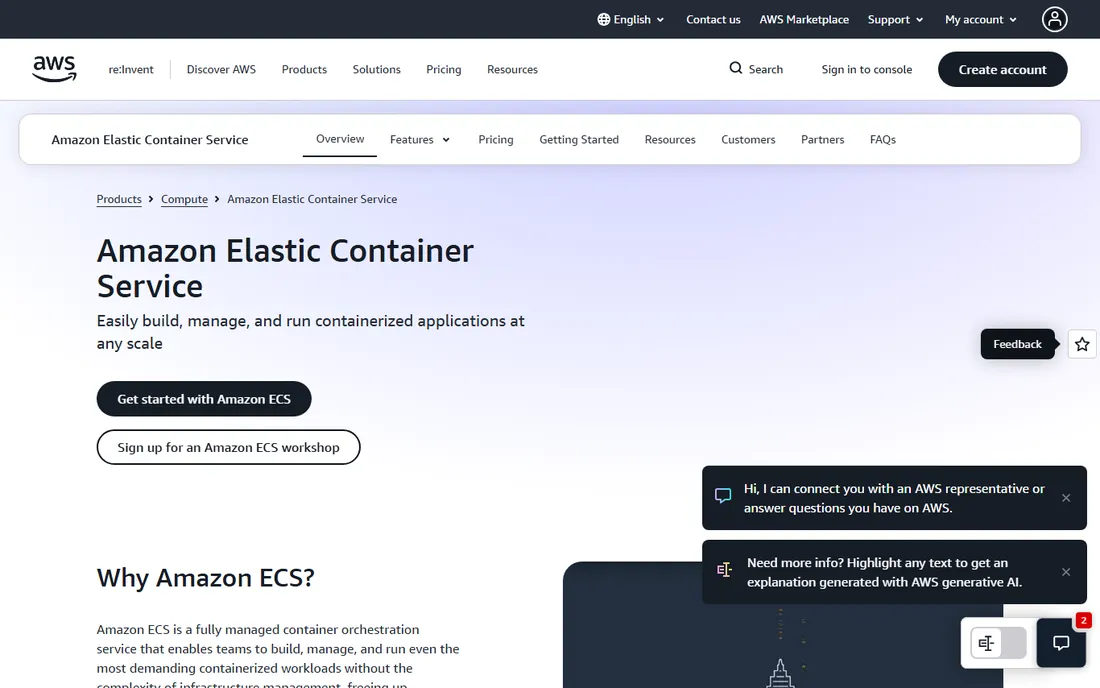
Amazon ECS is the path of least resistance for AWS shops. The fully managed orchestration service runs demanding containerized workloads without infrastructure management, with pay-as-you-go pricing, automated patching, IAM roles, and encrypted storage. Fargate removes server management entirely, and ECS Anywhere extends to on-prem and edge.
This year AWS pitches ECS for generative AI and agentic workloads, with Fargate's isolation for sensitive AI applications. The honest catch is lock-in and cost: this is an AWS service with AWS pricing, and there is no free tier. For teams committed to AWS, it is the simplest way to run containers at scale.
What we like- Fully managed with no control plane to run
- Deep AWS integrations with IAM, Fargate, and security services
- Pay-as-you-go with ECS Anywhere for hybrid
Watch out for- AWS lock-in
- No free tier and costs scale with usage
How we chose
We compared the leading container platforms using each vendor's own site and documentation in October 2026, alongside CNCF resources and practitioner reviews. We required verifiable live products covering desktop, orchestration, and managed platforms. We never claim hands-on testing.
Under 50 containers: keep it simple
Docker Desktop for development, Portainer for a visual console, and maybe a single managed cluster. You do not need a platform team or an enterprise distribution. The tools at this scale should reduce toil, not create it.
50 to 500 containers: pick your orchestrator
Kubernetes becomes worth the investment here, usually through Rancher, a cloud managed service, or ECS if you are on AWS. Nomad is the contrarian pick for mixed workloads. Standardize on one orchestrator before the sprawl standardizes on you.
500+ containers: you need a platform
Multi-cluster governance, GitOps, policy enforcement, and cost control become the job. Portainer Business, Rancher, or OpenShift earn their keep here. The question stops being which orchestrator and starts being who owns the platform.
Containers and the agent era
The 2026 shift is worth stating plainly: the same isolation that made containers safe for microservices makes them the natural sandbox for AI agents. Docker's governance push, ECS's agentic workload story, and Nomad's LLM tutorials all point one way. If your roadmap includes AI agents touching production systems, pick container tooling with agent isolation in mind now rather than retrofitting it later.
Frequently asked questions
What is the difference between Docker and Kubernetes?
Docker builds and runs individual containers; Kubernetes orchestrates many containers across many machines, handling scaling, healing, and networking. Most teams use both: Docker for the developer workflow, Kubernetes for production.
Is Kubernetes free?
Yes, Kubernetes itself is free and open source. You pay for the infrastructure it runs on and optionally for managed services or enterprise distributions like Rancher or OpenShift that add support and tooling.
What is the easiest container management tool?
Portainer is the easiest path to managing Docker and Kubernetes through a visual console, with 3 nodes free. Docker Desktop is the easiest start for developers. Both avoid the Kubernetes learning curve until you actually need it.
Should I use Podman or Docker?
Use Docker for the biggest ecosystem and most tutorials. Use Podman when security policy requires daemonless, rootless containers, or when you want a fully open source stack without licensing questions. The CLIs are compatible, so switching is low-cost.
What is the best container platform for AWS?
Amazon ECS is the simplest AWS-native option with no control plane to manage. Amazon EKS runs Kubernetes on AWS for teams that need the Kubernetes ecosystem. Pick ECS for simplicity, EKS for portability.
Can containers run AI workloads?
Yes, and this is the 2026 trend. Containers provide the isolation AI agents need: Docker offers Cloud Sandboxes and governance for agents, ECS supports agentic workflows on Fargate, and Nomad can schedule LLM workloads. Treat agent workloads like untrusted code and isolate accordingly.
Sources we checked (8)
- https://www.docker.com/
- https://portainer.io/
- https://www.rancher.com/
- https://kubernetes.io/
- https://podman.io/
- https://www.redhat.com/en/technologies/cloud-computing/openshift
- https://www.nomadproject.io/
- https://aws.amazon.com/ecs/
Is your product missing or out of date?
We review this list regularly. Vendors can request a listing, send updated pricing or ask about featured placement.

Shihab Mia · Founder, Rankite
Shihab has spent more than a decade helping SaaS and e-commerce brands grow through search. He writes Rankite's software buying guides from pricing pages, documentation and public user reviews. More about Shihab.