How we make this list: we compare pricing pages, product documentation and public user reviews. Ratings come from G2, Capterra or Trustpilot, with the date we checked them.
Key takeaways
- Carnegie Mellon stands out for a dedicated software engineering degree, while most other schools teach the subject inside computer science.
- Public schools such as Georgia Tech, Purdue, and UC Berkeley can cost far less than private schools for in-state students, so residency matters as much as ranking.
- Admission selectivity varies widely, so a strong list pairs one or two reach schools with solid programs where admission is more realistic.
- Internships, co-op programs, and nearby employers often matter more for a first job than a small difference in rank.
Quick comparison
| Tool | Best for | Starting price | Free plan |
|---|
 Massachusetts Institute of Technology | Research depth and theory | $62,396 per year | No |
 Stanford University | Silicon Valley connections | $65,910 per year | No |
 Carnegie Mellon University | Dedicated software engineering | $65,636 per year | No |
 University of California, Berkeley | Public research at scale | $15,377 per year in-state | No |
 Georgia Institute of Technology | Value for in-state students | $12,058 per year in-state | No |
 University of Illinois Urbana-Champaign | Large, industry-connected program | $18,267 per year in-state | No |
 Purdue University | Hands-on engineering value | $9,992 per year in-state | No |
 University of Washington | Seattle tech access | $12,973 per year in-state | No |
Is your product missing or out of date?
We review this list regularly. Vendors can request a listing, send updated pricing or ask about featured placement.
The best colleges for software engineering
#1
Massachusetts Institute of Technology
Best for: Research depth and theory
Visit mit.edu
Starting price$62,396 per year
Free planNo
MIT in Cambridge, Massachusetts, suits students who want rigorous grounding in algorithms, systems, and theory alongside practical building. Coursework tends to be demanding from the first year, and students who enjoy proof, math, and hard systems problems will feel at home. Research opportunities are unusually broad, from artificial intelligence to robotics and programming languages.
The catch is fit as much as price. Admission is among the most selective in the country, and the pace leaves little room for a casual approach to study. Financial aid can change the picture a great deal, so families should check the net price calculator before ruling MIT out on sticker price alone. For a student set on research or advanced technical roles, it remains a strong first choice.
What we like- Deep computer science faculty
- Strong research labs
- Extensive alumni network in tech
Watch out for- Very low admission rate
- Intense workload
- High total cost before aid
Starting price$65,910 per year
Free planNo

Stanford places students within easy reach of major tech employers, startups, and venture-backed labs. Its computer science program lets students specialize in areas such as artificial intelligence, systems, and human-computer interaction. That flexibility helps students who arrive unsure whether they want product work, research, or founding a company.
The trade-offs are familiar for elite private schools. Admission is extremely competitive, and housing and living costs in the area add to the total bill. Stanford meets full financial need for qualifying undergraduates, and tuition is free for undergraduates from families below a published income threshold, so aid deserves a close look. Students who want industry access without leaving campus life behind will find few better locations.
What we like- Close ties to Bay Area employers
- Flexible computer science tracks
- Strong startup culture
Watch out for- Very low admission rate
- High cost of living nearby
- Large introductory classes
#3
Carnegie Mellon University
Best for: Dedicated software engineering
Visit cmu.edu
Starting price$65,636 per year
Free planNo
Carnegie Mellon is the clearest pick on this list for students who want software engineering as a named discipline, not only as a track inside computer science. Its programs stress team projects, requirements, architecture, and quality, which mirrors how real software teams work. Recruiters from large tech firms and robotics companies visit regularly, and the School of Computer Science has a long record in the field.
That focus comes with pressure. Project courses can consume evenings, and the tuition figure is high before aid. Students who prefer a broader liberal arts balance may find the culture more technical than they expected. For applicants who already know they want to build and ship software, and who want formal training in engineering practice, CMU is hard to beat.
What we like- Dedicated software engineering degree options
- Project-based learning
- Strong industry recruiting
Watch out for- High tuition
- Demanding project workload
- Pittsburgh winters and campus intensity
#4
University of California, Berkeley
Best for: Public research at scale
Visit berkeley.edu
Starting price$15,377 per year in-state
Free planNo
Berkeley offers one of the strongest public routes into software engineering through electrical engineering and computer sciences. Students gain access to major research groups, a large alumni base in the Bay Area, and a campus culture that rewards building side projects and contributing to open source. For California residents, the in-state tuition figure makes the value case especially strong.
Size is the main drawback. Introductory courses can be large, and declaring the major is competitive, so students need a plan for prerequisites and grades. Out-of-state tuition is far higher, which changes the value calculation for nonresidents. Applicants who thrive in a large, fast-moving public university and who can manage their own advising will get a great deal here.
What we like- Large, respected EECS program
- Strong open-source and startup culture
- Lower in-state tuition
Watch out for- Competitive major declaration
- Large classes
- High Bay Area living costs
#5
Georgia Institute of Technology
Best for: Value for in-state students
Visit gatech.edu
Starting price$12,058 per year in-state
Free planNo
Georgia Tech in Atlanta combines a respected computing program with a practical, career-focused culture. Co-op placements and internships with employers in Atlanta and beyond give students paid experience before graduation. The curriculum covers systems, algorithms, and software design with enough depth for both industry roles and graduate study.
The workload is serious, and students should expect a schedule packed with technical courses. Out-of-state students pay far more than Georgia residents, so the value story depends on residency. For in-state students, and for out-of-state students who earn merit aid, Georgia Tech offers one of the best returns in this group.
What we like- Strong co-op and internship pipeline
- Focused engineering culture
- Lower in-state cost
Watch out for- Heavy technical workload
- Out-of-state tuition much higher
- Atlanta summers are hot
#6
University of Illinois Urbana-Champaign
Best for: Large, industry-connected program
Visit illinois.edu
Starting price$18,267 per year in-state
Free planNo
Illinois has built a computer science program known for systems, programming languages, and artificial intelligence, with a large faculty and many research labs. Employers recruit heavily on campus, and alumni work across major tech firms. The university town setting keeps living costs lower than coastal cities, which helps the total budget.
Admission directly into computer science is competitive, and students should apply to the right major from the start rather than assuming an easy transfer. The location means internships often require travel, though remote roles have eased that gap. Students who want a large program with deep technical options and a lower cost base will find Illinois a sensible pick.
What we like- Large computer science faculty
- Strong systems and AI research
- Active recruiting
Watch out for- Admission to computer science is competitive
- Campus is not near a major tech hub
- Winters are cold
Starting price$9,992 per year in-state
Free planNo
Purdue in West Lafayette, Indiana, is known for engineering discipline and for keeping in-state tuition comparatively low. Students interested in software careers typically study computer science or related engineering fields, with coursework in data structures, operating systems, and software design. Co-op programs let students alternate study with paid work, which builds a resume early.
The main point to check is program structure. Purdue does not present software engineering in quite the same standalone way as Carnegie Mellon, so applicants should compare curricula and electives closely. The town setting suits students who like a campus-centered life, but it lacks the walk-to-work employer density of Seattle or the Bay Area. On price and engineering rigor, Purdue is a strong value choice.
What we like- Low in-state tuition
- Strong engineering reputation
- Co-op options
Watch out for- Software engineering is inside broader computing programs
- West Lafayette is a college town
- Out-of-state cost rises sharply
Starting price$12,973 per year in-state
Free planNo
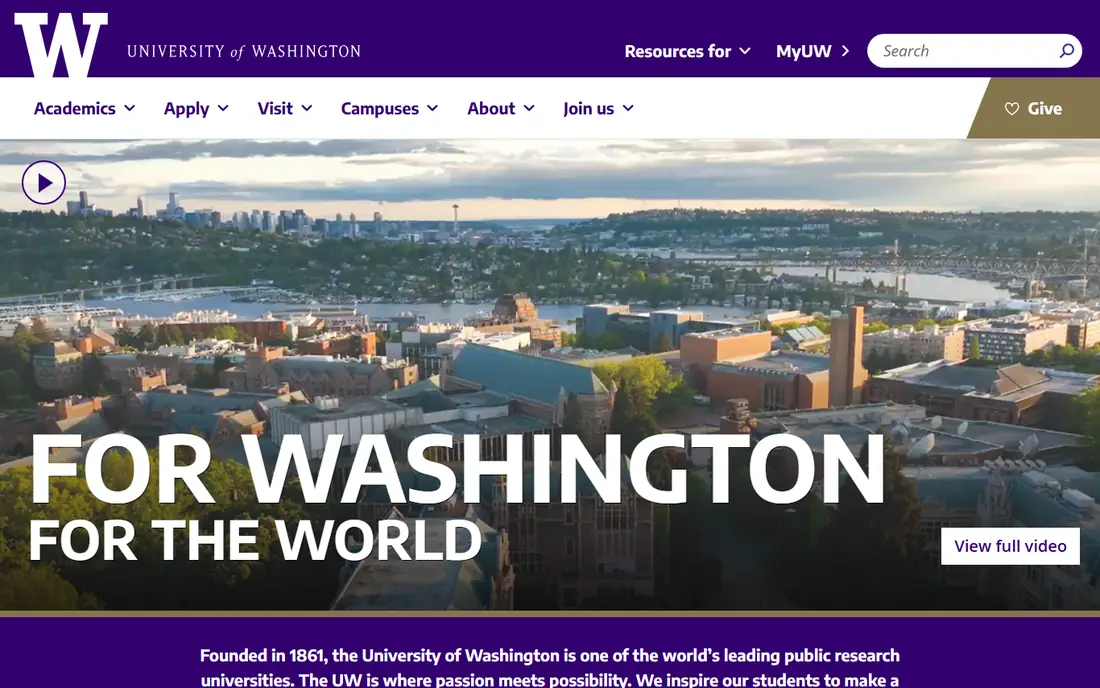
The University of Washington in Seattle gives students direct access to a major tech job market, with large employers and startups nearby. Its Paul G. Allen School of Computer Science and Engineering covers software engineering topics within a respected computer science degree, and research labs span artificial intelligence, systems, and human-computer interaction.
Getting into the major is the hurdle to plan around, since demand exceeds places and admission standards are high. Out-of-state tuition is far above the in-state figure, so nonresidents should weigh aid carefully. For Washington residents who want to stay near Seattle employers, and for students who value industry ties, Washington belongs on the shortlist.
What we like- Close to Seattle employers
- Strong computer science and engineering school
- Research options
Watch out for- Admission to the major is competitive
- Out-of-state tuition much higher
- Rainy winters
How we chose
We compared programs on curriculum fit for software engineering, faculty and research strength, internship and recruiting access, admission selectivity, and published tuition figures. Pricing and program details were checked against university pages and published tuition comparisons, with in-state and out-of-state figures kept separate because the gap changes the decision. We did not claim hands-on campus visits or interviews. Public reviews, rankings, and employer recruiting patterns were used only as supporting context, not as proof of quality on their own.
What to weigh before you apply
A good application list balances ambition with realism. Pick two reach schools, two or three solid matches, and at least one program where admission and cost both look comfortable. Check whether software engineering is a separate degree, a track, or a set of electives, because the label alone does not tell you what you will study.
Cost beyond tuition
Tuition is only part of the bill. Housing, food, books, travel, and fees vary a great deal by city, and a lower tuition school in an expensive city can cost more overall than it first appears. Run each net price calculator with your own family figures, and ask about aid renewal rules, since some grants depend on grades or continued enrollment.
Curriculum and career support
Look at required courses in data structures, algorithms, databases, operating systems, and software design, plus capstone or team project options. Ask how many students complete internships or co-ops, and whether the career office publishes first-destination results by major. A program that helps students land a first internship often matters more than a famous name.
Location and fit
Location shapes internships, part-time work, and social life. A campus near employers makes semester internships easier, while a college town can offer lower costs and a closer community. Visit if you can, talk with current students about workload and advising, and trust fit over rank when two programs are close on paper.
Frequently asked questions
What degree should I look for in software engineering?
Look for computer science, software engineering, or computer engineering degrees with strong coverage of data structures, algorithms, systems, and team software projects. The exact degree title matters less than the required courses, capstone work, and internship support. Compare curricula side by side before deciding.
Is a top-ranked school required for a software engineering job?
No. Employers hire from many schools, and internships, projects, and interview skills carry real weight. A well-known school can open doors and expand a network, but a strong student at a solid public program with two internships is competitive. Focus on skills and experience, not rank alone.
How much does a software engineering degree cost?
Costs range widely. In-state tuition at public schools on this list runs from about $10,000 to about $18,000 per year, while private schools listed here charge roughly $62,000 to $66,000 in tuition before aid. Add housing, food, fees, and travel for the full total, and use each net price calculator for a personal estimate.
Should I choose a dedicated software engineering degree or computer science?
A dedicated degree suits students who want formal training in requirements, architecture, testing, and team delivery. Computer science suits students who want broader theory and flexibility across research, systems, and product roles. Either path can lead to software jobs, so pick the curriculum that matches your interests.
When should I apply, and what strengthens an application?
Most US applications are due in autumn or early winter of the final school year, with exact dates varying by school. Strong math and science grades, coding projects, and clear essays help, and early action or early decision deadlines can differ from regular deadlines. Check each university admissions page for its own calendar.
Sources we checked (9)
- https://www.mit.edu
- https://www.stanford.edu
- https://www.cmu.edu
- https://www.berkeley.edu
- https://www.gatech.edu
- https://illinois.edu
- https://www.purdue.edu
- https://www.washington.edu
- https://www.collegetuitioncompare.com/best-schools/software-engineering/
Is your product missing or out of date?
We review this list regularly. Vendors can request a listing, send updated pricing or ask about featured placement.

Shihab Mia · Founder, Rankite
Shihab has 5+ years in B2B and SaaS SEO. He writes Rankite's software buying guides from pricing pages, documentation and public user reviews. More about Shihab.