How we make this list: we compare pricing pages, product documentation and public user reviews. Rankite is independent; if a vendor ever pays for a featured spot, that listing is clearly labeled Partner.
Key takeaways
- Start free before you pay. freeCodeCamp, The Odin Project and Khan Academy cost nothing and take most beginners through a full first skill, so a paid plan only makes sense once you know what you want to learn next.
- Codecademy and Scrimba suit people who quit long video courses. Their short, interactive lessons and built-in editors keep you coding from minute one.
- Coursera and edX fit learners who want a certificate with an institution's name on it. Free audit access covers most content, but the paid certificate is what carries the signal.
- DataCamp is the only pick here built for data science specifically. If your goal is Python for analytics, it gets you there faster than a generalist platform.
- Udemy works best as a supplement, not a home base. Its one-time-course model is cheap on sale, but you are on your own for a learning path.
Quick comparison
| Tool | Best for | Starting price | Free plan |
|---|
 freeCodeCamp freeCodeCamp | Full free coding curriculum | See website | Yes |
 The Odin Project The Odin Project | Free full-stack web dev path | See website | Yes |
 Codecademy Codecademy | Interactive beginner lessons | See website | Yes |
 Khan Academy Khan Academy | Absolute first steps | See website | Yes |
 Coursera Coursera | University-backed certificates | See website | Yes |
 edX edX | Academic courses with free audit | See website | Yes |
 DataCamp DataCamp | Data science and Python | See website | Yes |
 Scrimba Scrimba | Learn by editing live code | See website | Yes |
 Udemy Udemy | Cheap one-off courses | See website | No |
Is your product missing or out of date?
We review this list regularly. Vendors can request a listing, send updated pricing or ask about featured placement.
Every platform below teaches real programming, but they differ sharply in structure, cost and who they suit. Pick the one that matches your goal, not the one with the longest feature list.
Starting priceSee website
Free planYes
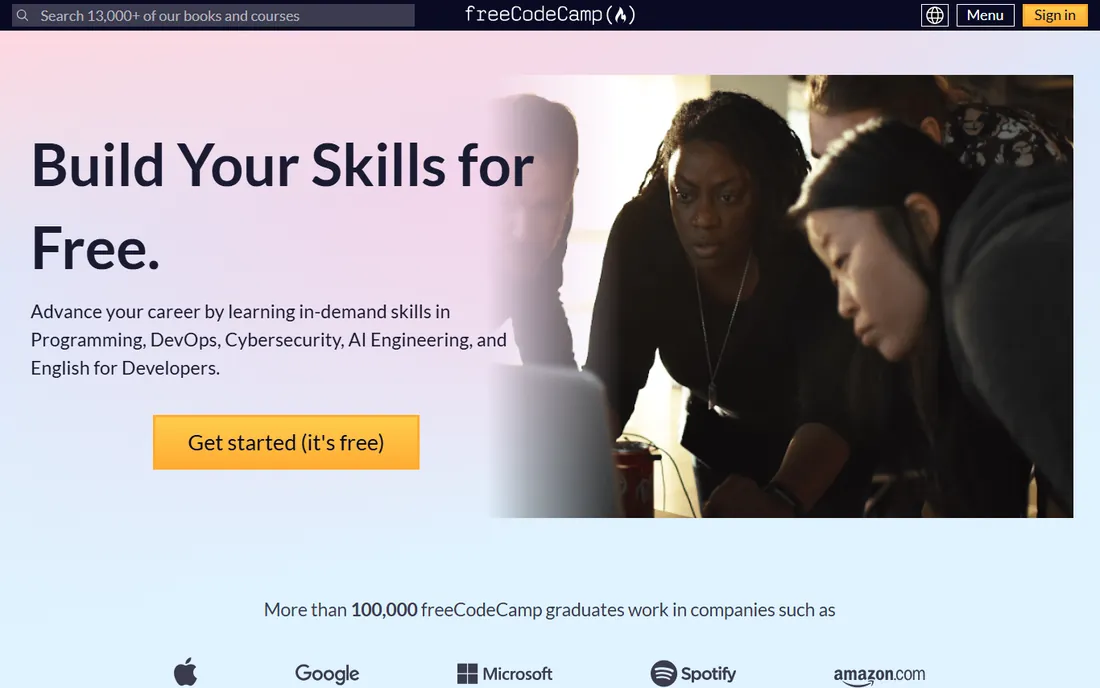
freeCodeCamp is a nonprofit that built one of the largest free coding curricula on the web. You start with responsive web design, move through JavaScript, and can continue into front-end libraries, data visualization, APIs, Python, data analysis, machine learning and more. Each certification requires building five projects, which gives you a portfolio by default.
The biggest strength is also the honest catch: everything is free, but nobody is checking your work. Beginners who need a teacher looking over their shoulder tend to stall around the JavaScript algorithms section. If you are self-directed, this is the best free option anywhere. If you need accountability, pair it with a local study group or one paid course for structure.
What we like- Completely free with no paywall on certifications
- Project-based curriculum with thousands of hours of material
- Large community and nonprofit mission
Watch out for- Quality varies across sections
- No instructor support, you rely on forums and Discord
Starting priceSee website
Free planYes
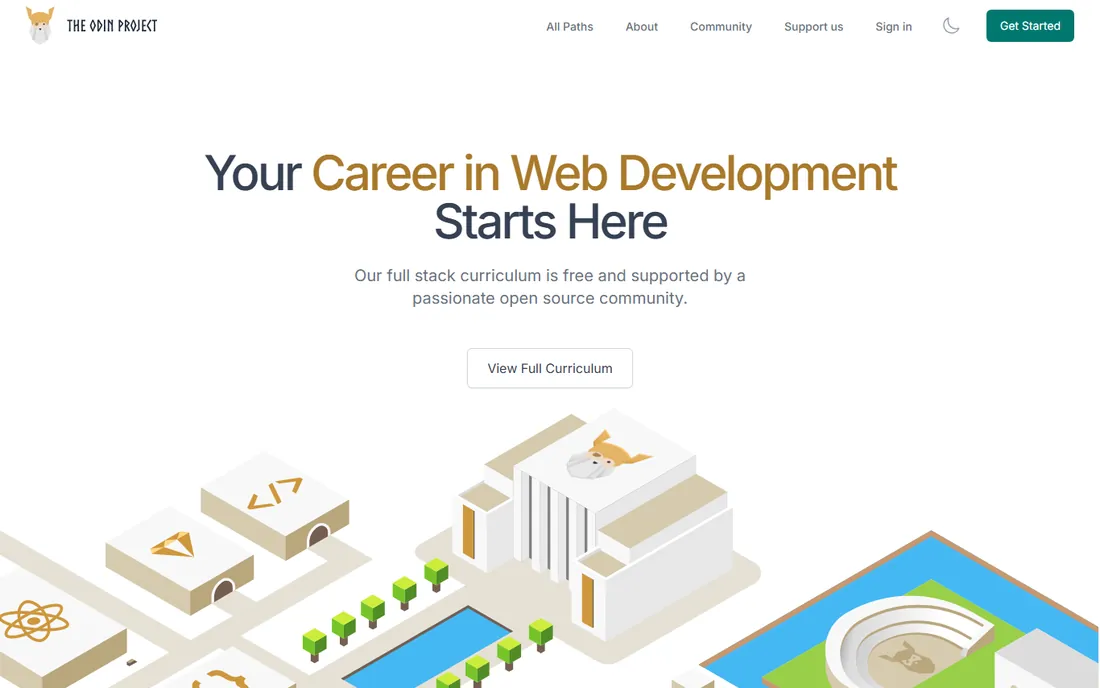
The Odin Project was built by working developers who thought bootcamps left out the practical parts. Its foundations path covers HTML, CSS and JavaScript, then splits into Ruby on Rails or Node.js tracks. Along the way it forces you to use Git, GitHub, the command line and Linux or WSL, which is exactly the tooling real jobs require.
This is the free choice for anyone aiming at web development employment. The trade-off is difficulty. It is famously unpolished on purpose: you will spend time on Stack Overflow and Discord. Beginners who want a gentle on-ramp often start with freeCodeCamp and move to The Odin Project once they can code without hand-holding.
What we like- Opinionated full-stack path with real projects
- Strong active community and code review culture
- Teaches tooling like Git and Linux alongside code
Watch out for- Strictly web development, no data science or mobile
- Expects you to read docs and troubleshoot on your own
Starting priceSee website
Free planYes
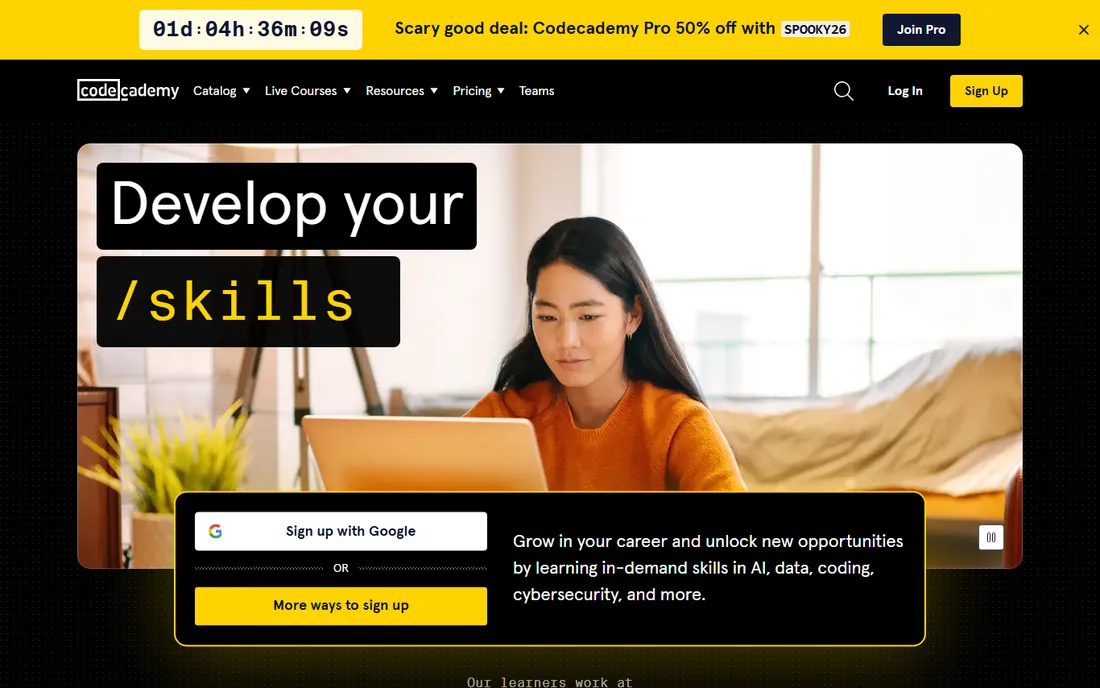
Codecademy made interactive learning normal. You type code in the browser, get immediate feedback, and move to the next bite-sized lesson. Its catalog spans Python, JavaScript, Java, SQL, Go and career paths like data science and full-stack engineering. For someone deciding whether coding is for them, ten minutes on Codecademy answers the question.
The honest catch is the paywall. The free Basic plan covers introductory courses, but career paths, projects and interview prep need Plus or Pro. Codecademy is an excellent front door and a weak back door: plan to graduate to project work on freeCodeCamp or The Odin Project once you finish the basics.
What we like- Built-in editor means zero setup
- Short lessons with instant feedback
- Wide catalog of languages and skill paths
Watch out for- Free tier covers only basics, real depth is behind Plus or Pro
- Exercises can feel shallow compared to full projects
Starting priceSee website
Free planYes
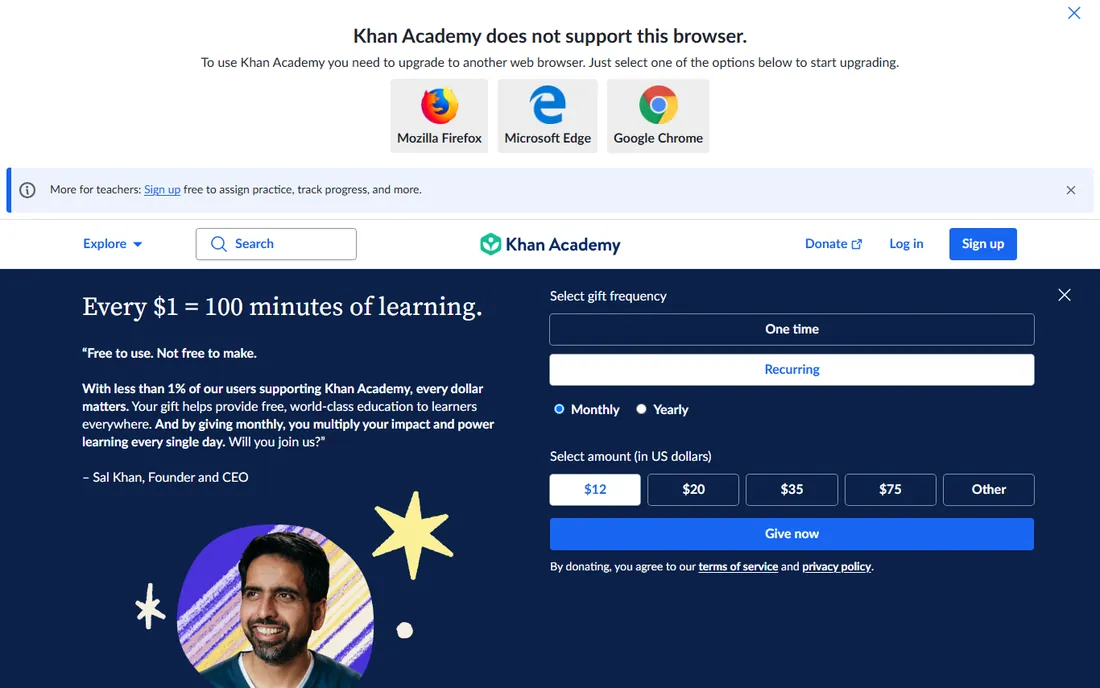
Khan Academy teaches computing the way it teaches math: patient, visual and free. Its intro to JavaScript and HTML/CSS courses are among the most approachable on the internet, with short videos and a drawing-based playground that makes coding feel like play. If you have never written a line of code, this is the least intimidating start.
Think of it as the on-ramp, not the highway. The computing catalog stops well before job-ready material, and certificates do not exist. Use it for your first two weeks, then move to a deeper platform once syntax no longer scares you.
What we like- Completely free forever
- Friendly explanations aimed at true beginners
- Good for younger learners and total newcomers
Watch out for- Computing section is thin beyond basics
- Not a path to employment
Starting priceSee website
Free planYes
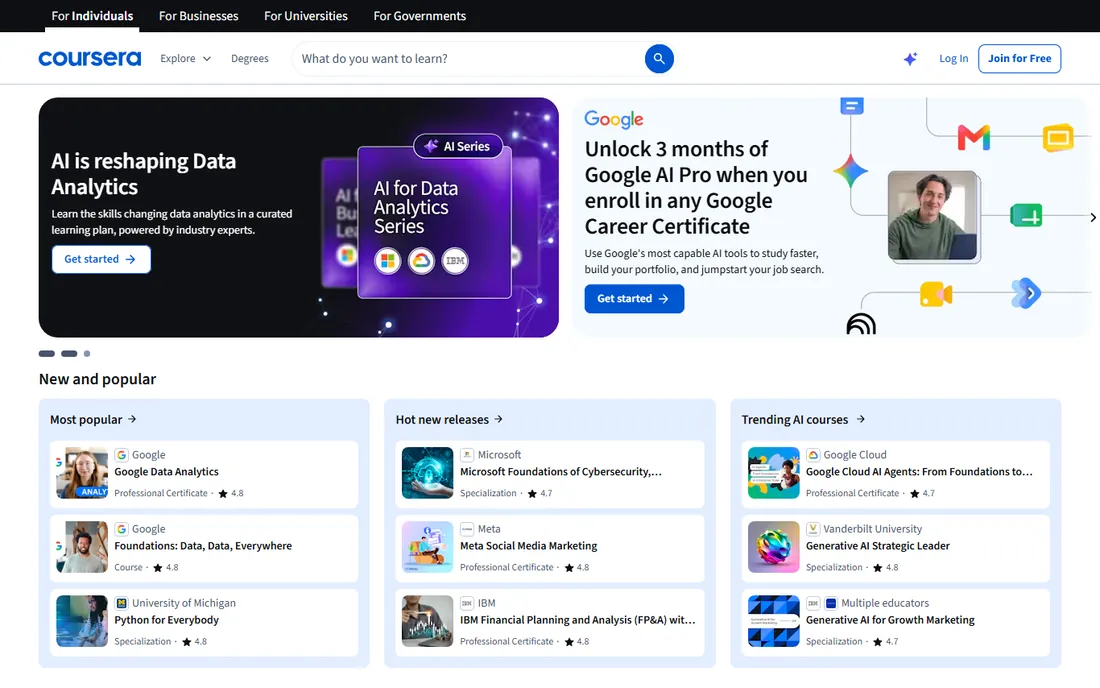
Coursera is where university courses meet mass access. Its programming catalog includes Python for Everybody from the University of Michigan, the Princeton algorithms sequence and Google's own certificates. You can audit most courses free, which means video and readings cost nothing; paying opens up graded assignments and the shareable certificate.
The catch is the subscription model. Coursera Plus bills monthly or yearly, and a slow learner can pay several months for one specialization. It makes sense if the credential matters for your job search or if your employer reimburses it. For pure skill-building, the free alternatives above deliver the same knowledge without the invoice.
What we like- Courses from real universities like Stanford and Michigan
- Certificates recognized by many employers
- Free audit option on most courses
Watch out for- Monthly subscription gets expensive fast
- Course quality varies between partner institutions
Starting priceSee website
Free planYes
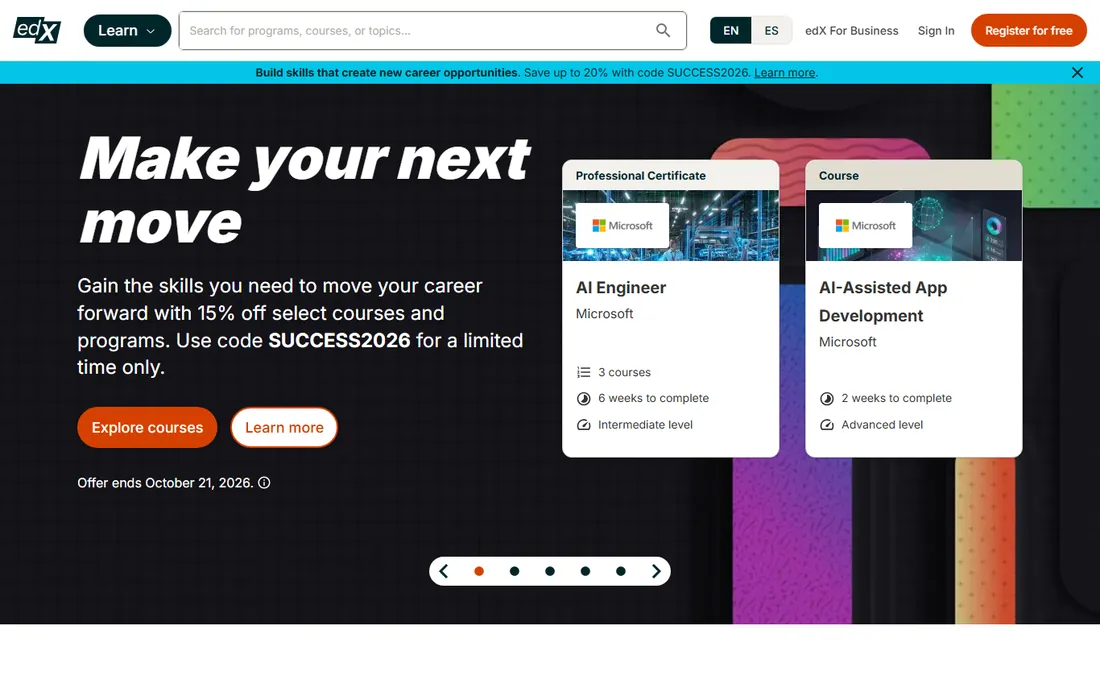
edX is the home of CS50x, Harvard's famous introduction to computer science, which remains one of the best free programming courses ever made. Beyond that, it hosts full professional certificates and MicroMasters programs in data science, software development and computer science from institutions like MIT, Berkeley and IBM.
The platform skews academic. Lectures are long, grading is rigorous and the interface feels like a campus portal rather than a modern app. That is either a feature or a bug depending on your temperament. If you want CS50 and a credible certificate on your LinkedIn profile, edX is the cheapest legitimate route.
What we like- Harvard and MIT courses like CS50 available
- Free audit access to most content
- MicroMasters and professional certificates for career changers
Watch out for- Paid certificates are expensive per course
- Platform UX feels dated compared to competitors
Starting priceSee website
Free planYes
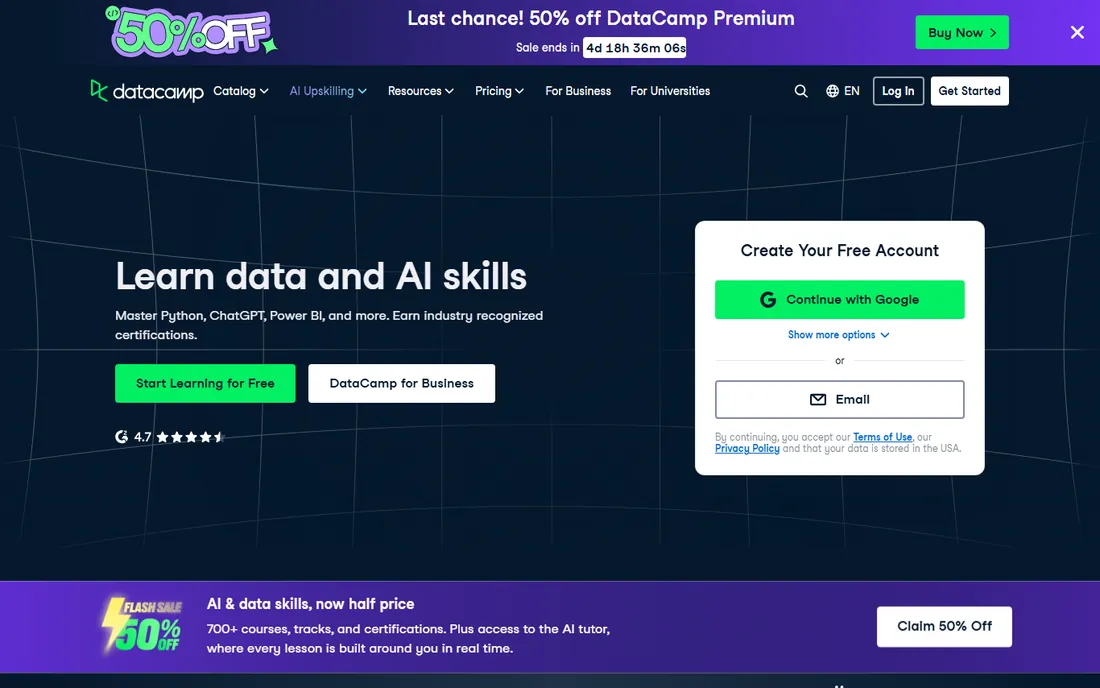
DataCamp does one thing well: getting non-programmers fluent in data skills. Its courses run entirely in the browser, which removes the environment setup that stops many beginners cold. Career tracks bundle dozens of courses into a coherent path, and the workspace feature lets you practice on real datasets.
If your goal is data analytics or data science, this is a better fit than any general platform here. If you want to build websites or apps, look elsewhere. The other weakness is pacing: courses hold your hand tightly, and some learners report struggling when they face a blank file for the first time.
What we like- Browser-based coding with zero setup
- Career tracks for data analyst, data scientist and AI
- Skill assessments and workspaces for practice
Watch out for- Niche focus, not for web or app development
- Exercises can feel repetitive and guided
Starting priceSee website
Free planYes
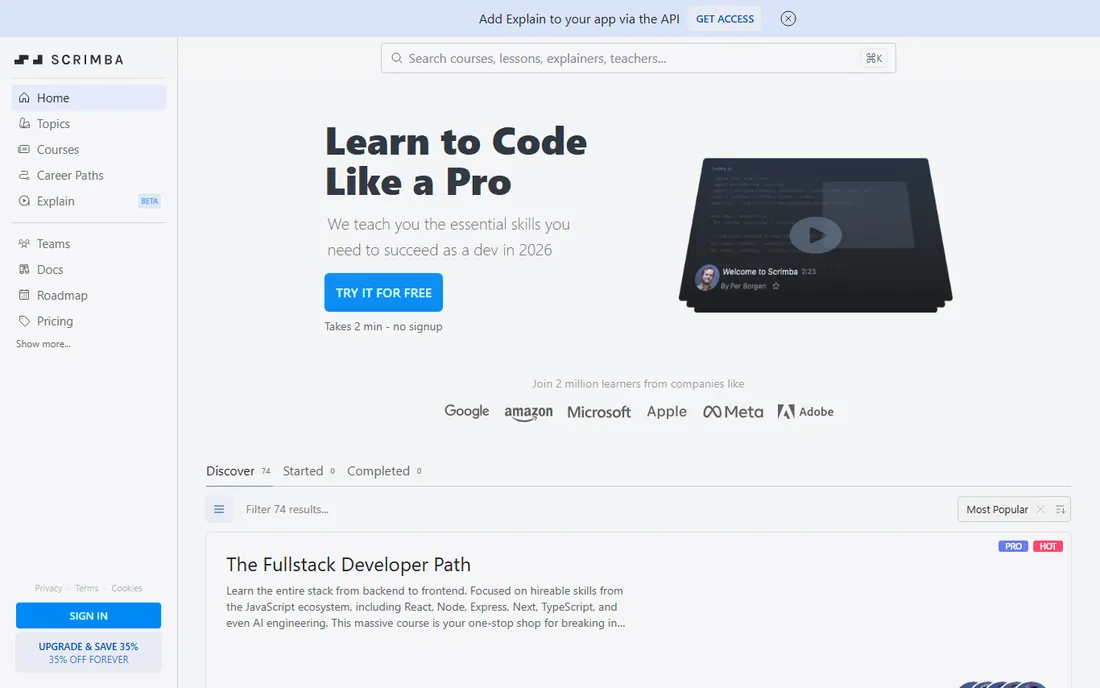
Scrimba's format is genuinely different. Instructors record screencasts where you can pause the video, edit the code in the same window and resume watching. It removes the friction of switching between a tutorial and your editor, which is where many beginners lose momentum.
The platform focuses on front-end web development: HTML, CSS, JavaScript, React, TypeScript. The free tier includes substantial full courses, and the paid plan is modest. The honest limitation is scope. There is no data science, no back-end depth, no mobile. As a front-end specialist school, though, its teaching format is one of the best here.
What we like- Interactive screencasts you can pause and edit
- Strong front-end focus with modern tools
- Generous free courses
Watch out for- Mostly web development, narrow beyond that
- Smaller catalog than the big platforms
Starting priceSee website
Free planNo
Udemy is a marketplace, not a curriculum. Anyone can publish a course, which means the catalog covers everything from Assembly to Zig and the quality ranges from excellent to unwatchable. On sale, which happens almost constantly, most courses cost less than a sandwich, and you keep them forever.
The smart way to use Udemy is as a supplement: you follow a structured path elsewhere and buy one Udemy course when you need a specific skill. Check instructor ratings, review counts and preview videos before buying. As your main platform it fails because nobody tells you what to learn next.
What we like- Massive catalog of niche topics
- Frequent sales make courses very cheap
- Lifetime access to anything you buy
Watch out for- No curated learning path
- Quality varies wildly between instructors
How we chose
We compared platforms on curriculum structure, beginner friendliness, free access, certificate value, community support and price. We read pricing pages, public reviews on G2 and Capterra, Reddit threads in r/learnprogramming, and official documentation and course catalogs. We weighted hands-on coding practice and project work more heavily than certificates, since employers hire for portfolios. We did not run hands-on tests of every platform.
What to actually pay for
Pay for structure, not content. Free platforms teach the same syntax as paid ones; what money buys is a guided path, human support and a credential. Before spending anything, spend two weeks on a free option. If you are still coding daily, you know enough about your goal to choose a paid plan wisely.
A practical sequence: start with Khan Academy or freeCodeCamp for the first month. When you can write a small program without a tutorial, pick a direction. Web development leads to The Odin Project (free) or Codecademy Pro (paid, gentler). Data leads to DataCamp. Credential hunting leads to Coursera or edX with free audit first.
Check two things on any pricing page before you buy: whether the subscription is per month or billed annually, and what happens to your access if you cancel. Some platforms cut off all content; others let you keep completed courses. Also confirm whether a certificate costs extra on top of the subscription, because on some platforms it does.
How certificates and portfolios compare
Certificates help in two situations: getting past HR filters and proving structured learning to non-technical managers. A Coursera or edX certificate with a university name carries more weight than a platform certificate. DataCamp's career tracks sit in the middle, known inside data hiring circles and unknown outside them.
Portfolios beat all of these. Recruiters and hiring managers look at GitHub repositories with finished projects, not completion badges. The platforms that force you to build things, freeCodeCamp's certification projects and The Odin Project's portfolio pieces, produce better job outcomes than the ones that quiz you through videos. Plan your platform choice around what you will build, not what badge you will earn.
Frequently asked questions
How long does it take a beginner to learn coding?
Most people need three to six months of consistent daily practice to become comfortable with one language, and six to twelve months to be job-ready for an entry-level web or data role. Consistency matters more than total hours: twenty minutes a day beats a four-hour weekend binge.
Which programming language should a beginner learn first?
Python and JavaScript are the two best starting points. Python is cleaner to read and dominates data science; JavaScript is the language of the web and lets you see results in a browser immediately. Pick one based on your goal and go deep rather than sampling three.
Is a paid coding platform worth it over free ones?
Only if you need structure, feedback or a credential. Free platforms like freeCodeCamp and The Odin Project teach the same skills. Pay when you know you learn faster with guidance, or when an employer will value the certificate.
Can I get a job with only freeCodeCamp or Coursera certificates?
Certificates help but rarely close a job by themselves. Hiring managers want to see projects you built and code you wrote. Use the platform to learn, then build two or three projects from scratch and put them on GitHub with clear descriptions.
Is Khan Academy enough to become a programmer?
No. Khan Academy is an excellent first step for total beginners, but its computing content stops well before job-ready skills. Plan to move to freeCodeCamp, The Odin Project or a paid platform within your first month.
Which platform is best for kids learning to code?
Khan Academy wins for younger learners: the tone is friendly, the visuals are gentle and everything is free. For older kids and teenagers, Codecademy's interactivity or Scrimba's hands-on format can work better, with a parent nearby to help with setup.
Sources we checked (11)
- https://www.freecodecamp.org
- https://www.theodinproject.com
- https://www.codecademy.com
- https://www.khanacademy.org
- https://www.coursera.org
- https://www.edx.org
- https://www.datacamp.com
- https://www.scrimba.com
- https://www.udemy.com
- https://www.g2.com/categories/online-course-providers
- https://www.reddit.com/r/learnprogramming/
Is your product missing or out of date?
We review this list regularly. Vendors can request a listing, send updated pricing or ask about featured placement.

Shihab Mia · Founder, Rankite
Shihab has spent more than a decade helping SaaS and e-commerce brands grow through search. He writes Rankite's software buying guides from pricing pages, documentation and public user reviews. More about Shihab.