How we make this list: we compare pricing pages, product documentation and public user reviews. Rankite is independent; if a vendor ever pays for a featured spot, that listing is clearly labeled Partner.
Key takeaways
- Comcate is the code-enforcement-first pick: built for the case lifecycle from intake to abatement, with mobile case management and one-click document generation.
- Cities that already run permitting on a big platform should stay put: Accela, Tyler EnerGov and OpenGov cover code enforcement inside broader civic suites.
- Small departments watching the budget: iWorQ and GovWell publish friendlier pricing than the enterprise suites, with iWorQ packages starting around $3,300 per year in public proposals.
- Almost nobody publishes list prices in this category: expect a demo and a quote, and ask whether inspections, notices and the citizen portal are included or add-ons.
Quick comparison
| Tool | Best for | Starting price | Free plan |
|---|
 Comcate Comcate | Code enforcement departments that want software built for their exact workflow | See website (custom quote) | No (demo available) |
 OpenGov OpenGov | Cities and counties standardizing on a single civic platform | See website (custom quote) | No (demo available) |
 Accela Accela | Large agencies that need a deeply configurable end-to-end platform | See website (custom quote) | No (demo available) |
 Tyler EnerGov Tyler EnerGov | Jurisdictions where enforcement cases regularly end up in court | See website (custom quote) | No (demo available) |
 CivicPlus CivicPlus | Cities that want enforcement connected to resident-facing services | See website (custom quote) | No (demo available) |
 Cityworks Cityworks | GIS-driven agencies built on Esri | See website (custom quote) | No (demo available) |
 GovWell GovWell | Small to mid-size cities that want to modernize quickly | See website (custom quote) | No (demo available) |
 iWorQ iWorQ | Small departments that need capable software on a small budget | From ~$3,300/year (per public municipal proposals) | No (demo available) |
Is your product missing or out of date?
We review this list regularly. Vendors can request a listing, send updated pricing or ask about featured placement.
The best code enforcement software
A code officer comes back from the field with a dozen violation photos, three complaint printouts and a voicemail log, then spends the afternoon retyping it all into a spreadsheet that nobody else can see. That is the daily reality in departments still running on paper, and it is why case backlogs grow even when staffing does not shrink. The eight platforms below move the whole case lifecycle, intake, inspection, notice, hearing, abatement, into one system with an audit trail a judge will accept.
#1
Comcate
Best for: Code enforcement departments that want software built for their exact workflow
Visit comcate.com
Starting priceSee website (custom quote)
Free planNo (demo available)
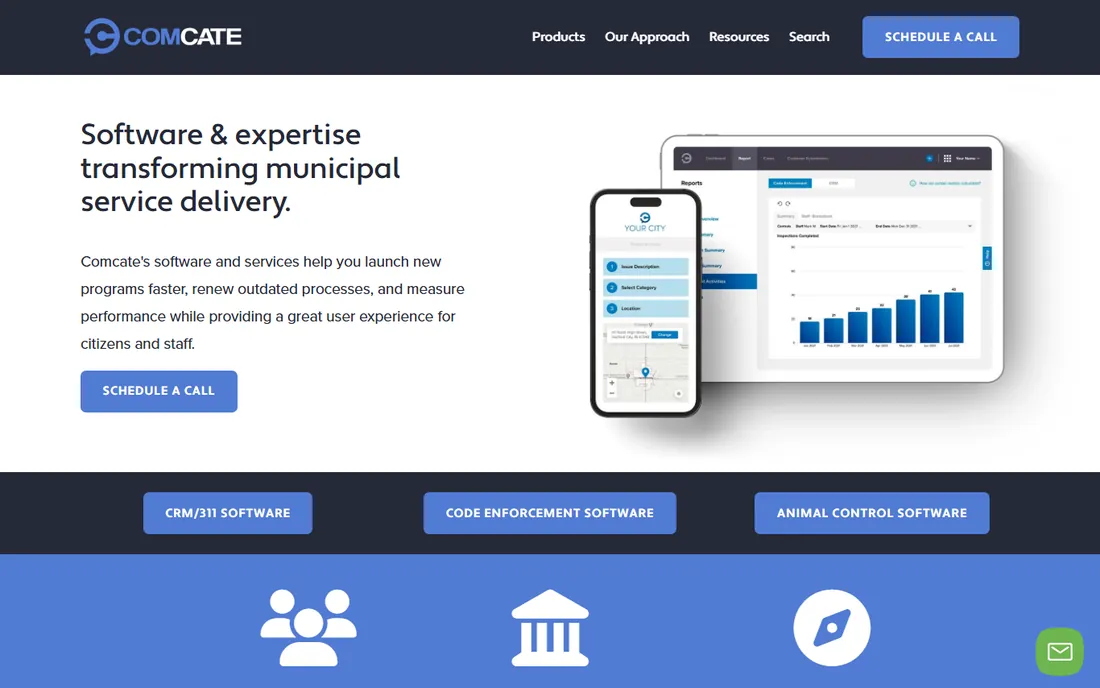
Comcate is the specialist on this list. Where the big civic platforms treat code enforcement as one module among many, Comcate's Code Enforcement Manager was designed around the case lifecycle: intake and inspections, notices, abatements and compliance tracking in one cloud platform. Texas cities including Grand Prairie and Denison moved to it in 2025 after struggling with permitting-first systems. Mobile case management lets officers work cases from the field, and automated follow-up reminders keep cases from going stale.
The trade-off is scale of vendor. Comcate cites 220 agencies and 20 years in business, which is solid but far smaller than Tyler or Accela. There is no public pricing page, so the first step is a 15-minute call and a demo. For a department whose whole job is code enforcement, the fit is usually worth the call.
What we like- Purpose-built for code enforcement rather than adapted from permitting
- Mobile-friendly case management with automated follow-up reminders
- One-click document generation for notices and letters
Watch out for- No published pricing, so budgeting requires a sales conversation
- Smaller vendor footprint than the enterprise suites
#2
OpenGov
Best for: Cities and counties standardizing on a single civic platform
Visit opengov.com
Starting priceSee website (custom quote)
Free planNo (demo available)
OpenGov sells the unified civic platform, and code enforcement rides along with permitting, licensing and asset management. The company says one in three Americans lives in a community powered by OpenGov, with 2,000-plus governments running operations on it. For a city manager, the appeal is consolidation: one vendor, one login, one dataset from complaint to resolution, plus reporting that elected officials can actually read.
The honest catch is that breadth costs focus. Code enforcement inside OpenGov is a configured module, not a standalone product, so the depth you get depends on implementation. Pricing is entirely custom. If your city already runs OpenGov for permitting, adding enforcement is the path of least resistance. If you are buying enforcement alone, the specialists deserve a look first.
What we like- One platform across permitting, licensing, budgeting and code enforcement
- 2,000-plus governments on the platform
- Strong reporting for elected officials
Watch out for- Enterprise sales process with custom quotes
- Code enforcement depth varies by how the suite is configured
#3
Accela
Best for: Large agencies that need a deeply configurable end-to-end platform
Visit accela.com
Starting priceSee website (custom quote)
Free planNo (demo available)
Accela is the heavyweight for complex jurisdictions. With 900-plus agencies and 30 years in govtech, its civic platform covers the full service lifecycle from guided intake through inspection, approval and renewal. Code enforcement benefits from the same workflow engine that handles building permits: automated routing, document management and a complete audit trail. The company reports implementations cutting permit turnaround from weeks to days.
That power comes with project weight. Accela is not something a three-person department deploys in a month; it is an enterprise implementation with an enterprise price tag. For a large city or county with legal, planning and enforcement teams sharing workflows, it earns its keep. For a town of 8,000, it is more platform than you need.
What we like- 900-plus government agencies and deep regulatory workflow experience
- End-to-end from intake to approval on one platform
- In-house implementation team with strong track record
Watch out for- Implementation is a real project, not a quick rollout
- Pricing is enterprise-grade and fully custom
#4
Tyler EnerGov
Best for: Jurisdictions where enforcement cases regularly end up in court
Visit tylertech.com
Starting priceSee website (custom quote)
Free planNo (demo available)

Tyler Technologies' EnerGov is the pick when the legal stakes are highest. Code enforcement cases that reach hearings or court need documentation that holds up: who inspected, when, what was found, what notice was sent, what the response was. EnerGov's audit trail is built for exactly that scrutiny. As part of Tyler's broader public-sector suite, it connects to the company's courts, records and ERP products.
The flip side is enterprise everything: enterprise pricing, enterprise sales cycle, and an interface that feels like enterprise software. Small departments may find it heavy. But if your attorneys are involved in enforcement regularly, the legal-grade record-keeping is the feature that matters most.
What we like- Very strong audit trails built for legal scrutiny
- Part of Tyler's connected-community ecosystem
- Deep experience with complex regulatory environments
Watch out for- Enterprise pricing and longer sales cycles
- Interface reflects its enterprise heritage
#5
CivicPlus
Best for: Cities that want enforcement connected to resident-facing services
Visit civicplus.com
Starting priceSee website (custom quote)
Free planNo (demo available)
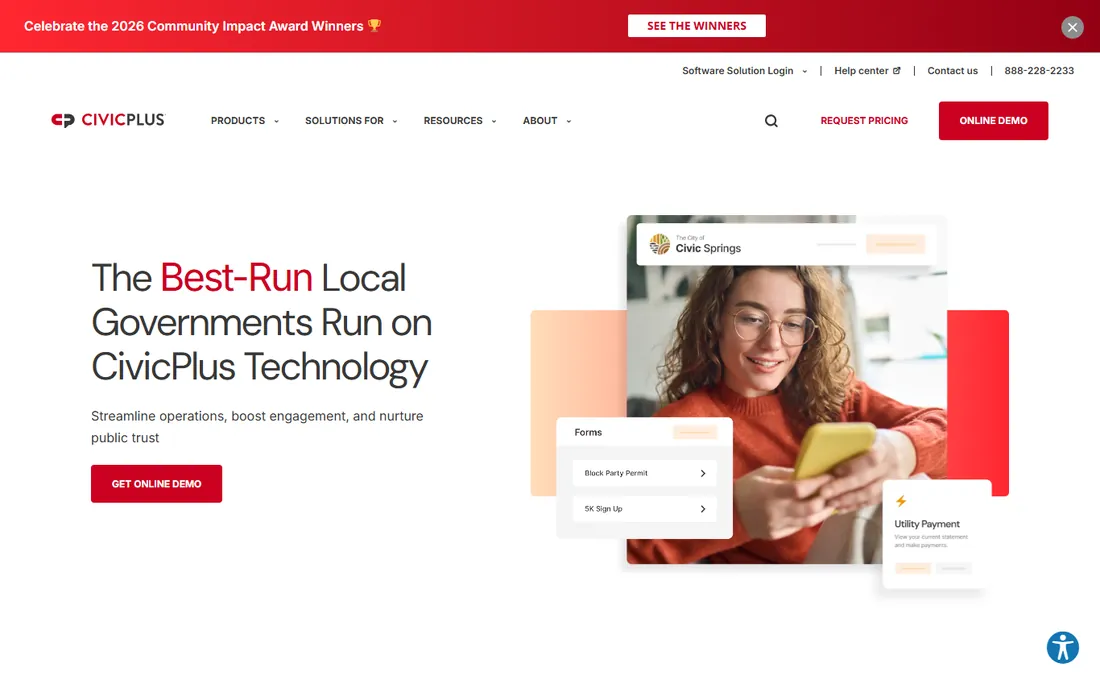
CivicPlus approaches from the resident experience side. Its platform connects websites, agendas, recreation, utility billing and community development, so code enforcement cases can live alongside the resident portal where complaints come in. The Community Development module covers permits, inspections and license renewals with automated reminders, and staff get one login across tools.
For a city already using CivicPlus for its website or agenda management, adding the community development pieces is natural. As a standalone enforcement purchase, evaluate it against the specialists: the breadth is the selling point, and also the reason to check that the enforcement workflows are deep enough for your officers.
What we like- Community Development module ties enforcement to permits and licensing
- Resident portal with single sign-on
- Broad civic product family from websites to recreation
Watch out for- Enforcement is one module in a very broad catalog
- Pricing requires talking to sales
Starting priceSee website (custom quote)
Free planNo (demo available)

Cityworks earned its reputation on GIS: if your agency thinks in maps, its Esri-native approach puts every case, asset and work order on the map. The permitting, licensing and land (PLL) side covers code enforcement workflows with location at the center. Trimble is now consolidating Cityworks into Trimble Unity Maintain, a cloud SaaS platform merging Cityworks, AgileAssets and related products.
That transition is the thing to ask about in a demo. The GIS-centric DNA remains, and the cloud move modernizes deployment, but buyers should confirm the roadmap for the PLL enforcement pieces specifically. For an Esri shop, the map-first workflow is still unmatched.
What we like- Deepest GIS integration in the category, built on Esri ArcGIS
- Strong for agencies that map every case
- Now evolving into Trimble Unity Maintain with cloud SaaS architecture
Watch out for- Product is in transition as Trimble consolidates Cityworks into Unity Maintain
- Permitting/licensing/land focus rather than enforcement-first
Starting priceSee website (custom quote)
Free planNo (demo available)
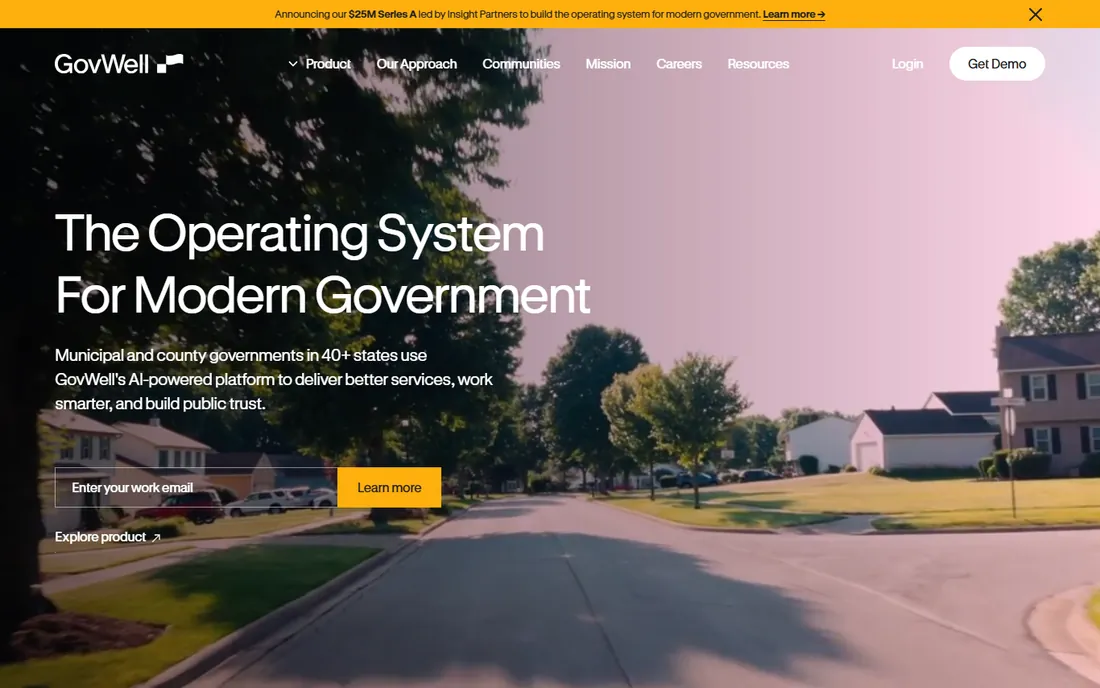
GovWell is the modernizer's pick. Municipalities like Cape Elizabeth, Maine, launched GovWell portals in 2025 letting residents submit code enforcement complaints with photos, track status and pay invoices online. The pitch is speed: a contemporary cloud interface without the enterprise implementation project, plus live support chat for citizens and contractors during business hours.
As a younger vendor, GovWell cannot match the installed base of Tyler or Accela, which matters for risk-averse councils. But for a small to mid-size city moving off paper, the combination of a real citizen portal and fast deployment is compelling. Ask for reference customers near your population size.
What we like- Modern cloud interface designed for speed of deployment
- Citizen portal for complaints with photo upload and status tracking
- Live chat support for residents and contractors
Watch out for- Younger vendor with a smaller customer base than the incumbents
- Pricing not published
#8
iWorQ
Best for: Small departments that need capable software on a small budget
Visit iworq.com
Starting priceFrom ~$3,300/year (per public municipal proposals)
Free planNo (demo available)
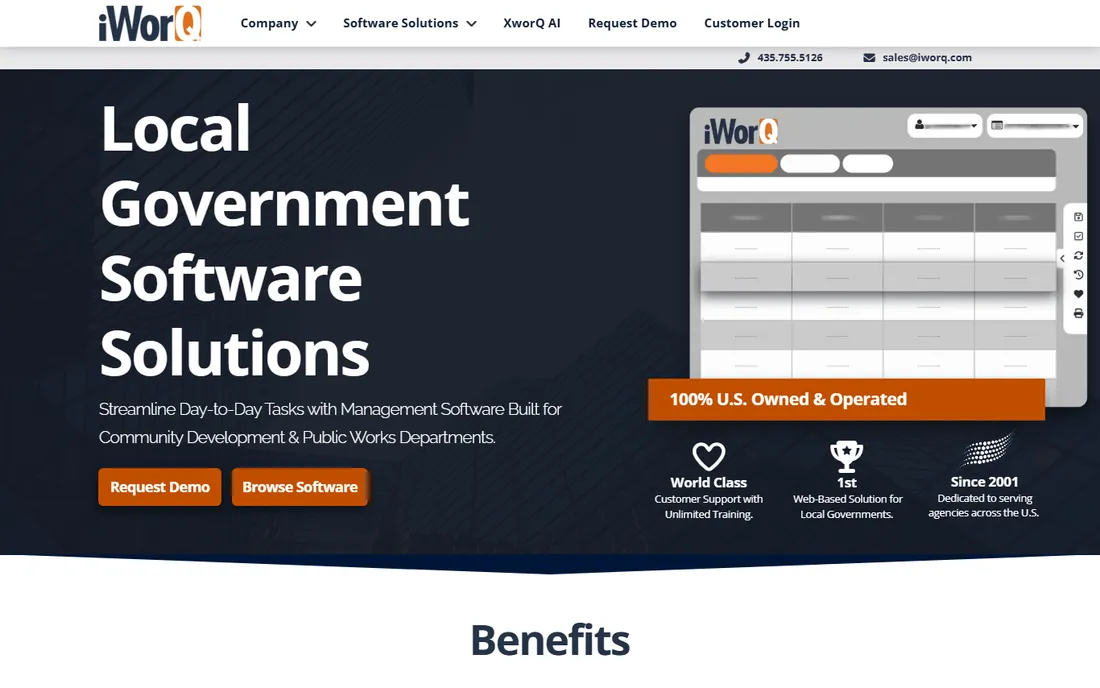
iWorQ is the budget-friendly workhorse. Public municipal proposals show Community Development packages (permit management plus code enforcement) around $3,300 to $9,500 per year depending on size, with free support and training Monday through Friday. That is a fraction of enterprise suite pricing, and the feature set covers the essentials: case tracking, inspections, letter generation, photo management and GIS map integration.
The trade-offs are polish and depth. This is practical software, not a showcase platform, and power users will notice the gap next to Accela or Tyler. For a small department that needs to get off spreadsheets this fiscal year without a six-figure project, iWorQ is the pragmatic choice.
What we like- Genuinely affordable annual pricing visible in public proposals
- Free customer support and training for authorized users
- GIS map integration included
Watch out for- Interface and feature depth trail the enterprise suites
- Chrome-browser focus for the application
Most "code enforcement software" on the market is actually permitting software with an enforcement tab. The difference shows up in daily work. Enforcement-first tools like Comcate model the case as the central object: complaint intake, officer assignment, inspection scheduling, violation documentation, notice generation, reinspection, hearing prep and abatement, each with its own workflow and deadlines. Permitting-first platforms model the permit as central and bolt enforcement on.
Ask vendors to demo a full violation lifecycle, not just the dashboard. Can an officer create a case from a photo in the field? Does the system auto-generate the correct notice letter with the right ordinance citation? Are reinspection reminders automatic? Does the audit trail show every touch in chronological order? The vendors that answer yes without customization are the enforcement-first ones.
Pricing reality in government software
Almost nobody in this category publishes prices, and that is not an accident: pricing depends on population, module count, user seats and implementation scope. Public proposals put iWorQ in the low thousands per year for small towns; the enterprise suites run into six figures annually for larger jurisdictions. GovWell and Comcate sit somewhere between, quoted per deal.
When comparing quotes, normalize what is included. Some vendors charge separately for the citizen portal, mobile inspections, GIS integration and document generation; others bundle them. Ask for the three-year total including implementation, training, data migration and annual uplifts. And check the contract terms: multi-year deals usually discount 10 to 20 percent, but lock you in before you know whether officers actually use the mobile app.
How we chose
We started with the searches municipal buyers actually run: code enforcement software, municipal code enforcement software and code compliance software. For each candidate we checked the vendor's own site for current product status, looked at public municipal proposals and press releases for pricing evidence, and compared feature depth against public reviews on G2, Capterra and practitioner discussion. Where a price could not be verified on the vendor's page we wrote "See website" rather than guessing. Cityworks is included with a note on its transition to Trimble Unity Maintain.
Frequently asked questions
How much does code enforcement software cost?
Small departments pay roughly $3,300 to $10,000 per year for tools like iWorQ, based on public municipal proposals. Mid-size cities using Comcate or GovWell typically pay custom-quoted annual subscriptions. Enterprise platforms from Tyler, Accela and OpenGov run into six figures per year for larger jurisdictions, usually including implementation.
Can code enforcement software handle the legal side of cases?
The better platforms generate the full audit trail: inspection records, photos, notices sent, responses received and hearing documentation in chronological order. Tyler EnerGov is the strongest here. Whatever you buy, confirm the system exports a complete case file your attorney can take to a hearing.
Do officers really use the mobile features?
Only if the mobile app works offline or in low signal, which is the first thing to test in a demo. Comcate, Accela and GovWell all offer mobile case management. Ask for a trial with two officers for two weeks before signing; adoption problems show up fast.
What is the difference between code enforcement and permitting software?
Permitting software manages applications: someone applies, staff review, a permit issues. Code enforcement manages violations: a complaint or inspection starts a case that moves through notices, hearings and abatement. Many vendors sell both, but the workflow centers differ, so buy the one built around your primary job.
How long does implementation take?
Cloud tools like GovWell, Comcate and iWorQ typically go live in weeks to a few months. Enterprise platforms like Accela and Tyler EnerGov are multi-month projects with data migration and configuration. Ask every vendor for a go-live timeline tied to a reference customer your size.
Sources we checked (9)
- https://comcate.com
- https://opengov.com
- https://accela.com/
- https://www.tylertech.com
- https://civicplus.com
- https://cityworks.com/
- https://www.govwelltech.com
- https://www.iworq.com
- https://www.pcstacks.com/4-code-enforcement-software-tools-that-reduce-violations-and-paperwork/
Is your product missing or out of date?
We review this list regularly. Vendors can request a listing, send updated pricing or ask about featured placement.

Shihab Mia · Founder, Rankite
Shihab has spent more than a decade helping SaaS and e-commerce brands grow through search. He writes Rankite's software buying guides from pricing pages, documentation and public user reviews. More about Shihab.