How we make this list: we compare pricing pages, product documentation and public user reviews. Rankite is independent; if a vendor ever pays for a featured spot, that listing is clearly labeled Partner.
Key takeaways
- Shopify is the default pick for most SMBs: Basic at $29 a month (billed annually), a proven checkout, and 21,000+ apps.
- BigCommerce starts at $39 a month and gives more built-in features per tier, with no extra transaction fees on its own payment rails.
- WooCommerce and PrestaShop are free, open-source platforms; you pay for hosting, themes, and extensions instead of subscriptions.
- Wix and Squarespace combine websites and ecommerce in one builder, starting at $29 and $19 a month (billed annually) respectively.
- Adobe Commerce is quote-based and built for large, complex catalogs; expect a significant annual license plus implementation costs.
- Match the platform to your technical resources: hosted SaaS if you have no developers, open source if you do.
Quick comparison
| Tool | Best for | Starting price | Free plan |
|---|
 Shopify Shopify | SMBs wanting the safest all-in-one bet | $29/month (Basic, billed annually) | Free trial (3-day trial plus $1/month for 3 months on select plans) |
 BigCommerce BigCommerce | Growing stores wanting features built in | $39/month (Core) | Free trial (15 days, no credit card) |
 WooCommerce WooCommerce | WordPress users wanting full control | Free (open-source plugin; hosting and extensions extra) | Yes (the core plugin is free forever) |
 Adobe Commerce Adobe Commerce | Enterprises with complex catalogs | See website (custom quote based on GMV) | No (sales demo available) |
 Wix Wix | Small shops that need site + store in one | $29/month (Core, billed annually) | Yes (free site builder plan; ecommerce needs a Premium plan) |
 Squarespace Squarespace | Design-led brands with small catalogs | $19/month (Basic, billed annually) | Free trial (14 days, no credit card) |
 PrestaShop PrestaShop | Open-source fans avoiding subscriptions | Free (open-source download; hosting, themes, modules extra) | Yes (the software is free forever) |
Is your product missing or out of date?
We review this list regularly. Vendors can request a listing, send updated pricing or ask about featured placement.
The best CMS software for ecommerce
Starting price$29/month (Basic, billed annually)
Free planFree trial (3-day trial plus $1/month for 3 months on select plans)

Shopify powers millions of businesses worldwide and remains the most recommended starting point for a reason. The platform handles hosting, security, payments, and updates, so you focus on products and marketing. The checkout is genuinely its crown jewel: Shopify cites a Big Three consulting study showing up to 15 percent higher conversion than other platforms, and Shop Pay's one-tap flow has real data behind it.
Basic at $29 a month (billed annually) includes unlimited products, the full online store, blog, and discount engine. The honest catch is the fee structure: use a payment provider other than Shopify Payments and Basic takes 2 percent per transaction, on top of your processor's cut. Paid apps and premium themes can push the real monthly cost well past the sticker price. For most small and mid-size US sellers, though, nothing else is this battle-tested.
What we like- Checkout converts up to 15% better than average per Shopify's own research
- 21,000+ apps in the app store
- Unlimited products and bandwidth on every plan
Watch out for- 2% third-party transaction fee on Basic
- Customization needs Liquid coding
- Real costs pile up with paid apps and themes
Starting price$39/month (Core)
Free planFree trial (15 days, no credit card)
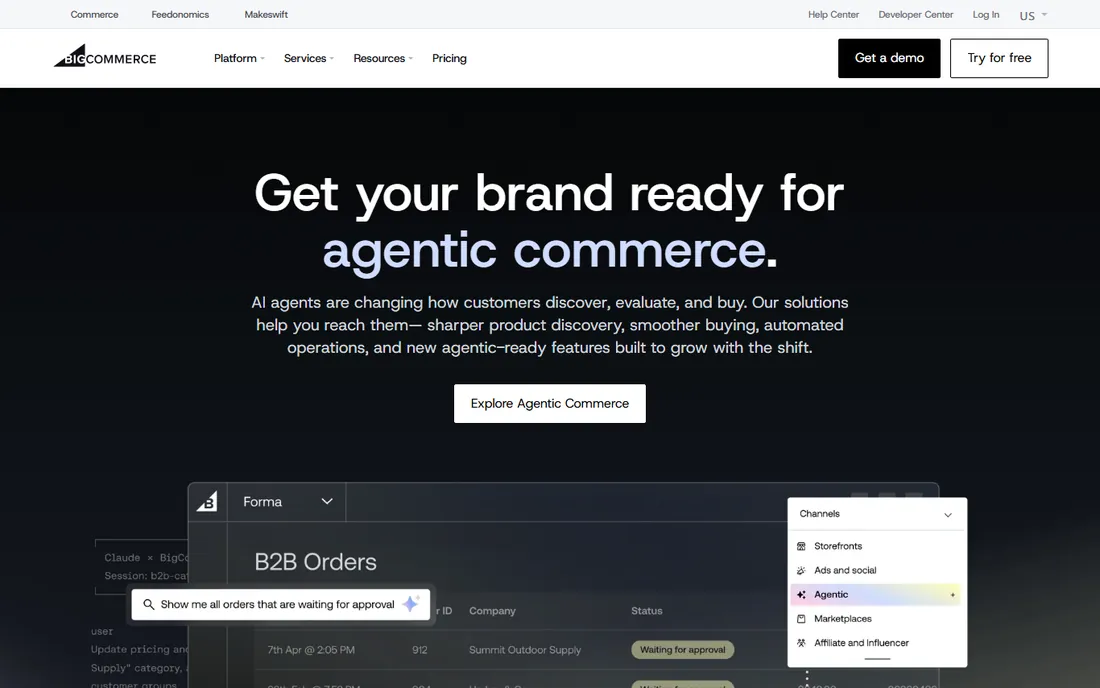
BigCommerce positions itself as the open SaaS alternative: hosted and simple, but with the API access developers need. Where Shopify reserves features for apps, BigCommerce ships them natively: abandoned cart saver, professional reporting, customer groups, and product reviews are built in from early tiers. A notable pricing difference is the absence of added transaction fees; you keep more margin on every order regardless of gateway.
Core starts at $39 a month, Growth at $105, and Scale at $399 (or $299 billed annually). The honest catch is the GMV-based plan structure: exceed your tier's annual sales threshold and the platform bumps you to the next plan automatically. Stores with spiky growth should model that cost. For B2B sellers and merchants that dislike Shopify's app dependency, BigCommerce is the strongest head-to-head rival.
What we like- No added transaction fees on any plan
- Stronger out-of-the-box feature set than Shopify
- Open API and multi-storefront support on every tier
Watch out for- Plans auto-upgrade as GMV grows
- Theme selection is smaller than Shopify's
- Onboarding asks more of beginners
Starting priceFree (open-source plugin; hosting and extensions extra)
Free planYes (the core plugin is free forever)
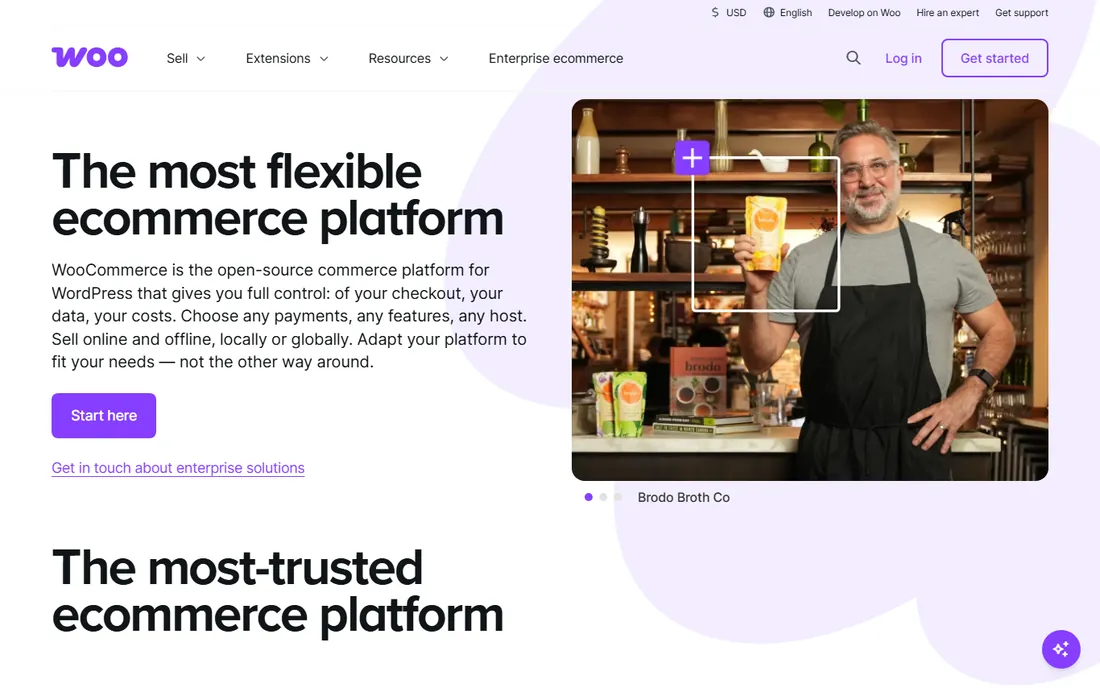
WooCommerce is the open-source commerce plugin for WordPress, and its homepage states it powers more than 4 million online stores. Because it is open source, there are no subscription tiers, no revenue thresholds, and no platform transaction fees. You choose your host, your payment gateways, and your extensions, and you own everything including your customer data.
The free plugin covers products, checkout, coupons, and shipping. The honest catch is operational: you are the platform team. Hosting quality decides your speed and uptime, updates and backups are your job, and a well-extended store can easily cost $300 to $1,000 a year in extensions. For content-driven businesses already on WordPress, WooCommerce is usually the right answer. For non-technical teams, the maintenance burden is real.
What we like- Free core with no revenue caps or transaction fees
- Total ownership of your data and code
- 4 million+ stores and a massive extension marketplace
Watch out for- You manage hosting, security, backups, and updates
- Extension costs add up
- Performance depends entirely on your hosting and configuration
Starting priceSee website (custom quote based on GMV)
Free planNo (sales demo available)
Adobe Commerce (the former Magento Commerce) is the heavyweight on this list. It runs B2B and B2C from one platform, supports multiple brands and regions from a single admin, and auto-scales through flash sales. The AI merchandising layer includes semantic search and 13 recommendation types, and the platform is PCI Level 1 certified with HIPAA-ready cloud options.
Adobe does not publish pricing; quotes are based on annual GMV, with industry sources putting entry licenses around $22,000 a year and cloud editions higher. The honest catch is total cost of ownership: licenses are the start, not the end, and you will need developers or an agency for build and ongoing work. This is not an SMB platform by default; it earns its place for complex catalogs, B2B workflows, and global operations.
What we like- Handles millions of SKUs and multi-brand storefronts natively
- Full B2B suite with quotes, approvals, and custom catalogs
- Deep Adobe Experience Cloud integration
Watch out for- License runs roughly $22,000+/year at entry level per industry estimates
- Requires developers for implementation and maintenance
- Overkill for simple stores
#5
Wix
Best for: Small shops that need site + store in one
Visit wix.com
Starting price$29/month (Core, billed annually)
Free planYes (free site builder plan; ecommerce needs a Premium plan)
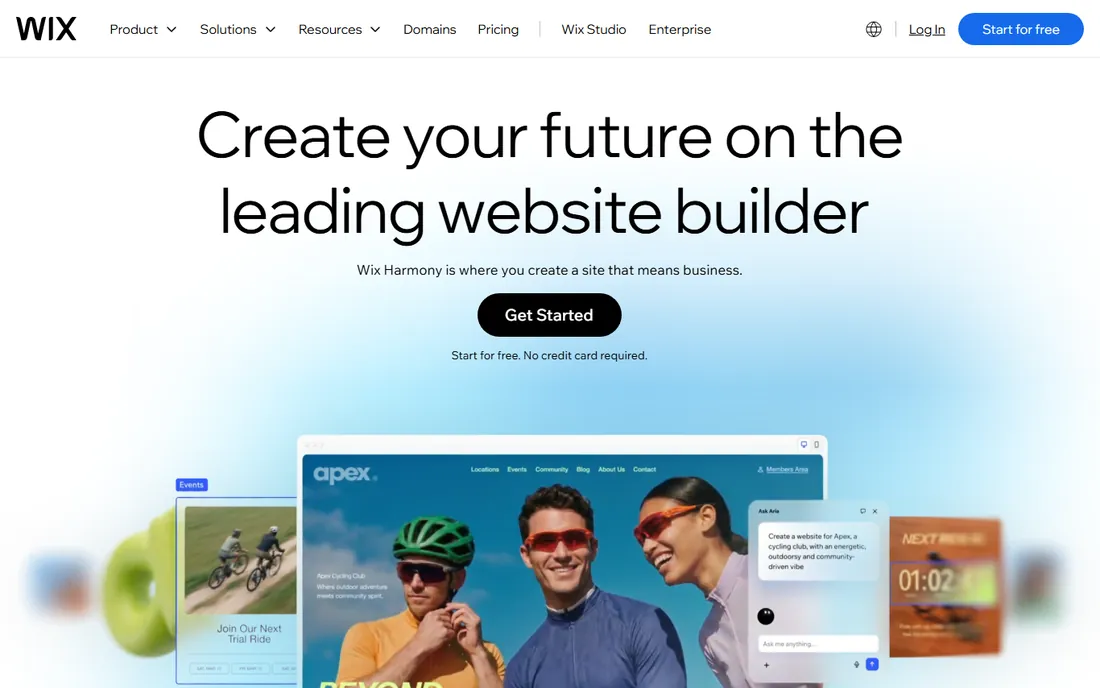
Wix is first a website builder and second a commerce platform, which is exactly what many small businesses need. One dashboard covers the storefront, product catalog, payments, SEO, email marketing, and even bookings and memberships. The drag-and-drop editor gives more design freedom than Shopify or BigCommerce, and the AI store generator can produce a starter shop from a single prompt.
Ecommerce starts on Core at $29 a month (billed annually), with Business at $39 a month adding standard ecommerce features and Business Elite at $159 for advanced ones. The honest catch is scale: a 50,000-product ceiling, transaction limits per month on lower tiers, and weaker multichannel tooling than the dedicated commerce platforms. For small catalogs where the brand site matters as much as the cart, Wix is a strong fit.
What we like- Website, ecommerce, bookings, and marketing in one dashboard
- 2,000+ templates and AI store generation
- Accepts payments on the Core tier and up
Watch out for- 50,000 product cap
- Limited multi-currency and advanced shipping on lower tiers
- Migration off Wix is harder than on open platforms
Starting price$19/month (Basic, billed annually)
Free planFree trial (14 days, no credit card)

Squarespace serves design-first sellers: boutiques, creators, and service businesses where how the site looks is half the selling. Every plan includes hosting, SSL, templates, and a free custom domain for the first year. Commerce tools cover physical products, digital downloads, gift cards, subscriptions, and member areas, with shipping labels and real-time tax on the Core plan and up.
Basic at $19 a month (billed annually) allows selling with a 2 percent transaction fee; Core at $29 drops the fee to 0 percent. The honest catch is the ecosystem: the extensions marketplace is far smaller than Shopify's, and some commerce features (abandoned cart, advanced discounts) sit behind higher tiers. If your catalog is small and aesthetics are the differentiator, Squarespace delivers more polish per dollar than anyone.
What we like- Best-in-class design templates
- Ecommerce, domains, email, and scheduling in one subscription
- 0% platform transaction fee on Core and above
Watch out for- Smaller app ecosystem than Shopify
- Advanced commerce features need the $99 Advanced plan
- Fewer payment and shipping integrations
Starting priceFree (open-source download; hosting, themes, modules extra)
Free planYes (the software is free forever)
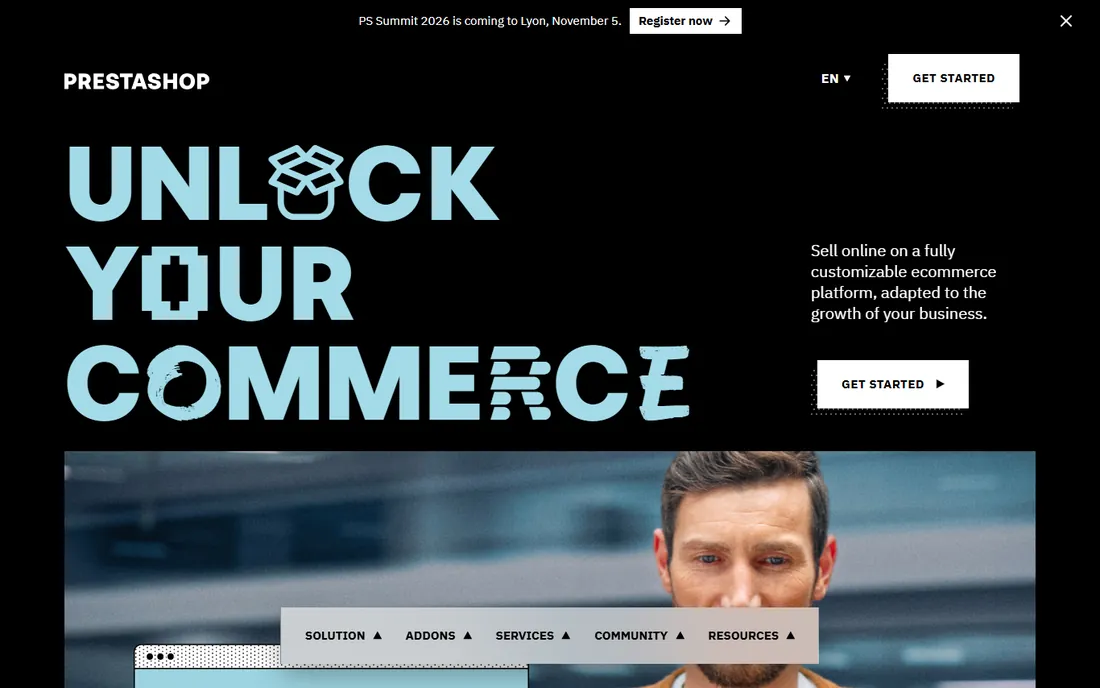
PrestaShop is the European open-source answer to WooCommerce: a free, full-featured ecommerce CMS written in PHP, used by around 300,000 shops in 60 languages. The back office covers catalog management, order processing, promotions, and reporting without a single subscription. Because you host it yourself, there are no revenue tiers and no platform fees.
The honest catch mirrors WooCommerce's: free software, paid ecosystem. Themes and modules cost real money, and you are responsible for hosting performance, security patches, and upgrades. The US support community is thinner than WooCommerce's, though the European one is deep. For merchants who want open-source ownership with a dedicated commerce core rather than a WordPress plugin, PrestaShop is the main alternative.
What we like- No subscription fees ever
- 300,000+ shops and 1 million+ community members
- Strong multilingual and multi-currency support out of the box
Watch out for- Quality modules are paid and costs accumulate
- Smaller US ecosystem than WooCommerce
- You handle hosting, security, and updates
How we chose
We verified each platform's homepage and pricing from the vendor's own site, documentation, and public comparisons on G2, Capterra, and Trustpilot, plus practitioner discussions in ecommerce communities. We required each option to support real catalog, cart, and checkout functionality, weighed total cost of ownership (not just sticker price), scalability, ease of use, and fit for small to mid-size US businesses. No hands-on testing was claimed or performed; pricing reflects vendor-published figures as of October 2026.
What to check before you buy
Commerce platforms look similar in demos and diverge in billing. These checks matter most.
True cost per order
Add the subscription, payment processing, platform transaction fees, and essential paid apps or extensions. A cheap plan with a 2 percent transaction fee often costs more than a pricier plan with zero fees once you have volume.
Who owns the infrastructure
Hosted platforms (Shopify, BigCommerce, Wix, Squarespace, Adobe Commerce Cloud) handle servers, security, and updates. Self-hosted platforms (WooCommerce, PrestaShop) give you control and ownership, but every outage and update is yours to fix.
Content and SEO needs
If your store is also a content brand, the built-in CMS matters. WordPress-backed WooCommerce and design-rich Squarespace and Wix win here; pure commerce platforms bolt blogging on more awkwardly.
Exit costs
Export your products, customers, and orders before you commit. Moving off hosted platforms is the hardest; open-source stores migrate with their database and files.
Hosted SaaS vs. open source: the real tradeoff
This list splits into two philosophies. Hosted platforms charge a subscription and remove the technology burden: no servers, no patches, no 2 a.m. outages. You trade control and a slice of margin for peace of mind. That trade is worth it for most small and mid-size businesses whose core skill is selling, not server administration.
Open source flips the deal: the software is free, you own everything, and no vendor can raise prices or change terms on you. In exchange, you supply the hosting, security, and maintenance, directly or through an agency. The breakeven point is real but later than it looks; once you add managed hosting, premium extensions, and occasional developer help, the savings narrow. Choose open source when control, customization, or data ownership are non-negotiable. Choose SaaS when selling time matters more than server time.
Frequently asked questions
What is CMS software for ecommerce?
It is software that lets you build and manage an online store: product catalogs, shopping carts, checkout, payments, orders, and often the content pages around them. Some are pure commerce platforms (Shopify, BigCommerce), some are website builders with commerce (Wix, Squarespace), and some are open-source systems you host yourself (WooCommerce, PrestaShop).
Which ecommerce CMS is best for a small business?
For most small US businesses, Shopify or BigCommerce. Shopify has the biggest ecosystem and simplest onboarding; BigCommerce includes more features natively and charges no extra transaction fees. If you already run WordPress, WooCommerce is usually the cheapest path.
Is WooCommerce really free?
The core plugin is free and has no revenue limits or platform fees. You still pay for web hosting, a domain, and usually some paid extensions, themes, or developer help. Typical running costs range from a few dollars a month for basic hosting to several hundred a year for a well-equipped store.
How much does Adobe Commerce cost?
Adobe does not publish pricing. Quotes are based on annual GMV, and industry sources estimate entry-level licenses around $22,000 per year, with cloud editions higher. Implementation and ongoing development are additional costs.
Can I migrate from one ecommerce platform to another?
Yes, but difficulty varies. Product and customer data can usually be exported and imported; design, SEO URLs, and custom functionality are the hard parts. Open-source platforms migrate most cleanly because you control the database. Moving off hosted platforms is the most expensive direction.
Do I need a developer to run an online store?
Not for hosted platforms like Shopify, BigCommerce, Wix, or Squarespace; they are built for non-technical owners. WooCommerce and PrestaShop benefit from occasional technical help, and Adobe Commerce effectively requires developers or an agency partner.
Sources we checked (12)
- https://www.shopify.com
- https://www.shopify.com/pricing
- https://www.shopify.com/za/blog/retail-ecommerce-platform
- https://www.bigcommerce.com/
- https://www.bigcommerce.com/pricing/
- https://woocommerce.com
- https://business.adobe.com/products/commerce.html
- https://www.wix.com
- https://wix.com/pricing
- https://www.squarespace.com/
- https://www.squarespace.com/pricing
- https://prestashop.com/
Is your product missing or out of date?
We review this list regularly. Vendors can request a listing, send updated pricing or ask about featured placement.

Shihab Mia · Founder, Rankite
Shihab has spent more than a decade helping SaaS and e-commerce brands grow through search. He writes Rankite's software buying guides from pricing pages, documentation and public user reviews. More about Shihab.