How we make this list: we compare pricing pages, product documentation and public user reviews. Rankite is independent; if a vendor ever pays for a featured spot, that listing is clearly labeled Partner.
Key takeaways
- SciSure (formerly SciShield) is the standard for university and institutional lab safety and chemical tracking.
- ChemInventory at $56 per year is the affordable pick for research groups that need structure search and barcoding.
- Quartzy combines free inventory software with lab supply ordering, which suits R&D labs.
- Regulated labs should prioritize SDS management, compliance reporting and audit trails over price.
Quick comparison
| Tool | Best for | Starting price | Free plan |
|---|
 SciSure SciSure | University and institutional labs | See website | No |
 Quartzy Quartzy | R&D labs that also order supplies | Free | Free plan |
 ChemInventory ChemInventory | Research groups on a budget | $56/year | Free trial |
 EHS Insight EHS Insight | Safety compliance programs | See website | Free trial |
 CDD Vault CDD Vault | Drug discovery teams | See website | Free trial |
 LabCollector LabCollector | Customizable lab management | See website | Free trial |
 SciNote SciNote | ELN with inventory included | See website | Free plan |
 Third Wave Analytics Third Wave Analytics | Regulated lab environments | See website | No |
 CloudLIMS CloudLIMS | Cloud LIMS with chemical tracking | See website | Free trial |
Is your product missing or out of date?
We review this list regularly. Vendors can request a listing, send updated pricing or ask about featured placement.
The best chemical inventory software
Starting priceSee website
Free planNo
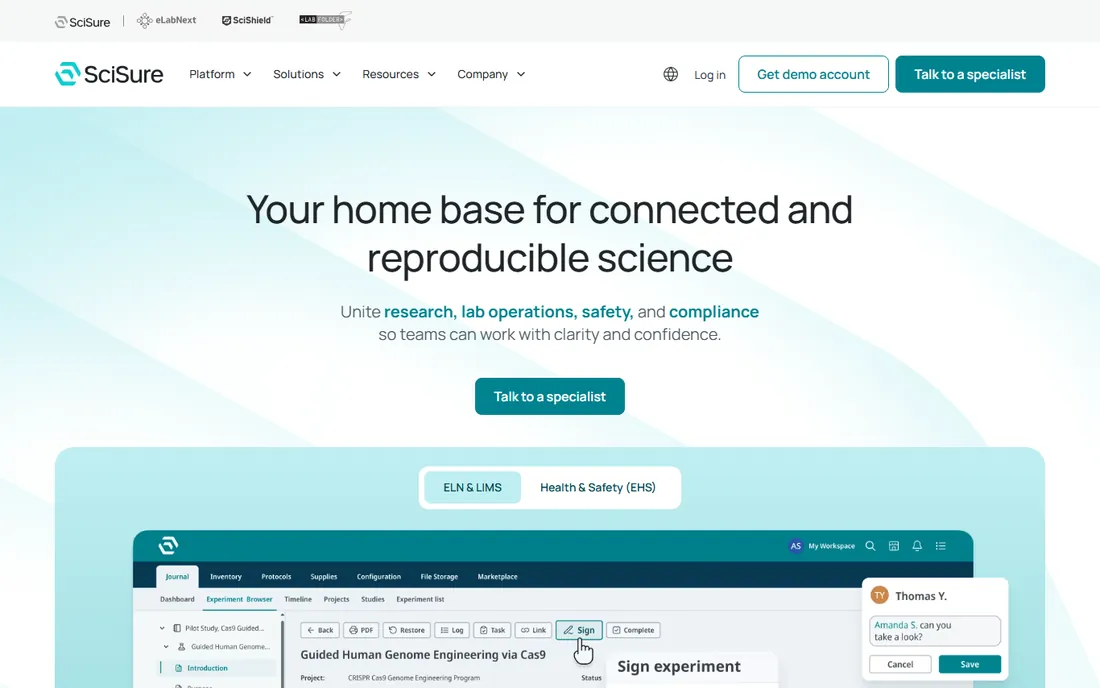
SciSure, formerly known as SciShield (and before that BioRAFT), is the chemical inventory and lab safety platform used across major universities and research institutions. It tracks chemical containers with hazard information, manages safety data sheets, supports regulatory reporting and connects inventory to inspections and training records.
Pricing is quote-based and aimed at institutional buyers. Small independent labs will find it heavyweight. For a university EHS department or a large research organization that needs defensible compliance, SciSure is the established standard. Note the name: longtime users will know it as SciShield or BioRAFT.
What we like- Purpose-built for lab safety compliance
- Chemical inventory with hazard data
- Institutional reporting
Watch out for- Quote-based pricing
- Geared toward institutions, not small labs
Starting priceFree
Free planFree plan
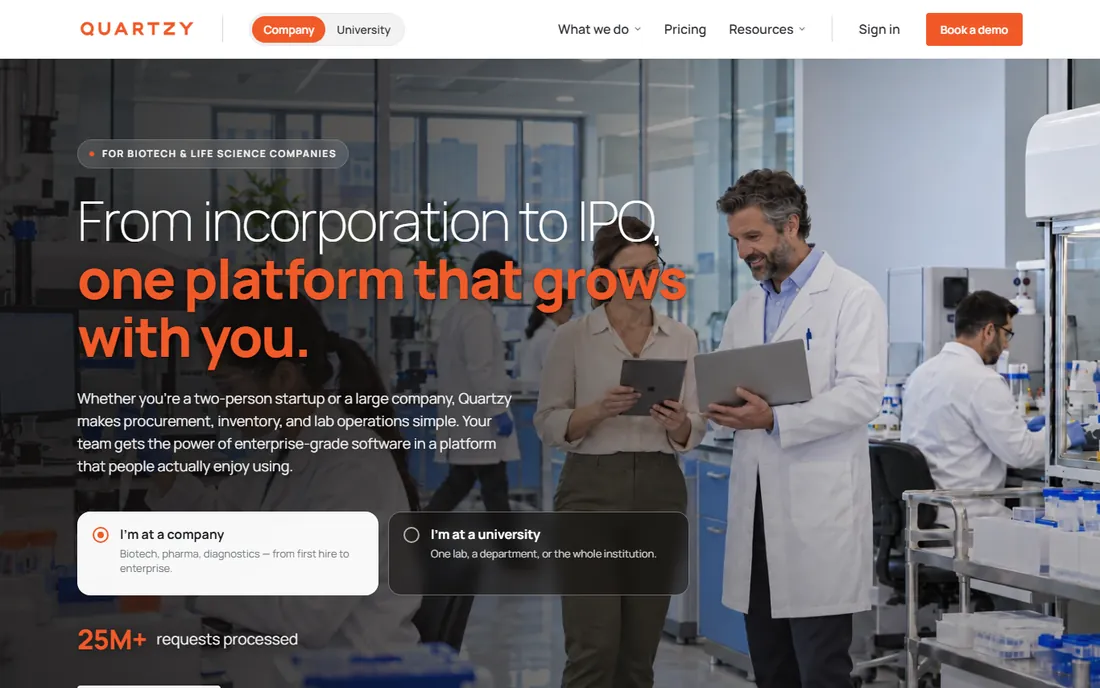
Quartzy takes a different approach: the lab management software is free, and the company earns as a distributor of lab products. Inventory tracking, order requests and approvals live alongside a catalog of 10 million products from over 1,800 brands, so reordering a chemical is two clicks from seeing it run low.
The inventory features are practical rather than exhaustive; regulated compliance workflows are thinner than SciSure or EHS Insight. For R&D labs where ordering friction is the real problem, the free platform plus integrated supply chain is a compelling combination.
What we like- Free inventory platform
- Integrated ordering from 1,800+ brands
- Easy to deploy
Watch out for- Inventory depth is lighter than dedicated systems
- Tied to the Quartzy marketplace
Starting price$56/year
Free planFree trial
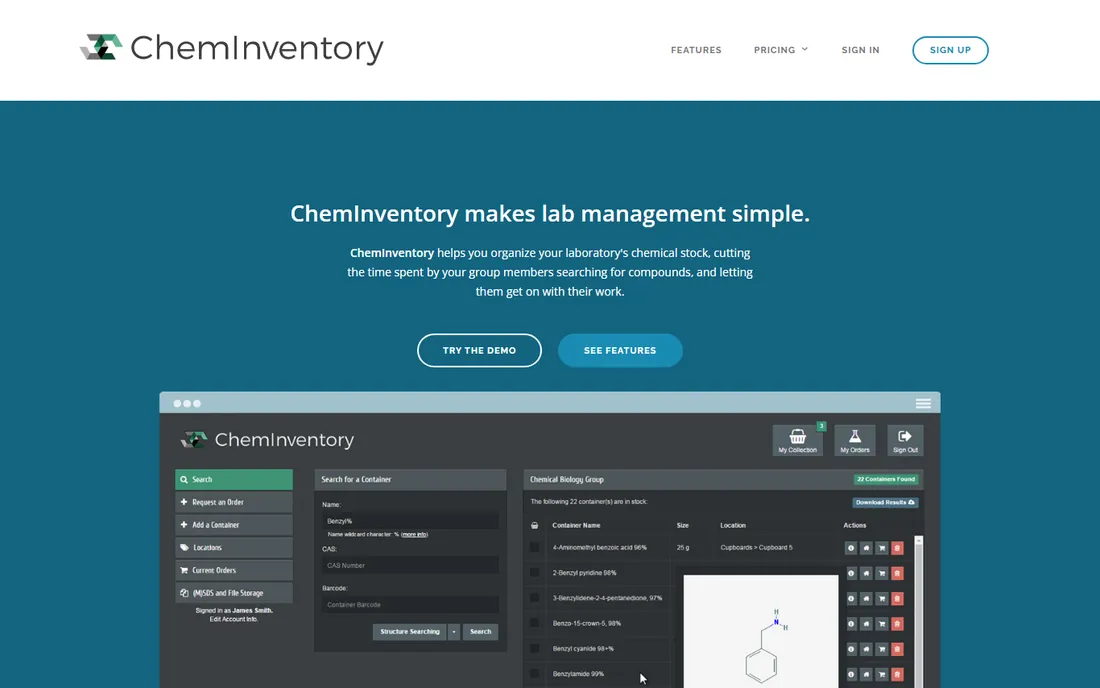
ChemInventory is built for research groups that need to stop losing track of compounds. Search by name, CAS registry number, chemical structure or custom fields, with structures shown alongside results. Unique barcodes per container make stocktaking fast with a scanner. Data is encrypted and backed up daily.
At $56 per year, it is the cheapest serious option here by a wide margin. Compliance reporting and institutional features are limited. For an academic research group or small lab that needs chemical organization without enterprise software, ChemInventory is the value pick.
What we like- Very affordable
- Structure and CAS number search
- Barcode support
- Cloud-based
Watch out for- Smaller vendor
- Fewer compliance features
Starting priceSee website
Free planFree trial
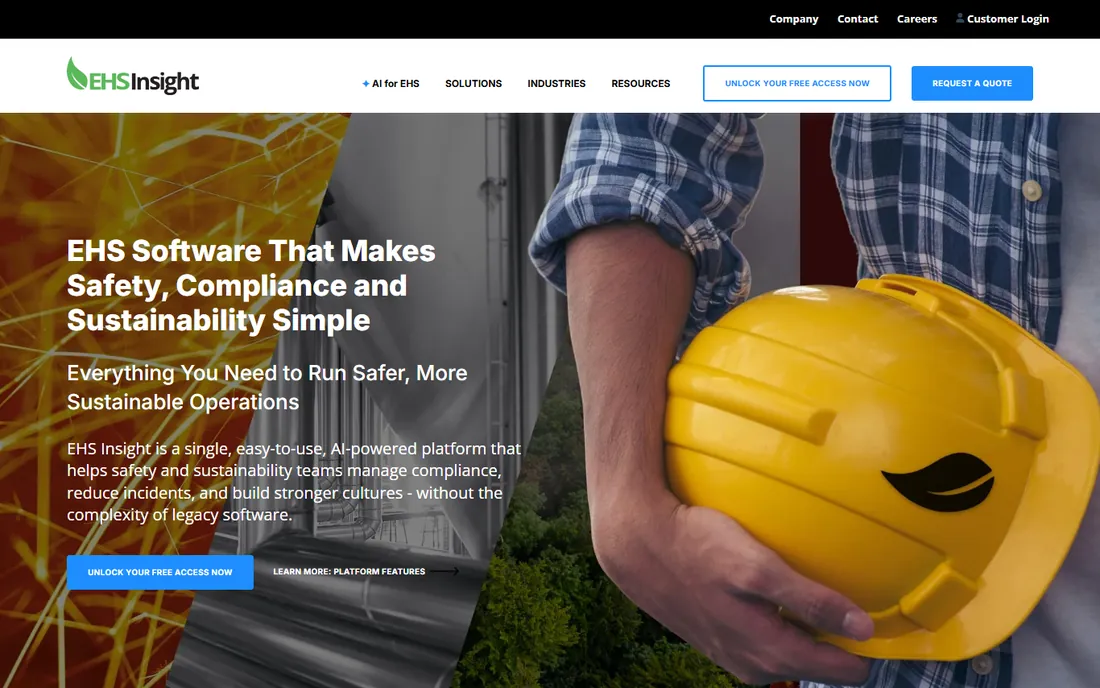
EHS Insight approaches chemical inventory as part of environment, health and safety management. Chemical tracking sits alongside incident reporting, audits, inspections, compliance obligations and corrective actions. For organizations where chemical inventory is one piece of a safety program, that breadth avoids buying separate systems.
It is affordable and easy to set up for the category, with strong support reported. Pure inventory depth is less than SciSure. Choose EHS Insight when the goal is a safety program with chemical tracking included, not just a chemical database.
What we like- Full EHS platform, not just inventory
- Incident and audit management
- Easy to set up
Watch out for- Broader than pure chemical inventory
- Quote-based pricing
Starting priceSee website
Free planFree trial
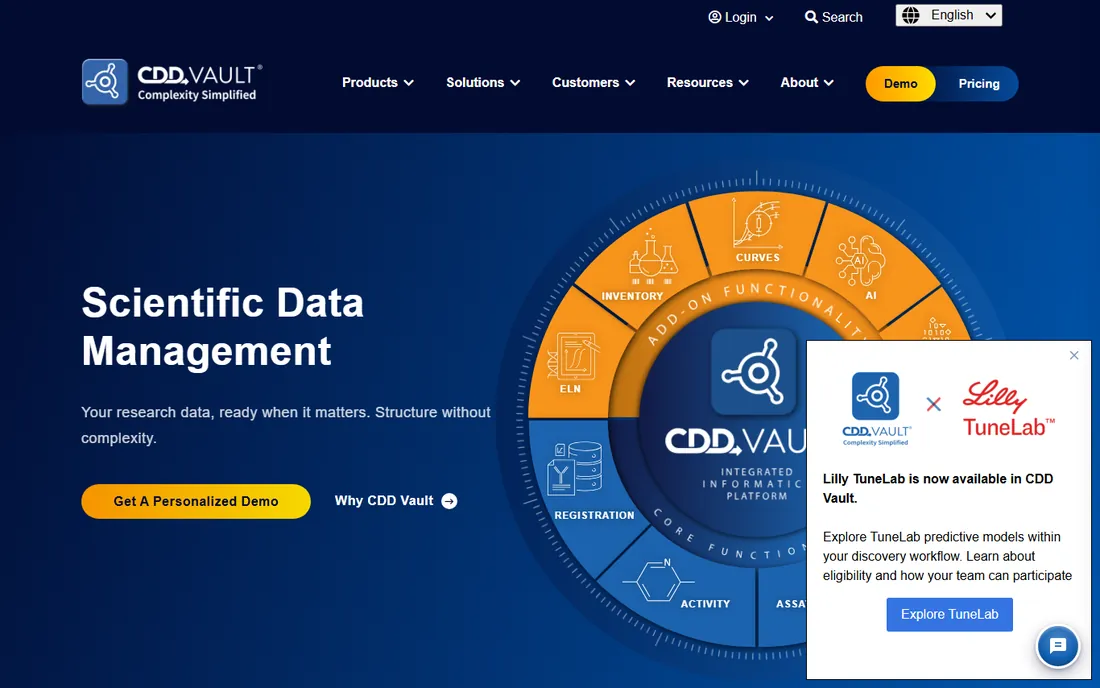
CDD Vault (Collaborative Drug Discovery) manages chemical structures, biological assay data and inventory for drug discovery teams. Registration, structure searching, SAR visualization and an electronic lab notebook come in a web interface designed for medicinal chemists. External collaboration features let partners share data securely.
This is specialized software for pharma and biotech, priced accordingly with quotes. General chemistry labs will find it overspecialized. For drug discovery groups that need chemistry and biology data together, CDD Vault is the purpose-built choice.
What we like- Built for drug discovery data
- Chemical registration and visualization
- Collaboration tools
Watch out for- Specialized for pharma
- Quote-based pricing
Starting priceSee website
Free planFree trial
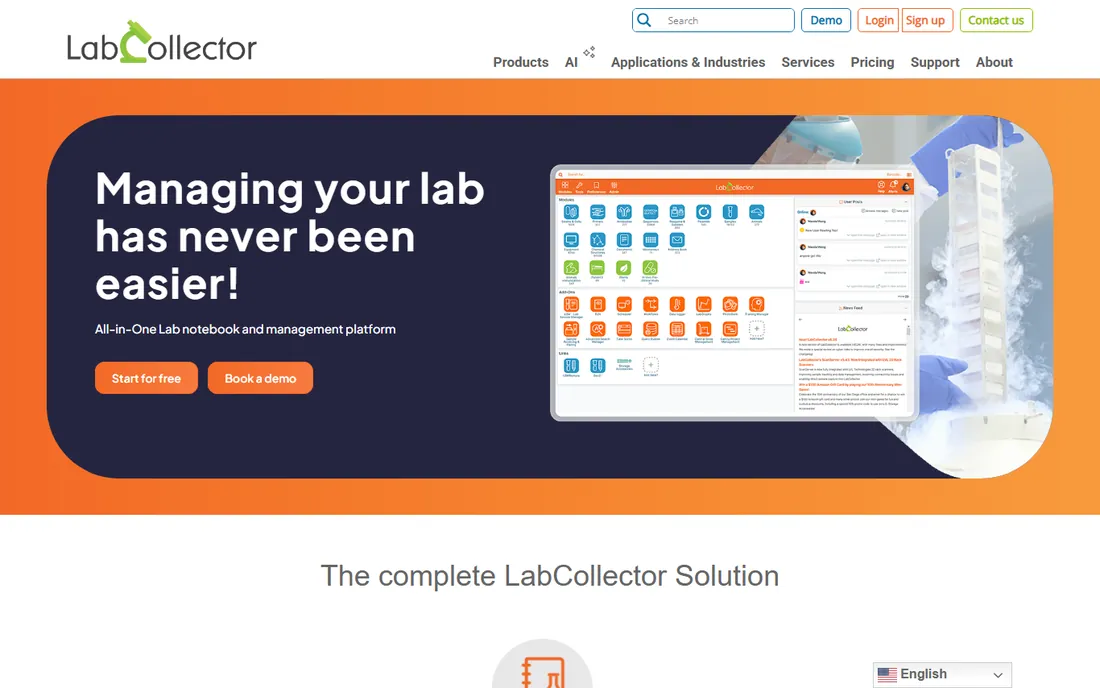
LabCollector is a modular lab information system covering chemical inventory, equipment, samples, ELN and more. The chemical module tracks lots, SDS documents, hazard pictograms and storage locations, with barcode support. Modules can be customized extensively to match lab workflows.
The interface shows its age and configuration takes real effort. Pricing is quote-based. For labs that want one customizable system covering inventory plus equipment and samples, LabCollector's breadth justifies the setup work.
What we like- Highly customizable modules
- Chemical inventory with SDS
- Broad lab coverage
Watch out for- Interface feels dated
- Configuration takes effort
Starting priceSee website
Free planFree plan
SciNote is primarily an electronic lab notebook with inventory management built in. Reagents and chemicals link directly to experiments, so usage tracking happens naturally in the research workflow. The free tier is genuinely useful for small academic teams.
Standalone inventory depth is less than dedicated tools; this is an ELN first. Paid plans add advanced features. For labs that need both experiment documentation and chemical tracking, getting both in one free-to-start platform is efficient.
What we like- Free tier available
- Inventory linked to experiments
- Good for academic labs
Watch out for- Inventory is secondary to the ELN
- Advanced features need paid plans
Starting priceSee website
Free planNo
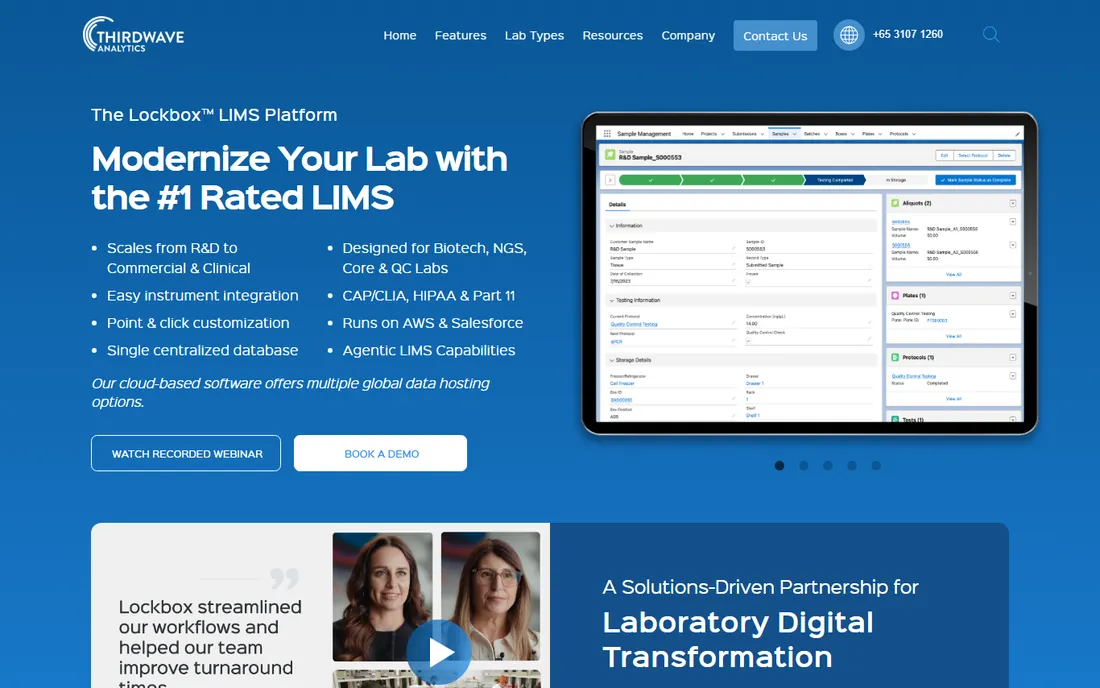
Third Wave Analytics, formerly Lockbox LIMS, builds laboratory software for regulated environments where audit trails and validation are non-negotiable. Chemical and sample tracking come with the compliance infrastructure that FDA-regulated or accredited labs require.
Pricing is quote-based and the product is aimed at organizations with real regulatory burden. Basic research labs will find it oversized. For regulated labs, the validation support and audit capabilities are the point.
What we like- Built for regulated environments
- Strong audit trails
- Validation support
Watch out for- Quote-based
- Overkill for basic inventory needs
Starting priceSee website
Free planFree trial

CloudLIMS offers a cloud-based laboratory information management system with chemical inventory among its modules. Sample tracking, workflows, instrument integration and compliance features come in a configurable SaaS package. It serves both regulated labs and research organizations.
As a full LIMS, it is more than a chemical database; labs that only need inventory may find it broad. Pricing is quote-based. For labs outgrowing spreadsheets that also need sample and workflow management, CloudLIMS covers the growth path.
What we like- Cloud-native LIMS
- Configurable workflows
- Serves regulated and research labs
Watch out for- Quote-based pricing
- LIMS breadth exceeds pure inventory needs
What regulated labs must verify
Safety data sheet management is table stakes: confirm SDS documents attach to inventory records and stay current. Regulatory reporting varies by jurisdiction (EPA, OSHA, fire codes), so ask which reports the system generates natively. Audit trails should record who moved, used or disposed of every container. Barcode or RFID support turns annual inventory from a week of work into a day. Pilot with your actual chemical list, including the odd items, before committing.
Free vs paid in lab software
Free options are real: Quartzy's platform, SciNote's tier and ChemInventory at $56 per year cover many labs. The trade is support, compliance depth and institutional reporting. A university EHS office cannot run on a free tier; a five-person research group often can. Match the software's seriousness to your regulatory exposure, not your aspirations.
Barcode workflows that actually get used
Chemical inventory software lives or dies on barcode workflows. The database can be perfect, but if researchers will not scan containers, the data goes stale within weeks and the system becomes shelfware. The difference between systems that work and systems that gather dust is almost entirely about friction at the bench. The winning pattern is simple: one scan to check out, one scan to check in, zero typing. Every additional step (selecting the project, entering the amount, confirming the location) halves compliance. During evaluation, watch a real researcher perform a checkout in the trial. Count the taps. If it takes more than 15 seconds, keep looking.
Label printing integration is the unglamorous feature that determines success. Containers need scannable labels from day one: receiving prints a label, the label goes on the container immediately, and from then on every movement is a scan. This requires a label printer at receiving (thermal printers work best for chemical resistance), label stock that survives freezers and solvents, and label formats with both barcode and human-readable text. Test the labels in your actual conditions: freezer labels that fall off at minus 80 are useless. The software should generate labels automatically on receiving with no manual data entry. If labeling requires a separate process, it will not happen consistently.
Mobile scanning beats dedicated hardware for most labs. Researchers already carry phones; a good mobile app with camera barcode scanning removes the excuse. Dedicated scanners suit high-volume stockrooms but gather dust at benches. Whatever the hardware, the app must work offline in cold rooms and basements where WiFi dies, syncing when connectivity returns. Test this explicitly. Also verify the barcode formats: Code 128 and QR codes cover most needs, but existing vendor barcodes (Sigma-Aldrich, Fisher) should scan directly into the system. Re-labeling thousands of existing containers is a project killer; the software should read what is already there.
The receiving workflow sets the data quality for everything downstream. When a chemical arrives, the system should capture the vendor, catalog number, lot, quantity, expiration date and SDS link, ideally by scanning the vendor barcode or importing the packing slip. Assign the storage location at receiving, not later. Later never comes. Some labs centralize receiving through one person or a stockroom; others let anyone receive. Centralized receiving produces better data; decentralized receiving produces better compliance. Choose based on your lab's culture, and configure the software's permissions to match. The best system is the one your people will actually use at 5 PM on a Friday.
Audit the inventory quarterly, not annually. Annual audits discover a year's worth of drift and take weeks. Quarterly cycle counts (a different section each quarter) keep the data trustworthy with manageable effort. The software should support cycle counting workflows: generate count lists, record discrepancies, investigate variances. Track the discrepancy rate as your key metric; under 5 percent means the barcode workflow is working, over 15 percent means it is not. And tie the inventory to ordering: when the system knows what you have, it can prevent duplicate orders and flag expiring stock. That ROI conversation with finance gets much easier when the software visibly reduces purchasing waste.
Frequently asked questions
What is chemical inventory software?
Software that tracks the chemicals in a lab: what you have, where it is stored, how much remains, its hazards and its safety documentation. It replaces spreadsheets with barcode tracking, search and compliance reporting.
How much does chemical inventory software cost?
From $56 per year (ChemInventory) to free (Quartzy, SciNote free tier) up to institutional quote-based platforms (SciSure, EHS Insight). Most labs pay either nearly nothing or enterprise rates, with little in between.
Do we need it for OSHA or EPA compliance?
If you store hazardous chemicals, you need accurate inventory records, current SDS documents and often regulatory reports. Dedicated software makes inspections and reporting dramatically easier than spreadsheets, though requirements vary by jurisdiction.
Can it track chemicals across multiple labs?
Yes. Institutional platforms like SciSure are built for multi-lab and multi-building tracking with centralized reporting. Smaller tools handle single labs well; confirm multi-location support if you need it.
What is the difference between chemical inventory and LIMS?
Chemical inventory tracks chemicals specifically. A LIMS (laboratory information management system) is broader, covering samples, tests, instruments and workflows. Some labs need both; CloudLIMS and LabCollector bundle them.
How do barcodes work with chemical inventory?
Each container gets a unique barcode label. Scanning during receiving, use and disposal updates the record automatically. Most tools here support standard barcode scanners; confirm label printing is included.
How we chose
We compared the chemical inventory tools labs actually use, from free research-group tools to institutional compliance platforms. Pricing comes from vendor pages and published comparisons; institutional tools are quote-based. We weighted chemical-specific features (structure search, SDS, hazard data), compliance capabilities and fit for different lab sizes. No hands-on testing was performed; assessments rest on documentation and public reviews.
Sources we checked (11)
- https://www.scisure.com/
- https://www.quartzy.com/
- https://www.cheminventory.net/
- https://www.ehsinsight.com/
- https://www.collaborativedrug.com/
- https://www.labcollector.com/
- https://www.scinote.net/
- https://thirdwaveanalytics.com/
- https://cloudlims.com/
- https://slashdot.org/software/chemical-inventory/saas/
- https://sourceforge.net/software/chemical-inventory/australia/
Is your product missing or out of date?
We review this list regularly. Vendors can request a listing, send updated pricing or ask about featured placement.

Shihab Mia · Founder, Rankite
Shihab has spent more than a decade helping SaaS and e-commerce brands grow through search. He writes Rankite's software buying guides from pricing pages, documentation and public user reviews. More about Shihab.