How we make this list: we compare pricing pages, product documentation and public user reviews. Rankite is independent; if a vendor ever pays for a featured spot, that listing is clearly labeled Partner.
Key takeaways
- Akeneo and Pimcore lead open-source-friendly PIM, with free community editions for technically capable teams.
- Salsify and inRiver suit enterprises syndicating rich product content across retailers and marketplaces.
- Plytix is the most approachable PIM for small and mid-size brands getting organized.
- Catsy, Sales Layer, Pimberly and Bluestone PIM fill mid-market niches with faster implementations.
- Pricing is quote-based almost everywhere, so budget for a demo-led process.
Quick comparison
| Tool | Best for | Starting price | Free plan |
|---|
 Akeneo Akeneo | Open-source-friendly product PIM | See website | Yes |
 Pimcore Pimcore | Open-source data management platform | See website | Yes |
 Plytix Plytix | Approachable PIM for growing brands | See website | Free trial |
 Salsify Salsify | Enterprise product experience | See website | No |
 inRiver inRiver | B2B and manufacturing PIM | See website | No |
 Catsy Catsy | Mid-market product content | See website | No |
 Sales Layer Sales Layer | Fast PIM implementation | See website | No |
 Pimberly Pimberly | UK-born mid-market PIM | See website | No |
 Bluestone PIM Bluestone PIM | Flexible SaaS PIM | See website | No |
Is your product missing or out of date?
We review this list regularly. Vendors can request a listing, send updated pricing or ask about featured placement.
The best catalog management software
Starting priceSee website
Free planYes
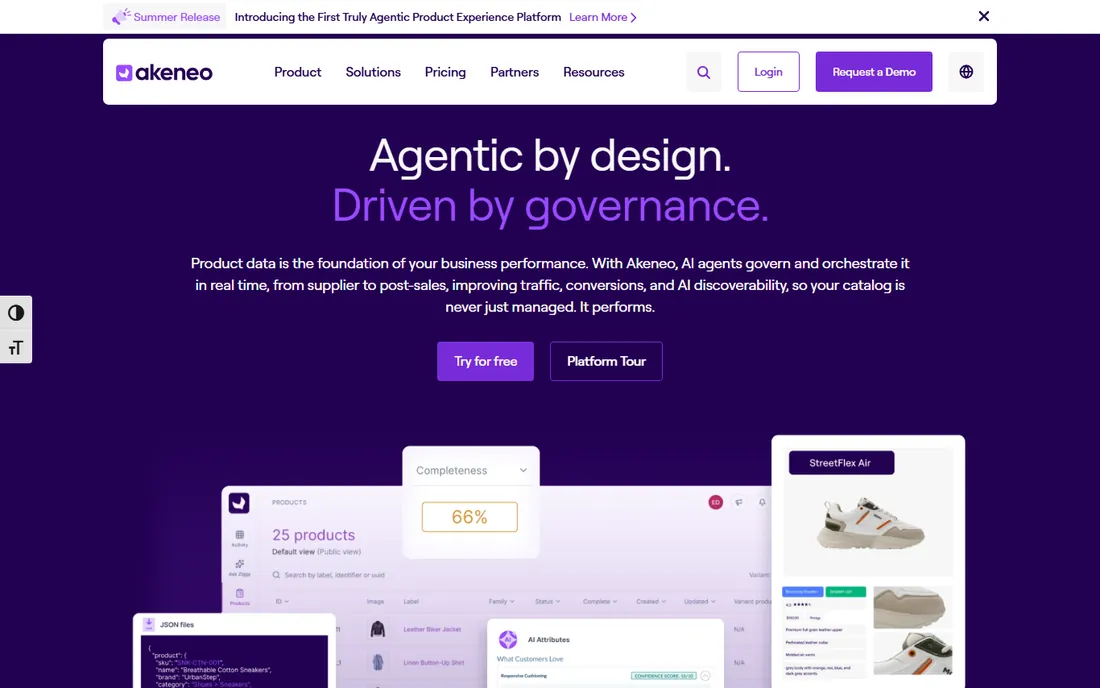
Akeneo is the PIM most ecommerce teams evaluate first. The Community Edition is free and open source, which lets technically capable teams run real product information management without licensing costs. Paid Growth and Enterprise editions add hosted SaaS, advanced workflows and support. Product data modeling is excellent, and the app marketplace extends functionality.
The Community Edition needs developers to deploy and maintain, so the "free" comes with labor costs. Paid pricing is quoted. Brands with technical resources get enormous value from Community; others should price the SaaS editions against Plytix or Catsy.
What we like- Free Community Edition
- Strong product data modeling
- Large community and marketplace
Watch out for- Paid editions are quote-priced
- Community needs technical resources to run
Starting priceSee website
Free planYes
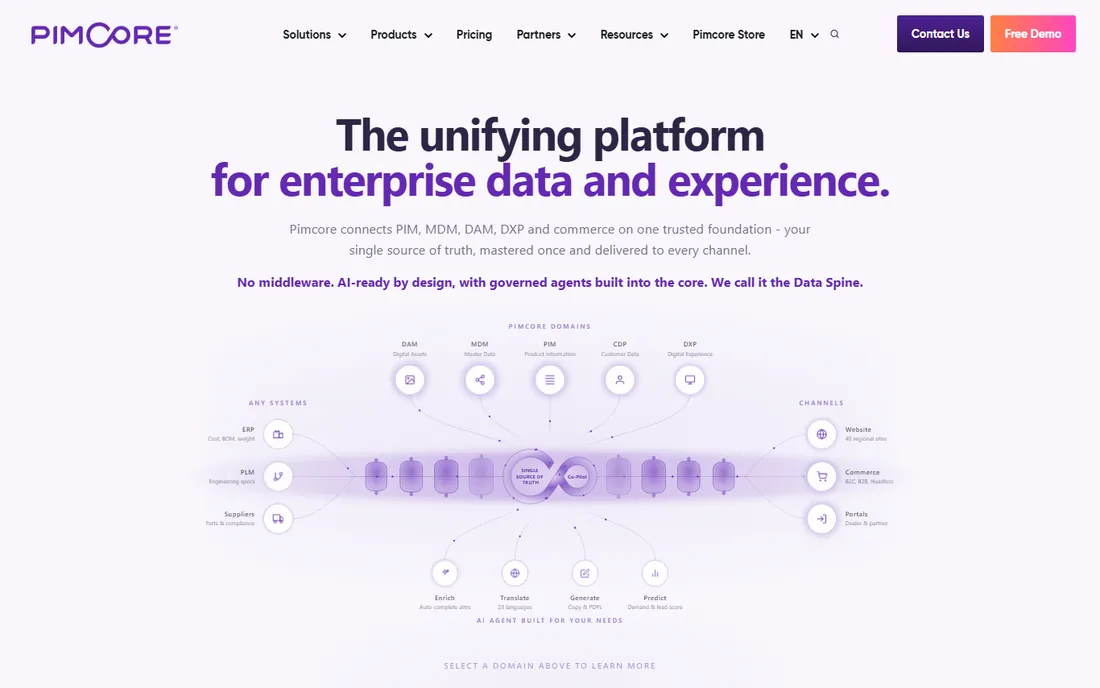
Pimcore goes beyond PIM: it combines product information, digital assets, content management and commerce data in one open-source platform. Companies that need a single system for product data, images and web content get more than any pure PIM offers. The Community Edition is free.
That breadth brings complexity. Pimcore is a platform to build on, not an app to configure, and it demands developer investment. Enterprise Edition is quote-priced. Organizations with development capacity and broad data needs get unmatched flexibility. Those wanting simple PIM should look at Plytix.
What we like- PIM plus DAM, CMS and ecommerce in one open platform
- Free Community Edition
- Extremely flexible
Watch out for- Complexity matches the flexibility
- Needs developers for serious use
Starting priceSee website
Free planFree trial
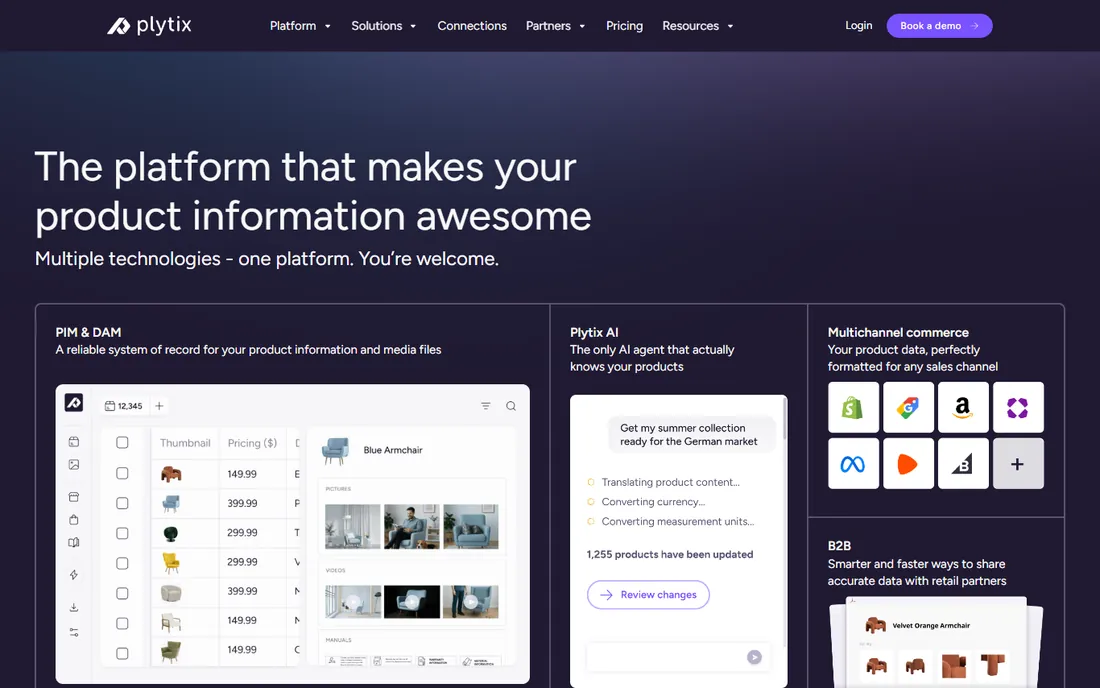
Plytix is the PIM for teams that find Akeneo intimidating. The interface is clean, onboarding is fast, and non-technical staff can manage product data, digital assets and catalogs without training. Small and mid-size brands get organized quickly, and a free trial lets you test with real data.
Enterprise complexity is the limit. Massive assortments, intricate workflows and deep B2B needs fit Salsify or inRiver better. Pricing is not published. For growing brands drowning in spreadsheets, Plytix is the fastest path to a real catalog.
What we like- Easiest PIM for non-technical teams
- Clean interface
- Quick to implement
Watch out for- Less depth for complex enterprise needs
- Pricing not published
Starting priceSee website
Free planNo

Salsify manages the entire product experience: PIM data, digital assets, and syndication to retailers, marketplaces and distributors from one platform. Brands selling through Amazon, Walmart and major retailers use Salsify to keep listings accurate and rich everywhere. Content benchmarking shows how your products compare.
Everything is enterprise: quoted pricing, implementation services and annual contracts. Small brands should not be here. Companies whose revenue depends on retailer listings will find the syndication depth worth the investment.
What we like- Best-in-class syndication to retailers
- Rich product content tools
- Strong analytics
Watch out for- Enterprise pricing and implementation
- Overkill for small catalogs
Starting priceSee website
Free planNo
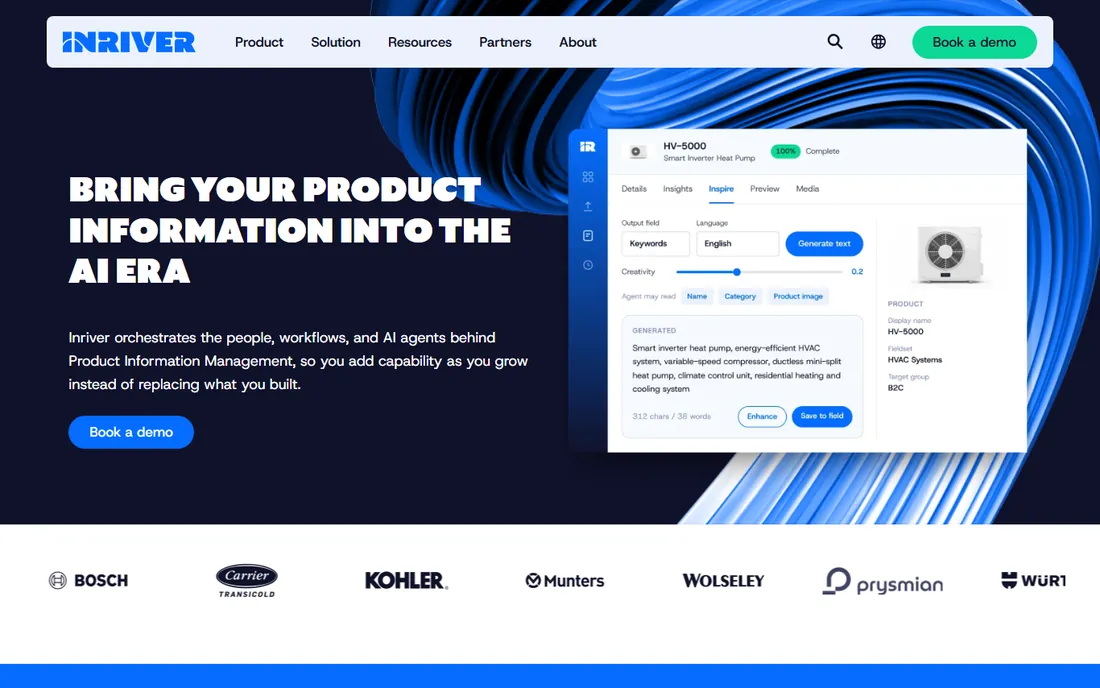
inRiver serves manufacturers and B2B distributors with complex product data: variants, compatibility, technical specifications and channel-specific assortments. Print catalog publishing, still important in industrial distribution, is a genuine strength. The workflow engine handles multi-step enrichment processes.
Ecommerce-native brands may find Akeneo or Salsify more natural. Pricing is quoted for enterprise deals. B2B companies with technical products and print-plus-digital needs should put inRiver high on the list.
What we like- Strong for complex B2B assortments
- Good print catalog support
- Solid workflow engine
Watch out for- Quote-based enterprise pricing
- Less ecommerce-native than Akeneo
Starting priceSee website
Free planNo
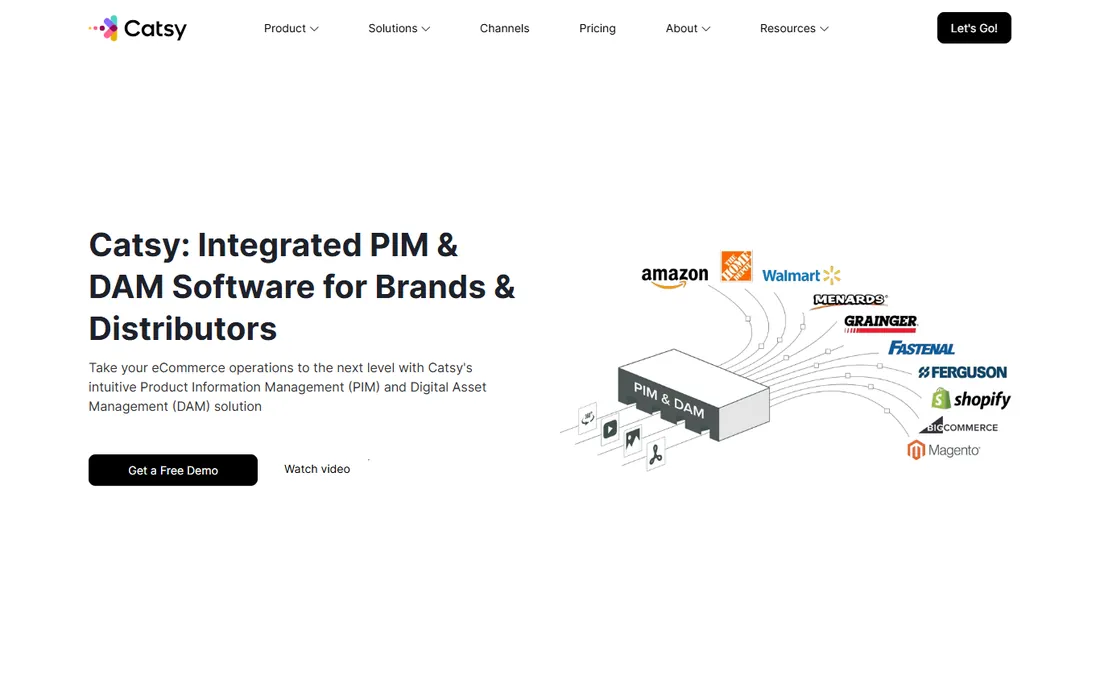
Catsy targets the mid-market gap between spreadsheet chaos and enterprise PIM. Implementation is measured in weeks, the interface suits business users, and digital asset management is integrated rather than bolted on. US-based support gets good marks from customers.
The vendor is smaller than Akeneo or Salsify, so the ecosystem and reference base are narrower. Pricing is not published. Mid-size brands and distributors wanting PIM without an enterprise project get strong value here.
What we like- Fast implementation for mid-size catalogs
- Good DAM integration
- US-based support
Watch out for- Smaller vendor with less brand recognition
- Pricing not published
Starting priceSee website
Free planNo
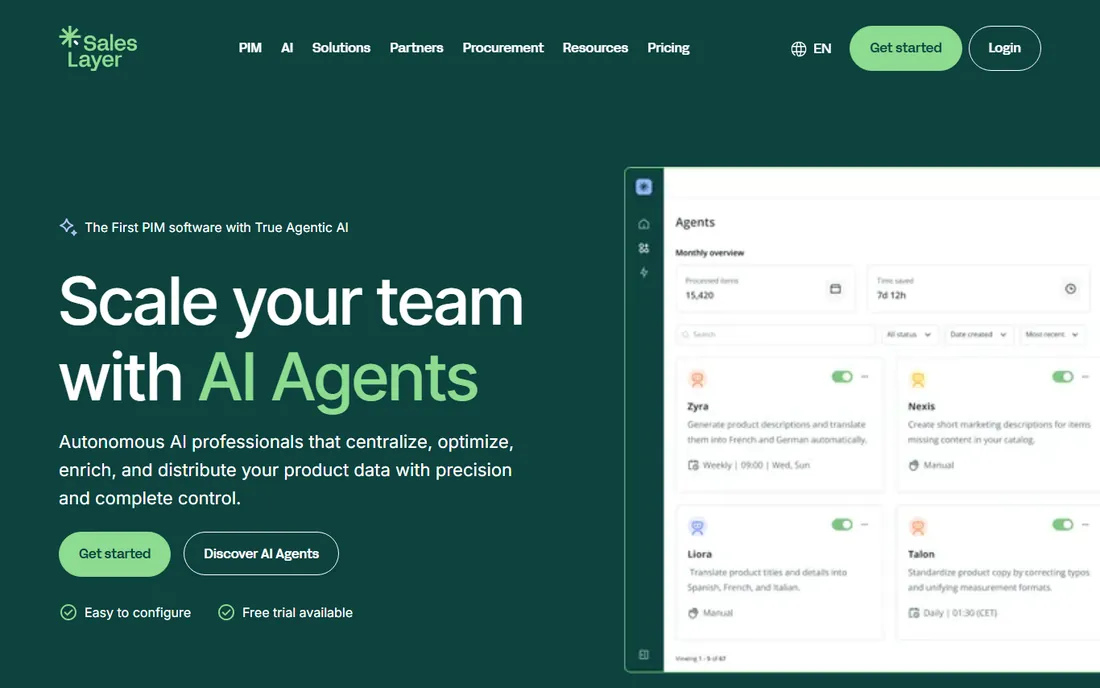
Sales Layer promises PIM without the year-long project, and largely delivers. Catalog creation, channel-specific assortments and product data syndication go live fast, which suits multi-channel sellers that need results this quarter. The interface stays approachable for business users.
Highly complex data modeling and enterprise governance fit the bigger platforms better. Pricing is not published. Companies selling across their own store, marketplaces and retailers simultaneously should evaluate Sales Layer for speed.
What we like- Quick time to value
- Clean catalog and channel management
- Good for multi-channel sellers
Watch out for- Less depth for highly complex data models
- Pricing not published
Starting priceSee website
Free planNo
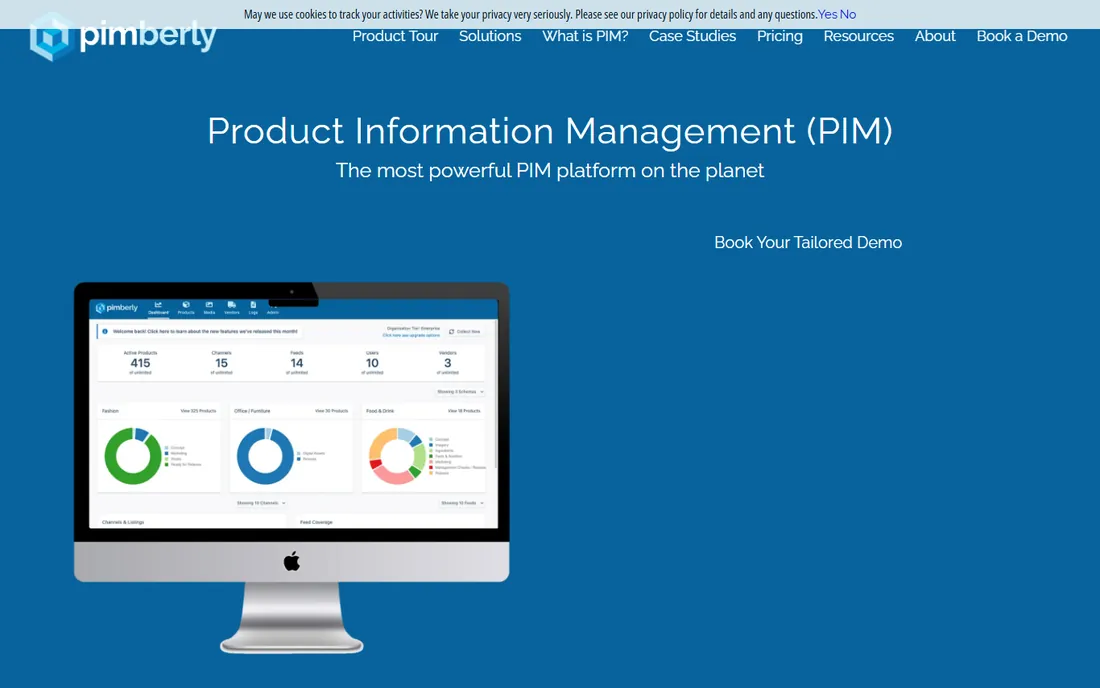
Pimberly grew in the UK retail and distribution market, where it handles both B2B trade catalogs and B2C ecommerce assortments. Onboarding is hands-on, and the platform covers the core PIM workflow, enrichment, DAM, channels, without enterprise bloat. The team understands the realities of mid-market catalogs because that is all they serve.
North American buyers will find fewer local references and partners. Pricing is not published. UK and European mid-market companies should compare Pimberly against Plytix and Catsy; the regional fit and support can tip the decision.
What we like- Strong in UK retail and distribution
- Good onboarding
- Handles B2B and B2C catalogs
Watch out for- Smaller North American presence
- Pricing not published
Starting priceSee website
Free planNo
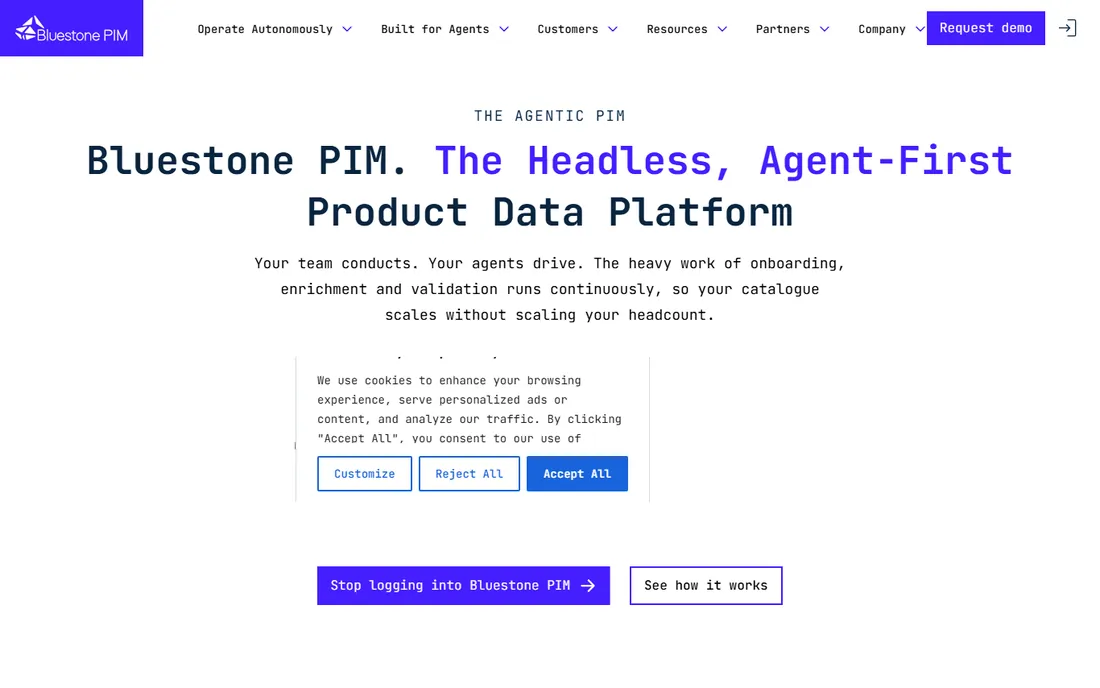
Bluestone PIM offers a modern SaaS PIM with strong APIs for companies that integrate product data into custom stacks. The interface is clean, the data model is flexible, and implementation avoids the heavyweight services engagements of enterprise PIM.
Prebuilt connectors to every retailer and marketplace are fewer than Salsify's, so check your channel list. Pricing is not published. Technically inclined teams wanting a flexible, API-first PIM without enterprise overhead should take a look.
What we like- Flexible SaaS architecture
- Good API for custom integrations
- Clean modern interface
Watch out for- Smaller vendor
- Fewer prebuilt channel connectors than Salsify
How we chose
We evaluated product information and catalog management software actively sold in 2026, from open-source platforms to enterprise SaaS. Research covered vendor sites and documentation, user reviews on G2 and Capterra, and ecommerce operations discussion. We weighted data modeling flexibility, digital asset handling, channel syndication, implementation effort and fit for different catalog sizes. Prices come from vendor pages where published.
PIM versus DAM versus MDM: what you are actually buying
These acronyms overlap confusingly. PIM (product information management) organizes product data: SKUs, attributes, descriptions, pricing. DAM (digital asset management) organizes media: images, videos, documents. MDM (master data management) governs all enterprise data domains, of which product is one.
Most tools here are PIM with DAM included. If your problem is messy product spreadsheets, buy PIM. If it is finding the right product image, you might only need DAM. If it is inconsistent data across the whole enterprise, that is MDM and a bigger project. Pimcore uniquely spans all three, which is powerful and complicated in equal measure.
Frequently asked questions
What is the best catalog management software?
Akeneo leads for most ecommerce brands, with a free Community Edition for technical teams. Pimcore suits organizations needing PIM plus DAM and CMS in one platform. Enterprises syndicating to retailers should evaluate Salsify, while growing brands often prefer the simplicity of Plytix.
What is PIM software?
PIM (product information management) software centralizes product data, descriptions, attributes, images and pricing, then syndicates it to sales channels like websites, marketplaces and retailers. It replaces the spreadsheets most companies use to manage catalogs.
How much does PIM software cost?
Most vendors do not publish pricing. Open-source options (Akeneo Community, Pimcore Community) are free but need technical resources. SaaS PIM typically runs from hundreds to thousands per month for mid-market, reaching six figures annually at enterprise scale. Always get a written quote. Implementation services often cost as much as the first year of licenses, so ask vendors to itemize the quote before you compare totals.
Do I need PIM for a small catalog?
Below a few hundred SKUs selling on one channel, spreadsheets and your ecommerce platform usually suffice. PIM pays off when you manage thousands of SKUs, sell across multiple channels, or need consistent product data in several languages. The pain of manual updates is the signal. When updating a price means editing five spreadsheets and three listings, you need PIM.
What is the difference between Akeneo and Pimcore?
Akeneo is a focused PIM with an excellent product data model and a free Community Edition. Pimcore is a broader open-source data platform combining PIM, DAM, CMS and commerce. Choose Akeneo for pure product data management; choose Pimcore when you need multiple data domains in one system. Both need technical resources to run the free editions well.
Syndication: getting product data to every channel
Collecting product data is half the job; publishing it everywhere is the other half. Check which channels each PIM connects to natively: your ecommerce platform, Amazon, Google Shopping, major retailers and distributors. Native connectors save enormous integration work.
Also verify the content requirements per channel. Amazon wants different attributes than your Shopify store, and retailers reject feeds missing required fields. Good PIM software maps one product record to many channel formats automatically. During demos, have the vendor publish a real product to two different channels and show the result. Ask how the system handles rejected listings too: automatic error reports that pinpoint the missing attribute save hours compared to manual feed debugging.
Data quality: the project before the project
PIM software does not fix bad product data; it organizes whatever you put in. Before implementation, audit your catalog: duplicate SKUs, missing attributes, inconsistent naming, images without naming conventions. Most PIM projects stall here, not in the software configuration.
Assign data ownership explicitly. Someone must own each attribute: who writes descriptions, who approves images, who maintains pricing. Software with workflow and approval features (Akeneo, inRiver, Pimcore) enforces this, but only if you define the roles. Budget as much time for data cleanup as for the software itself, and start the cleanup before the vendor's kickoff call. Clean data also makes every future channel launch faster.
Sources we checked (9)
- https://www.akeneo.com
- https://pimcore.com
- https://www.plytix.com
- https://www.salsify.com
- https://www.inriver.com
- https://catsy.com
- https://www.saleslayer.com
- https://pimberly.com
- https://www.bluestonepim.com
Is your product missing or out of date?
We review this list regularly. Vendors can request a listing, send updated pricing or ask about featured placement.

Shihab Mia · Founder, Rankite
Shihab has spent more than a decade helping SaaS and e-commerce brands grow through search. He writes Rankite's software buying guides from pricing pages, documentation and public user reviews. More about Shihab.