How we make this list: we compare pricing pages, product documentation and public user reviews. Rankite is independent; if a vendor ever pays for a featured spot, that listing is clearly labeled Partner.
Key takeaways
- Nearly every consumer tracker on this list is free, because the business model is offset subscriptions or employer programs, not app sales.
- Commons (formerly Joro) is the most automatic option for US and Canadian users, estimating emissions from linked card spending.
- Earth Hero and the Carbon Footprint Calculator are the best starting points if you do not want to create an account or hand over financial data.
- Klima and Aerial focus on paying to offset emissions through certified projects, which is a different job from reducing them.
- Greenly is the only pick here built for real business carbon accounting, while JouleBug now serves employers running sustainability programs.
Quick comparison
| Tool | Best for | Starting price | Free plan |
|---|
 Commons Commons | Automatic tracking for users in the US and Canada | Free | Yes |
 Capture Capture | Commuters and frequent travelers | Free | Yes |
 Earth Hero Earth Hero | Step-by-step action plans without a sales pitch | Free | Yes |
 Pawprint Pawprint | UK households and workplace challenges | Free | Yes |
 Klima Klima | Offsetting emissions through certified climate projects | Free (offset subscriptions extra) | Yes |
 Aerial Aerial | Travelers who want to offset flights and trips | Free (travel offsets extra) | Yes |
 JouleBug JouleBug | Companies running employee sustainability programs | See website | Free app |
 Greenly Greenly | Small businesses needing a real carbon audit | See website | No |
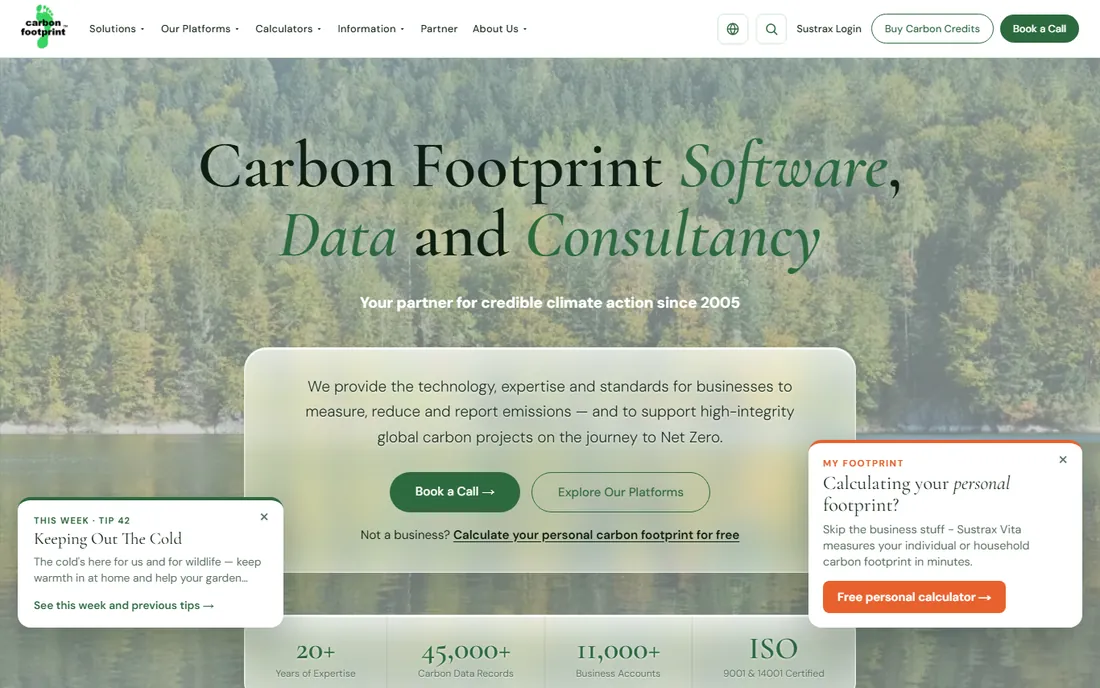
 Carbon Footprint Calculator Carbon Footprint Calculator | A quick footprint estimate with no app and no account | Free | Yes |
Is your product missing or out of date?
We review this list regularly. Vendors can request a listing, send updated pricing or ask about featured placement.
Starting priceFree
Free planYes
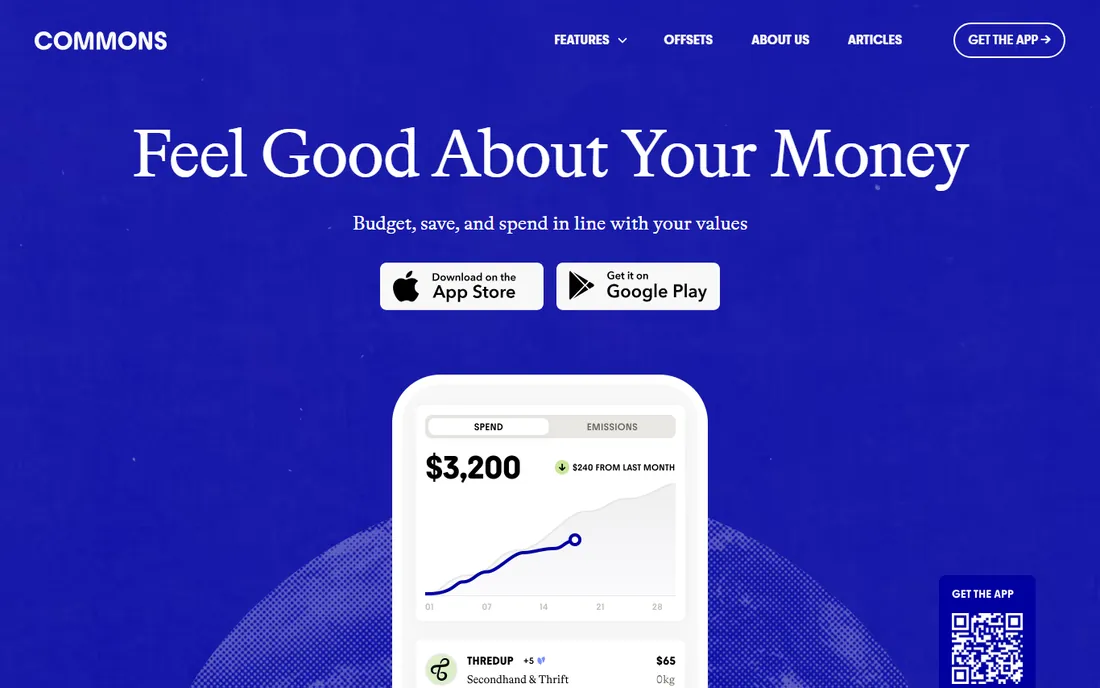
If you live in the US or Canada, Commons is the easiest tracker to start with. It was previously called Joro, and it works by connecting to your cards and estimating the carbon impact of what you buy. That removes the chore of logging every trip and purchase, which is where most trackers lose people after week two.
The app is free, and the tradeoff is data. You have to be comfortable linking financial accounts, and the footprint it reports is modeled from spending categories, not measured directly. It is also unavailable outside the US and Canada. For Americans who want a number with minimal effort, though, nothing else on this list is as automatic.
What we like- Estimates emissions automatically from spending
- Clear reduction guidance
- No manual logging
Watch out for- US and Canada only
- Requires linking financial accounts
- Estimates are approximations, not measurements
Starting priceFree
Free planYes

Capture takes a different approach: it watches how you move. Using your phone's GPS, it detects trips by car, train, and plane, then converts them into emissions estimates without you lifting a finger. For people whose footprint is dominated by commuting or flying, that automation covers the biggest slice of the pie.
The catch is what it does not see. Home energy, food, and shopping barely register, so the total can understate your real footprint. Background location tracking also costs battery life and asks for trust. Capture suits travelers who want their biggest category handled automatically and are willing to estimate the rest.
What we like- GPS-based travel tracking runs in the background
- Strong on flights and driving
- Simple interface
Watch out for- Travel-heavy focus misses home energy and diet
- Background GPS uses battery
- Smaller user base
Starting priceFree
Free planYes
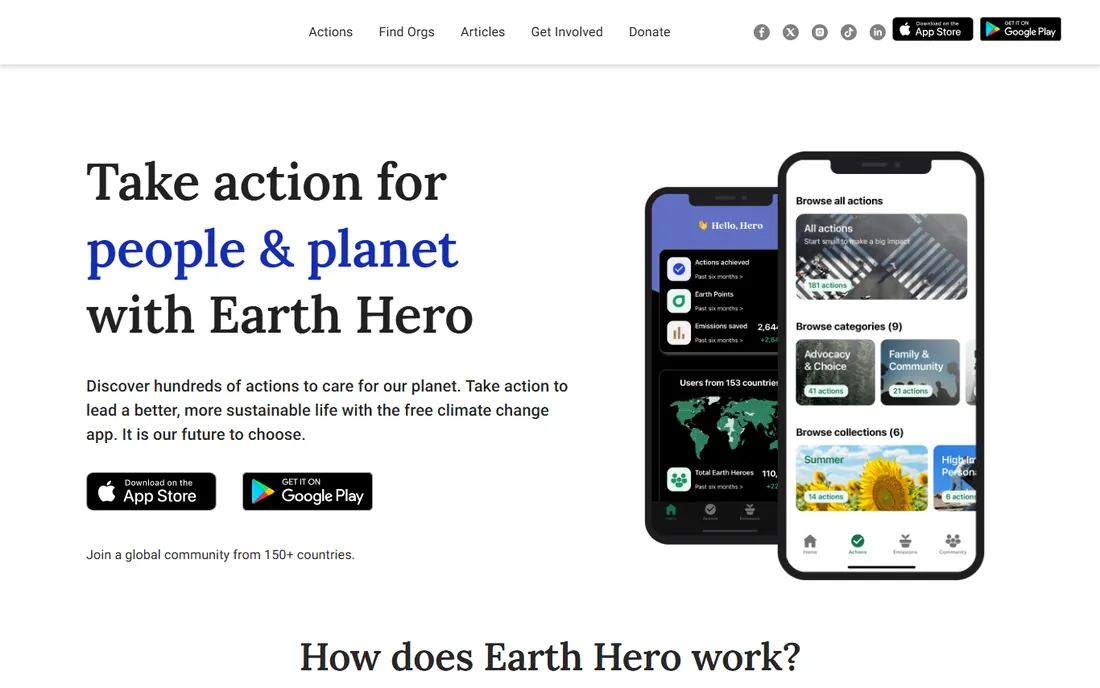
Earth Hero comes from a nonprofit, and it shows in the best way. There is no offset store upsell and no premium tier gating the useful parts. You answer questions about travel, home energy, food, and consumption, and the app builds a personalized plan of actions to cut emissions, tracking your progress over time. It works in more than 150 countries.
The price of that independence is manual work. You enter your data yourself, and there is no card linking or GPS detection to fill the gaps. The interface is functional rather than beautiful. If you want guidance you can trust, with no company trying to sell you offsets, Earth Hero is the cleanest option here.
What we like- Run by a nonprofit
- Available in 150+ countries
- Personalized reduction plans
Watch out for- Manual data entry
- No automatic bank or GPS tracking
- Design feels basic
Starting priceFree
Free planYes
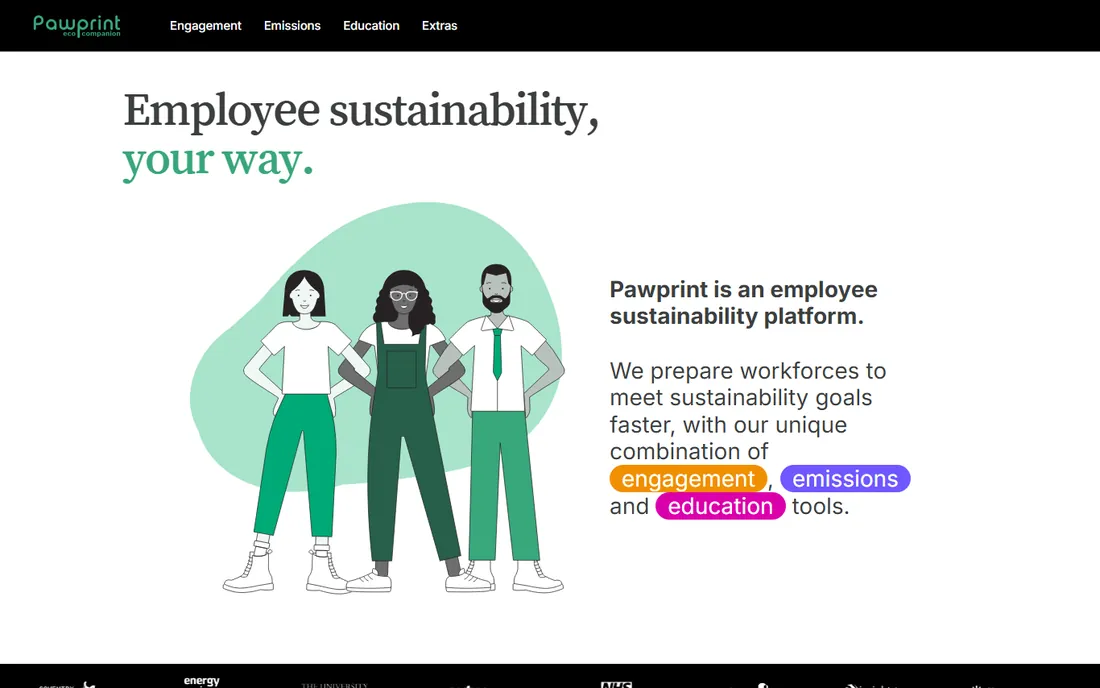
Pawprint is the friendliest app on this list, and the most natural fit for UK users. The footprint quiz is quick, the suggestions are written in plain language, and the team challenges make it workable for offices that want a shared sustainability activity. It grew out of the consumer space but now leans toward workplace programs.
That UK focus is also the limitation. Content, benchmarks, and integrations assume a British user, and the tracking itself is mostly manual. Americans will get more from Commons or Earth Hero. For a UK household or a small company team that wants something people will actually open twice, Pawprint earns its place.
What we like- Friendly design that non-experts enjoy
- Team and company challenges
- UK-focused content
Watch out for- UK-centric
- Limited automatic tracking
- Business features are the real focus now
#5
Klima
Best for: Offsetting emissions through certified climate projects
Visit getklima.com
Starting priceFree (offset subscriptions extra)
Free planYes
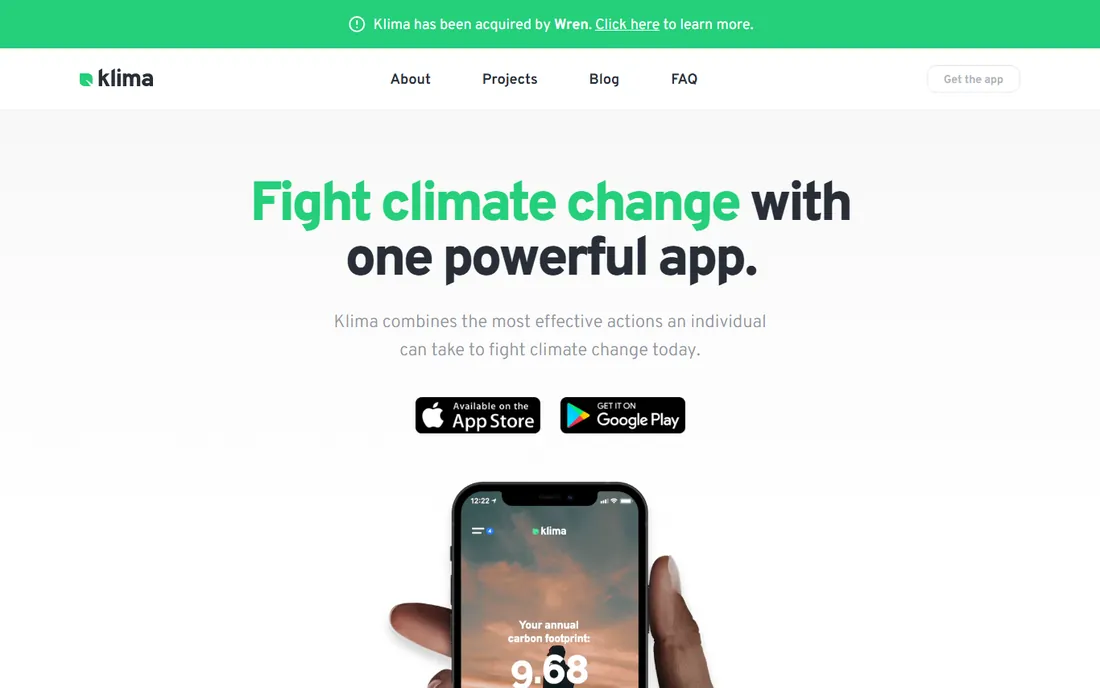
Klima is for people who want to pay to neutralize their footprint, not just measure it. The Berlin-based app calculates your personal emissions in minutes, then offers a monthly subscription that funds certified climate projects like reforestation and clean energy. Members have reportedly offset tens of thousands of tonnes of CO2 collectively.
The honest debate is whether offsetting should come before reducing. Klima does include reduction tips, but the product is built around the subscription, and monthly payments add up over a year. Note also that the company has shifted attention toward business offerings over time, so check the app is still actively maintained before committing. It remains a solid pick for offset-first users.
What we like- Calculates footprint quickly
- Funds vetted climate projects
- Active in 70+ countries
Watch out for- Subscription model pushes offsetting over reduction
- Monthly cost adds up
- App's long-term future is unclear
#6
Aerial
Best for: Travelers who want to offset flights and trips
Visit aerial.is
Starting priceFree (travel offsets extra)
Free planYes
Frequent flyers should look at Aerial first. Where general trackers treat flights as one line item, Aerial is built around travel: it estimates trip emissions and lets you buy offsets tied to specific journeys. The app itself is free and pleasant to use, and the concept is easy to grasp.
The narrow focus is the tradeoff. Aerial will not help much with your home energy bill or your diet, so it works best as a complement to a broader tracker rather than a replacement. And each offset is a separate purchase, which can add up for heavy travelers. Use it for what it is: the simplest way to address the flights.
What we like- Built specifically around travel emissions
- Simple offset purchases
- Clean modern app
Watch out for- Narrow focus on travel
- Offsets cost extra per trip
- Less useful for home and lifestyle tracking
#7
JouleBug
Best for: Companies running employee sustainability programs
Visit joulebug.com
Starting priceSee website
Free planFree app
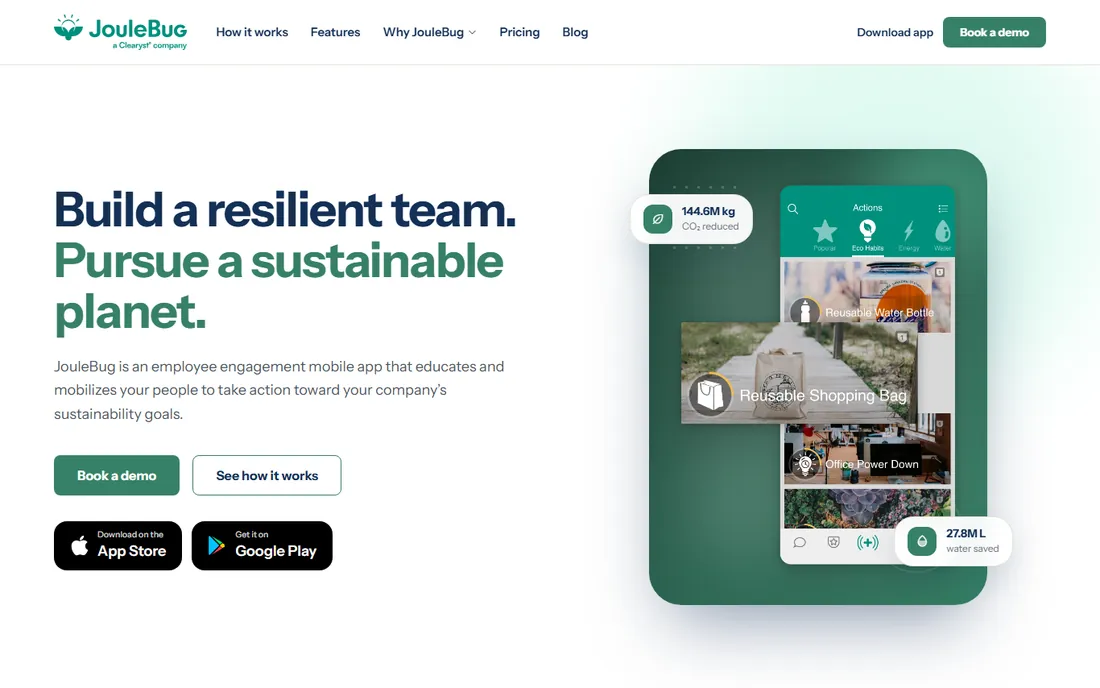
JouleBug no longer fits the consumer tracker mold. The app pioneered gamified green challenges years ago, but following its acquisition by Clearyst in early 2026, it now serves employers running sustainability and engagement programs. The challenges, leaderboards, and team competitions are built for workplaces, not households.
Individuals can still download the free app, but development energy clearly goes to the business product, whose pricing is not public. If you are a manager looking to engage staff on sustainability, JouleBug is worth a demo. If you are an individual tracking your own footprint, pick one of the consumer apps above instead.
What we like- Gamified challenges keep teams engaged
- Long track record
- Now backed by a larger platform
Watch out for- Consumer app is no longer the focus
- Business pricing is not public
- Less useful for individuals now
Starting priceSee website
Free planNo
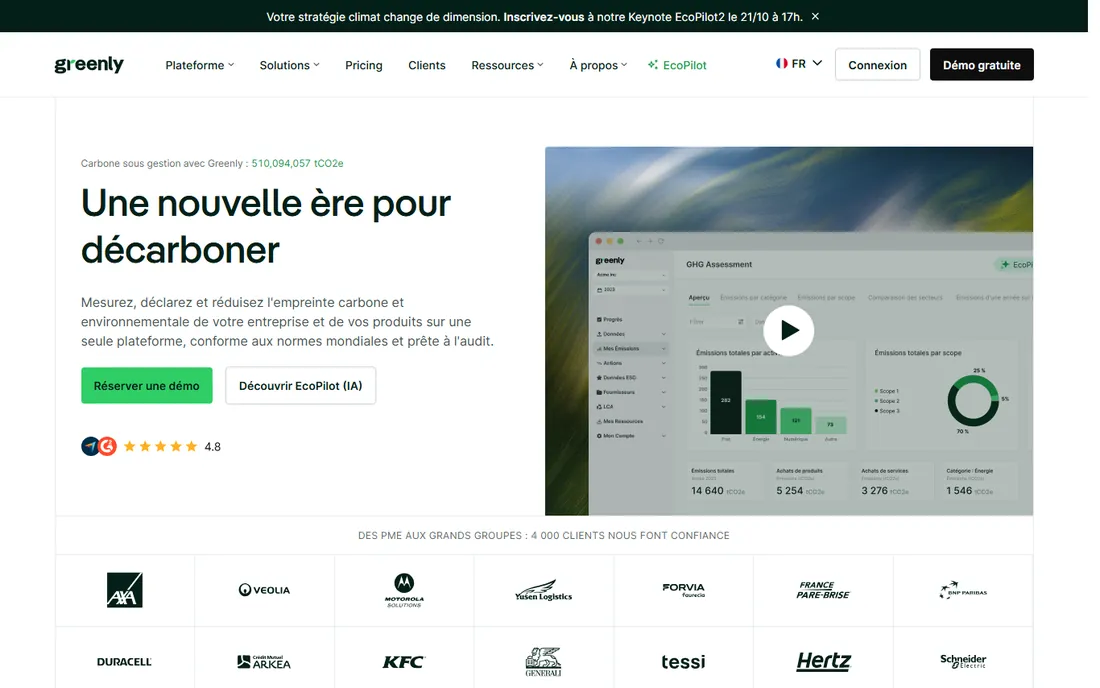
Greenly is the odd one out here, and deliberately so. It is business carbon accounting software, not a personal habit app. It connects to a company's financial and operational data, calculates emissions across scopes, and produces the kind of audit trail that clients, regulators, and procurement surveys actually accept.
That makes it the right answer for Priya's situation in the intro: a business being asked for a real number. Pricing is custom and the product is overkill for anyone tracking a household. But if your company needs defensible carbon figures rather than a personal estimate, this is the only tool on the list built for that job.
What we like- Proper carbon accounting methodology
- Built for regulatory and client reporting
- Integrates with business systems
Watch out for- Not a personal tracker
- Pricing is custom and not public
- Overkill for individuals
What to look for in a carbon tracker
First, decide how much effort you will actually sustain. Automatic trackers that read your spending or GPS location keep working when your motivation fades, while manual ones give more detailed results only if you keep logging. Be honest about which type you are. The best methodology in the world is worthless in an app you delete after a week.
Second, check geography and methodology. Commons only serves the US and Canada, Pawprint assumes the UK, and Earth Hero works almost everywhere. Look for some explanation of how the numbers are calculated. Apps that publish their emission factors and data sources deserve more trust than ones that present a single unexplained score.
Third, understand the business model. Free consumer apps usually make money from offset subscriptions or employer contracts, which shapes what they recommend. That is not disqualifying, but it explains why some apps push offsets harder than reduction. If you are choosing for a business rather than yourself, skip the consumer apps entirely and look at proper accounting tools like Greenly.
How we chose
We researched each product's website, app store listings, and documentation, plus coverage in startup and climate press, and public discussion on Reddit and review sites. We only listed products that exist and operate today, noting where companies have pivoted, as with JouleBug's move to employer programs and Joro's rename to Commons. We compared geographic availability, how emissions are calculated, whether tracking is automatic or manual, and whether the product serves individuals or businesses. No vendor paid for placement, and we did not claim hands-on testing.
Do carbon offsets actually work
Offsets are the most misunderstood part of this category, so here is the short version. A carbon offset pays for an emissions reduction somewhere else, like a reforestation project or a clean cookstove program, to balance out your own emissions. Good projects are verified by independent standards and would not have happened without the funding. Bad ones protect forests that were never threatened or count reductions twice.
That is why the project list matters more than the app. Klima and Aerial both point to certified projects, which is better than an unlabeled offset button. Even so, most climate researchers rank reducing your own emissions above offsetting them, because a tonne you never emit is certain while a tonne offset elsewhere depends on the project working as promised. Use offsets for what you cannot yet eliminate, especially flights, and treat reduction as the main event.
Frequently asked questions
Are carbon footprint apps accurate?
They are estimates, not measurements. App-based trackers model your emissions from spending data, GPS movement, or questionnaire answers, using average emission factors. That makes them good for spotting your biggest categories and tracking trends, but not for precise accounting. Businesses that need exact figures should use proper carbon accounting software.
Do I have to connect my bank account?
Only with Commons, which needs card access to estimate emissions from spending. Every other consumer app on this list works without financial data, using manual entry, GPS, or questionnaires instead. If linking accounts bothers you, Earth Hero or the Carbon Footprint Calculator are solid alternatives.
Which app is best for the US?
Commons, because its automatic spending-based tracking is built for the US and Canada. Capture is a good second pick if travel dominates your footprint. Earth Hero works well in the US too, if you prefer manual entry and nonprofit independence.
Which app is best for the UK?
Pawprint, which is UK-focused in its content and benchmarks. Earth Hero and Klima also serve UK users well. Commons does not operate outside the US and Canada.
Should my small business use one of these apps?
Probably not as the official answer. Consumer apps are fine for employee awareness or a rough internal estimate, but client surveys and procurement questionnaires usually expect methodology you can defend. For that, look at business tools like Greenly rather than a personal tracker.
Is it better to reduce emissions or buy offsets?
Reduce first. Cutting your own energy use, travel, and consumption is certain and usually saves money. Offsets make sense for emissions you cannot eliminate yet, like necessary flights. The strongest approach is a tracker that helps you reduce, plus selective offsets for the remainder.
Sources we checked (9)
- https://www.thecommons.earth/
- https://www.thecapture.club/
- https://www.earthhero.org/
- https://www.pawprint.eco/
- https://getklima.com/
- https://aerial.is/
- https://joulebug.com/
- https://www.greenly.earth/
- https://www.carbonfootprint.com/
Is your product missing or out of date?
We review this list regularly. Vendors can request a listing, send updated pricing or ask about featured placement.

Shihab Mia · Founder, Rankite
Shihab has spent more than a decade helping SaaS and e-commerce brands grow through search. He writes Rankite's software buying guides from pricing pages, documentation and public user reviews. More about Shihab.