How we make this list: we compare pricing pages, product documentation and public user reviews. Rankite is independent; if a vendor ever pays for a featured spot, that listing is clearly labeled Partner.
Key takeaways
- Business owners wanting a quick, credible valuation start with BizEquity or Equidam, which automate the process online.
- Valuation professionals use ValuAdder, ValuSource and Valutico for defensible, report-ready valuations.
- Comparable transaction data from BizComps, BVR DealStats, PrivCo and PitchBook underpins serious valuations.
- Automated tools estimate value; professional standards and judgment defend it in deals, courts and tax filings.
- Pricing ranges from affordable online reports to professional subscriptions priced for firms.
Business valuation software estimates what a company is worth, for sales, investment, tax, litigation or planning. Tools range from automated online valuations for owners to professional platforms and the transaction databases that professionals rely on for comparables.
Quick comparison
| Tool | Best for | Starting price | Free plan |
|---|
 BizEquity BizEquity | Online valuations for owners | See website | No |
 Equidam Equidam | Startup and SMB valuations online | See website | Free trial |
 ValuAdder ValuAdder | Professional valuation reports | See website | Free trial |
 ValuSource ValuSource | Valuation data and software | See website | No |
 Valutico Valutico | AI-powered professional valuations | See website | No |
 BizComps BizComps | Comparable transaction data | See website | No |
 BVR DealStats BVR DealStats | Deal comps database | See website | No |
 PrivCo PrivCo | Private company financials | See website | Free trial |
 PitchBook PitchBook | Private market data and comps | See website | No |
Is your product missing or out of date?
We review this list regularly. Vendors can request a listing, send updated pricing or ask about featured placement.
The best business valuation software
Starting priceSee website
Free planNo

BizEquity generates business valuations online from financial inputs, giving owners a credible starting number for planning, loans or sale preparation. Its advisor network connects owners with professionals for deeper work.
It is an estimate, not a defensible appraisal for litigation or tax. Owners who need a real number fast get value; anyone heading to court needs a credentialed appraiser.
BizEquity users should treat the online valuation as the start of a conversation, not the final number. Use it to prepare for lender or buyer discussions with a defensible range. Update the inputs annually; stale financials produce stale valuations.
What we like- Fast online business valuations
- Advisor network
- Accessible to non-experts
Watch out for- Estimates, not certified appraisals
- Depth limited for complex companies
Starting priceSee website
Free planFree trial
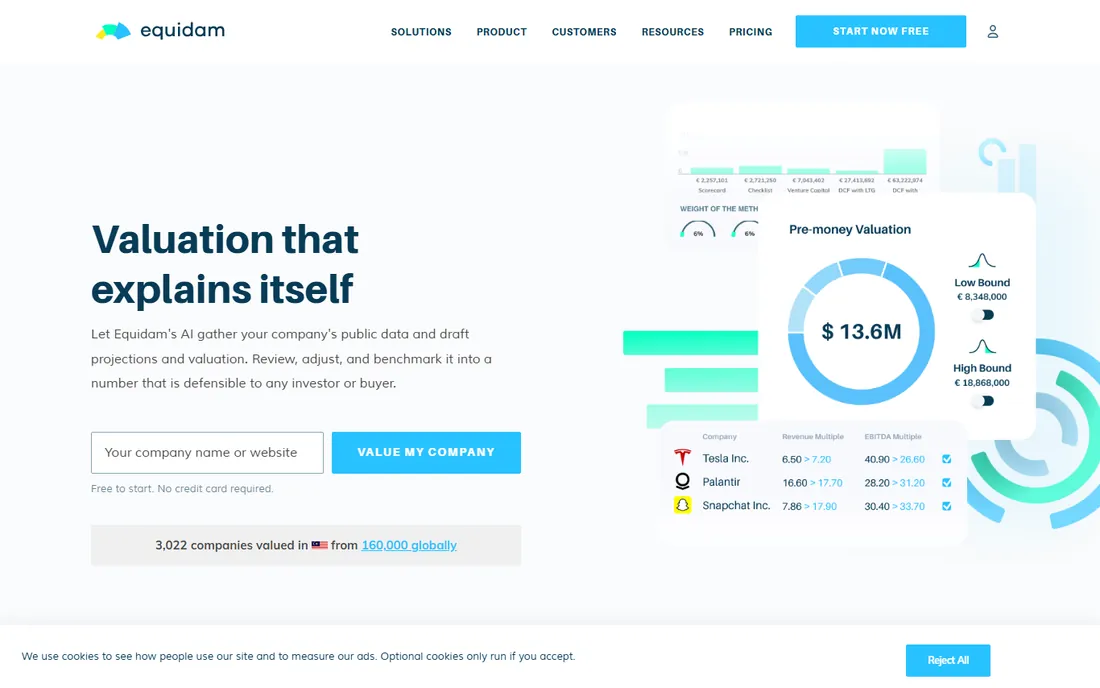
Equidam produces valuation reports using established methods, DCF, multiples, with transparent assumptions. Startups use it for fundraising and option pricing; small businesses for planning.
Complex companies with layered capital structures need professional judgment. For standard startups and SMBs, the methodology transparency builds trust.
Equidam users get the most credibility by understanding the methodology behind the report before sharing it. The transparent assumptions invite scrutiny, so be ready to defend them. Startups should run valuations before fundraising conversations begin.
What we like- Transparent methodology
- Popular with startups
- Affordable reports
Watch out for- Self-service limits for complex capital structures
- Not a substitute for Big Four valuations
Starting priceSee website
Free planFree trial

ValuAdder provides business valuation software tools for professionals who prepare formal valuations: income, market and asset approaches with defensible calculations and presentation-quality reports.
It assumes valuation knowledge. Advisors, accountants and analysts who value businesses regularly get professional output; casual users should start with BizEquity or Equidam.
ValuAdder professionals should build a standard report template for their practice to speed repeat engagements. The methodology depth impresses clients but requires the analyst to explain it clearly. Keep assumptions documented for every engagement.
What we like- Professional-grade valuation tools
- Report-ready output
- Respected methodology
Watch out for- Aimed at professionals
- Learning curve for newcomers
Starting priceSee website
Free planNo
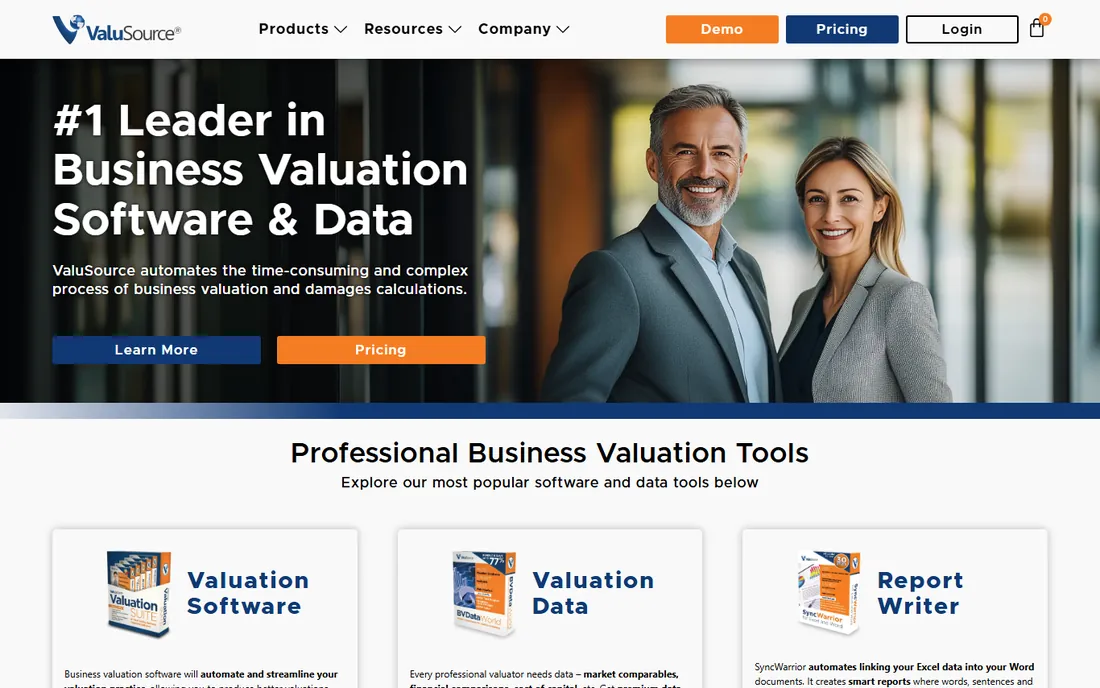
ValuSource has served the valuation profession for decades with software and data products supporting formal business appraisals. Its user base of credentialed valuators speaks to its standing.
The experience is traditional rather than modern. Professionals who value depth over design stay loyal.
ValuSource subscribers should integrate the data resources into their standard workflow rather than treating them as occasional references. The professional community around the products is a genuine resource. Stay current with methodology updates.
What we like- Long-standing valuation software and data
- Professional user base
- Comprehensive resources
Watch out for- Traditional interface
- Pricing for professional budgets
Starting priceSee website
Free planNo
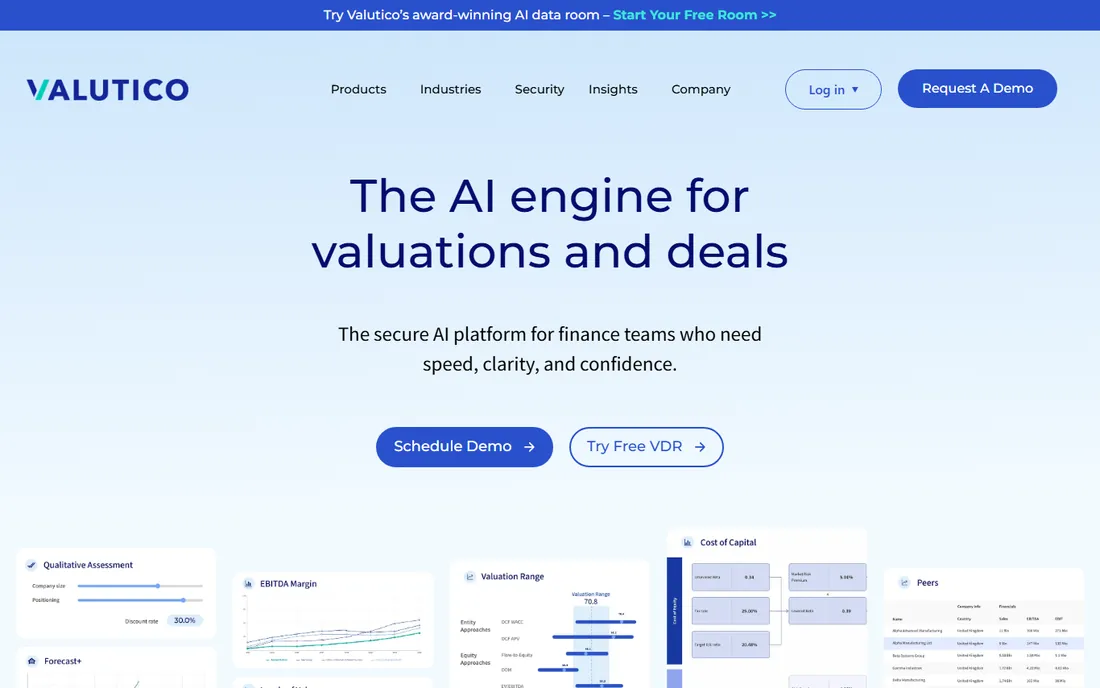
Valutico applies AI to professional business valuation, speeding up analysis and report preparation for advisory firms. The modern interface contrasts with legacy valuation tools.
As a newer entrant, its track record is shorter than ValuSource's. Forward-looking firms that want AI assistance in valuation work should evaluate it.
Valutico firms should validate the AI-assisted outputs against their own judgment on the first several engagements. The speed gains are real once trust is established. Use the modern reporting to differentiate the practice with clients.
What we like- AI-assisted valuation workflows
- Modern interface
- Growing professional adoption
Watch out for- Newer vendor
- Premium pricing for firms
Starting priceSee website
Free planNo

BizComps provides databases of actual business sales, the comparable transactions that power the market approach to valuation. Professionals consider sold comps indispensable.
It is data, not software: you still need valuation expertise to apply it. For defensible market-based valuations, the data quality matters more than any tool.
BizComps subscribers should learn the search filters deeply; the database value depends on finding truly comparable transactions. Document the comps selection rationale for every valuation. The data quality justifies the subscription only if used rigorously.
What we like- Real sold-business transaction data
- Essential for market approach
- Trusted by valuators
Watch out for- Data product, not valuation software
- Subscription priced for professionals
Starting priceSee website
Free planNo
DealStats, from Business Valuation Resources, is the industry-standard database of private company transactions, with valuation multiples and deal terms. BVR's resources underpin countless formal valuations.
Like BizComps, it serves professionals. Firms doing regular valuation work treat it as infrastructure.
DealStats users should pull comps early in every engagement and let them frame the analysis. The multiples data anchors negotiations in reality. Combine with qualitative factors for a complete picture.
What we like- Comprehensive deal statistics
- From Business Valuation Resources
- Industry standard
Watch out for- Professional pricing
- Requires valuation knowledge
Starting priceSee website
Free planFree trial
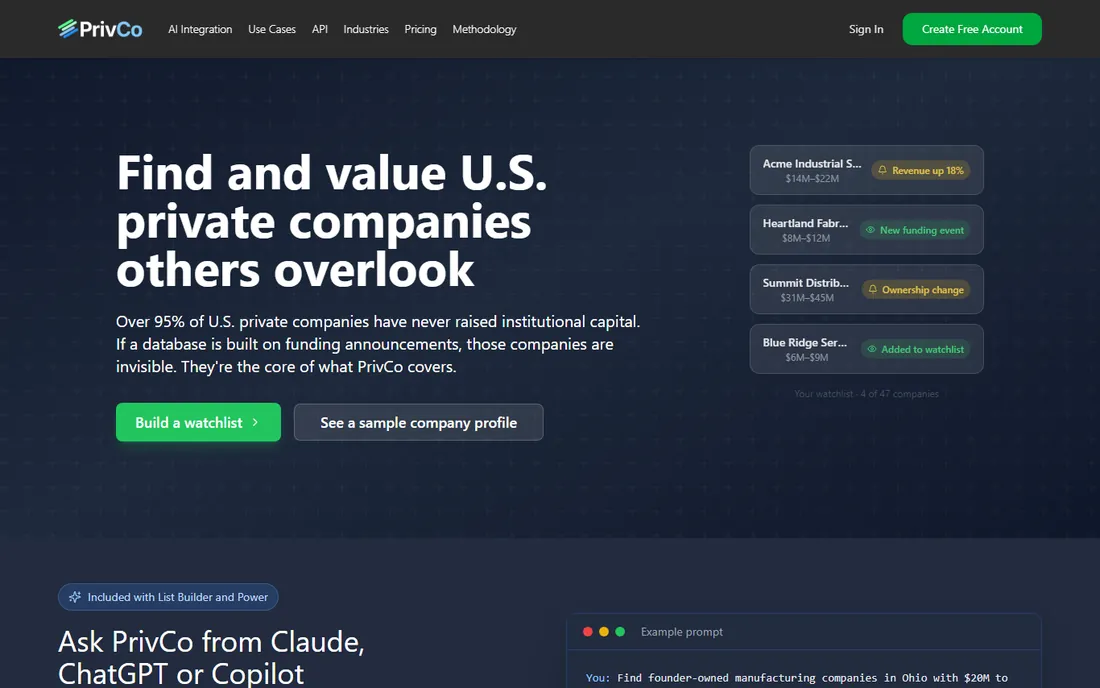
PrivCo aggregates financial intelligence on private companies, giving valuators and investors comps data for market analysis. Researchers and advisors use it to benchmark private businesses.
It provides data, not valuation conclusions. As a research input to the valuation process, it earns its place.
PrivCo researchers should verify coverage for their target company size before relying on it; the database shines in the middle market. Use it alongside other sources for triangulation. The financial details inform better interview questions.
What we like- Private company financial data
- Useful for comps research
- Accessible interface
Watch out for- Coverage varies by company size
- Not a valuation calculator
Starting priceSee website
Free planNo
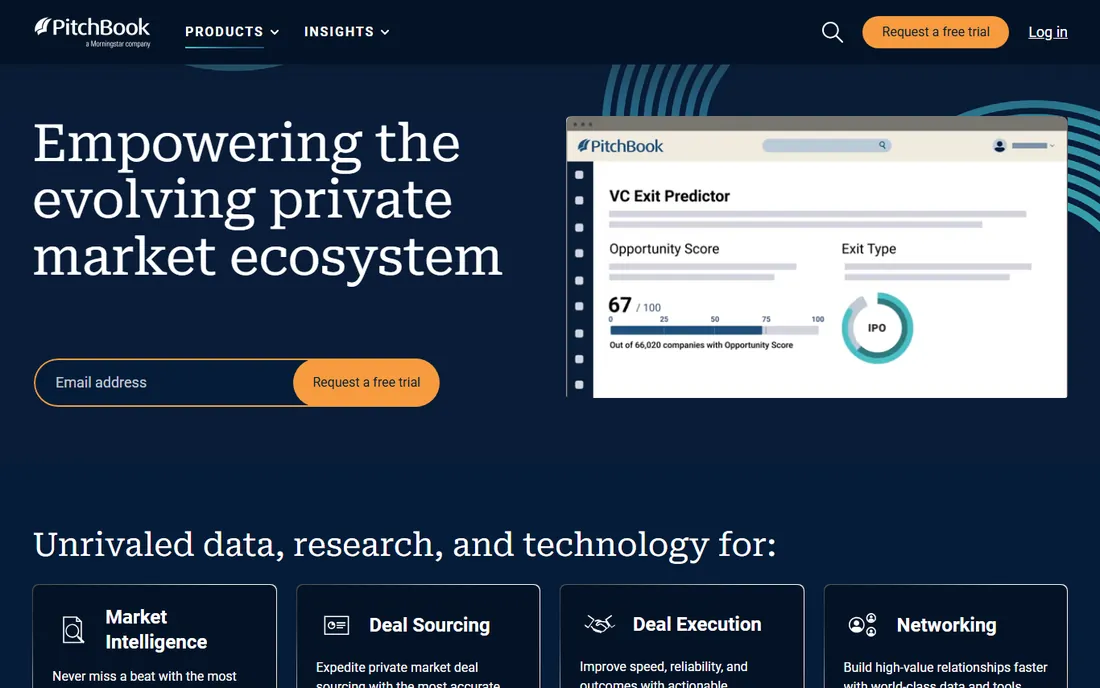
PitchBook is the institutional standard for private market data: deals, valuations, multiples and company financials. Investment professionals use its comparables in formal valuations.
The pricing targets institutions, not small businesses. For serious valuation work at scale, its data depth is unmatched.
PitchBook subscribers at institutions should train junior staff on comp selection to avoid garbage-in valuations. The data depth is only as good as the analyst using it. Set up alerts for transactions in your coverage sectors.
What we like- Deepest private market data
- Deal multiples and comparables
- Institutional standard
Watch out for- Expensive
- Aimed at investors and large firms
How we chose
We verified each vendor's homepage and kept tools with genuine valuation capability or the transaction data valuations depend on. We excluded generic financial calculators without valuation methodology. Pricing is professional and rarely public, so entries show "See website".
What to get right before you buy
Know what the number is for. Planning estimates tolerate automation; litigation, tax and transactions require credentialed professionals and defensible methods.
Budget for data, not just software. The transaction databases often cost more than the valuation tools, and they are what make valuations defensible.
Check methodology transparency. Whether automated or professional, you should be able to explain every assumption behind the number.
Frequently asked questions
How much does business valuation software cost?
Online valuations can cost hundreds per report; professional software and data subscriptions run from thousands to tens of thousands annually.
Can software replace a business appraiser?
For planning estimates, often yes. For litigation, tax filings, or transactions, courts and buyers expect credentialed appraisers following professional standards.
What are the main business valuation methods?
The income approach (DCF), market approach (comparable transactions) and asset approach. Professional valuations typically weigh multiple methods.
What is a 409A valuation?
A 409A valuation sets the fair market value of a private company's stock for tax purposes, commonly needed for employee stock options. Startups often use specialized providers.
How accurate are online business valuations?
They give reasonable estimates for standard businesses with clean financials. Unique assets, complex structures or distressed situations need professional judgment.
What data do I need for a valuation?
Three to five years of financial statements, plus industry information and, for the market approach, comparable transaction data.
Defending your valuation when it matters
A valuation nobody challenges is just a number; a valuation someone challenges needs defense. Start by documenting every assumption the day you make it: growth rates, discount rates, comp selections and adjustments. Memory fades, but the workpapers remain. Six months later, you will not remember why you chose that multiple.
Second, use multiple methods and reconcile them. Income, market and asset approaches rarely agree perfectly; the reconciliation discussion is where credibility is built. A valuation that leans entirely on one method invites attack on that method. Show your work across approaches and explain the weighting.
Third, choose comparables you can defend in plain language. Every comp will be questioned: too big, too small, wrong geography, wrong year. For each comparable, write one sentence explaining why it belongs. If you cannot write that sentence, drop the comp.
Fourth, separate facts from judgments explicitly. Historical financials are facts; projected growth is judgment. Mark the boundary clearly so reviewers know where certainty ends. Honest uncertainty presented well beats false precision every time.
Finally, know the standard of value you are opining on. Fair market value, investment value and fair value differ legally and practically. Using the wrong standard invalidates everything else. Confirm the standard with counsel before the analysis begins, not after it is challenged.
When to pay for a professional valuation
Software valuations serve many purposes, but some situations demand a credentialed appraiser. Litigation, tax disputes, estate settlements and SBA loans typically require a formal valuation meeting professional standards. Check what the receiving party accepts before choosing the DIY route.
Buy-sell agreements often specify the valuation standard and process in advance. If the agreement calls for an independent appraisal, software output will not satisfy it. Review the agreement's valuation clause before a triggering event occurs, not after.
For internal decisions, like setting an asking price or evaluating an offer, software valuations are usually sufficient. They provide a reality check that prevents the most common mistake: pricing on emotion. Run the valuation before listing, and take the range seriously even when it disappoints.
Consider a hybrid approach for important transactions. Use software to establish your own view of value, then hire a professional for the formal opinion. You will ask better questions, understand the appraiser's assumptions, and negotiate from knowledge rather than hope. The software cost is trivial compared to the transaction value at stake.
Sources we checked (9)
- https://bizequity.com/
- https://www.equidam.com/
- https://www.valuadder.com/
- https://www.valusource.com/
- https://valutico.com/
- https://bizcomps.com/
- https://www.bvresources.com/
- https://www.privco.com/
- https://pitchbook.com/
Is your product missing or out of date?
We review this list regularly. Vendors can request a listing, send updated pricing or ask about featured placement.

Shihab Mia · Founder, Rankite
Shihab has spent more than a decade helping SaaS and e-commerce brands grow through search. He writes Rankite's software buying guides from pricing pages, documentation and public user reviews. More about Shihab.