How we make this list: we compare pricing pages, product documentation and public user reviews. Rankite is independent; if a vendor ever pays for a featured spot, that listing is clearly labeled Partner.
Key takeaways
- LivePlan is the most complete business plan builder, pairing guided plan writing with financial forecasting and performance tracking.
- Upmetrics and Bizplan suit founders who want AI-assisted plans and attractive pitch-ready output without hiring a consultant.
- Enloop and Cuttles keep things simple for first-time founders who need a solid plan fast.
- PlanGuru serves accountants and CFOs who need serious budgeting and forecasting depth behind the plan.
- IdeaBuddy and GoSmallBiz cover the idea-to-plan journey for early-stage founders on a budget.
Quick comparison
| Tool | Best for | Starting price | Free plan |
|---|
 LivePlan LivePlan | complete plan plus forecasting | See website | Free trial |
 Upmetrics Upmetrics | AI-assisted business plans | See website | Free trial |
 Bizplan Bizplan | guided startup planning | See website | Free trial |
 Enloop Enloop | simple automated plans | See website | Free trial |
 Cuttles Cuttles | first-time founder plans | See website | Free trial |
 IdeaBuddy IdeaBuddy | idea validation to plan | See website | Free trial |
 PlanGuru PlanGuru | financial forecasting depth | See website | Free trial |
 GoSmallBiz GoSmallBiz | budget-friendly planning help | See website | Free trial |
Is your product missing or out of date?
We review this list regularly. Vendors can request a listing, send updated pricing or ask about featured placement.
The best business planning software
Starting priceSee website
Free planFree trial
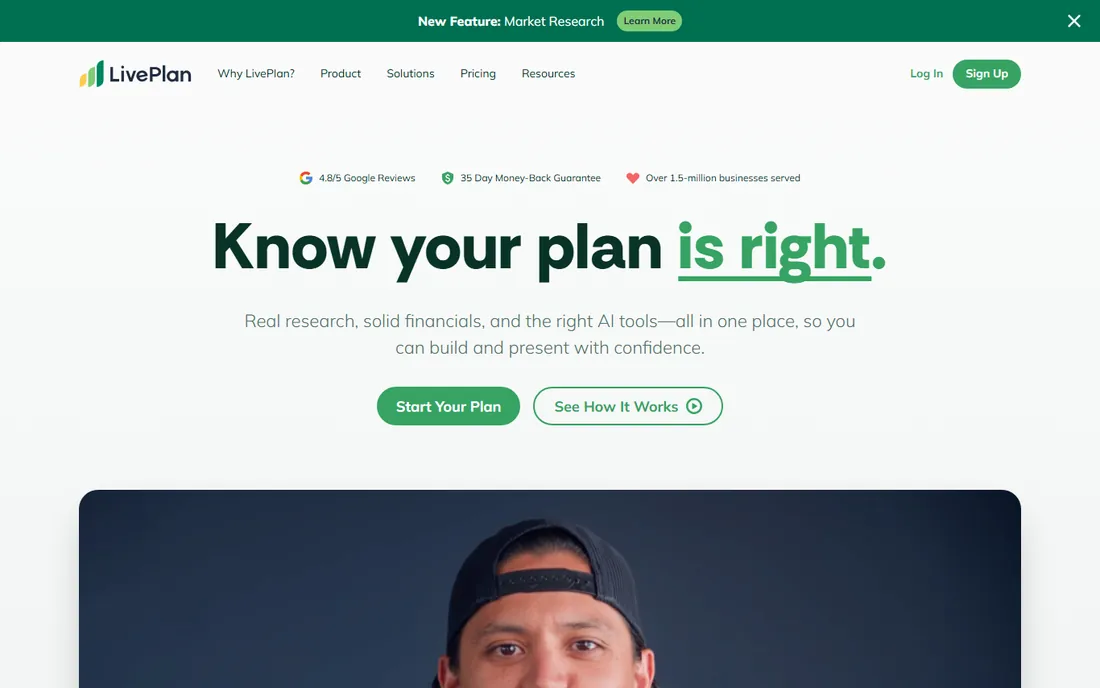
LivePlan is the reference product in this category. Step-by-step guidance walks you through each section of the plan, the financial forecasting builds profit-and-loss, cash flow, and balance sheet projections from your inputs, and dashboards compare actuals against the plan once you are operating. Banks and the SBA recognize its output format.
It is a real subscription, not a one-time purchase, which founders sometimes resent for software used intensively for a month. And solo founders with simple businesses may find it more than they need. But for anyone writing a plan to raise money or get a loan, LivePlan's completeness and credibility justify the cost.
What we like- Guided plan builder plus financials
- Performance dashboards
- Lender-friendly output
Watch out for- Subscription cost adds up
- More than some founders need
Starting priceSee website
Free planFree trial
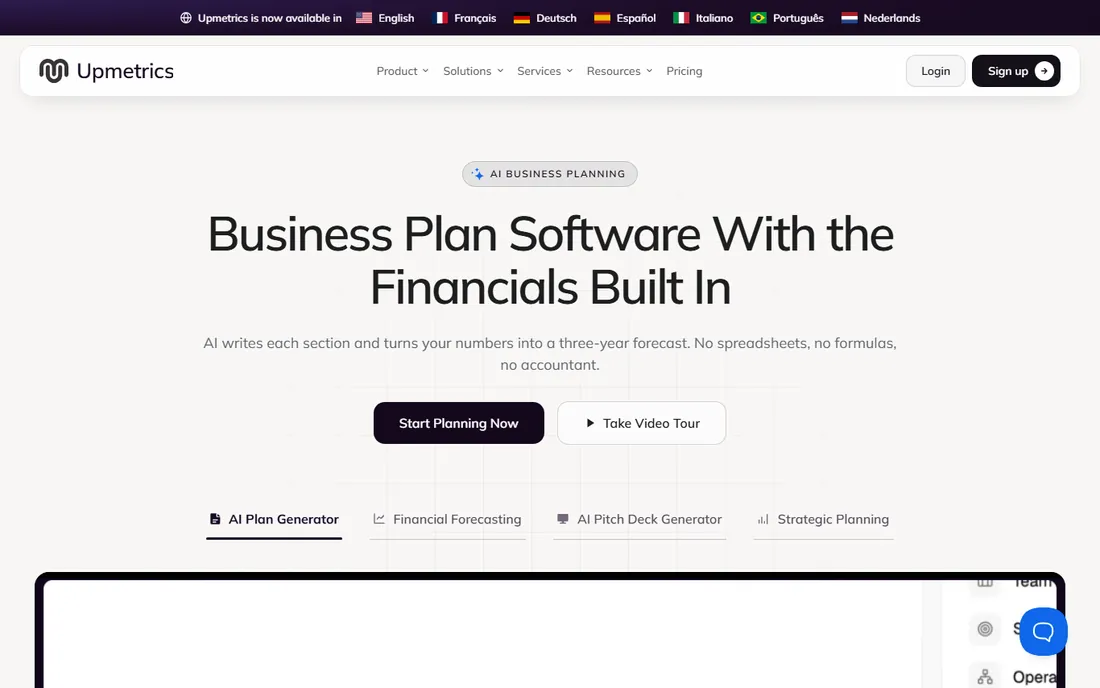
Upmetrics brings AI into the planning process: describe your business and it drafts sections, suggests financial assumptions, and helps phrase the narrative. The library of sample plans across industries gives founders a starting template close to their business. The interface feels modern where older tools feel like forms.
AI-drafted plans still read like AI drafts. Founders must rewrite with their real numbers, real market knowledge, and real voice before showing the plan to anyone who matters. Used as an accelerator rather than an author, though, Upmetrics shortens the painful blank-page phase considerably.
What we like- AI writing assistance
- 400+ sample plans
- Clean modern interface
Watch out for- AI output needs editing
- Younger company
Starting priceSee website
Free planFree trial
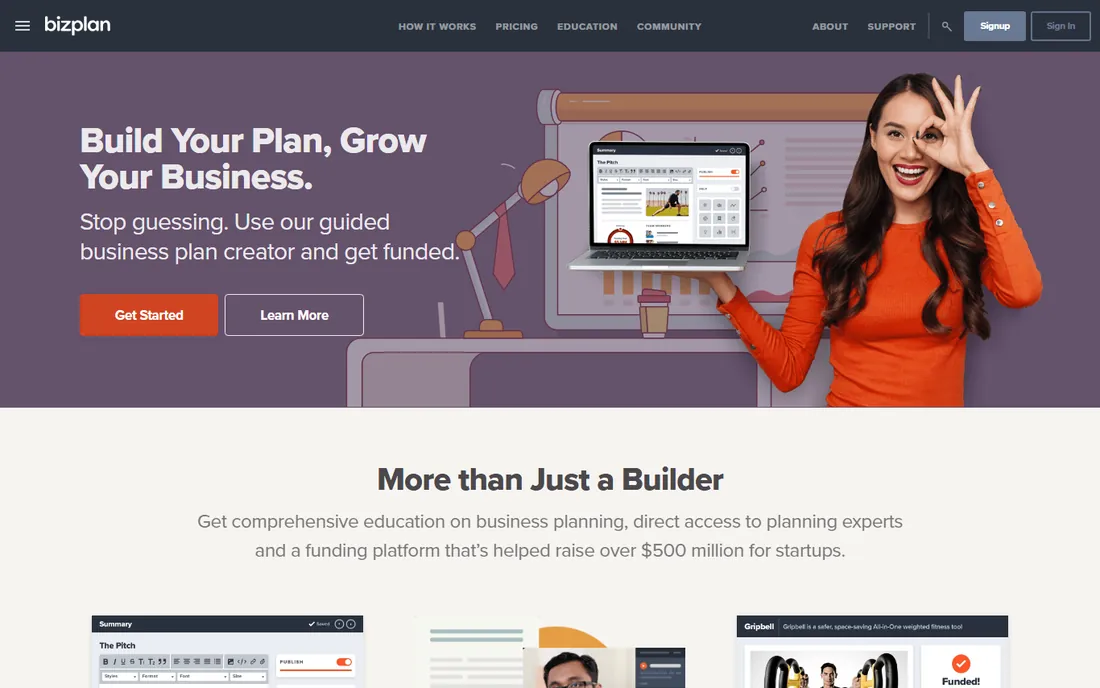
Bizplan targets startups specifically, with a guided builder that produces investor-ready plans and financials. Its connection to the Fundable fundraising platform gives founders a path from plan to pitch to investors in one ecosystem. The drag-and-drop financial builder avoids spreadsheet wrestling.
The startup focus is also the limit. Main-street businesses seeking bank loans get less tailored guidance than with LivePlan. And pricing sits at the premium end. But founders planning a fundraise who want plan, financials, and investor access in one place get a coherent package.
What we like- Startup-focused builder
- Fundable network access
- Drag-and-drop financials
Watch out for- Pricing is premium
- Less suited to traditional small business
Starting priceSee website
Free planFree trial
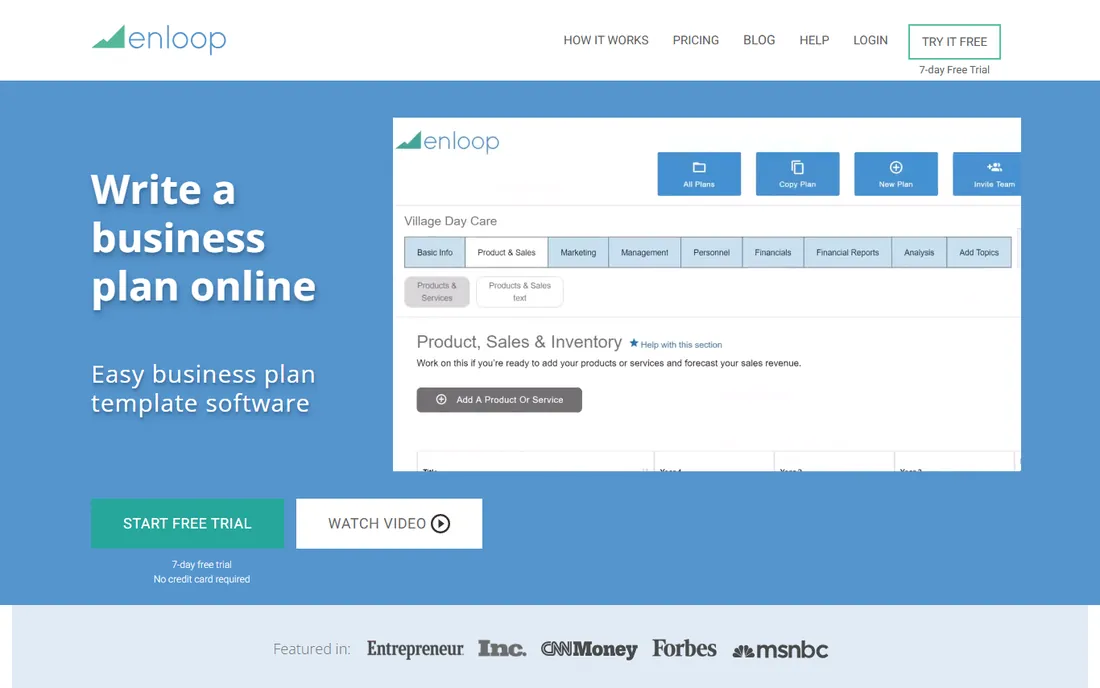
Enloop's pitch is automation: enter your business details and it generates the text and financial forecasts for each plan section, including a pass/fail-style health score. Founders who dread writing get a complete first draft fast, formatted for lenders.
The tradeoff is control. Customization options are thinner than LivePlan's, and the interface shows its age. But the core job, turning business facts into a coherent, formatted plan with real financials, gets done with minimal fuss. Practical founders who want output over process will appreciate it.
What we like- Auto-generates financial sections
- Simple workflow
- Bank-ready formatting
Watch out for- Fewer customization options
- Dated interface
Starting priceSee website
Free planFree trial
Cuttles speaks to first-time founders in plain language. The guided process explains what each section means and why lenders or investors care, which removes the intimidation factor that stalls so many plans. The lean startup framing keeps the focus on assumptions worth testing.
Complex businesses will outgrow its financial modeling. The template library is smaller than Upmetrics'. But as a first plan, written by someone who has never written one, Cuttles' hand-holding approach gets more founders to a finished document than more powerful tools do.
What we like- Beginner-friendly guidance
- Lean startup focus
- Affordable
Watch out for- Less depth for complex financials
- Smaller template library
Starting priceSee website
Free planFree trial
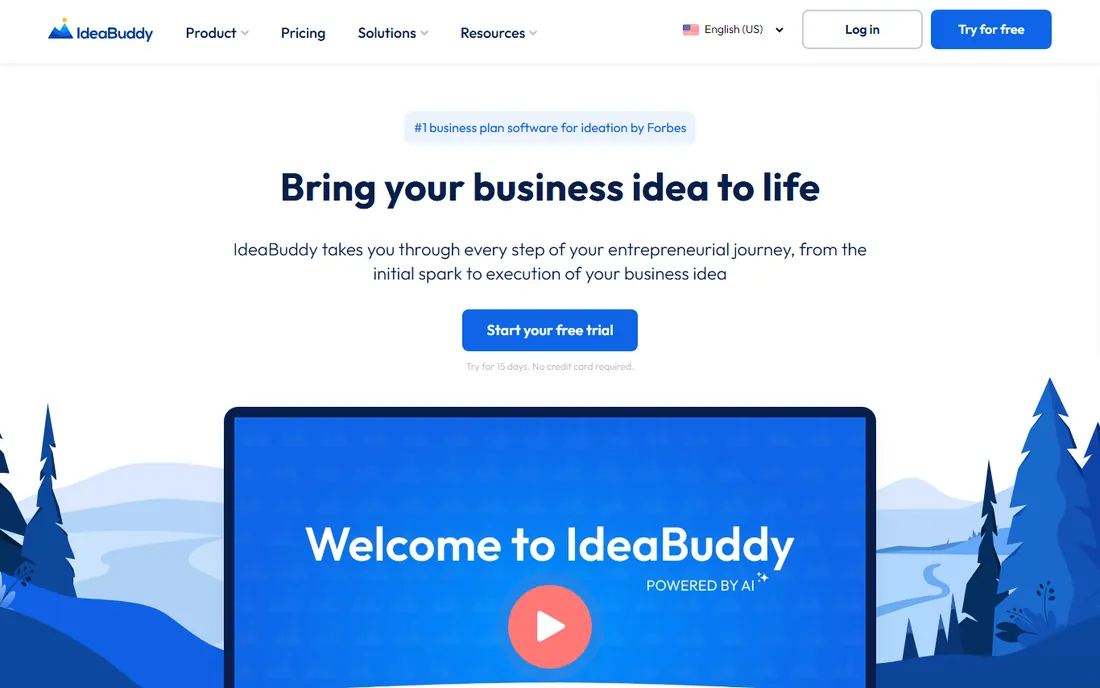
IdeaBuddy starts before the business plan: with the idea itself. Validation tools, business model canvas, and financial projections walk founders from rough concept to structured plan in one flow. Early-stage founders who are still deciding whether the idea works get more value here than from a pure plan writer.
Once the business is real and needs detailed financial planning, specialists like LivePlan or PlanGuru take over. IdeaBuddy's strength is the fuzzy front end: shaping, testing, and structuring the idea. Founders past that stage should graduate to deeper tools.
What we like- Covers idea to business plan
- Validation tools
- Visual business model canvas
Watch out for- Planning depth less than specialists
- Best for early stage only
Starting priceSee website
Free planFree trial

PlanGuru is the forecaster's tool. Where others generate simple projections, PlanGuru offers deep budgeting, consolidations, and over twenty forecasting methods that accountants and fractional CFOs trust. Businesses that live or die on cash flow accuracy use it for rolling forecasts long after the business plan is done.
It assumes financial literacy. Founders wanting hand-holding through the narrative sections of a plan will find less guidance here. But pair PlanGuru's numbers with any plan writer's document and you get the rare combination: a plan that reads well and forecasts honestly.
What we like- Serious budgeting and forecasting
- 20+ forecasting methods
- Accountant-friendly
Watch out for- Steeper learning curve
- Less plan-writing guidance
Starting priceSee website
Free planFree trial
GoSmallBiz bundles a straightforward business plan builder with courses, templates, and tools for running a small business, at a price well under the premium tools. The planning features cover the essentials without overwhelming new owners.
Output polish and financial depth trail the leaders. But for Main Street businesses that need a workable plan plus ongoing operational guidance on a tight budget, the bundle makes sense. It is the practical pick when the plan is a means to a loan, not a fundraising document.
What we like- Affordable
- Includes business courses
- Simple plan builder
Watch out for- Basic features
- Less polished output
What lenders and investors actually read
Nobody reads a forty-page plan cover to cover. Lenders read the financials: cash flow projections, break-even analysis, and whether the numbers support the loan. Investors read the team, the market size, and the traction. Write those sections with real specificity and keep the rest concise.
Financial projections need defensible assumptions, not optimism. Tie revenue to concrete drivers: customers times price, locations times throughput. Show the math. Every experienced reader discounts hockey-stick growth; credible plans show how the business survives the flat middle years.
A plan's real value starts after it is written. Compare actual revenue and expenses against projections monthly, and update the forecast quarterly. LivePlan's dashboards automate this; with other tools, export to a spreadsheet and review on a schedule.
The plan is a hypothesis. When actuals diverge, the question is whether the business or the assumption was wrong. Founders who revisit the plan treat it as a management tool. Founders who file it away after the loan closes wasted the effort.
Frequently asked questions
Do I need business planning software?
Not always. A simple business can plan in a document and a spreadsheet. Software earns its place when you need lender-ready formatting, financial projections you trust, or investor-grade polish. If a bank or investor will read the plan, software pays for itself in credibility.
How much does business planning software cost?
Most tools here run on subscriptions in the tens of dollars per month, with trials to start. Annual billing usually discounts significantly. Given that a plan supports five or six-figure funding decisions, the software cost is trivial next to the stakes.
Can AI write my business plan?
AI can draft sections and suggest structure, as Upmetrics demonstrates, but it cannot supply your market knowledge, real financial assumptions, or the specifics lenders check. Treat AI output as a first draft to rewrite, never as a finished plan to submit.
What is the difference between a business plan and a business model canvas?
The canvas is a one-page map of how the business works: customers, value proposition, channels, revenue. The plan is the full document with narrative, market analysis, and financial projections. IdeaBuddy covers both; most founders start with the canvas and expand to the plan.
How long should a business plan be?
As long as needed and no longer: typically 15-25 pages for lenders, shorter for investors who prefer decks. Financial projections and appendices add length without adding reading burden. Clarity beats completeness; every section should earn its pages.
The plan versus the pitch deck
Business plans and pitch decks serve different audiences and different moments. The plan is the full document: market analysis, operations, financial projections, the complete thinking. Lenders read plans. The deck is the ten-slide story: problem, solution, traction, team, ask. Investors hear decks.
Founders raising venture capital need the deck first and the plan as backup for due diligence. Founders seeking bank loans need the plan first; decks rarely enter the conversation. Build both from the same foundation so the numbers agree, but tailor the emphasis: decks sell the opportunity, plans prove the viability. The software on this list produces plans; pair it with a presentation tool for the deck, and keep one set of financials behind both.
Financial projections that convince readers
Projections convince when the assumptions are visible and defensible. Show your work: revenue as customers times price, costs tied to headcount and activity, growth tied to specific marketing channels. Readers discount any projection; transparent math earns back half the discount.
Build three scenarios, not one. The base case reflects realistic execution, the upside shows what good execution delivers, and the downside proves the business survives bad luck. Lenders care most about the downside: can loan payments continue if revenue misses by thirty percent? Investors care most about the upside's plausibility. Monthly detail for year one, quarterly for years two and three, matches how closely anyone can actually forecast.
How we chose
We focused on software that produces real business plans with financials, not just pitch decks or articles. We verified each vendor's current site, compared plan builders, forecasting depth, and pricing, and weighed reviews from founder communities. We covered guided builders, AI-assisted tools, and forecasting specialists so each founder type finds a fit. No vendor paid for placement, and we did not claim hands-on testing.
Should I hire someone to write my business plan?
Usually not the whole plan, but targeted help pays off. Accountants can validate financial projections for a few hundred dollars, which is cheap insurance when a lender will scrutinize them. Consultants make sense for complex fundraising documents. But the founder must own the thinking: a plan you cannot explain in your own words fails the moment anyone asks questions.
Sources we checked (8)
- https://www.liveplan.com
- https://www.bizplan.com
- https://upmetrics.co
- https://enloop.com
- https://www.cuttles.com
- https://ideabuddy.com
- https://planguru.com
- https://gosmallbiz.com
Is your product missing or out of date?
We review this list regularly. Vendors can request a listing, send updated pricing or ask about featured placement.

Shihab Mia · Founder, Rankite
Shihab has spent more than a decade helping SaaS and e-commerce brands grow through search. He writes Rankite's software buying guides from pricing pages, documentation and public user reviews. More about Shihab.